NASHVILLE, Tenn. (AP) — Konsta Helenius scored his first NHL goal, assisted on two others, and the Buffalo Sabres beat the Nashville Predators 5-3 on Tuesday night.
Noah Ostlund scored twice, Tage Thompson and Peyton Krebs also scored and Alex Lyon made 32 saves for the Sabres, 3-1-1 in their last five games.
Ryan O’Reilly scored twice and added an assist, Filip Forsberg had a goal and two assists, and Juuse Saros and Justus Annunen combined to make 27 saves for the Predators, losers of two straight. Nashville had not lost consecutive games since a three-game skid in late November.
Ostlund scored the first goal of the game at 8:11 of the opening period.
Saros stopped Helenius' shot from the left side and Ostlund crept in from the right and poked in the rebound from just outside the crease.
Ostlund struck again at 11:45 of the first with Helenius assisting on that goal as well.
Helenius scored at 17:24 of the first, skating through the slot and snapping a wrist shot high to Saros’ glove side. The 19-year-old Finn made his NHL debut in Monday night’s loss at Carolina.
Thompson’s goal at 4:20 of the second spelled the end of the night for Saros, who stopped 14 of 18 shots faced. On Monday, Thompson was named the NHL’s First Star for the week ending Jan. 18.
Annunen stopped all 13 shots he faced in relief.
O’Reilly, a former Sabre, and Forsberg scored goals 1:45 apart just past the midpoint of the second.
Nashville drew to within one at 9:30 of the third on O'Reilly's second.
O’Reilly extended his point-scoring streak to five games. He has five goals and five assists over that span.
Krebs scored an empty-net goal with 1:46 remaining.
Sabres: Visit the Montreal Canadiens on Thursday night.
Predators: Host the Ottawa Senators on Thursday night.
AP NHL: https://apnews.com/hub/nhl
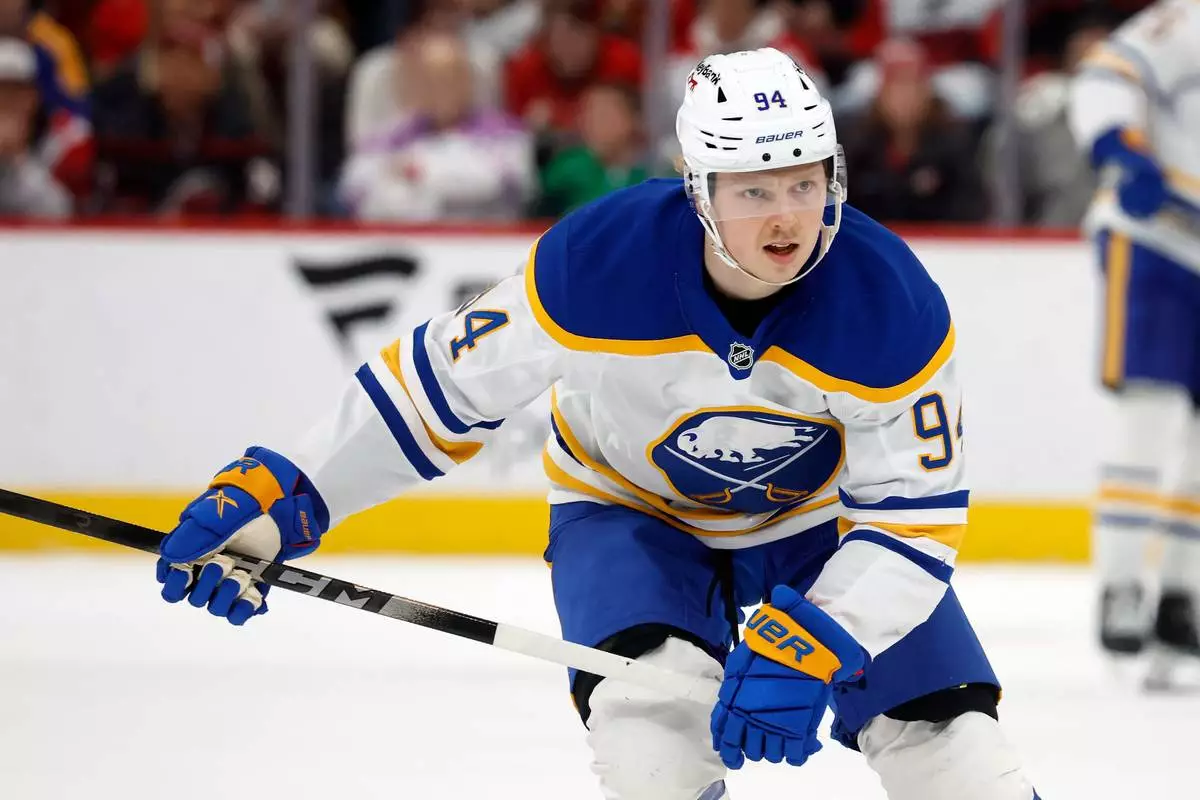
Buffalo Sabres' Konsta Helenius skates after the puck during the third period of an NHL hockey game against the Carolina Hurricanes in Raleigh, N.C., Monday, Jan. 19, 2026. (AP Photo/Karl DeBlaker)
ARLINGTON, Texas (AP) — Justin Foscue finally went deep for the first time in the big leagues with the Texas Rangers. That home run created a much happier highlight than the embarrassing blooper-reel moment he knows he will see often in the future after running into their two-time World Series MVP shortstop.
“Getting your first home run is a big deal. ... And I almost took out the star shortstop,” Foscue said. “A lot of ups and downs.”
Foscue, a first-round draft pick by the Rangers in 2020, hit his first career homer Saturday night in the Rangers’ 6-0 victory that snapped the Chicago Cubs’ 10-game winning streak.
“It was a big relief for me,” he said. “It is the best moment of my career so far.”
That came roughly 24 hours after he was playing second base and collided with Corey Seager, who was moving to his left to field a grounder up the middle. The ball squirted past as the infielders tumbled to the ground behind the bag. Neither was injured, but Foscue was charged with an error for causing the mishap in that 7-1 loss.
“Nobody feels worse (for) running into Corey Seager. Trust me, he did not want to do that,” Rangers manager Skip Schumaker said. “I think it was big of Corey to go up to him and say, it’s gonna be all right, you know, don’t worry about it.”
Seager actually texted Foscue after that game to let him know everything was good.
“That really meant a lot,” Foscue said. “I said I’m glad you’re OK.”
Foscue had entered the series opener against the Cubs as a pinch-hitter in the fifth inning, and his RBI single produced the only Texas run. The fielding blooper to open the seventh led to three unearned runs for Chicago.
When the Rangers gave struggling Jake Burger a break Saturday night, Foscue started at first base.
“If (Seager) would have gotten hurt, then I don’t know if I would be here,” Foscue said after his 23th big league game since his debut in 2024. It was his fourth game this season since being recalled from Triple-A Round Rock after second baseman Josh Smith went on the injured list.
Instead, Foscue stayed and Schumaker was even making light of the fielding blooper with a joke about it during the hitters meeting before Saturday’s game.
“Kind of lightens it a little bit,” Foscue said. “Stuff like that happens in baseball, and I hate that I was the one, that I was part of it, and I cannot believe that it happened still. ... You can’t think about the day before. If you do that, you’re gonna be carrying a lot of baggage with you.”
In the clubhouse after hitting his first home, Foscue got a celebratory beer shower from his teammates.
“It’s how you bounce back,” Schumaker said. “That shows you what kind of person and what kind of character you have.”
AP MLB: https://apnews.com/MLB
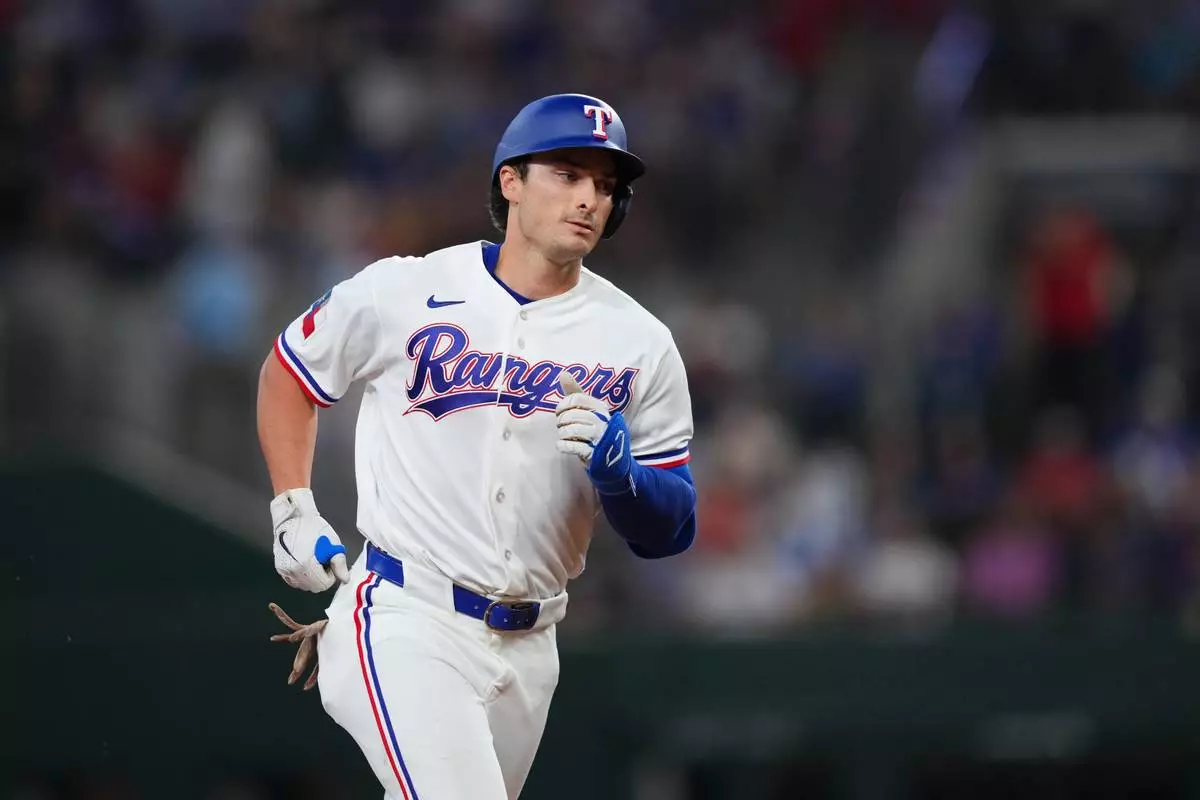
Texas Rangers' Justin Foscue runs the bases after hitting his first career home run during the third inning of a baseball game against the Chicago Cubs, Saturday, May 9, 2026, in Arlington, Texas. (AP Photo/Julio Cortez)
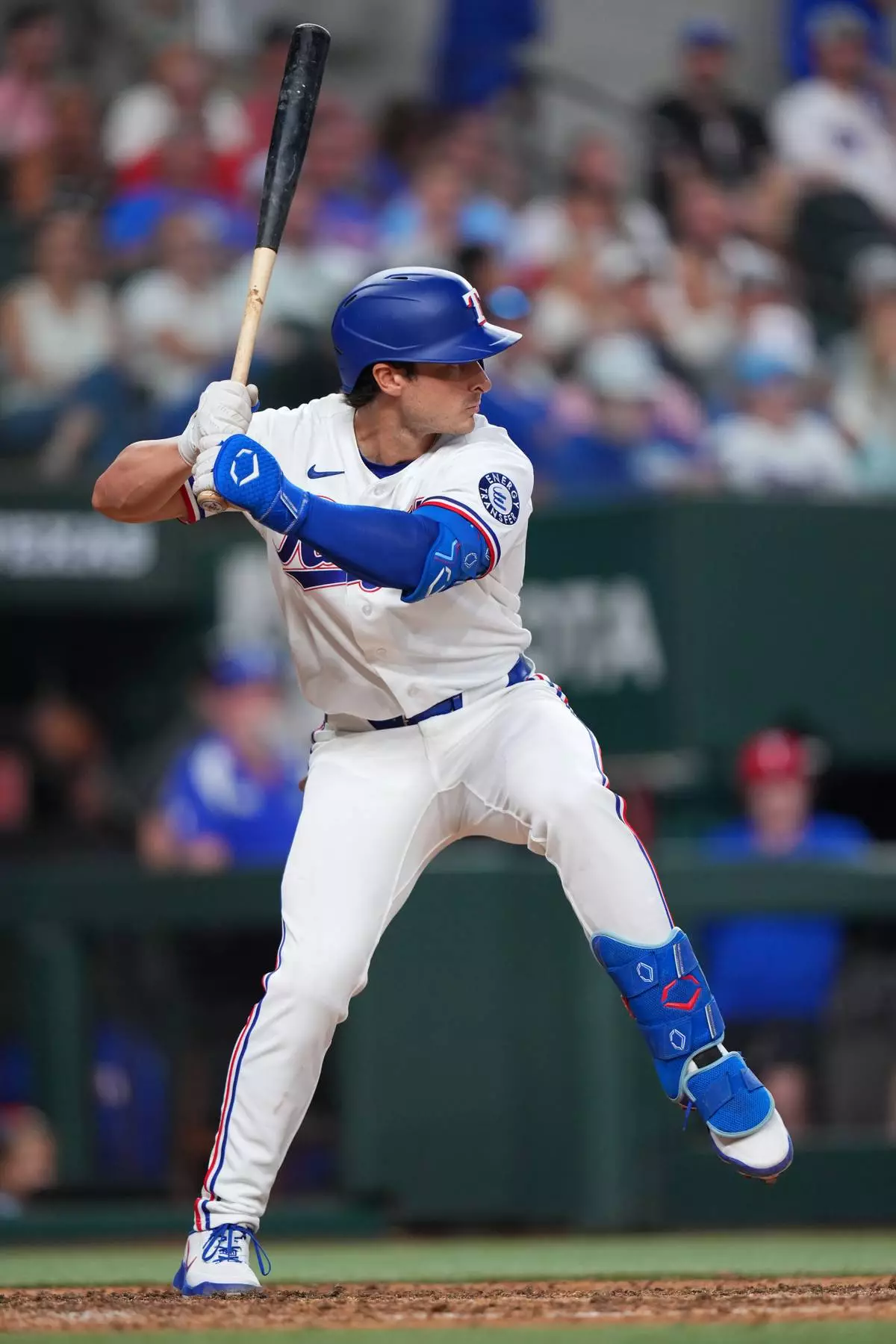
Texas Rangers' Justin Foscue loads up while waiting for a pitch from the Chicago Cubs during the sixth inning of a baseball game Saturday, May 9, 2026, in Arlington, Texas. (AP Photo/Julio Cortez)
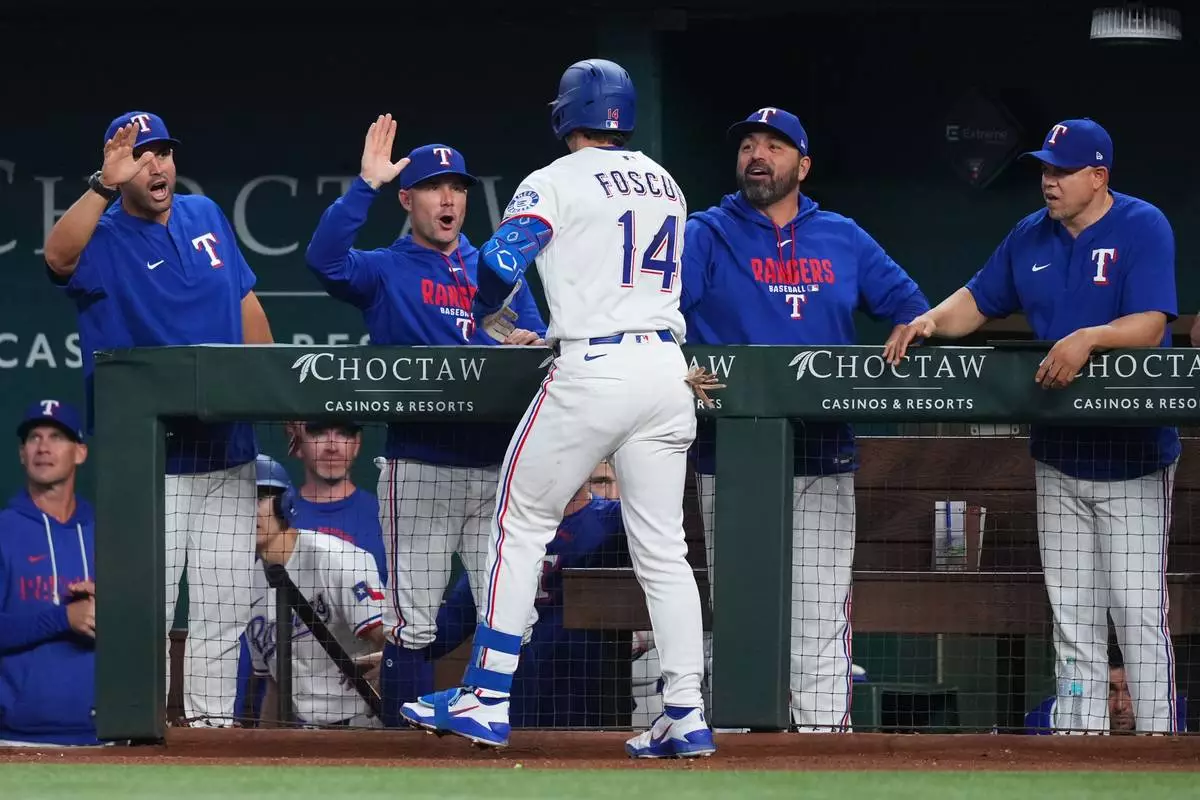
Texas Rangers' Justin Foscue (14) reacts with manager Skip Schumaker, second from left, and staff after hitting his first career home run during the third inning of a baseball game against the Chicago Cubs Saturday, May 9, 2026, in Arlington, Texas. (AP Photo/Julio Cortez)
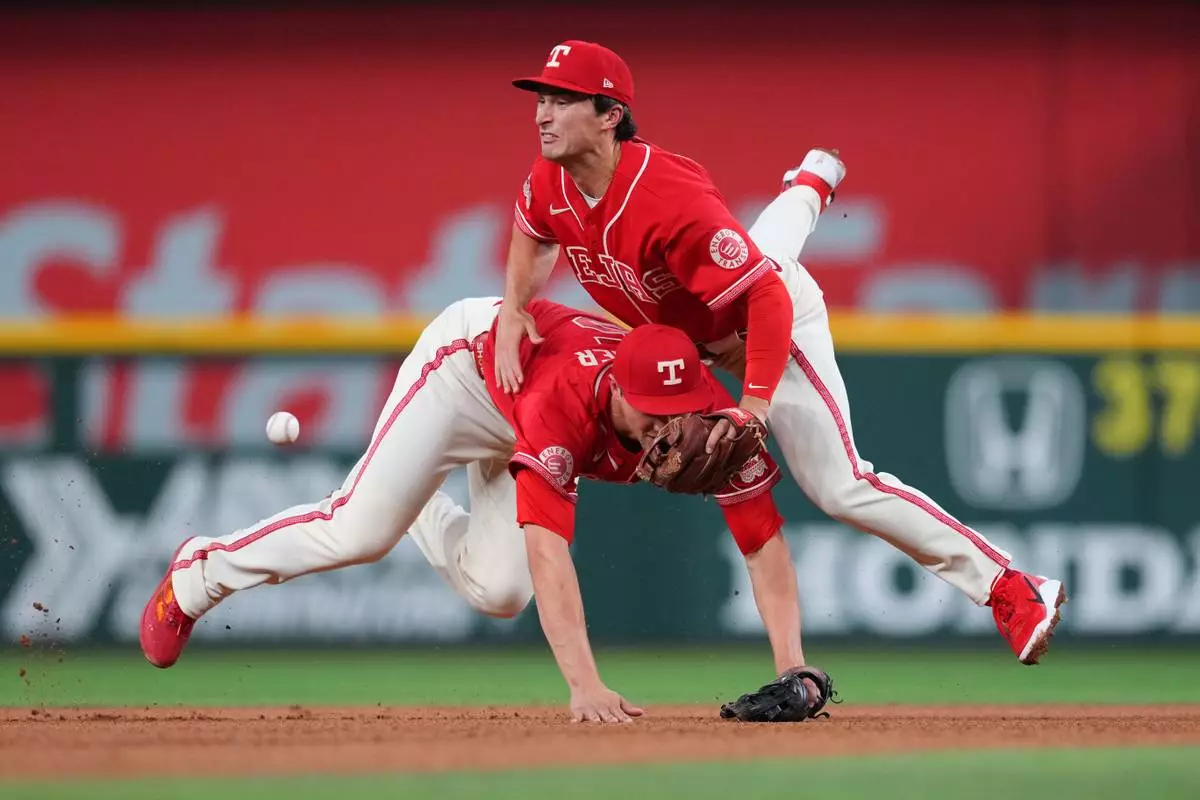
Texas Rangers shortstop Corey Seager, left, and second baseman Justin Foscue collide while fielding a ball hit by Chicago Cubs' Nico Hoerner during the seventh inning of a baseball game Friday, May 8, 2026, in Arlington, Texas. (AP Photo/Julio Cortez)