

Skip to Content Facebook Feature Image

Deputy Secretary for Justice Highlights Hong Kong's Economic Resilience at Thought Leadership Conference

HK

Deputy Secretary for Justice Highlights Hong Kong's Economic Resilience at Thought Leadership Conference
HK

HK

Deputy Secretary for Justice Highlights Hong Kong's Economic Resilience at Thought Leadership Conference

2026-01-21 12:30 Last Updated At:12:38

Speech by DSJ at conference on The Future of Hong Kong Economy

Following is the keynote speech by the Deputy Secretary for Justice, Dr Cheung Kwok-kwan, at the Thought Leadership Conference Series: The Future of Hong Kong Economy organised by the University of Hong Kong (HKU) Business School today (January 21):

Professor Wong (the Provost and Deputy Vice-Chancellor of HKU and Director of the Hong Kong Institute of Economics and Business Strategy, Professor Richard Wong), Professor Cai (the Dean and Chair of Economics of the HKU Business School, Professor Cai Hongbin), Professor Mokyr (the recipient of the 2025 Nobel Prize in Economic Sciences, Professor Joel Mokyr), distinguished guests, ladies and gentlemen,

Good morning. I am most pleased to address such a distinguished audience today at the conference on The Future of Hong Kong Economy 2026.

The year 2026 unfolds against a global backdrop of complexity and uncertainty. Issues like geopolitical tensions, supply chain shifts and tariff disputes are reshaping the flow of capital and the operation of businesses. Yet history shows that Hong Kong's prosperity has always been fuelled by embracing changes, and by turning challenges into opportunities.

This leads me to the theme today - how Hong Kong can continue to serve as a trusted platform for business growth in the region and beyond. Please allow me to structure my remarks around three "C"s: Certainty, Capability, and Connectivity.

Certainty - rule of law as economic bedrock

The first and most fundamental "C" is Certainty.

For businesses to thrive and economies to flourish, we need above all a predictable environment: certainty in contracts, in dispute resolution and in the enforcement of rights and obligations. In short, certainty is underpinned by the rule of law.

Hong Kong's success as an international financial, trading, and legal services centre is inseparable from its solid rule-of-law foundation. Our common law system, constitutionally guaranteed under the Basic Law, has been operating with integrity for over 180 years here. Judicial independence, equality before the law, and respect for contractual freedom are core values that we all treasure.

In an era when businesses must navigate multiple jurisdictions and political risks, Hong Kong offers something unique: a stable, bilingual, and internationally trusted legal environment. As the only common law jurisdiction within China, and the only one operating fully in both Chinese and English, Hong Kong provides unparalleled credibility and convenience for cross-border transactions.

Under the Basic Law, free flow of capital is guaranteed. Investments and properties in Hong Kong are protected by a robust regulatory regime administered by bodies including the Securities and Futures Commission and the Independent Commission Against Corruption.

The jurisprudence of the Hong Kong courts commands high respect in other common law jurisdictions. In a recent judgement, the Judicial Committee of the Privy Council sitting in London referred to and discussed no fewer than six Hong Kong decisions from the past few years when determining insolvency issues raised in an appeal before it. This credibility is reflected in our consistent global standing - Hong Kong ranks among the top jurisdictions globally for business legislation and dispute resolution, making us the world's second-most preferred seat for arbitration and number one in the Asia-Pacific region.

Legal certainty is also a strategic enabler that allows businesses to plan long term, deploy capital with confidence, and innovate without fear. This foundation makes Hong Kong the ideal international legal hub for proactive collaboration in an era where "safe passage" for capital is more critical than ever.

Capability - professional services powering economic growth

Building on certainty comes the second "C": Capability.

Hong Kong's professional services ecosystem - spanning across legal, finance, accounting, tax, risk management, and dispute resolution - is one of our most powerful strengths. Their quality services are integral to value creation - by empowering businesses to manage risks effectively, tackling compliance issues skilfully, structuring transactions securely, and resolving disputes efficiently.

Our legal profession is international in outlook and local in insight. Our financial and accounting professionals operate to global standards while understanding regional realities. Together, they provide end-to-end support across the entire business lifecycle - from market entry and project financing, to management of an intellectual property rights portfolio, regulatory compliance, restructuring, and cross-border dispute resolution.

In a world of tariff disputes, sanctions, and regulatory divergence, companies increasingly rely on professional services to navigate complexity. Whether expanding into ASEAN (Association of Southeast Asian Nations), the Middle East, Africa, or other markets, businesses require bespoke solutions - solutions that are legally sound, commercially viable, and culturally informed.

This is precisely where Hong Kong excels. We are home to a deep pool of professionals, recently ranked first in Asia and fourth globally under the IMD (International Institute for Management Development) World Talent Ranking.

Our professionals speak the universal language of business, with clear understanding of the nuances of different legal systems, market practices, and risk profiles. We have over 13 000 local lawyers and over 1 500 foreign lawyers from over 30 jurisdictions, including some 500 from the Chinese Mainland as well as more than 80 foreign law firms. Furthermore, we have a unique asset - over 600 lawyers with dual qualifications to practice in both Hong Kong and the Mainland cities of the Greater Bay Area.

In my view, an enterprise expanding globally is like a gentleman visiting a tailor shop for an impeccable suit. An off-the-rack solution simply does not work. What businesses need, and Hong Kong can offer, is a bespoke experience - professional services that cater to the client's needs and execute with precision to ensure a perfect fit for every occasion.

Connectivity - GoGlobal and Hong Kong's strategic role

This brings me to the third "C": Connectivity.

Hong Kong has long been described as a "super connector" and a "super value-adder". It highlights Hong Kong's crucial role under the "one country, two systems" in connecting the Chinese Mainland with the rest of the world.

In recent years, the Government has taken proactive steps to strengthen this role by supporting enterprises, particularly Mainland enterprises, to use Hong Kong as a launch pad for global expansion.

Under the Chief Executive's 2025 Policy Address, I have been tasked to promote our legal services and co-ordinate with other professional sectors to meet the going global needs of Mainland enterprises.

To this end, we launched the Hong Kong Professional Services GoGlobal Platform last December. It serves two major functions:

(1) Information integration: We make information on professional services providers and their capability easily accessible to enterprises. At the launch ceremony of the Platform, we published a collection of over 50 success stories covering a wide range of sectors and extensive markets including Asia, Middle East and Africa.

(2) Needs matching: We enhance co-ordination to meet the specific needs of enterprises. For instance, I recently led a cross-professional delegation to Shenzhen for a direct exchange between our experts and Mainland enterprises. This initiative was well-received.

Earlier this month, we also established the Expert Committee on Professional Services for Going Global, comprising experts from relevant fields, to advise me on our strategy to promote Hong Kong as the premier two-way platform for attracting investment and going global.

Looking ahead

Ladies and gentlemen, as we consider Hong Kong's economic outlook in 2026, we should neither be complacent nor pessimistic. The challenges are real. But so are our strengths.

The certainty under our rule of law infrastructure instils trust. The capability of our professional services delivers solutions. The connectivity through our GoGlobal initiatives provides opportunities.

The relationship between law and the economy is practical, dynamic, and deeply intertwined. A resilient economy requires a credible legal system. A modern legal system must serve real economic needs. In Hong Kong, these two have grown together - and they will continue to do so.

With continued collaboration among the Government, businesses, and the professional community, I am sure that Hong Kong will not only navigate the present uncertainties, but emerge stronger, more relevant, and more connected to the world.

On that note, I wish you all a fruitful conference today and continued success in your endeavours. Thank you very much.
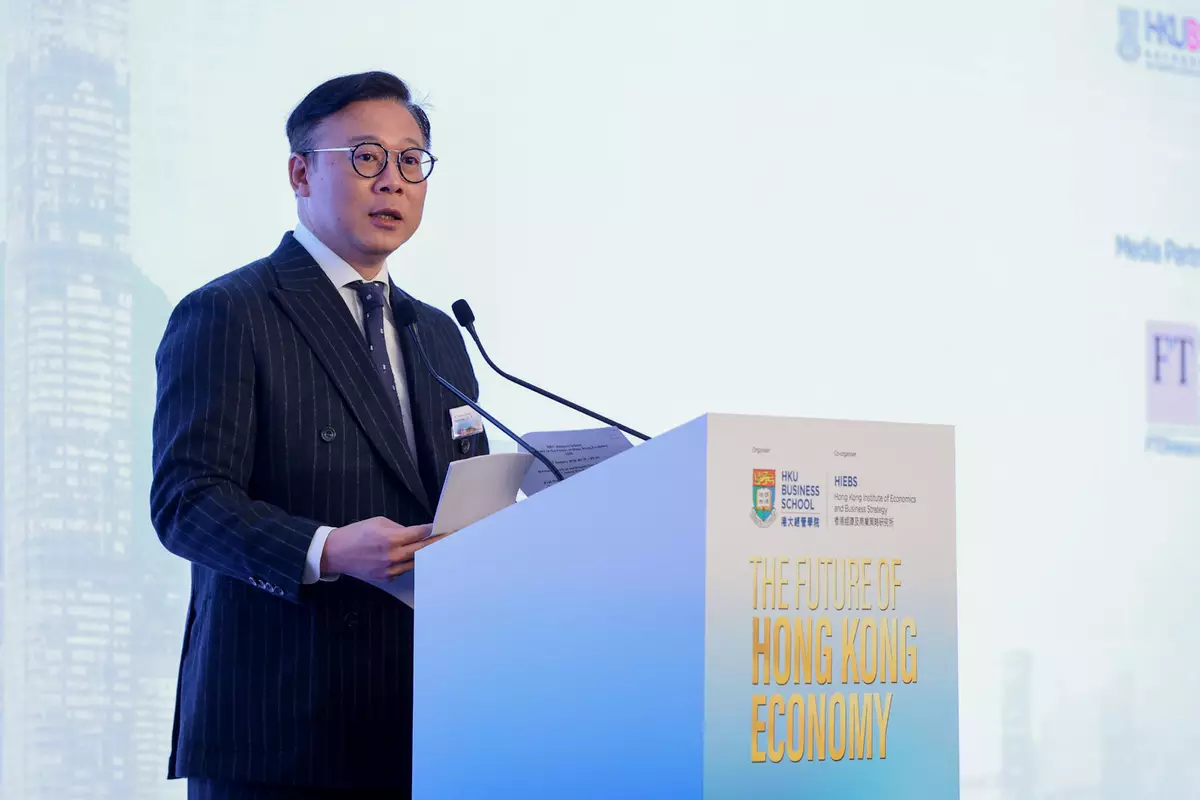
Speech by DSJ at conference on The Future of Hong Kong Economy  Source: HKSAR Government Press Releases

Speech by DSJ at conference on The Future of Hong Kong Economy Source: HKSAR Government Press Releases

FEHD releases second batch of gravidtrap indexes for Aedes albopictus in May

The Food and Environmental Hygiene Department (FEHD) today (May 14) released the second batch of gravidtrap indexes and density indexes for Aedes albopictus in May, covering 13 survey areas, as follows:

District

Survey Area

First Phase Gravidtrap Index

First Phase Density Index

Central and Western

Kennedy Town and Shek Tong Tsui

20.8%

1.2

Eastern

Chai Wan

11.5%

1.0

North Point and Quarry Bay

24.6%

1.5

Southern

Aberdeen and Ap Lei Chau

31.5%

1.9

Islands

Cheung Chau

9.3%

1.4

Wong Tai Sin

Wong Tai Sin East

17.0%

1.3

Tsuen Wan

Tsuen Wan Town

8.8%

2.4

Tuen Mun

Tuen Mun North

9.5%

1.2

Kowloon City

Kowloon Tong

23.4%

1.4

Kwun Tong

Kwun Tong Central

37.3%

2.2

Yau Tsim

Tsim Sha Tsui and Yau Ma Tei

4.8%

2.0

North

Fanling North

13.1%

1.5

Tsuen Wan

Sheung Kwai Chung

10.3%

1.5

Among the second batch of First Phase Gravidtrap Indexes covering eight survey areas and Area Gravidtrap Indexes covering five survey areas in May, all were below 10 per cent, except for Kennedy Town and Shek Tong Tsui in Central and Western District; Chai Wan, North Point and Quarry Bay in Eastern District; Aberdeen and Ap Lei Chau in Southern District; Wong Tai Sin East in Wong Tai Sin District; Kowloon Tong in Kowloon City District; Kwun Tong Central in Kwun Tong District; Fanling North in North District; as well as Sheung Kwai Chung in Tsuen Wan District.

With reference to the data from the past few years, the gravidtrap indexes start to rise from April or May every year. The actual timing of the increase and its extent are affected by factors like weather and rainfall. Entering the humid and rainy season, the conditions are favourable for mosquito growth and breeding, and the overall trend and extent of the rise of gravidtrap indexes this year are similar to those of previous years. In response to the rise of gravidtrap indexes, the FEHD, together with relevant departments and stakeholders, has implemented rapid response measures and deployed targeted actions.

For Kennedy Town and Shek Tong Tsui in Central and Western District; Chai Wan, North Point and Quarry Bay in Eastern District; Aberdeen and Ap Lei Chau in Southern District; Wong Tai Sin East in Wong Tai Sin District; Kowloon Tong in Kowloon City District; Kwun Tong Central in Kwun Tong District; Fanling North in North District; as well as Sheung Kwai Chung in Tsuen Wan District, which recorded indexes exceeding 10 per cent, in accordance with the mechanism implemented by the FEHD in response to the chikungunya fever (CF) situation (i.e. strengthening mosquito control work in areas with a gravidtrap index between 10 per cent and 20 per cent, instead of 20 per cent or above under the original mechanism), the FEHD is collaborating with relevant departments and stakeholders to identify locations with high mosquito infestations and carry out intensive and targeted mosquito control measures. In particular, the gravidtrap data for Chai Wan showed that areas with more mosquito problems included hospitals, parks and public and private housing estates; the gravidtrap data for North Point and Quarry Bay showed that areas with more mosquito problems included parks and public and private housing estates; the gravidtrap data for Fanling North showed that areas with more mosquito problems included parks, public and public housing estates and village houses; the gravidtrap data for Kowloon Tong showed that areas with more mosquito problems included parks, schools and private housing estates; and the gravidtrap data for Kennedy Town and Shek Tong Tsui, Aberdeen and Ap Lei Chau, Wong Tai Sin East, Kwun Tong Central and Sheung Kwai Chung showed that areas with more mosquito problems included parks, schools and public and private housing estates.

In response to the high-risk areas identified in the said survey areas, the FEHD has initiated three prosecutions against relevant construction site contractors following the discovery of mosquito breeding at construction sites in Southern District, Kowloon City District and Kwun Tong District. Furthermore, following the discovery of stagnant water or stagnant water containers at a total of five parks, a construction site, three public housing estates and two private housing estates in Central and Western District, Kowloon City District, Kwun Tong District and Tsuen Wan District, the FEHD has issued 11 statutory notices to the relevant venue management companies, construction site contractors, estate management companies and property management companies, requiring the clearance of such items within a specified timeframe. The FEHD and the relevant departments are following up on the mosquito control work, and will also organise exhibitions, distribute leaflets and posters, and notify residential estates that have subscribed to the gravidtrap Rapid Alert System, advising property management agents and residents to stay vigilant and work together in taking mosquito prevention and elimination measures. In addition, the FEHD will strengthen the monitoring of the gravidtrap index in the areas to review the effectiveness of the mosquito control work.

The FEHD has so far released two batches of gravidtrap indexes for Aedes albopictus in May 2026, covering 22 survey areas. Among these 22 survey areas, four recorded a decrease or remained unchanged as compared to the Area Gravidtrap Index last month (i.e. April 2026), representing that the areas' mosquito infestation improved or maintained a low level. Seven other areas recorded a slight increase, but the indexes were lower than 10 per cent.

Public participation is crucial to the effective control of mosquito problems. The FEHD appeals to members of the public to continue to work together in strengthening personal mosquito control measures, including:

  • tidy up their premises and check for any accumulation of water inside their premises;

  • remove all unnecessary water collections and eliminate the sources;

  • check household items (those placed in outdoor and open areas in particular), such as refuse containers, vases, air conditioner drip trays, and laundry racks to prevent stagnant water;

  • change water in flower vases and scrub their inner surfaces thoroughly, and remove water in saucers under potted plants at least once a week;

  • properly cover all containers that hold water to prevent mosquitoes from accessing the water;

  • properly dispose of articles that can contain water, such as disposable meal boxes and empty cans; and

  • scrub drains and surface sewers with alkaline detergent at least once a week to remove any mosquito eggs.

Starting in August 2025, following the completion of the surveillance of individual survey areas, and once the latest gravidtrap index and the density index are available, the FEHD has been disseminating relevant information through press releases, its website and social media. It aims to allow members of the public to quickly grasp the mosquito infestation situation and strengthen mosquito control efforts, thereby reducing the risk of CF transmission.

Following recommendations from the World Health Organization and taking into account the local situation in Hong Kong, the FEHD sets up gravidtraps in districts where mosquito-borne diseases have been recorded in the past, as well as in densely populated places such as housing estates, hospitals and schools to monitor the breeding and distribution of Aedes albopictus mosquitoes, which can transmit CF and dengue fever. At present, the FEHD has set up gravidtraps in 62 survey areas of the community, with a surveillance period of two weeks. During the surveillance period, the FEHD will collect the gravidtraps once a week. After the first week of surveillance, the FEHD will immediately examine the glue boards inside the retrieved gravidtraps for the presence of adult Aedine mosquitoes to compile the Gravidtrap Index (First Phase) and Density Index (First Phase). At the end of the second week of surveillance, the FEHD will instantly check the glue boards for the presence of adult Aedine mosquitoes. Data from the two weeks of surveillance will be combined to obtain the Area Gravidtrap Index and the Area Density Index. The gravidtrap and density indexes for Aedes albopictus in different survey areas, as well as information on mosquito prevention and control measures, are available on the department's webpage (www.fehd.gov.hk/english/pestcontrol/dengue_fever/Dengue_Fever_Gravidtrap_Index_Update.html#).

The Food and Environmental Hygiene Department (FEHD) today (May 14) released the second batch of gravidtrap indexes and density indexes for Aedes albopictus in May, covering 13 survey areas. Photo shows staff members of the FEHD's contractor conducting a fogging operation to eliminate adult mosquitoes in Fanling North, North District. Source: HKSAR Government Press Releases

The Food and Environmental Hygiene Department (FEHD) today (May 14) released the second batch of gravidtrap indexes and density indexes for Aedes albopictus in May, covering 13 survey areas. Photo shows staff members of the FEHD's contractor conducting a fogging operation to eliminate adult mosquitoes in Fanling North, North District. Source: HKSAR Government Press Releases

The Food and Environmental Hygiene Department (FEHD) today (May 14) released the second batch of gravidtrap indexes and density indexes for Aedes albopictus in May, covering 13 survey areas. Photo shows an FEHD staff member inspecting a new mosquito trap at a school in Kwun Tong Central, Kwun Tong District. Source: HKSAR Government Press Releases

The Food and Environmental Hygiene Department (FEHD) today (May 14) released the second batch of gravidtrap indexes and density indexes for Aedes albopictus in May, covering 13 survey areas. Photo shows an FEHD staff member inspecting a new mosquito trap at a school in Kwun Tong Central, Kwun Tong District. Source: HKSAR Government Press Releases

The Food and Environmental Hygiene Department (FEHD) today (May 14) released the second batch of gravidtrap indexes and density indexes for Aedes albopictus in May, covering 13 survey areas. Photo shows an FEHD staff member inspecting a public housing estate in Sheung Kwai Chung, Tsuen Wan District. Following the discovery of stagnant water in the public housing estate, a statutory notice has been issued to the relevant estate management company, requiring the clearance of such item within a specified timeframe. Source: HKSAR Government Press Releases

The Food and Environmental Hygiene Department (FEHD) today (May 14) released the second batch of gravidtrap indexes and density indexes for Aedes albopictus in May, covering 13 survey areas. Photo shows an FEHD staff member inspecting a public housing estate in Sheung Kwai Chung, Tsuen Wan District. Following the discovery of stagnant water in the public housing estate, a statutory notice has been issued to the relevant estate management company, requiring the clearance of such item within a specified timeframe. Source: HKSAR Government Press Releases
The Food and Environmental Hygiene Department (FEHD) today (May 14) released the second batch of gravidtrap indexes and density indexes for Aedes albopictus in May, covering 13 survey areas. Photo shows an FEHD staff member inspecting a park in Kennedy Town, Central and Western District. Following the discovery of stagnant water in the park, a statutory notice has been issued to the relevant venue management company, requiring the clearance of such item within a specified timeframe. Source: HKSAR Government Press Releases

The Food and Environmental Hygiene Department (FEHD) today (May 14) released the second batch of gravidtrap indexes and density indexes for Aedes albopictus in May, covering 13 survey areas. Photo shows an FEHD staff member inspecting a park in Kennedy Town, Central and Western District. Following the discovery of stagnant water in the park, a statutory notice has been issued to the relevant venue management company, requiring the clearance of such item within a specified timeframe. Source: HKSAR Government Press Releases

Recommended Articles