Skip to Content Facebook Feature Image

SoftBank Corp. Announces “Infrinia AI Cloud OS,” a Software Stack for AI Data Centers

Business

SoftBank Corp. Announces “Infrinia AI Cloud OS,” a Software Stack for AI Data Centers
Business

Business

SoftBank Corp. Announces “Infrinia AI Cloud OS,” a Software Stack for AI Data Centers

2026-01-21 13:00 Last Updated At:01-23 00:18

TOKYO--(BUSINESS WIRE)--Jan 21, 2026--

SoftBank Corp. (TOKYO:9434, President & CEO: Junichi Miyakawa, “SoftBank”) announced that its Infrinia Team* 1, which works on the development of next-generation AI infrastructure architecture and systems, has developed “Infrinia AI Cloud OS,” a software stack* 2 designed for AI data centers.

This press release features multimedia. View the full release here: https://www.businesswire.com/news/home/20260120958817/en/

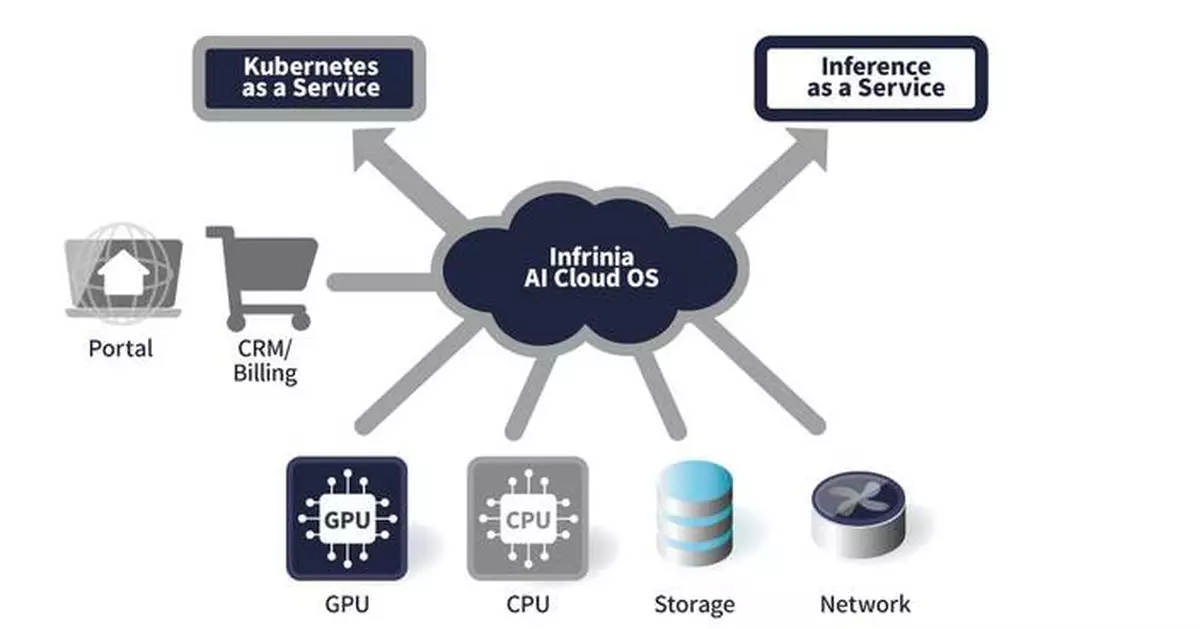
By deploying “Infrinia AI Cloud OS,” AI data center operators can build Kubernetes* 3 as a Service (KaaS) in a multi-tenant environment, and Inference as a Service (Inf-aaS) that provides Large Language Model inference capabilities via APIs, as part of their own GPU cloud services. In addition, the software stack is expected to reduce total cost of ownership (TCO) as well as operational burden compared with bespoke solutions or in-house development. This will enable the rapid delivery of GPU cloud services that efficiently and flexibly support the full AI lifecycle—from AI model training to inference.

SoftBank plans to deploy “Infrinia AI Cloud OS” initially within its own GPU cloud services. Furthermore, the Infrinia Team aims to expand deployment to overseas data centers and cloud environments with a view to global adoption.

Background of “Infrinia AI Cloud OS” Development

The demand for GPU-accelerated AI computing is expanding rapidly across the generative AI, autonomous robotics, simulation, drug discovery, and materials development fields. As a result, user needs and usage patterns for AI computing are becoming increasingly diverse and sophisticated, and requirements including the following have emerged:

Building and operating GPU cloud services that meet these requirements requires highly specialized expertise and involves complex operational tasks, placing a significant burden on GPU cloud service providers.

To address these challenges, the Infrinia Team developed “Infrinia AI Cloud OS,” a software stack that maximizes GPU performance while enabling the easy and rapid deployment and operation of advanced GPU cloud services.

Key Features of “Infrinia AI Cloud OS”

Kubernetes as a Service

Inference as a Service

Secure Multi-tenancy and High Operability

These key features allow AI data center operators with customer management systems, as well as enterprises offering GPU cloud services, to add advanced capabilities that enable efficient AI model training and inference while flexibly utilizing GPU resources, to their own GPU service offerings.

Junichi Miyakawa, President & CEO of SoftBank Corp., commented:
"To further deepen the utilization of AI as it evolves toward AI agents and Physical AI, SoftBank is launching a new GPU cloud service and software business to provide the essential capabilities required for the large-scale deployment of AI in society. At the core of this initiative is our in-house developed ‘Infrinia AI Cloud OS,’ a GPU cloud platform software designed for next-generation AI infrastructure that seamlessly connects AI data centers, enterprises, service providers and developers. The advancement of AI infrastructure requires not only physical components such as GPU servers and storage, but also software that integrates these resources and enables them to be delivered flexibly and at scale. Through Infrinia, SoftBank will play a central role in building the cloud foundation for the AI era and delivering sustainable value to society.”

For more information on “Infrinia AI Cloud OS,” please visit the website below:
https://infrinia.ai/

About SoftBank Corp.

Guided by the SoftBank Group’s corporate philosophy, “Information Revolution – Happiness for everyone,” SoftBank Corp. (TOKYO: 9434) operates telecommunications and IT businesses in Japan and globally. Building on its strong business foundation, SoftBank Corp. is expanding into non-telecom fields in line with its “Beyond Carrier” growth strategy while further growing its telecom business by harnessing the power of 5G/6G, IoT, Digital Twin and Non-Terrestrial Network (NTN) solutions, including High Altitude Platform Station (HAPS)-based stratospheric telecommunications. While constructing AI data centers and developing homegrown LLMs specialized for the Japanese language, SoftBank is integrating AI with radio access networks (AI-RAN), with the aim of becoming a provider of next-generation social infrastructure. To learn more, please visit https://www.softbank.jp/en/corp/

*1: The Infrinia Team is an Infrastructure Architecture & Systems Team established within SB Telecom America, Corp., a wholly owned subsidiary of SoftBank Corp., as part of the company’s broader initiative to advance next-generation AI infrastructure. The Infrinia Team is based in Sunnyvale, California USA.
*2: A software stack is a set of software components and functions used together to build and operate systems and applications.
*3: Kubernetes is an open-source system for automating the deployment and scaling of applications and for managing containerized applications.
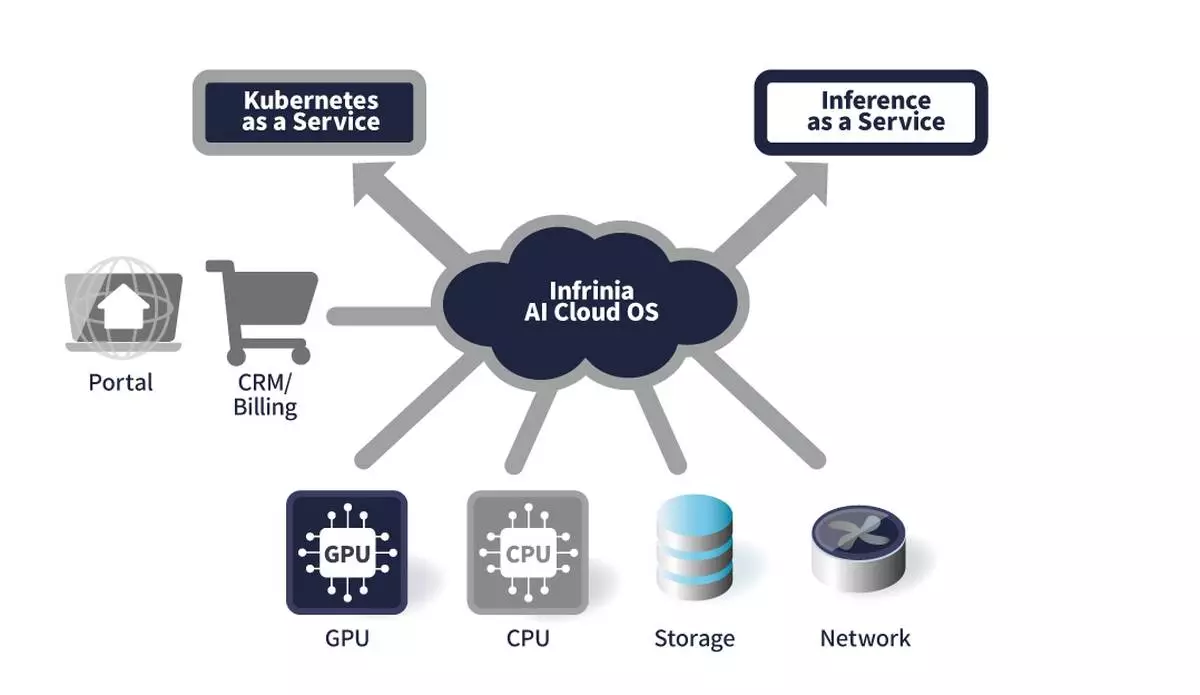
Image of "Infrinia AI Cloud OS"
Image of "Infrinia AI Cloud OS"

SEOUL, South Korea (AP) — French President Emmanuel Macron and South Korean President Lee Jae Myung agreed Friday to work together to help reopen the Strait of Hormuz and ease global economic uncertainties caused by the war in the Middle East.

Their summit in Seoul came as U.S. President Donald Trump slammed allies for not supporting the U.S. and Israeli war against Iran. Macron was making his first visit to South Korea since taking office in 2017, as part of an Asian tour that already has taken him to Japan.

Macron told Lee at the start of the meeting that the two countries can play a role in helping to stabilize the situation in the Middle East, including Iran’s chokehold on the Strait of Hormuz, which has unleashed shock on global energy markets.

At a joint televised briefing afterward, Macron underscored the need for France and South Korea to cooperate to help reopen the strait and deescalate Middle East animosities, while Lee said the two affirmed “their resolves to cooperate to secure the safe shipping route in the Strait of Hormuz.”

The two leaders did not take questions and did not elaborate on how they would help reopen the strait — the narrow waterway between Iran and Oman through which about one-fifth of the world’s oil usually passes.

“We need to clearly define, at the international level, the conditions for a process to ease the crisis and conflict in the Middle East,” Macron said. “We need to ensure that the Strait of Hormuz is reopened.”

Lee said he and Macron agreed to expand cooperation in technology, energy and other areas. South Korean and French officials also signed agreements to cooperate on nuclear fuel supply chains, jointly invest in an offshore wind project in southern South Korea and to collaborate on critical minerals. South Korea has moved to increase output at its nuclear reactors to mitigate the energy crunch and Lee has also called for a faster transition to renewable energy, saying the war has exposed the country’s heavy reliance on fossil fuel imports.

Macron’s Asia trip comes as Trump has ramped up his frustration with allies. In a speech Wednesday, Trump said Americans “don’t need” the strait but the countries who do “must grab it and cherish it.”

In an earlier Easter event at the White House, Trump called for his allies in Asia and China to get involved in reopening the waterway.

“Let South Korea, you know, we only have 45,000 soldiers in harm’s way over there, right next to a nuclear force — let South Korea do it,” Trump said. “Let Japan do it. They get 90% of their oil from the strait. Let China do it.”

The United States stations about 28,000 troops in South Korea, not the 45,000 stated by Trump. The U.S. troops’ deployment in South Korea is meant to deter potential aggressions from North Korea.

Macron has said reopening the Strait of Hormuz through a military operation is unrealistic.

South Korean officials have said they are in contact with Washington on the issue and that Seoul isn’t considering paying Iran transit fees to secure fuel shipments through the strait.

French President Emmanuel Macron, front left, his wife Brigitte Macron, back center, and South Korean President Lee Jae Myung, front right, and his wife Kim Hea Kyung, right, attend the welcome ceremony at the presidential Blue House in Seoul Friday, April 3, 2026. (Jung Yeon-je /Pool Photo via AP)

French President Emmanuel Macron, front left, his wife Brigitte Macron, back center, and South Korean President Lee Jae Myung, front right, and his wife Kim Hea Kyung, right, attend the welcome ceremony at the presidential Blue House in Seoul Friday, April 3, 2026. (Jung Yeon-je /Pool Photo via AP)

French President Emmanuel Macron, center, his wife Brigitte Macron, left, and South Korean President Lee Jae Myung, right, and his wife Kim Hea Kyung, second left, attend the welcome ceremony at the presidential Blue House in Seoul Friday, April 3, 2026. (Jung Yeon-je /Pool Photo via AP)

French President Emmanuel Macron, center, his wife Brigitte Macron, left, and South Korean President Lee Jae Myung, right, and his wife Kim Hea Kyung, second left, attend the welcome ceremony at the presidential Blue House in Seoul Friday, April 3, 2026. (Jung Yeon-je /Pool Photo via AP)

French President Emmanuel Macron, second left, talks with South Korean President Lee Jae Myung, second right, during their meeting at the Blue House in Seoul, South Korea, Friday, April 3, 2026. (Jung Yeon-je/Pool Photo via AP)

French President Emmanuel Macron, second left, talks with South Korean President Lee Jae Myung, second right, during their meeting at the Blue House in Seoul, South Korea, Friday, April 3, 2026. (Jung Yeon-je/Pool Photo via AP)

French President Emmanuel Macron shakes hands with South Korean President Lee Jae Myung during their meeting at the Blue House in Seoul, South Korea, Friday, April 3, 2026. (Jung Yeon-je/Pool Photo via AP)

French President Emmanuel Macron shakes hands with South Korean President Lee Jae Myung during their meeting at the Blue House in Seoul, South Korea, Friday, April 3, 2026. (Jung Yeon-je/Pool Photo via AP)

Recommended Articles