Skip to Content Facebook Feature Image

Fukushima nuclear plant operator restarts reactor at another plant, reviving safety concerns

News

Fukushima nuclear plant operator restarts reactor at another plant, reviving safety concerns
News

News

Fukushima nuclear plant operator restarts reactor at another plant, reviving safety concerns

2026-01-21 18:47 Last Updated At:19:00

TOKYO (AP) — The world’s largest nuclear power plant restarted Wednesday in north-central Japan for the first time since the 2011 Fukushima nuclear meltdown, as resource-poor Japan accelerates atomic power use to meet soaring electricity needs.

The first steps in energy production at the No. 6 reactor of the Kashiwazaki-Kariwa nuclear power plant are important because the operator is Tokyo Electric Power Company Holdings, the same utility that runs the ruined Fukushima Daiichi plant. TEPCO's past safety issues at Fukushima have led to public worries about operations at the Kashiwazaki-Kariwa plant, which also sits in an isolated, quake-prone region.

TEPCO said staff at the No. 6 reactor’s control room turned on a button Wednesday evening to start a nuclear chain reaction toward achieving criticality — a stage when a reactor reaches a self-sustaining nuclear reaction. The move was delayed a day due to a faulty alarm setting found over the weekend.

All seven reactors at Kashiwazaki-Kariwa have been dormant since a year after the Fukushima Daiichi plant on Japan’s northeastern coast was hit by a massive quake and tsunami in March 2011 and suffered meltdowns that contaminated the surrounding land with radioactive fallout so severe that some areas are still unlivable.

TEPCO is still trying to recover from the hit to its image, even as it works on a cleanup at Fukushima Daiichi that's estimated to cost 22 trillion yen ($139 billion). Government and independent investigations blamed the Fukushima debacle on TEPCO's bad safety culture and criticized it for collusion with safety authorities.

Fourteen other nuclear reactors have restarted across Japan since 2011, but this is the first TEPCO-run unit to resume production.

Residents near the plant welcome the potential economic and employment benefits but worry about nuclear safety and the feasibility of evacuation plans, especially after a major quake in the nearby Noto region two years ago.

A restart of the No. 6 reactor at the Kashiwazaki-Kariwa plant, about 220 kilometers (135 miles) northwest of Tokyo, could generate an additional 1.35 million kilowatts of electricity, enough to power more than 1 million households in the capital region.

All seven units were taken offline in 2012 as part of nationwide safety shutdowns after the Fukushima disaster, though they were unaffected by that quake and tsunami.

The Kashiwazaki-Kariwa plant was partially damaged in a 2007 earthquake, causing safety worries and distrust among locals. TEPCO responded by installing a quake-resistant command center at the compound in 2009.

No. 6 was one of the two reactors that had cleared safety tests in 2017, but faced an operational ban by the Nuclear Regulation Authority over serious safeguarding problems found in 2021. It finally got a greenlight in 2023.

The restart follows revelations of seismic data falsification by another utility during safety screenings of one of its reactors. That has angered regulation officials and shaken public confidence.

Under a government draft evacuation plan, about 18,600 residents within a 5-kilometer (3-mile) radius of the plant would need to evacuate if there were radiation leak worries, while about 400,000 others in a wider zone would be asked to stay indoors.

The 2024 Noto quake caused only moderate damage to two idled reactors at the nearby Shika nuclear power plant. But the earthquake severely damaged roads and houses, making many places inaccessible and trapping thousands on the narrow peninsula.

Nuclear safety officials say that such damage could make existing evacuation plans largely unworkable.

Mie Kuwabara, who lives near Kashiwazaki and was at a recent protest outside TEPCO’s Tokyo headquarters, said information provided by the utility seems “one-sided ... and not enough” for residents.

Japan has reversed its post-Fukushima nuclear phaseout policy, citing the need for a stable and affordable energy supply, and the rising cost of fossil fuel imports after Russia’s war on Ukraine and other global conflicts.

Prime Minister Sanae Takaichi wants to maximize nuclear energy use by accelerating restarts of workable and safe reactors, extending their operational lifespan and building replacements as well as new reactors while developing next-generation models. She also wants to lower the use of Chinese-made solar panels.

Despite its population decrease, Japan expects growing energy needs from power-hungry AI data centers. Under new decarbonization targets released last year, Japan aims to more than double the share of nuclear power in the country’s energy mix to 20% by 2040.

The Kansai Electric Power Co. last year announced plans to start surveys toward constructing a new reactor for western Japan; this would be the first new unit since the Fukushima disaster.

Since the Fukushima disaster, TEPCO has reinforced seawalls and added other safety features at Kashiwazaki-Kariwa.

Workers have made reactor buildings and other key facilities watertight, installed a reservoir for emergency water injection, mobilized a mobile cooling unit, and constructed filtered venting systems that can largely remove radioactive particles when gasses need to be released to prevent reactor damage.

TEPCO has spent more than 1 trillion yen ($6.33 billion) on safety measures.

When the restarted Kashiwazaki-Kariwa No. 6 reactor reaches 50% of its power output capacity, in about a week, it will be temporarily shut down for inspection, likely from late January to early February.

The reactor will then be reactivated for a full startup and commercial power generation in late February, TEPCO said.

Associated Press video journalist Mayuko Ono contributed to this report.
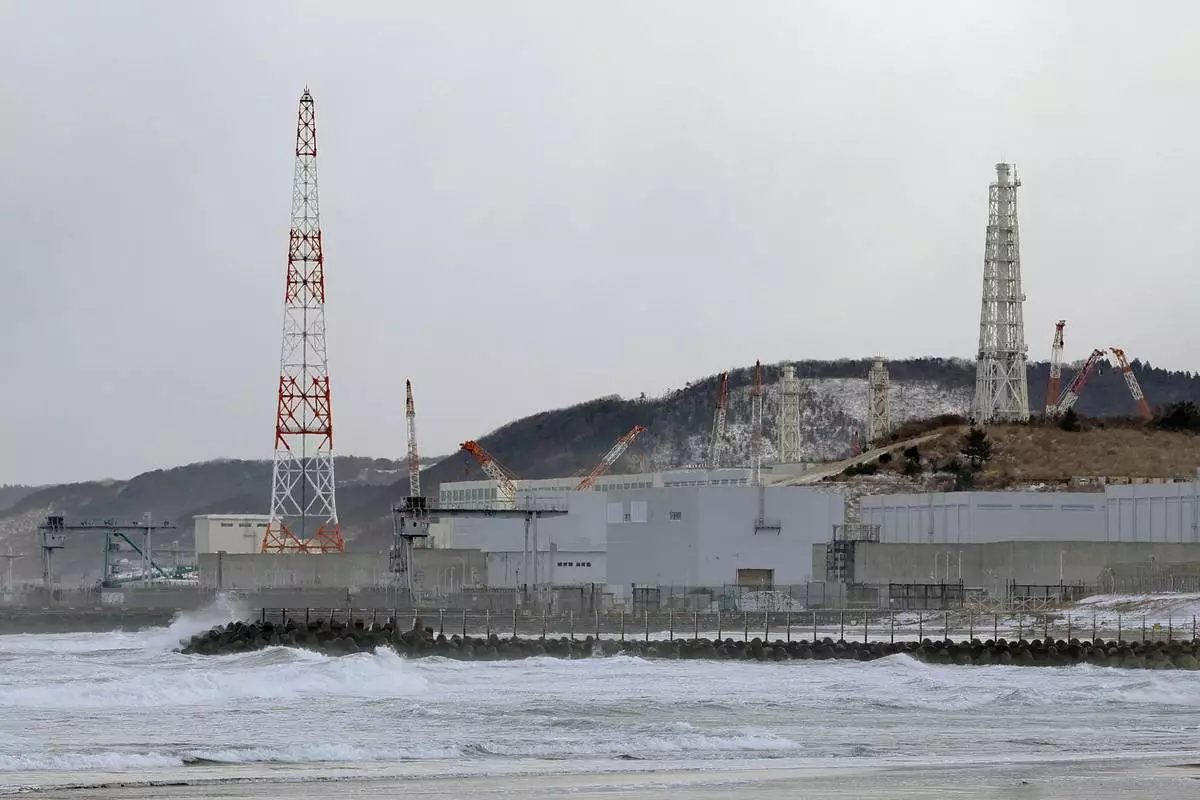
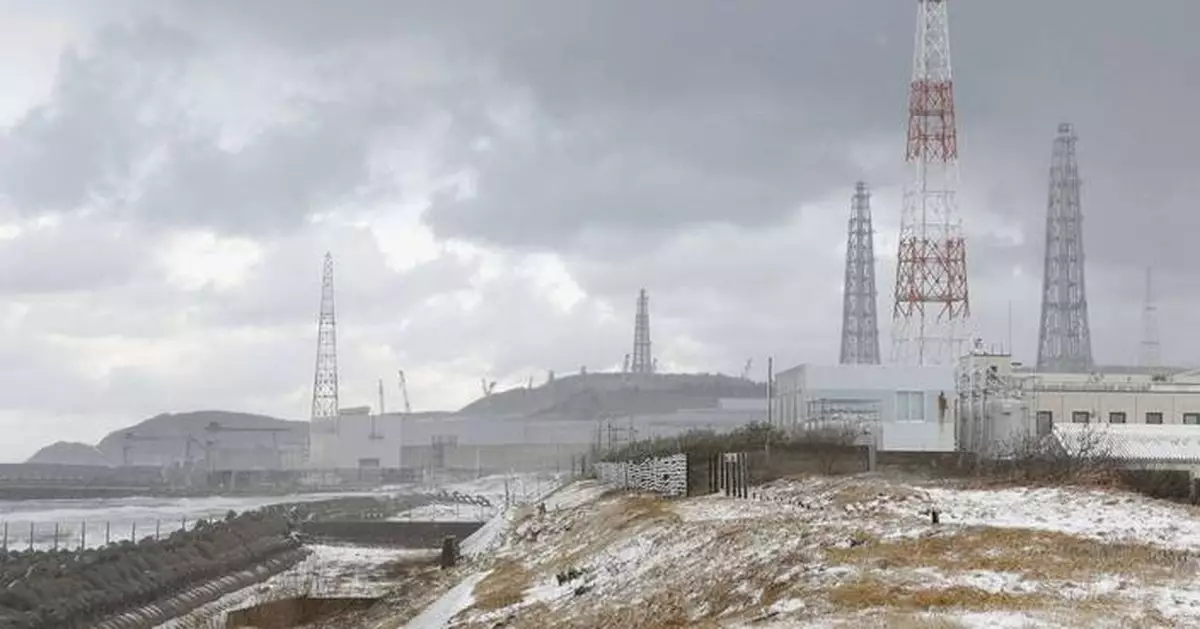
The Tokyo Electric Power Company Holdings Inc.'s Kashiwazaki-Kariwa nuclear power plant is seen in Kashiwazaki, Niigata prefecture, Japan, Wednesday, Jan. 21, 2026. (Chiaki Ueda/Kyodo News via AP)
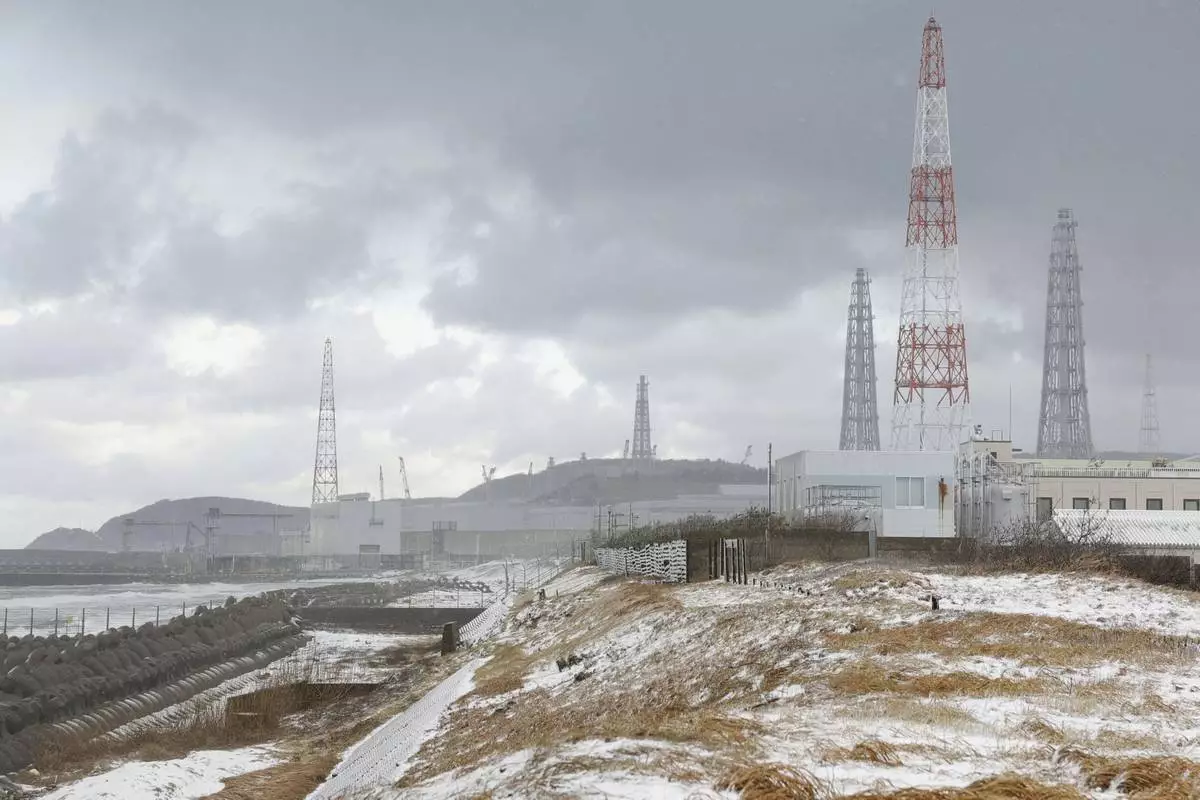
The Tokyo Electric Power Company Holdings Inc.'s Kashiwazaki-Kariwa nuclear power plant is seen in Kashiwazaki, Niigata prefecture, Japan, Wednesday, Jan. 21, 2026. (Chiaki Ueda/Kyodo News via AP)
The Tokyo Electric Power Company Holdings Inc.'s Kashiwazaki-Kariwa nuclear power plant is seen in Kashiwazaki, Niigata prefecture, Japan, Wednesday, Jan. 21, 2026. (Chiaki Ueda/Kyodo News via AP)
The Tokyo Electric Power Company Holdings Inc.'s Kashiwazaki-Kariwa nuclear power plant is seen in Kashiwazaki, Niigata prefecture, Japan, Wednesday, Jan. 21, 2026. (Chiaki Ueda/Kyodo News via AP)

BUFFALO, N.Y. (AP) — In two decades of kicking in doors for the U.S. Drug Enforcement Administration, Joseph Bongiovanni often took on the risks of being the “lead breacher," meaning he was the first person into the room.

On Wednesday, he felt a familiar uncertainty awaiting sentencing for using his DEA badge to protect childhood friends who became prolific drug traffickers in Buffalo, New York.

“I never knew what was on the other side of that door — that fear is what I feel today,” Bongiovanni, 61, told a federal judge, pounding the defense table as his face reddened with emotion. “I've always been innocent. I loved that job.”

U.S. District Court Judge Lawrence J. Vilardo sentenced the disgraced lawman to five years in federal prison on a string of corruption counts. The punishment was significantly less than the 15 years prosecutors sought even after a jury acquitted Bongiovanni of the most serious charges he faced, including an allegation he pocketed $250,000 in bribes from the Mafia.

The judge said the sentence reflected the complexity of the mixed verdicts following two lengthy trials and the almost Jekyll-and-Hyde nature of Bongiovanni's career, in which the lawman racked up enough front-page accolades to fill a trophy case.

Bongiovanni once hurtled into a burning apartment building to evacuate residents through billowing smoke. He locked up drug dealers, including the first ever prosecuted in the region for causing a fatal overdose.

“There are two completely polar opposite versions of the facts and polar opposite versions of the defendant,” Vilardo said, assuring prosecutors five years behind bars would pose a considerable hardship to someone who has never been to prison.

Defense attorney Parker MacKay noted the judge had acknowledged Bongiovanni as a “beacon” of the Buffalo community. The government's request for a 15-year sentence, he added, was “completely unmoored to the nature of the convictions.”

“As Mr. Bongiovanni told the judge at sentencing, he is innocent, and we look forward to continuing to work with him to prove that,” MacKay told The Associated Press.

A jury in 2024 convicted Bongiovanni of four counts of obstruction of justice, counts of conspiracy to defraud the United States, conspiracy to distribute controlled substances and making false statements to law enforcement.

Prosecutors said Bongiovanni's “little dark secret” caused immeasurable damage over 11 years. They likened him to Jose Irizarry, a disgraced former DEA agent serving a 12-year federal sentence after confessing to laundering money for Colombian drug cartels.

Bongiovanni upheld an oath not to the DEA, they argued, but to organized crime figures in the tight-knit Italian American community of his North Buffalo upbringing. During sentencing, Bongiovanni’s family dissolved into tears on the front row of the packed courtroom in downtown Buffalo.

Prosecutors said Bongiovanni's corruption involved as much inaction as calculated coverup. They pointed to a turning point in 2008 when Bongiovanni could have acted on intelligence about traffickers he knew whose operation would evolve into a large-scale organization with links to California, Vancouver, and New York City.

He also was accused of authoring bogus DEA reports, stealing sensitive files, throwing off colleagues, outing confidential informants, covering for a sex-trafficking strip club and helping a high school English teacher keep his marijuana-growing side hustle. Prosecutors said he brazenly urged colleagues to spend less time investigating Italians and focus instead on Black and Hispanic people.

“His conduct shook the foundation of law enforcement — and this community — to its core,” Assistant U.S. Attorney Joseph Tripi told the judge. “That's what a betrayal is.”

The ex-agent's downfall came amid a sex-trafficking prosecution that took sensational turns, including an implicated judge who killed himself after the FBI raided his home, law enforcement dragging a pond in search of an overdose victim and dead rats planted outside the home of a government witness who prosecutors allege was later killed by a fatal dose of fentanyl.

It also involved the Pharoah’s Gentlemen’s Club outside Buffalo. Bongiovanni was childhood friends with the strip club’s owner, Peter Gerace Jr., who authorities say has close ties to both the Buffalo Mafia and the violent Outlaws Motorcycle Club. A separate jury convicted Gerace of a sex trafficking conspiracy and of paying bribes to Bongiovanni.

The prosecution also cast a harsh light on the DEA after a string of corruption scandals prompted at least 17 agents brought up on federal charges over the past decade. Last month, prosecutors charged another former agent with conspiring to launder millions of dollars and obtain military-grade firearms and explosives for a Mexican drug cartel.

Frank Tarentino, the DEA’s northeast associate chief of operations, said Bongiovanni’s sentence “sends a powerful message that those who betray their badge will be held accountable to the fullest extent of the law.”

Joseph Bongiovanni, center, leaves federal court with his wife, Lindsay Bongiovanni, right, after being sentenced to 5 years in prison on corruption charges, Wednesday, Jan. 21, 2026, in Buffalo, N.Y. (AP Photo/Jim Mustian)

Joseph Bongiovanni, center, leaves federal court with his wife, Lindsay Bongiovanni, right, after being sentenced to 5 years in prison on corruption charges, Wednesday, Jan. 21, 2026, in Buffalo, N.Y. (AP Photo/Jim Mustian)

Joseph Bongiovanni, left, leaves federal court with his wife, Lindsay Bongiovanni, after being sentenced to 5 years in prison on corruption charges, Wednesday, Jan. 21, 2026, in Buffalo, N.Y. (AP Photo/Jim Mustian)

Joseph Bongiovanni, left, leaves federal court with his wife, Lindsay Bongiovanni, after being sentenced to 5 years in prison on corruption charges, Wednesday, Jan. 21, 2026, in Buffalo, N.Y. (AP Photo/Jim Mustian)

Recommended Articles