MILWAUKEE--(BUSINESS WIRE)--Jan 21, 2026--
Rockwell Automation, Inc. (NYSE:ROK), the world’s largest company dedicated to industrial automation and digital transformation, today announced it has reaffirmed its founding partnership with the University of Wisconsin-Milwaukee’s Connected Systems Institute with a $1 million commitment over the next five years, along with continued strategic contributions.
This press release features multimedia. View the full release here: https://www.businesswire.com/news/home/20260121077926/en/
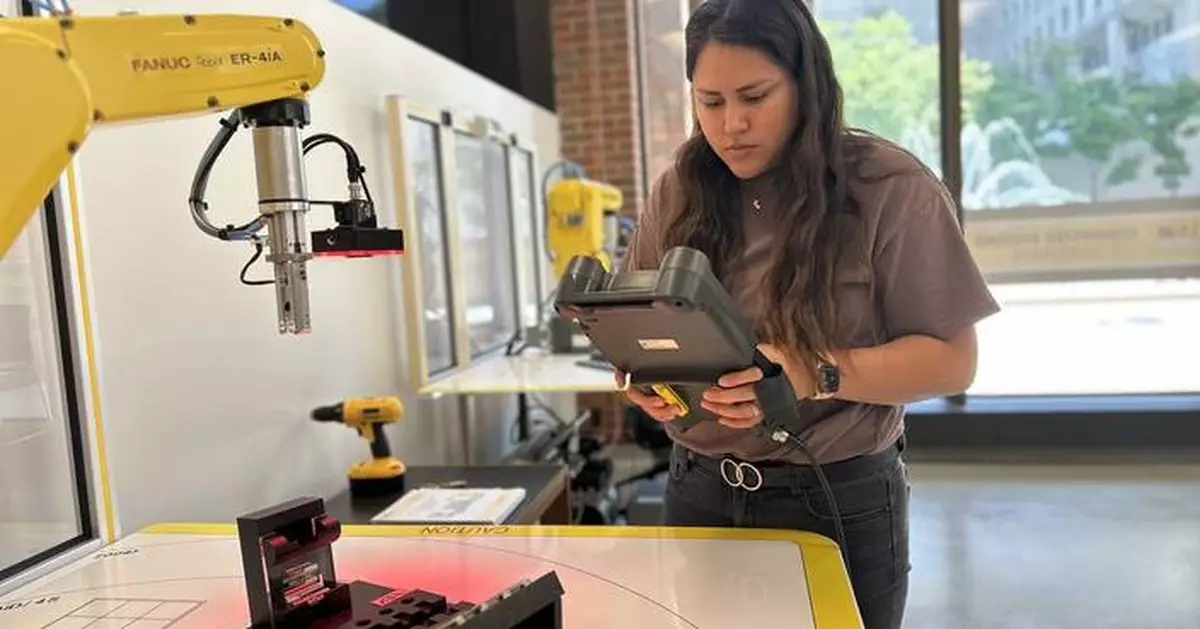
Rockwell Automation smart factory at the Connected Systems Institute.
Rockwell, a founding member of the CSI, has invested $5 million since 2017, including hardware, software and engineering expertise. This renewed collaboration reflects a shared vision: empowering the future manufacturing workforce and driving innovation through education and industry partnerships.
Preparing talent for the future of manufacturing
The commitment comes as Rockwell plans a new one-million-square-foot manufacturing site in Southeast Wisconsin, part of a $2 billion investment in plants, digital infrastructure, and talent. With onshoring and technology advancements accelerating, the need for skilled talent has never been greater.
“As a global leader in industrial automation and digital transformation, Rockwell is committed to shaping the future of manufacturing,” said Tessa Myers, senior vice president, Intelligent Devices, Rockwell Automation, and Executive Sponsor for the relationship with the University of Wisconsin-Milwaukee. “By combining cutting-edge technology with hands-on learning, CSI is developing the talent, expertise, and solutions to lead the workforce of tomorrow.”
The future of industrial operations depends on systems that adapt and learn, powered by AI, robotics, and software-defined automation. These technologies succeed only when paired with skilled people ready to lead the transformation. Scaling digital transformation starts with people.
“Southeast Wisconsin has long been home to a large manufacturing ecosystem that embraces technology and innovation,” Myers said. “This is the perfect place to develop talent and grow the skilled workforce because we have the partnerships and mindset to support it.”
Driving innovation through partnerships
The CSI focuses on the industrial internet of things (IIoT), which uses sensors to gather data from equipment, machines, and manufactured products through secure data networks. It brings together UWM’s College of Engineering & Applied Science and its Lubar College of Business, other academic units and other Universities of Wisconsin institutions. In June, the CSI became home to the Microsoft AI Co-Innovation Lab, the first of its kind in higher education and the first dedicated to manufacturing.
“Industry partnerships like this are essential to the evolution of higher education,” said UWM Chancellor Tom Gibson. “Collaborations with leading companies like Rockwell Automation ensure that our students gain hands-on experience with advanced technologies and real-world applications. These partnerships strengthen our ability to deliver graduates who are ready to lead in an increasingly connected and automated world.”
A track record of success
Since its founding, CSI has significantly expanded its impact on student engagement and industry collaboration, and momentum is growing. More than 500 students participated in CSI programs in the past year, including multi-day hackathons, hands-on projects using CSI’s advanced equipment, and courses taught at CSI. UWM’s Advanced Controls engineering course capacity increased 30% with new Rockwell training stations and instruction by Rockwell engineers. The CSI also supported the launch of a Master of Science program in Connected Systems Engineering, including a CSI-based capstone project. These offerings complement classroom learning and prepare students for real-world challenges.
Over the past year, CSI students completed 15 industry-directed projects in advanced manufacturing in partnership with leading companies including Rockwell Automation, Microsoft, and several other Wisconsin manufacturers. These experiences foster meaningful connections between education and industry that strengthen the talent pipeline and support regional manufacturers.
About Rockwell Automation
Rockwell Automation, Inc. (NYSE: ROK), is a global leader in industrial automation and digital transformation. We connect the imaginations of people with the potential of technology to expand what is humanly possible, making the world more productive and more sustainable. Headquartered in Milwaukee, Wisconsin, Rockwell Automation employs approximately 26,000 problem solvers dedicated to our customers in more than 100 countries as of fiscal year end 2025. To learn more about how we are bringing the Connected Enterprise to life across industrial enterprises, visit www.rockwellautomation.com.
About UWM
The University of Wisconsin-Milwaukee has an ambitious mission as both a top-tier research university and an access institution, striving to ensure that students have equitable opportunities to earn a college degree. UWM educates a diverse student body of more than 23,000 students from 83 countries. About 43% of its undergraduates are first-generation college students. Its unique and top-rated programs include Wisconsin’s only accredited schools of architecture and public health, the only North American school dedicated solely to freshwater sciences and a film program ranked among the top 50 in the world. It has the largest and top-rated online education program in Wisconsin. UW-Milwaukee partners with leading companies to conduct joint research, promote entrepreneurship, provide student internships and serve as an economic engine for southeastern Wisconsin. The Princeton Review named UW-Milwaukee a 2026 “Best Midwestern” university based on overall academic excellence and student reviews.
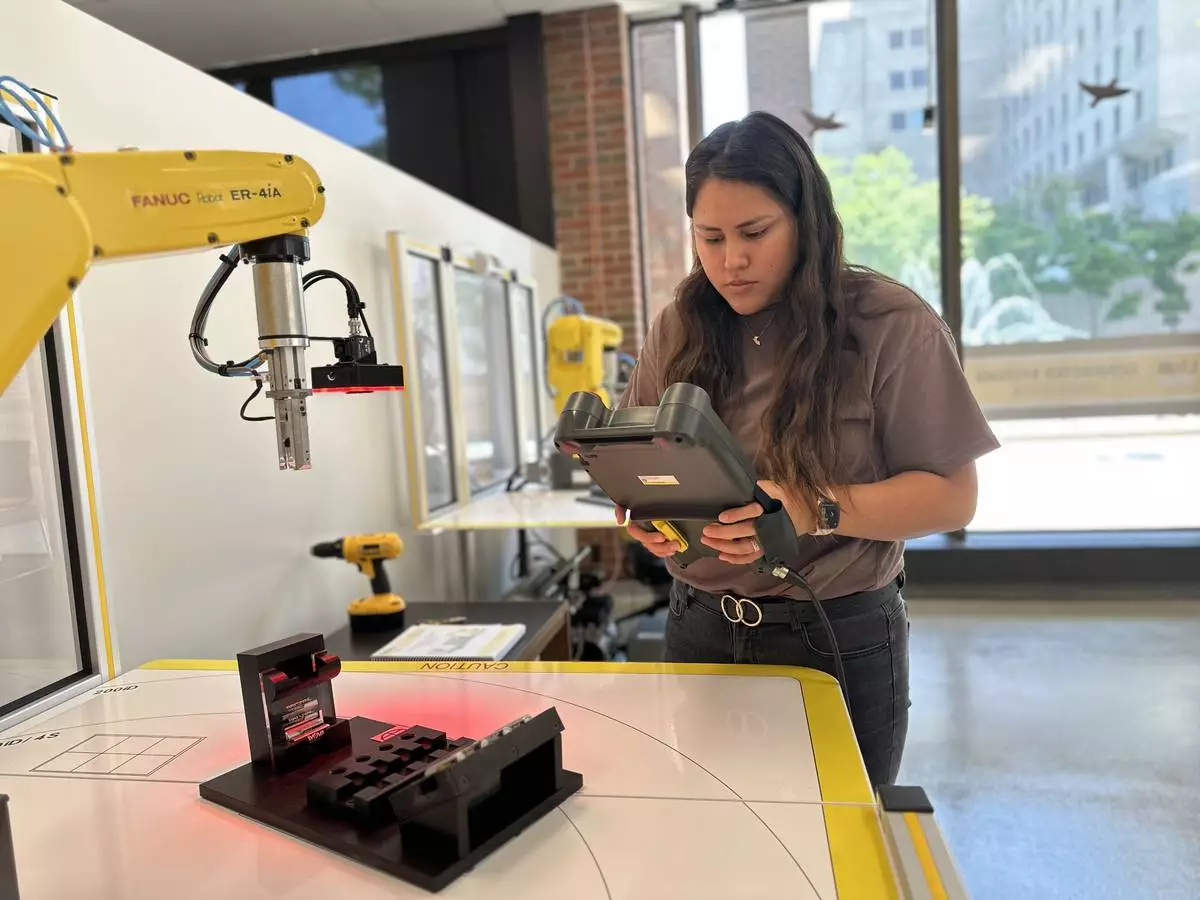
Senior mechanical engineering major and CSI undergraduate researcher Daniela Centeno Gutierrez programs FANUC robots at CSI.