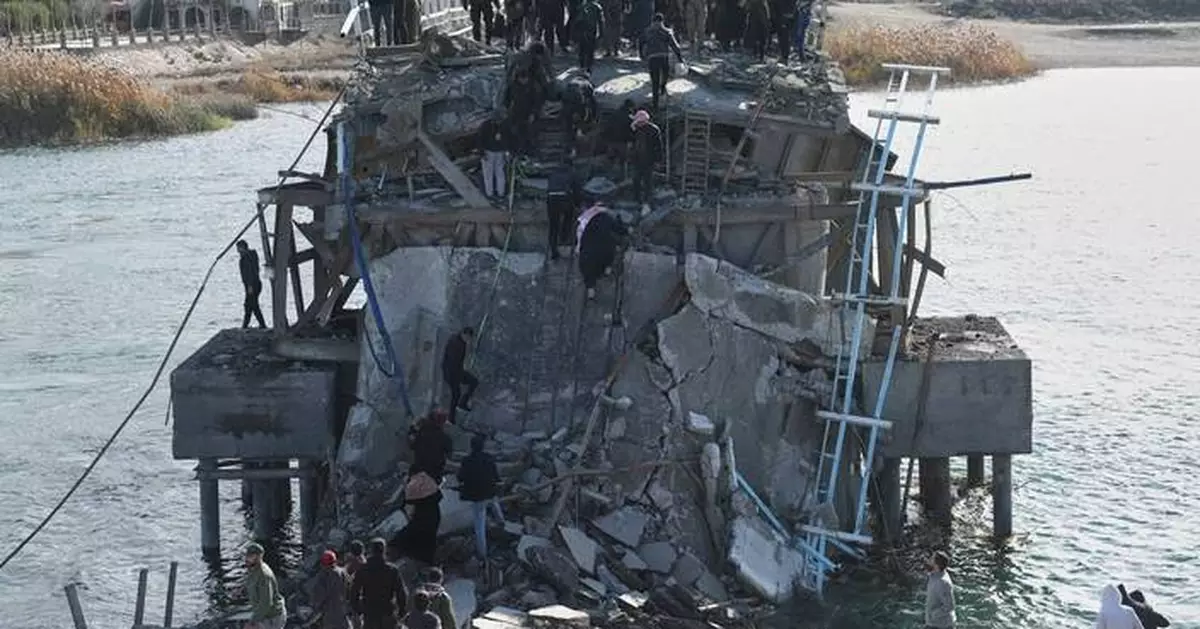
BEIRUT (AP) — Two tumultuous weeks saw the fall from power in Syria of the Kurdish-led force that was once the main U.S. partner there, as Washington shifts its backing to the country's nascent government.
Analysts say the Syrian Democratic Forces miscalculated, taking a hard stance in negotiations with the new leaders in Damascus on the assumption that if a military conflict erupted between them, Washington would support the SDF as it had for years when they battled the Islamic State group.
Click to Gallery
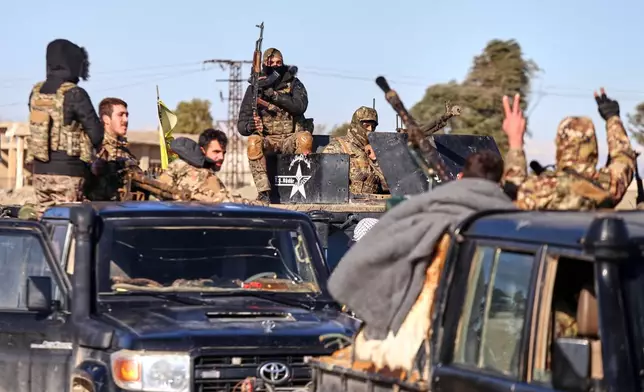
Soldiers of the Kurdish-led, U.S.-backed Syrian Democratic Forces (SDF) deploy with armoured military vehicles to secure roads leading to Gweiran Prison which houses men accused of being an Islamic State (ISIS) fighters in Hassakeh, northeastern Syria, Monday, Jan. 19, 2026. (AP Photo/Baderkhan Ahmad)
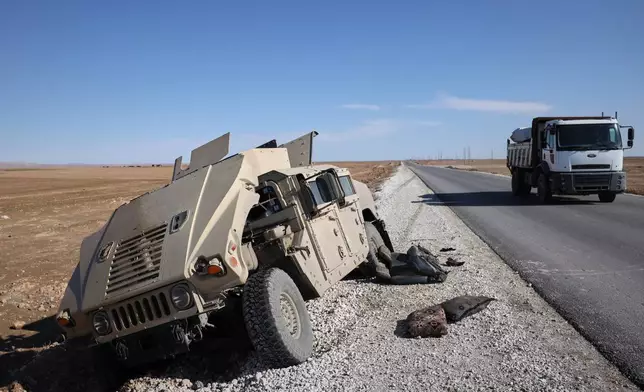
A truck drives past a damaged Humvee abandoned by retreating Syrian Democratic Forces (SDF) along a road between government-controlled Raqqa and SDF-controlled Hassakeh in northeastern Syria, Tuesday, Jan. 20, 2026. (AP Photo/Omar Albam)
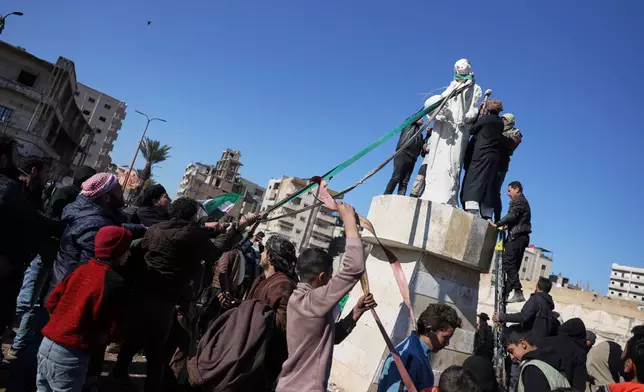
Local supporters of the Syrian government deface and attempt to topple a sculpture depicting a Kurdish woman a day after Syrian government troops took control of the area from the Syrian Democratic Forces (SDF), in Raqqa, northeastern Syria, Monday, Jan. 19, 2026. (AP Photo/Omar Albam)
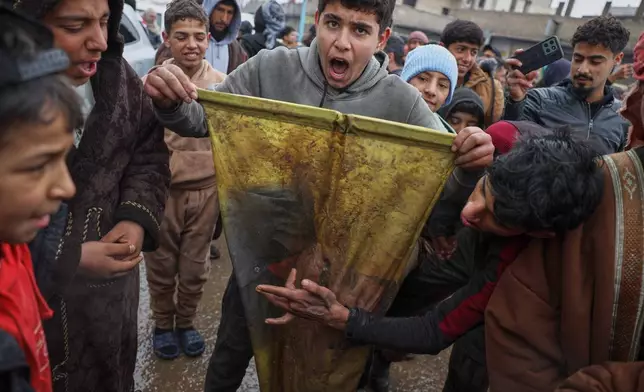
Local youth tear up an SDF flag as they celebrate after Syrian government troops took control of the town from U.S.-backed Syrian Democratic Forces (SDF) during an ongoing push against Kurdish-led forces, in Tabqa, eastern Syria, Sunday, Jan. 18, 2026. (AP Photo/Omar Albam)
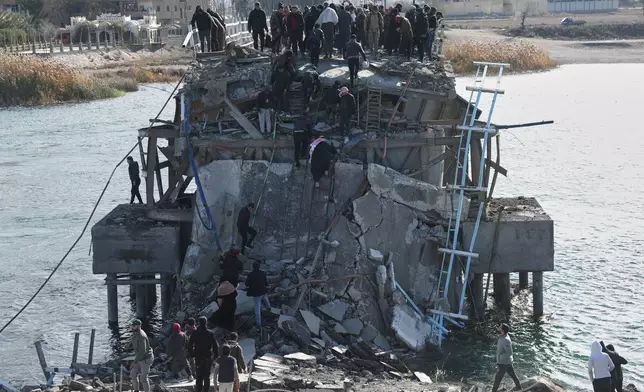
People climb over the damaged Al-Rashid Bridge, with some crossing on foot, after it was destroyed as Kurdish-led Syrian Democratic Forces withdrew, a day after Syrian government forces took control of the area on the outskirts of Raqqa, northeastern Syria, Monday, Jan. 19, 2026. (AP Photo/Ghaith Alsayed)
Instead, the Kurdish-led force lost most of its territory in northeast Syria to a government offensive after intense clashes erupted in the northern city of Aleppo on Jan. 6. Washington did not intervene militarily and focused on mediating a ceasefire.
By Wednesday, the latest ceasefire was holding, and the SDF had signed onto a deal that would effectively dissolve it.
Elham Ahmad, a senior official with the de facto autonomous administration in the Kurdish-led northeast, expressed surprise to journalists Tuesday that its calls for intervention by the U.S.-led coalition against IS “have gone unanswered.”
Experts had seen it coming. "It’s been very clear for months that the U.S. views Damascus as a potential strategic partner," said Noah Bonsey, senior advisor on Syria with the International Crisis Group.
U.S. President Donald Trump has strongly backed the government of interim President Ahmad al-Sharaa, a former insurgent leader, since his forces ousted former President Bashar Assad in December 2024 following years of civil war. Under al-Sharaa, Syria has joined the global coalition against IS.
U.S. envoy to Syria Tom Barrack in a blunt statement Tuesday said the SDF’s role as Syria's primary anti-IS force “has largely expired" since the new government is "both willing and positioned to take over security responsibilities.” The U.S. is not interested in "prolonging a separate SDF role,” he said.
On Wednesday, the U.S. military said it started transferring IS detainees from northeastern Syria to secure facilities in Iraq.
As al-Sharaa sought to pull the country together after 14 years of civil war, he and SDF leader Mazloum Abdi in March 2025 agreed that the SDF's tens of thousands of fighters would be integrated into the new army. The government would take over key institutions in northeast Syria, including border crossings, oil fields and detention centers housing thousands of suspected IS members.
But for months, U.S.-mediated negotiations to implement the deal stalled.
Syrian government officials who spoke to The Associated Press blamed fractured SDF leadership and their maximalist demands.
Syria’s ambassador to the United Nations, Ibrahim Olabi, said Abdi on several occasions agreed to proposals that the group’s more hardline leaders then rejected.
“Then he stopped agreeing to things and started saying, ‘I have to go back’ (to consult with other officials), which obviously didn’t work with us and the Americans," Olabi said. “We wanted to spend a week in one room and get everything done.”
A senior Syrian government official who spoke on condition of anonymity because he was not authorized to comment publicly said Barrack slammed his hand on the table during one negotiating session and demanded that Abdi clarify whether he wanted to continue with the agreement. Barrack declined to comment via a spokesperson.
Ahmad with the Kurdish-led administration accused Damascus officials of dodging meetings and said those that occurred "were only possible because of the Americans pushing Damascus to come and join.”
Talks were always likely to be thorny. The SDF's Kurdish base was wary of the new government, particularly after outbreaks of sectarian violence targeting other minority groups in Syria.
There was “a major disagreement over a huge substantive set of questions around the future of Syrian governance, how decentralized or centralized it should be,” Bonsey said.
Meghan Bodette, director of research at the pro-SDF Kurdish Peace Institute think tank, said the impasse came down to an “astronomical” gulf in political outlook.
“Damascus comes from an Islamist background and sought to create a centralized, Sunni Arab-dominated state, while the (Kurdish-led authorities) wanted to keep maximum local autonomy" through decentralization and institutionalizing minority rights, she said.
Much debate focused on how the SDF forces would be integrated into the new army.
The senior Syrian official said SDF leaders at one point proposed integrating Syrian government military groups into their forces instead.
He said the government rejected that but agreed to keep the SDF unified in three battalions in northeastern Syria along with a border brigade, a women’s brigade and a special forces brigade.
In return, the government demanded that non-SDF military forces have freedom of movement in the northeast and that SDF divisions would report to the Ministry of Defense and not move without orders. The senior official said Abdi asked to be named deputy minister of defense, and the government agreed.
At the last negotiation session in early January, however, SDF commander Sipan Hamo — seen by Damascus as part of the hardline faction — demanded that the northeast brigades and battalions report to a person chosen by the SDF and that other forces could only enter the region in small patrols and with SDF permission, the senior official said. The government rejected that.
SDF officials did not respond to request for comment on details of negotiations.
Days after that session, clashes erupted in Aleppo.
Olabi, the ambassador, said the Syrian military's success in limiting civilian casualties in Aleppo was another key to the diplomatic breakthrough with the SDF.
Syria's military leadership appeared to have learned lessons from confrontations elsewhere in which government-affiliated fighters carried out sectarian revenge attacks on civilians.
In Aleppo, the military opened “humanitarian corridors” so civilians could flee.
“If Aleppo had gone wrong, I think we would be in a very different place,” Olabi said.
After Syrian forces captured the Arab-majority oil-rich provinces of Raqqa and Deir al-Zour from the SDF, the two sides announced a deal. SDF would retain a presence only in Hassakeh province, the country's Kurdish heartland. And SDF fighters would be integrated into the army as individuals.
Bonsey said the SDF had been warned during negotiations that their effort to maintain their dominant role in the northeast conflicted with geopolitical shifts.
They ended up accepting a deal that is “much worse” than what was on offer just two weeks ago, he said.
Associated Press journalist Hogir Abdo in Qamishli, Syria, contributed to this report.
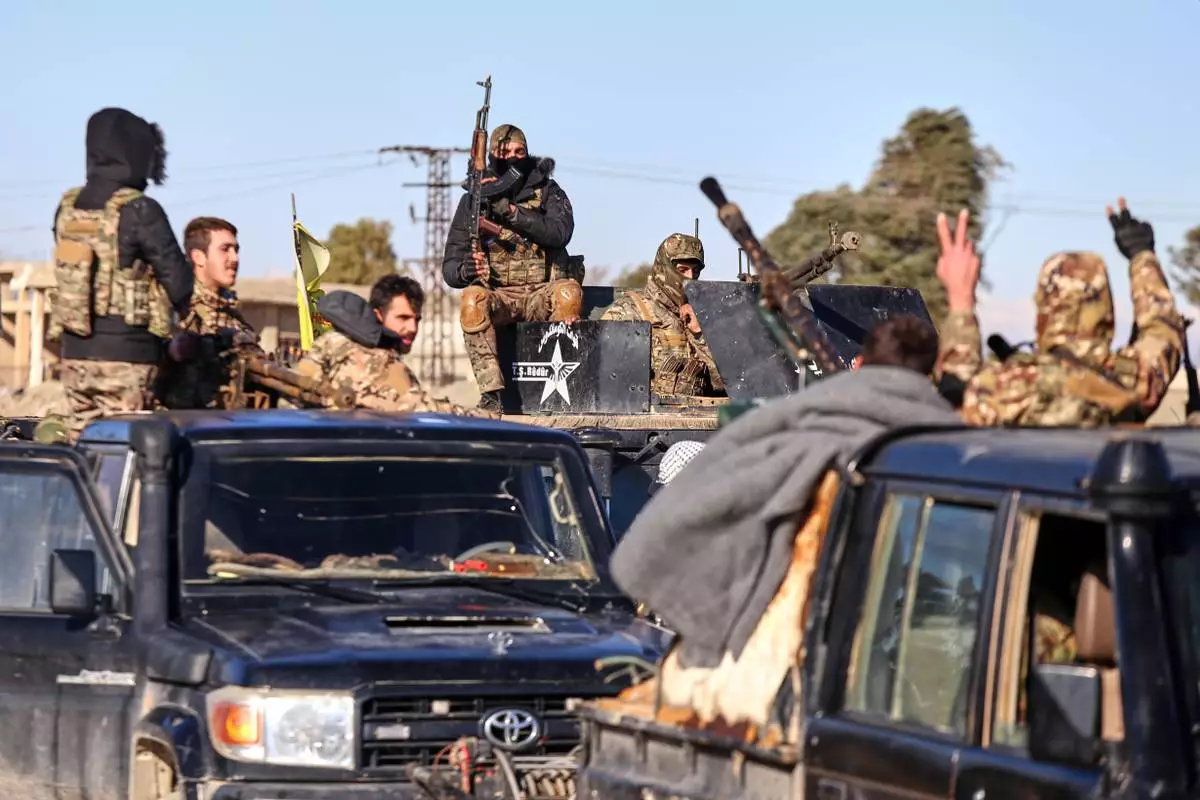
Soldiers of the Kurdish-led, U.S.-backed Syrian Democratic Forces (SDF) deploy with armoured military vehicles to secure roads leading to Gweiran Prison which houses men accused of being an Islamic State (ISIS) fighters in Hassakeh, northeastern Syria, Monday, Jan. 19, 2026. (AP Photo/Baderkhan Ahmad)
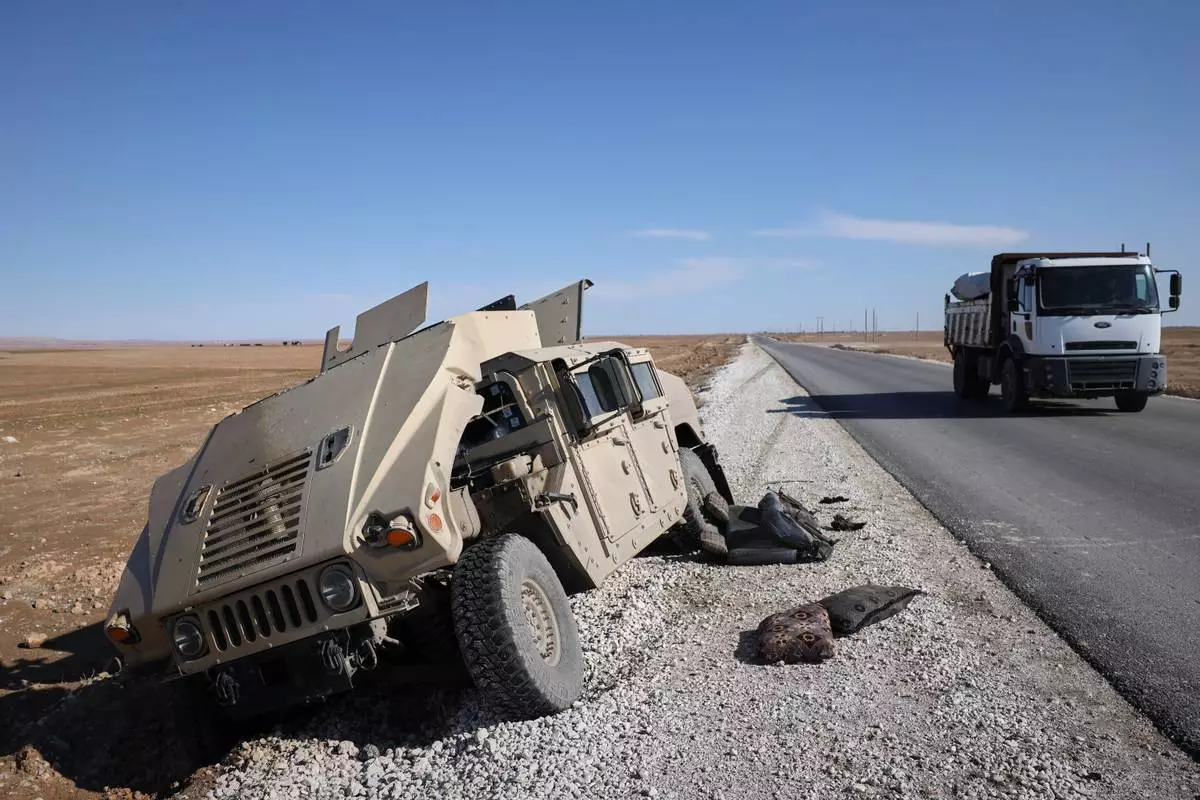
A truck drives past a damaged Humvee abandoned by retreating Syrian Democratic Forces (SDF) along a road between government-controlled Raqqa and SDF-controlled Hassakeh in northeastern Syria, Tuesday, Jan. 20, 2026. (AP Photo/Omar Albam)
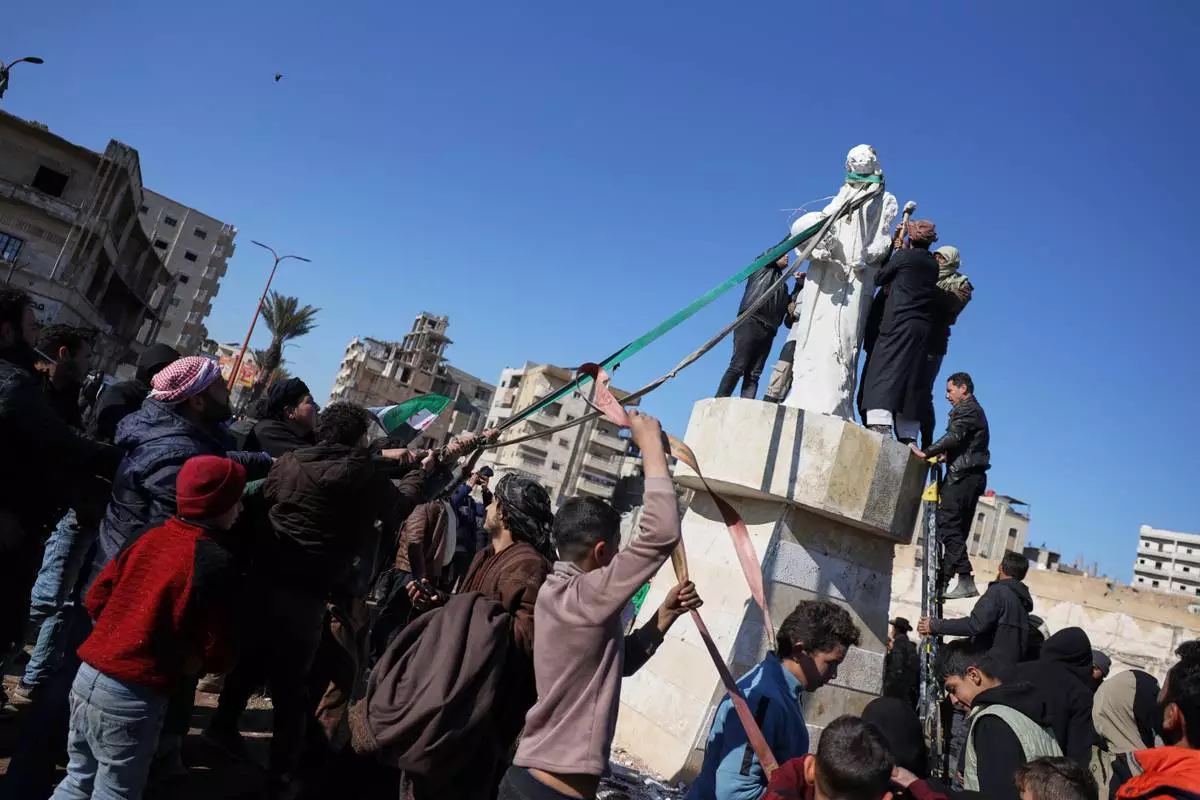
Local supporters of the Syrian government deface and attempt to topple a sculpture depicting a Kurdish woman a day after Syrian government troops took control of the area from the Syrian Democratic Forces (SDF), in Raqqa, northeastern Syria, Monday, Jan. 19, 2026. (AP Photo/Omar Albam)
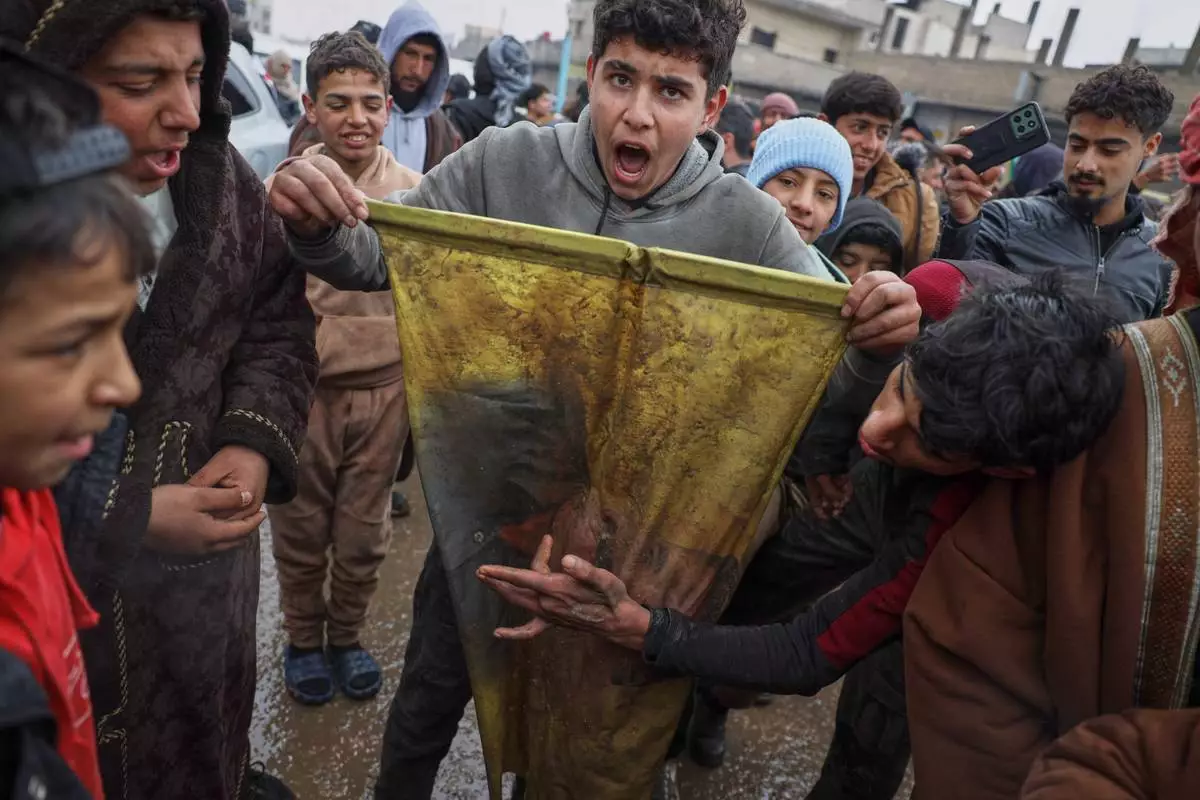
Local youth tear up an SDF flag as they celebrate after Syrian government troops took control of the town from U.S.-backed Syrian Democratic Forces (SDF) during an ongoing push against Kurdish-led forces, in Tabqa, eastern Syria, Sunday, Jan. 18, 2026. (AP Photo/Omar Albam)
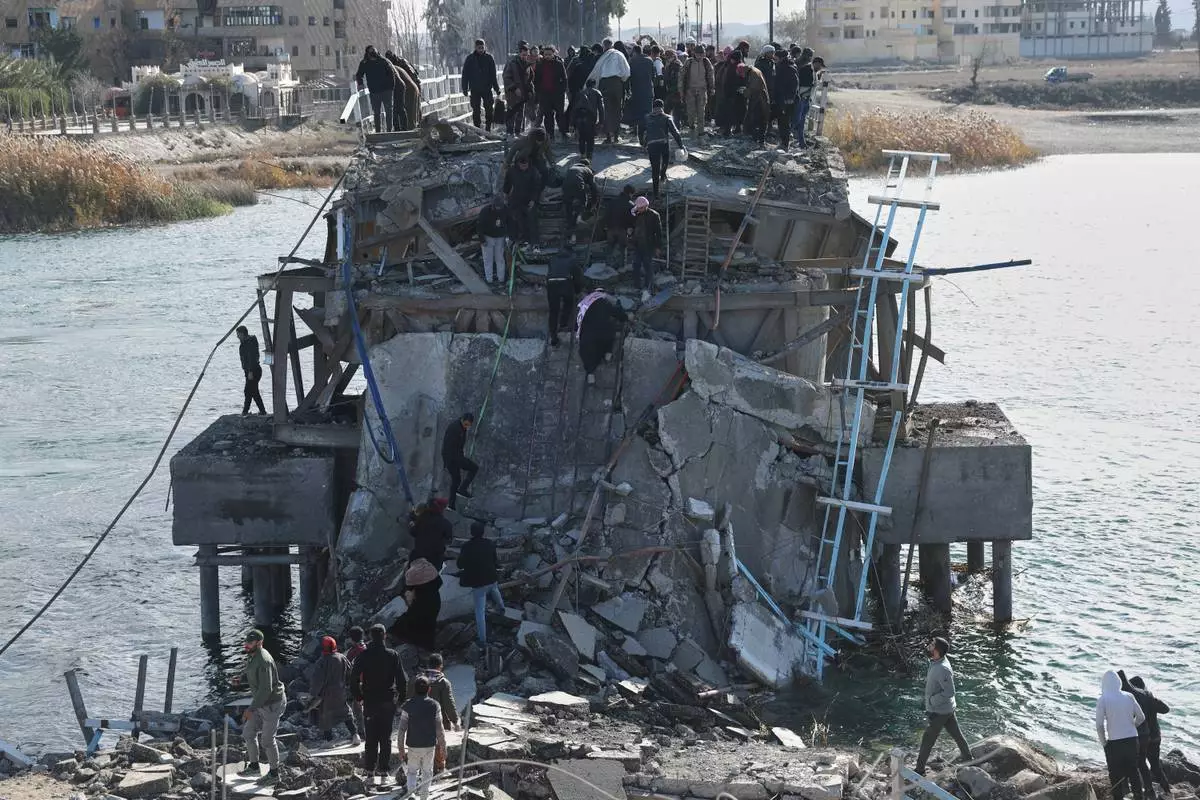
People climb over the damaged Al-Rashid Bridge, with some crossing on foot, after it was destroyed as Kurdish-led Syrian Democratic Forces withdrew, a day after Syrian government forces took control of the area on the outskirts of Raqqa, northeastern Syria, Monday, Jan. 19, 2026. (AP Photo/Ghaith Alsayed)