Japanese Prime Minister Sanae Takaichi's announcement of disolving the House of Representatives raises legal questions, said a Japanese scholar.
Takaichi on Monday announced her plan to dissolve the House of Representatives on January 23 for a snap general election set for February 8.
At a press conference, Takaichi said she will dissolve the 465-member lower house on Friday, the opening day of this year's ordinary parliamentary session.
Voting will take place on February 8, with official campaigning starting from Jan. 27, she added.
The election, the first since Takaichi took office on October 21, 2025, is set to come with more than two years left in the current lower house term.
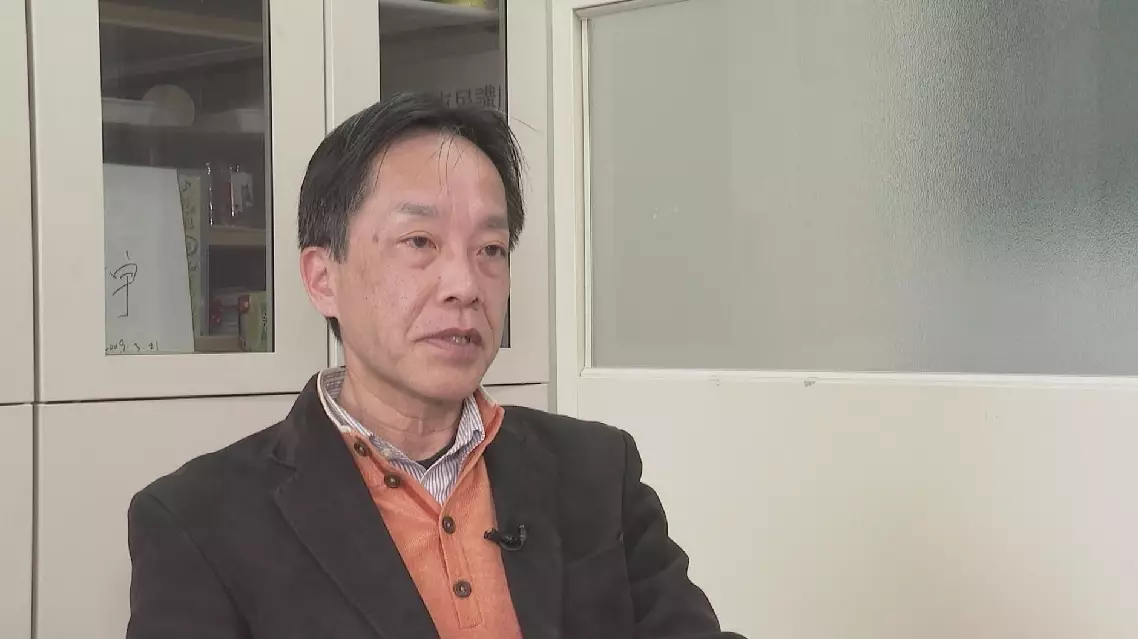
In an interview with China Media Group (CMG) on Tuesday, Masahiko Shimizu, a professor of constitutional law at Nippon Sport Science University, said Takaichi's move is irresponsible and untenable.
"Takaichi said she would 'seek the people's trust' (by dissolving the House of Representatives). If this were truly the case, then the House should have been dissolved when the extraordinary Diet session was held in October 2025. Choosing to dissolve it now instead of then will prevent the 2026 budget from being approved before the end of the 2025 fiscal year in March. From this perspective, it is an extremely irresponsible approach. When she was elected as the president of the Liberal Democratic Party, Takaichi said she would 'work tirelessly'. She should have focused on addressing livelihood issues such as rising prices. However, her current actions contradict her promise. It is untenable, both constitutionally and politically, for members of parliament elected by the people to have their term dissolved and terminated by the Prime Minister at her own discretion and at her own pace." he said.
Since Takaichi took office in 2025, the Japanese government has rapidly increased defense spending, discussed abolishing export restrictions on five categories of equipment under the three principles on the transfer of defense equipment guidelines, and accelerated discussions within the Liberal Democratic Party (LDP) regarding revisions to the Three Non-Nuclear Principles.
Shimizu said the Japanese government's moves have violated the spirit of Article 9 of the Constitution and sparked concerns.
"For a country with Article 9 written in the constitution, any attempt to amend the Three Non-Nuclear Principles and allow U.S. nuclear weapons to enter Japan is absolutely unacceptable, especially as the country has experienced the atomic bombings of Hiroshima and Nagasaki. It is equally intolerable to abolish the export restrictions on five categories of equipment under the three principles on the transfer of defense equipment guidelines, allow free exports of arms, and become a 'death trader'. Further revising its three national security documents is an extension of Japan's path towards becoming a military power. Takaichi's push for revision of the three national security documents will only further accelerate this trend. From the perspective of Article 9 of the Constitution, all of these are absolutely not allowed," he said.
Shimizu said Takaichi has not retracted her erroneous remarks, of which the negative impact will gradually become apparent in Japanese society.
"Last year, Takaichi made remarks about so-called 'Taiwan contingency' in the Diet. Such statements are inappropriate. Takaichi has not retracted such remarks, resulting in calls from China to reduce visits to Japan and the imposition of export restrictions. The consequences of these actions will inevitably become more apparent in the future, and Takaichi will certainly face accountability in the Diet. Furthermore, her expansionary fiscal policies have led to recent increases in long-term interest rates and a depreciation of the Japanese yen, resulting in rising prices and making life more difficult for citizens. These will not only trigger accountability in the Diet, but also arouse strong public dissatisfaction with Takaichi's policies," he said.
Japan PM's move to dissolve lower house raises legal questions: scholar
Local people who reside along a notorious industrial corridor in the U.S. state of Louisiana infamously known as "Cancer Alley" have highlighted the damaging results of long-term pollution and systemic neglect on their heath, particularly those from Black communities who live along this route.
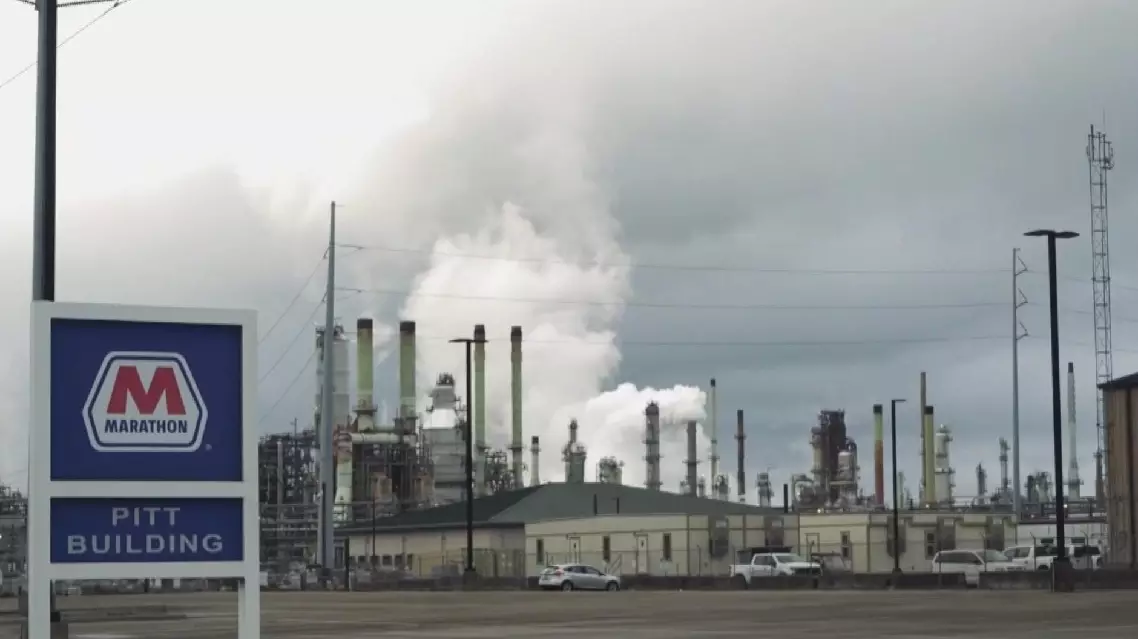
Located on a 140-kilometer stretch of the Mississippi River between Baton Rouge and New Orleans, this so-called "Cancer Alley" is densely packed with hundreds of chemical and oil-and-gas facilities. It is also home to people from predominantly Black communities whose families have lived here for generations.
Here, smokestacks belch fumes into the sky, flares burn through the night, and the air carries a chemical tang that residents say has seeped into their very bones.
"We have 12 industries within a 10-mile radius. That's too many industries for the human body to take in," said Sharon Lavigne, a resident of St. James Parish in Louisiana and founder of RISE St. James, a community organization fighting for local residents' right to live with dignity.
A new United Nations report has condemned what's happening in "Cancer Alley" as "environmental racism", noting that companies there prioritize profits while regulators fail to act.
"They don't care if we die. They don't care if we get sick. They don't care about the human life. All they care about is the almighty dollar," said Lavigne.
Lavigne said they had pleaded with the chemical giant DuPont to meet the safety standards set by the U.S. Environmental Protection Agency (EPA), but the company has repeatedly refused.
Seniors like Robert Taylor, who was born in 1940, have seen the effects this heavy industry has had over the course of several decades, as the land he once knew to be rich with sugarcane fields and thriving crops is now encircled by massive chemical plants.
Trucks carrying hazardous chemicals run day and night, and acrid fumes fill the air. Fruits and vegetables that were once picked and eaten freely are long gone, and residents are afraid to even approach the trees in their own yards, which have already died from the top down.
Taylor lamented the seemingly inescapable plague of cancer that has taken many of his loved ones.
"My mother, her brother, his two children, my first cousins who are my age, who I love, my own brother and my sister, and now my wife got cancer. So for me, it was a devastating thing when I found out that this didn't have to be, that this was because of the actions of these people," said Taylor.
"This country actually considered us chattel property. Well, I don't see it any different now, [we're just] a 'sacrifice zone'," he added.
Multinational petrochemical companies secure state approvals to build with significant tax breaks and exemptions by promising jobs and economic growth in the local communities. However, local employment data tells a different story.
"When you drive through the community, it's over 90 percent black. But when you go into the site, the major jobs, the six-figure jobs are 90 percent white," said Tish Taylor, daughter of Robert Taylor.
Scientific research corroborates residents' fears about the environmental hazards in "Cancer Alley".
Kimberly Terrell, formerly a scientist with Tulane University's Environmental Law Clinic, had conducted a research study that linked elevated cancer rates in Louisiana to neighborhoods with the highest levels of air pollution.
"When we crunched the data, absolutely, the neighborhoods in Louisiana, specifically, the neighborhoods that have higher rates of pollution, specifically air pollution, have higher than normal cancer rates," said Terrell.
Soon after, Tulane University silenced further research by their Environmental Law Clinic concerning Black communities in "Cancer Alley". Terrell also resigned from her position, citing that the university succumbed to pressure from special interest groups.
"There was extreme blowback from the highest level of the university. What the provost later told me is that people were left feeling uncomfortable and embarrassed, and then the next week I was put under a gag order," said Terrell.
The multinational companies reportedly even employ 24-hour surveillance and security personnel who often pressure and harass journalists and activists investigating their operations.
Despite this, local residents have continued to call on the U.S. government and corporations to take responsibility, halt production, and restore their environment, though their voices are often drowned out by the roar of machinery at the industrial plants.
"Something needs to be done. Our government needs to stop approving these permits for these polluters to come in here to finish us off. We are human beings and we deserve to live. And we will fight to stay alive and to stay healthy," said Lavigne.
US "Cancer Alley" highlights damaging legacy of environmental racism, systemic neglect