DAKAR, Senegal (AP) — The U.N. World Food Program said Thursday that more than a million people in northeastern Nigeria could lose access to emergency food and nutrition aid within weeks unless funding is secured, as violence and hunger surge in the region.
The food agency of the United Nations said in a statement it will sharply scale back assistance, limiting it to only 72,000 people in February, down from 1.3 million assisted during last year’s lean season, which runs from May to October.
According to WFP, 35 million people are likely to experience severe hunger in Nigeria this year, the highest figure on the continent and the largest recorded since the agency began collecting data in the country.
WFP has provided food assistance in northeastern Nigeria since 2015, reaching nearly two million people a year in hard-hit areas.
“Despite generous contributions that sustained WFP’s life-saving aid to the most vulnerable in recent months, those limited resources have now been exhausted,” the agency's statement on Thursday read.
“This will lead to catastrophic humanitarian, security and economic consequences for the most vulnerable people who have been forced to flee their homes in search of food and shelter,” David Stevenson, WFP’s Nigeria Country Director, said.
Renewed violence in Nigeria has displaced around 3.5 million people in recent months, destroyed food supplies, and worsened malnutrition to critical levels in several northern states. Widespread attacks by various armed groups have deterred farmers from using their land, officials said.
Last week, gunmen abducted more than 150 worshippers in simultaneous attacks on three separate churches in northwest Nigeria.
The West African country also has been hard hit by a massive scaling down of U.N. food assistance following U.S. President Donald Trump’s decision to gut the United States Agency for International Development.
Nigeria is one of several countries in the region where the cut to USAID has deepened the food crisis. In July, WFP already scaled back nutrition programs across West and Central Africa.
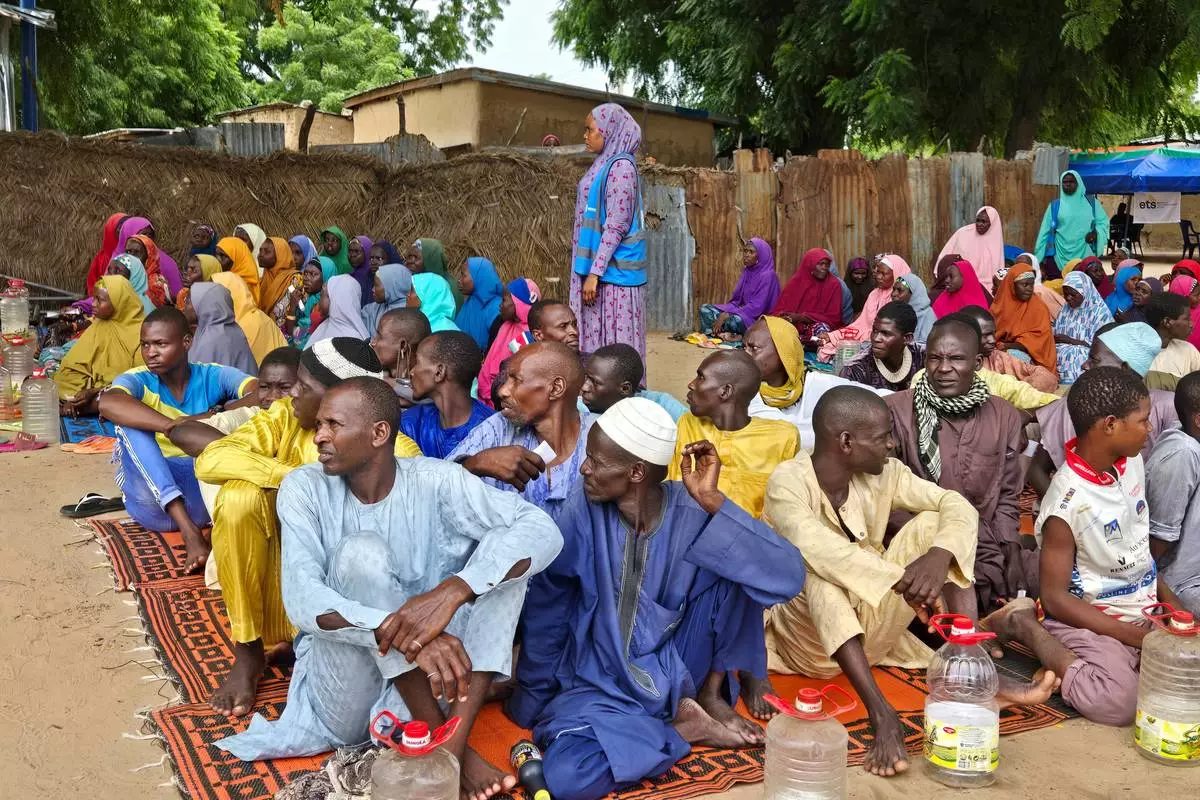
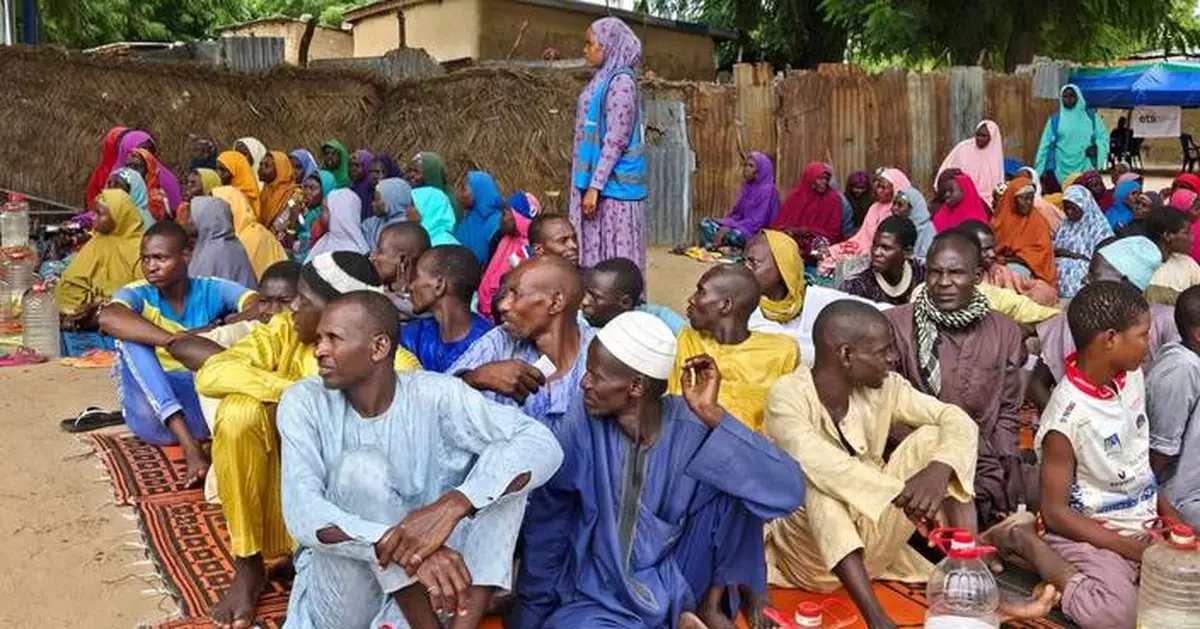
FILE - People wait to receive food donations from the United Nations World Food Program in Damasak, northeastern Nigeria, Oct. 6, 2024. (AP Photo/Chinedu Asadu, File)
SEOUL, South Korea (AP) — French President Emmanuel Macron and South Korean President Lee Jae Myung agreed Friday to work together to help reopen the Strait of Hormuz and ease global economic uncertainties caused by the war in the Middle East.
Their summit in Seoul came as U.S. President Donald Trump slammed allies for not supporting the U.S. and Israeli war against Iran. Macron was making his first visit to South Korea since taking office in 2017, as part of an Asian tour that already has taken him to Japan.
Macron told Lee at the start of the meeting that the two countries can play a role in helping to stabilize the situation in the Middle East, including Iran’s chokehold on the Strait of Hormuz, which has unleashed shock on global energy markets.
At a joint televised briefing afterward, Macron underscored the need for France and South Korea to cooperate to help reopen the strait and deescalate Middle East animosities, while Lee said the two affirmed “their resolves to cooperate to secure the safe shipping route in the Strait of Hormuz.”
The two leaders did not take questions and did not elaborate on how they would help reopen the strait — the narrow waterway between Iran and Oman through which about one-fifth of the world’s oil usually passes.
“We need to clearly define, at the international level, the conditions for a process to ease the crisis and conflict in the Middle East,” Macron said. “We need to ensure that the Strait of Hormuz is reopened.”
Lee said he and Macron agreed to expand cooperation in technology, energy and other areas. South Korean and French officials also signed agreements to cooperate on nuclear fuel supply chains, jointly invest in an offshore wind project in southern South Korea and to collaborate on critical minerals. South Korea has moved to increase output at its nuclear reactors to mitigate the energy crunch and Lee has also called for a faster transition to renewable energy, saying the war has exposed the country’s heavy reliance on fossil fuel imports.
Macron’s Asia trip comes as Trump has ramped up his frustration with allies. In a speech Wednesday, Trump said Americans “don’t need” the strait but the countries who do “must grab it and cherish it.”
In an earlier Easter event at the White House, Trump called for his allies in Asia and China to get involved in reopening the waterway.
“Let South Korea, you know, we only have 45,000 soldiers in harm’s way over there, right next to a nuclear force — let South Korea do it,” Trump said. “Let Japan do it. They get 90% of their oil from the strait. Let China do it.”
The United States stations about 28,000 troops in South Korea, not the 45,000 stated by Trump. The U.S. troops’ deployment in South Korea is meant to deter potential aggressions from North Korea.
Macron has said reopening the Strait of Hormuz through a military operation is unrealistic.
South Korean officials have said they are in contact with Washington on the issue and that Seoul isn’t considering paying Iran transit fees to secure fuel shipments through the strait.
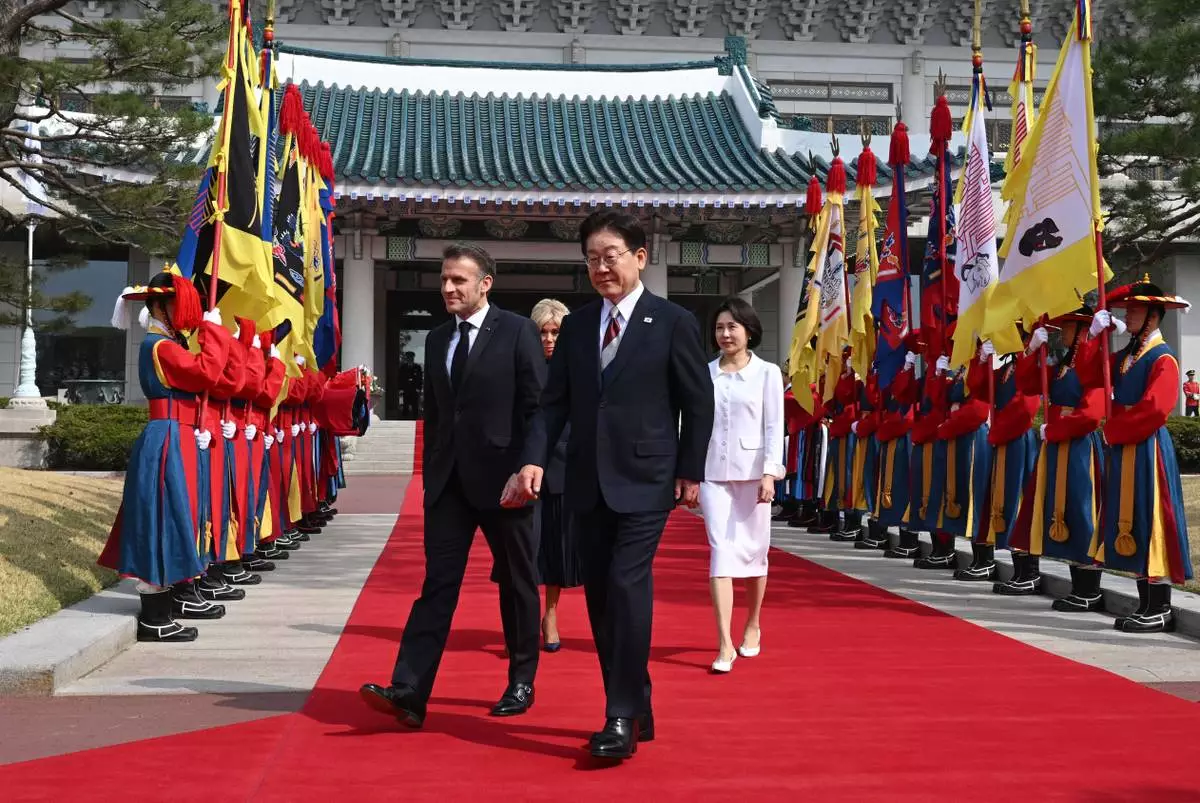
French President Emmanuel Macron, front left, his wife Brigitte Macron, back center, and South Korean President Lee Jae Myung, front right, and his wife Kim Hea Kyung, right, attend the welcome ceremony at the presidential Blue House in Seoul Friday, April 3, 2026. (Jung Yeon-je /Pool Photo via AP)
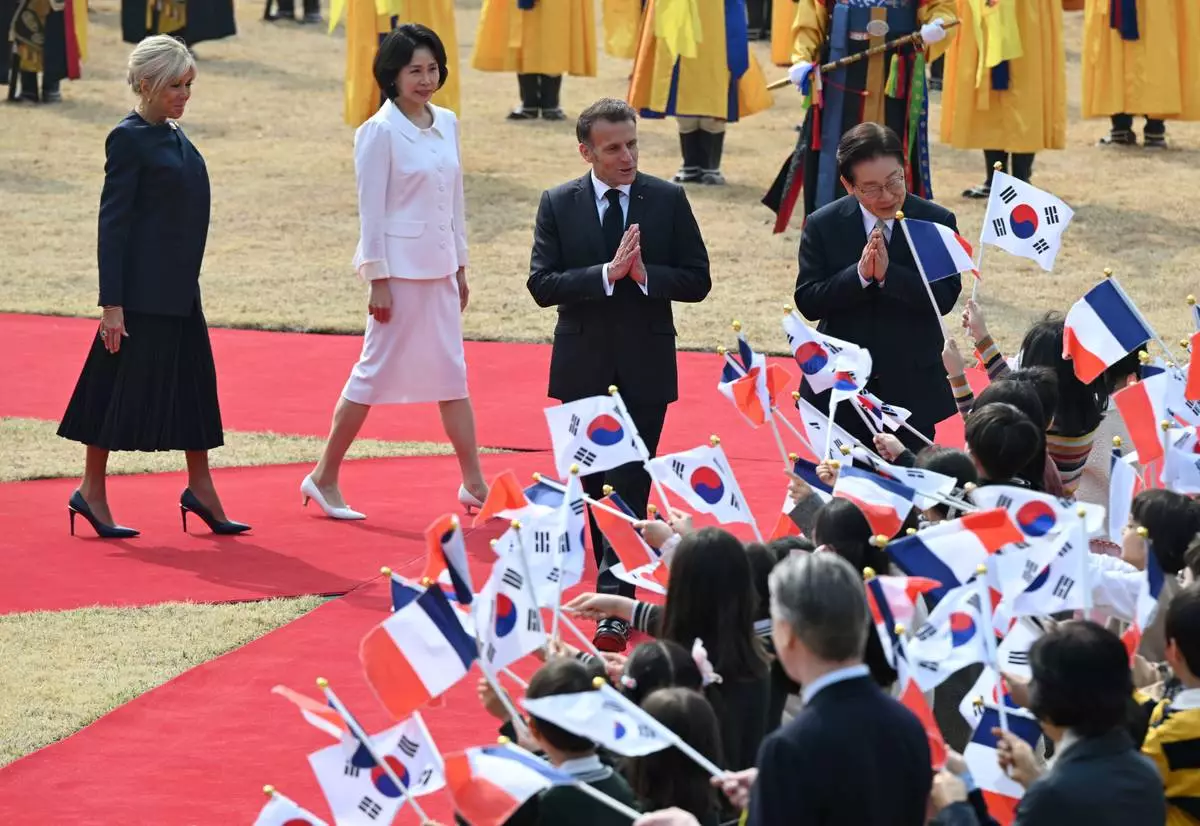
French President Emmanuel Macron, center, his wife Brigitte Macron, left, and South Korean President Lee Jae Myung, right, and his wife Kim Hea Kyung, second left, attend the welcome ceremony at the presidential Blue House in Seoul Friday, April 3, 2026. (Jung Yeon-je /Pool Photo via AP)
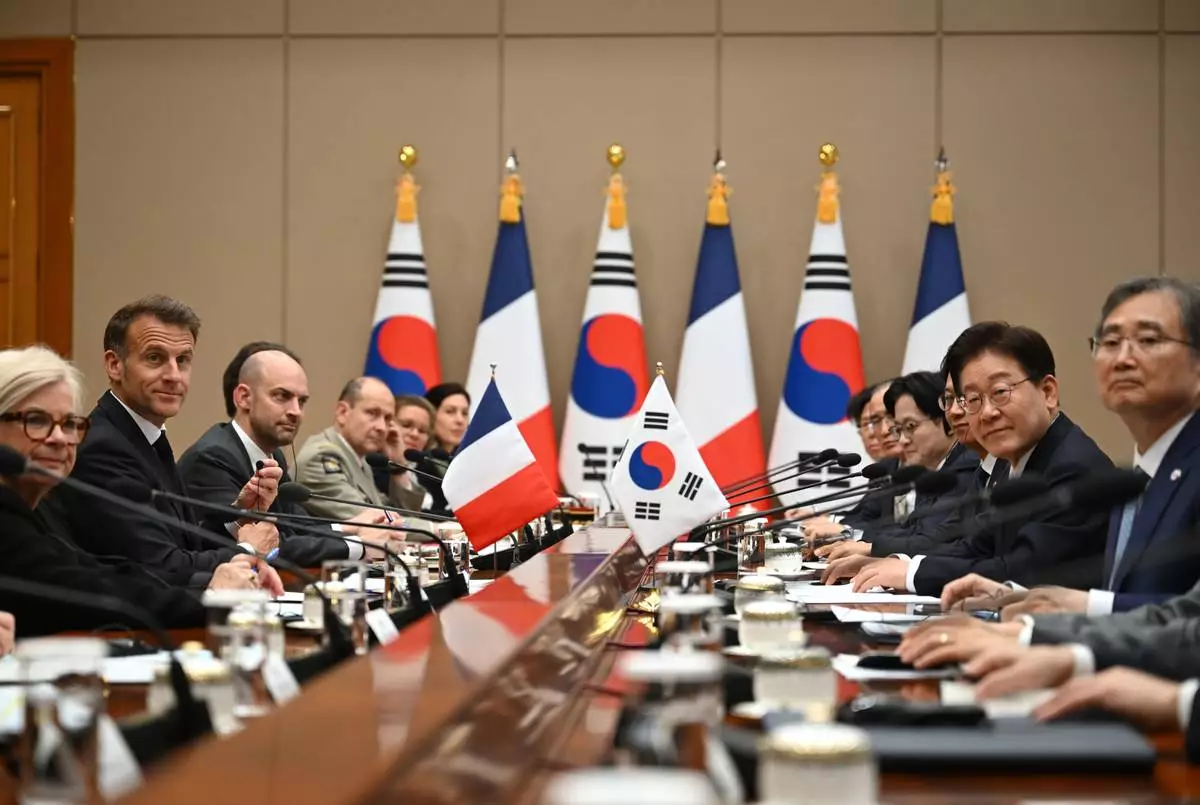
French President Emmanuel Macron, second left, talks with South Korean President Lee Jae Myung, second right, during their meeting at the Blue House in Seoul, South Korea, Friday, April 3, 2026. (Jung Yeon-je/Pool Photo via AP)
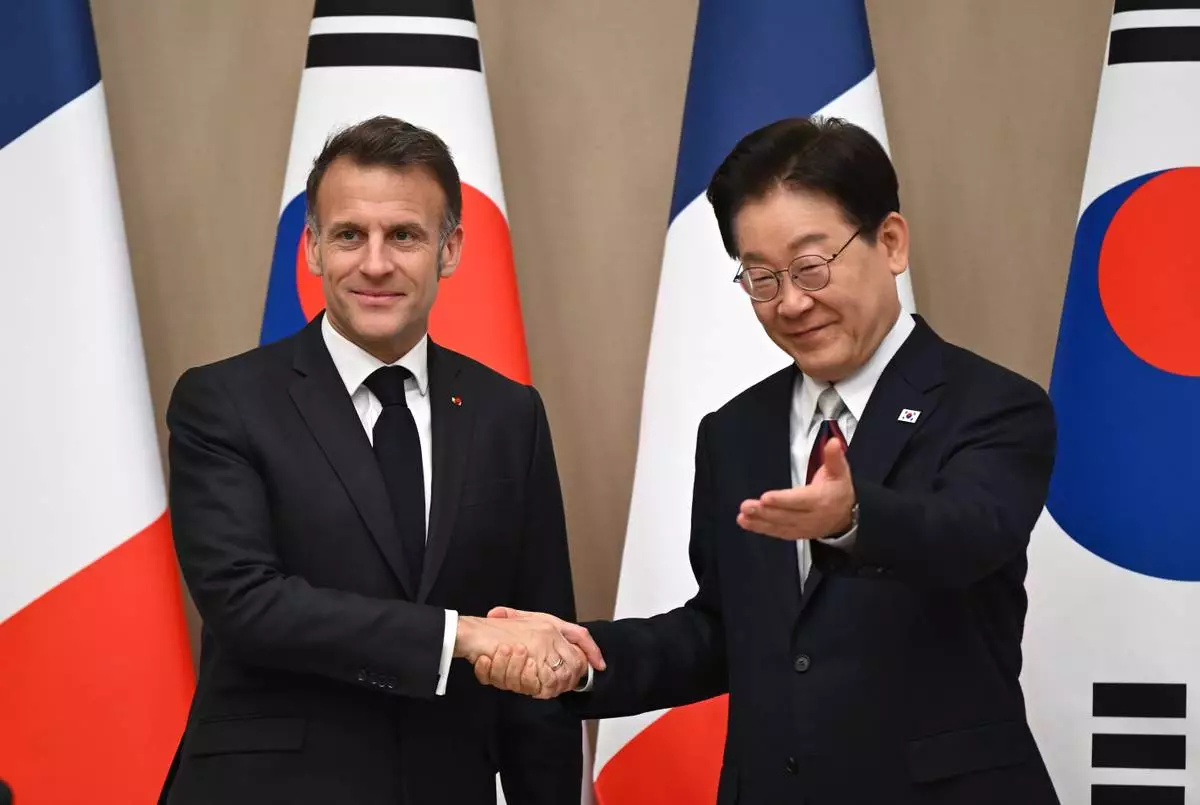
French President Emmanuel Macron shakes hands with South Korean President Lee Jae Myung during their meeting at the Blue House in Seoul, South Korea, Friday, April 3, 2026. (Jung Yeon-je/Pool Photo via AP)