Government responds to Coroner's verdict on death inquest for vessel collision incident near Lamma Island in 2012
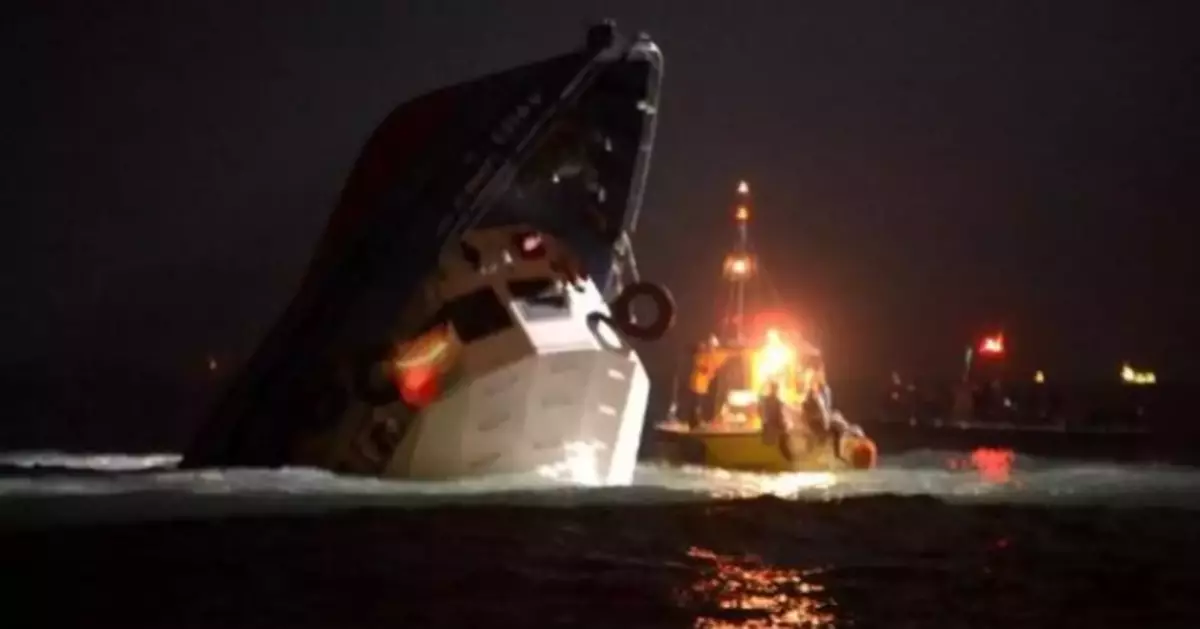
The Coroner's Court today (January 22) finished reading the verdict on the cause of death of the passengers involved in the vessel collision incident near Lamma Island in 2012.
A Government spokesman said the Government respects the judgment of the Coroner's Court and would study the verdict carefully with serious follow-up. At the same time, the Government expresses its deepest condolences to the families. After the incident, the Government conducted two investigations, including the one conducted by the Commission of Inquiry (CoI) established in accordance with the Commission of Inquiry Ordinance and the internal investigation led by then-Transport and Housing Bureau (then-THB); and accepted the expert reports under various investigations.
The Transport and Logistics Bureau has all along been supervising the Marine Department (MD) in following up on the recommendations of the CoI and the experts, and in adopting a systemic approach for fully implementing five categories of measures to enhance marine safety and prevent the recurrence of similar incidents. Relevant measures include -
Enhancing safety standards onboard: including requiring all passenger vessels' watertight doors to be fitted with visual and audio alarms; specifying the requirements of watertight door warning markings; improving the labelling and placement of life jackets; and establishing standards for securing seats to the deck;
Improving plan approval and vessel survey standards: including the creation of a dedicated team for plan approval for local vessels; introduction of standardised procedures for vessel surveys and plan approvals; introduction of the tripartite Inspection and Test Plan Scheme (ITP) for high-risk vessels by requiring the shipyard, shipowner and the MD to reach a consensus on important test items and acceptance criteria to clarify any misunderstanding or ambiguity regarding design and regulatory requirements, thus ensuring a vessel's watertight integrity and compliance with regulatory and contractual requirements;
Promoting operational safety within the industry: including the introduction of the common life jacket for use by adults and children; the enactment of the Marine Safety (Alcohol and Drugs) Ordinance to regulate drink and drug boating; and the mandate of lookout arrangements onboard vessels;
Strengthening industry professionalism and promoting safety culture: including the introduction of the Fast Speed Passenger Vessel Endorsement regime to enhance coxswains' and engine operators' navigational skills and ability to handle emergency situations, as well as the introduction of the Local Safety Management System; and
Introducing systemic reform of the MD's management and regulatory regime: including strengthening professional development of MD officers; launching of the electronic vessel survey system and introducing the use of electronic certificates to enhance work efficiency and quality.
Please refer to the Annex for details of the relevant measures.
As for the responsibilities of the MD officers involved, the then-THB forwarded the internal investigation report (THB Report) to the Civil Service Bureau (CSB) for follow-up, and the CSB has, in accordance with the recommendations in the THB Report and the legal advice from the Department of Justice, took actions according to the disciplinary procedures and finished following up on the relevant cases. There were also two MD officers involved who were criminally prosecuted and sentenced to imprisonment.
As regards the recommendations of the Coroner for the MD, including (1) to continue regular engagement with shipbuilders, marine transport service operators and relevant professional bodies or issue simple guidance notes or clarification to ensure that they understand the application of relevant rules and regulations; (2) to implement a new declaration system requiring vessel owners, before each periodical survey, to confirm whether any alterations have been made since the previous survey; (3) to continue to review the working hours and rest arrangements of seafarers, with a focus on identifying fatigue risks in day-to-day operations, and with major ferry operators consulted in the process and the Local Vessels Advisory Committee used as a forum for relevant discussions; and (4) to disseminate to the trade information on the recommendations the Coroner gave to Cheoy Lee Shipyards, the MD will seriously study them and follow up. In respect of the first recommendation, the MD has been stepping up communication with the industry and implemented the Local Safety Management system, with the adoption of a proactive risk management approach to enhance communication with the industry on marine safety issues. For the second recommendation, the MD is actively preparing for the introduction of a requirement under the existing ship inspection system that shipowners must declare that there were no unauthorised alterations of the vessels concerned prior to a survey. In respect of the third recommendation, the Government will review the working environment and conditions of local seafarers and will thoroughly consult relevant stakeholders. For the fourth recommendation, the MD will communicate with other shipyards in respect of the relevant issue.
The spokesman expressed that the Government will continue to work hand-in-hand with the industry to strengthen marine safety together.
Source: AI-found images
Speech by CE at Hong Kong Academy of Sciences 10th Anniversary Celebration Banquet
Following is the speech by the Chief Executive, Mr John Lee, at the Hong Kong Academy of Sciences 10th Anniversary Celebration Banquet today (January 22):
Professor Dennis Lo (President of the Hong Kong Academy of Sciences), members of the Hong Kong Academy of Sciences and the Hong Kong Young Academy of Sciences, distinguished guests, ladies and gentlemen,
Good evening. It is an honour to join you tonight, in celebration of the landmark 10th anniversary of the Hong Kong Academy of Sciences.
Over the past decade, the Academy has played a pivotal role in bringing together leading scientists, locally and internationally. No less important, it has nurtured promising young science and technology talent, inspiring scientific and technological excellence in Hong Kong. The Academy has also been the Government's close partner in developing Hong Kong's innovation and technology (I&T) sector.
I&T is shaping the future of our generation and our world. And the Government is committed to ensuring Hong Kong's rise as an international I&T centre.
I'm glad to tell you that we're making notable progress. To quote a few figures, our gross expenditure on research and development in 2024 was more than double that of 2014, ten years ago, rising from 16billion Hong Kong Dollars in 2014 to about 36 billion Hong Kong Dollars in 2024. The number of employees in the I&T sector has also surged 70 per cent, from 35 000 to about 59 000, over the same period.
During that time, we witnessed the birth of 20 unicorn companies in Hong Kong. At last count, we are home to a thriving community of some 4 700 start-ups. And I have confidence that these figures will be on the rise, as we continue to attract quality I&T talent, companies and start-ups to Hong Kong.
And we're certainly not slowing down. Among many other initiatives, we launched the 3 billion Hong Kong Dollars Frontier Technology Research Support Scheme last September. The funding will help our universities attract leading scientists and researchers to Hong Kong.
Last year, for the first time, the Shenzhen-Hong Kong-Guangzhou cluster ranked first, number one, among the world's top 100 innovation clusters, in the annual Global Innovation Index.
Also last year, Hong Kong ranked fourth, globally, in the World Digital Competitiveness Ranking published by the International Institute for Management Development. That's up three places from the previous year. In the areas of "technological framework" and "adaptive attitudes", we came first globally.
More than topping international rankings, our development into an international I&T centre tops the HKSAR Government's policy agenda. In this, we enjoy the firm support of the National 14th Five-Year Plan, as well as the Recommendations for Formulating the 15th Five-Year Plan for National Economic and Social Development.
We are, let me add, expediting development across the entire I&T spectrum, which include:
- consolidating our upstream strengths in basic research;
- promoting the midstream transformation and commercialisation of research outcomes; and
- encouraging downstream industry development.
This wide-ranging, far-reaching approach is opening up fresh opportunities, particularly under our new South-North dual engine, which pairs finance in the south and I&T in the north. Hong Kong Park in the Loop and San Tin Technopole, both located in our fast-growing Northern Metropolis, are the strategy's central pillars.
Together, they will drive emerging technology industries in Hong Kong, and serve as a critical centre for developing new quality productive forces.
Hong Kong Park in the Loop officially opened last month. That marked a milestone in the development of the Hetao Shenzhen-Hong Kong Science and Technology Innovation Cooperation Zone, an area that straddles our boundary with Shenzhen.
The 210 hectares of new I&T land in the San Tin area is a natural extension of the Loop. And our publication, last November, of the conceptual outline of San Tin Technopole's development plan for the I&T industry, sets a clear strategy for San Tin Technopole.
The San Tin area's I&T sites are expected to integrate with the industry supply chains of cities in the Guangdong-Hong Kong-Macao Greater Bay Area. And the land will accommodate the varying scales and technology fields of their companies.
We expect it will also take up the transformation and industrialisation of Hong Kong Park's research outcomes. That will certainly drive economic growth, creating high-quality employment opportunities and industrial upgrading.
Together, the new I&T land surrounding San Tin and Hong Kong Park will form a crucial node for the integrated emergence of upstream, midstream and downstream I&T industries. They will help propel Hong Kong's development as an I&T powerhouse, radiating with influence that transcends boundaries.
And that, ladies and gentlemen, is just the beginning. Thanks to the unwavering support of our country, the Northern Metropolis' fast-track development, and the continuing contributions of key partners such as the Hong Kong Academy of Sciences, I am confident that Hong Kong's science and I&T sectors will be at the heart of our city's flourishing future.
My thanks, once again, to the Academy of Sciences for its dedication, perseverance and countless contributions over its first eventful decade. I look forward to the Academy's next 10 years of scientific promise and great progress.
Ladies and gentlemen, I wish you all a very memorable evening and a happy, healthy and prosperous new year. Thank you.
The Hong Kong Academy of Sciences 10th Anniversary Celebration Banquet Source: HKSAR Government Press Releases
Speech by CE at Hong Kong Academy of Sciences 10th Anniversary Celebration Banquet Source: HKSAR Government Press Releases