CHICAGO (AP) — A man accused of offering a $10,000 bounty over Snapchat for the life of a top Border Patrol leader was found not guilty on Thursday in the first criminal trial stemming from the Chicago-area immigration crackdown that started last year.
Jurors deliberated less than 4 hours before returning the favorable verdict for 37-year-old Juan Espinoza Martinez. He faced one count of murder-for-hire and up to 10 years in prison if convicted. Testimony lasted mere hours in the federal trial that was the latest test of the Trump administration’s credibility on federal surges that have played out from Minnesota to Maine.
Espinoza Martinez, who wore a suit and tie, listened intently with his arms crossed near his stomach. He hugged his attorneys and shook their hands after court adjourned.
Attorneys for the defense declined comment. Prosecutors did not address reporters waiting in the lobby of the federal court in downtown Chicago. Neither did jurors.
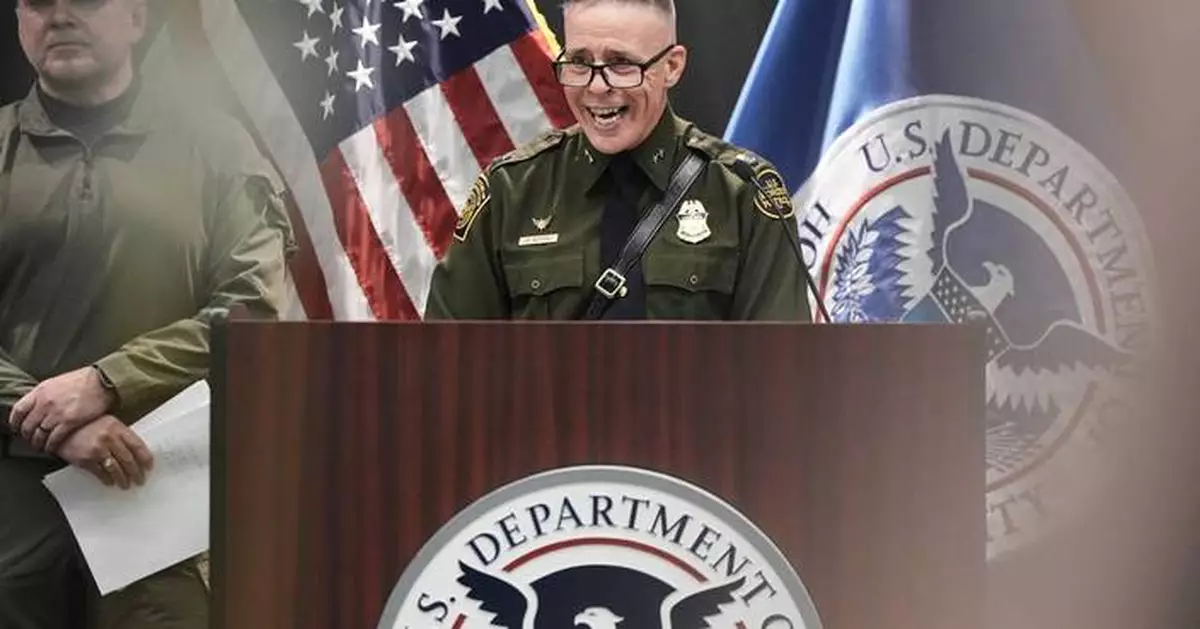
At the heart of the government’s case were Snapchat messages sent from Espinoza Martinez to his younger brother and a friend who turned out to be a government informant. One read in part “10k if u take him down,” along with a picture of Gregory Bovino, a Border Patrol official who has led aggressive crackdowns nationwide, including in the Chicago area.
“Those words do not indicate that this was a joke,” First Assistant U.S. Attorney Jason Yonan told jurors during Thursday's closing arguments. “Those words have meaning. They are not innocent and harmless words.”
But defense attorneys said the government didn’t show any evidence against Espinoza Martinez who sent the messages as “neighborhood gossip” after coming home from work and unwinding with beers. He didn’t follow up on the exchanges and had only a few dollars in his bank account.
“Sending a message about gossip that you heard in the neighborhood, it’s not murder for hire,” his defense attorney Dena Singer told jurors. “It’s not a federal crime.”
Her office did not return a message seeking comment after the verdict. Neither did the U.S. attorney's office in Chicago or the Department of Homeland Security.
In court, prosecutors accused Espinoza Martinez of being “fixated and obsessed” with Bovino and cited other messages where he criticized the crackdown.
Espinoza Martinez was arrested in October as the city of 2.7 million and surrounding suburbs were seeing a surge of federal immigration officers. Protests and standoffs with agents were common, particularly in the city’s heavily Mexican Little Village neighborhood where Espinoza Martinez lived.
He did not testify at his trial.
But attorneys played clips of his interview with law enforcement where he said he was confused about the charges and that he sent the messages without much thought while scrolling social media after work.
“I didn’t threaten anyone,” he told investigators, interchanging English and Spanish at times in the interview. “I’m not saying that I was telling them to do it.”
Born in Mexico, he’s lived in Chicago for years but doesn’t have citizenship.
DHS touted Espinoza Martinez’s arrest on social media with unredacted photos of his face, referring to him as a “depraved” gang member. Bovino has held the case up as an example of the increasing dangers faced by federal agents. Prosecutors included Yonan, the second-highest ranking federal prosecutor in the Chicago region.
But several federal lawsuits in Chicago have fueled skepticism about DHS’s narratives. Of the roughly 30 criminal cases stemming from Operation Midway Blitz, charges have been dismissed or dropped in about half. In a notable lawsuit that forced Bovino to sit for depositions, a federal judge found he lied under oath including about alleged gang threats.
Bovino did not testify at Espinoza Martinez’s trial.
Nationwide, dozens of criminal cases tied to immigration operations have also crumbled.
Federal prosecutors initially referred to Espinoza Martinez as a “ranking member” of the Latin Kings, but their lack of evidence led U.S. District Judge Joan Lefkow to bar testimony on the Chicago street gang at trial. According to the criminal complaint, Espinoza Martinez allegedly sent messages on behalf of the gang to other gang members.
At trial, there were minor mentions of the gang, including Espinoza Martinez saying in his interview that he had nothing to do with the Latin Kings. His brother, Oscar, testified that he took the Snapchat messages as a joke and were something he’d already seen on Facebook.
Singer poked holes in the government’s case, including in the testimony of their first witness Adrian Jimenez.
The 44-year-old owns a construction company and had been in touch with Espinoza Martinez over Snapchat about work. Unknown to Espinoza Martinez, he had also worked as a paid government informant over the years after serving a prison sentence for a felony. He shared the Snapchats with a federal investigator.
Jimenez, who suffers from back problems, walked slowly with a limp to the witness chair and needed help getting up.
“Would you solicit for hire an individual that was in that much pain and could barely walk?” Singer said to jurors. “That doesn’t make any sense.”
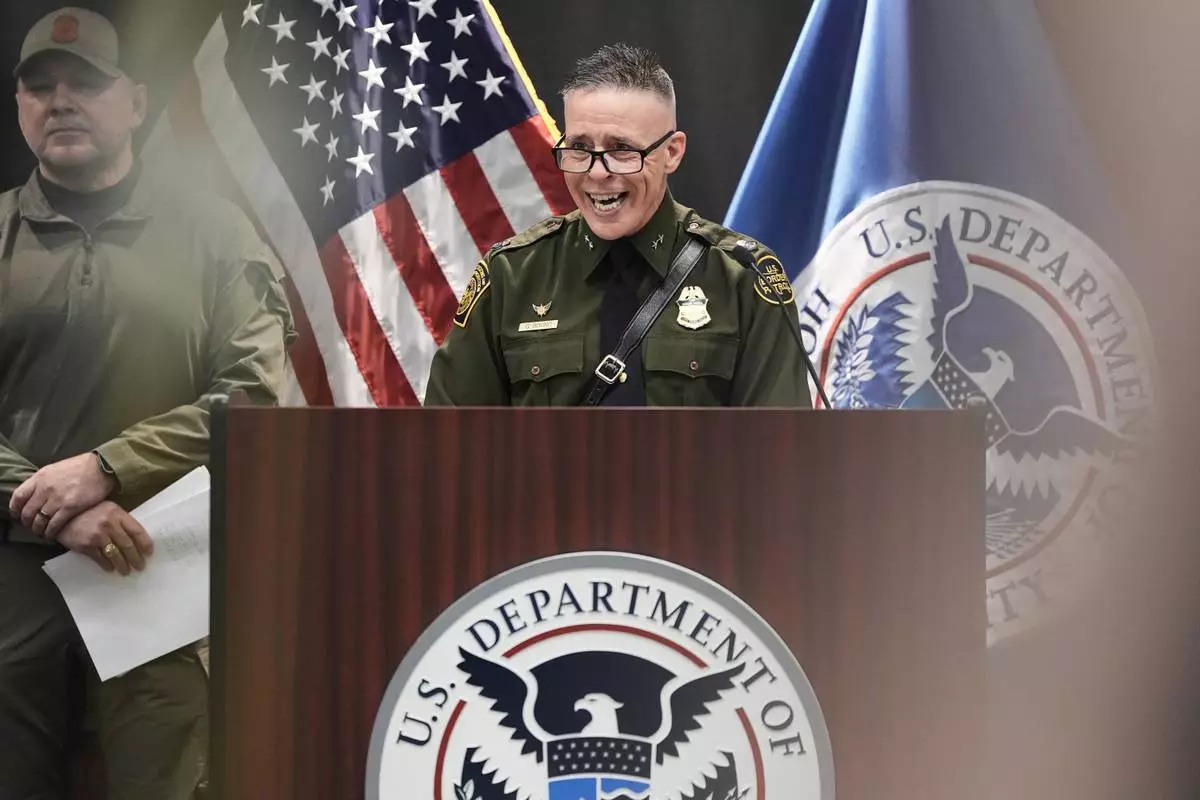
U.S. Border Patrol Cmdr. Gregory Bovino speaks during a news conference Tuesday, Jan. 20, 2026, in Minneapolis. (AP Photo/Angelina Katsanis)
MINNEAPOLIS (AP) — Insisting that he was in Minnesota to calm tensions, Vice President JD Vance on Thursday blamed “far-left people” and state and local law enforcement officials for the chaos that has unfolded during the White House's aggressive deportation campaign.
The Republican vice president said, “We’re doing everything that we can to lower the temperature,” adding that Minnesota leaders should “meet us halfway.”
The Justice Department is investigating top Democrats in the state, including Gov. Tim Walz and Minneapolis Mayor Jacob Frey, over whether they have obstructed or impeded immigration enforcement through their public criticism of the administration. Walz and Frey have described the investigation as an attempt to bully the political opposition.
Federal officers stood in a row behind Vance as he spoke, and there were two U.S. Immigration and Customs Enforcement vehicles emblazoned with the slogan “Defend the Homeland.”
His visit follows weeks of aggressive rhetoric from the White House, including President Donald Trump, who has threatened to invoke the Insurrection Act — and send in military forces — to crack down on unrest. Asked about that option, Vance said, “Right now, we don’t think that we need that.”
Trump dispatched thousands of federal agents to Minnesota earlier this month after reports of child care fraud by Somali immigrants. Minneapolis-area officials, including Frey, as well as the police, religious leaders and the business community, have pushed back. And outrage grew after an agent fatally shot Renee Good, a U.S. citizen and mother of three, during a confrontation this month.
Walz said the federal government was to blame for the turmoil.
“Take the show of force off the streets and partner with the state on targeted enforcement of violent offenders instead of random, aggressive confrontation,” he wrote on social media.
Frey, speaking from city hall, accused immigration officials of racial profiling, an accusation that Vance had rejected during his visit.
“They are detaining people that have done nothing wrong,” Frey said. “They are going after people exclusively based on the fact that they look like they are Somali or Latino, and no reason beyond that.”
He said the enforcement measures in the city and an influx of some 3,000 federal officers seemed designed as political retaliation, as opposed to getting criminals off the street.
“This is more about, tragically, terrorizing people than it is about safety, than it is even about immigration,” Frey said.
Vance has played a leading role in defending the agent who killed Good, and he previously said her death was “a tragedy of her own making.” On Thursday, he repeated claims that Good “rammed” an agent with her car, an account that has been disputed based on videos of the incident.
Minnesota faith leaders, backed by labor unions and hundreds of Minneapolis-area businesses, are planning a day of protests on Friday. Nearly 600 local businesses have announced plans to shut down, while hundreds of “solidarity events” are expected across the country, according to MoveOn spokesperson Britt Jacovich.
Vance defended ICE agents who detained a 5-year-old boy as he was arriving home from preschool.
“When they went to arrest his illegal alien father, the father ran,” Vance said. “So the story is that ICE detained a 5-year-old. Well, what are they supposed to do?”
The boy, who was taken by federal agents along with his father to a detention facility in Texas, was the fourth student from his Minneapolis suburb to be detained by immigration officers in recent weeks.
Asked about reporting that federal authorities are asserting sweeping power to forcibly enter people’s homes without a judge’s warrant, Vance said warrants would still be part of immigration enforcement. But Vance did not specify which kind of warrant he was referring to.
“Nobody is talking about doing immigration enforcement without a warrant,” Vance said. “We’re never going to enter somebody’s house without some kind of warrant, unless of course somebody is firing at an officer and they have to protect themselves.”
The Associated Press reported on Wednesday that federal immigration officers were asserting sweeping power to forcibly enter houses without a judicial warrant, according to an internal ICE memo, in what is a reversal of long-standing guidance meant to respect constitutional limits on government searches.
Instead, the officers can use administrative warrants. Those are issued by ICE officials, as opposed to warrants signed off on by an independent judge.
During a stop in Toledo, Ohio, on Thursday morning, Vance acknowledged that immigration agents have made mistakes, while declining to be specific.
“Of course there have been mistakes made, because you’re always going to have mistakes made in law enforcement,” he said when asked about Trump's comments earlier this week that ICE “is going to make mistakes sometimes.”
But Vance said the blame didn't lie with the federal government.
“The number one way where we could lower the mistakes that are happening, at least with our immigration enforcement, is to have local jurisdictions that are cooperating with us,” he said.
Vance also praised the arrest of protesters who disrupted a church service in Minnesota on Sunday and said he expects more prosecutions to come. The protesters entered the church chanting “ICE out” and “Justice for Renee Good.”
“They’re scaring little kids who are there to worship God on a Sunday morning,” Vance said. He added, “Just as you have the right to protest, they have a right to worship God as they choose. And when you interrupt that, that is a violation of the law.”
Vance took the opportunity to criticize hometown Democratic Rep. Marcy Kaptur while he was in her Toledo-centered district. A crowded slate of Republicans — including former ICE Deputy Director Madison Sheahan — is vying to take on the longest-serving woman in Congress this fall.
Vance’s stop in Ohio was focused primarily on bolstering the administration’s positive economic message on the heels of Trump's appearance at the World Economic Forum in Davos, Switzerland, and he showed support for Republicans such as gubernatorial contender Vivek Ramaswamy and U.S. Sen. Jon Husted.
Convincing voters that the nation is in rosy financial shape has been a persistent challenge for Trump during the first year of his second term. Polling has shown that the public is unconvinced that the economy is in good condition and majorities disapprove of Trump's handling of foreign policy.
Vance urged voters to be patient with the economy, saying Trump had inherited a bad situation from Democratic President Joe Biden.
“You don’t turn the Titanic around overnight,” Vance said. “It takes time to fix what is broken.”
Carr Smyth reported from Columbus, Ohio, and Peoples from New York. Associated Press writers Jack Brook and Sarah Raza contributed from Minneapolis.
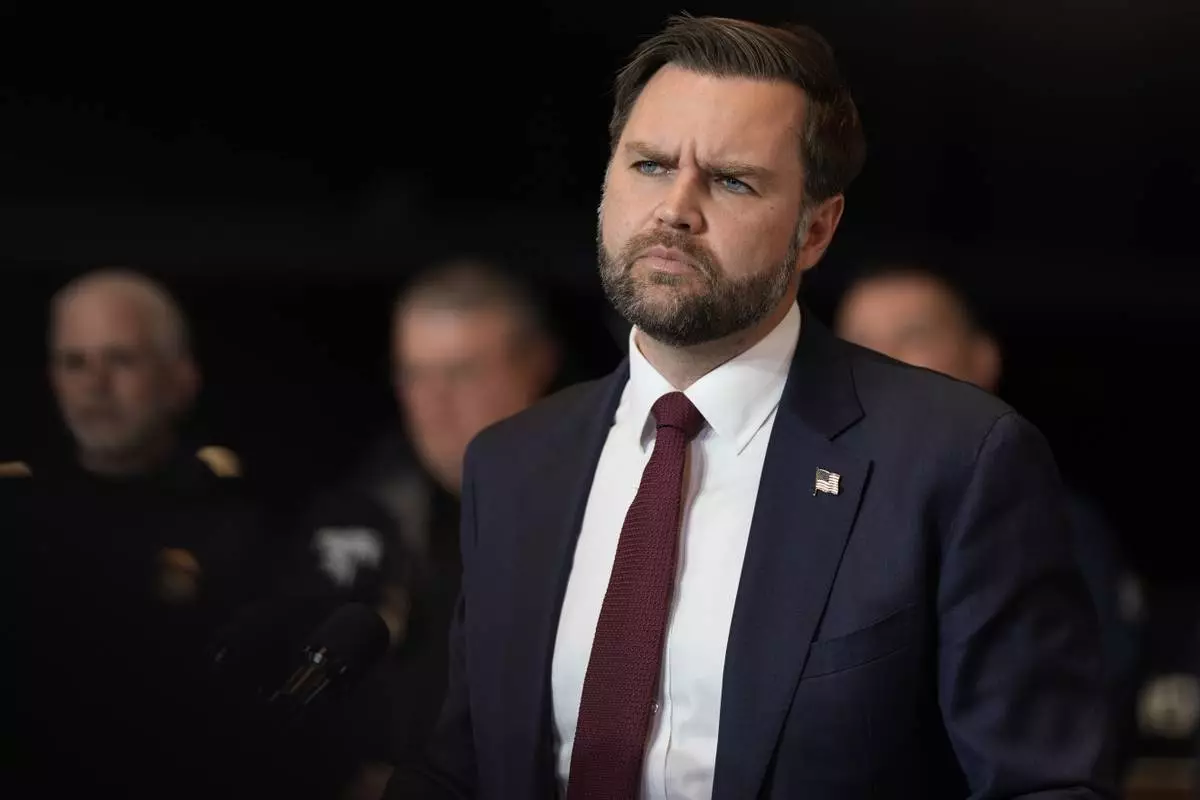
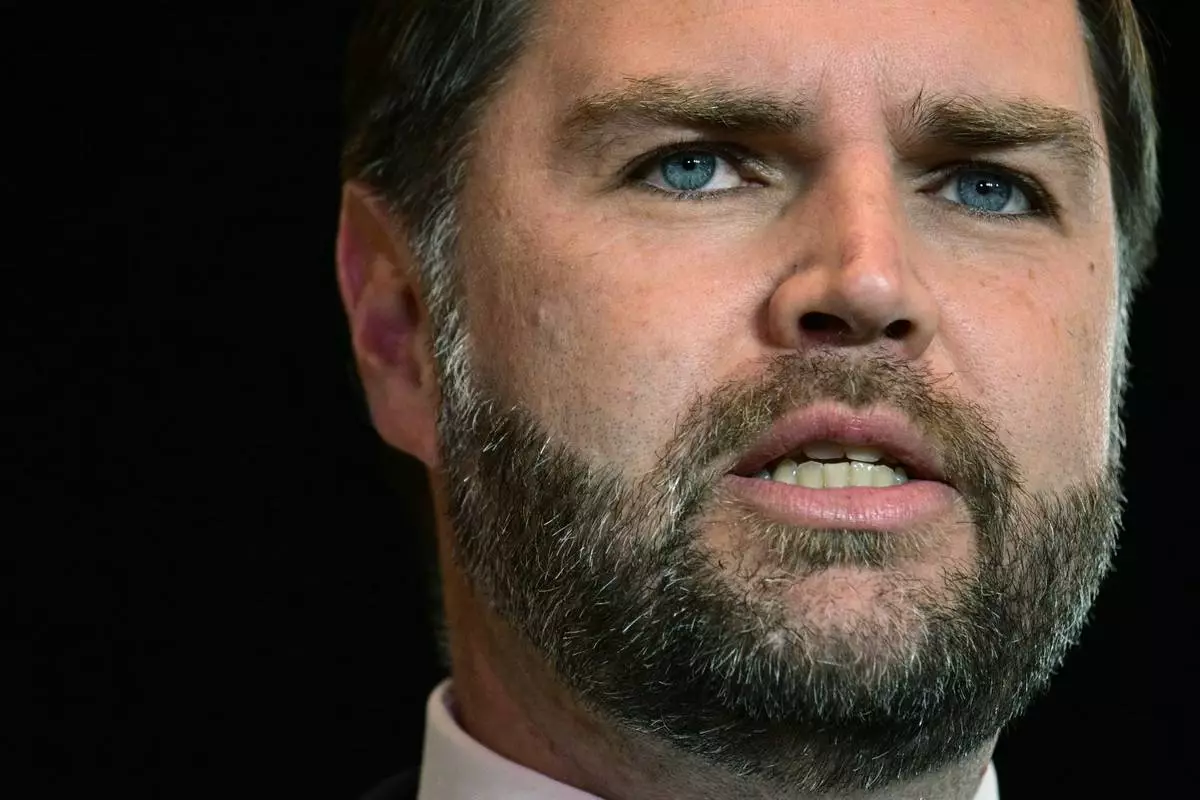
Vice President JD Vance speaks during a news conference on Thursday, Jan. 22, 2026, in Minneapolis. (AP Photo/Angelina Katsanis)
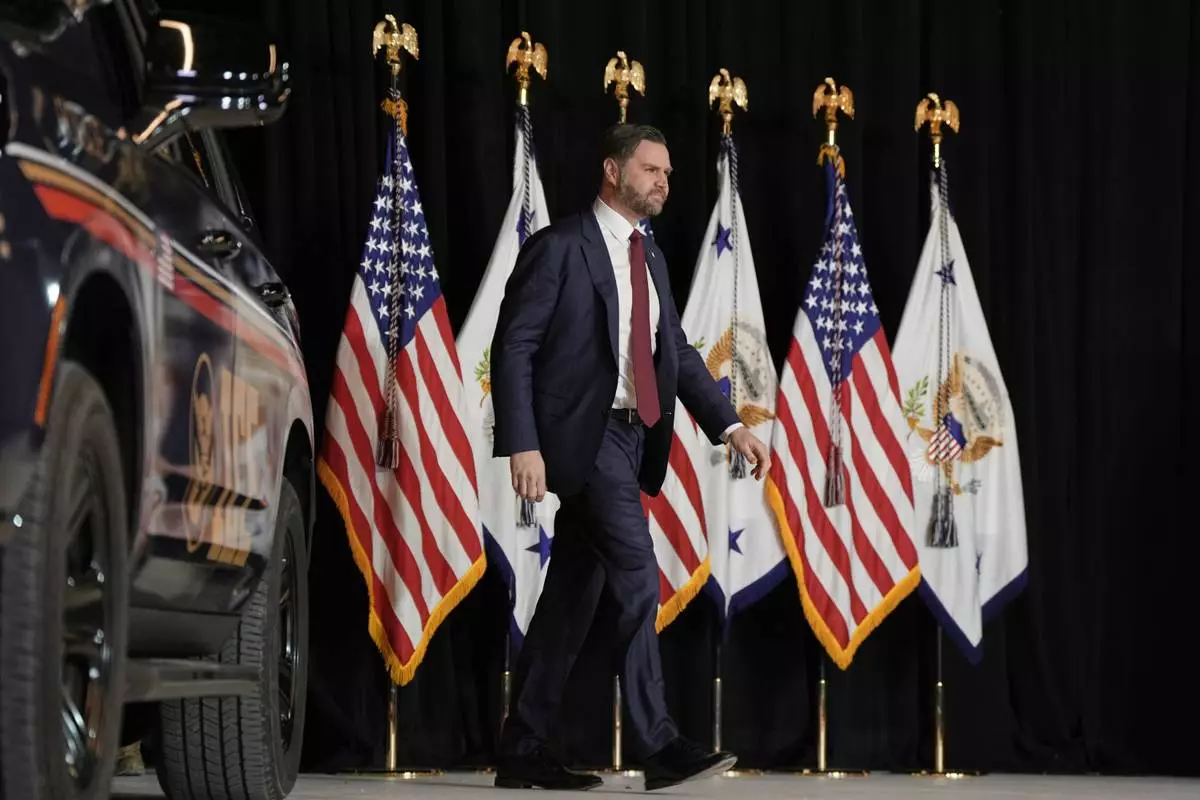
Vice President JD Vance speaks during a news conference on Thursday, Jan. 22, 2026, in Minneapolis. (AP Photo/Angelina Katsanis)
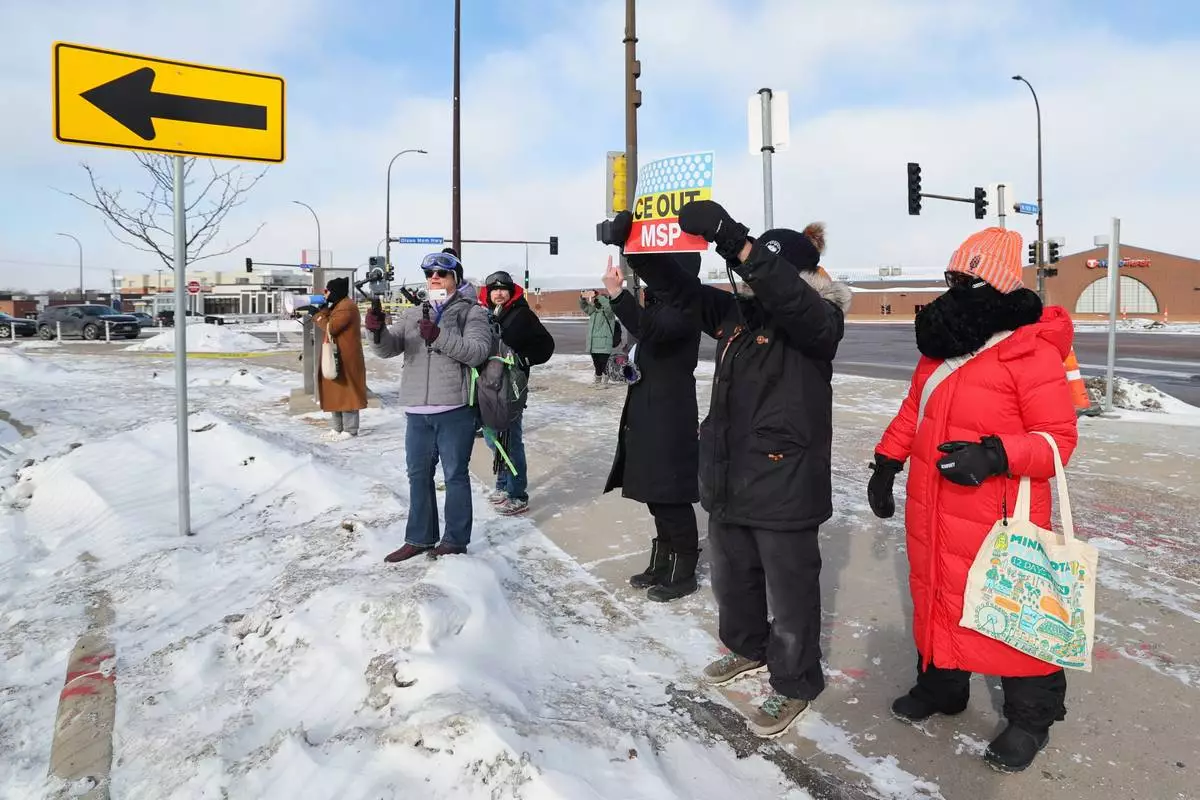
Protesters gather outside an event venue, as Vice President J.D. Vance visits Minneapolis, Thursday, Jan. 22, 2026. (AP Photo/Adam Bettcher)
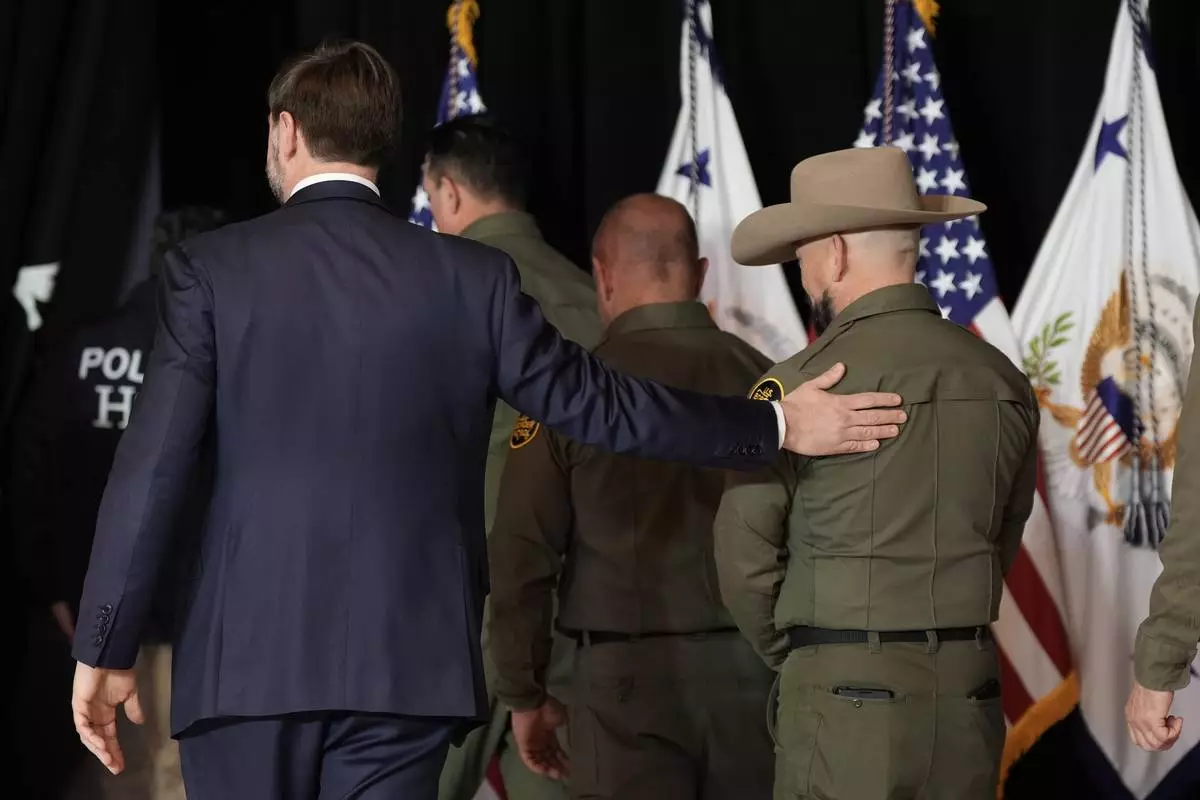
Vice President JD Vance walks out with Federal law enforcement agents after a news conference on Thursday, Jan. 22, 2026, in Minneapolis. (AP Photo/Angelina Katsanis)
Vice President JD Vance speaks at an industrial shipping facility on the administration's economic agenda and impacts on the Midwest in Toledo, Ohio, on Thursday, Jan. 22, 2026. (Jim Watson/Pool Photo via AP)
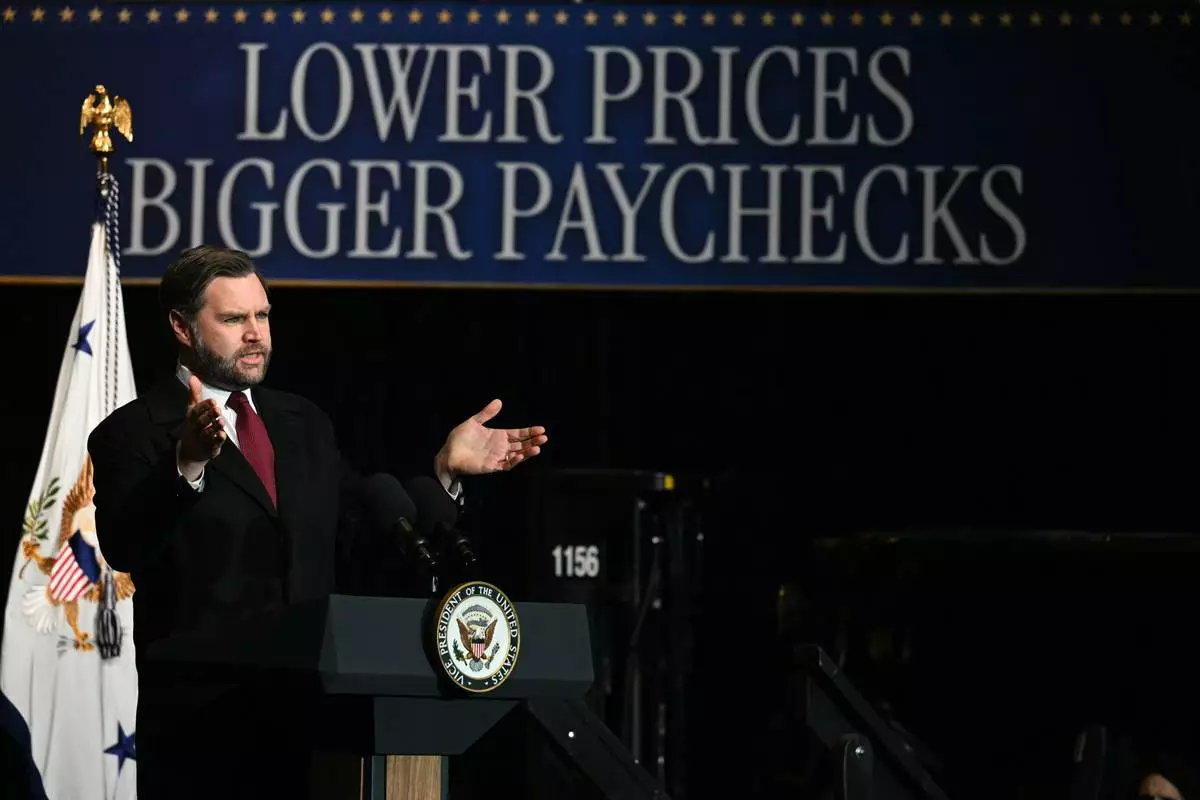
Vice President JD Vance speaks at an industrial shipping facility on the administration's economic agenda and impacts on the Midwest in Toledo, Ohio, on Thursday, Jan. 22, 2026. (Jim Watson/Pool Photo via AP)

Vice President JD Vance speaks at an industrial shipping facility on the administration's economic agenda and impacts on the Midwest in Toledo, Ohio, on Thursday, Jan. 22, 2026. (Jim Watson/Pool Photo via AP)
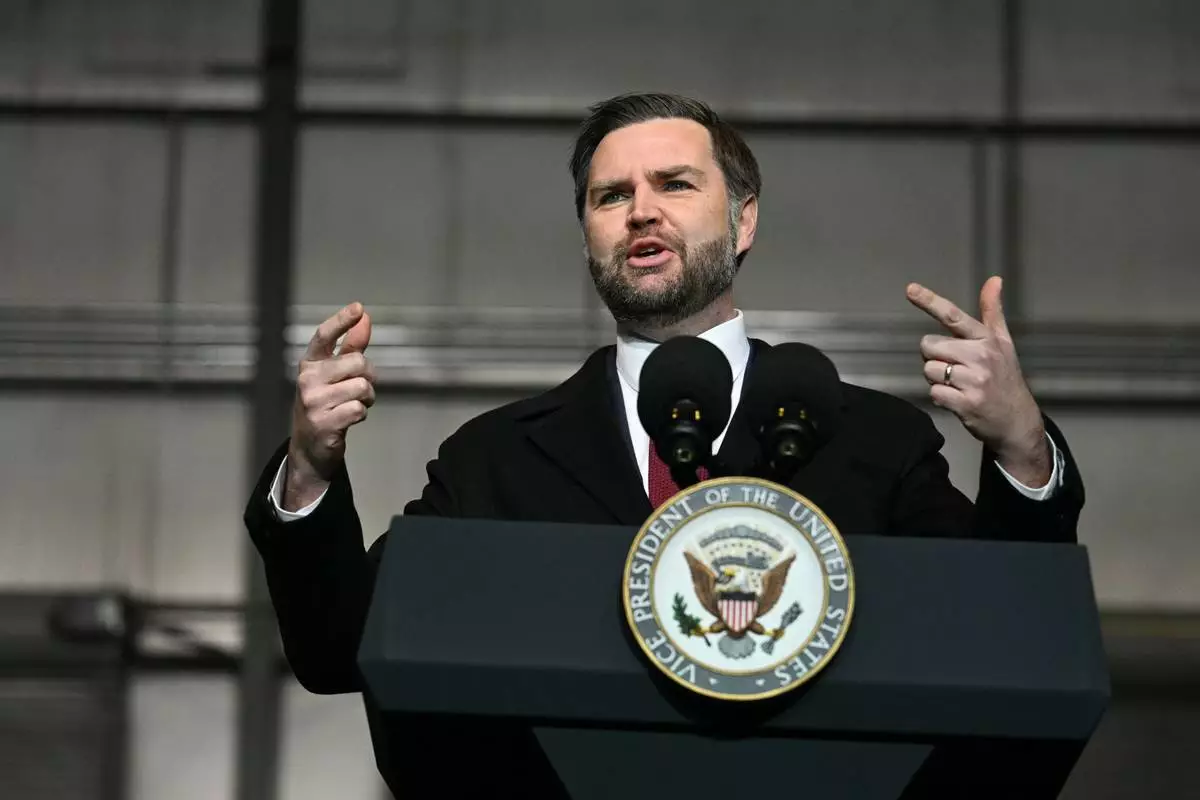
Vice President JD Vance speaks at an industrial shipping facility on the administration's economic agenda and impacts on the Midwest in Toledo, Ohio, on Thursday, Jan. 22, 2026. (Jim Watson/Pool Photo via AP)