Skip to Content Facebook Feature Image

US completes withdrawal from World Health Organization

News

US completes withdrawal from World Health Organization
News

News

US completes withdrawal from World Health Organization

2026-01-24 01:56 Last Updated At:02:00

NEW YORK (AP) — The U.S. has finalized its withdrawal from the World Health Organization, one year after President Donald Trump announced America was ending its 78-year-old commitment, federal officials said Thursday.

But it's hardly a clean break.

The U.S. owes about $280 million to the global health agency, according to WHO. And Trump administration officials acknowledge that they haven't finished working out some issues, such as lost access to data from other countries that could give America an early warning of a new pandemic.

The withdrawal will hurt the global response to new outbreaks and will hobble the ability of U.S. scientists and pharmaceutical companies to develop vaccines and medicines against new threats, said Lawrence Gostin, a public health law expert at Georgetown University.

“In my opinion, it’s the most ruinous presidential decision in my lifetime,” he said.

The WHO is the United Nations’ specialized health agency and is mandated to coordinate the response to global health threats, such as outbreaks of mpox, Ebola and polio. It also provides technical assistance to poorer countries; helps distribute scarce vaccines, supplies and treatments; and sets guidelines for hundreds of health conditions, including mental health and cancer.

Nearly every country in the world is a member.

U.S. officials helped lead the WHO's creation, and America has long been among the organization's biggest donors, providing hundreds of millions of dollars and hundreds of staffers with specialized public health expertise.

On average, the U.S. pays $111 million a year in member dues to the WHO and roughly $570 million more in annual voluntary contributions, according to the U.S. Department of Health and Human Services.

In an executive order issued right after taking office, Trump said the U.S. was withdrawing from WHO due to the organization’s mishandling of the COVID-19 pandemic and other global health crises. He also cited the agency’s “failure to adopt urgently needed reforms” and its “inability to demonstrate independence from the inappropriate political influence of WHO member states.”

WHO, like other public health organizations, made costly mistakes during the pandemic, including at one point advising people against wearing masks. It also asserted that COVID-19 wasn’t airborne, a stance it didn’t officially reverse until 2024.

Another Trump administration complaint: None of WHO's chief executives — there have been nine since the organization was created in 1948 — have been Americans. Administration officials view that as unfair given how much the WHO relies on U.S. financial contributions and on U.S. Centers for Disease Control and Prevention personnel.

Experts say the U.S. exit could cripple numerous global health initiatives, including the effort to eradicate polio, maternal and child health programs, and research to identify new viral threats.

Dr. Ronald Nahass, president of the Infectious Diseases Society of America, called the U.S. withdrawal “shortsighted and misguided” and “scientifically reckless.”

The U.S. has ceased official participation in WHO-sponsored committees, leadership bodies, governance structures and technical working groups. That would seem to include the WHO group that assesses what flu strains are circulating and makes critical decisions about updating flu shots.

It also signals the U.S. is no longer participating in global flu information-sharing that guides vaccine decisions.

Such disease intelligence has helped Americans be “at the front of the line” when new outbreaks occur and new vaccines and medicines are quickly needed to counteract them and save lives, Gostin said.

Trump administration officials say they already have public health relationships with many countries and are working to ensure direct sharing of that kind of information, rather than having WHO serve as a middleman. But U.S. officials did not give specifics about how many such arrangements are in place.

Gostin, an expert on international public health treaties and collaborations, said it's unlikely the U.S. will reach agreements with more than a couple dozen countries.

Many emerging viruses are first spotted in China, but “is China going to sign a contract with the United States?” Gostin said. “Are countries in Africa going to do it? Are the countries Trump has slapped with a huge tariff going to send us their data? The claim is almost laughable.”

Gostin also believes Trump overstepped his authority in pulling out of WHO. The U.S. joined the organization through an act of Congress and it is supposed to take an act of Congress to withdraw, he argued.

The U.S. is legally required to give notice one year in advance of withdrawal — which it did — but also to pay any outstanding financial obligations.

The U.S. has not paid any of its dues for 2024 and 2025, leaving a balance of about $280 million at current exchange rates, according to WHO.

An administration official denied that requirement Thursday, saying the U.S. had no obligation to pay prior to withdrawing as a member.

This story was first published on Jan. 22, 2026. It was updated on Jan. 23, 2026 to correct the amount of money owed to WHO.

Shastri reported from Milwaukee.

The Associated Press Health and Science Department receives support from the Howard Hughes Medical Institute’s Department of Science Education and the Robert Wood Johnson Foundation. The AP is solely responsible for all content.
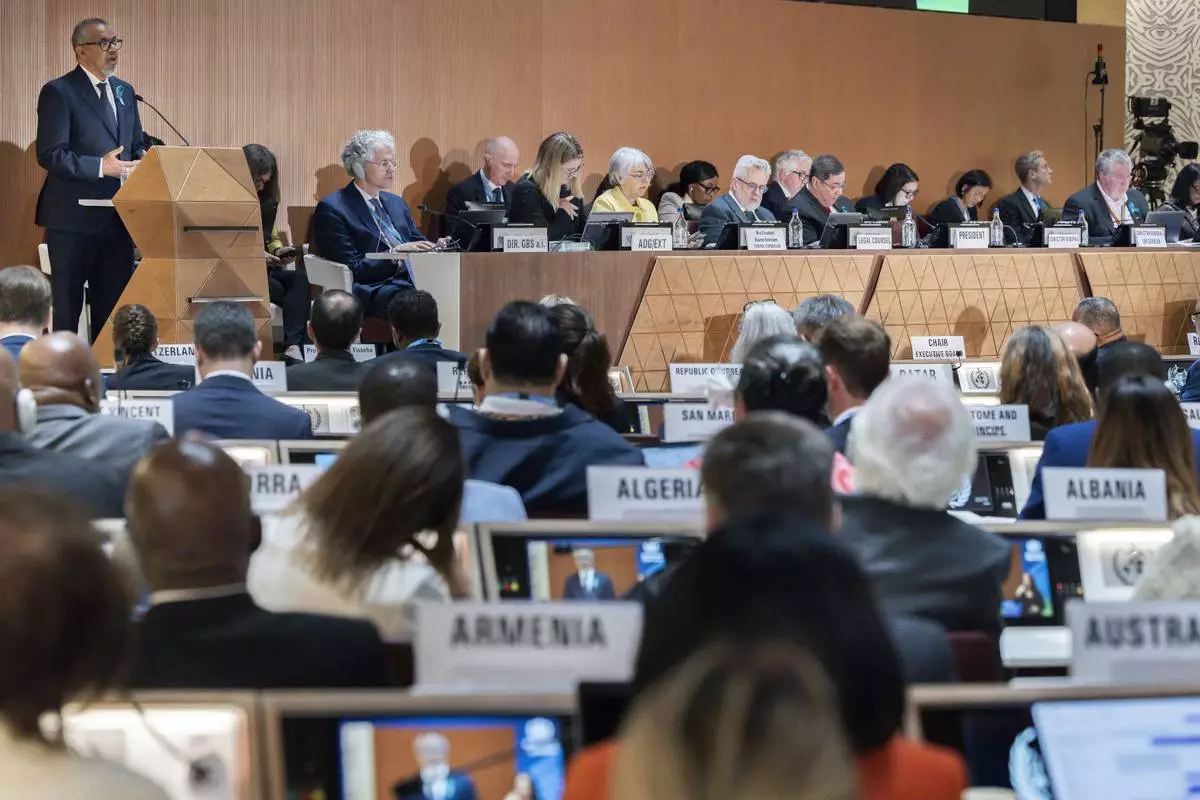
FILE - Director General of the World Health Organization (WHO) Tedros Adhanom Ghebreyesus, left, delivers his statement, during the opening of the 78th World Health Assembly at the European headquarters of the United Nations in Geneva, Switzerland, May 19, 2025. (Magali Girardin/Keystone via AP, File)
FILE - Director General of the World Health Organization (WHO) Tedros Adhanom Ghebreyesus, left, delivers his statement, during the opening of the 78th World Health Assembly at the European headquarters of the United Nations in Geneva, Switzerland, May 19, 2025. (Magali Girardin/Keystone via AP, File)

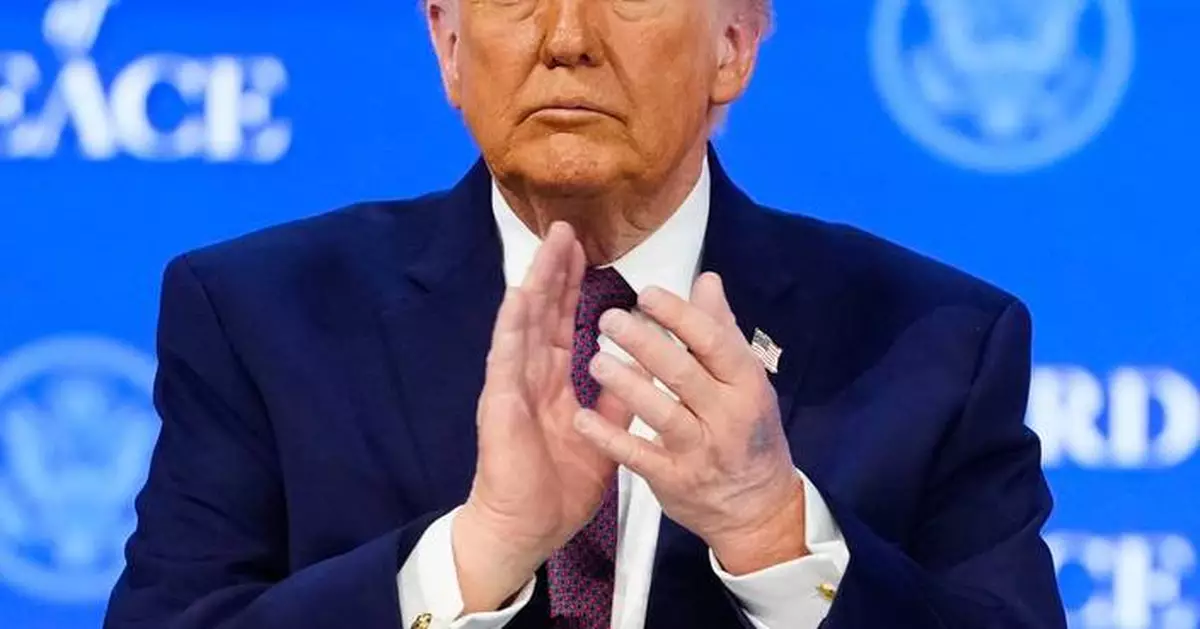
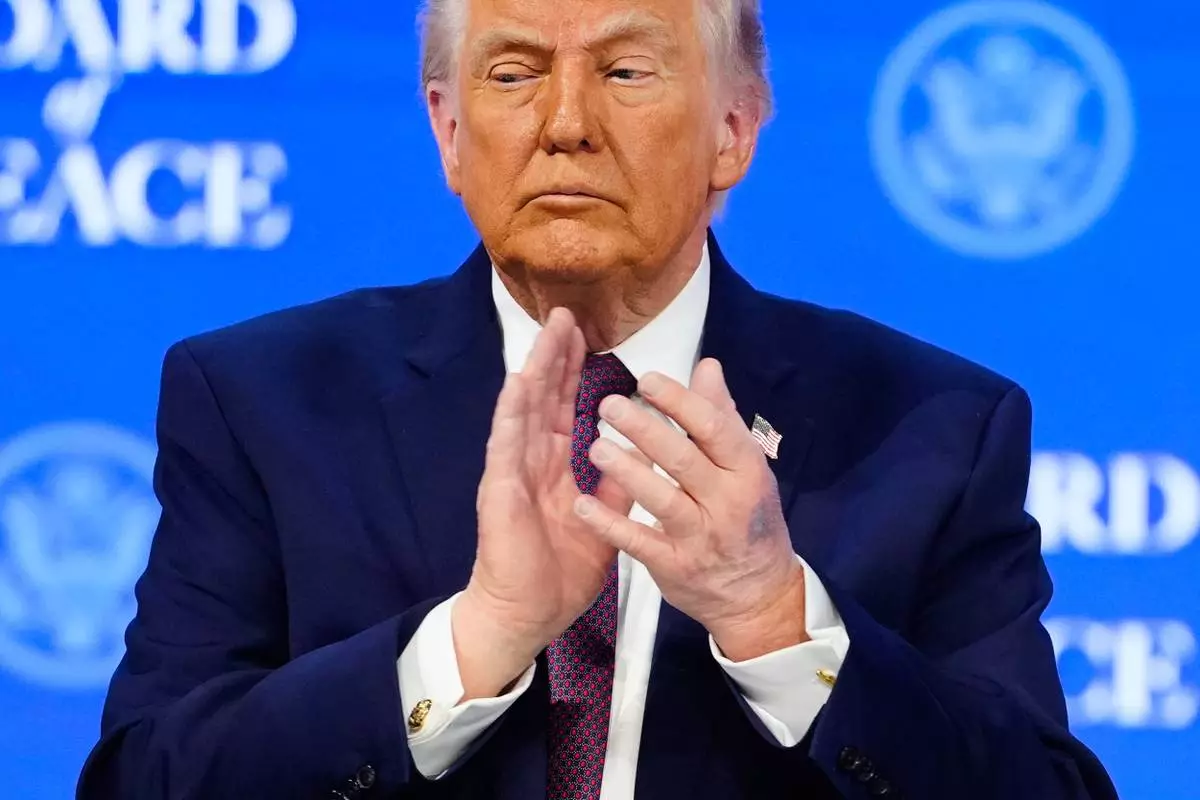
President Donald Trump applauses during a signing ceremony on his Board of Peace initiative at the Annual Meeting of the World Economic Forum in Davos, Switzerland, Thursday, Jan. 22, 2026. (AP Photo/Markus Schreiber)
President Donald Trump applauses during a signing ceremony on his Board of Peace initiative at the Annual Meeting of the World Economic Forum in Davos, Switzerland, Thursday, Jan. 22, 2026. (AP Photo/Markus Schreiber)
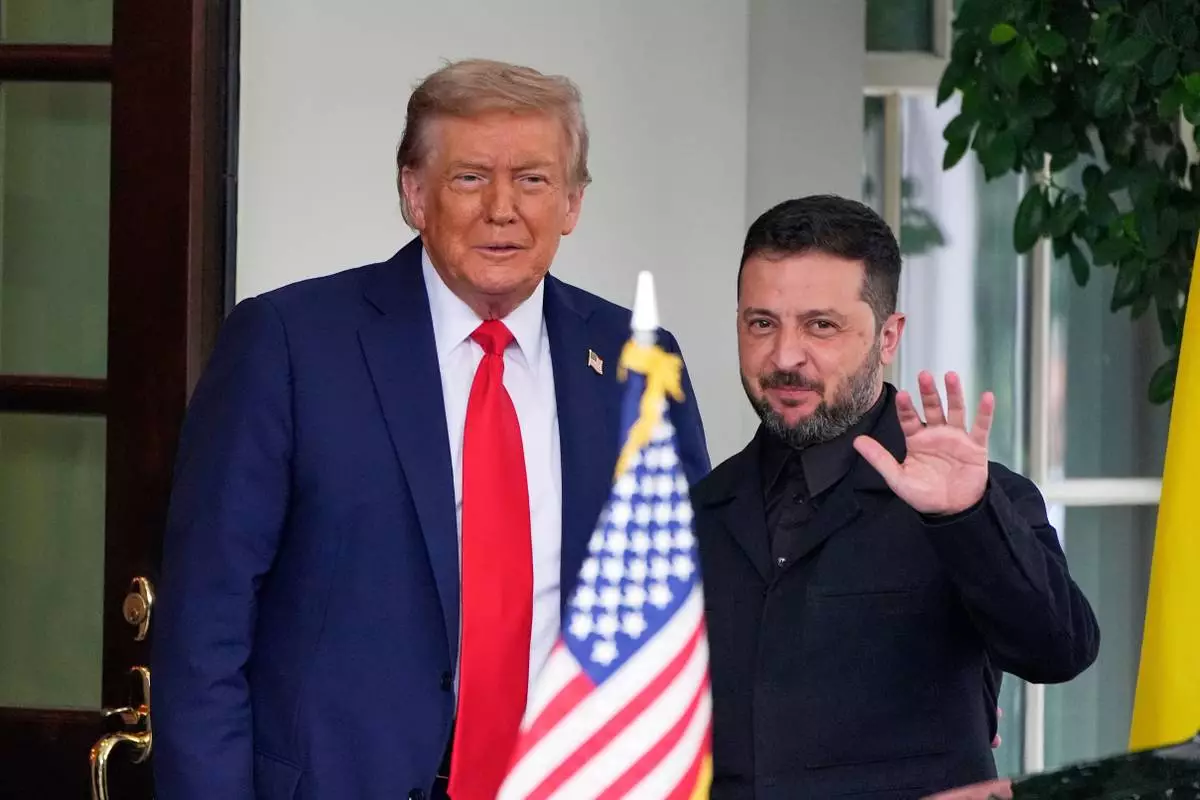
The U.S.-led push to end Russia’s nearly 4-year-old war in Ukraine gained momentum late last year and is moving ahead in 2026, with leaders, diplomats and envoys traveling to a flurry of meetings to discuss a potential deal.

Some key moments:

Nov. 19: Ukrainian President Volodymyr Zelenskyy travels to Turkey in what he said was an effort to jump-start negotiations on ending the war. Reports emerge soon after of a 28-point peace plan drafted by the U.S. and Russia that critics say leans heavily in Moscow’s favor.

Nov. 20: U.S. Army Secretary Dan Driscoll travels to the Ukrainian capital to brief Zelenskyy on the U.S.-backed peace proposal.

Nov. 23: U.S. Secretary of State Marco Rubio meets a Ukrainian delegation headed by then-presidential chief of staff Andrii Yermak for talks in Geneva. Both sides report progress but provide few details.

Nov. 24-25: Driscoll meets Russian officials in Abu Dhabi, United Arab Emirates. Russian President Vladimir Putin’s foreign policy adviser, Yuri Ushakov, says the parties do not discuss the new peace plan in detail.

Nov. 30: A Ukrainian delegation led by Rustem Umerov meets U.S. officials in Florida. He replaced Yermak, who resigned amid a corruption scandal involving Ukraine’s energy sector.

Dec. 1: Zelenskyy travels to Paris to brief French President Emmanuel Macron on the outcome of the Florida talks, as a U.S. delegation heads to Moscow for talks there.

Dec. 2: Putin meets Witkoff and U.S. President Donald Trump’s son-in-law Jared Kushner at the Kremlin for five hours. Russian envoy Kirill Dmitriev and Ushakov also were present. Ushakov describes the meeting as constructive, but says much work remains.

Dec. 2: Zelenskyy meets in Ireland with the Ukrainian delegation returning from Florida. He says Ukraine is waiting for signals from the U.S. delegation after its Moscow meeting.

Dec. 4-6: A Ukrainian delegation returns to Florida to meet U.S. delegates.

Dec. 14-15: Ukrainian officials, including Zelenskyy, travel to Berlin and hold talks with Witkoff and Kushner. U.S. officials say after the talks that Washington has agreed to provide Kyiv with unspecified security guarantees.

Dec. 20-21: Russian envoy Dmitriev holds several days of talks with Witkoff and Kushner in Miami. Separately, the Americans also meet with the Ukrainian delegation that also is in Florida.

Dec. 28: Zelenskyy flies to Florida to meet Trump, who calls Putin before sitting down with the Ukrainian president.

Jan. 6-7: Zelenskyy and other Ukrainian officials attend a summit of the “coalition of the willing” in Paris and hold talks with Witkoff and Kushner. Kyiv's allies tout major progress toward agreeing on how to defend Ukraine if a peace deal is struck, saying they were ready to provide international guarantees to deter Russia from attacking again.

Jan. 17: A Ukrainian delegation arrives in the U.S. for talks as Russia again attacks Ukraine’s power grid, cutting electricity and heat in freezing temperatures.

Jan. 20: Russian envoy Dmitriev meets with Witkoff and Kushner at the World Economic Forum in Davos, Switzerland. No details about what was discussed are revealed.

Jan. 21: Umerov says in a statement that the Ukrainian delegation in Davos met with Witkoff and Kushner there

Jan. 22: Zelenskyy meets Trump in Davos for about an hour. Trump describes the talks as “very good.” Zelenskyy calls them “productive and meaningful.”

Jan. 22-23: Putin hosts Witkoff and Kushner for talks in Moscow. After nearly four hours of talks, Ushakov reaffirms that "that reaching a long-term settlement can’t be expected without solving the territorial issue,” but says more talks will be held the next day in the United Arab Emirates.

Jan. 23: Russian, Ukrainian and U.S. delegates hold talks in Abu Dhabi, the first known instance that officials from the Trump administration have sat down with both countries to try to halt the war. Zelenskyy says the fraught issue of territorial concessions is likely be discussed, while the Kremlin calls the meeting a “working group on security issues.”

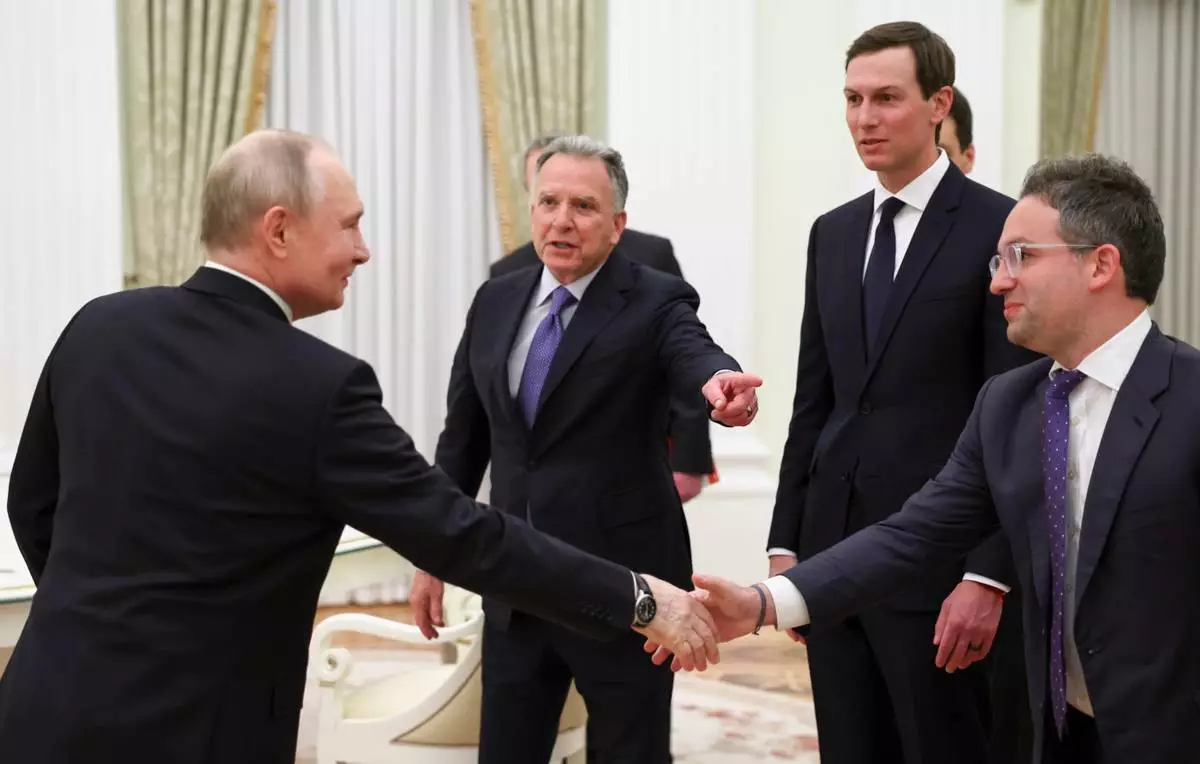
Russian President Vladimir Putin, left, greet U.S. President Donald Trump's envoys Steve Witkoff, centre left, Jared Kushner, second right, and Josh Gruenbaum, the head of the Federal Acquisition Service at the General Services Administration, at the Senate Palace of the Kremlin, in Moscow, Thursday, Jan. 22, 2026. (Alexander Kazakov/Sputnik, Kremlin Pool Photo via AP)

Russian President Vladimir Putin, left, greet U.S. President Donald Trump's envoys Steve Witkoff, centre left, Jared Kushner, second right, and Josh Gruenbaum, the head of the Federal Acquisition Service at the General Services Administration, at the Senate Palace of the Kremlin, in Moscow, Thursday, Jan. 22, 2026. (Alexander Kazakov/Sputnik, Kremlin Pool Photo via AP)

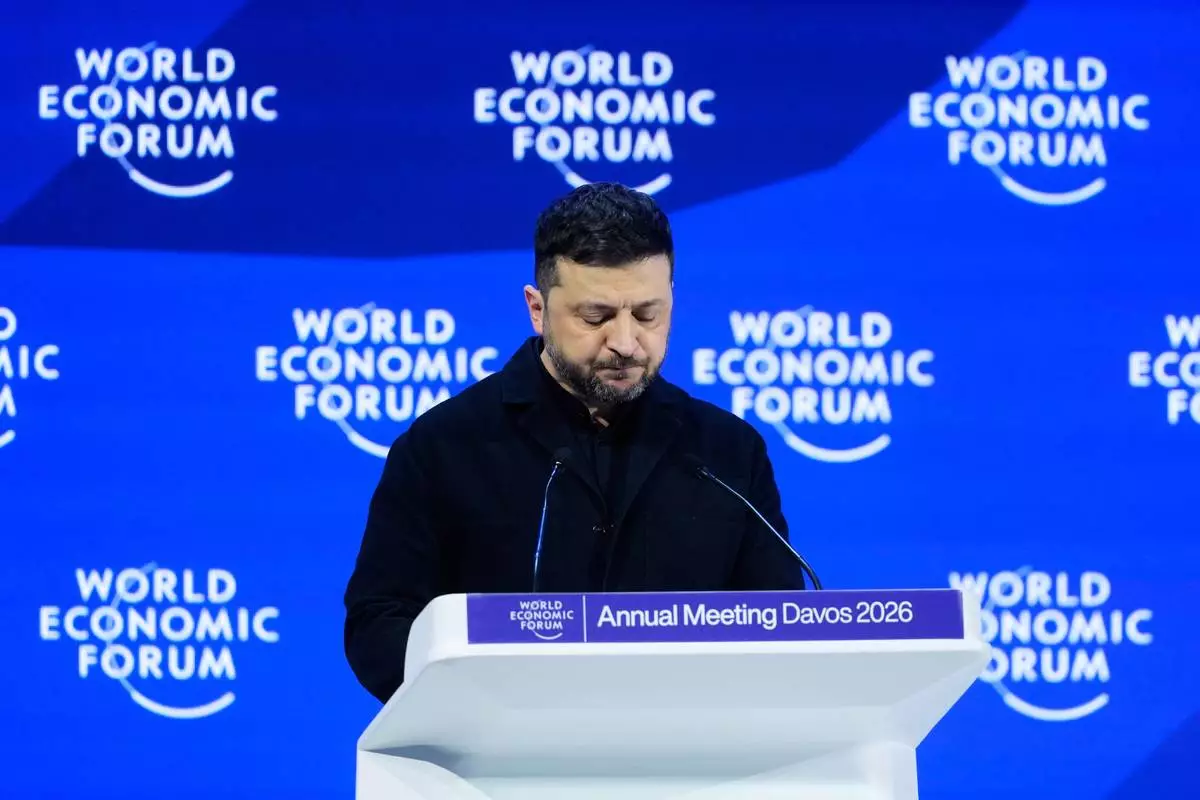
Ukraine's President Volodymyr Zelenskyy delivers a speech at the Annual Meeting of the World Economic Forum in Davos, Switzerland, Thursday, Jan. 22, 2026. (AP Photo/Markus Schreiber)
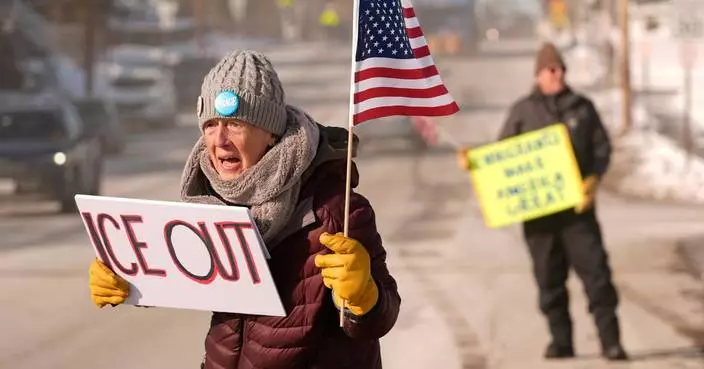
Ukraine's President Volodymyr Zelenskyy delivers a speech at the Annual Meeting of the World Economic Forum in Davos, Switzerland, Thursday, Jan. 22, 2026. (AP Photo/Markus Schreiber)
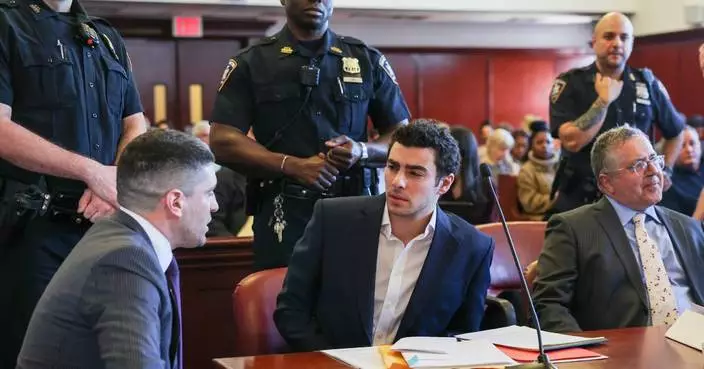
FILE - President Donald Trump, left, greets Ukraine's President Volodymyr Zelenskyy as he arrives at the White House, Aug. 18, 2025, in Washington. (AP Photo/Alex Brandon, File)

FILE - President Donald Trump, left, greets Ukraine's President Volodymyr Zelenskyy as he arrives at the White House, Aug. 18, 2025, in Washington. (AP Photo/Alex Brandon, File)

Recommended Articles