JERUSALEM (AP) — Modern cities with sleek high-rises, a pristine coastline that attracts tourists, and a state-of-the-art port that juts into the Mediterranean. This is what Jared Kushner, U.S. President Donald Trump's son-in-law and Middle East adviser, says Gaza could become, according to a presentation he gave at an economic forum in Davos, Switzerland.
In his 10-minute speech on Thursday, Kushner claimed it would be possible — if there's security — to quickly rebuild Gaza's cities, which are now in ruins after more than two years of war between Israel and Hamas.
“In the Middle East, they build cities like this ... in three years," said Kushner, who helped broker the ceasefire in place since October. “And so stuff like this is very doable, if we make it happen.”
That timeline is at odds with what the United Nations and Palestinians expect will be a very long process to rehabilitate Gaza. Across the territory of roughly 2 million people, former apartment blocks are hills of rubble, unexploded ordnance lurks beneath the wreckage, disease spreads because of sewage-tainted water and city streets look like dirt canyons.
The United Nations Office for Project Services says Gaza has more than 60 million tons of rubble, enough to fill nearly 3,000 container ships. That will take over seven years to clear, they say, and then additional time is needed for demining.
Kushner spoke as Trump and an assortment of world leaders gathered to ratify the charter of the Board of Peace, the body that will oversee the ceasefire and reconstruction process.
Here are key takeaways from the presentation, and some questions raised by it:
Kushner said his reconstruction plan would only work if Gaza has “security” — a big “if.”
It remains uncertain whether Hamas will disarm, and Israeli troops fire upon Palestinians in Gaza on a near-daily basis.
Officials from the militant group say they have the right to resist Israeli occupation. But they have said they would consider “freezing” their weapons as part of a process to achieve Palestinian statehood.
Since the latest ceasefire took effect Oct. 10, Israeli troops have killed at least 470 Palestinians in Gaza, including young children and women, according to the territory's Health Ministry. Israel says it has opened fire in response to violations of the ceasefire, but dozens of civilians have been among the dead.
In the face of these challenges, the Board of Peace has been working with Israel on “de-escalation,” Kushner said, and is turning its attention to the demilitarization of Hamas — a process that would be managed by the U.S.-backed Palestinian committee overseeing Gaza.
It's far from certain that Hamas will yield to the committee, which goes by the acronym NCAG and is envisioned eventually handing over control of Gaza to a reformed Palestinian Authority. Hamas says it will dissolve the government to make way, but has been vague about what will happen to its forces or weapons. Hamas seized control of Gaza in 2007 from the Palestinian Authority.
Another factor that could complicate disarmament: the existence of competing armed groups in Gaza, which Kushner's presentation said would either be dismantled or “integrated into NCAG.” During the war, Israel has supported armed groups and gangs of Palestinians in Gaza in what it says is a move to counter Hamas.
Without security, Kushner said, there would be no way to draw investors to Gaza and or stimulate job growth. The latest joint estimate from the U.N., the European Union and the World Bank is that rebuilding Gaza will cost $70 billion.
Reconstruction would not begin in areas that are not fully disarmed, one of Kushner’s slides said.
When unveiling his plan for Gaza's reconstruction, Kushner did not say how demining would be handled or where Gaza’s residents would live as their areas are being rebuilt. At the moment, most families are sheltering in a stretch of land that includes parts of Gaza City and most of Gaza's coastline.
Talk of building new, modern cities has left many Palestinians worried that returning to their homes or rebuilding them won’t be possible.
“I was planning to pitch a tent where my old house was, and gradually rebuild my life again,” said Ahmed Awadallah, who is living with his family in one of the many displacement camps in the city of Khan Younis.
If the high-rises Kushner envisions ever get built, he thinks his family might, at best, end up in a small apartment in one of them.
Bassil Najjar, who is staying in the same tent camp as Awadallah, said he believes the promised high-rises are not meant for people from Gaza. His torched house is in an area currently under Israeli control.
“I have lost hope to return to my house,” he said Friday.
In Kushner's vision of a future Gaza, there would be new roads and a new airport — the old one was destroyed by Israel more than 20 years ago — plus a new port, and an area along the coastline designated for “tourism” that is currently where most Palestinians live. The plan calls for eight “residential areas” interspersed with parks, agricultural land and sports facilities.
Also highlighted by Kushner were areas for “advanced manufacturing,” “data centers,” and an “industrial complex,” though it is not clear what industries they would support.
Kushner said construction would first focus on building “workforce housing” in Rafah, a southern city that was decimated during the war and is currently controlled by Israeli troops. He said rubble-clearing and demolition were already underway there.
Kushner did not address whether demining would occur. The United Nations says unexploded shells and missiles are everywhere in Gaza, posing a threat to people searching through rubble to find their relatives, belongings, and kindling.
Rights groups say rubble clearance and demining activities have not begun in earnest in the zone where most Palestinians live because Israel has prevented the entry of heavy machinery.
After Rafah will come the reconstruction of Gaza City, Kushner said, or “New Gaza,” as his slide calls it. The new city could be a place where people will “have great employment," he said.
Nomi Bar-Yaacov, an international lawyer and expert in conflict resolution, described the board’s initial concept for redeveloping Gaza as “totally unrealistic” and an indication Trump views it from a real estate developer's perspective, not a peacemaker's.
A project with so many high-rise buildings would never be acceptable to Israel because each would provide a clear view of its military bases near the border, said Bar-Yaacov, who is an associate fellow at the Geneva Centre for Security Policy.
What's more, Kushner’s presentation said the NCAG would eventually hand off oversight of Gaza to the Palestinian Authority after it makes reforms. But Israeli Prime Minister Benjamin Netanyahu has adamantly opposed any proposal for postwar Gaza that involves the Palestinian Authority. And even in the West Bank, where it governs, the Palestinian Authority is widely unpopular because of corruption and perceived collaboration with Israel.
Toqa Ezzidin in Cairo and Danica Kirka contributed from London.

From left, United States Mideast envoy Steve Witkoff, Jared Kushner and United States Secretary of State Marco Rubio prior to a Board of Peace charter announcement during the Annual Meeting of the World Economic Forum in Davos, Switzerland, Thursday, Jan. 22, 2026. (AP Photo/Evan Vucci)
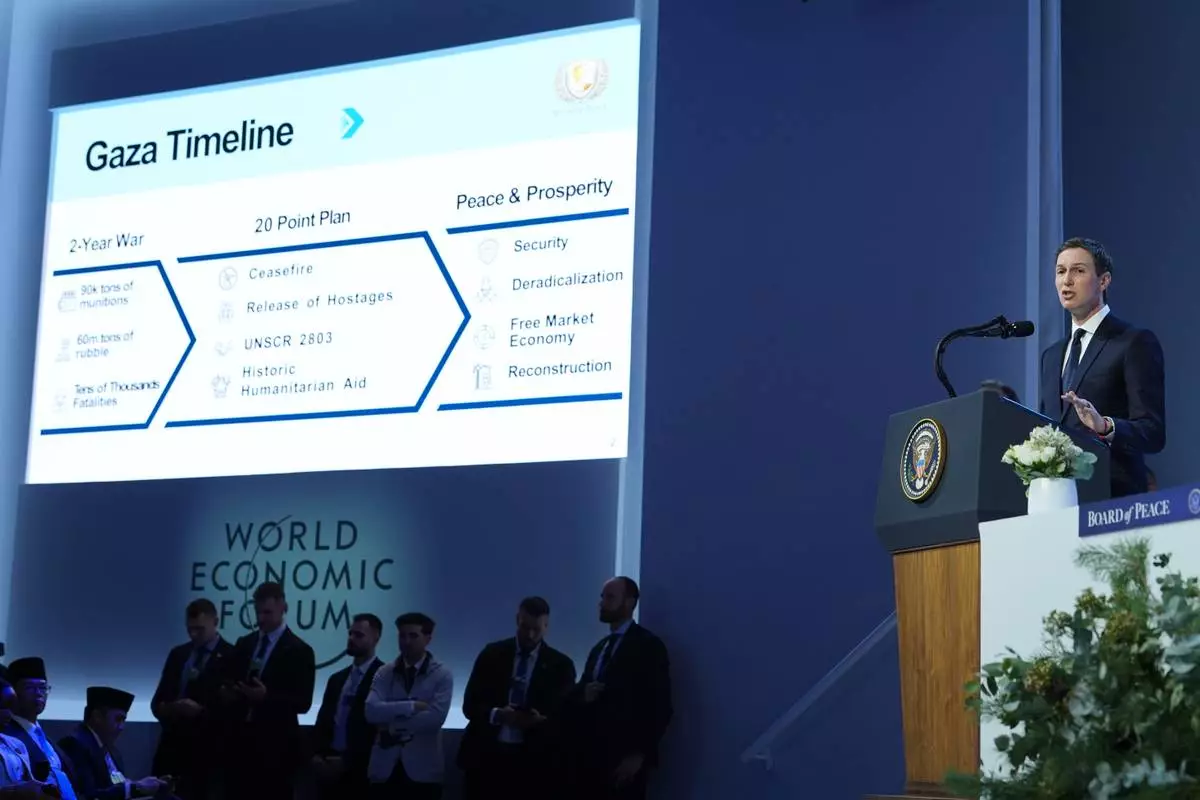
Jared Kushner speaks after the signing of a Board of Peace charter during the Annual Meeting of the World Economic Forum in Davos, Switzerland, Thursday, Jan. 22, 2026. (AP Photo/Evan Vucci)
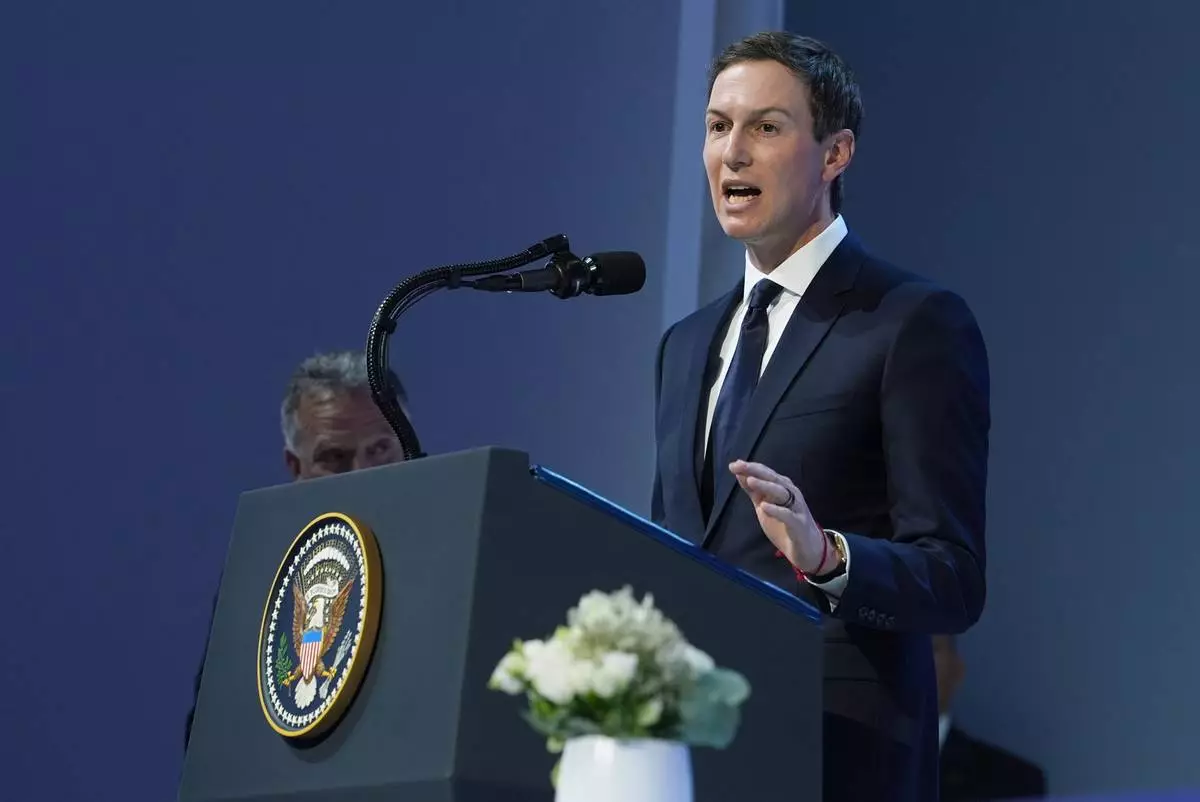
Jared Kushner speaks after the signing of a Board of Peace charter during the Annual Meeting of the World Economic Forum in Davos, Switzerland, Thursday, Jan. 22, 2026. (AP Photo/Evan Vucci)
DUBAI, United Arab Emirates (AP) — Iran attacked commercial ships on Wednesday and targeted Dubai International Airport, escalating a campaign of bottling up the oil-rich Persian Gulf as global energy concerns mounted and American and Israeli airstrikes pounded the Islamic Republic.
Iran's response to the surprise Israeli and U.S. bombardment 12 days ago has upended trade routes, choked supplies of fuel and fertilizer coming out of the Gulf and threatened air traffic through one of the world's most-traveled regions. Both sides have dug in, hoping to outlast the other.
An Israeli intelligence assessment found that Iran's new supreme leader, Ayatollah Mojtaba Khamenei, was wounded at the start of the war — on the day when his father and predecessor, Ayatollah Ali Khamenei, was killed in an Israeli airstrike.
An Israeli intelligence official and a reservist with knowledge of the assessment spoke on condition of anonymity because they were not authorized to discuss the matter with the media. They gave no details on the nature of the injuries.
The 56-year-old, whose wife was also killed in the Israeli strike, has not been seen since becoming supreme leader on Monday. Yousef Pezeshkian, the son of Iranian President Masoud Pezeshkian, wrote on social media that he had heard Mojtaba was wounded but that friends said “he is healthy and there is no problem.”
The fallout across the Middle East has widened as Israel strikes what it says are targets connected to Iran-backed Hezbollah militants in Lebanon. The U.N. refugee agency said at least 759,000 people have been internally displaced in Lebanon, while more than 92,000 others have crossed into neighboring Syria.
In a separate development, Iran’s sports minister said it cannot take part in the upcoming soccer World Cup in North America in June because of the “wicked acts” of the United States. Ahmad Donyamali told Iranian state TV that “it’s not possible for us to take part in the World Cup” after the U.S. launched two wars against Iran in less than a year. He said Iranian players would not be safe in the United States.
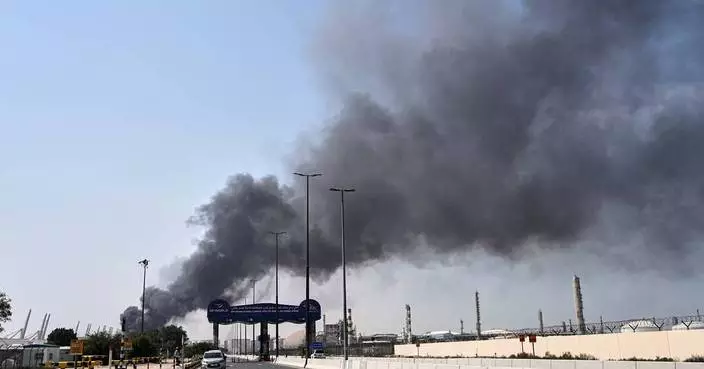
Two Iranian drones hit near the Dubai airport, home to the long-haul carrier Emirates and the world’s busiest for international travel. Four people were wounded but flights continued, the Dubai Media Office said.
A projectile hit a Thai cargo ship off the coast of Oman in the Strait of Hormuz, setting it ablaze. Authorities are searching for three missing crew members from the Mayuree Naree after 20 were rescued by the Omani navy, according to Thailand’s Marine Department.
At least 12 incidents have been confirmed involving vessels in and around the Strait of Hormuz, through which a fifth of all traded oil passes, since the war began, according to two global trackers. The International Maritime Organization says at least seven mariners have been killed.
Iran has effectively stopped cargo traffic through the narrow strait. It has also targeted oil fields and refineries in Gulf Arab nations, aiming at generating enough global economic pain to pressure the United States and Israel to end their strikes.
The United States has pledged to keep the strait open and has carried out intense airstrikes targeting Iran's navy and the port city of Bandar Abbas.
The U.S. military said Tuesday it had destroyed 16 Iranian minelayers near the strait, though U.S. President Donald Trump said in social media posts that there were no reports yet of Iran mining the passage.
Some tankers, believed linked to Iran, are continuing to get through the strait, making so-called “dark” transits -- meaning they aren’t turning on trackers that show where they are. Vessels carrying sanctioned Iranian crude often turn off their trackers.
The commodity-tracking firm Kpler said Iran has restarted crude exports through its Jask oil terminal on the Gulf of Oman. A tanker loaded roughly 2 million barrels at Jask on March 7, it said.
Oil prices remained well below Monday’s peaks but the price of Brent crude, the international standard, was still up some 20% Wednesday from when the war began. Consumers around the world are already feeling the pain at the pump.
The International Energy Agency agreed Wednesday to release the largest volume of emergency oil reserves in its history, in a bid to counter the war’s impact on energy markets.
The Paris-based organization said it will make 400 million barrels of oil available from its member countries’ emergency reserves, more than twice the amount they released four years ago in response to Russia’s invasion of Ukraine.
Israeli strikes set a building ablaze in central Beirut, engulfing the top two floors. Lebanon’s Health Ministry said four people were wounded.
Other Israeli strikes on southern and eastern Lebanon killed 14 people, and a Red Cross worker also died Wednesday of wounds sustained Monday, when his team was hit by an Israeli strike while they were rescuing people from an earlier attack.
Lebanon's Health Ministry said Wednesday that 570 people have been killed in the country since the latest fighting began.
Iranian authorities say more than 1,300 people have been killed there, and Israel has reported 12 people dead. The U.S. has lost seven soldiers while another eight have suffered severe injuries.
Iran’s joint military command said it would start targeting banks and financial institutions in the Middle East. That would put at risk particularly Dubai, in the United Arab Emirates, which is home to many international financial institutions, as well as Saudi Arabia and the island kingdom of Bahrain.
The threat came after a Tehran location of Bank Sepah, a state-owned financial institution sanctioned by the U.S. over funding its armed forces, came under attack Wednesday, killing staffers there, according to the state-run IRNA news agency.
This story has been corrected to fix an earlier misspelling of Mojtaba Khamenei’s first name.
Mednick reported from Tel Aviv, Israel and Rising from Bangkok. Associated Press writers Samy Magdy in Cairo, Sally Abou AIJoud in Beirut, Giovanna Dell’Orto in Miami, Jamey Keaten in Geneva, Cara Anna in Lowville, New York, Kirsten Grieshaber in Berlin and Samuel Petrequin in Paris contributed to this story.

A man holds a picture of late Defense Minister Aziz Nasirzadeh beside his coffin as mourners attend the funeral procession for senior Iranian military officials and civilians killed during the U.S.-Israel campaign in Tehran, Iran, Wednesday, March 11, 2026. (AP Photo/Vahid Salemi)
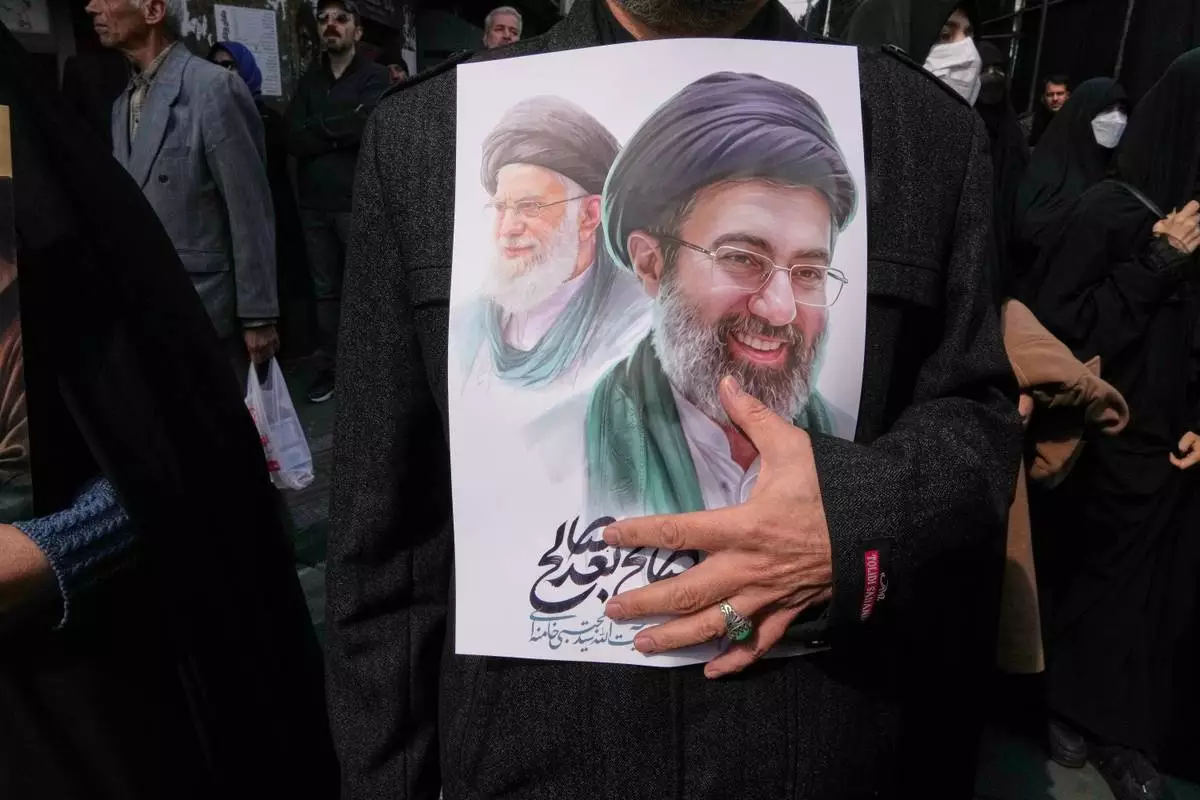
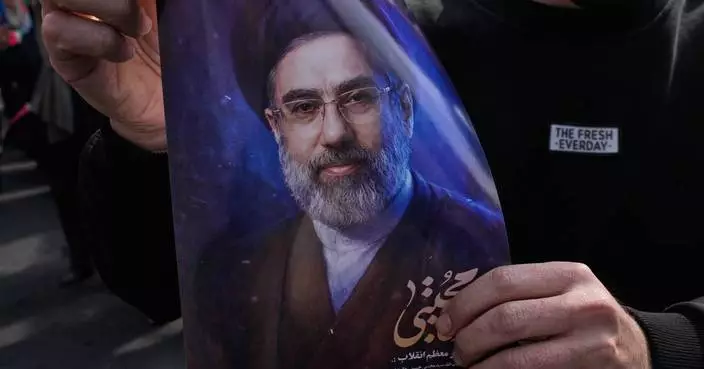
A mourner holds a poster depicting Ayatollah Mojtaba Khamenei, right, the successor to his late father Ayatollah Ali Khamenei, left, as supreme leader, during the funeral procession for senior Iranian military officials and civilians killed during the U.S.-Israel campaign in Tehran, Iran, Wednesday, March 11, 2026. (AP Photo/Vahid Salemi)
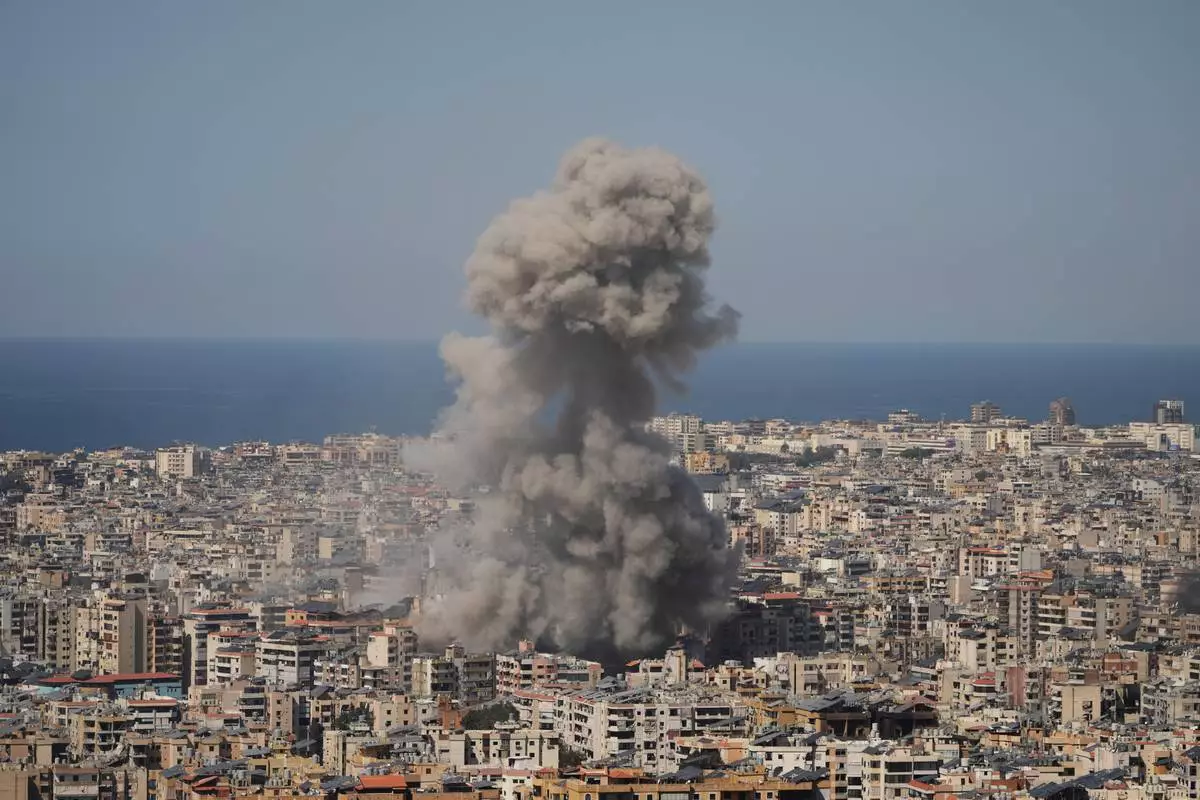
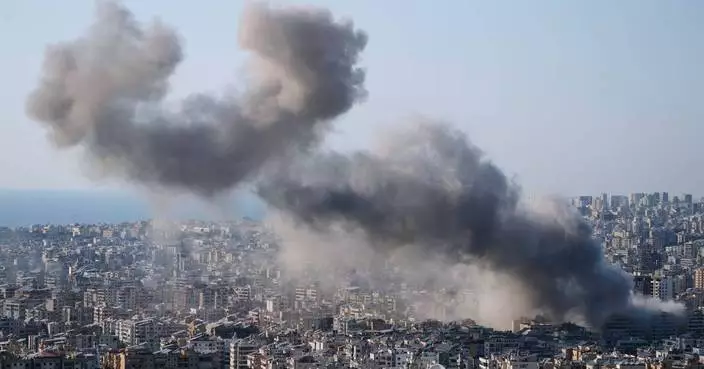
Smoke rises from a building following an Israeli airstrike in Dahiyeh, Beirut's southern suburb, Wednesday, March 11, 2026. (AP Photo/Hassan Ammar)
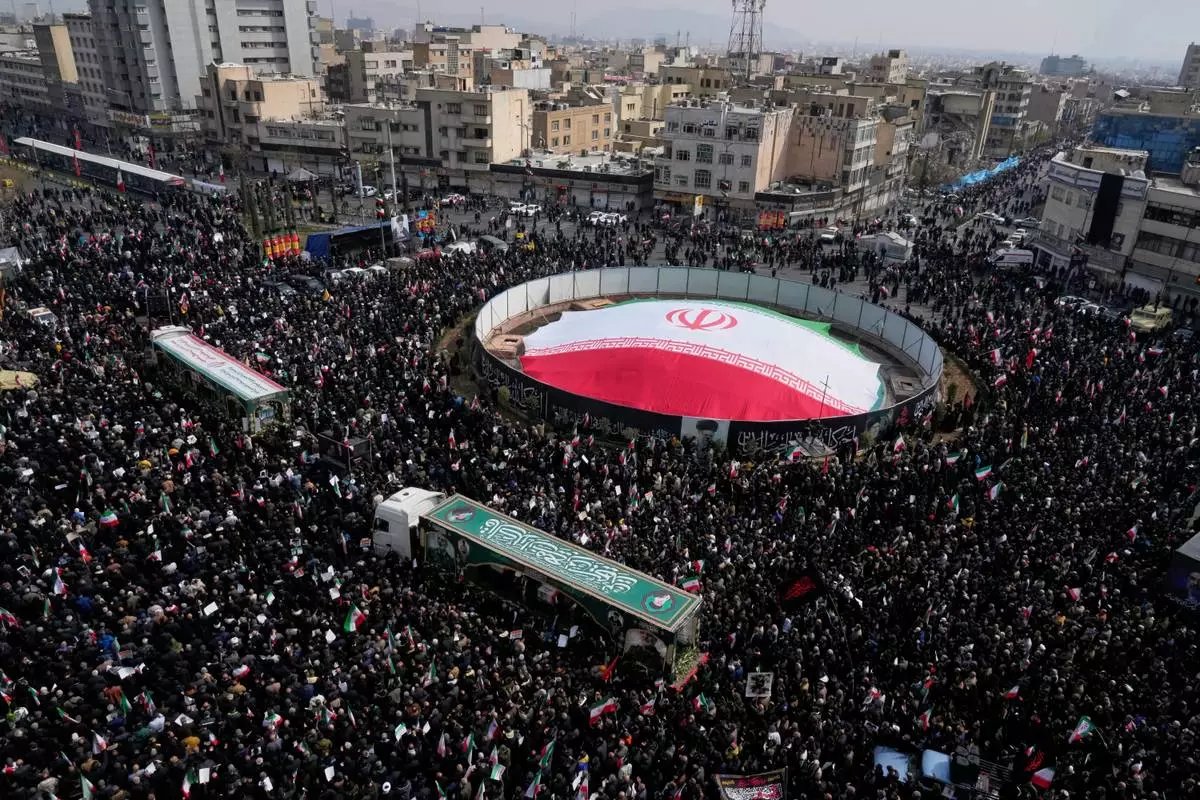
Mourners attend the funeral procession for senior Iranian military officials and some civilians killed during the U.S.-Israel campaign, in Tehran, Iran, Wednesday, March 11, 2026. (AP Photo/Vahid Salemi)

FILE - A plume of smoke rises after a strike in Tehran, Iran, Monday, March 2, 2026. (AP Photo/Mohsen Ganji, File)

Rescue workers gather at the site where Israeli airstrikes hit apartments in Beirut, Lebanon, Wednesday, March 11, 2026. (AP Photo/Hussein Malla)
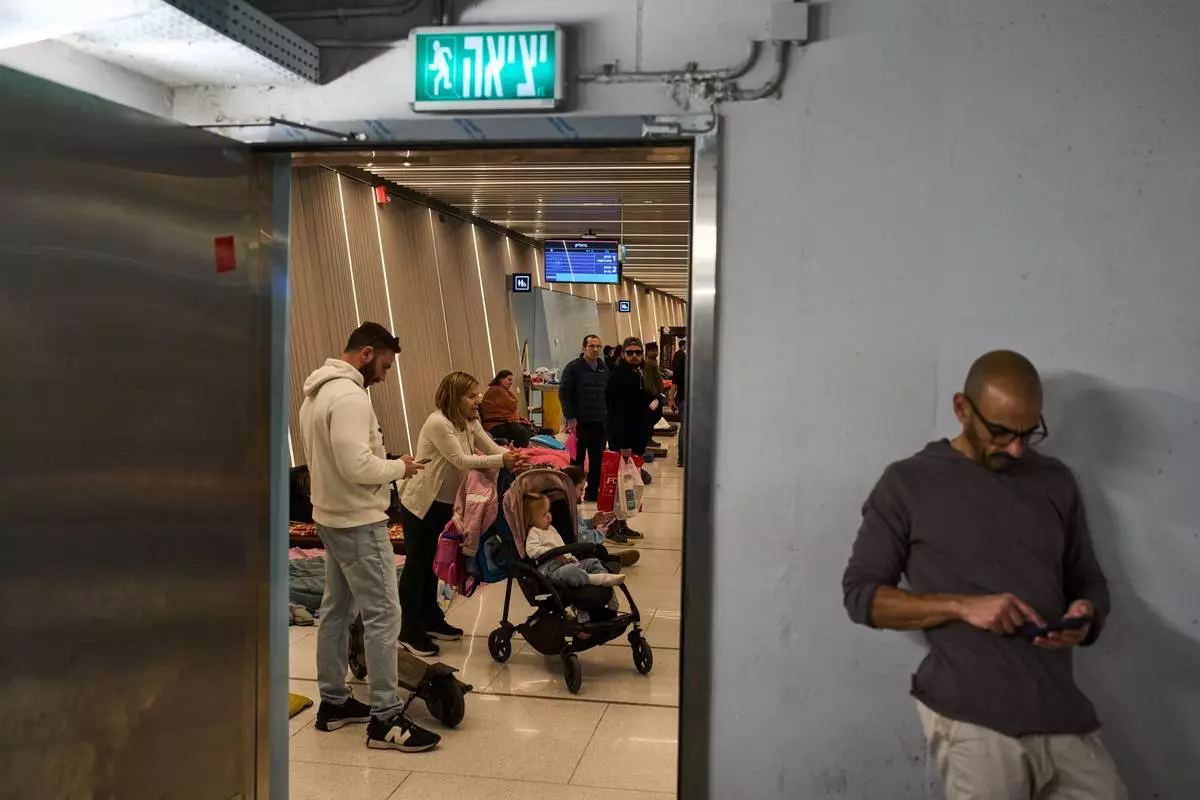
People take shelter in an underground metro station as air raid sirens warn of incoming Iranian missile strike, in Ramat Gan, Israel, Tuesday, March 10, 2026. (AP Photo/Oded Balilty)
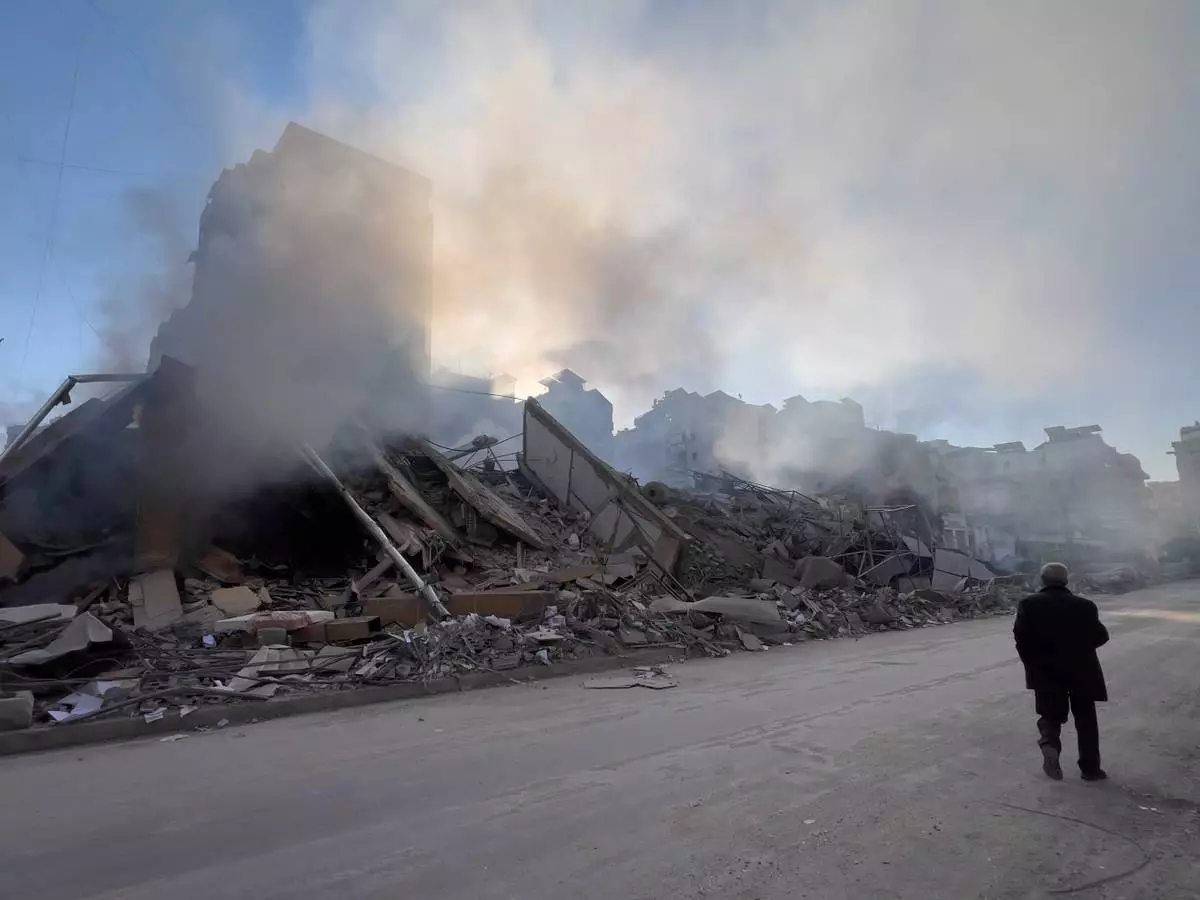
A man passes in front of a destroyed building that housed a branch of Al-Qard Al-Hassan, a non-bank financial institution run by Hezbollah, which was hit by an Israeli airstrike in Dahiyeh, Beirut's southern suburbs, Lebanon, Tuesday, March 10, 2026. (AP Photo/Hussein Malla)
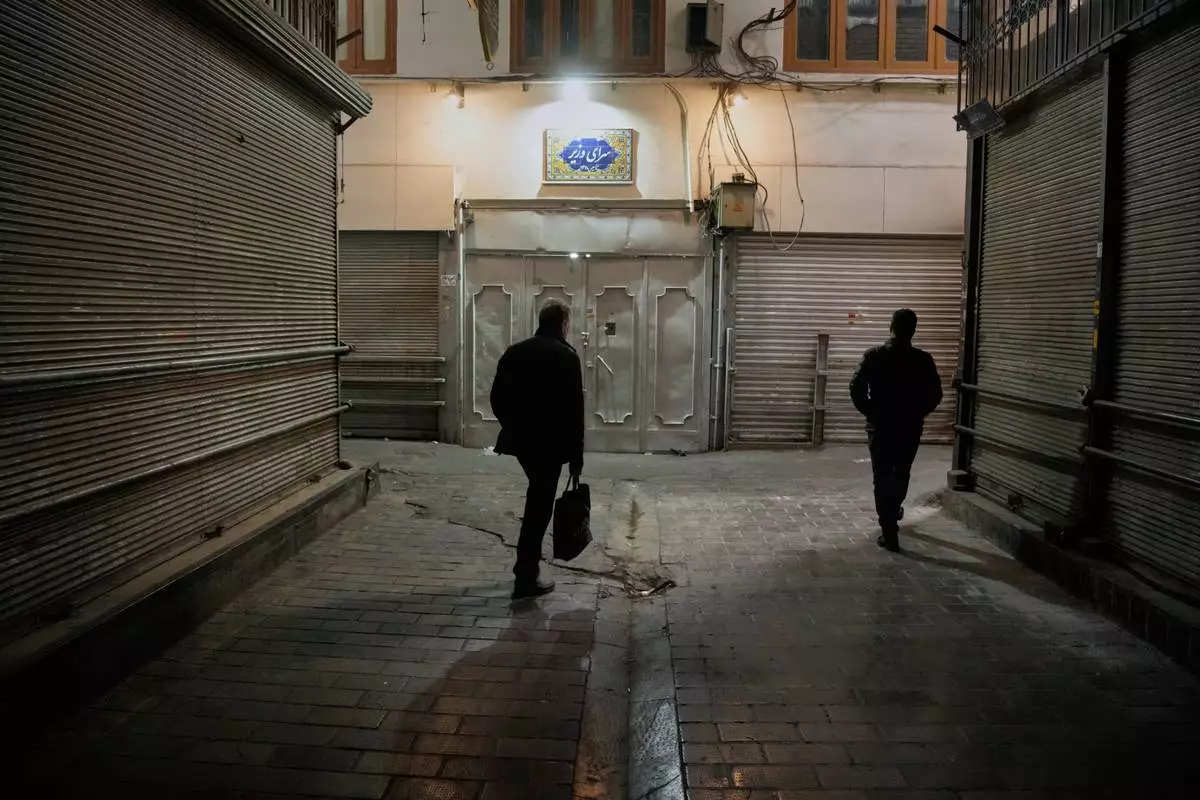
People walk past closed shops at the nearly empty traditional main bazaar in Tehran, Iran, Tuesday, March 10, 2026. (AP Photo/Vahid Salemi)
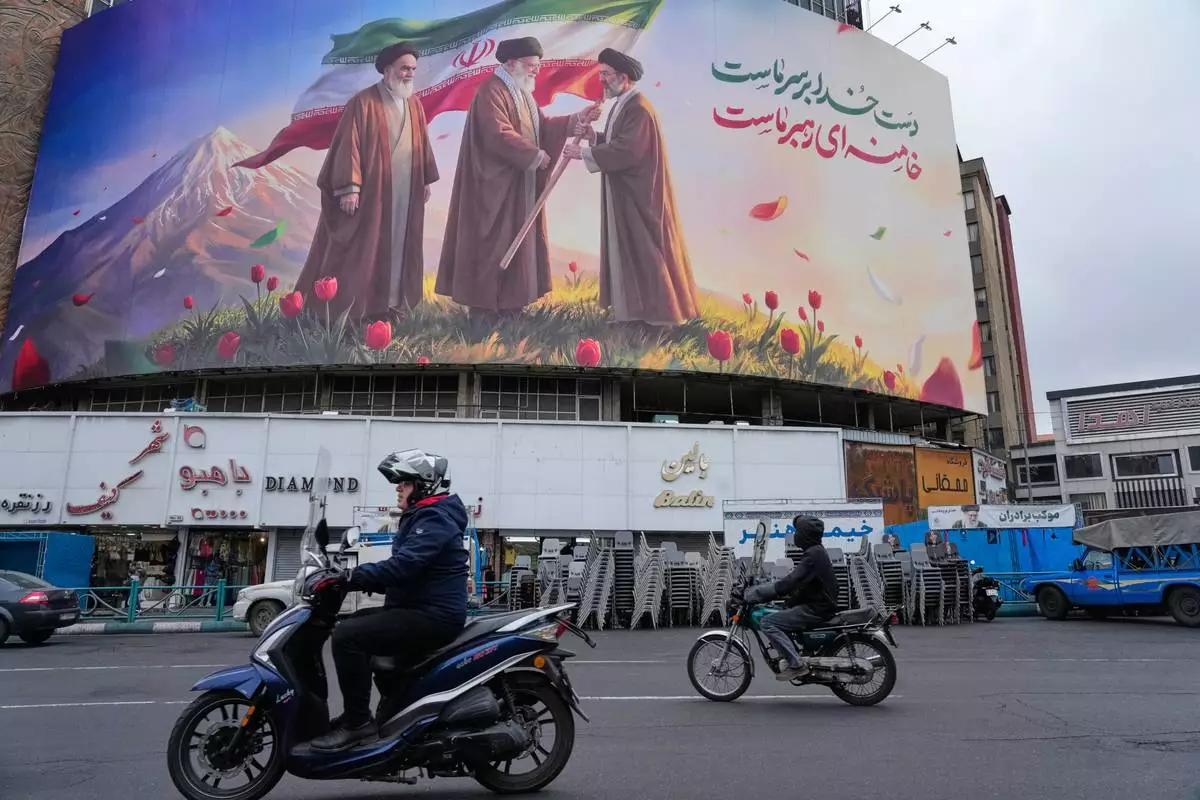
Motorbikes drive past a billboard depicting Iran’s late Supreme Leader Ayatollah Ali Khamenei, center, handing the country’s flag to his son and successor Ayatollah Mojtaba Khamenei, right, as the late revolutionary founder Ayatollah Ruhollah Khomeini stands at left, in a square in downtown Tehran, Iran, Tuesday, March 10, 2026. (AP Photo/Vahid Salemi)

Smoke rises from an Israeli airstrike in Dahiyeh, Beirut's southern suburbs, Lebanon, Tuesday, March 10, 2026. (AP Photo/Bilal Hussein)