China's green technology exports have beaten U.S. exports of fossil fuels in total value in 2025, former U.S. Vice President Al Gore said Friday on the sidelines of the annual meeting of the World Economic Forum (WEF) in Davos, Switzerland.
"Last year, China not only exported more green technology by dollar value than the United States' export of fossil fuels to the rest of the world, but more by 50 percent," he told reporters.
"China has invested in an appreciating asset going up in value because the cost of electricity from renewables and batteries continues to go down rapidly, while the policy of clinging to outdated, dirty, destructive fossil fuels is a depreciating asset and could become a stranded asset for those who cling to it for too long," Gore said.
While China was once known for exporting mostly labor-intensive, low-end products in the global value chain, its export structure has undergone remarkable upgrading in recent years, with exports becoming increasingly greener and more technology intensive.
In the field of green energy, exports of lithium batteries and wind turbines soared by 26.2 percent and 48.7 percent, respectively, in 2025. Within the green mobility sector, exports of electric motorcycles and bicycles rose by 18.1 percent last year.
China has seen its green and low-carbon energy transition accelerate at the fastest pace during the 14th Five-Year Plan period (2021-2025).
Green electricity accounted for one-third of China's total electricity consumption during the period, according to the National Energy Administration.
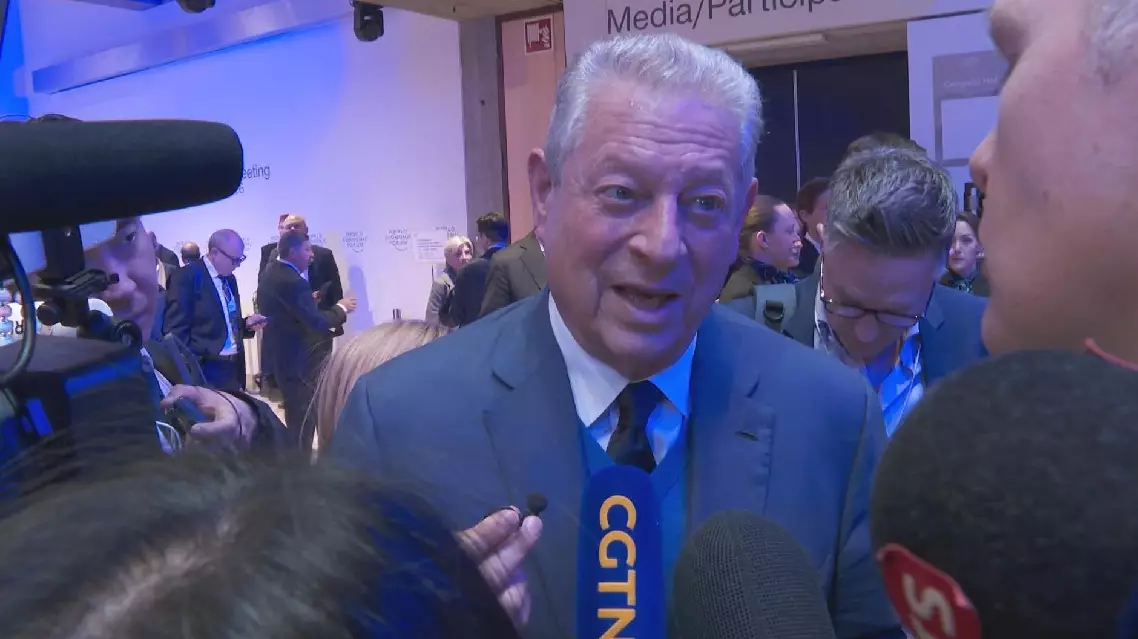
Former US Vice President on China's green technology
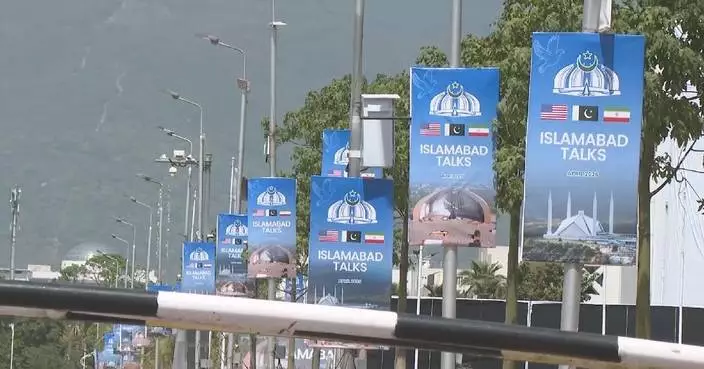
An Iranian delegation led by Foreign Minister Seyed Abbas Araghchi arrived in Pakistan on Friday night to discuss regional developments and ongoing peace efforts, a spokesman for Pakistan's Ministry of Foreign Affairs said.
Tahir Andrabi, the spokesman, said in a social media post that Araghchi is scheduled to meet Pakistan's leadership to exchange views on the evolving regional situation and efforts aimed at promoting peace and stability.
Upon arrival, the Iranian foreign minister was received by Pakistani Deputy Prime Minister and Foreign Minister Mohammad Ishaq Dar, Chief of Defense Forces and Chief of Army Staff Field Marshal Syed Asim Munir, along with other senior officials.
Araghchi currently has no negotiation plans with U.S. representatives, but will convey messages to the U.S. side through Pakistani mediators, according to Iranian sources on Friday.
However, the White House said Friday that U.S. President Donald Trump's envoy Steve Witkoff and son-in-law Jared Kushner are heading to Pakistan for talks with Araghchi this weekend.
U.S. Vice President JD Vance, who led the U.S. negotiating team during the first round of talks in Pakistan earlier this month, is not currently planning to attend the upcoming talks, White House Press Secretary Karoline Leavitt said, adding he will be standing by and consulting Trump alongside Secretary of State Marco Rubio.
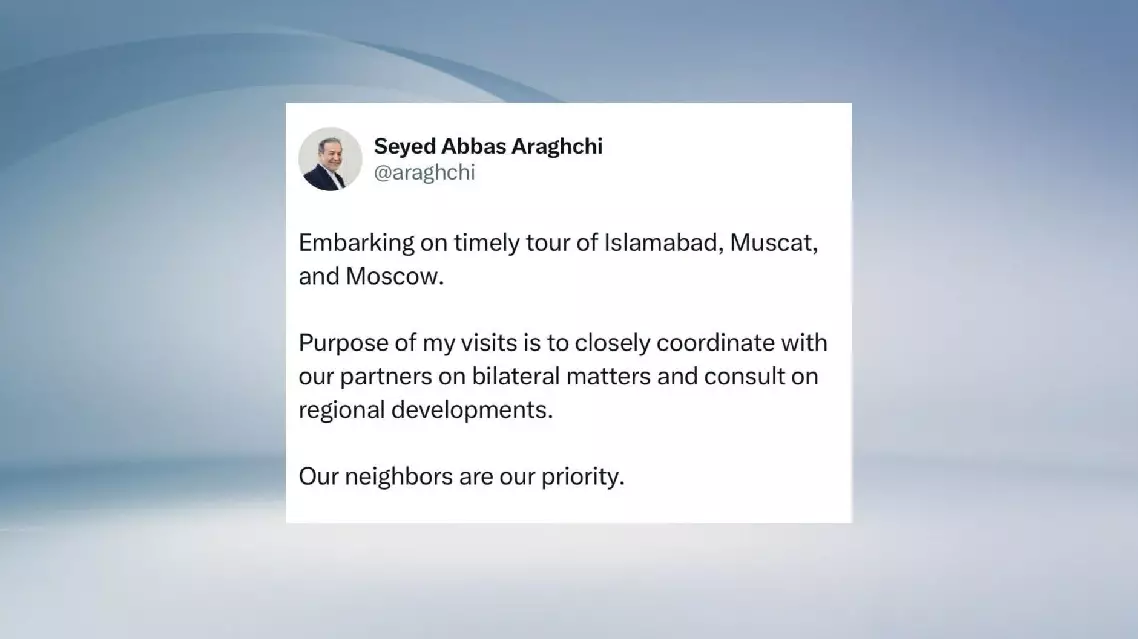
Earlier in the day, Araghchi said in a social media post that he was embarking on a regional tour that includes stops in Islamabad, Muscat and Moscow. Araghchi emphasized that the purpose of the visit is to closely coordinate with partners on bilateral affairs and to consult on the regional situation. He also noted that Iran's neighbors are a priority for Iran.
Iranian delegation led by FM arrives in Pakistan