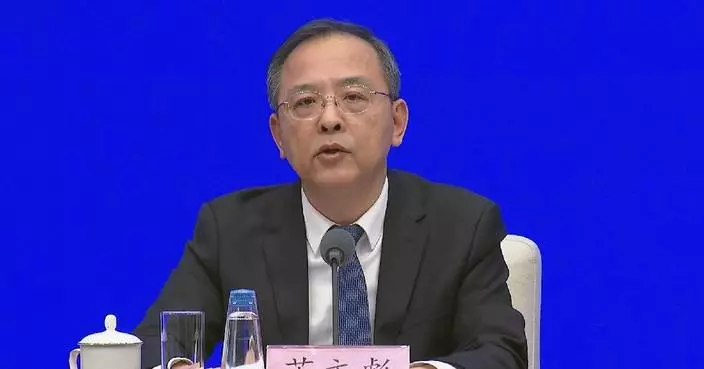
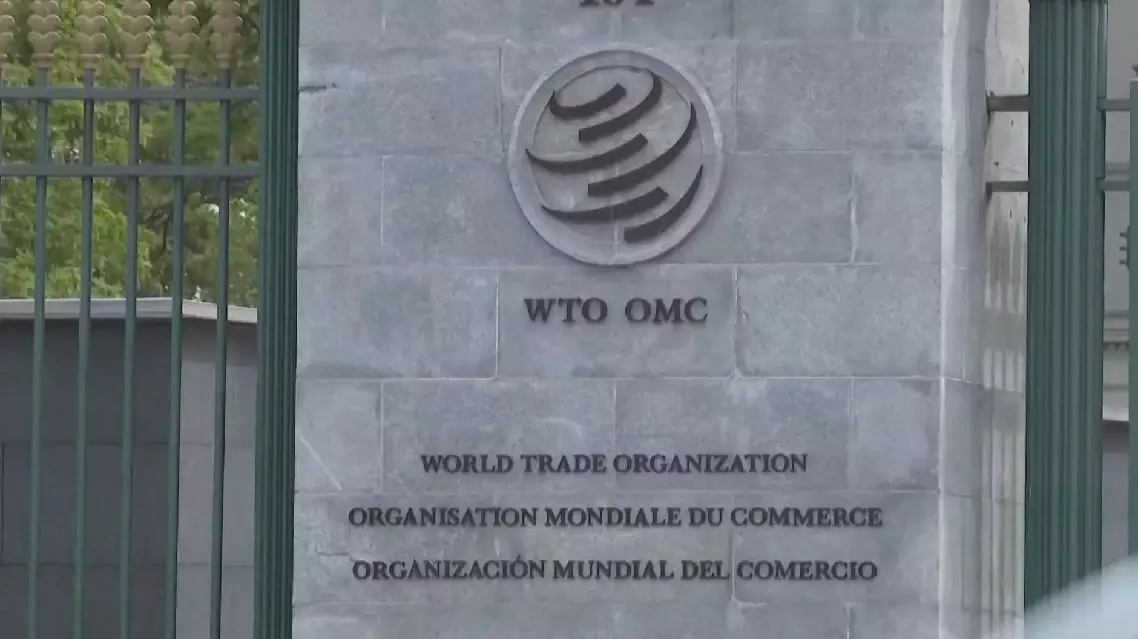
China will actively partake in the reform of the World Trade Organization (WTO) to make sure that the organization will benefit all its members, said Li Chenggang, China's international trade representative with the Ministry of Commerce and vice commerce minister, at a small-scale WTO ministerial meeting in Davos, Switzerland on Thursday.
Chaired by Guy Parmelin, President of the Swiss Confederation and head of the Federal Department of Economic Affairs, Education and Research, the meeting was attended by ministers or representatives from nearly 30 WTO members including China, the United States, the European Union (EU), South Africa, New Zealand, and the Republic of Korea, alongside WTO Director-General Ngozi Okonjo-Iweala.
In his address at the meeting, Li said that the fundamental principles and rules of the WTO have provided stability and predictability for global trade growth, serving as the foundation for the continuous development of the multilateral trading system.
Amid the current turbulence in international trade, the value of the WTO has become increasingly prominent. WTO members should engage in pragmatic cooperation, advance reforms to keep the multilateral trading system in line with the times, uphold the effectiveness and authority of the WTO, and better leverage its important role in global economic governance, he said.
Li emphasized that China is a staunch defender and active participant in the multilateral trading system. China supports the 14th WTO's Ministerial Conference in building greater consensus and achieving practical outcomes on issues such as formulating a WTO reform work plan, incorporating the Investment Facilitation for Development (IFD) Agreement into the WTO legal framework, extending duty-free treatment for electronically transmitted goods, and addressing food security.
He stressed that China will actively participate in WTO reform to ensure its benefits reach all members, respond to the challenges of the times, and address industry concerns.
Participants at the meeting generally acknowledged the vital value of the WTO, underscoring the critical role of the non-discrimination principle in advancing global trade and upholding a level playing field.
They expressed support for incorporating negotiation outcomes such as the IFD Agreement and the e-commerce agreement into the WTO legal framework, advocated extending the duty-free treatment for electronically transmitted goods, and called for working out a WTO reform plan to guide subsequent reform efforts, jointly striving to ensure the success of the 14th WTO's Ministerial Conference.
China to actively participate in WTO reform: vice commerce minister
Li Li, a deputy to the National People's Congress (NPC) from southwest China's Guizhou Province, has made it her mission to preserve and promote the rich cultural heritage of the Buyi people, particularly their traditional clothing.
Born and raised in a village of Qinglong County, Qianxinan Buyei and Miao Autonomous Prefecture, Li began learning the intricate handicrafts of the Buyi people from her mother at a young age.
After spending over a decade working away from home, she felt a strong calling to return and safeguard her cultural roots. In 2015, she returned to her roots to start a business with the vision to revitalize Buyi clothing.
"Starting my own business was really tough in the beginning. If you want to make a Western-style suit, you could just buy some fabric and copy an existing design. But ethnic clothing is different. It requires constant innovation, and that takes a huge amount of time. Traditional fabrics tend to fade, and I spent months just trying to figure out how to fix the color. This problem had kept me up for a long time. But eventually, I tackled the challenges one by one," Li said.
Her persistence has paid off. This year, Li's team tapped into the cultural symbolism of the Year of the Horse, creating a range of horse-themed products that have quickly gained popularity.
"This year is the Year of the Horse, so we created a lot of horse-themed items. They are very popular and orders have been pouring in. Every year, we design our cultural products and clothing based on what the market wants. We started with a 300-square-meter workshop, and now we have our own intangible cultural heritage center. Over the years, we've trained more than a thousand embroiderers," she said.
As a grassroots NPC deputy, Li prioritizes listening to the voices of ordinary people. During work sessions with embroiderers, she takes time to listen to their concerns and offers flexible schedules for those with special needs.
The preservation of ethnic clothing and culture has always been at the heart of her work.
"During this year's 'two sessions', I will continue to focus on the preservation of ethnic clothing and culture. I want to encourage more young people to get involved in cultural inheritance. For example, I've been going to schools to teach students because I hope that intangible cultural heritage can take root in children's hearts from an early age. I want them to grow up knowing how remarkable our ethnic culture is and to develop a strong sense of cultural pride," Li said.
The "two sessions" refer to the annual meetings of the National People's Congress, China's top legislature, and the National Committee of the Chinese People's Political Conference, China's top political advisory body,which usually convene in early March.
NPC deputy from Guizhou revitalizes Buyi culture through inheritance and innovation