BLOOMINGTON, Ind. (AP) — The Las Vegas Raiders are on the clock, and Heisman Trophy winner Fernando Mendoza is officially available.
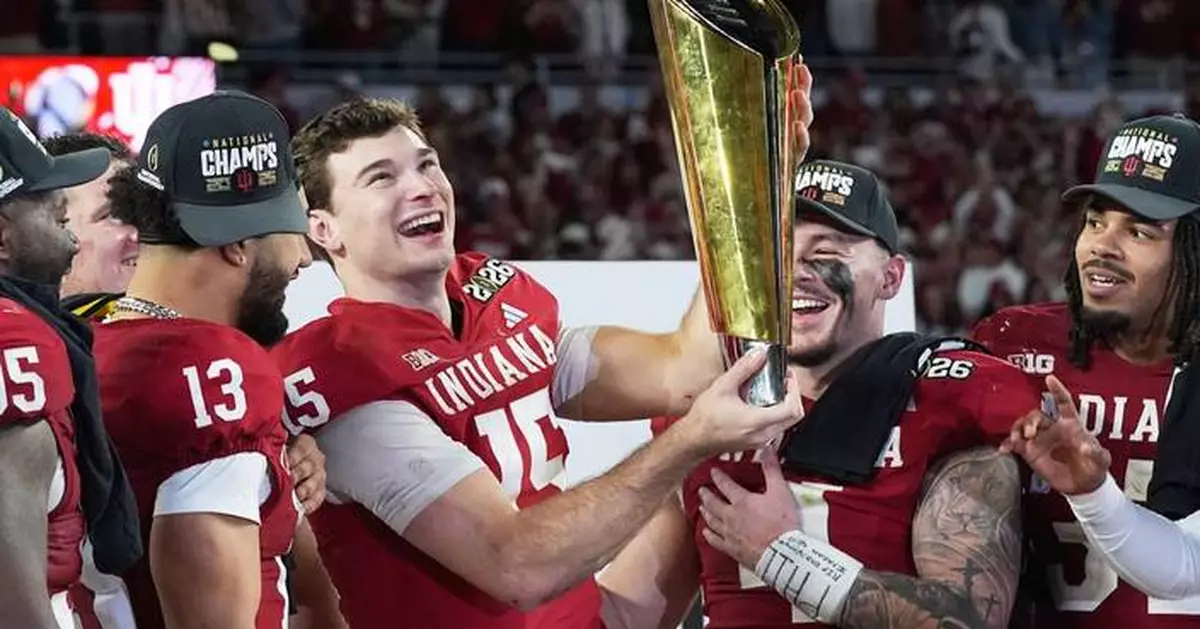
Mendoza formally declared for the NFL draft Friday and could be headed to the Raiders with the No. 1 pick in April. Mendoza led Indiana to a 16-0 season and its first national championship with a 27-21 victory against Miami on Monday night.
“Let's get to work,” Mendoza wrote in a social media post that included a highlight video. “I'm humbled to announce that I am officially declaring for the 2026 NFL Draft!”
The junior completed 72% of his passes this season for 3,535 yards, with 41 touchdowns and six interceptions. He also ran for seven scores and played some of his best football in the College Football Playoff, with eight TD passes and no picks while scoring a key late touchdown on a highlight-reel 12-yard run on fourth-and-4. It extended Indiana’s lead to 24-14 in the fourth quarter.
Mendoza's first and only season with the Hoosiers was capped by memorable moments.
In October, he beat an Iowa blitz by throwing the tiebreaking 49-yard TD pass to Elijah Sarratt with 88 seconds left in a 20-15 win. Two weeks later, after throwing a Pick-6 that allowed then-No. 3 Oregon to tie the score at 20 early in the fourth quarter, he responded by leading the Hoosiers down the field and connected with Sarratt on an 8-yard TD pass in a 30-20 victory.
At Penn State in November, Mendoza threw a perfectly placed 7-yard TD pass to Omar Cooper Jr., who toe-tapped the back line in the end zone with 36 seconds left to give the Hoosiers a 27-24 victory. Then in December, Mendoza's 17-yard TD pass to Sarratt midway through the third quarter proved the decisive score in a 13-10 victory over No. 1 Ohio State, ending Indiana's 30-game losing streak in the series while giving the Hoosiers their first outright Big Ten title since 1945.
And in the playoffs, Mendoza helped hand No. 9 Alabama its worst postseason loss in school history, 38-3, and rout No. 5 Oregon 56-22 before defeating No. 10 Miami 27-21 on the Hurricanes home field — thanks in part to his incredible scoring run.
Along the way, Mendoza became a respected leader inside the locker room, a humble but well-known personality outside of it and Indiana's first Heisman winner as he capped what some called the greatest two-year turnaround in college football history. Mendoza also is the third Latino player to win the Heisman.
None of it surprised Mendoza's teammates or coaches.
“When you have this much success year in and year out, your teams are always close, but this team was exceptionally close,” coach Curt Cignetti said Monday. “I think Fernando had a big part of that, and I think (center Pat) Coogan and (linebacker Aiden) Fisher and going on the road with some of those guys — the Penn State game, what that did for this team, I can’t measure, when we were down and out and all the odds were against us, second-and-17, running clock, 1 minute, 30 (seconds), and all of a sudden we recomposed and found a way to get that done.”
Mendoza’s decision to turn pro was considered a formality. The Hoosiers seemingly tipped his NFL intentions when they signed TCU quarterback Josh Hoover during the open transfer portal window.
Mendoza is considered the clearcut top QB in the draft after Oregon’s Dante Moore announced he would return to school for the 2026 season. And the Raiders desperately need better quarterback play after going 3-14 in 2025 and clinching the No. 1 overall pick with a loss to the New York Giants in Week 17. The franchise will have a new coach after firing veteran Pete Carroll after one season.
It's not just Mendoza's arm, either. Cignetti has spoken multiple times about the quarterback's uncanny ability to extend plays like the decisive one he had Monday night.
Mendoza was a lightly recruited player coming out of a traditional powerhouse prep program, Christopher Columbus, in Miami. His first offer came from Yale. His only FBS offer came from California, where he started for two seasons before leaving the program to join his younger brother, Alberto, at Indiana.
Alberto Mendoza announced this week he's transferring to Georgia Tech.
And now Fernando Mendoza, after appearing on Jimmy Fallon's late-night show Thursday and “Good Morning America” on Friday, one more celebration — Saturday in Bloomington — before heading to the NFL.
“When I first stepped in the locker room, you could tell that they believed, and if you didn’t believe, you’re kind of, like, outcasted,” Mendoza said. “So in a way it was either our way or the highway. At that point once you know and you see everybody truly believe, not just believe because they want more catches or more stats but because they truly believe in the goal, I think it’s infectious, and it’s infectious throughout the locker room, and I’m so blessed to be a part of it.”
Get poll alerts and updates on the AP Top 25 throughout the season. Sign up here and here (AP News mobile app). AP college football: https://apnews.com/hub/ap-top-25-college-football-poll and https://apnews.com/hub/college-football
AP NFL: https://apnews.com/hub/nfl
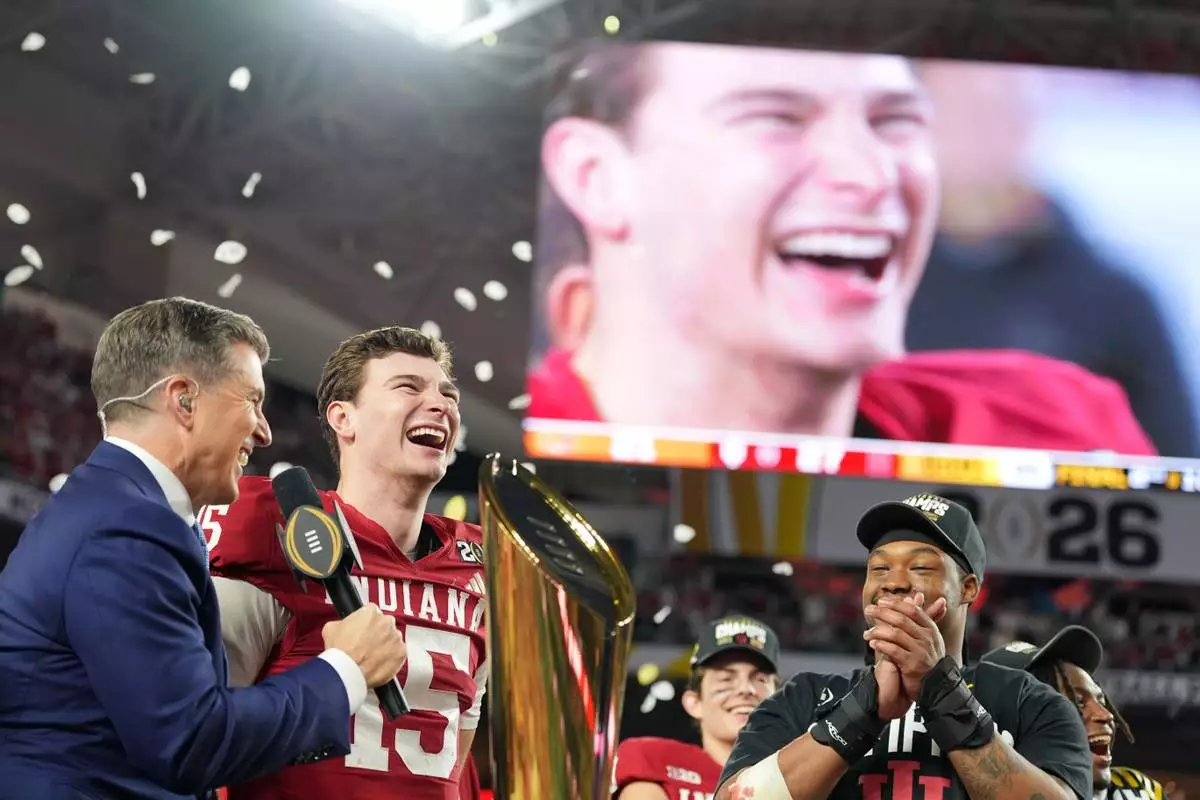
Indiana quarterback Fernando Mendoza smiles after the College Football Playoff national championship game against Miami, Monday, Jan. 19, 2026, in Miami Gardens, Fla. (AP Photo/Rebecca Blackwell)
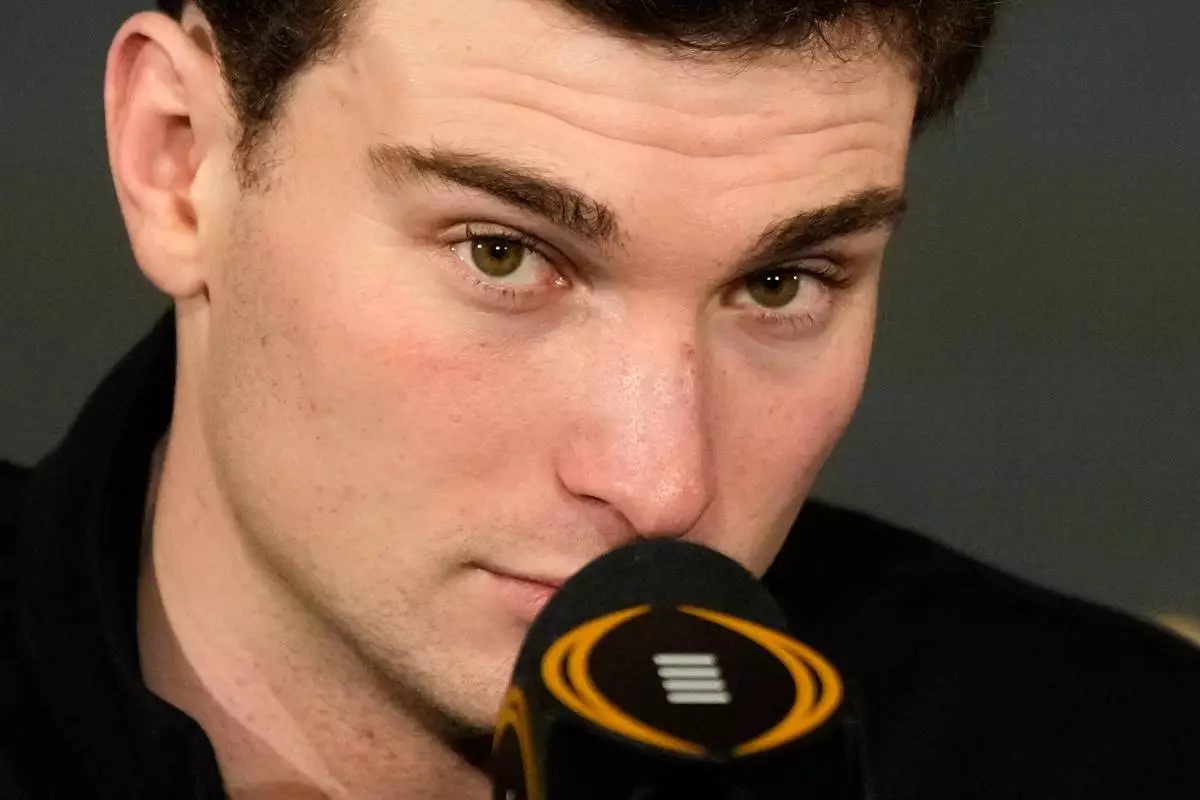
Indiana quarterback Fernando Mendoza speaks during the champions news conference after theiir win against Miami in the College Football Playoff national championship game, Tuesday, Jan. 20, 2026, in Miami. (AP Photo/Chris Carlson)
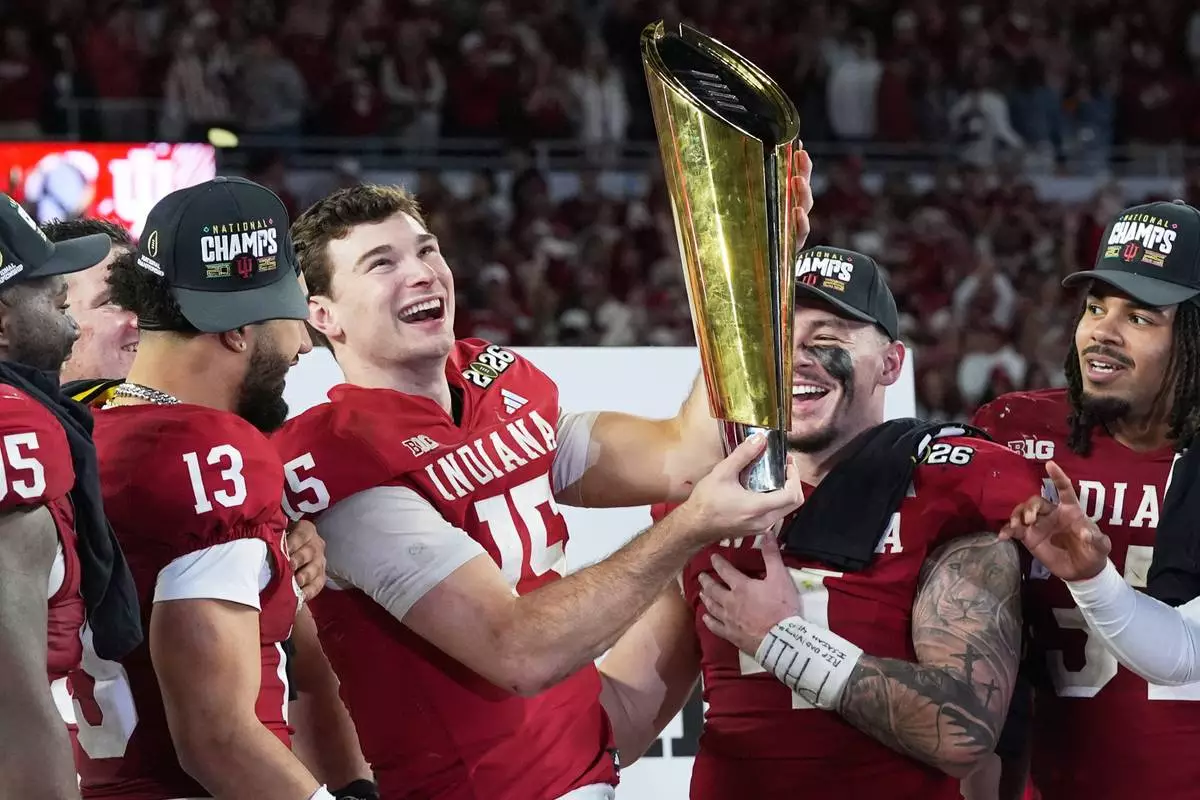
Indiana quarterback Fernando Mendoza holds the trophy after their win against Miami in the College Football Playoff national championship game, Monday, Jan. 19, 2026, in Miami Gardens, Fla. (AP Photo/Marta Lavandier)
DUBAI, United Arab Emirates (AP) — The bloodiest crackdown on dissent since Iran's 1979 Islamic Revolution is slowly coming into focus, despite authorities cutting off the Islamic Republic from the internet and much of the wider world.
Cities and towns smell of smoke as fire-damaged mosques and government offices line streets. Banks have been torched, their ATMs smashed. Officials estimate the damage to be at least $125 million, according to an Associated Press tally of reports by the state-run IRNA news agency from over 20 cities.
The number of dead demonstrators reported by activists continues to swell. Activists warn it shows Iran engaging in the same tactics it has used for decades, but at an unprecedented scale — firing from rooftops on demonstrators, shooting birdshot into crowds and sending motorcycle-riding paramilitary Revolutionary Guard volunteers in to beat and detain those who can’t escape.
“The vast majority of protesters were peaceful. The video footage shows crowds of people — including children and families — chanting, dancing around bonfires, marching on their streets,” said Raha Bahreini, of Amnesty International. "The authorities have opened fire unlawfully.”
The killing of peaceful protesters — as well as the threat of mass executions — have been a red line for military action for U.S. President Donald Trump. An American aircraft carrier and warships are approaching the Mideast, possibly allowing Trump to launch another attack on Iran after bombing its nuclear enrichment sites last year. That risks igniting a new Mideast war.
Iran's mission to the United Nations did not respond to detailed questions from the AP regarding the suppression of the demonstrations.
The demonstrations began Dec. 28 at Tehran’s historic Grand Bazaar, initially over the collapse of Iran's currency, the rial, then spread across the country.
Tensions exploded on Jan. 8, with demonstrations called for by Iran's exiled crown prince, Reza Pahlavi. Witnesses in Tehran told the AP before authorities cut internet and phone communication that they saw tens of thousands of demonstrators on the streets.
As communications failed, gunfire echoed through Tehran.
“Many witnesses said they had never seen such a large number of protesters on the streets,” said Bahar Saba of Human Rights Watch. “Iranian authorities have repeatedly shown they have no answers other than bullets and brutal repression to people taking to the streets.”
Ali Akbar Pourjamshidian, a deputy interior minister speaking on state TV Wednesday, acknowledged the violence began in earnest on Jan. 8.
“More than 400 cities were involved," he said.
By Jan. 9, Revolutionary Guard Gen. Hossein Yekta, previously identified as leading plainclothes units of the force, went on Iranian state TV and warned “mothers and fathers” to keep their children home.
“Tonight you all must be vigilant. Tonight is the night for keeping mosques, all bases everywhere filled with ‘Hezbollahi,’” Yekta said, using a word for “followers of God” that carries the connotation of fervent supporters of Iran's theocracy.
Already weakened by the 12-day war Israel launched against Iran in June, the authorities decided to fully employ violence to end the demonstrations, experts said.
“I think the regime viewed it as this was a moment of existential threat and that they could either allow it to play out and allow the protests to build and allow foreign powers to increase their rhetoric and increase their demands on Iran,” said Afshon Ostovar, an expert on the Revolutionary Guard and professor at the Naval Postgraduate School in Monterrey, California.
"Or they could turn out the lights, kill as many people as necessary ... and hope they could get away with it. And I think that’s what they ultimately did.”
In Iran, one of the main ways its theocracy can squash demonstrations is through the Basij, the Guard's volunteer arm.
Mosques in Iran include facilities for the Basij. Guard Gen. Heydar Baba Ahmadi was quoted by the semiofficial Mehr news agency in 2024 as estimating “79% of Basij resistance bases are located in mosques and 5% in other holy places.”
Iranian state media repeatedly has aired images of mosques damaged in the protests without exploring their links to the Basij.
“Most neighborhood Basij bases are co-located with mosques and most neighborhood Basij leaders are associated with the mosque leadership," Ostovar said, adding that demonstrators “going after regime targets” associated with repression would have considered them “a legitimate part of it.”
Videos show Basij holding long guns, batons and pellet guns. Anti-riot police can be seen wearing helmets and body armor, carrying assault rifles and submachine guns.
The videos show police firing shotguns into crowds, something authorities deny despite corpses showing wounds consistent with metal birdshot. Scores have reportedly suffered blinding eye wounds from birdshot — something seen in the protests around the 2022 death of Mahsa Amini.
Iran's semiofficial ILNA news agency reported that Tehran's Farabi Eye Hospital, the premiere clinic for eye injuries, called in “all current and retired doctors” to help those injured.
We “received accounts that the security forces were just firing relentlessly at protesters,” said Bahreini of Amnesty International.
"They’re not just targeting one or two people to create a climate of terror for people to disperse ... but just relentlessly firing at thousands of protesters and chasing after them, even as they were fleeing so that more people were just collapsing to the ground with severe gunshot wounds.”
For two weeks, Iran offered no overall casualty figures. Then on Wednesday, the government said 3,117 people were killed, including 2,427 civilians and security forces. That left another 690 dead that Pourjamshidian identified as “terrorists.”
That conflicts with figures from the U.S.-based Human Rights Activists News Agency, which put the death toll on Saturday at 5,137, based on activists inside Iran verifying fatalities against public records and witness statements. It said 4,834 were demonstrators, 208 were government-affiliated personnel, 54 were children and 41 were civilians not participating in protests.
Death tolls in Iran have long been inflated or deflated for political reasons. But the fact that Iran's theocracy offered any death toll — and gave a number beyond any other political unrest to strike the country in the modern era — underlines the scale of what happened.
It also provides a justification for the ongoing mass arrest campaign and internet shutdown. State media report dozens to hundreds of people detained daily.
Pourjamshidian also gave an extensive list of vandalism from the protests and crackdown, including 750 banks, 414 government buildings, 600 ATMs and hundreds of vehicles that sustained damage.
Meanwhile, uncertainty looms for Iran's theocracy over what Trump may or may not do.
Traditionally, Iranians hold memorial services for their late loved ones 40 days after their deaths — meaning the country could see renewed demonstrations around Feb. 17. Online videos from Behesht-e Zahra, the massive cemetery on the outskirts of Tehran, show mourners chanting: “Death to Khamenei!”
Satellite photos from Planet Labs PBC analyzed by the AP show large numbers of cars daily at Behesht-e Zahra’s southern reaches, where those killed in the demonstrations are being buried.
Elaheh Mohammadi, a journalist at Tehran's pro-reform newspaper Ham Mihan, recently noted it had been shut by authorities. She said journalists were working on stories about Behesht-e Zahra they weren't able to publish.
“We send out a message to let people know we’re still alive,” Mohammadi wrote online. “The city smells of death.”
“Hard days have passed and everyone is stunned; a whole country is in mourning, a whole country is holding back tears, a whole country has a lump in its throat."
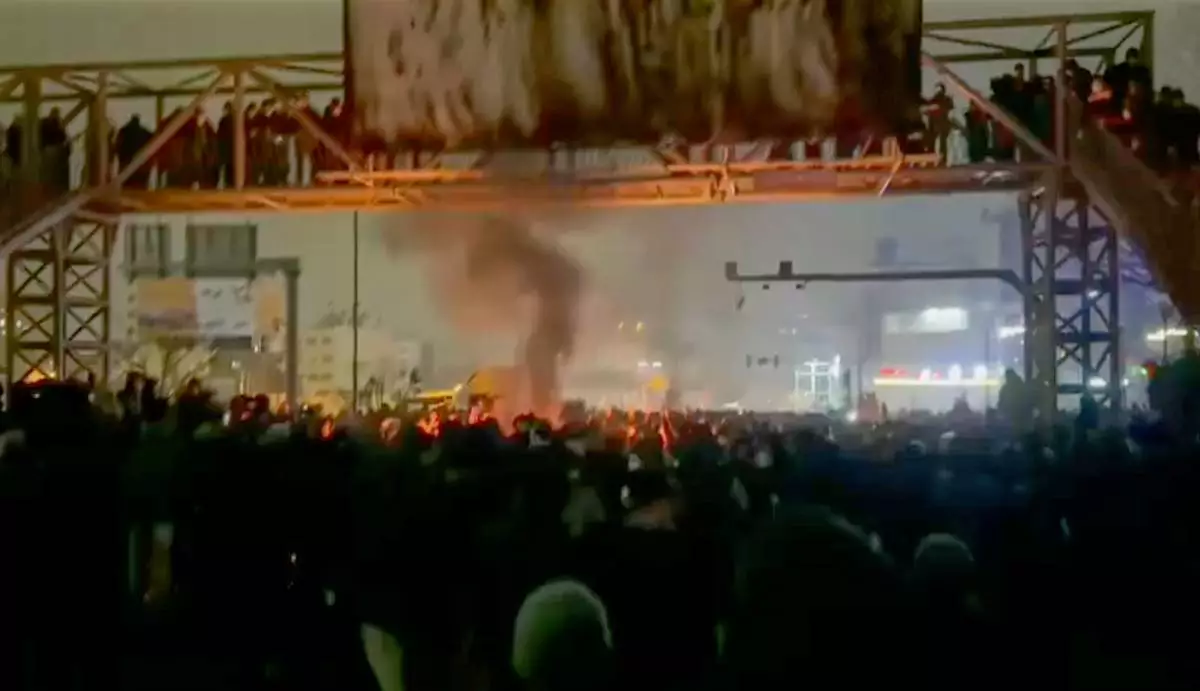
In this frame grab from footage circulating on social media from Iran shows protesters taking to the streets despite an intensifying crackdown as the Islamic Republic remains cut off from the rest of the world in Tehran, Iran, Friday, Jan. 9, 2026.(UGC via AP)
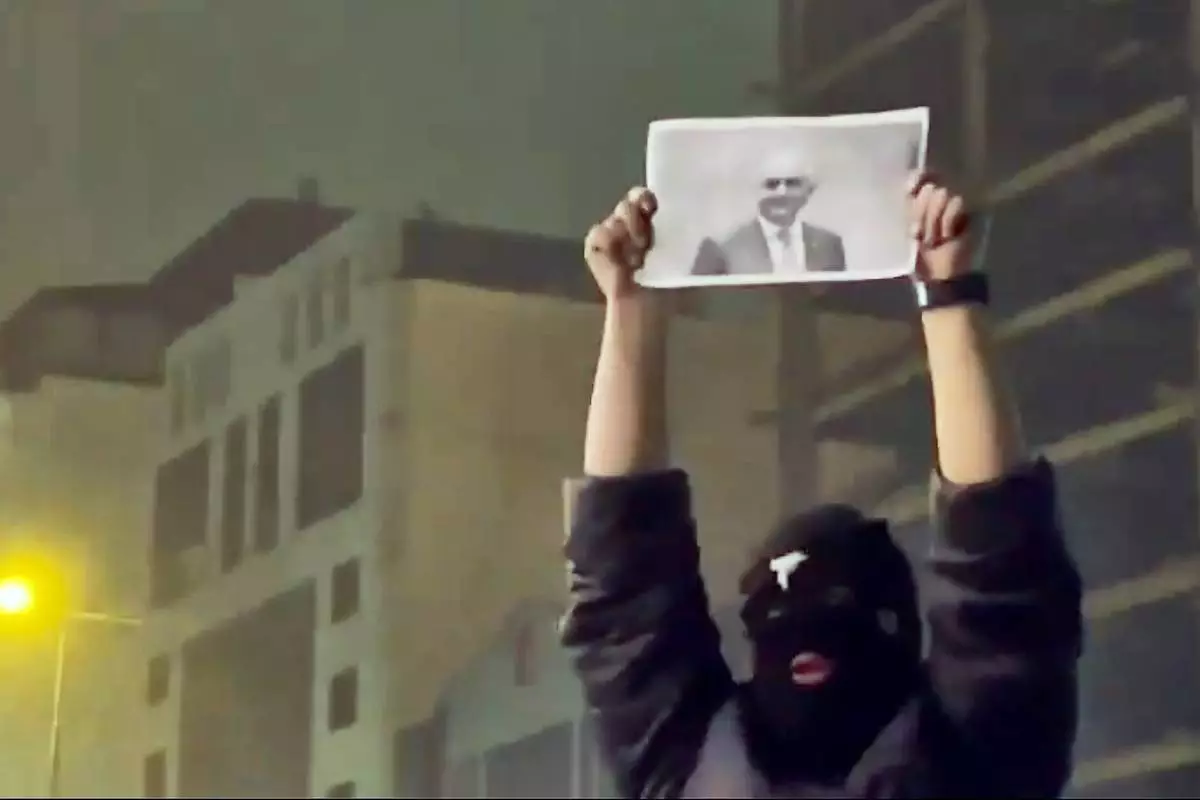
In this frame grab from video obtained by the AP outside Iran, a masked demonstrator holds a picture of Iran's Crown Prince Reza Pahlavi during a protest in Tehran, Iran, Friday, January. 9, 2026. (UGC via AP)
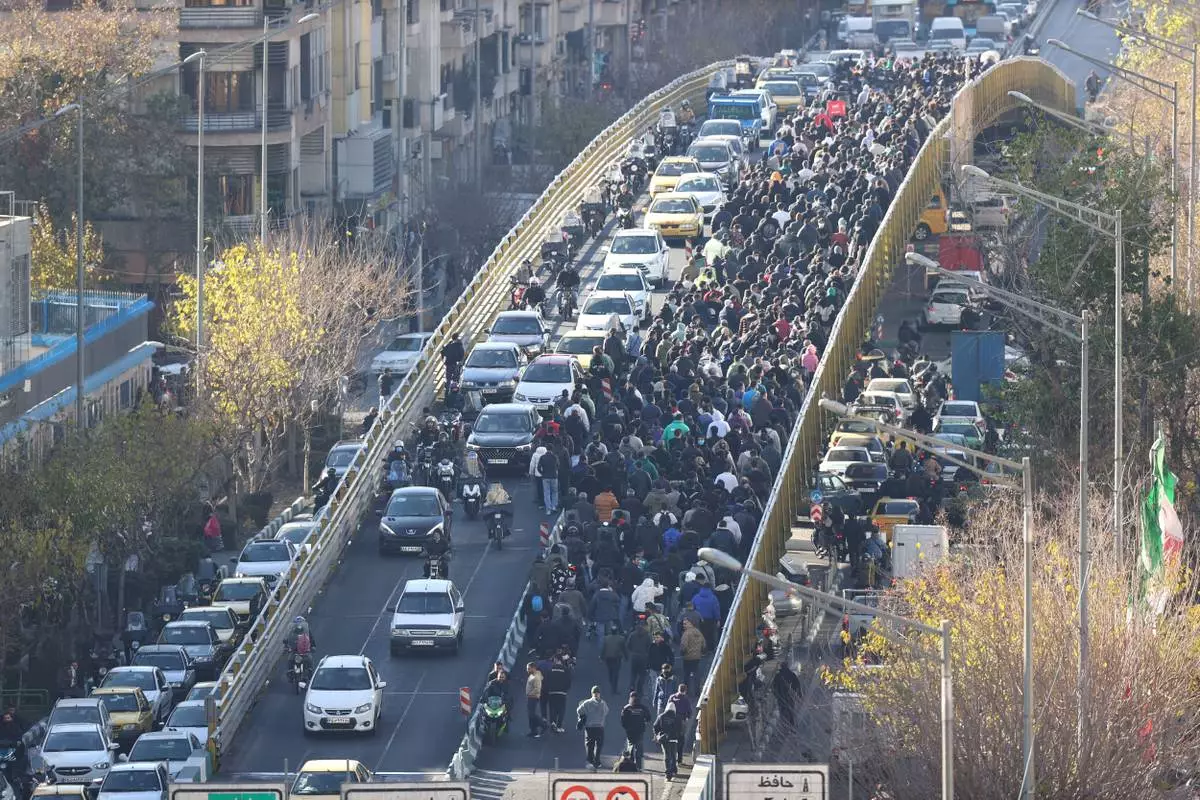
FILE - Protesters march on a bridge in Tehran, Iran, on Dec. 29, 2025. (Fars News Agency via AP, File)
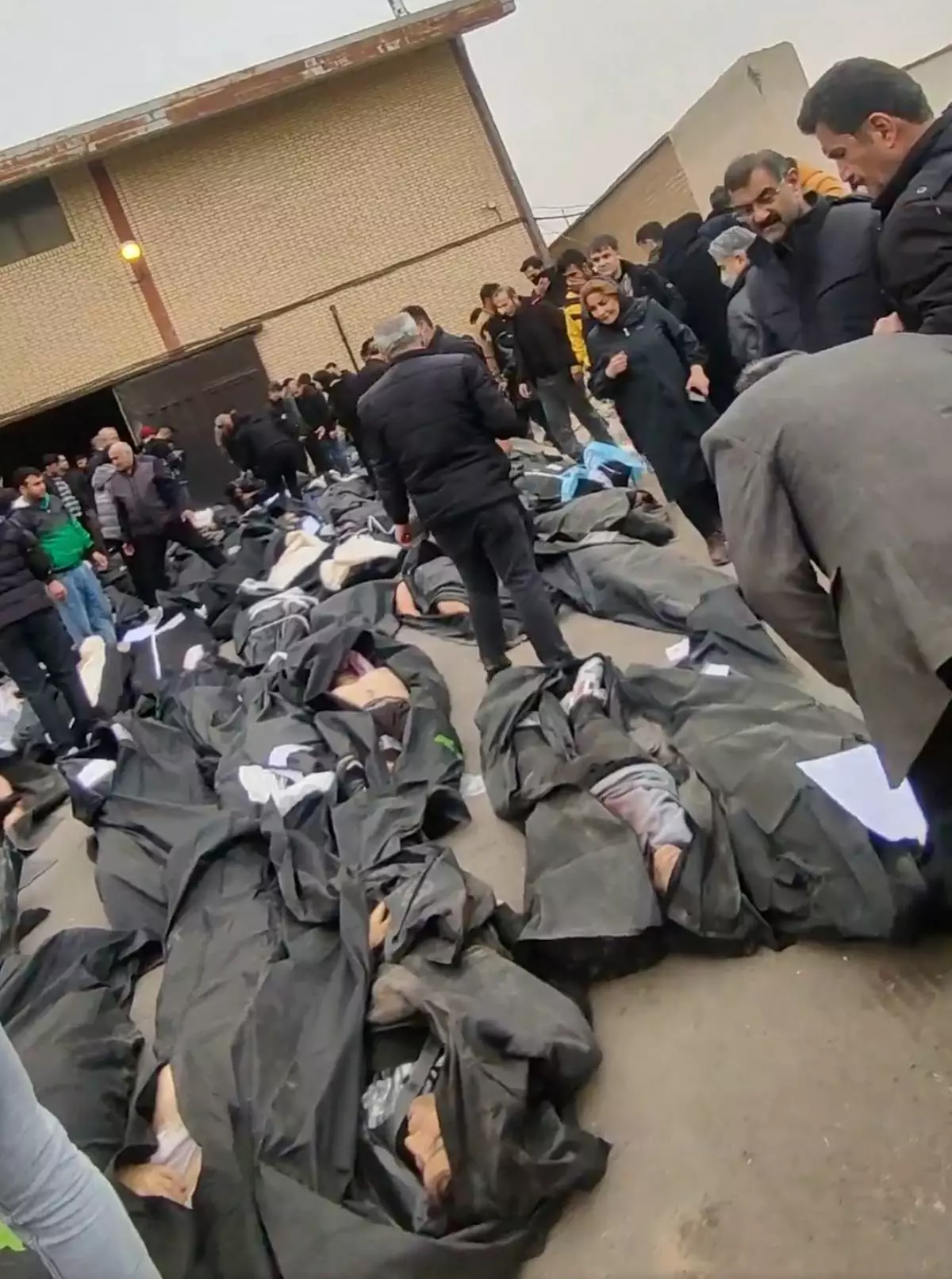
This frame grab from videos taken between Jan. 9 and Jan. 11, 2026, and circulating on social media purportedly shows images from a morgue with dozens of bodies and mourners after crackdown on the outskirts of Iran's capital, in Kahrizak, Tehran Province. (UGC via AP)
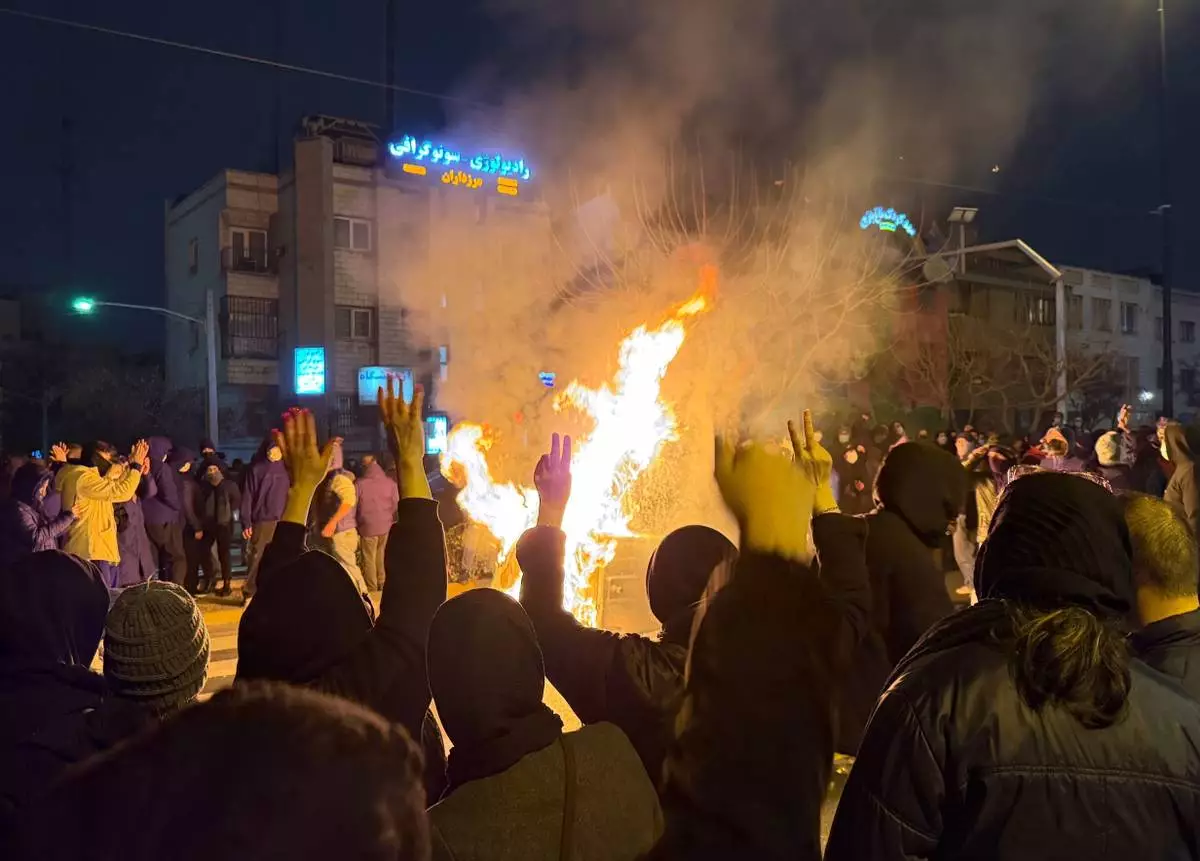
FILE - In this photo obtained by The Associated Press, Iranians attend an anti-government protest in Tehran, Iran, Jan. 9, 2026. (UGC via AP, File)