Duke quarterback Darian Mensah is trying to speed up the legal case that currently has him blocked from heading to another school.
An attorney for Mensah filed an emergency motion in Durham County Superior Court seeking a judge to “reconsider” the temporary restraining order (TRO) granted to the school that prohibits Mensah from enrolling elsewhere. That TRO sought by Duke runs through the next scheduled hearing Feb. 2, but Mensah's request argues that enrollment deadlines for other schools expire as early as Friday.
“Consequently, the TRO Order becomes more than ‘temporary,’ as it could permanently foreclose opportunities for Mensah to enroll at other collegiate institutions,” the motion states.
Additionally, Mensah's motion sought to move up the February hearing date to Friday if a judge didn't reconsider the restraining order. There was no change to the case's hearing schedule listed on the court's online portal as of midday Friday.
The school filed its lawsuit Monday in Durham County Superior Court, pointing to terms in the two-season contract Mensah signed with Duke for payments tied to his name, image and likeness (NIL) rights in college football through 2026. Duke's complaint came three days after Mensah reversed his previously announced plan to return to the Blue Devils after leading them to the Atlantic Coast Conference title.
Specifically, Duke’s lawsuit argued that the contract requires parties to go through arbitration before any dispute can be resolved. The school has issued a statement saying it “intends to honor” its contract with Mensah “and we expect he will do the same.”
A judge granted Duke’s request for the TRO, first verbally in a Tuesday hearing and then with a written order a day later, in an effort to “preserve the status quo” until the next hearing. That meant Mensah could enter his name into the transfer portal, but couldn’t take additional steps such as enrolling elsewhere and reaching a deal to play football.
Mensah's filing asks the judge for reconsideration based on “new evidence," then argues that “neither Mensah nor counsel was aware of any enrollment deadlines” for schools interested in adding Mensah at the time of the Tuesday hearing. It argues that Mensah would suffer “manifest injustice” if the deadline passes while the parties stay with the Feb. 2 scheduled hearing, while also arguing that date exceeds a 10-day limit prescribed by the North Carolina Rules of Civil Procedure.
In an accompanying affidavit, Mensah states he “learned for the first time” that enrollment deadlines at other schools “will expire” Friday and that he was “not informed” of deadlines before the hearing.
Mensah, who transferred in from Tulane and even faced his former team, finished second in the Bowl Subdivision ranks by throwing for 3,973 yards while ranking tied for second with 34 passing touchdowns.
The Mensah-Duke case is the latest in what is becoming a more frequent occurrence in the revenue-sharing era of college sports: legal fights over contracts between schools and players seeking to transfer.
Earlier this month, Washington quarterback Demond Williams Jr. announced plans to transfer before changing his mind two days later, coming amid multiple reports that the school was prepared to pursue legal options to enforce Williams’ NIL contract.
And in December, Missouri pass rusher Damon Wilson II filed a lawsuit claiming the athletic department at Georgia was trying to illegally punish him for entering the portal in January 2025.
Get poll alerts and updates on the AP Top 25 throughout the season. Sign up here. AP college football: https://apnews.com/hub/ap-top-25-college-football-poll and https://apnews.com/hub/college-football

FILE - Virginia defensive lineman Daniel Rickert (52) tries to tackle Duke quarterback Darian Mensah (10) during the Atlantic Coast Conference championship NCAA college football game between Virginia and Duke, Dec. 6, 2025, in Charlotte, N.C. (AP Photo/Jacob Kupferman, File)
BRUSSELS (AP) — The cold, hard reality facing any U.S., NATO or European plans for Greenland is the ice. It chokes harbors, entombs minerals, and freezes shorelines into minefields of white and blue shards that threaten ships all year.
And the only way to break through all that is, well, with icebreakers: enormous ships with burly engines, reinforced hulls, and heavy bows that can crush and cleave ice.
But the United States has only three such vessels, one of which is so decrepit as to be barely usable. It has entered agreements to obtain 11 more, but can only source additional ships from adversaries — or allies it has recently rebuffed.
Despite toning down his rhetoric, U.S. President Donald Trump seems set on the U.S. owning Greenland for security and economic reasons: to keep what he calls “the big, beautiful piece of ice” out of the hands of Moscow and Beijing, to secure a strategic Arctic location for U.S. assets, and to extract the island’s mineral wealth including rare earths.
Without specifying any plan, he told world leaders gathered in Davos, Switzerland, on Wednesday that “to get to this rare earth you got to go through hundreds of feet of ice.”
Yet there is no meaningful way to do that — or anything else in the semiautonomous Danish territory — without icebreakers’ crucial ability to cut trails through frozen seas.
Even if they decided to surge U.S. material into Greenland tomorrow, “they would have two or three years gap in which they’re not really able to access the island most of the time,” said Alberto Rizzi, a fellow at the European Council on Foreign Relations.
“On a map, Greenland looks surrounded by sea, but the reality is that the sea is full of ice,” he said.
If the U.S. wants more icebreakers, there are only four options: the shipyards of strategic adversaries China and Russia or longtime allies Canada and Finland, both of whom have recently weathered blistering criticism and threats of tariffs by Trump over Greenland.
Icebreakers are expensive to design, build, operate and maintain and require a skilled workforce that can only be found in certain places like Finland, with expertise forged in the frigid Baltic Sea.
Finland has built roughly 60% of the world’s fleet of more than 240 icebreakers and designed half the remainder, Rizzi said.
“It’s very niche capabilities that they developed as a necessity first and then they have been able to turn it into geoeconomic leverage,” he said.
Russia has the world’s largest fleet with about 100 vessels, including colossal ships powered by nuclear reactors. Second comes Canada, which is set to double its fleet to around 50 icebreakers, according to a 2024 report by Aker Arctic, a Helsinki-based icebreaker design firm.
“Our design and engineering work order books are pretty full at the moment and the near future looks promising," said Jari Hurttia, business manager at Aker Arctic, as he describes rising interest in the firm's “unrivalled special competence which is not available anywhere else in the world.”
China currently has five compared to the U.S. three, and is rapidly building more as they expand their ambitions in the Arctic, said Marc Lanteigne, a professor at the University of Tromsø in Norway who teaches often at the University of Greenland in Nuuk.
“China is now in a position to develop indigenous icebreakers, and so the U.S. feels it must do the same,” he said.
Washington has to play catch up, and fast, said Sophie Arts, a fellow at the German Marshall Fund focused on Arctic security.
“President Trump has really bemoaned this lack of icebreakers, especially in comparison to Russia,” Arts said. The 2 of the 3 U.S. icebreakers are “basically past their life cycle already."
So he turned to the undeniable expertise of the European Union’s northernmost nation and the U.S.’s neighbor to the north.
“Both Canada and Finland are really, really vital to this,” Arts said. “Cooperation is what makes this possible ... the U.S. doesn’t really have a pathway to do this on its own at this time.”
During his first administration, Trump prioritized the U.S. military’s acquisition of ice-capable vessels, a strategy that the Biden administration followed up on by signing an agreement called the Ice PACT with Helsinki and Ottawa to deliver 11 icebreakers constructed by two corporate consortiums with Finnish designs.
Four would be built in Finland, while seven would be constructed in a Canadian-owned billion-dollar “American Icebreaker Factory” in Texas as well as a shipyard in Mississippi under joint U.S.-Canadian ownership.
Any mining of critical minerals would face high costs in the harsh conditions at sea and on land in Greenland. Investments there would take years if not decades to pay off, Lanteigne said.
Even with adequate icebreakers, the price to build and maintain mining or defensive facilities — like those envisioned in the yet-unfunded $175 billion Golden Dome missile defense network linking detectors and interceptors in space and on the ground — would be enormous.
That means U.S. allies in the Arctic might still welcome more investment by Washington in Greenland.
Danish Prime Minister Mette Frederiksen said in a statement that she would be open to strengthening Arctic security including the U.S. Golden Dome program “provided that this is done with respect for our territorial integrity.”
While both the U.S. and the 27-nation European Union including Denmark and Finland have pledged to vastly increase investment in Greenland, it is clear who currently has the hard-power capability to actually reach the vast frozen territory roughly three times the size of Texas.
“It’s kind of absurd because I don’t think Finland would scrap the deal with the U.S. as a response to threatening to invade Greenland,” Rizzi said. “But if Europe wants to exercise significant leverage to the USA, they could say ‘We’re not going to give you any icebreakers and good luck reaching the Arctic, or projecting power there, with those two old ships that you have.’”
European Commission President Ursula von der Leyen reminded world leaders Tuesday at Davos of the key EU-technology base for any Arctic endeavors.
“Finland — one of the newest NATO members — is selling its first icebreakers to the U.S.,” von der Leyen said at the World Economic Forum.
“This shows that we have the capability right here, in the ice so to speak, that our northern NATO members have Arctic-ready forces right now, and above all, that Arctic security can only be achieved together.”
She announced after an emergency summit of the 27 EU leaders in Brussels on Thursday that the EU would surge defense spending in Greenland including an icebreaker.
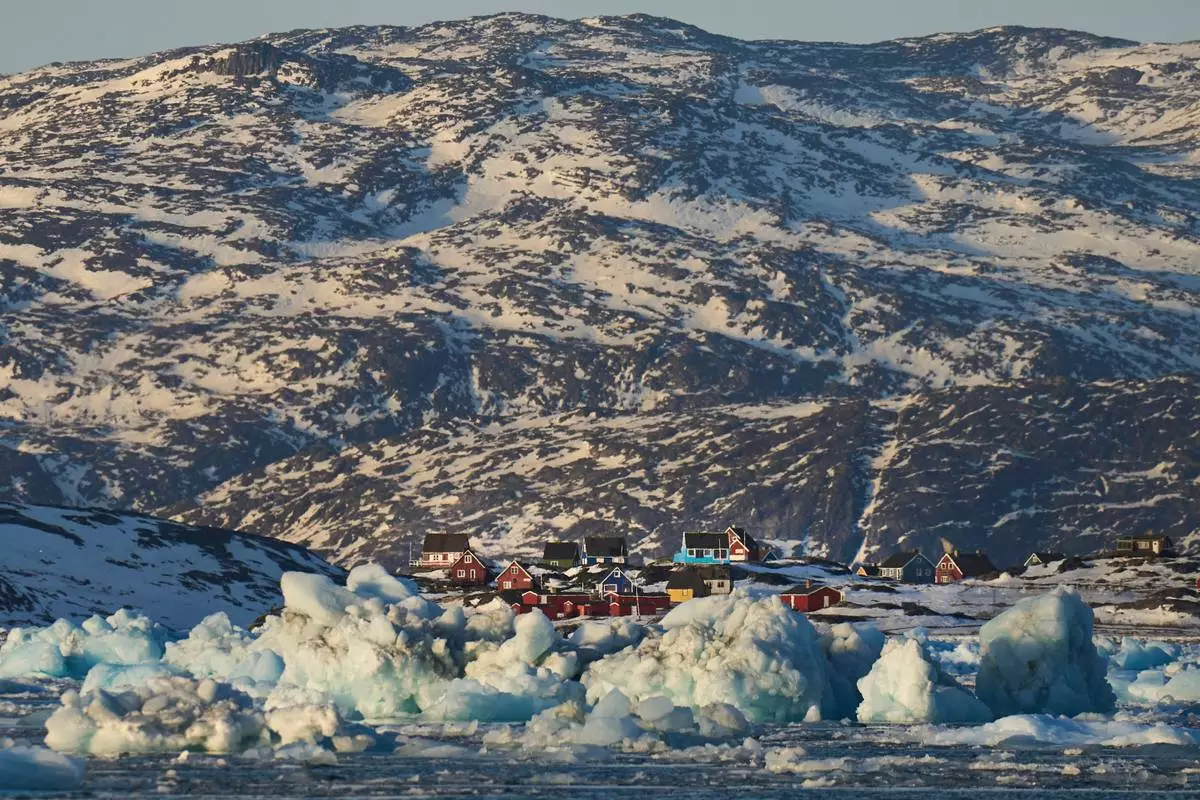
FILE - Pieces of ice move through the sea in Qoornoq Island, near Nuuk, Greenland, on Feb. 17, 2025. (AP Photo/Emilio Morenatti, File)
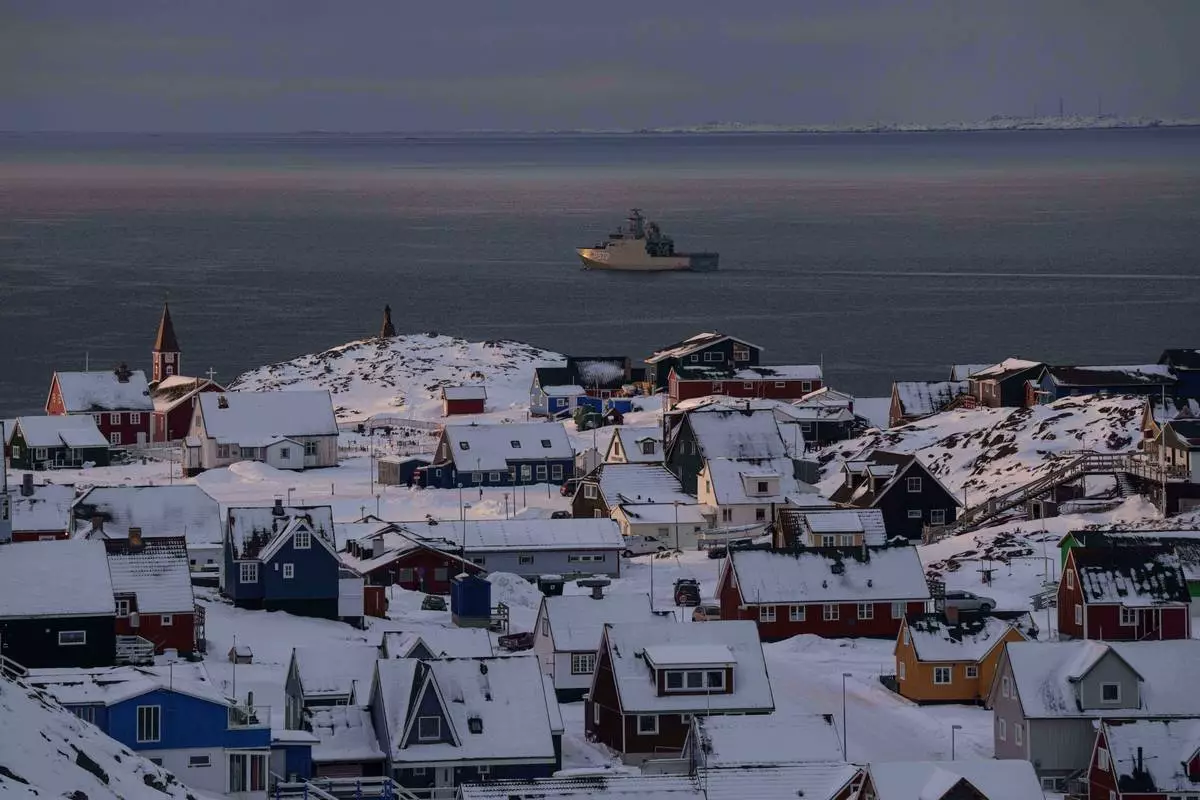
Military vessel HDMS Knud Rasmussen of the Royal Danish Navy patrols near Nuuk, Greenland, Thursday, Jan. 15, 2026. (AP Photo/Evgeniy Maloletka)
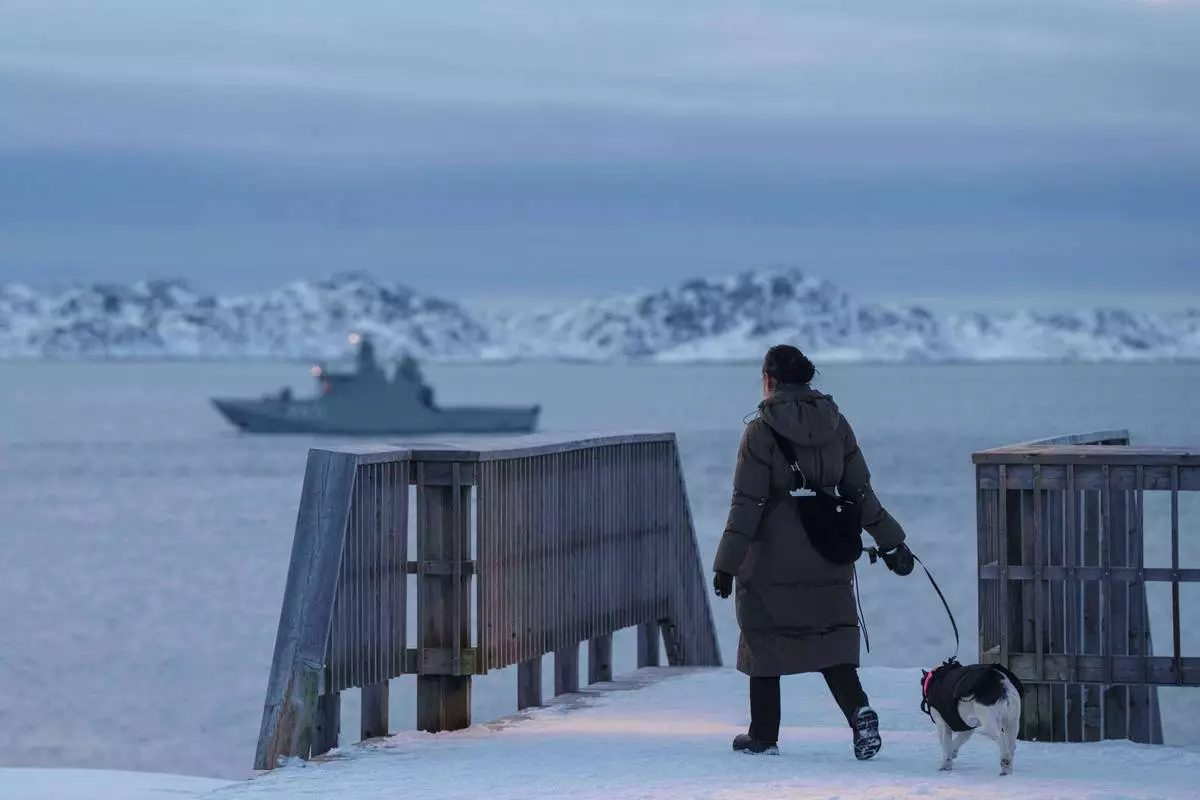
A woman walks with her dog in Nuuk, Greenland, on Thursday, Jan. 15, 2026. (AP Photo/Evgeniy Maloletka)
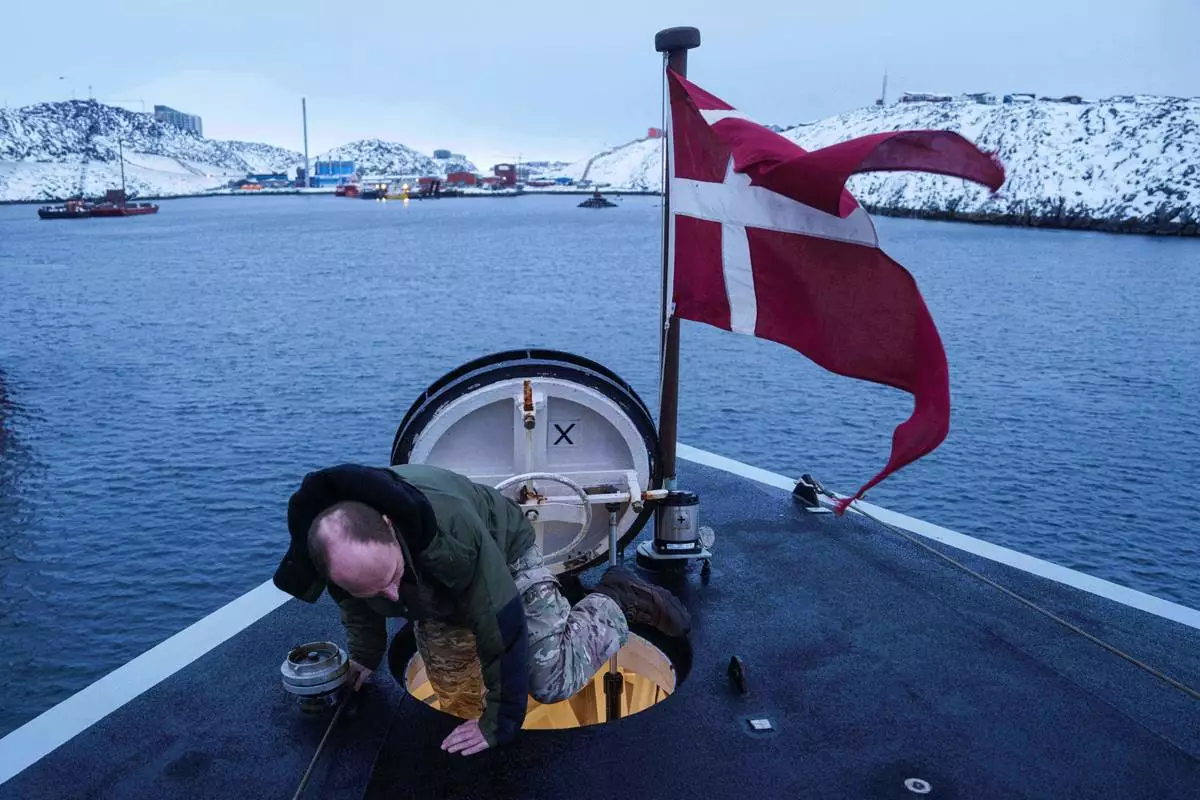
A Danish serviceman climbs out of a hatch on the bow of the military vessel HDMS Knud Rasmussen of the Royal Danish Navy docked in Nuuk, Greenland, on Saturday, Jan. 17, 2026. (AP Photo/Evgeniy Maloletka)
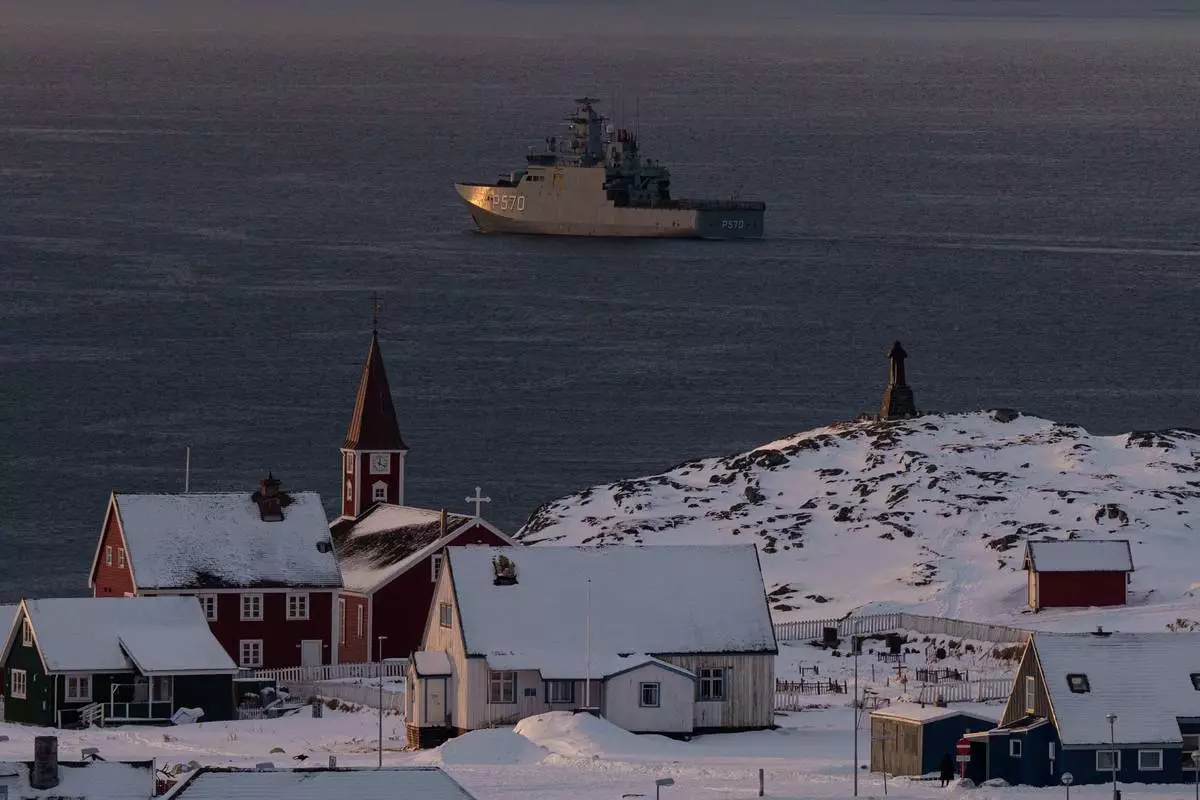
Military vessel HDMS Knud Rasmussen of the Royal Danish Navy patrols near Nuuk, Greenland, on Thursday, Jan. 15, 2026. (AP Photo/Evgeniy Maloletka)
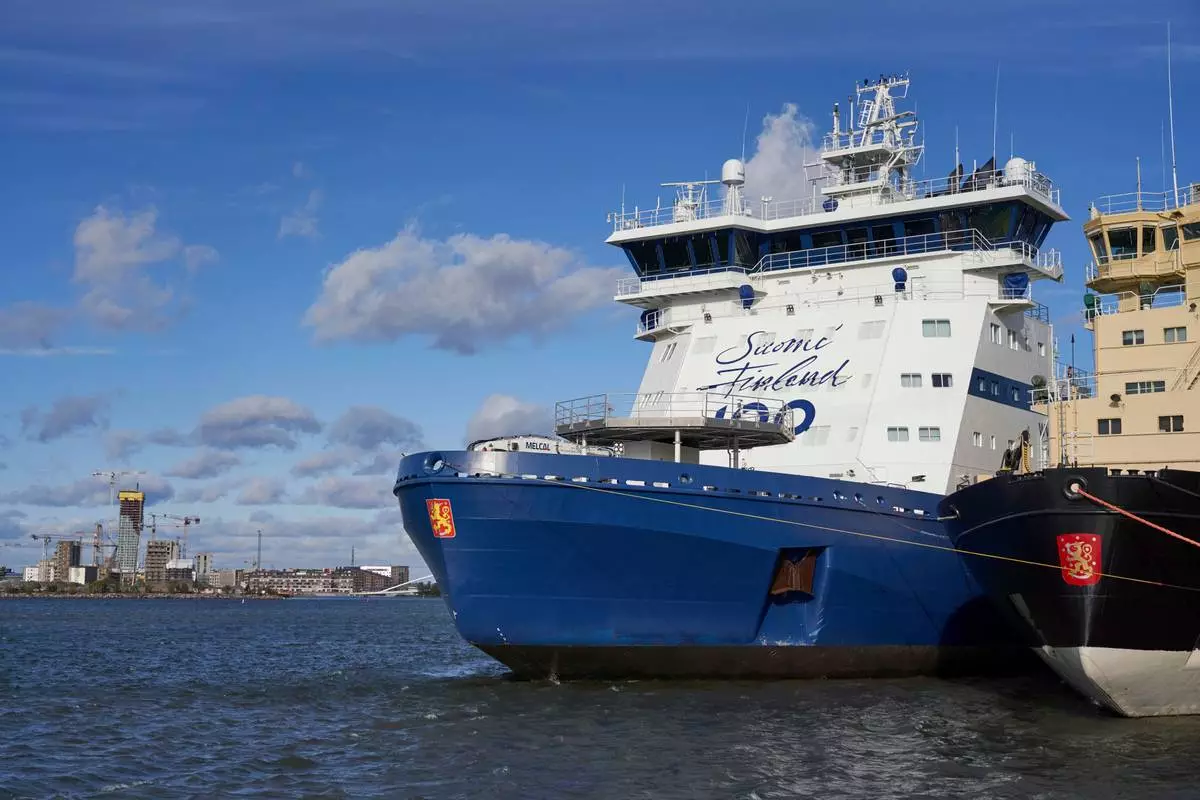
FILE -Finnish icebreaker Polaris is moored in Helsinki, Finland, Thursday Sept. 27, 2018. (AP Photo/David Keyton, File)