Vice President JD Vance on Friday encouraged anti-abortion activists to “take heart in how far we’ve come” on the quest to limit the practice, listing the Trump administration's accomplishments including an expansion of a ban on U.S. foreign aid for groups supporting abortion services.
“There is still much road ahead to travel together,” Vance told attendees at the annual March for Life demonstration, which draws tens of thousands of people annually to Washington. Attendees rallied on the National Mall before heading to the Supreme Court.
Click to Gallery
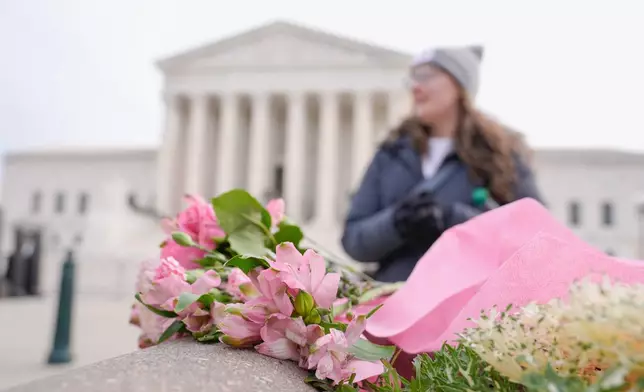
An anti-abortion activist places flowers in front of the U.S. Supreme Court during the annual March for Life, Friday, Jan. 23, 2026, on Capitol Hill, in Washington. (AP Photo/Mariam Zuhaib)
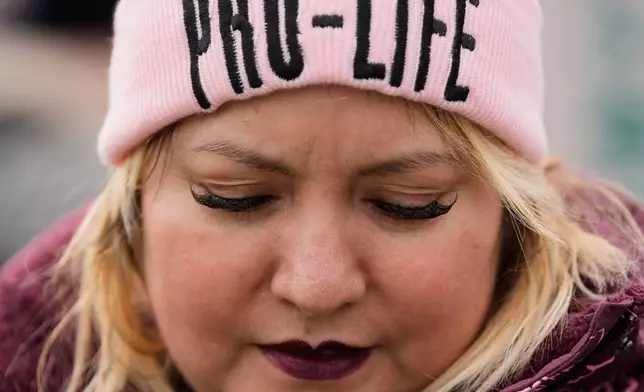
An anti-abortion demonstrator attends the annual March for Life, Friday, Jan. 23, 2026, in Washington. (AP Photo/Julia Demaree Nikhinson)
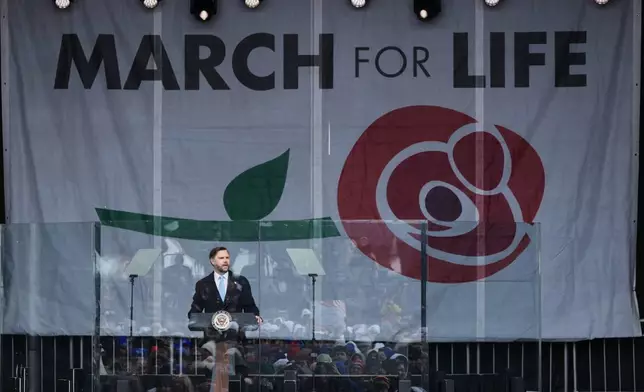
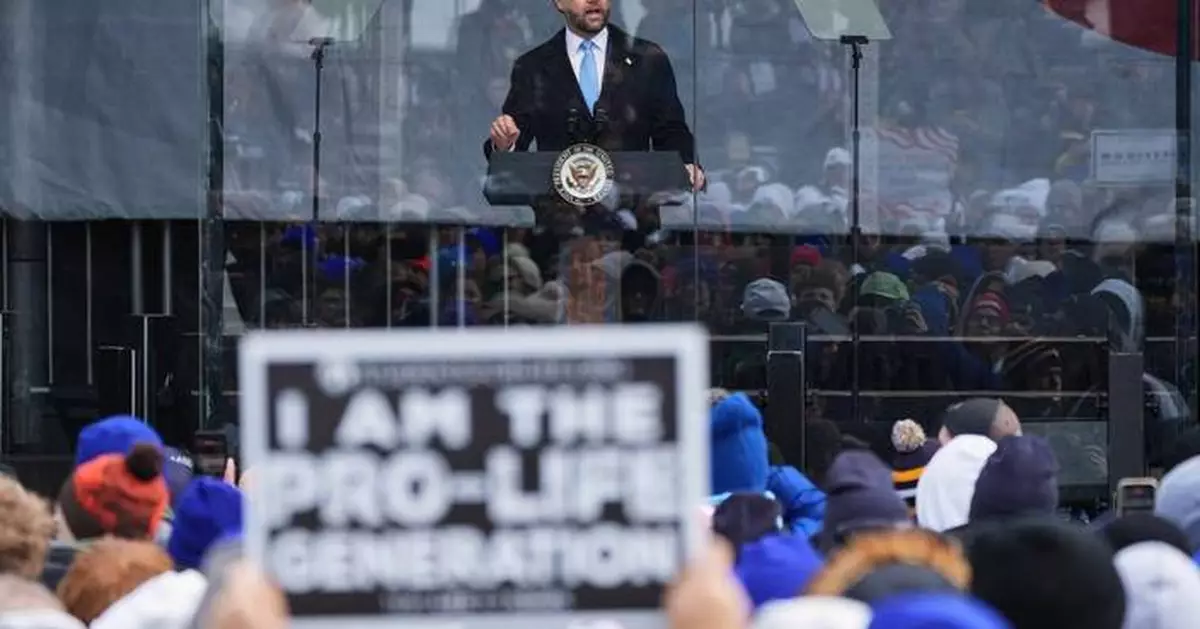
Vice President JD Vance speaks at a rally ahead of the March for Life in Washington, Friday, Jan. 23, 2026. (AP Photo/Stephanie Scarbrough)
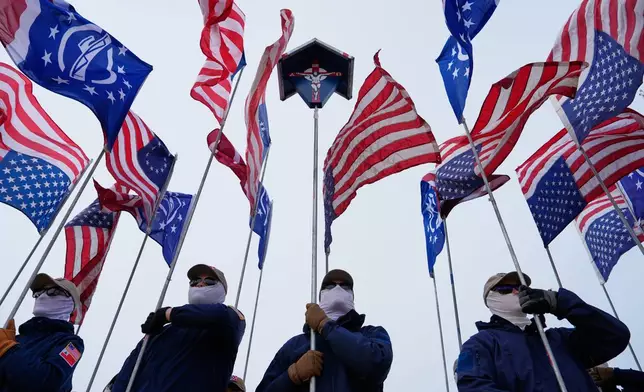
Members of the Patriot Front hold flags on the National Mall during the annual March for Life, Friday, Jan. 23, 2026, in Washington. (AP Photo/Julia Demaree Nikhinson)
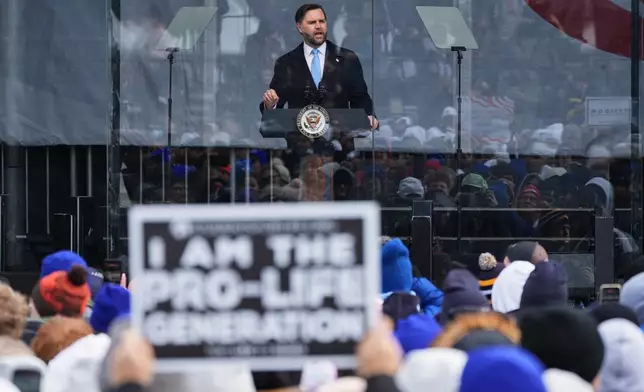
Vice President JD Vance speaks at a rally ahead of the March for Life in Washington, Friday, Jan. 23, 2026. (AP Photo/Stephanie Scarbrough)
Vance, a Republican, has spent years passionately advocating for Americans to have more children. He repeatedly expressed alarm about declining birth rates as he launched his political career in 2021 with a successful bid for the U.S. Senate in Ohio, and as vice president he has continued on that mission.
“I want more babies in the United States of America," Vance said in addressing last year's March for Life.
Earlier this week, Vance and his wife, second lady Usha Vance, announced in a social media post they are expecting a son, their fourth child, in late July.
“Let the record show, you have a vice president who practices what he preaches," Vance said Friday.
Vance cited the Supreme Court's 2022 Dobbs decision, which overturned Roe v. Wade, calling it "the most important Supreme Court decision of my lifetime.” He said President Donald Trump's leadership and appointment of conservative jurists “put a definitive end to the tyranny of judicial rule on the question of human life.”
He also lauded the “historic expansion of the Mexico City policy," the broadening of a ban on U.S. foreign aid for groups supporting abortion services, to include assistance going to international and domestic organizations and agencies that promote gender identity as well as diversity, equity and inclusion programs.
“We believe that every country in the world has the duty to protect life," Vance said, to a sea of supporters waving signs reading “Choose Life,” “Make More Babies” and “I am the Pro-Life Generation.”
“It’s not our job as the United States of America to promote radical gender ideology,” he said. "It’s our job to promote families and human flourishing.”
From the Vatican, Pope Leo XIV — the first U.S.-born pope — sent a message of support to participants in the march.
“I would encourage you, especially the young people, to continue striving to ensure that life is respected in all of its stages,” Leo wrote in a letter shown on a video at the march. “May Jesus, who promised to be with us always, accompany you today as you courageously and peacefully march on behalf of unborn children.”
On Thursday, an official said the Trump administration was implementing new rules, halting foreign assistance from going not only to groups that provide abortion as a method of family planning but also to those that advocate “gender ideology” and DEI. The official spoke on the condition of anonymity ahead of the rules’ publication in the Federal Register on Friday.
First established under President Ronald Reagan, a Republican, the policy was rescinded by subsequent Democratic administrations and was reinstated in Trump’s first term.
With its origins in the 1973 Roe v. Wade decision that nationally enshrined federal protection for abortion rights, the March for Life developed an entrenched presence among conservatives arguing against abortion. In 2017, Trump addressed the march by video, becoming the first sitting U.S. president to make live remarks. Three years later, he attended the event in person, further cementing its role in conservative politics.
In a video address to this year’s crowd, Trump recounted his administration’s “unprecedented strides to protect innocent life and support the institution of the family like never before,” enumerating his appointment of “judges and justices who believed in interpreting the Constitution as written” and “reflecting on the Dobbs decision that overturned Roe v. Wade.
Since the June 2022 Supreme Court ruling that overturned Roe, the march has become more celebratory, with organizers relishing a state-by-state fight in legislatures around the country and urging a continued fight until abortion is eliminated.
Meg Kinnard can be reached at http://x.com/MegKinnardAP.
Follow the AP's coverage of abortion at https://apnews.com/hub/abortion.
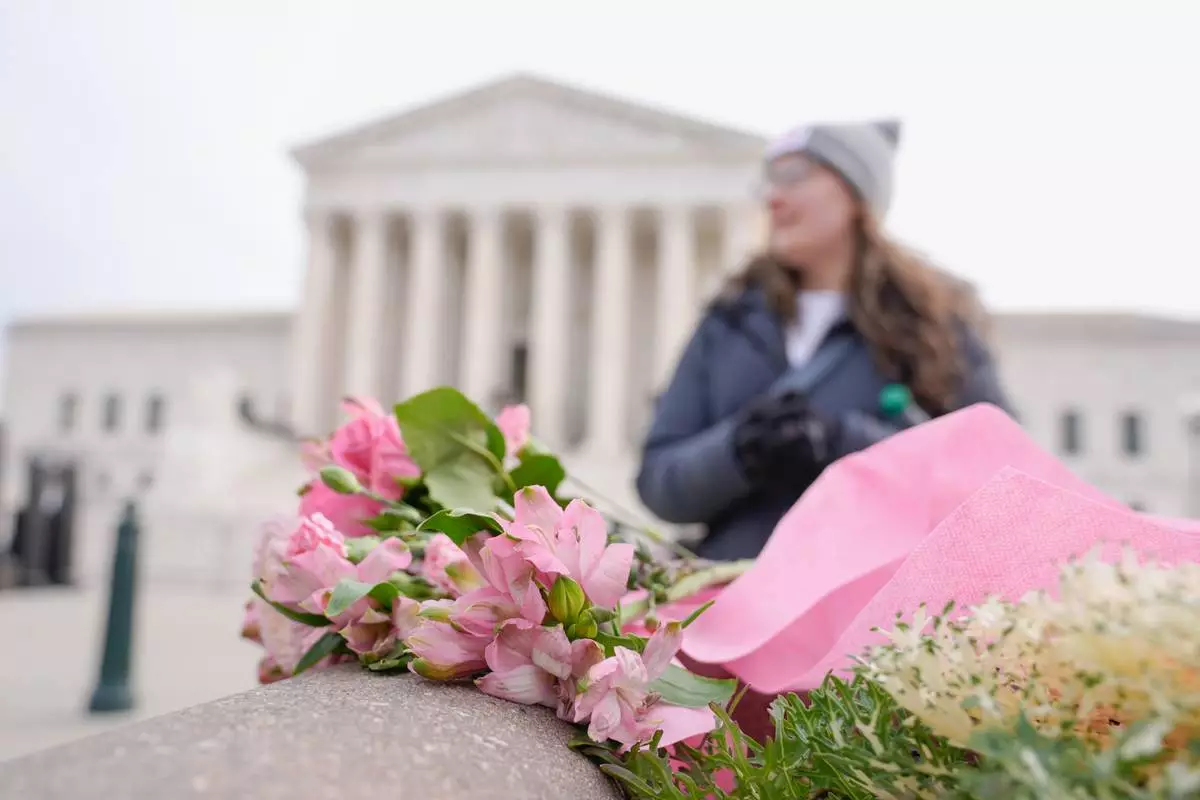
An anti-abortion activist places flowers in front of the U.S. Supreme Court during the annual March for Life, Friday, Jan. 23, 2026, on Capitol Hill, in Washington. (AP Photo/Mariam Zuhaib)
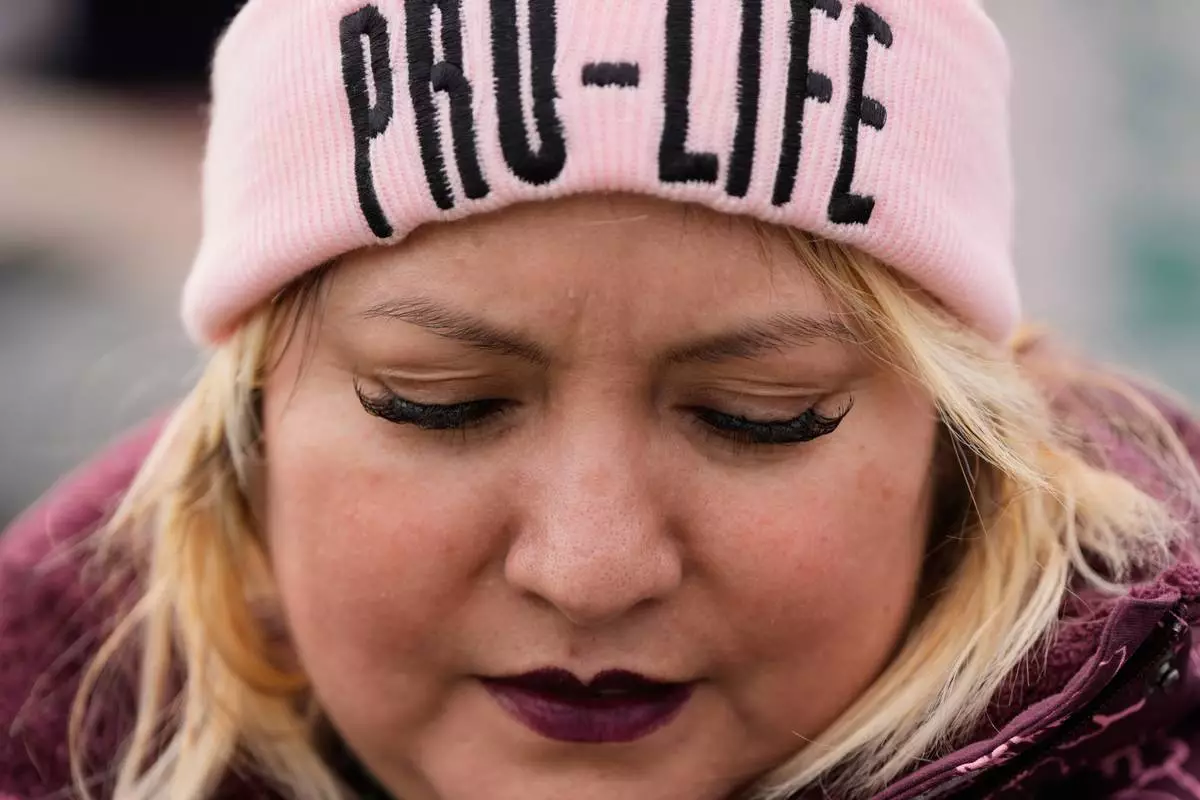
An anti-abortion demonstrator attends the annual March for Life, Friday, Jan. 23, 2026, in Washington. (AP Photo/Julia Demaree Nikhinson)
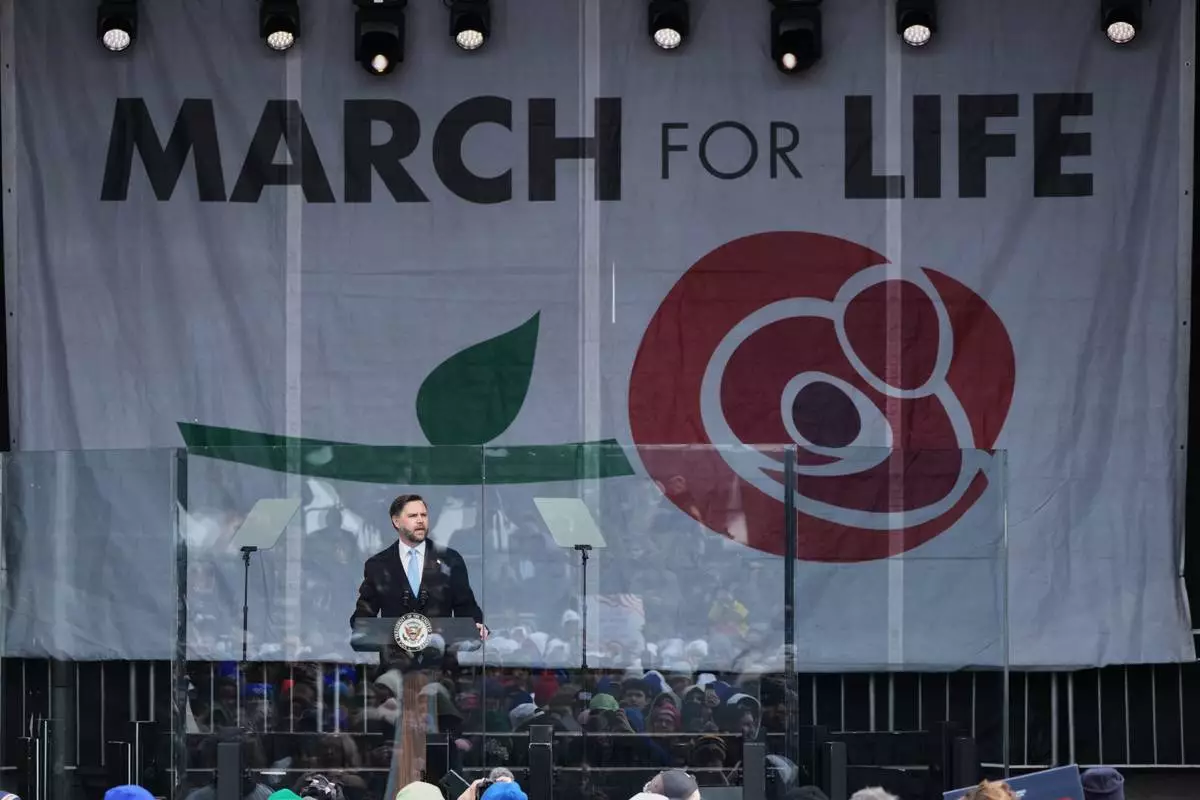
Vice President JD Vance speaks at a rally ahead of the March for Life in Washington, Friday, Jan. 23, 2026. (AP Photo/Stephanie Scarbrough)
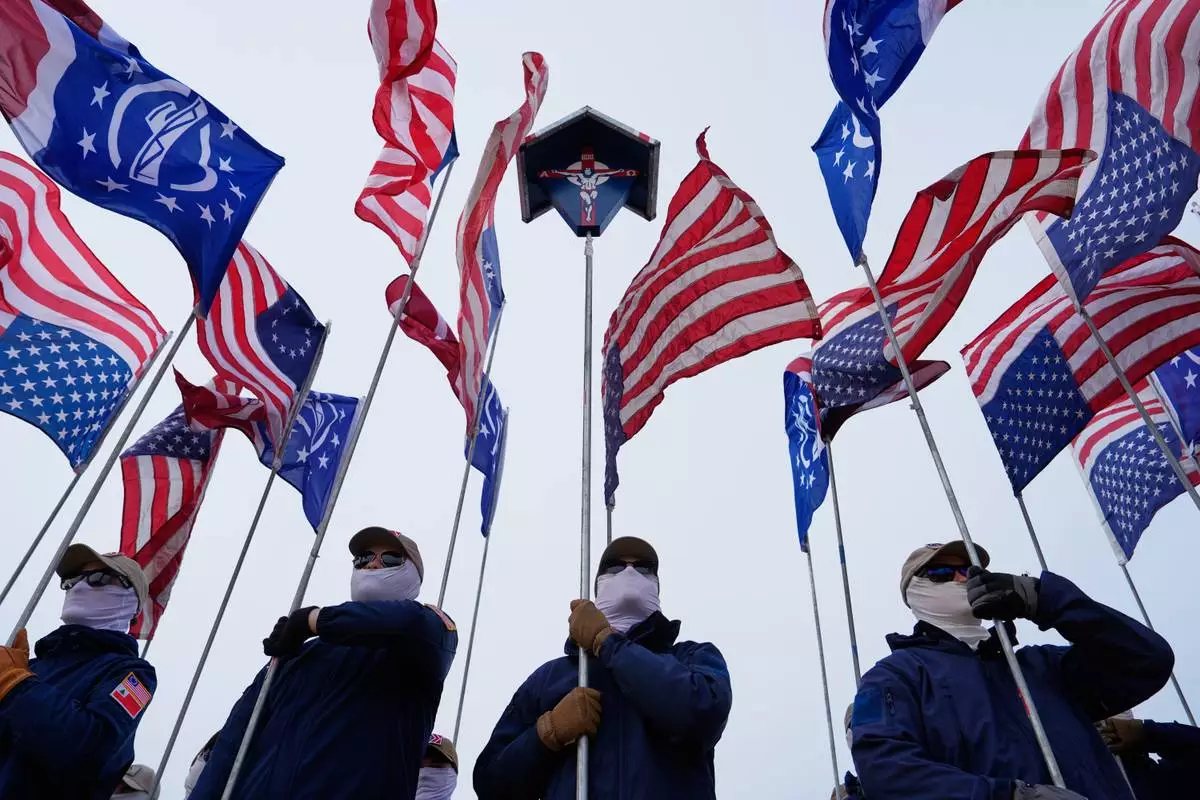
Members of the Patriot Front hold flags on the National Mall during the annual March for Life, Friday, Jan. 23, 2026, in Washington. (AP Photo/Julia Demaree Nikhinson)
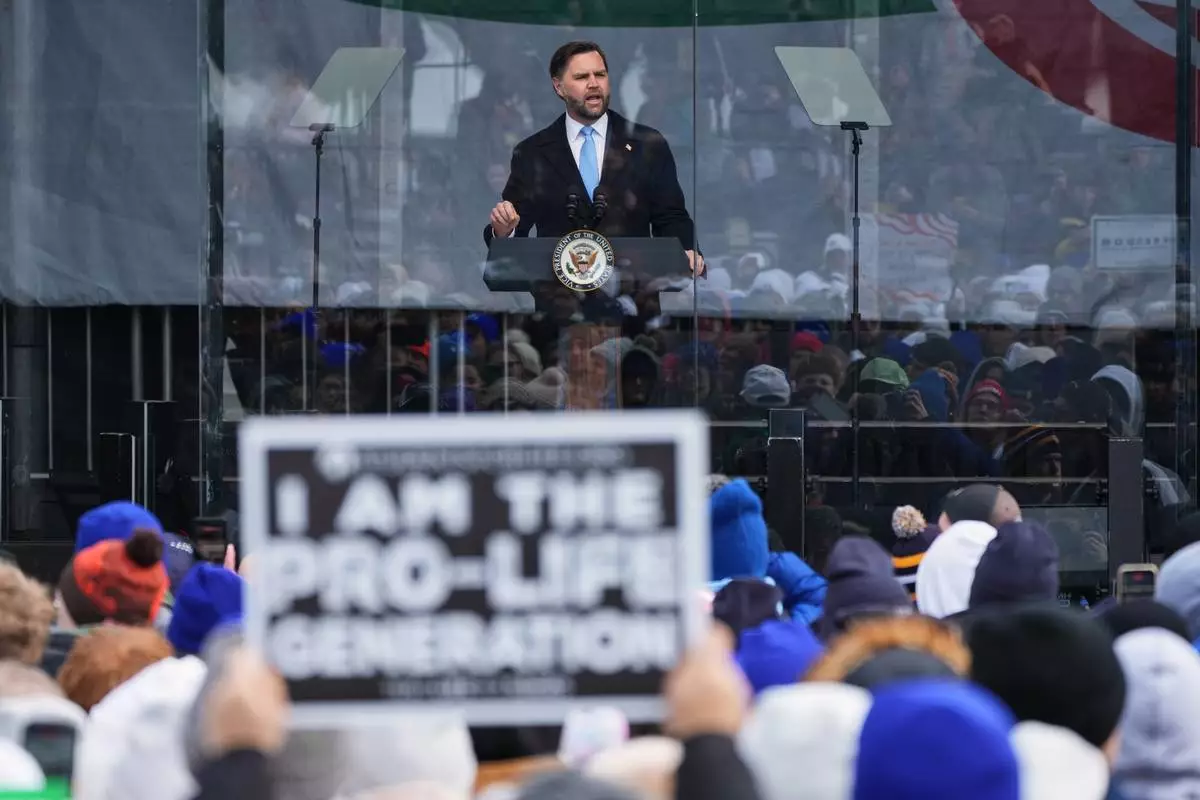
Vice President JD Vance speaks at a rally ahead of the March for Life in Washington, Friday, Jan. 23, 2026. (AP Photo/Stephanie Scarbrough)
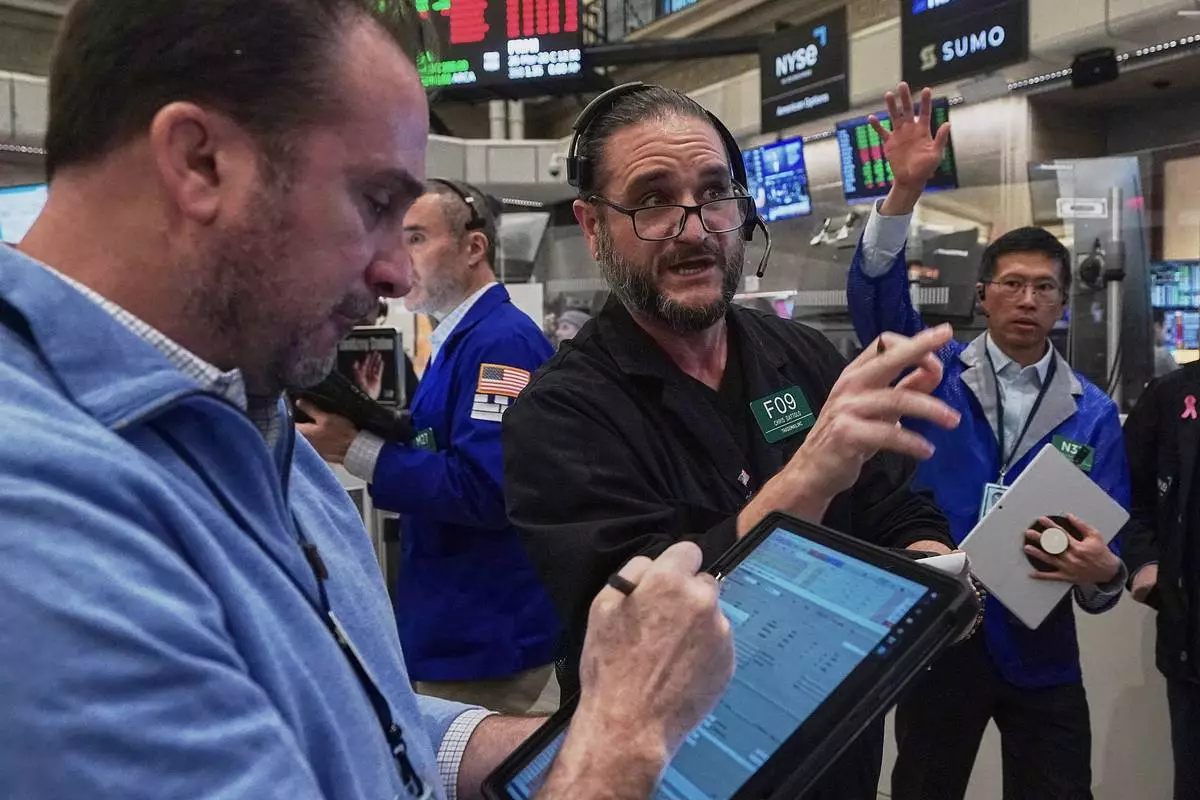
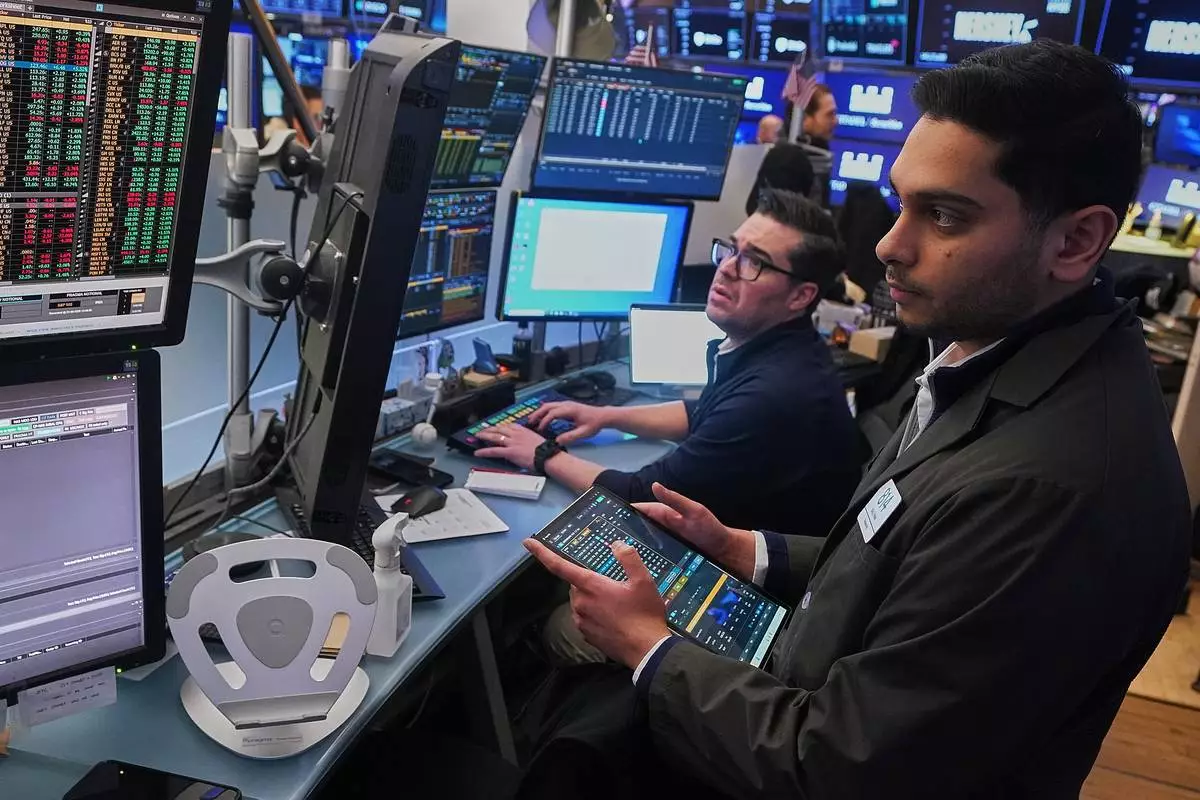
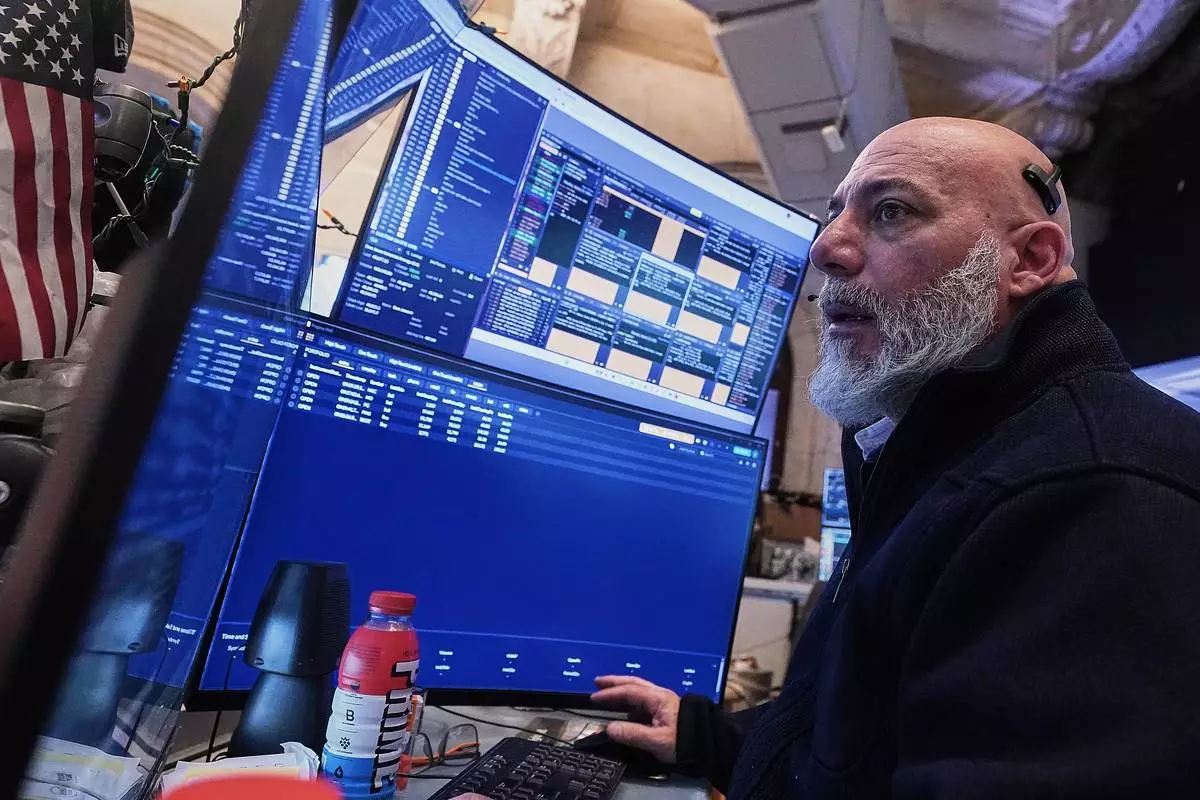
NEW YORK (AP) — The U.S. stock market finished its zigzag week full of tariff threats and cancellations with a quiet and tentative close. The S&P 500 closed barely changed Friday and notched a second straight week with a modest loss. The Dow Jones Industrial Average dipped 0.6%, and the Nasdaq composite rose 0.3%. The majority of U.S. stocks fell, including Intel, which gave a weaker financial forecast for upcoming results than analysts expected. The U.S. dollar’s value slid against the Japanese yen, euro and other currencies, while gold rose to another record in a signal that nervousness remains in the market.
THIS IS A BREAKING NEWS UPDATE. AP’s earlier story follows below.
NEW YORK (AP) — The U.S. stock market is drifting in mixed trading on Friday, as a zigzag week punctuated by loud threats and pullbacks heads toward a quieter close.
The S&P 500 rose 0.1% but remained on track to finish a second straight week with a modest loss. The Dow Jones Industrial Average was down 288 points, or 0.6%, with a little less than an hour remaining in trading, and the Nasdaq composite was 0.3% higher.
The majority of stocks on Wall Street fell, and Intel weighed on the market after tumbling 17.8%. The chip company reported better results for the end of 2025 than analysts expected. But investors focused instead on its forecast for the first three months of this year, which fell short of Wall Street’s expectations.
Chief Financial Officer David Zinsner said shortages of supplies are affecting the entire industry, and Intel expects available supply to hit a bottom early this year before improving in the spring and beyond. CEO Lip-Bu Tan highlighted the company’s opportunities created by the artificial-intelligence era.
Moves in the U.S. bond market were relatively modest following sharp swings early in the week, but other markets were still showing potential signs of nervousness.
The U.S. dollar’s value fell against the Japanese yen, Swiss franc and many other currencies. It had slid sharply early in the week after President Donald Trump threatened 10% tariffs on European countries for opposing his push to own Greenland.
That drop, paired with declines for prices for U.S. Treasury bonds, had suggested global investors may have been backing out of U.S. markets. But some relief came on Wednesday after Trump announced “the framework of a future deal with respect to Greenland” and called off the tariffs, though few details are available about it.
Gold’s price nevertheless rose to another record Friday and neared $5,000 per ounce in a signal that investors are still looking for something safer to own. It’s already up nearly 15% for the year so far.
On Wall Street, Capital One Financial sank 6.9% after reporting a weaker profit for the end of 2025 than analysts expected. It also said it was buying Brex, which helps businesses issue corporate cards, for $5.15 billion in cash and stock.
On the winning side of the market was CSX, which climbed 3.4% even though the railroad reported a weaker profit than analysts expected. Some analysts highlighted the company’s forecast for how much more operating profit it expects to retain from each $1 of revenue during 2026.
Clorox gained 1.2% after saying it was buying the maker of Purell, GOJO Industries, for $2.25 billion in cash.
In the bond market, Treasury yields inched lower as prices for U.S. government bonds rose.
A survey said expectations for inflation in the upcoming year among U.S. consumers improved to 4%. While that's well above the 2% inflation that the Federal Reserve targets, it's the lowest such reading in a year for the University of Michigan's survey.
That kind of improvement could help avoid a worst-case scenario the Fed has been desperate to avoid, one where expectations for high inflation trigger a vicious cycle of behavior that only worsens inflation.
Overall sentiment among U.S. consumers, meanwhile, was a touch stronger than economists expected. That could help keep them spending and the main engine of the U.S. economy humming. A separate preliminary report from S&P Global suggested growth is continuing for U.S. business activity.
The yield of the 10-year Treasury slipped to 4.23% from 4.26% late Thursday. The Fed's next chance to move the short-term interest rate it controls will come on Wednesday, but the widespread expectation is that it will hold steady.
In stock markets abroad, indexes were mixed in Europe after rising across much of Asia.
Japan’s Nikkei 225 added 0.3% after the Bank of Japan kept its key interest rate unchanged, as many investors expected. The central bank has been slowly pulling its policy rate higher from below zero and had raised it to 0.75% in December.
Global markets have calmed after struggling with a quick surge for long-term government bond yields in Japan early in the week. The move higher came on worries that Japan’s Prime Minister Sanae Takaichi might make moves that would add heavily to the government’s already big debt.
AP Business Writers Matt Ott and Elaine Kurtenbach contributed.
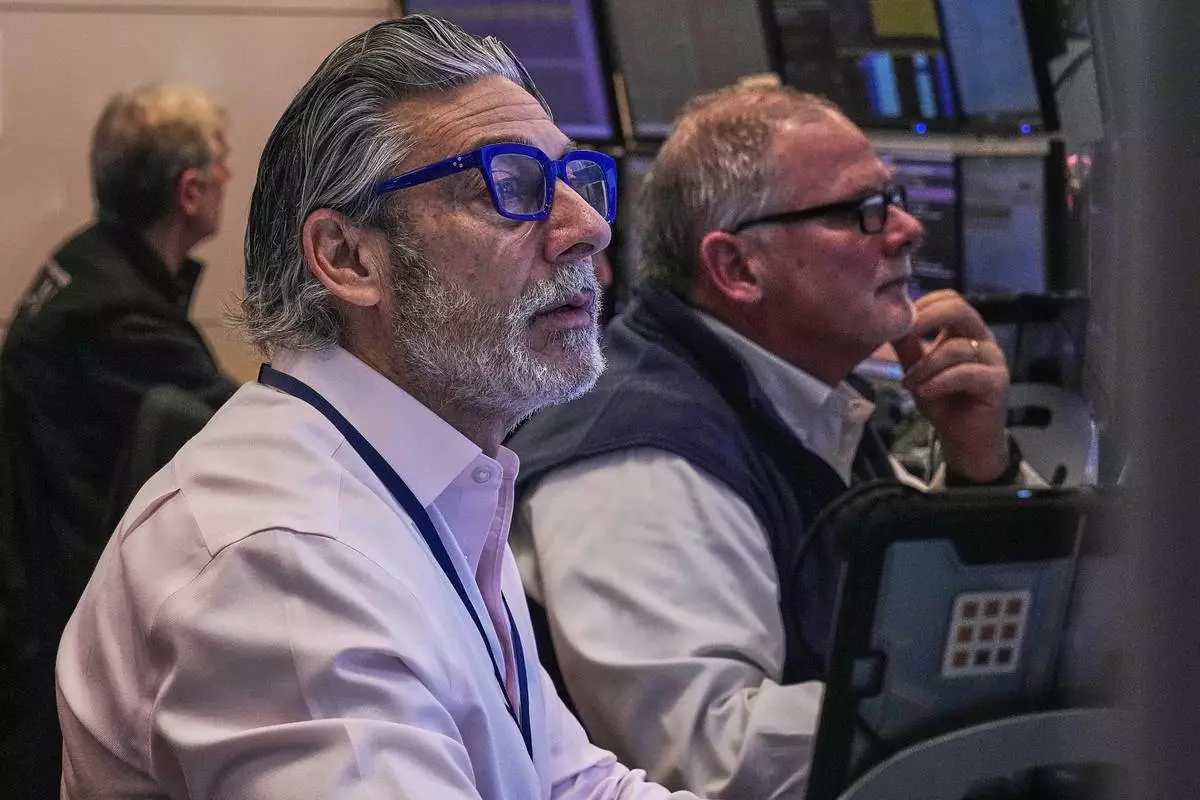
Traders John Romolo, left, and Michael Conlon work on the floor of the New York Stock Exchange, Thursday, Jan. 22, 2026. (AP Photo/Richard Drew)
Chris Dattolo, center, works with fellow options traders on the floor of the New York Stock Exchange, Thursday, Jan. 22, 2026. (AP Photo/Richard Drew)
Traders Joseph Lawler, left, and Niall Pawa work on the floor of the New York Stock Exchange, Thursday, Jan. 22, 2026. (AP Photo/Richard Drew)
Trader Vincent Napolitano works on the floor of the New York Stock Exchange, Thursday, Jan. 22, 2026. (AP Photo/Richard Drew)
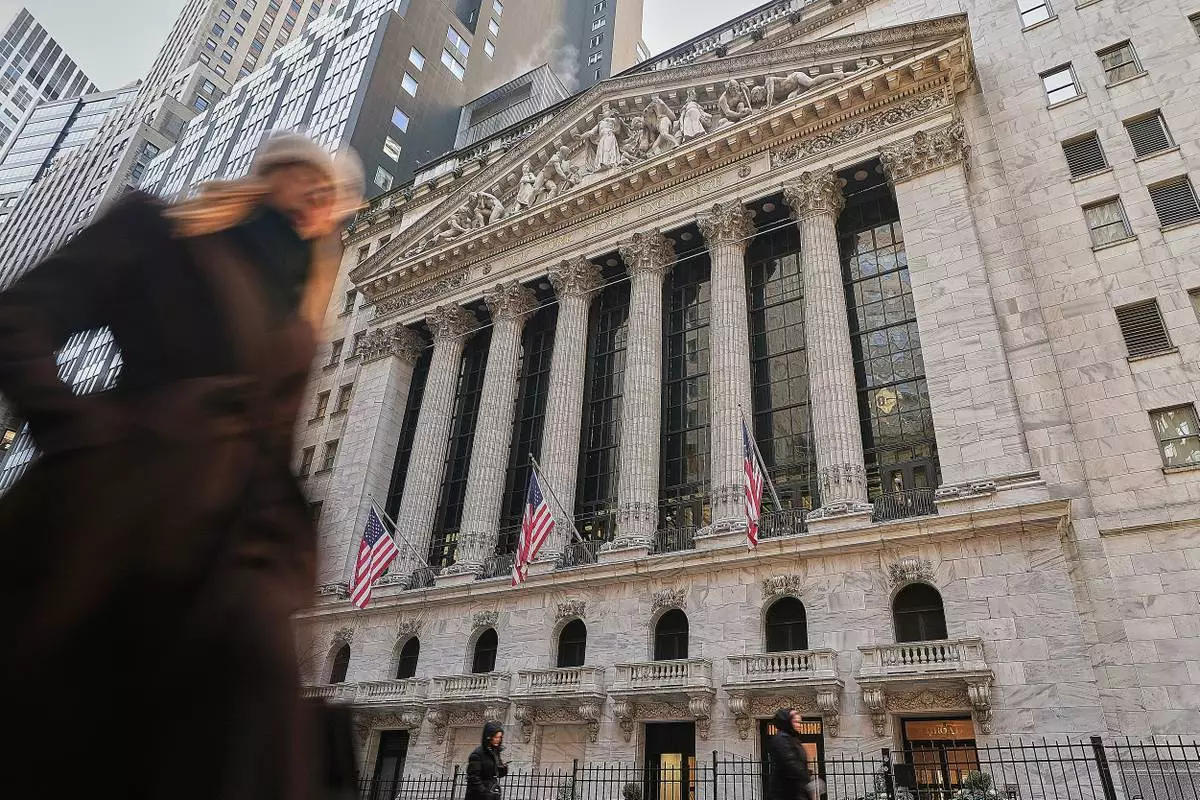
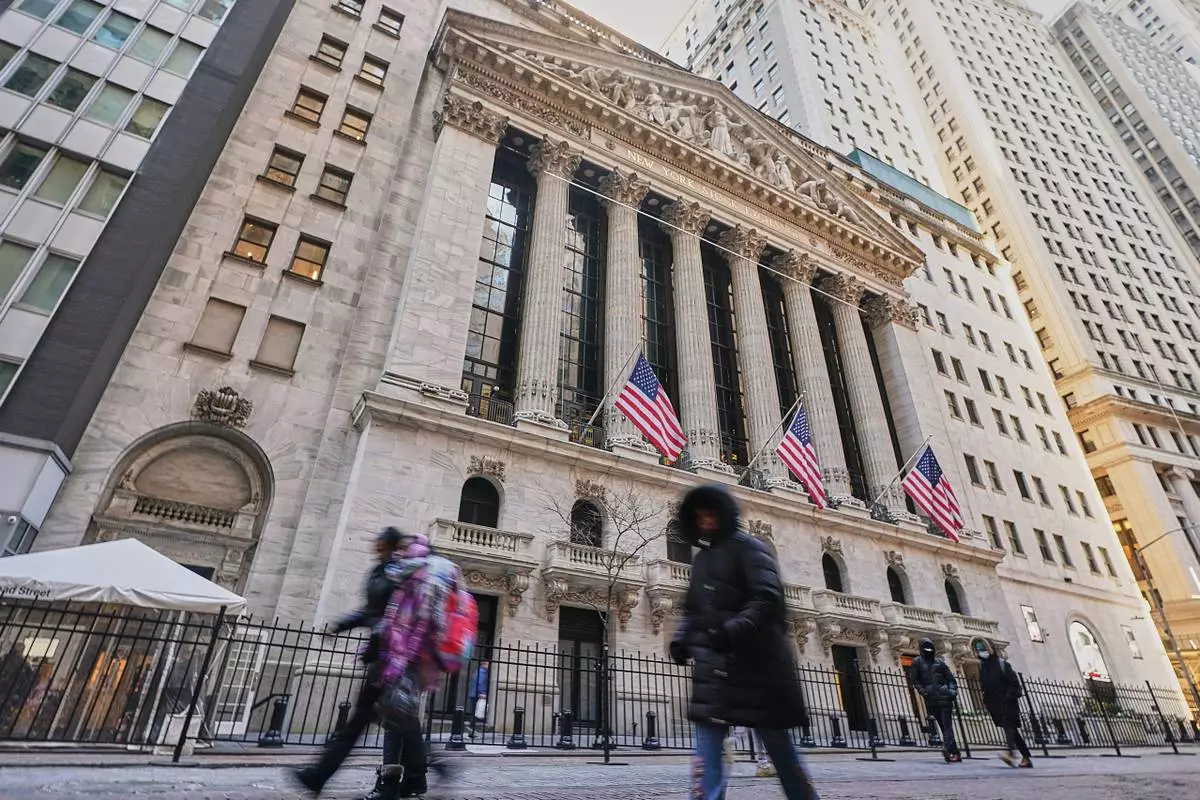
Morning commuters pass the New York Stock Exchange, Tuesday, Jan. 20, 2026. (AP Photo/Richard Drew)
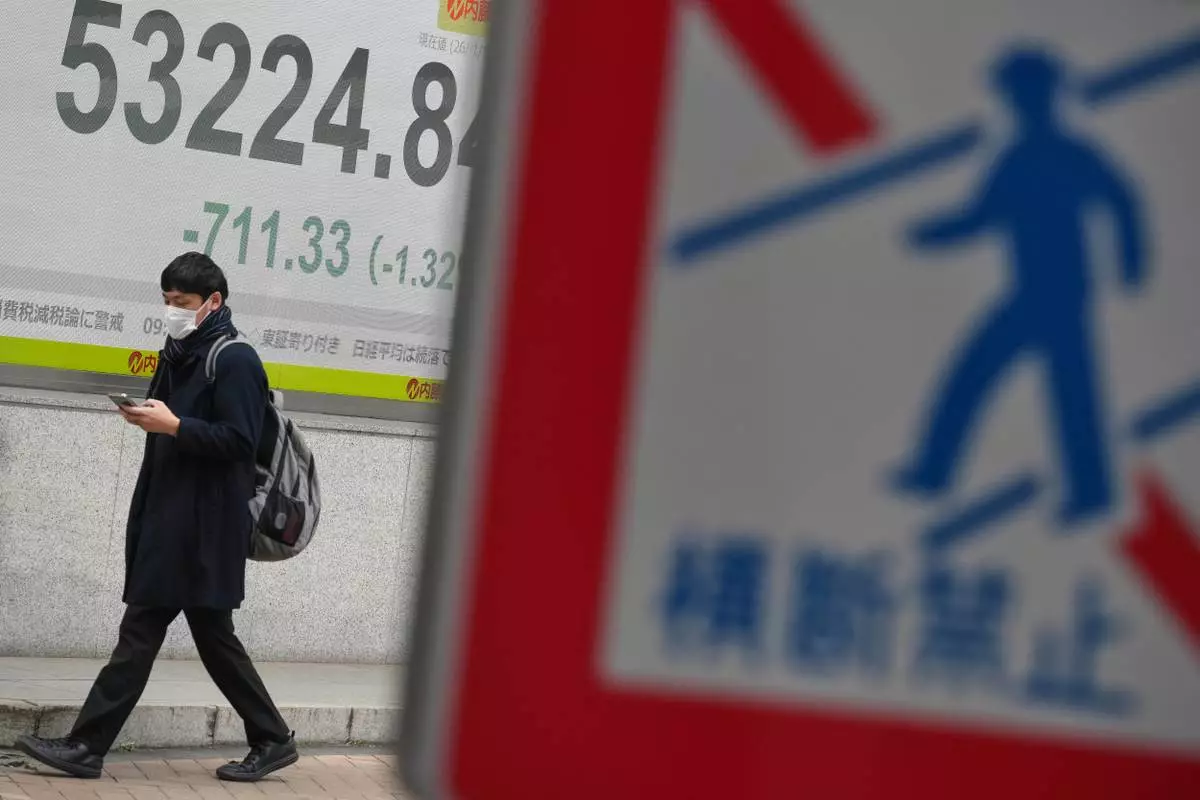
A person walks in front of an electronic stock board showing Japan's Nikkei index at a securities firm Monday, Jan. 19, 2026, in Tokyo. (AP Photo/Eugene Hoshiko)
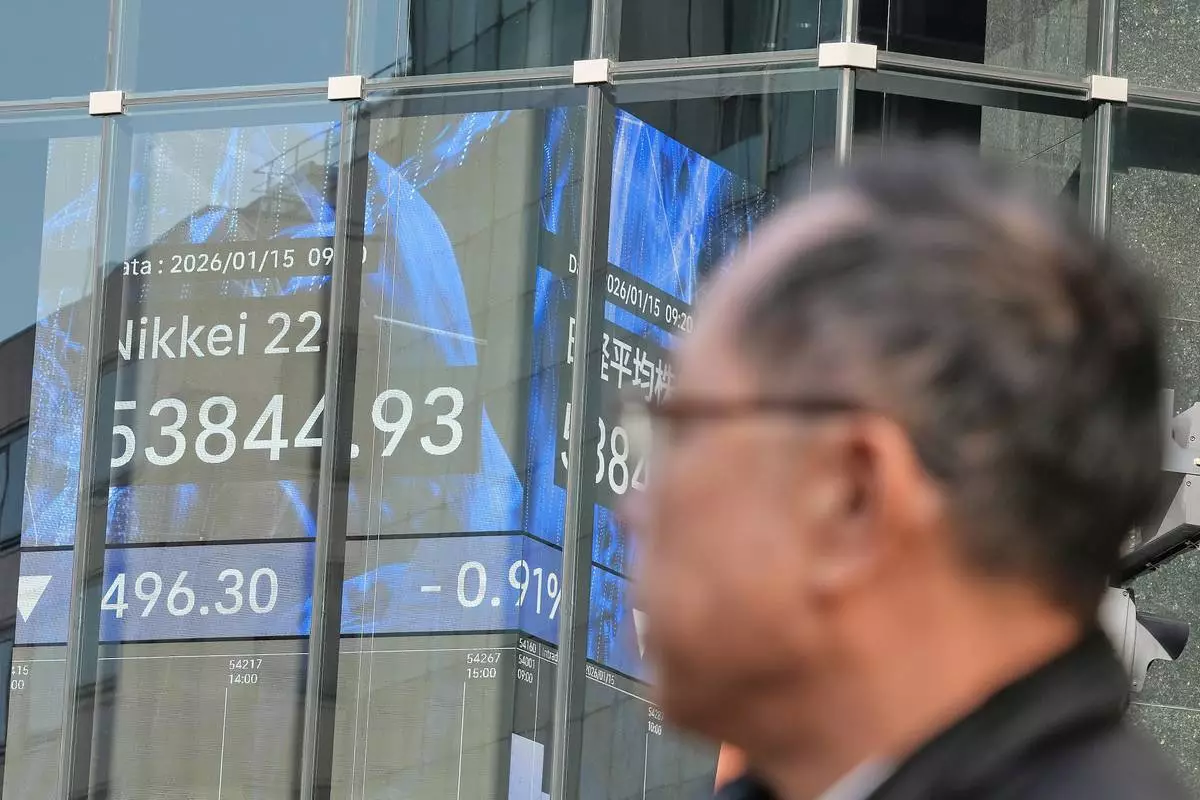
A person walks in front of an electronic stock board showing Japan's Nikkei index at a securities firm Thursday, Jan. 15, 2026, in Tokyo. (AP Photo/Eugene Hoshiko)