Skip to Content Facebook Feature Image

The NRP Group, JPS Health Network Celebrate Grand Opening of First Health and Housing Development in Texas

Business

The NRP Group, JPS Health Network Celebrate Grand Opening of First Health and Housing Development in Texas
Business

Business

The NRP Group, JPS Health Network Celebrate Grand Opening of First Health and Housing Development in Texas

2026-01-24 04:45 Last Updated At:13:24

FORT WORTH, Texas--(BUSINESS WIRE)--Jan 23, 2026--

The NRP Group, a vertically integrated, best-in-class developer, builder and manager of multifamily housing, today announced the completion and grand opening of Thrive on Crawford, a 67-unit mixed-income development in Fort Worth, Texas. The majority of homes are reserved for families earning 30%, 50% and 60% of the Area Median Income (AMI), with seven market-rate units available. The development integrates high‑quality housing with access to essential health services to improve long‑term outcomes for residents. The development includes 2,200 square feet of Class‑A commercial space leased to JPS Health Network.

This press release features multimedia. View the full release here: https://www.businesswire.com/news/home/20260123839729/en/

“Thrive on Crawford was designed to go beyond traditional affordable housing – integrating wellness services, quality amenities and convenient access to healthcare into a single community,” said Max Whipple, Vice President of Development at The NRP Group. “As our first Health and Housing development in Texas, this development reflects The NRP Group’s commitment to delivering thoughtful, high-quality housing in high-opportune cities.”

Located at 1310 Crawford Street, adjacent to a key site in JPS Health Network’s $2.1 billion bond program expansion, Thrive on Crawford is part of a broader vision to enhance healthcare services across Tarrant County. The new community provides essential housing options for healthcare workers, young professionals and families, offering an urban lifestyle close to boutique shops, restaurants and entertainment along Magnolia Avenue with direct access to I-35W.

"Thrive on Crawford is a prime example of how healthcare can extend beyond traditional clinical settings to address the determinants of health,” said Karen Duncan, MD, MBA, President and Chief Executive Officer at JPS Health Network. “Our partnership with The NRP Group demonstrates what is possible when healthcare systems and developers come together to build healthier communities.”

The development features one-, two- and three-bedroom apartments with high-end finishes, accompanied by modern cabinetry and private patios with storage units. Amenities include a business center with individual work pods, 24-hour fitness center, luxurious lounge center with a cafe, communal laundry facility and an outdoor playground. Thrive on Crawford also offers comprehensive resident service programs onsite, including adult literacy workshops, financial training and youth afterschool and summer programs.

“As housing and health become increasingly connected, developments like Thrive on Crawford play a critical role in enhancing the well-being of Tarrant County residents,” said Dustin Austin, Board Chair of the Tarrant County Hospital District Public Facility Corporation. “This community was built on the premise that affordable housing is foundational to healthier, more resilient communities and offers a unique opportunity for healthcare providers to engage directly with residents to support their overall well‑being.”

Project financing was provided by J.P. Morgan Chase and Berkadia, along with a tax credit equity investment through an investment fund managed by Red Stone Equity Partners. Additional financing was provided by the Near Southside Financing Zone TIF and Texas Department of Housing and Community Affairs. Wynne Jackson and Servitas helped co-develop the community.

“Thrive on Crawford is raising the bar on community redevelopment by providing housing, health services and opportunities to families in Tarrant County," said Annette Reschke, Executive Director of J.P. Morgan Community Development Banking. "We are proud to support this vision, ensuring residents have access to affordable housing and vital healthcare services in a community designed for long-term success.”

This health and housing collaboration not only allows JPS and other local healthcare professionals the opportunity to live within the communities they serve, but also provides residents with immediate access to important services such as primary care, pediatric, behavioral health, orthopedics, cardiology and oncology.

Thrive on Crawford marks The NRP Group’s fourth “Health and Housing” development. The Dallas metro area remains a priority market for The NRP Group. The firm has developed over 6,000 units across 27 properties in the region and previously broke ground on a new affordable housing development, The Fielder, in Mesquite.

Thrive on Crawford is now open and leasing is actively underway. For more information, please visit thriveoncrawford.com.

About The NRP Group
The NRP Group is a vertically integrated developer, owner, builder, and manager of best-in-class multifamily housing with a mission to create exceptional rental housing communities for individuals and families, regardless of income. Since its founding in 1994, NRP has developed more than 62,000 apartment homes and currently manages over 30,000 residential units.

Through its disciplined approach to vetting opportunities, NRP has established a track record of delivering impressive returns for investors. The company’s formidable size and depth of talent provide the experience and infrastructure necessary to execute developments of varying degrees of complexity and scope in both urban-infill and suburban locations, including market-rate, affordable, mixed-income, and senior housing.

The NRP Group has been consistently named a largest developer and builder in the U.S. on the NMHC “Top 50” lists, the Top 5 on the Multi-Housing News’ “Top Multifamily Developers” list, named a Top Affordable Housing Developer by Affordable Housing Finance, and has won three NAHB Pillar awards since 2020 for Development, Construction and Ones to Watch. The NRP Group has become the top multifamily developer in the U.S. that creates both affordable and market-rate housing at a national scale. Based on over 30 years of experience and expertise, NRP provides construction and property management services to outside owners and developers. For additional information, visit www.nrpgroup.com.

About JPS Health Network
The Tarrant County Hospital District, known as JPS Health Network, is a tax-supported organization serving the healthcare needs of families across Tarrant County. JPS provides adult inpatient care at John Peter Smith Hospital, a facility licensed for 582 beds and located in Fort Worth, Texas. JPS has served as a Level I Trauma Center for Tarrant County for over a decade and is currently the largest training institution in Fort Worth. The health network offers comprehensive services including primary care, specialty care, and pharmacy at more than 25 community locations. JPS is dedicated to providing a full continuum of behavioral health services, including inpatient services at Trinity Springs Pavilion, emergency behavioral health services at our Psychiatric Emergency Center, outpatient services at our JPS clinics, and mental health services for children and adolescents through programs like TCHATT.
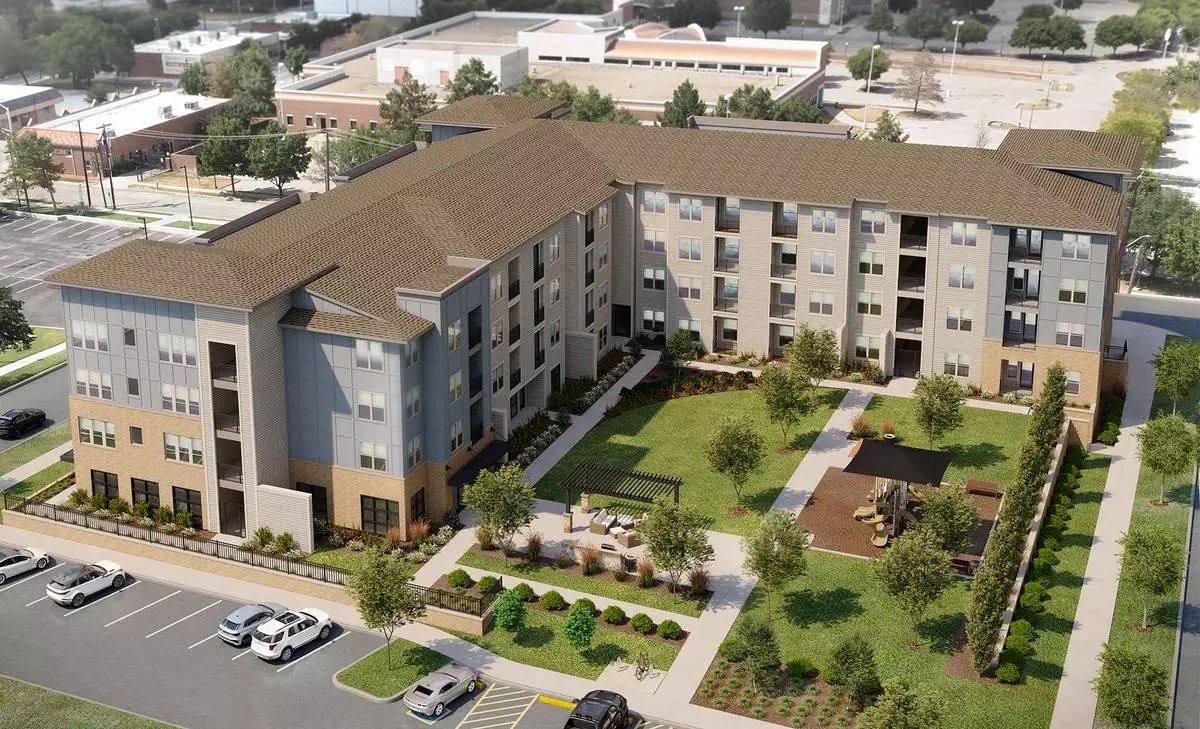
Thrive on Crawford (Credit: The NRP Group)


Thrive on Crawford (Credit: The NRP Group)

So many things went wrong last January 29 to contribute to the deadliest plane crash on American soil since 2001 that the National Transportation Safety Board isn't likely to identify a single cause of the collision between an airliner and an Army helicopter near Washington, D.C., that killed 67 people at its hearing on Tuesday.

Instead, their investigators will detail what they found that played a role in the crash, and the board will recommend changes to help prevent a similar tragedy. Last week, the Federal Aviation Administration already took the temporary restrictions it imposed after the crash and made them permanent to ensure planes and helicopters won't share the same airspace again around Reagan National Airport.

Family members of victims hope those suggestions won't be ignored the same way many past NTSB recommendations have been. Tim Lilley, whose son Sam was the first officer on the American Airlines plane, said he hopes officials in Congress and the administration will make changes now instead of waiting until for another disaster.

“Instead of writing aviation regulation in blood, let’s start writing it in data,” said Lilley, who is a pilot himself and earlier in his career flew Black Hawk helicopters in the Washington, D.C., area. “Because all the data was there to show this accident was going to happen. This accident was completely preventable."

Over the past year, the NTSB has already highlighted a number of the factors that contributed to the crash including a poorly-designed helicopter route past Reagan Airport, the fact that the Black Hawk was flying 78 feet higher than it should have been, the warnings that FAA ignored in the years beforehand and that the Army turned off a key system that would have broadcast the helicopter’s location more clearly.

The D.C. plane crash was the first in a number of high-profile crashes and close calls throughout 2025 that alarmed the public, but the total number of crashes last year was actually the lowest since the pandemic hit in 2020 with 1,405 crashes nationwide.

Experts say flying remains the safest way to travel because of all the overlapping layers of precautions built into the system, but too many of those safety measures failed at the same time last Jan. 29.

Here is some of what we have learned about the crash:

The route along the Potomac River the Black Hawk was following that night allowed for helicopters and planes to come within 75 feet (23 meters) of each other when a plane was landing on the airport's secondary runway that typically handles less than 5% of the flights landing at Reagan. And that distance was only ensured when the helicopter stuck to flying along the bank of the river, but the official route didn't require that.

Normally, air traffic controllers work to keep aircraft at least 500 feet (152 meters) apart to keep them safe, so the scant separation on Route 4 posed what NTSB Chairwoman Jennifer Homendy called “an intolerable risk to flight safety.”

The controllers at Reagan also had been in the habit of asking pilots to watch out for other aircraft themselves and maintain visual separation as they tried to squeeze more planes in to land on what the Metropolitan Washington Airport Authority has called the busiest runway in the country. The FAA put a halt to that practice after the crash.

That night a controller twice asked the helicopter pilots whether they had the jet in sight, and the pilots said they did and asked for visual separation approval so they could use their own eyes to maintain distance. But at the investigative hearings last summer board members questioned how well the crew could spot the plane. while wearing night vision goggles and whether the pilots were even looking in the right spot.

The American Airlines plane flying from Wichita, Kansas, collided with the helicopter 278 feet (85 meters) above the river, but the Black Hawk was never supposed to fly above 200 feet (61 meters) as it passed by the airport according to the official route.

Before investigators revealed how high the helicopter was flying, Tim Lilley was asking tough questions about it at some of the first meetings NTSB officials had with the families, His background as a pilot gave him detailed knowledge of the issues.

“We had a moral mandate because we had such an in-depth insight into what happened. We didn’t want to become advocates, but we could not shirk the responsibility,” said Lilley, who started meeting with top lawmakers in Congress, Transportation Secretary Sean Duffy and Army officials not long after the crash to push for changes.

The NTSB has said the Black Hawk pilots may not have realized how high the helicopter was because the barometric altimeter they were relying on was reading 80 to 100 feet (24 to 30 meters) lower than the altitude registered by the flight data recorder.

Investigators tested out the altimeters of three other Black Hawks of the same model from the same Army unit and found similar discrepancies.

FAA controllers were warning about the risks all the helicopter traffic around Reagan airport created at least since 2022.

And the NTSB found there had been 85 near misses between planes and helicopters around the airport in the three years before the crash along with more than 15,000 close proximity events. Pilots reported collision alarms going off in their cockpits at least once a month.

The warning signs were there, Officials refused to add a warning to helicopter charts urging pilots to use caution when they used the secondary runway at Reagan that this jet from Wichita, Kansas was trying to land on when it ran into the Black Hawk.

Rachel Feres said it was hard to hear about all the known concerns that were never addressed before the crash that killed her cousin Peter Livingston and his wife Donna and two young daughters, Everly and Alydia, who were both promising figure skaters.

“It became very quickly clear that this crash should never have happened,” Feres said. “And as someone who is not particularly familiar with aviation and how our aviation system works, we were just hearing things over and over again that I think really, really shocked people, really surprised people.”

FILE - Rescue and salvage crews pull up a part of a Army Black Hawk helicopter that collided midair with an American Airlines jet, at a wreckage site in the Potomac River from Ronald Reagan Washington National Airport, Feb. 6, 2025, in Arlington, Va. (AP Photo/Jose Luis Magana, File)

FILE - Rescue and salvage crews pull up a part of a Army Black Hawk helicopter that collided midair with an American Airlines jet, at a wreckage site in the Potomac River from Ronald Reagan Washington National Airport, Feb. 6, 2025, in Arlington, Va. (AP Photo/Jose Luis Magana, File)

FILE - Crosses are seen at a makeshift memorial for the victims of the plane crash in the Potomac River near Ronald Reagan Washington National Airport, Jan. 31, 2025, in Arlington, Va. (AP Photo/Jose Luis Magana, File)

FILE - Crosses are seen at a makeshift memorial for the victims of the plane crash in the Potomac River near Ronald Reagan Washington National Airport, Jan. 31, 2025, in Arlington, Va. (AP Photo/Jose Luis Magana, File)

FILE - A piece of wreckage is lifted from the water onto a salvage vessel near the site in the Potomac River of a mid-air collision between an American Airlines jet and a Black Hawk helicopter, at Ronald Reagan Washington National Airport, Feb. 4, 2025, in Arlington, Va. (AP Photo/Ben Curtis, File)

FILE - A piece of wreckage is lifted from the water onto a salvage vessel near the site in the Potomac River of a mid-air collision between an American Airlines jet and a Black Hawk helicopter, at Ronald Reagan Washington National Airport, Feb. 4, 2025, in Arlington, Va. (AP Photo/Ben Curtis, File)

Recommended Articles