OKLAHOMA CITY--(BUSINESS WIRE)--Jan 23, 2026--
Paycom Software, Inc. (NYSE: PAYC) (“Paycom”), a leading provider of comprehensive, cloud-based human capital management software, announced that Jeff York is returning to serve as chief sales officer (CSO), effective January 23, 2026. York previously served as CSO at Paycom from 2007 to 2021 and has since been serving as Paycom’s Leadership Strategist.
This press release features multimedia. View the full release here: https://www.businesswire.com/news/home/20260123915414/en/
York is replacing Amy Walker, who is transitioning from Paycom’s CSO to a consulting role for the company.
“Jeff is a proven sales strategist whose deep understanding of our model and culture equips him to lead the organization,” said Chad Richison, Paycom founder and CEO. “We will continue driving growth while delivering full solution automation for clients and their employees.”
York has more than three decades of sales experience and has held a variety of sales management positions where he has hired and developed many decorated executives. Under York’s leadership, Paycom’s sales force was named one of the 50 Best Companies to Sell For in the U.S., and his sales organization propelled Paycom to be named one of Fortune magazine’s 100 Fastest-Growing Companies for four consecutive years.
“I’m honored to return to the CSO role and partner with Chad to continue the momentum we have built organizationally,” said York. “We remain focused on consistent execution and delivering strong ROI for our clients.”
About Paycom
Paycom Software, Inc. (NYSE: PAYC) simplifies business and employees’ lives through automated, command-driven HR and payroll technology that revolutionizes data access. From hire to retire, Paycom’s employee-first technology leverages AI and full-solution automation to streamline processes and drive efficiencies in a truly single database, providing a seamless experience for Paycom’s clients and their employees. With its industry-first AI engine, IWantTM, Paycom provides instant and accurate access to employee data without having to navigate or learn the software. For over 25 years, Paycom has been recognized for its innovative technology and workplace culture while serving businesses of all sizes in the U.S. and internationally.
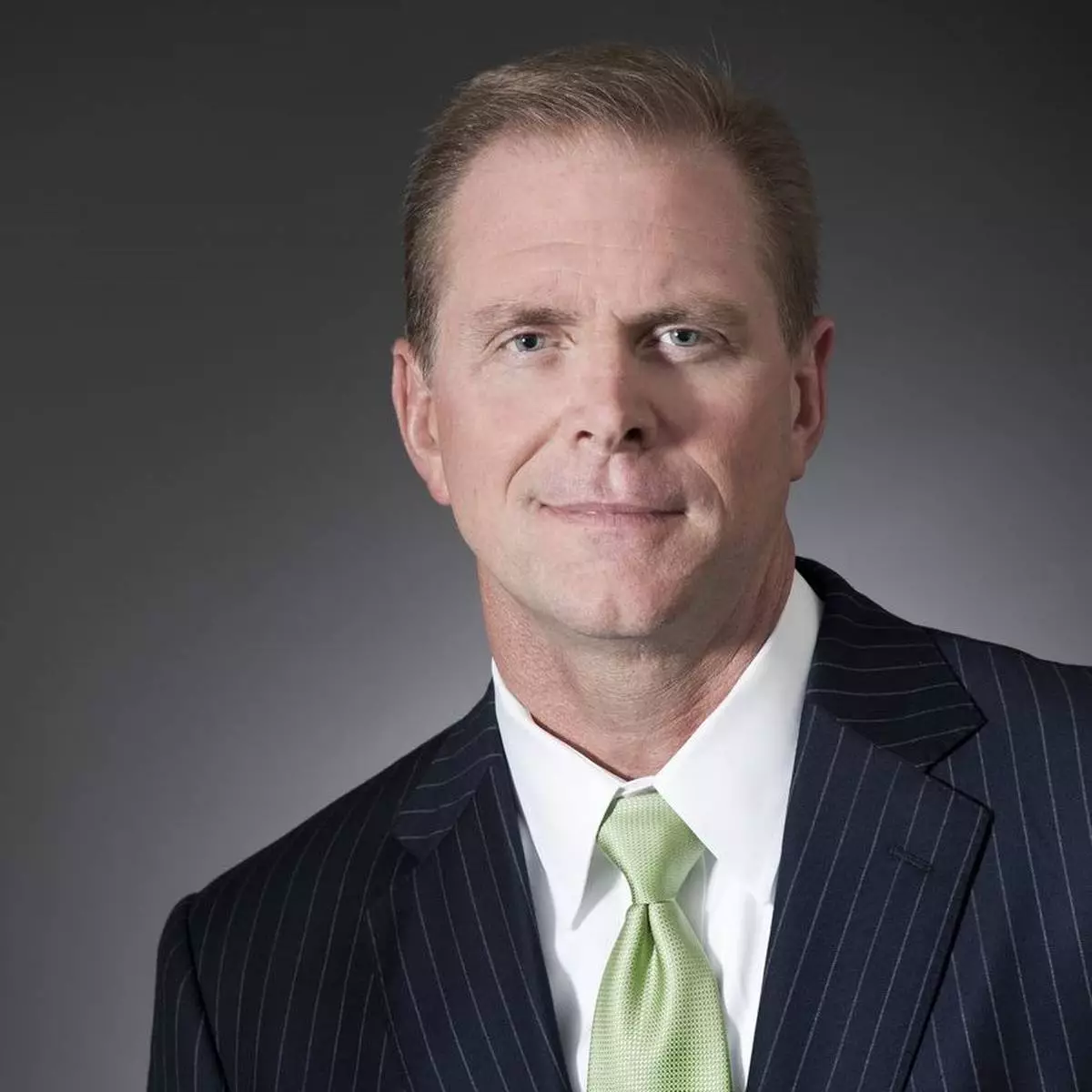
Jeff York Returns as Paycom’s Chief Sales Officer
MINNEAPOLIS (AP) — A 51-year-old man who was shot Saturday by federal immigration officers in Minneapolis has died, a hospital record obtained by The Associated Press shows.
The person was shot amid the Trump administration’s immigration crackdown, Minnesota Gov. Tim Walz said. The details surrounding the shooting weren’t immediately clear.
Department of Homeland Security spokesperson Tricia McLaughlin told the AP in a text messages that the person had a firearm with two magazines and that the situation was “evolving.”
The shooting happened amid widespread daily protests in the Twin Cities since the Jan. 7 shooting of 37-year-old Renee Good, who was killed when an Immigration and Customs Enforcement officer fired into her vehicle. Saturday's shooting unfolded just over a mile away from where Good was shot.
Walz, a Democrat, said in a social media post that he had been in contact with the White House after the shooting. He urged President Donald Trump to end what the Department of Homeland Security has called its largest-ever immigration enforcement operation.
“Pull the thousands of violent, untrained officers out of Minnesota. Now,” Walz said in a post on X.
DHS distributed a photo of a handgun they said was on the person who was shot.
After the shooting, an angry crowd gathered and screamed profanities at federal officers, calling them “cowards” and telling them to go home. One officer responded mockingly as he walked away, telling them: “Boo hoo.” Agents elsewhere shoved a yelling protester into a car.
The intersection where the shooting has been blocked off, and Border Patrol agents are on the scene wielding batons.
The shooting happened a day after thousands of demonstrators protesting the crackdown on immigrants crowded the city’s streets in frigid weather, calling for federal law enforcement to leave.
Associated Press writer Jim Mustian contributed from New York.
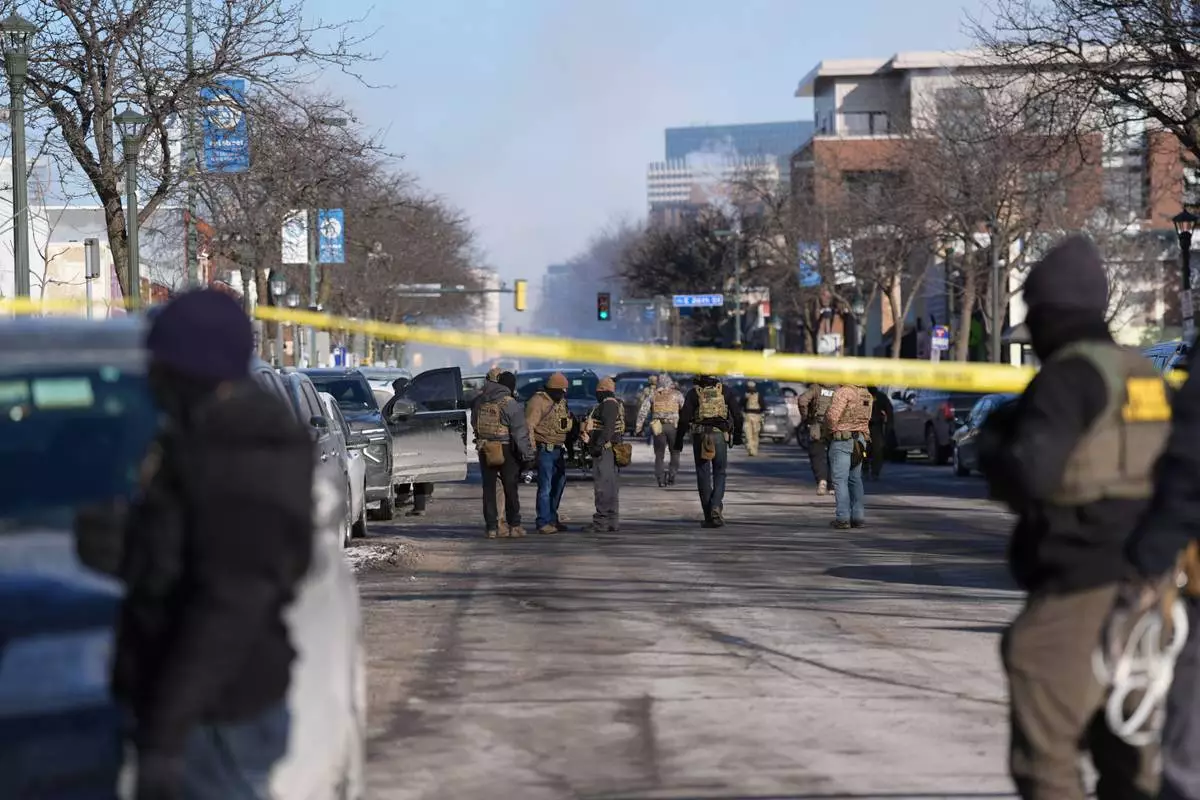
Federal agents stand near the site of a shooting Saturday, Jan. 24, 2026, in Minneapolis. (AP Photo/Abbie Parr)
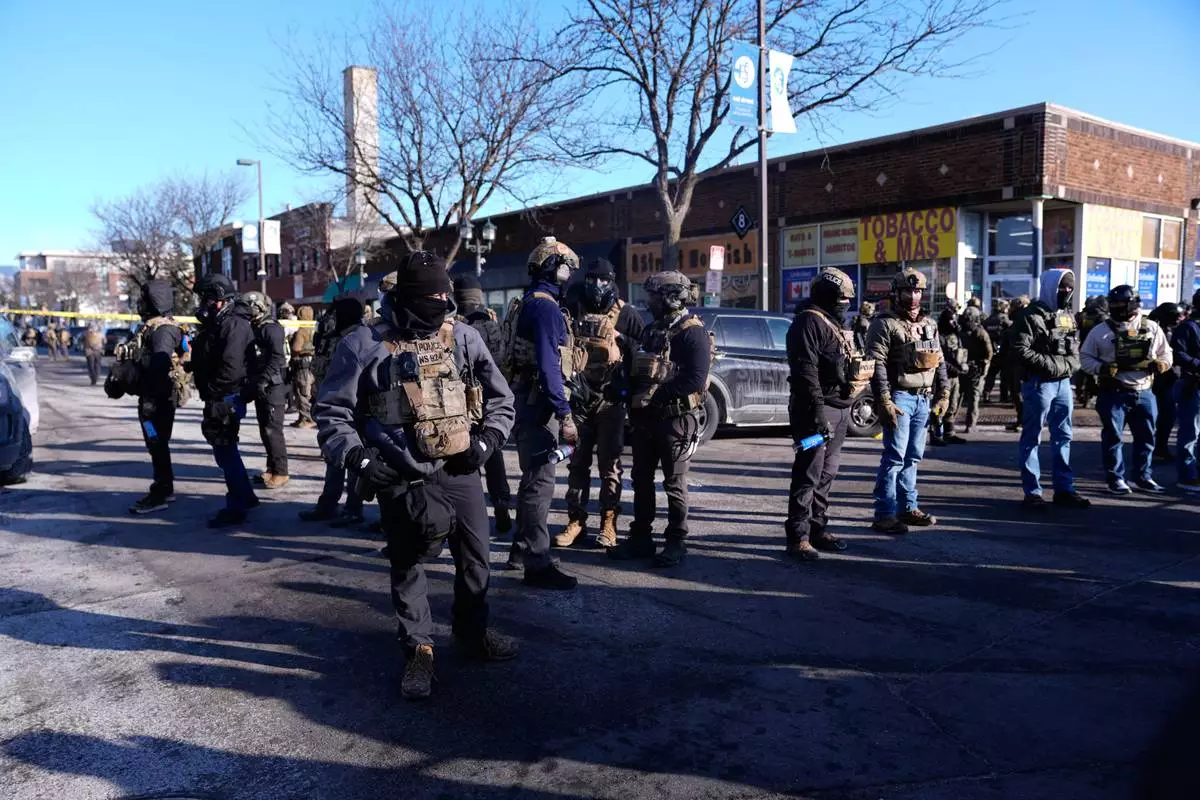
Federal agents stand near the site of a shooting Saturday, Jan. 24, 2026, in Minneapolis. (AP Photo/Abbie Parr)
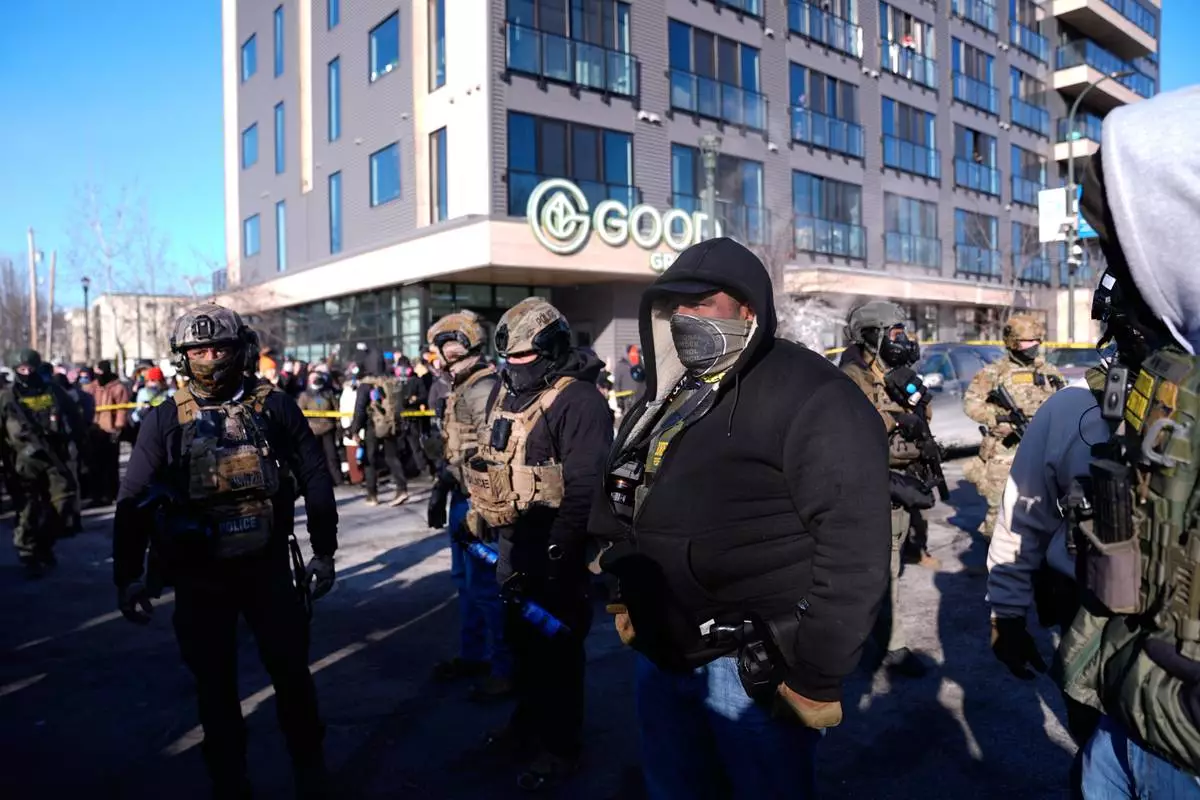
Federal agents stand near the site of a shooting Saturday, Jan. 24, 2026, in Minneapolis. (AP Photo/Abbie Parr)
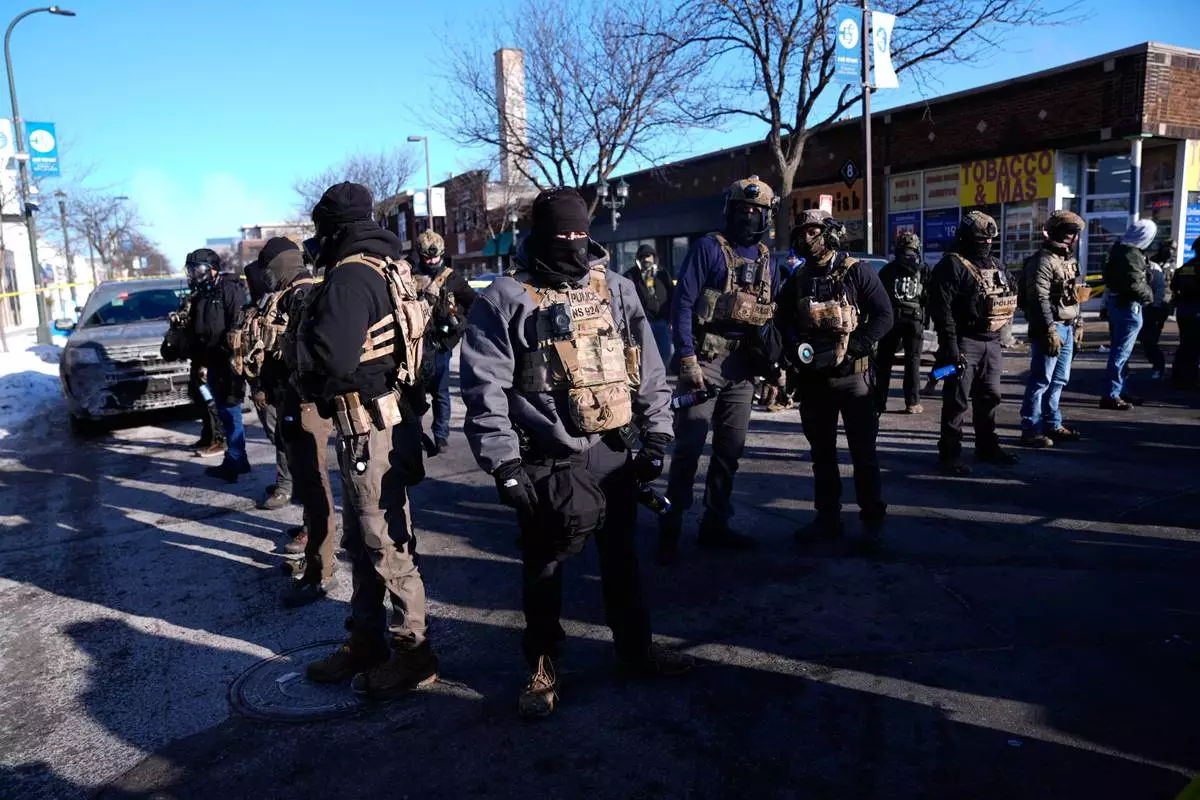
Federal agents stand near the site of a shooting Saturday, Jan. 24, 2026, in Minneapolis. (AP Photo/Abbie Parr)
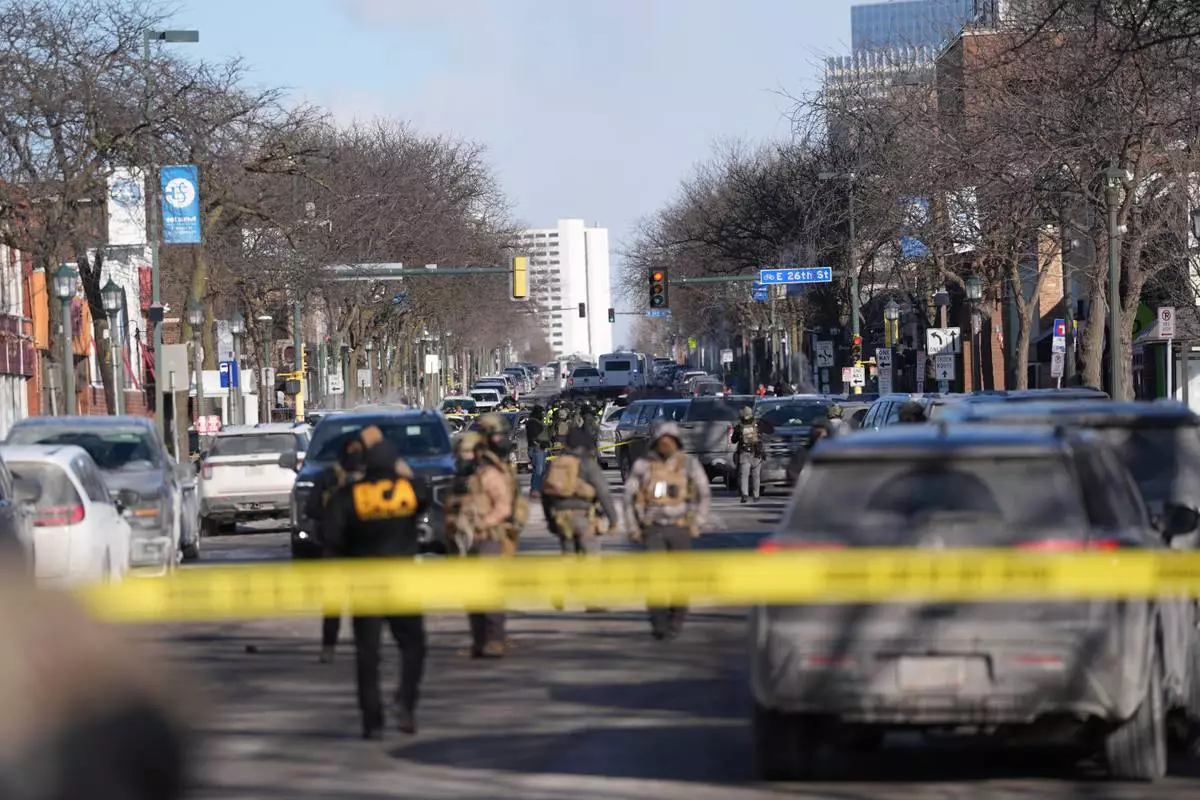
Federal agents stand near the site of a shooting Saturday, Jan. 24, 2026, in Minneapolis. (AP Photo/Abbie Parr)
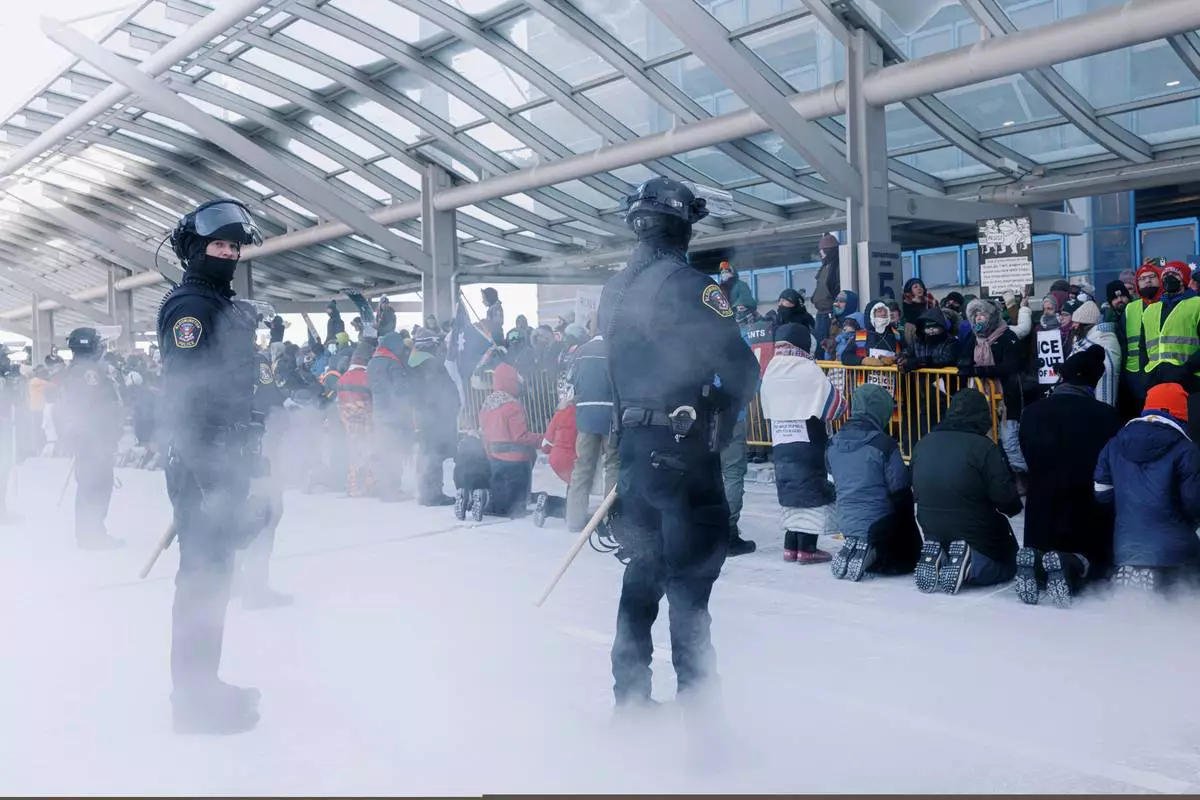
Clergy members and community activists gather at the Minneapolis-St. Paul International Airport, to protest deportation flights and urge airlines to call for an end to the Department of Homeland Security's operation, on Friday, Jan. 23, 2026, in St. Paul, Minn. (Kerem Yücel/Minnesota Public Radio via AP)
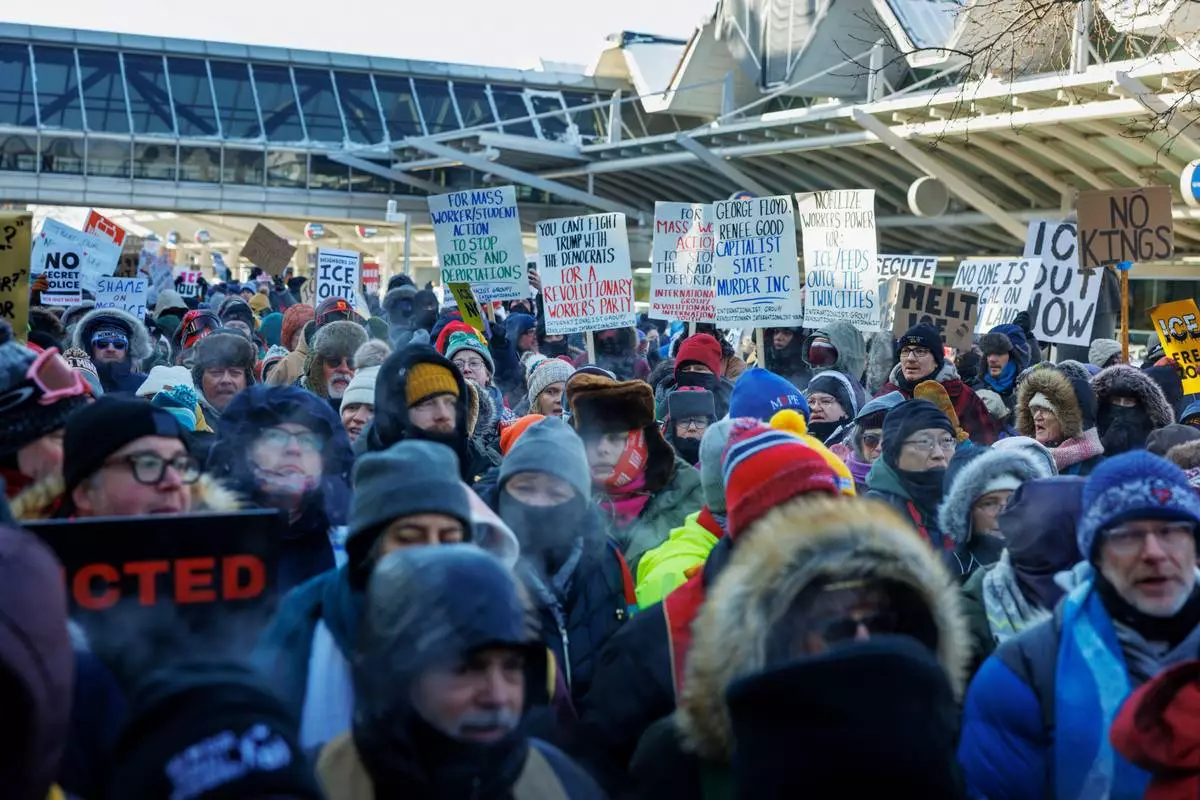
Clergy members and community activists gather at the Minneapolis-St. Paul International Airport, to protest deportation flights and urge airlines to call for an end to the Department of Homeland Security's operation, on Friday, Jan. 23, 2026, in St. Paul, Minn. (Kerem Yücel/Minnesota Public Radio via AP)