Skip to Content Facebook Feature Image

Ota Zaremba, 1980 Olympic weightlifting champion who spoke out about doping, dies at 68

Sport

Ota Zaremba, 1980 Olympic weightlifting champion who spoke out about doping, dies at 68
Sport

Sport

Ota Zaremba, 1980 Olympic weightlifting champion who spoke out about doping, dies at 68

2026-01-24 19:17 Last Updated At:19:20

PRAGUE (AP) — Ota Zaremba, who won a weightlifting gold medal at the 1980 Moscow Olympics before admitting to using performance-enhancing drugs under a secret program run by the totalitarian regime in the former Czechoslovakia, has died. He was 68.

The Czech Weightlifting Federation said Zaremba died Friday. No cause of his death was given.

“He was one of the absolute legends of Czechoslovak weightlifting and will forever remain part of its history,” the federation said in a statement.

Zaremba had several health problems during and after his career. He set several world records before retiring prematurely in 1987.

In 2006, then 49-year-old Zaremba told The Associated Press his health was “ruined” by steroids, which he and hundreds of other athletes in Czechoslovakia were routinely given during the 1970s and 1980s.

At the time, unable to work and surviving on a disability of just over $300 a month, he sold his gold medal and decided to speak out.

Jaroslav Nekola, then chairman of the Czech Anti-Doping Committee, told The AP it was estimated about 400 top athletes in a dozen selected sports — including track and field, skiing, swimming, canoeing, cycling, wrestling and weightlifting — participated in the doping program.

They signed an agreement to join a program of “specialized care” modeled after the doping regimens in the former East Germany and Soviet Union and given the green light by communist authorities. Those who refused faced the risk of being dropped from national teams.

“In our sport, coach (Emil) Brzoska told us we would have to take performance-enhancing drugs ... otherwise we wouldn’t be allowed to prepare for the Olympics,” Zaremba said. He said he used the steroids administered to him by the coach from 1979 to 1984.

Zaremba was paying the price. He needed strong painkillers to combat severe aches in his knees, spine and other parts of his body.

“In the morning, it takes me much longer to get out of bed than my 81-year-old mother, who is recovering from a stroke,” Zaremba said in 2006.

Struggling financially, he sold his gold medal for some $2,700. He had won the medal in the 100-kilogram event at the Moscow Games that the United States and some other countries boycotted after Soviet troops invaded Afghanistan.

He blamed doping for making him sterile — and breaking up his marriage. “If we had been able to have a child, I wouldn’t have been divorced,” he said.

Zaremba still said he believed doping helped him “have a chance” to win against other athletes from other countries who were also using drugs.

“I took the anabolic steroids as well as the others did and I beat them all,” he said. “That means I was the best.”

AP sports: https://apnews.com/sports

FILE - Olympic weightlifter Ota Zaremba in the town of Horni Sucha, Czech Republic, Nov. 20, 2006. (AP Photo/Petr David Josek, File)
FILE - Olympic weightlifter Ota Zaremba in the town of Horni Sucha, Czech Republic, Nov. 20, 2006. (AP Photo/Petr David Josek, File)
SEOUL, South Korea (AP) — North Korea launched suspected ballistic missiles toward the sea on Tuesday in apparent weapons tests, according to its neighbors, as the North heightens animosities with rival South Korea ahead of a major political meeting.

Japan’s Prime Minister's Office and Defense Ministry said North Korea fired possible ballistic missiles. South Korea’s Defense Ministry said it detected the launch of at least one unidentified projectile off North Korea's east coast. Neither country immediately provided details such as how far the North Korean weapons traveled.

Tuesday’s launch came after North Korea recently threatened retaliation over what it called South Korean surveillance drone flights across the border, one earlier in January and another in September. The South Korean government denied operating any drones during the times specified by North Korea and began probing if civilians sent them.

Analysts said North Korea’s drone accusations likely were driven by its efforts to dial up anti-South Korea sentiments ahead of the ruling Workers’ Party congress, which is expected to start in late January or February. The North could add leader Kim Jong Un’s declaration of a hostile “two-state” system on the Korean Peninsula in the party constitution during the congress, the first of its kind in five years.

Earlier this month, North Korea said it performed test flights of hypersonic missiles. Kim observed the launches and underscored the need to bolster the country’s nuclear war deterrent, according to North Korea’s state media.

North Korea in December test fired what it called long-range, strategic cruise missiles and new anti-air missiles and released photos showing the apparent construction of its first nuclear-powered submarine.

North Korea aimed to demonstrate or review its achievements on the weapons development sector ahead of the party congress, analysts said.

Mari Yamaguchi in Tokyo contributed to this report.

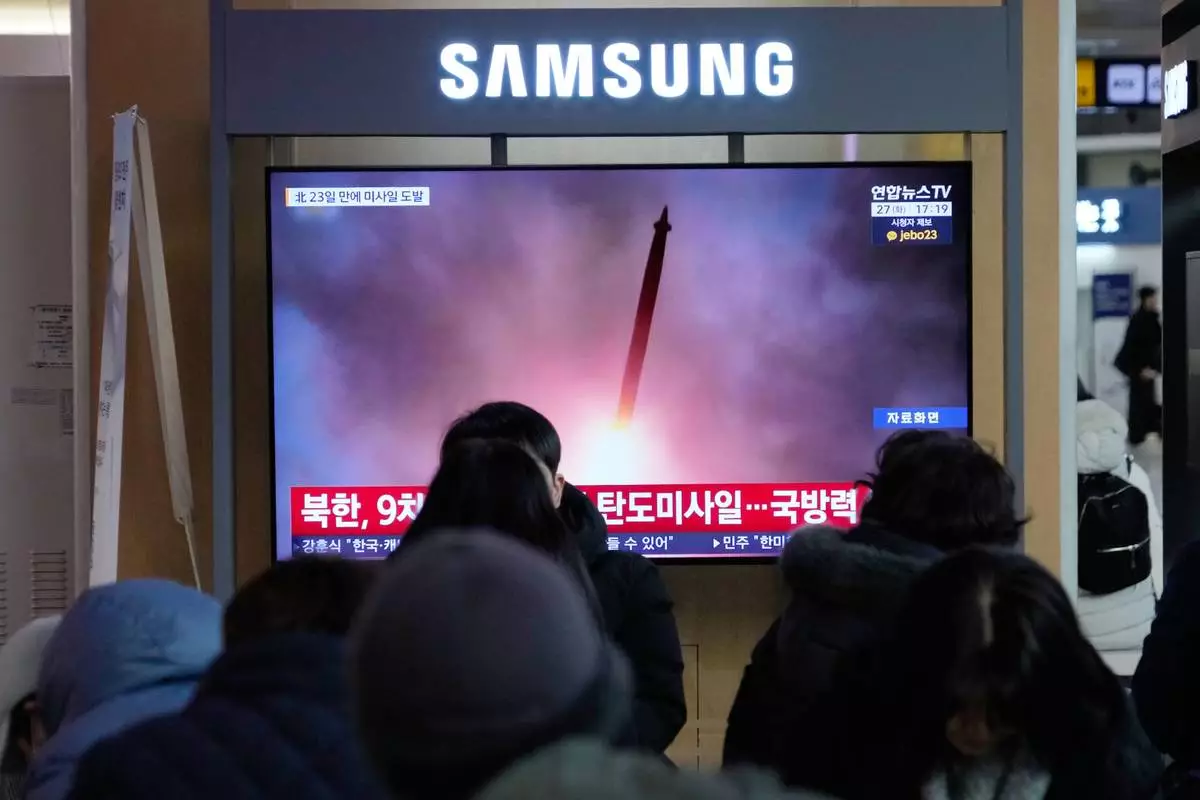
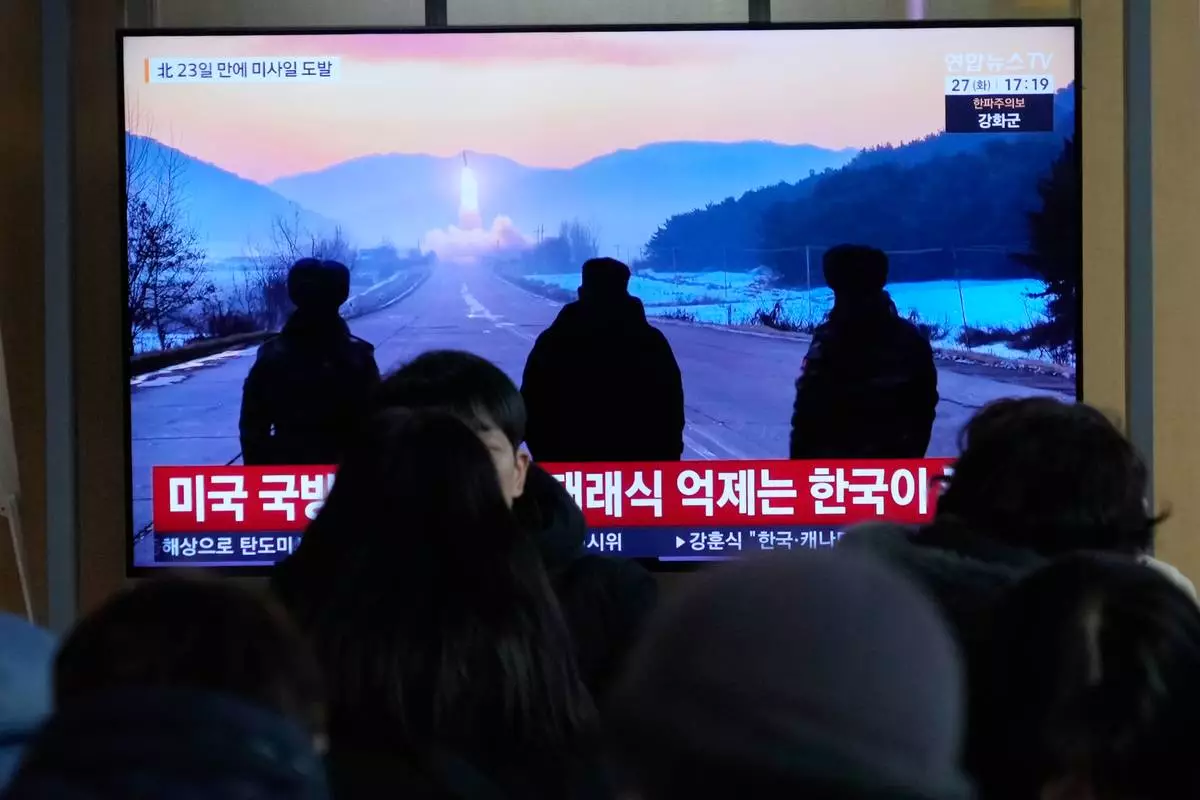
A TV screen shows a file image of North Korea's missile launch during a news program at Seoul Railway Station in Seoul, South Korea, Tuesday, Jan. 27, 2026. (AP Photo/Ahn Young-joon)

A TV screen shows a file image of North Korea's missile launch during a news program at Seoul Railway Station in Seoul, South Korea, Tuesday, Jan. 27, 2026. (AP Photo/Ahn Young-joon)

A TV screen shows a file image of North Korea's missile launch during a news program at Seoul Railway Station in Seoul, South Korea, Tuesday, Jan. 27, 2026. (AP Photo/Ahn Young-joon)

A TV screen shows a file image of North Korea's missile launch during a news program at Seoul Railway Station in Seoul, South Korea, Tuesday, Jan. 27, 2026. (AP Photo/Ahn Young-joon)

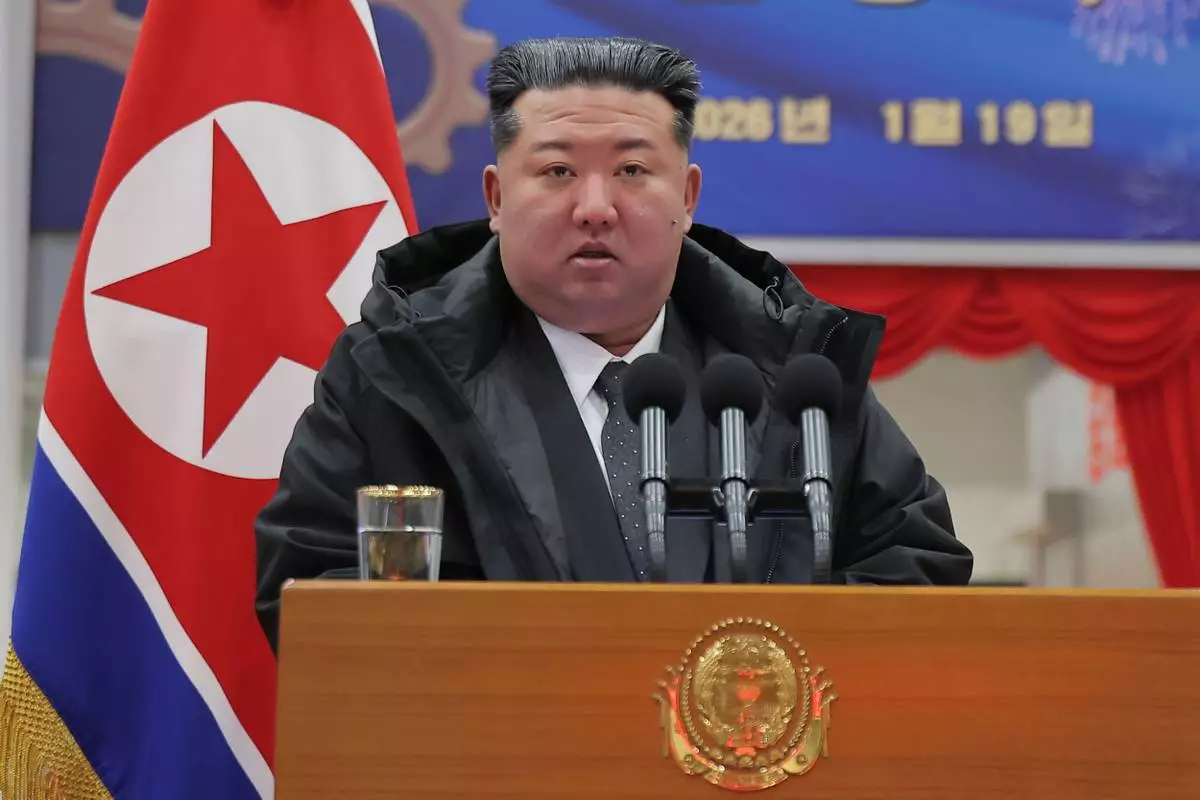
In this photo provided by the North Korean government, North Korean leader Kim Jong Un delivers a speech during a ceremony marking the completion of a first-stage modernization project at the Ryongsong Machine Complex in North Korea Monday, Jan. 19, 2026. Independent journalists were not given access to cover the event depicted in this image distributed by the North Korean government. The content of this image is as provided and cannot be independently verified. (Korean Central News Agency/Korea News Service via AP)

In this photo provided by the North Korean government, North Korean leader Kim Jong Un delivers a speech during a ceremony marking the completion of a first-stage modernization project at the Ryongsong Machine Complex in North Korea Monday, Jan. 19, 2026. Independent journalists were not given access to cover the event depicted in this image distributed by the North Korean government. The content of this image is as provided and cannot be independently verified. (Korean Central News Agency/Korea News Service via AP)

Recommended Articles