A historic water town in Yibin City, southwest China's Sichuan Province, will showcase its charm at the 2026 China Central Television (CMG) Spring Festival Gala, as the city is designated as one of the sub-venue locations for the gala.
Selected alongside Harbin, Yiwu, and Hefei, Yibin will help present a diverse cultural showcase during one of China's most important traditional festivals, complementing the main venue in Beijing. CMG announced the venue selections last month.
At the heart of Yibin's cultural appeal lies the ancient town of Lizhuang, a 1,400-year-old riverside settlement that once thrived as an economic and cultural hub in southern Sichuan. Preserved Ming and Qing dynasty temples, traditional residences, and tranquil waterways offer a picturesque setting for the festive broadcast.
Since 1983, the Spring Festival Gala has been a central part of Chinese New Year celebrations, featuring music, dance, comedy, opera, and folk performances broadcast nationwide on Chinese New Year's Eve. In 2026, the gala will air on Feb. 16.
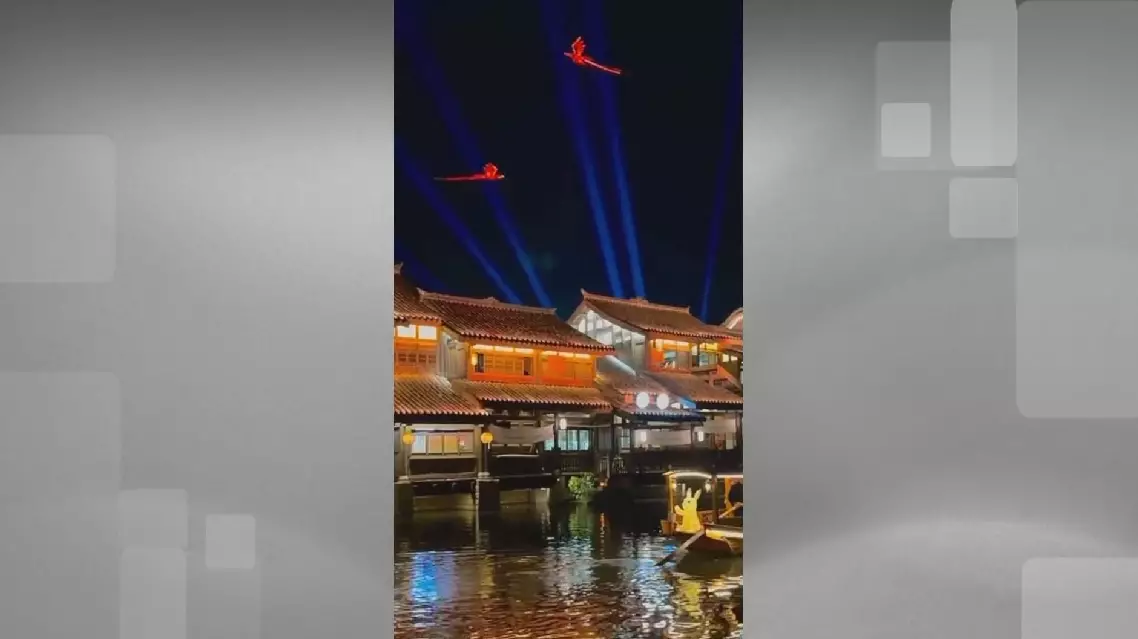
Historic water town in Yibin to host 2026 Spring Festival Gala sub-venue
A group of Y-20 transport aircraft of Chinese People's Liberation Army (PLA) Air Force has carried out intensive multi-aircraft formation and long-range training in complex weather conditions and unfamiliar airspace recently.
The training highlighted system coordination, autonomous navigation and on-the-spot decision-making, comprehensively honing the strategic delivery and long-range air mobility capabilities of large transport aircraft units in unfamiliar battlefield environments.
In a training session that started at noon in southwest China, multiple Y-20s smoothly rolled out onto the tarmac and assembled into a formation after taking off, heading toward designated target airspace.
Unlike routine training operations, this exercise was conducted with complex meteorological challenges, unfamiliar routes, and limited ground support information. Throughout the mission, crews relied entirely on onboard advanced systems and autonomous judgment to complete their tasks.
The training not only tested operational skills but also evaluated the crews' ability to process multifaceted information, anticipate risks, and execute coordinated decisions.
During the training, the mission command simulated multiple contingencies including satellite navigation jamming, severe turbulence and sudden weather changes. In response, the crews maintained composure, sharing real-time information via data links, recalibrating navigation plans, and adjusting formation and flight paths to accomplish tactical maneuvers and emergency recovery procedures.
As night fell, the formation completed all training objectives and returned safely to base. The crew conducted detailed debriefings, analyzed flight data, and held in-depth discussions on aspects such as collaborative connection and information integration.
"Through this training, we once again verified the solid progress in the system capabilities of the Y-20 over the years. Every session now tests our ability to fuse information, collaborate as a team, and withstand pressures. This is not an experience brought about by a single training session, but rather a manifestation of the accumulation from long-term practical training. Today, we can calmly handle unexpected situations in unfamiliar airspace, precisely with the confidence we have gained one step at a time," said Liu Xiaojun, a pilot.
Designed and manufactured by the state-owned Aviation Industry Corporation of China, the Y-20 has a maximum takeoff weight of around 200 tonnes.
It made its maiden flight in Jan 26, 2013, and joined China's air force on July 6, 2016.
The Y-20 is officially codenamed "Kunpeng", after a giant mythical bird that could fly vast distances.
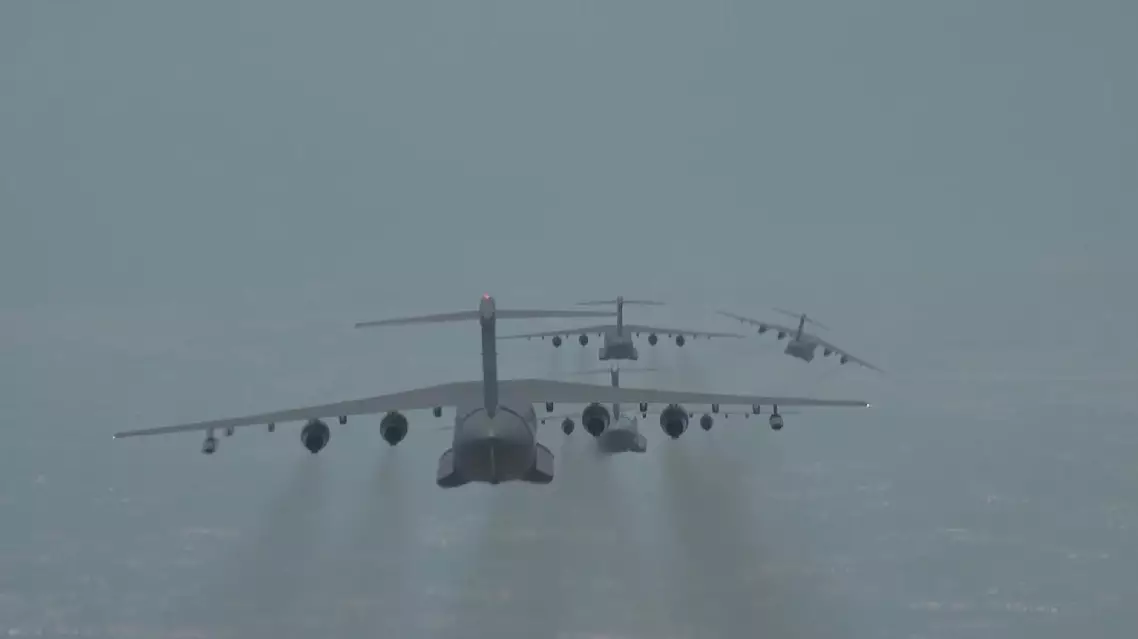
China's Y-20 transport aircraft conducts multi-aircraft training in challenging conditions