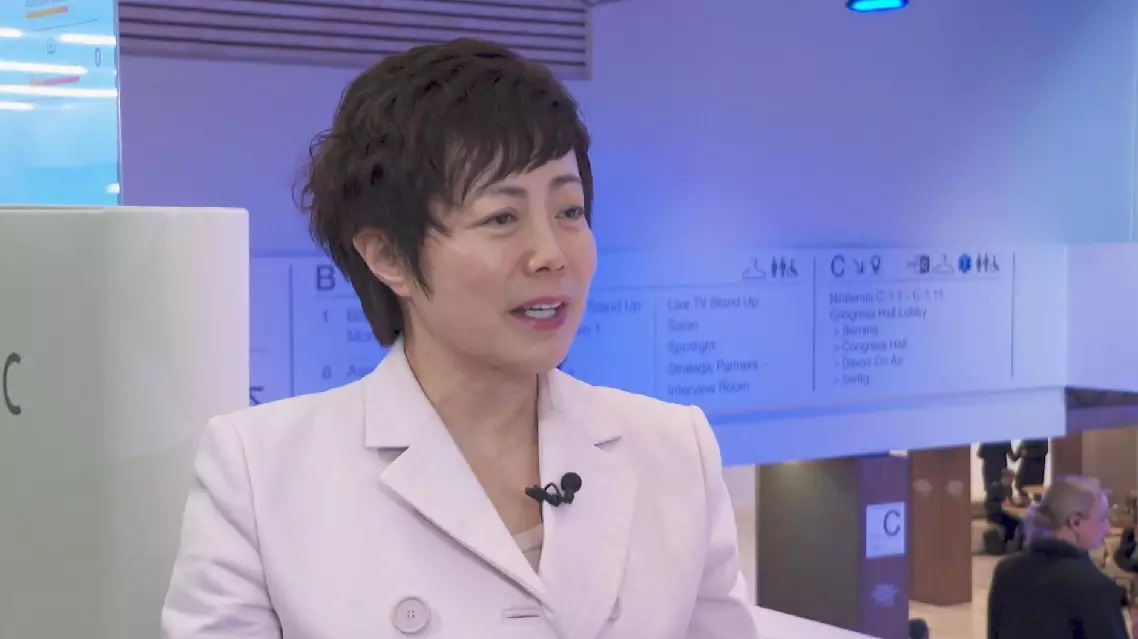
BYD Executive Vice President Li Ke has detailed the Chinese electric vehicle giant's technology-driven global strategy and localization plans, while identifying unpredictable policy outside China as a major challenge for traditional automakers.
She urged industry leaders to maintain a long-term view and persistently engage in the competitive "race," particularly within the crucial Chinese market, when speaking to China Global Television Network (CGTN) on the sidelines of the just concluded World Economic Forum (WEF) Annual Meeting 2026 in Davos, Switzerland.
Asked about BYD's strategy, she said that the BYD-made strategy is based on technology. "This is number one. Second, we're based on our market. Our principle is if the market is here, we're going to invest here. So we made our investment in Brazil. We decided like three to four years ago. And then we decided to invest in Hungary facility three years ago, very earlier than the tariff. And then, we have facility in Thailand, too. So, for us, we are turning BYD consumer car to become more international company and a global company and then to localize ourselves in different places for manufacturing. So tariff for us is just a short-term challenge, but our long-term vision is to make global manufacturing," she said. With BYD's expansion in Europe putting pressure on incumbent players, Li shared her views about the competitive dynamic.
"The car market is changing, so electrification is totally changing the whole industry, then every manufacturer need to invest for the technology, making your car to be smarter, to be more reliable, and then with all equipment and high technology, then also you need to invest further down to autonomous driving, so I think for BYD, we already lay out our next five years plan, focusing on AI, focusing on autonomous driving. So we are already in the second half of the game, like intelligence, autonomous driving. So every manufacturer, they need to really invest all the R and D resources for this kind of future technology. If they're not, they're going to lose out."
When asked what might be holding some competitors back, Li pointed not to technological shortcomings but to a broader strategic environment.
She identified inconsistent long-term policy in many countries as a key obstacle to decisive investment, before emphasizing the necessity of a resilient, long-term mindset to compete in the markets.
"I think, the challenges, it's pity for them. Outside China, a lot of countries, regions, their future policy is not sustainable, always changing back and forth. This will bring a lot confusion to the automaker, to the leader. What are they going to invest? They need to invest in combustion engine, or they need to be invested for the EV, or they need invest for other like technology. Sometimes they have to bet, they invest both. This will make their R and D so expensive. And then in the end, the result did not pay back. So this is their challenge here. But the second, as the auto leader, the top CEO, they need to look for the potential for future. Chinese market is very competitive, but you need to join the race. Never give up. Because it's just like an Olympic game. This year you might lose, but come back next year, you can be champion, if not, in the following years."
Regarding the WEF's role in addressing complex challenges, Li underscored its value as a neutral platform, a quality directly aligned with this year's theme of "A Spirit of Dialogue."
"Here, you are equally sitting together to discuss about the future. I saw a lot of top leaders, they are more relaxed here. I think you don't need to worry about the geopolitical battle here. And even some voice came landing here, it's become softer. So that's very amazing, like a platform," she said.
BYD VP outlines global manufacturing vision, values forum as neutral platform