Tens of thousands of people accused of links to the extremist Islamic State group are being held in camps across Syria.
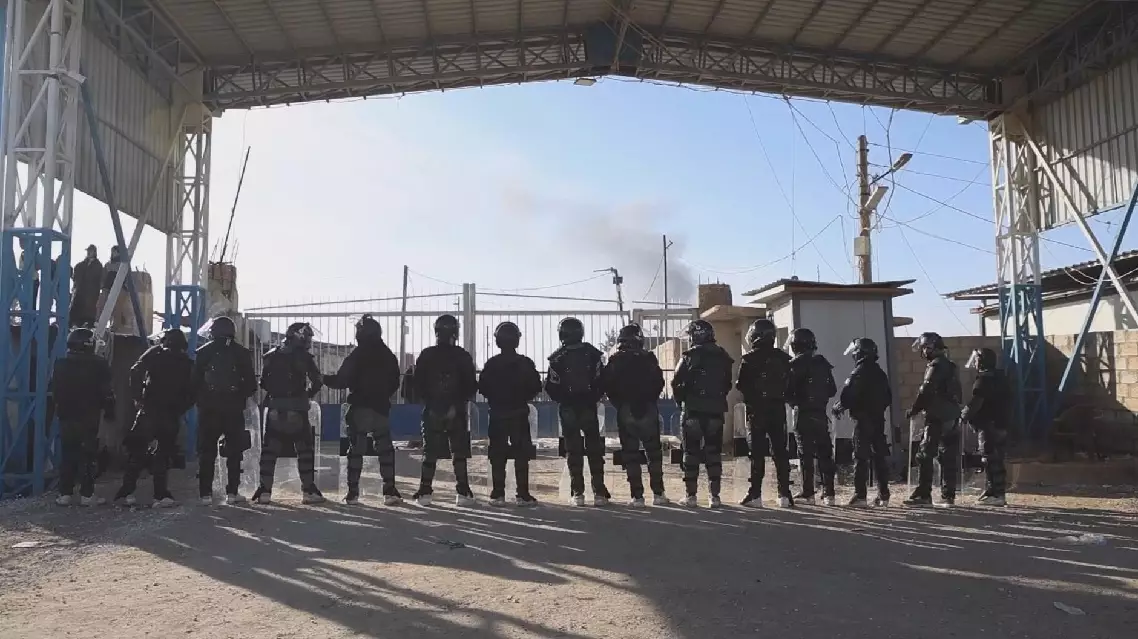
At Al-Hol camp in the country's northeast, one of the largest such sites, armed guards patrol the gates, preventing anyone from leaving.
The camp is home mostly to women and children, many of whom say they should be allowed to leave.
"They insist on calling us terrorists, but we are not terrorists. If some people hold extremist views, that does not mean everyone does... All the children here are growing up being told they are terrorists, and honestly, this is traumatizing them. It is our right for our children to leave the camp -- to study, to integrate, to work, and to live normal lives. They are citizens. They are Syrians, and we are all Syrian citizens," said Fatma Ali, a camp resident.
Women and children make up the majority of Al-Hol's population, though men are also held there. The Kurdish-led Syrian Democratic Forces (SDF) have said the camp is part of a broader detention system for thousands of alleged Islamic State members. Detainees say many were never given a chance to contest the accusations.
"I sell food just to be able to buy milk for my son. Every four months, they give us food and detergent -- only once. I told them I want to leave this place. They said, 'You can't. You have to bring proof.' I told them I'm from Latakia, but there's no internet and no phones. So how am I supposed to get proof? I went to them twice. They told me, 'You're either ISIS or Free Army -- your name is on the list.' And in the end, nothing happened. They said, 'You will work with us whether you like it or not,'" said Mohammad Issam, another resident.
For years, the Kurdish-led Syrian Democratic Forces controlled the camps. That control shifted rapidly this week after intense clashes in the area, when the Syrian army advanced and pushed the SDF out.
Analysts now warn that beyond the immediate security risks, the long-term legal and humanitarian fate of tens of thousands of detainees remains deeply uncertain.
"I believe it is possible to develop rehabilitation programs for detainees in Al-Hol camp. This would require agreements between the Syrian government and the countries of origin of those held there. Many of these cases involve dual nationals, and there are currently no clear agreements on how to prosecute or reintegrate people who fought in Syria or were affiliated with armed groups," said Mostafa Al Naimi, a political analyst.
With no clear legal framework, no unified process for prosecution and persistent security risks, the future of Syrias Islamic State detention camps remains unresolved. Analysts warn that prolonged uncertainty could create openings for extremist groups to regroup and exploit instability once again.
Tens of thousands accused of links to Islamic State held in Syrian camps