Leaders of law enforcement organizations expressed alarm Sunday over the latest deadly shooting by federal officers in Minneapolis while use-of-force experts criticized the Trump administration’s justification of the killing, saying bystander footage contradicted its narrative of what prompted it.
The federal government also faced criticism over the lack of a civil rights inquiry by the U.S. Justice Department and its efforts to block Minnesota authorities from conducting their own review of the killing of 37-year-old Alex Pretti.
In a bid to ease tensions, the International Association of Chiefs of Police called on the White House to convene discussions “as soon as practicable” among federal, state and local law enforcement.
“Every police chief in the country is watching Minneapolis very carefully,” said Chuck Wexler, executive director of the Police Executive Research Forum, a police research and policy organization. “If a police chief had three officer-involved shootings in three weeks, they would be stepping back and asking, ‘What does our training look like? What does our policy look like?’”
Pretti’s death came on the heels of the Jan. 7 fatal shooting of Renee Good and another incident a week later in Minneapolis when a federal officer shot a man in the leg after being attacked with a shovel and broom handle while attempting to arrest a Venezuelan who was in the country illegally.
“We’re dealing with a federal agency here,” Wexler said, referring to the Department of Homeland Security, “but its actions can have a ripple effect across the entire country.”
While questions remained about the latest confrontation, use-of-force experts told The Associated Press that bystander video undermined federal authorities’ claim that Pretti “approached” a group of lawmen with a firearm and that a Border Patrol officer opened fire “defensively.” There has been no evidence made public, they said, that supports a claim by Border Patrol senior official Greg Bovino that Pretti, who had a permit to carry a concealed handgun, intended to “massacre law enforcement.”
“It’s very baked into the culture of American policing to not criticize other law enforcement agencies,” said Seth Stoughton, a former police officer and use-of-force expert who testified for prosecutors in the trial of the Minneapolis officer convicted of murdering George Floyd.
“But behind the scenes, there is nothing but professional scorn for the way that DHS is handling the aftermath of these incidents,” Stoughton said.
Several government officials had essentially convicted Pretti on social media before the crime scene had been processed.
Deputy White House chief of staff Stephen Miller generated outrage by describing Pretti as “a would-be assassin” in a post, while a top federal prosecutor in Los Angeles, Bill Essayli, drew the ire of the National Rifle Association for posting that “if you approach law enforcement with a gun, there is a high likelihood they will be legally justified in shooting you.”
“In a country that has more guns than people, the mere possession of a weapon does not establish an imminent threat to officers — and neither does having a weapon and approaching officers,” Stoughton said. “I don’t think there’s any evidence to confirm the official narrative at all. It’s not unlawful for someone to carry a weapon in Minnesota.”
In the hours after Pretti’s shooting, Minnesota authorities obtained a search warrant granting them access to the shooting scene. Drew Evans, superintendent for the Minnesota Bureau of Criminal Apprehension, said his team was blocked from the scene.
Minnesota authorities also received an emergency court order from a federal judge barring officials “from destroying or altering evidence related to the fatal shooting involving federal officers.”
Bovino sounded a less strident tone at a Sunday news conference, calling Pretti’s shooting a “tragedy that was preventable” even as he urged people not to “interfere, obstruct, delay or assault law enforcement.” He refused to comment on what he called the “freeze-frame concept,” referring to videos circulating on social media that raise doubts about the dangers Pretti posed to officers.
“That, folks, is why we have something called an investigation,” Bovino said. “I wasn’t there wrestling him myself. So I’m not going to speculate. I’m going to wait for that investigation.”
Policing experts said the irregularities in the federal response went beyond the government’s immediate defense. Before Pretti’s parents had even been notified of his death, DHS posted a photograph on X of a 9mm Sig Sauer semiautomatic handgun seized during the scuffle, portraying the weapon as justification for the killing.
“The suspect also had 2 magazines and no ID,” the post said. “This looks like a situation where an individual wanted to do maximum damage.”
However, the photo showed only one loaded magazine lying next to the pistol, which had apparently been emptied and displayed on the seat of a vehicle. Minnesota state officials said that, by removing the weapon from the scene, Border Patrol officers likely mishandled key evidence.
None of the half-dozen bystander videos shows Pretti brandishing his gun. Rather, the videos showed Pretti’s hands were only holding his mobile phone as a masked Border Patrol officer opened fire.
In videos of the scuffle, “gun, gun” is heard, and an officer appears to pull a handgun from Pretti’s waist area and begins moving away. As that happens, a first shot is fired by a Border Patrol officer. There’s a slight pause, and then the same officer fires several more times into Pretti’s back.
Several use-of-force experts said that unenhanced video clips alone would neither exonerate nor support prosecution of the officers, underscoring the need for a thorough investigation. A key piece of evidence will likely be the video from the phone Pretti was holding when he was killed. Federal officials have not yet released that footage or shared it with state investigators.
“The evaluation of the reasonableness of this shooting will entirely depend on when the pistol became visible and how, if at all, it was being displayed or used,” said Charles “Joe” Key, a former police lieutenant and longtime use-of-force expert.
Ian Adams, an assistant professor of criminal justice at the University of South Carolina, described the federal government’s response as “amateur hour.”
“Jumping to the end result of this investigation, or what’s supposed to be an investigation, is somewhat embarrassing for policing professionals nationwide,” Adams said. “It’s clear that professionals in policing are observing what’s going on and not liking what they’re seeing.”
__
Associated Press reporter Hannah Fingerhut contributed reporting Des Moines, Iowa.
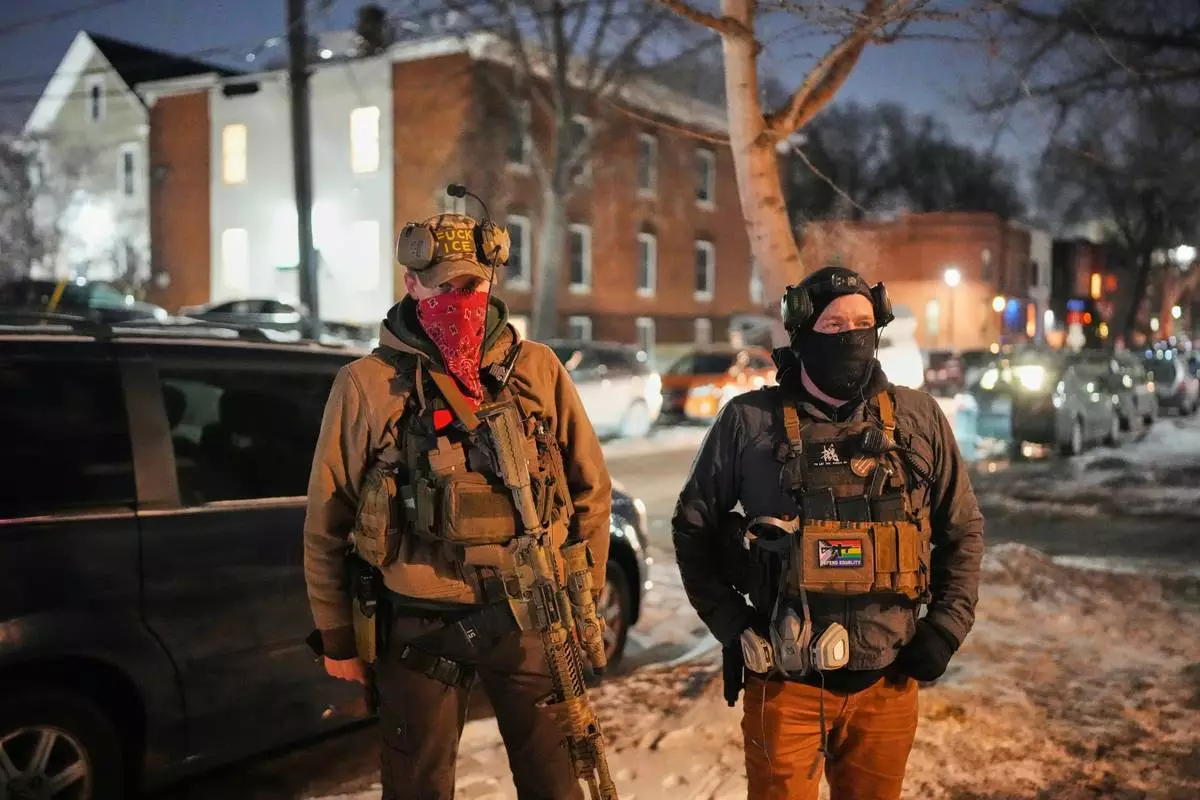
EDS NOTE: OBSCENITY - Armed community response members patrol near the scene where 37-year-old Alex Pretti was fatally shot by a U.S. Border Patrol officer earlier in the day, Saturday, Jan. 24, 2026, in Minneapolis. (AP Photo/Adam Gray)
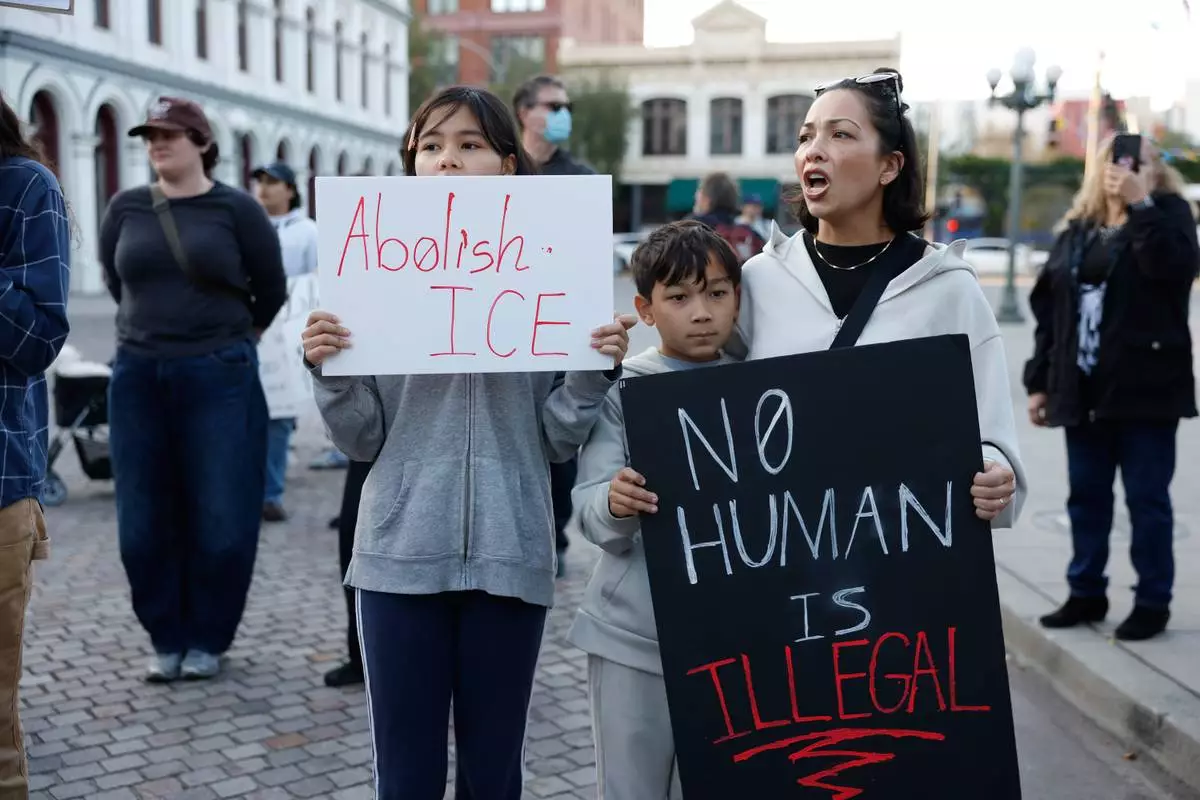
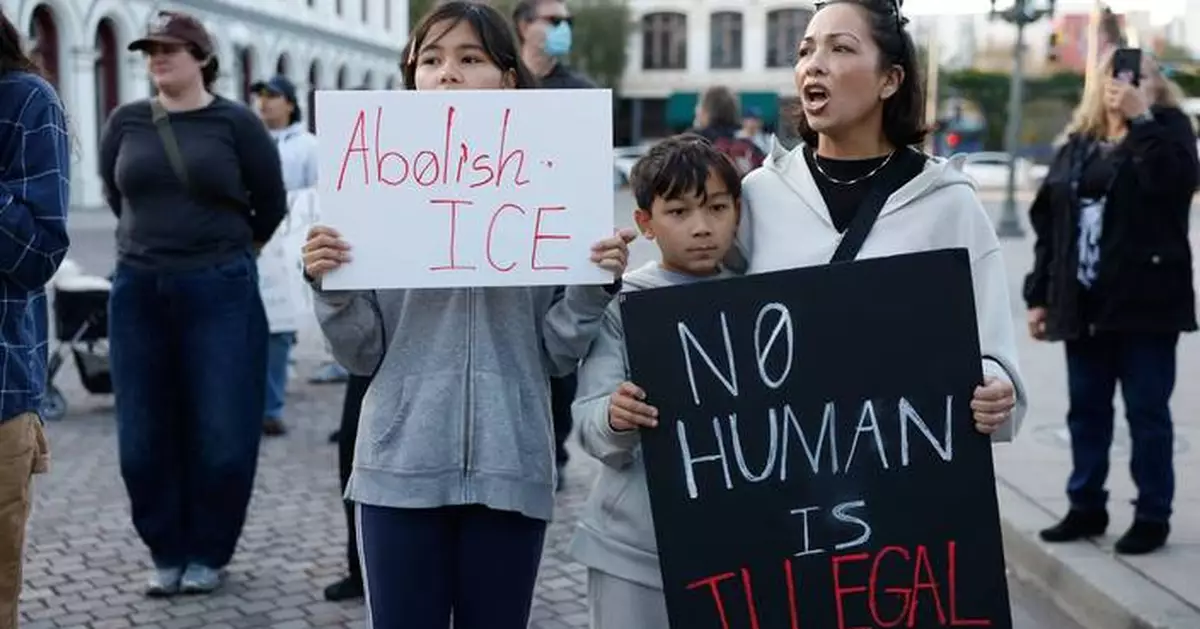
Demonstrators hold signs during a protest in response to the fatal shooting of 37-year-old Alex Pretti in Minneapolis earlier in the day Saturday, Jan. 24, 2026, in Los Angeles. (AP Photo/Caroline Brehman)