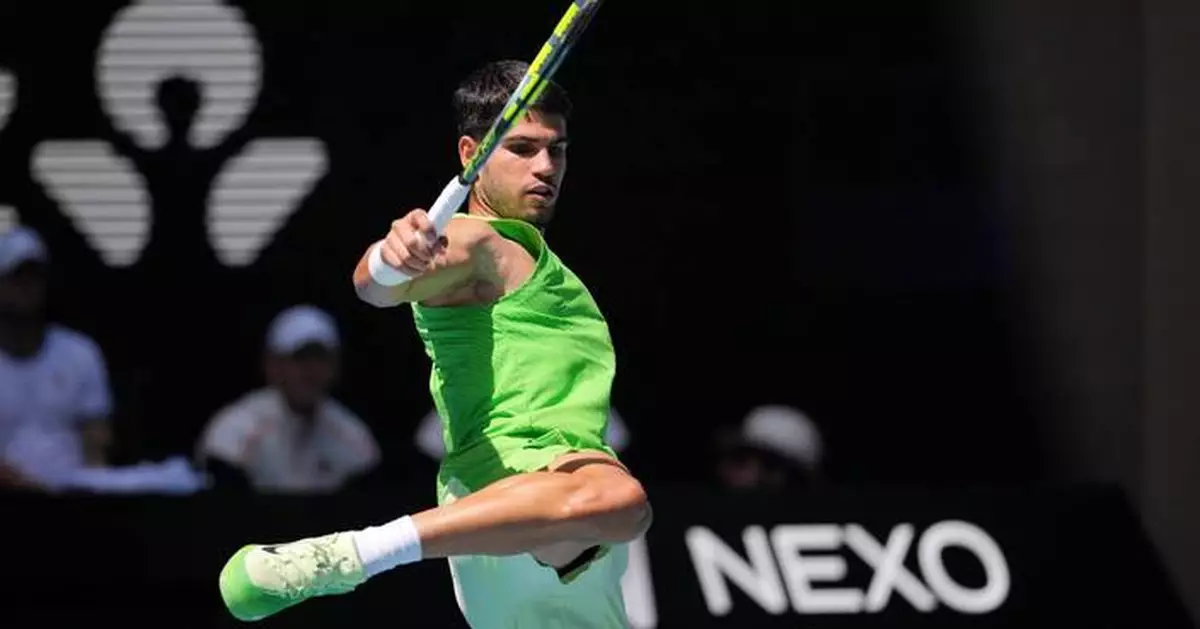
MELBOURNE, Australia (AP) — No sooner had Carlos Alcaraz advanced to the Australian Open quarterfinals with a win over Tommy Paul, than attention turned to his serve.
The top-ranked Alcaraz, in Australia trying to complete a career Grand Slam at the age of 22, has been remodeling it a little bit.
Click to Gallery
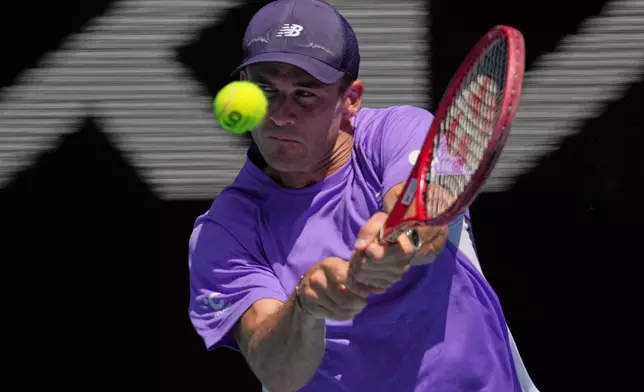
Tommy Paul of the U.S. plays a backhand return to Carlos Alcaraz of Spain during their fourth round match at the Australian Open tennis championship in Melbourne, Australia, Sunday, Jan. 25, 2026. (AP Photo/Dita Alangkara)
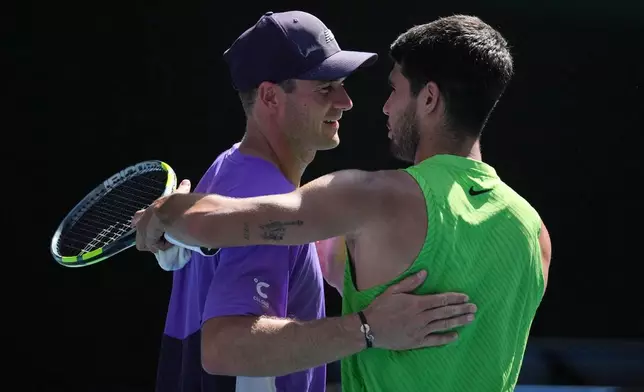
Carlos Alcaraz, right, of Spain is congratulated by Tommy Paul, left, of the U.S. during their fourth round match at the Australian Open tennis championship in Melbourne, Australia, Sunday, Jan. 25, 2026. (AP Photo/Dita Alangkara)
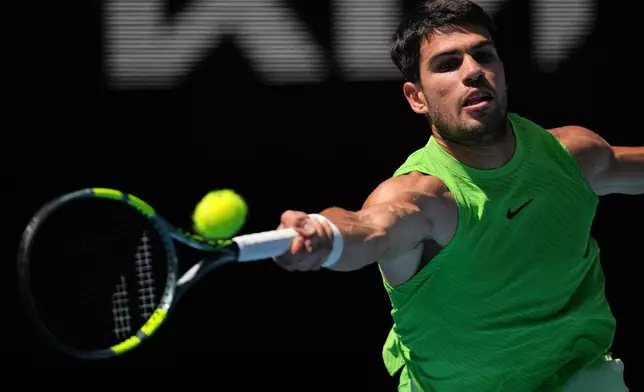
Carlos Alcaraz of Spain plays a forehand return to Tommy Paul of the U.S. during their fourth round match at the Australian Open tennis championship in Melbourne, Australia, Sunday, Jan. 25, 2026. (AP Photo/Dita Alangkara)
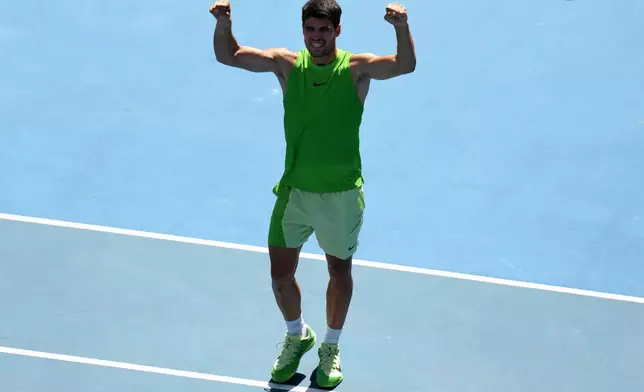
Carlos Alcaraz of Spain celebrates after defeating Tommy Paul of the U.S. during their fourth round match at the Australian Open tennis championship in Melbourne, Australia, Sunday, Jan. 25, 2026. (AP Photo/Dar Yasin)
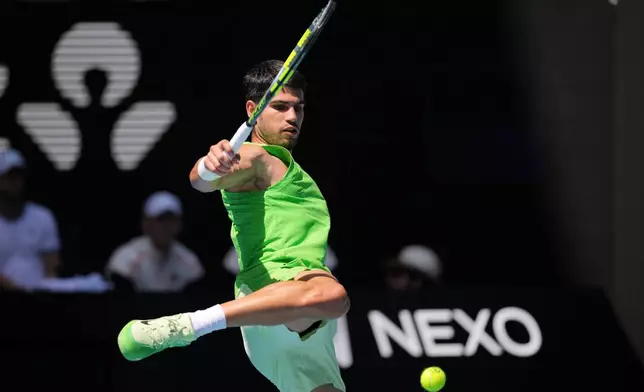
Carlos Alcaraz of Spain kicks the ball during his fourth round match against Tommy Paul of the U.S. at the Australian Open tennis championship in Melbourne, Australia, Sunday, Jan. 25, 2026. (AP Photo/Dita Alangkara)
It worked well for him on Sunday in a 7-6 (6), 6-4, 7-5 win over No. 19-seeded Paul. There were no double-faults, he got 70% of his first serves into play and won 79% of those points. He also won 68% of points on his second serve.
The retooled start of his service motion has a familiar look, and hasn't escaped the attention of Novak Djokovic. The 24-time major winner joked earlier in the tournament that he'd sent Alcaraz a message asking for a copyright fee.
Alcaraz was asked about it in an on-court TV interview on Rod Laver Arena, and played along, too.
“Yeah. I heard that. I have the contract over there, but I haven’t seen him yet!” the Spaniard said of his exchange with Djokovic.
Expanding on the theme, he said when videos of the service motion emerged in the pre-season he checked on his phone and had a message from Djokovic which, more or less, said: “Alright, you have to pay!”
Alcaraz said the locker room jokes keep it fun. Seeking an unprecedented 25th Grand Slam title, Djokovic has been blocked in the last two years by Alacaraz and Jannik Sinner, who have split the eight titles evenly. The 38-year-old Djokovic got a walkover into the quarterfinals when Jakub Mensik withdrew from their fourth-round match because of injury.
One missing element on Alcaraz's tennis CV is a trophy at Melbourne Park. He has never gone past the quarterfinals. He'll also likely have the crowd against him against local favorite Alex de Minaur, who advanced with a 6-4, 6-1, 6-1 win over No. 10 Alexander Bublik.
“I understand, nothing personal, but the crowd is going to be for him,” Alcaraz said. “Looking forward to it. I’ve got to be ready for that.”
Paul reached the Australian Open semifinals in 2023, so had that in his favor going into the fourth-round match with Alcaraz.
The pair were going shot-for-shot in the first-set tiebreaker when a medical episode paused their match for more than 14 minutes.
It was 3-3 when chair umpire Marija Cicak informed them that a spectator at Rod Laver Arena needed urgent medical attention.
The delay lasted so long that the players got to hit up again for a couple of minutes before play resumed, and after the spectator had been helped away from the arena by medical and ambulance staff.
Alcaraz was always in front after that. He broke serve in the pivotal 10th game of the third set and finished off the match in 2 hours and 44 minutes.
The pair hugged at the net, Alcaraz did a little dance move on the court to entertain the crowd, and then applauded the 28-year-old American as he walked off the court.
“Overall, a really high level of tennis from both sides,” Alcaraz said. “Really happy I got it in straight sets.”
Alcaraz said he was aware of his service stats and, in a kind of humble brag, added “Yeah, it’s impressing myself to be honest” across his first four matches at Melbourne Park.
“After every set I try to check it out – checking on the screens,” he said. “In general, I think the four matches that I've played (here), the serve has been an important weapon for me.”
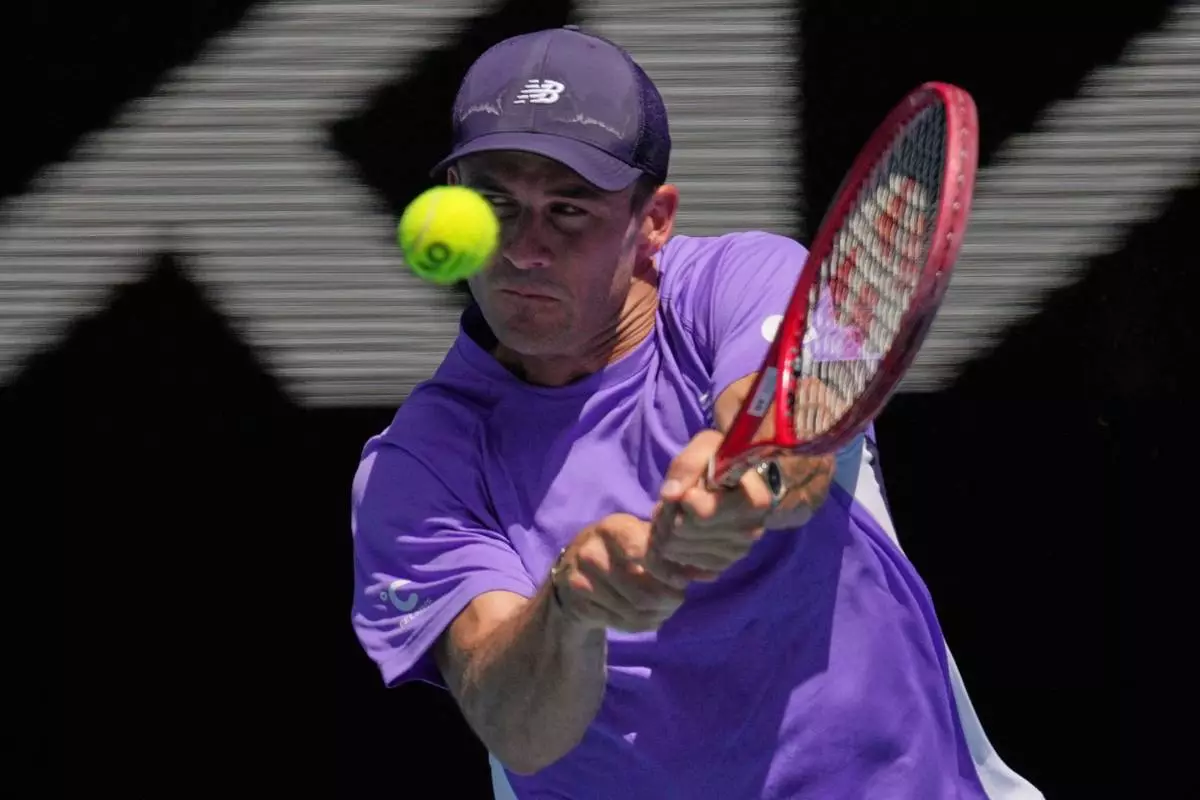
Tommy Paul of the U.S. plays a backhand return to Carlos Alcaraz of Spain during their fourth round match at the Australian Open tennis championship in Melbourne, Australia, Sunday, Jan. 25, 2026. (AP Photo/Dita Alangkara)
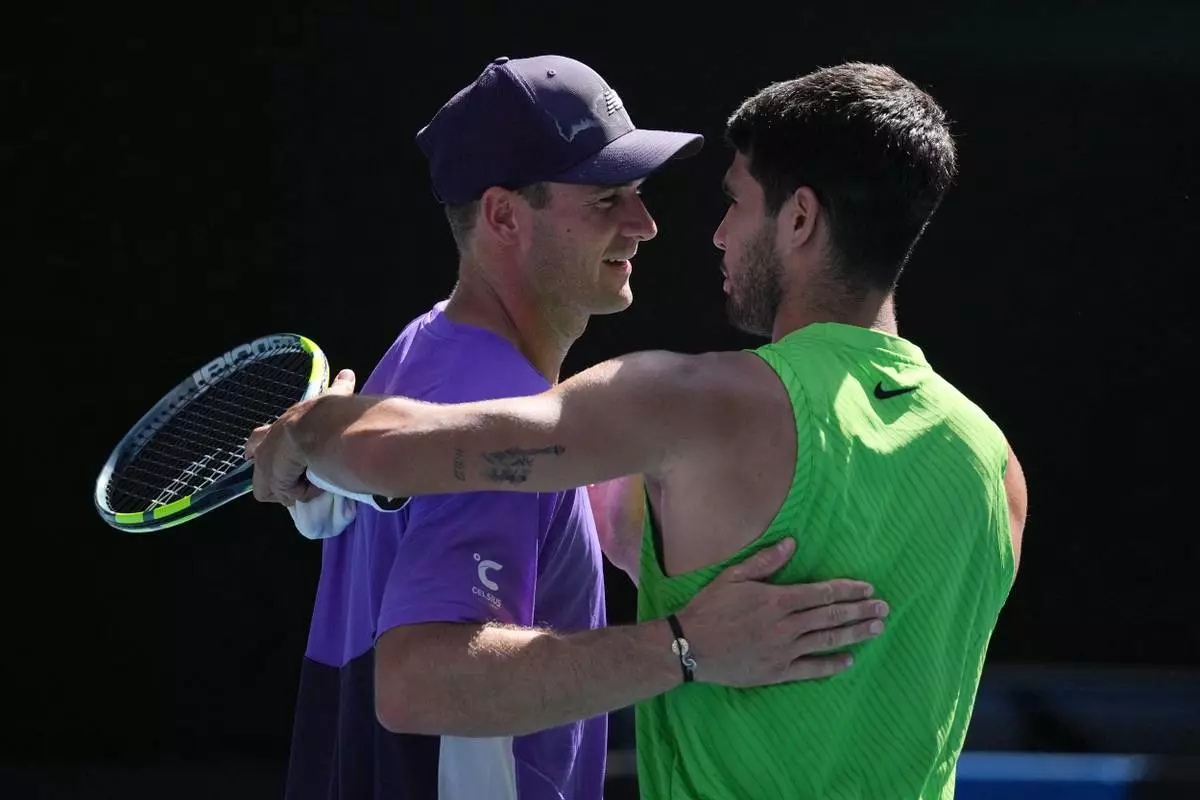
Carlos Alcaraz, right, of Spain is congratulated by Tommy Paul, left, of the U.S. during their fourth round match at the Australian Open tennis championship in Melbourne, Australia, Sunday, Jan. 25, 2026. (AP Photo/Dita Alangkara)
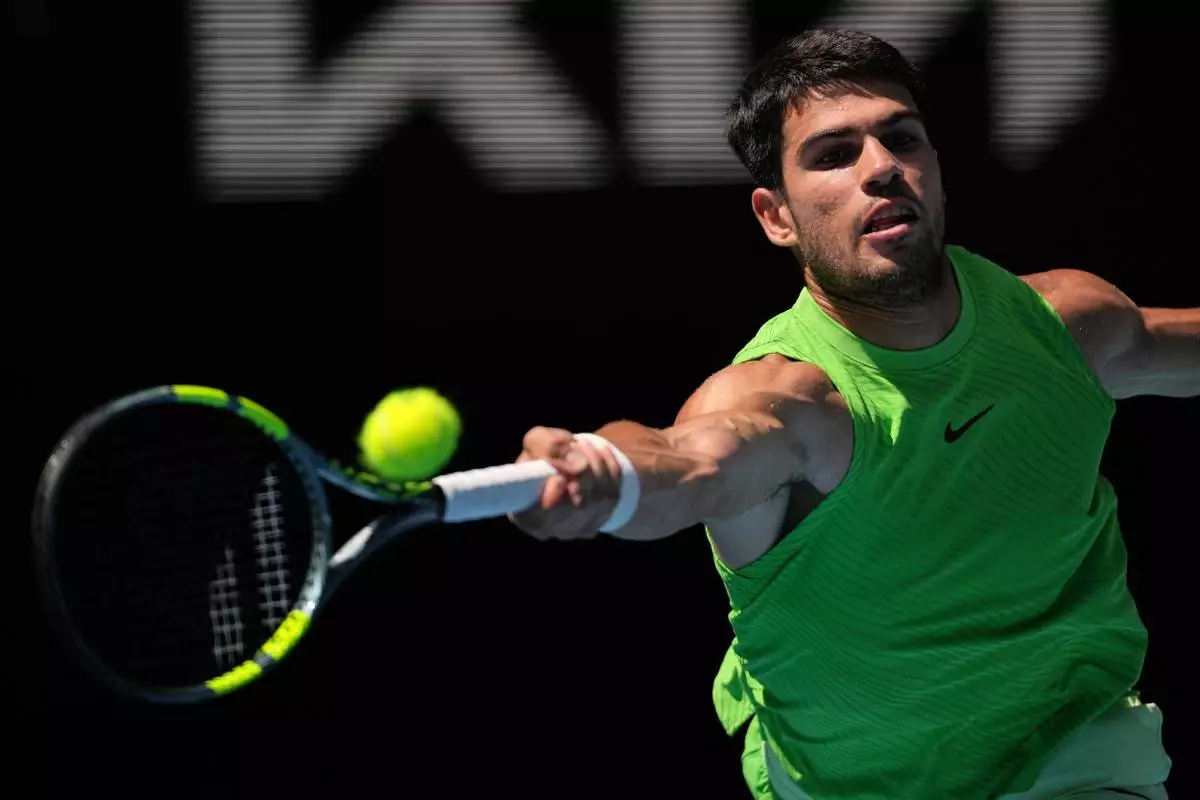
Carlos Alcaraz of Spain plays a forehand return to Tommy Paul of the U.S. during their fourth round match at the Australian Open tennis championship in Melbourne, Australia, Sunday, Jan. 25, 2026. (AP Photo/Dita Alangkara)
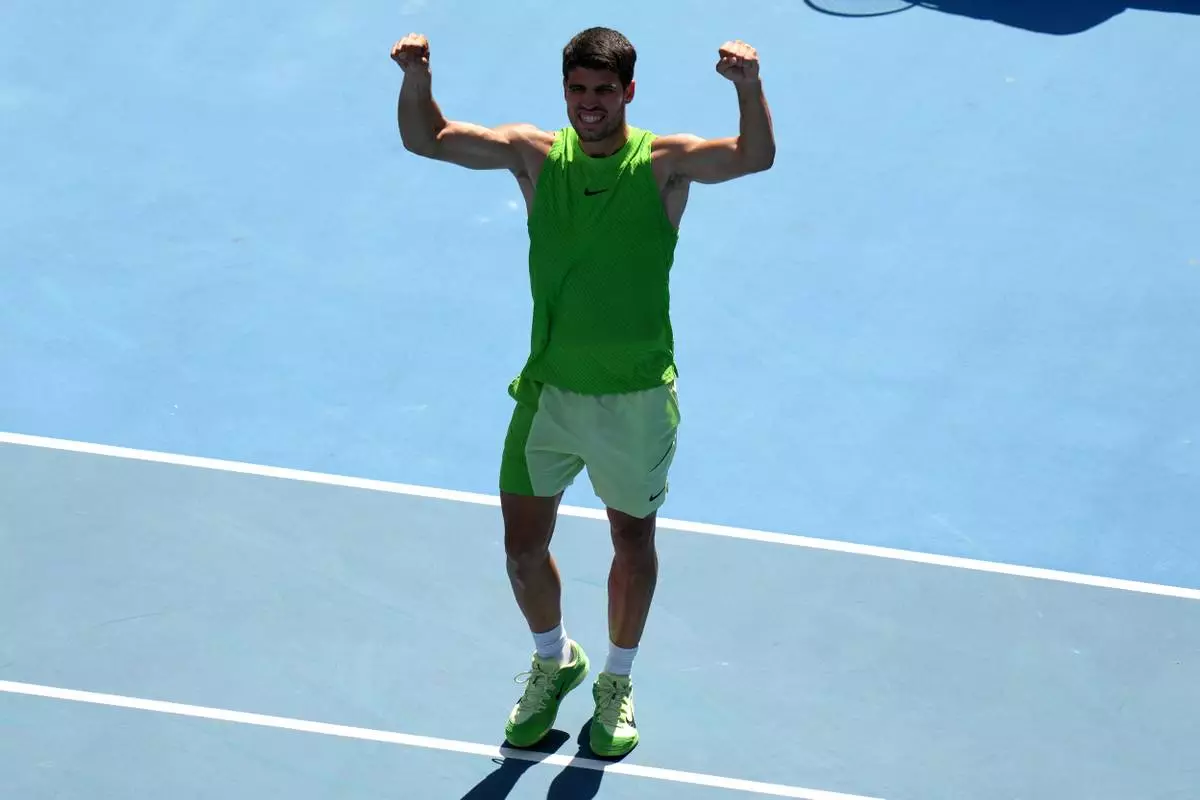
Carlos Alcaraz of Spain celebrates after defeating Tommy Paul of the U.S. during their fourth round match at the Australian Open tennis championship in Melbourne, Australia, Sunday, Jan. 25, 2026. (AP Photo/Dar Yasin)
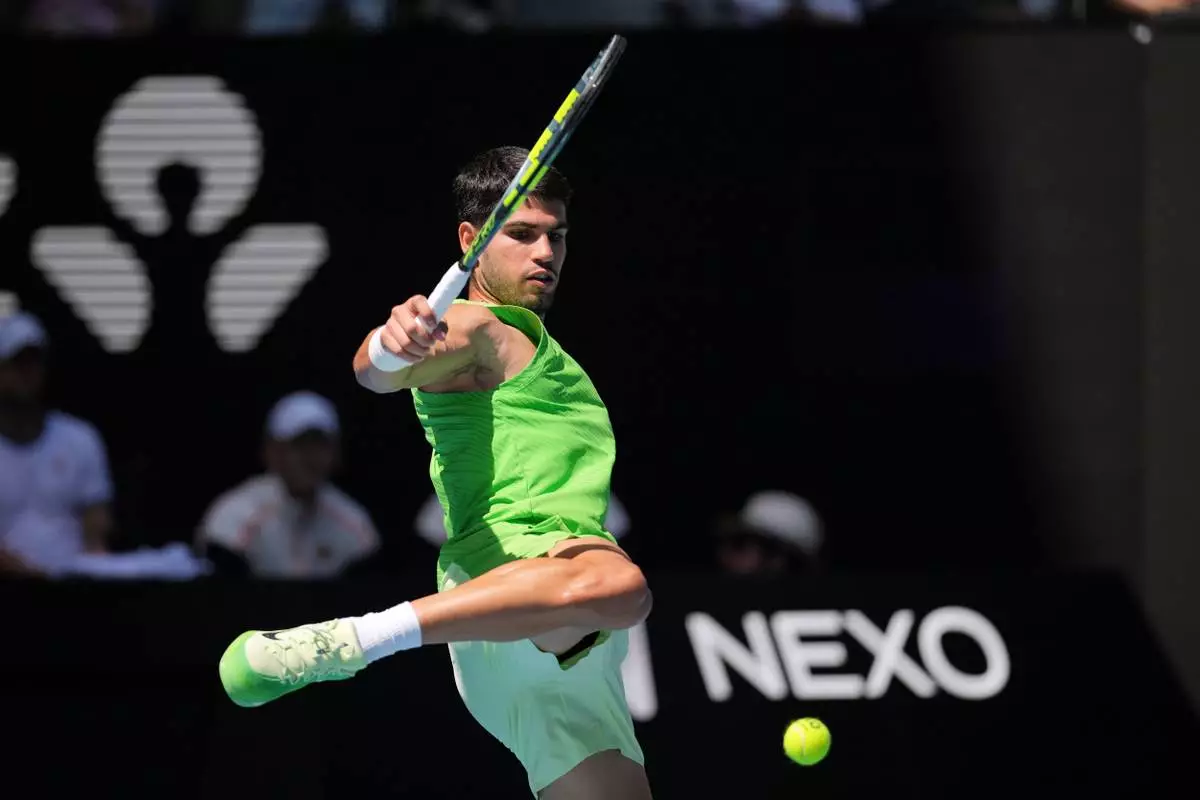
Carlos Alcaraz of Spain kicks the ball during his fourth round match against Tommy Paul of the U.S. at the Australian Open tennis championship in Melbourne, Australia, Sunday, Jan. 25, 2026. (AP Photo/Dita Alangkara)