Beijing's traditional winter pastime is getting a digital upgrade, with AI service bots enhancing operations and improving visitor experience on Beijing’s biggest natural ice surface -- the Summer Palace Ice Rink.
People of all ages and from different places have had fun riding ice bikes and ice sleds on the open area of the Summer Palace Ice Rink, which covers 160,000 square meters, or roughly the size of 90 standard ice hockey rinks.
A local family took a relative coming from southern Chinese regions, which see less or even no snow, to experience ice-skating.
A senior citizen said he is glad to ice-skate again, as it reminds him of his childhood.
Two friends said they traveled along to meet and have fun together, and planned the tour half a month in advance.
To keep nearly 10,000 visitors enjoying the ice in an orderly way, the tourist attraction has introduced an AI service bot named Xiao Yi, which provides real-time answers on park reservations, the fastest way onto the ice, and everything visitors need to know. The AI-empowered service is also accessible on mobile phones.
"She answers visitors' inquiries -- about park opening hours, ticket information, boat tour Information, temporary exhibitions, major events and more," said Bai Enjuan, director of Information Department Administration of Summer Palace.
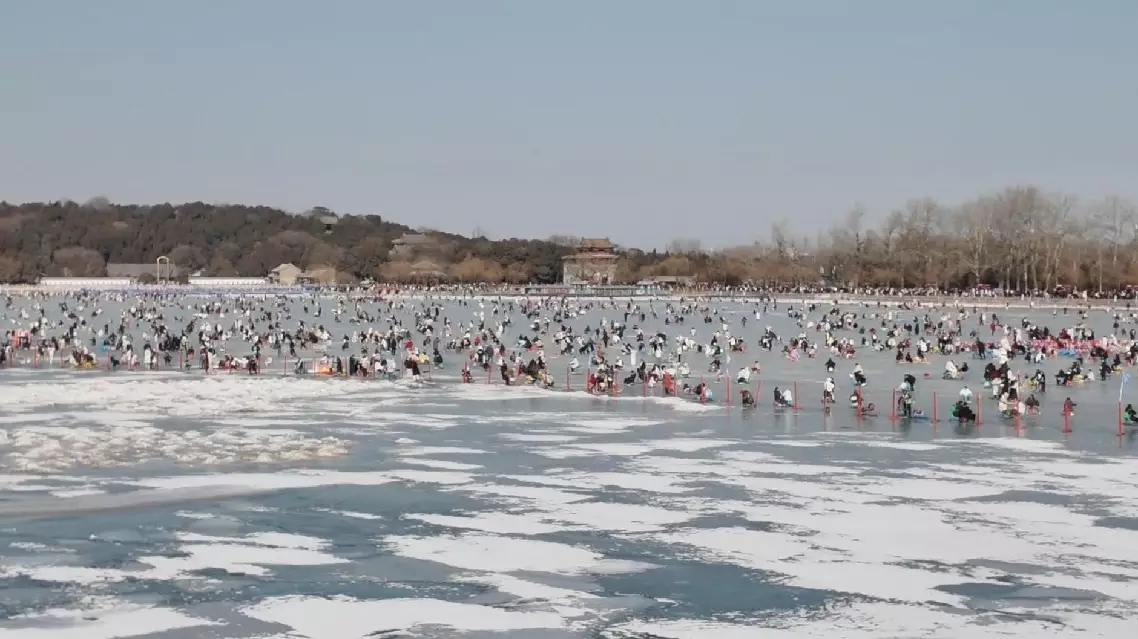
AI service bots improve visitor experience on Beijing’s Summer Palace ice rink
Residents in the Iranian capital Tehran have been forced to abandon their homes due to the continuing aerial bombardment from U.S. and Israeli attacks, with many worried about the damaging impact a prolonged war could have on their families.
The U.S. and Israeli began striking Iran on Saturday, with the attacks killing Supreme Leader Ali Khamenei and other senior Iranian officials, and claiming the lives of more than 1,200 Iranians as of Thursday.
Iran has retaliated with a series of counterattacks against U.S. and Israeli targets across the Middle East region, as concerns now mount about the conflict widening.
Amid the intensifying attacks, residents of Tehran felt they were left with no choice but to get out of the capital as missiles continued to rain down.
Among them was a local woman named Nahid, who, after reaching a safer location, shared her experience of fleeing the city, describing the fear and urgency that drove her decision.
"We left Tehran because of the war. We heard that Israel had attacked, and there were loud sounds and heavy bombardments. We left the city because we have children, and we were afraid they might get hurt or become terrified," she said.
Despite the current crisis, Nahid also spoke of a sense of resilience which remains among the people.
"There was absolutely no shortage of food. The shops and chain stores were all open and fully stocked. There was no shortage of food supplies. But we say that now we must stand firm and respond to Israel and foreign countries, so that it won’t be the case that whenever they wish, they can attack our homeland. We must show greater endurance and patience for the sake of our country," she said.
Another resident, Ensie, also recalled the sense of horror as missiles struck near her home.
"It was one of the most terrifying memories of my life. Because of the intense anxiety, I just kept running and trying to escape. I was coughing and my heart was racing. I didn't know what had happened. I just couldn't stop running," she said.
Ensie also spoke of the far-reaching impacts of the war, highlighting its toll on both the economy and people's mental health.
"War is terrible in every way. Financially, in terms of economic losses, and psychologically, especially because of its effects on adults and children. These are impacts whose consequences might only appear years later. No one likes war," she said.
The Iranian Red Crescent Society (IRCS) said on Thursday that 105 civilian sites and facilities in the country had been attacked by the U.S. and Israel since the outbreak of the conflict.
The IRCS also noted 1,332 attacks had been recorded at 636 locations across Iran since Saturday, with damage reported at 14 medical and pharmaceutical institutions.
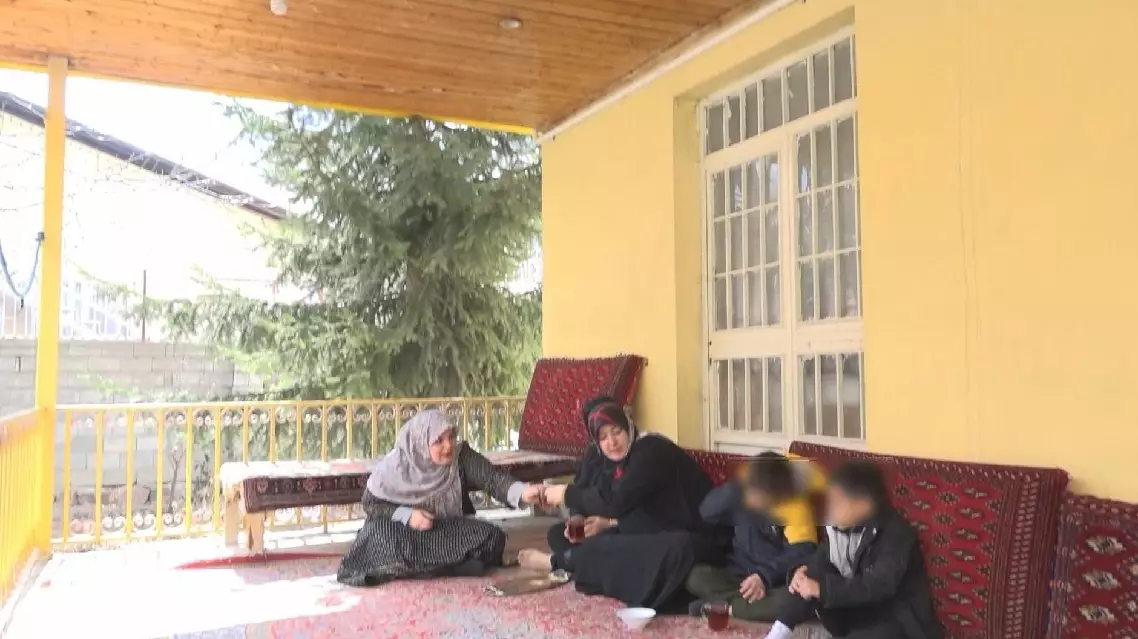
Iranian families forced to evacuate Tehran as US-Israeli strikes continue