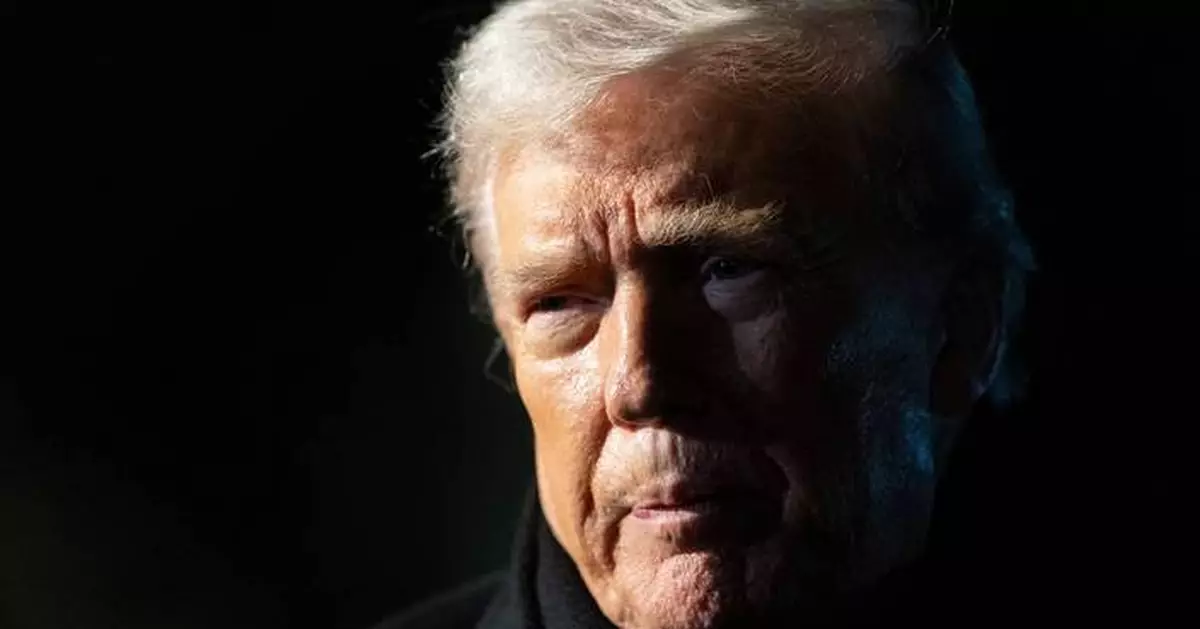
LONDON (AP) — No more fawning praise. No more polite workarounds and old-style diplomacy. And no one is calling Donald Trump “daddy” now.
European leaders who scrambled for a year to figure out how to deal with an emboldened American president in his second term edged closer to saying “no,” or something diplomatically like it, to his disregard for international law and his demands for their territory. Trump's vow to take over Greenland and punish any country that resists, seems to have been the crucible.
Click to Gallery
FILE - U.S. President Donald Trump, center, and Kate, Princess of Wales, listen to Britain's King Charles during the State Banquet in Windsor Castle, England, on day one of U.S. President Donald Trump and First Lady Melania Trump's second state visit to the U.K., Sept. 17, 2025. (Yui Mok/PA via AP, Pool Photo via AP, File)
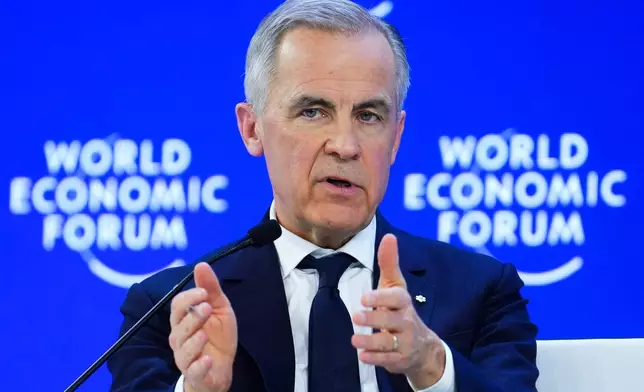
FILE - Canada Prime Minister Mark Carney delivers a speech at the World Economic Forum in Davos, Switzerland on Tuesday, Jan. 20, 2026. (Sean Kilpatrick/The Canadian Press via AP, File)
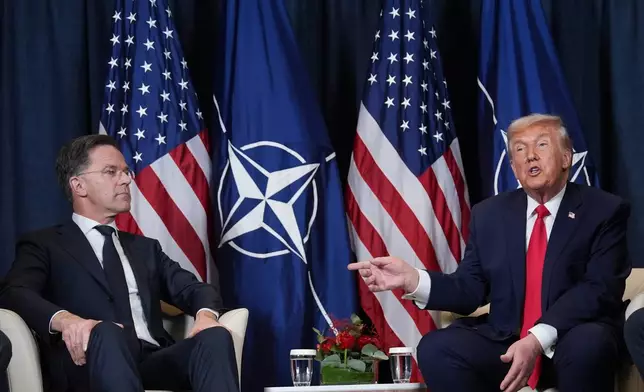
FILE - President Donald Trump, right, meets with NATO Secretary General Mark Rutte on the sidelines of the Annual Meeting of the World Economic Forum in Davos, Switzerland, Jan. 21, 2026. (AP Photo/Evan Vucci, File)
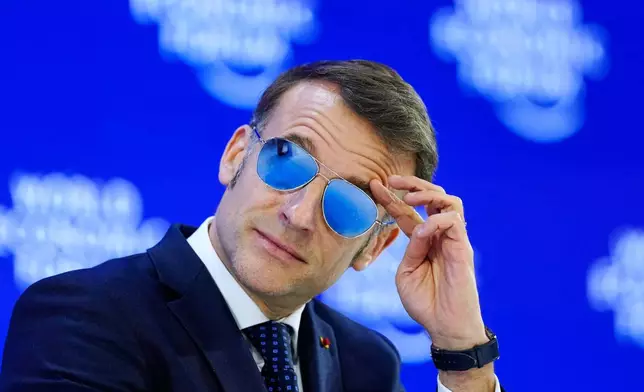
FILE - French President Emmanuel Macron is seen during the Annual Meeting of the World Economic Forum in Davos, Switzerland, Tuesday, Jan. 20, 2026. (AP Photo/Markus Schreiber, File)
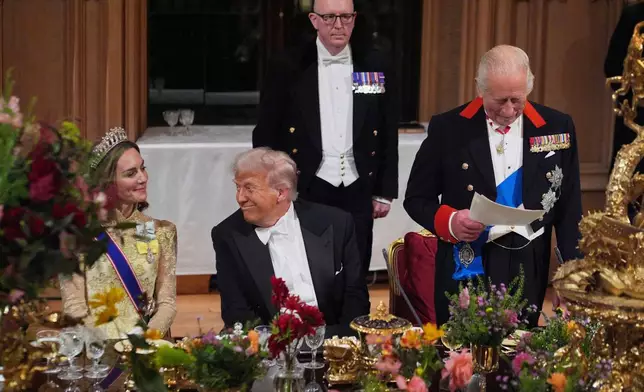
FILE - U.S. President Donald Trump, center, and Kate, Princess of Wales, listen to Britain's King Charles during the State Banquet in Windsor Castle, England, on day one of U.S. President Donald Trump and First Lady Melania Trump's second state visit to the U.K., Sept. 17, 2025. (Yui Mok/PA via AP, Pool Photo via AP, File)
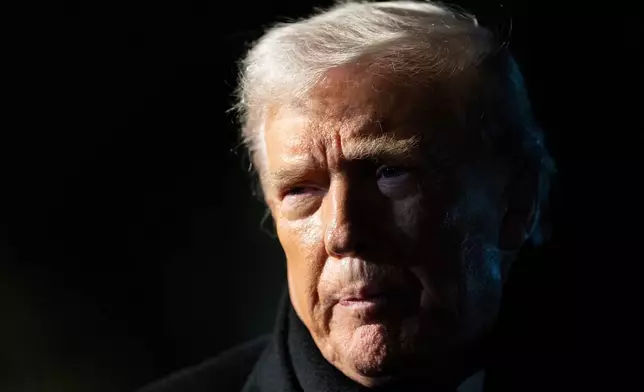
FILE - President Donald Trump speaks before departing on Marine One from the South Lawn of the White House, Jan. 20, 2026, in Washington. (AP Photo/Alex Brandon, File)
"Red lines" were deemed to have been crossed this year when Trump abruptly revived his demand that the United States “absolutely” must rule Greenland, the semiautonomous region that is part of NATO ally Denmark. That pushed even the most mild-mannered diplomats to issue sharp warnings against Trump, whom they had flattered withroyal treatment and fawning praise.
“Britain will not yield" its support for Greenland's sovereignty, British Prime Minister Keir Starmer said. Several of the continent's leaders said “Europe will not be blackmailed” over Greenland.
“Threats have no place among allies,” said Norwegian Prime Minister Jonas Gahr Støre.
The tough diplomatic talk around the showdown last week in Davos, Switzerland, was not the only factor pressuring Trump. U.S. congressional elections are approaching in November amid a sinking stock market and wilting approval ratings. European leaders also are not the first to stand in Trump's way during his second term — see Federal Reserve Chair Jerome Powell.
But the dramatic turnabout among Europe's elite, from “appeasing” Trump to defying him, offers clues in the ongoing effort among some nations of how to say “no” to a president who hates hearing it and is known to retaliate.
“We want a piece of ice for world protection, and they won’t give it,” Trump told his audience at the World Economic Forum. “You can say yes, and we will be very appreciative. Or you can say no, and we will remember.”
In recent days, Europe offered abundant refusals to go along with Trump, from his Greenland demand and joining his new Board of Peace and even to what Canada's Mark Carney called the “fiction” that the alliance functions for the benefit of any country more than the most powerful. The moment marked a unity among European leaders that they had struggled to achieve for a year.
“When Europe is not divided, when we stand together and when we are clear and strong also in our willingness to stand up for ourselves, then the results will show,” Danish Prime Minister Mette Frederiksen said. “I think we have learned something.”
Federiksen herself exemplified the learning curve. A year ago, she and other leaders were on their heels and mostly responding to the Trump administration. She found it necessary to tell reporters in February 2025, “We are not a bad ally,” after Vice President JD Vance had said Denmark was “not being a good ally.”
Trump is transactional. He has little use for diplomacy and no “need (for) international law,” he told The New York Times this month. Therein lay the disconnect between typically collaborative European leaders and the Republican president when he blazed back into the White House saying he wanted the U.S. to take over Greenland, Panama and perhaps even Canada.
“In Trump's first term, Europe didn't know what to expect and tried to deal with him by using the old rules of diplomacy, with the expectation that, if they kept talking to him in measured terms, that he would change his behavior and move into the club,” said Mark Shanahan, associate professor of political engagement at the University of Surrey,.
“It's very hard for other leaders who deal with each other through the niceties of a rules-based system and diplomatic conversation," Shanahan said. "It is hard for them to change.”
Five months after Trump's inauguration last year, with his Greenland threat in the air, European leaders had gotten their heads around Trump management enough to pull off a meeting of NATO nations in the Netherlands. NATO members agreed to contribute more and widely gave Trump credit for forcing them to modernize.
Secretary-General Mark Rutte, known as the coalition's “Trump whisperer," likened the president's role quieting the Iran-Israel war to a “daddy” intervening in a schoolyard brawl.
Traditional diplomacy exists to preserve possibilities of working together. That often means avoiding saying a flat “no” if possible. But Trump's Greenland gambit was so stark a threat from one NATO member to another that Greenland's prime minister actually said the word.
“Enough,” Jens-Frederik Nielsen said in a statement shortly after Trump's remarks Jan. 5. “No more pressure. No more hints. No more fantasies about annexation.”
That played a part in setting the tone. Denmark's leader said any such invasion of Greenland would mark the end of NATO and urged alliance members to take the threat seriously.
They did, issuing statement after statement rejecting the renewed threat. Trump responded last weekend from his golf course in Florida with a threat to charge a 10% import tax within a month on goods from eight European nations — Denmark, Norway, Sweden, France, Germany, the United Kingdom, the Netherlands and Finland. The rate, he wrote, would climb to 25% on June 1 if no deal was in place for “the Complete and Total purchase of Greenland” by the United States.
Trump's fighting words lit a fire among leaders arriving in Davos. But they seemed to recognize, too, that the wider Trump world left him vulnerable.
“Trump was in a fairly weak position because he has a lot of other looming problems going on,” domestically, including an upcoming U.S. Supreme Court decision on his tariffs and a backlash to immigration raids in Minnesota, said Duncan Snidal, professor emeritus of international relations at Oxford University and the University of Chicago.
Canada's Carney said no by reframing the question not as being about Greenland, but about whether it was time for European countries to build power together against a “bully" — and his answer was yes.
Without naming the U.S. or Trump, Carney spoke bluntly: Europe, he said, should reject the big power's “coercion” and “exploitation." It was time to accept, he said, that a “rupture” in the alliance, not a transition, had occurred.
Unsaid, Snidel pointed out, was that the rupture was very new, and though it might be difficult to repair in the future, doing so under adjusted rules remains in U.S. and European interests beyond Trump's presidency. “It's too good a deal for all of them not to,” Snidel said.
Before Trump stepped away from the podium in Davos, he had begun to back down.
He canceled his threat to use “force” to take over Greenland. Not long after, he reversed himself fully, announcing “the framework" for a deal that would make his tariff threat unnecessary.
Trump told Fox Business that “we’re going to have total access to Greenland,” under the “framework," without divulging what that might mean.
Frederiksen hit the warning button again. In a statement, she said, “We cannot negotiate on our sovereignty."
In other words: “No.”
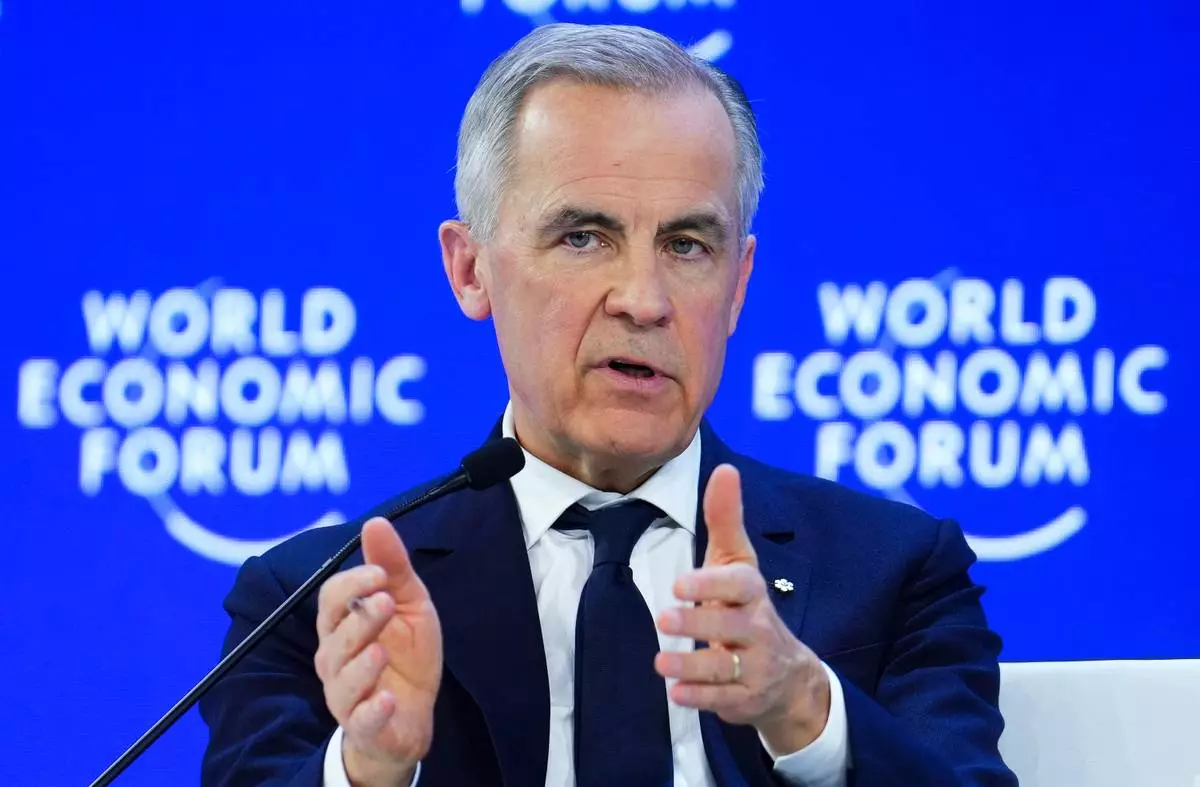
FILE - Canada Prime Minister Mark Carney delivers a speech at the World Economic Forum in Davos, Switzerland on Tuesday, Jan. 20, 2026. (Sean Kilpatrick/The Canadian Press via AP, File)
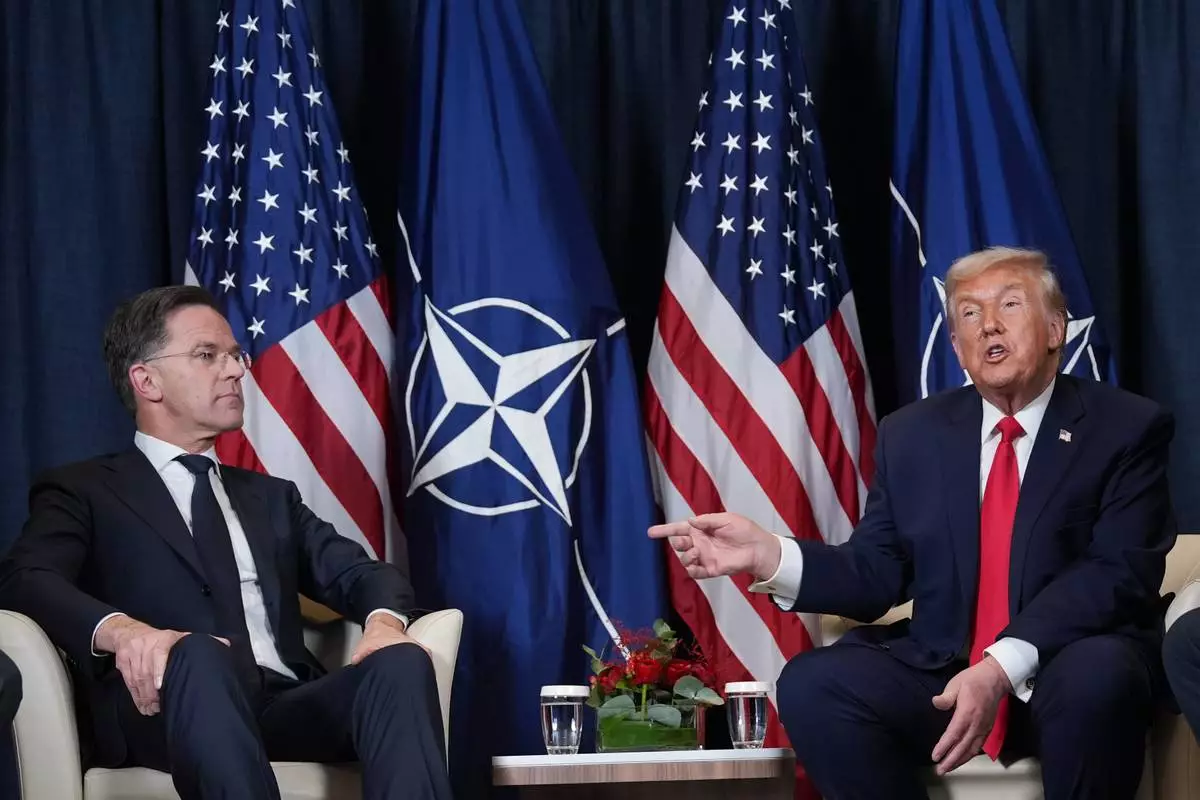
FILE - President Donald Trump, right, meets with NATO Secretary General Mark Rutte on the sidelines of the Annual Meeting of the World Economic Forum in Davos, Switzerland, Jan. 21, 2026. (AP Photo/Evan Vucci, File)
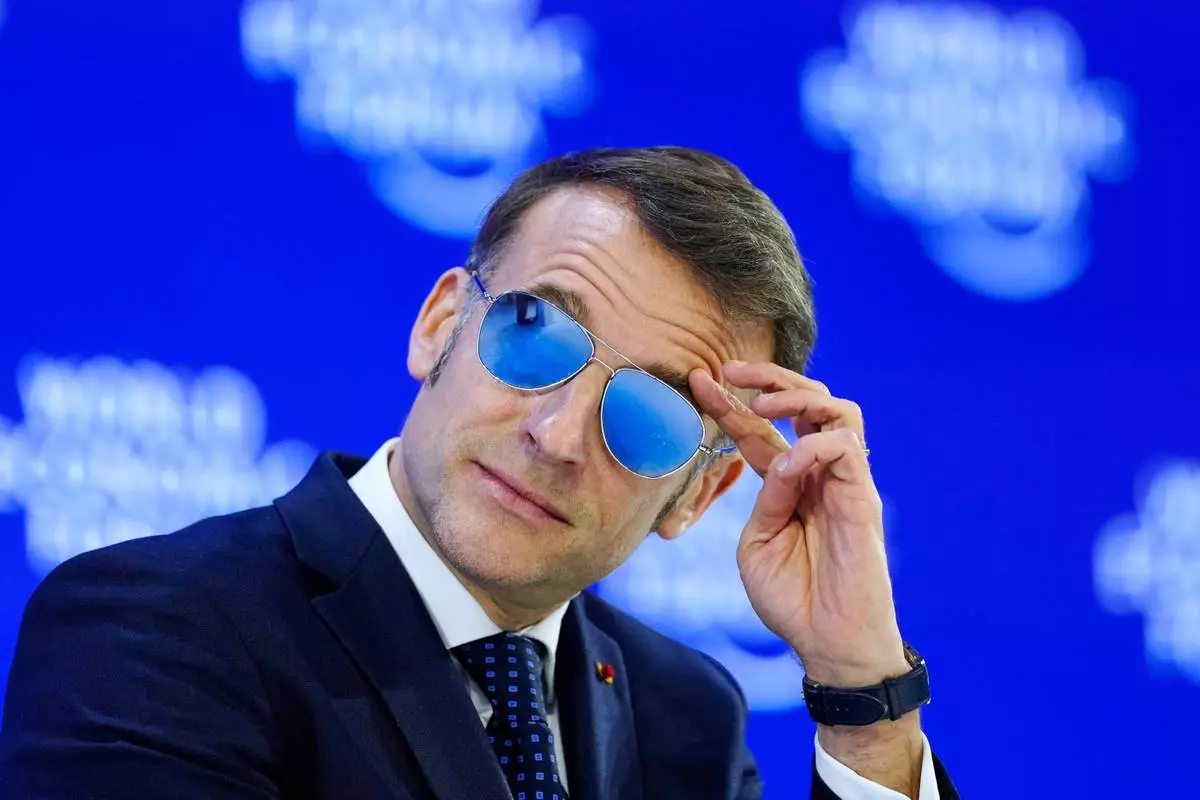
FILE - French President Emmanuel Macron is seen during the Annual Meeting of the World Economic Forum in Davos, Switzerland, Tuesday, Jan. 20, 2026. (AP Photo/Markus Schreiber, File)
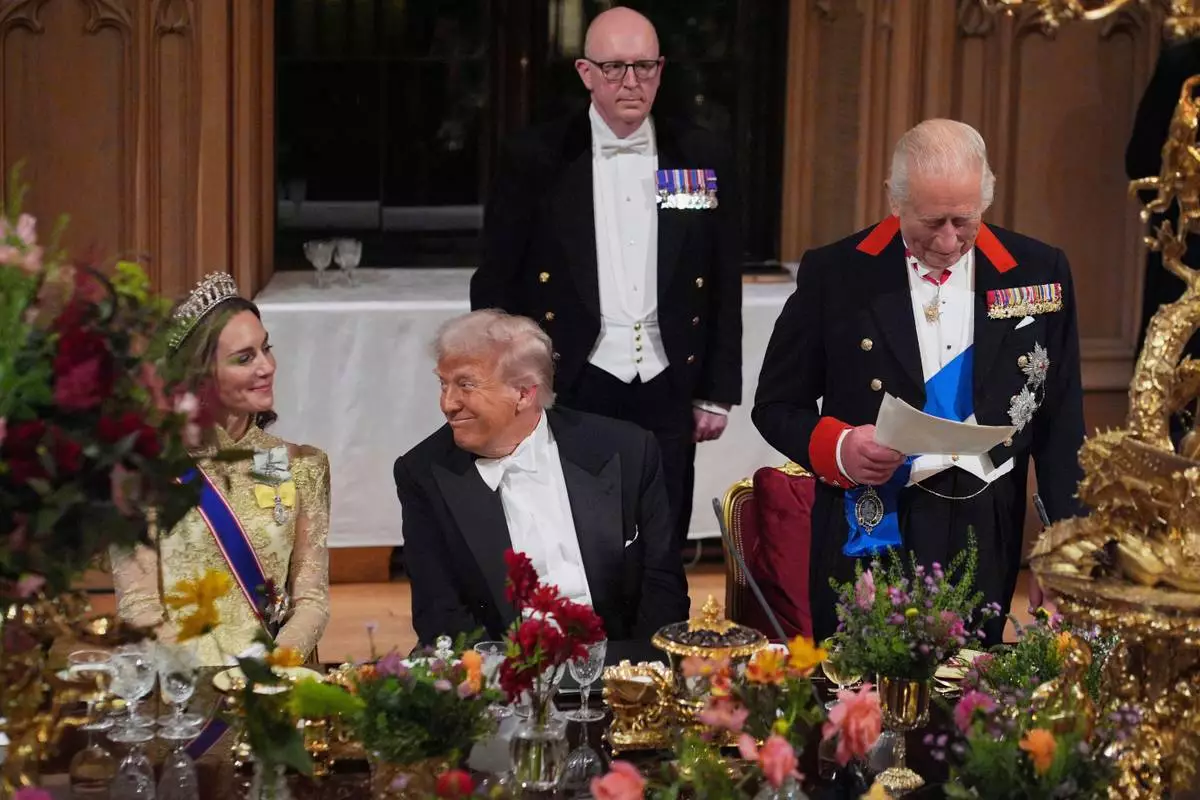
FILE - U.S. President Donald Trump, center, and Kate, Princess of Wales, listen to Britain's King Charles during the State Banquet in Windsor Castle, England, on day one of U.S. President Donald Trump and First Lady Melania Trump's second state visit to the U.K., Sept. 17, 2025. (Yui Mok/PA via AP, Pool Photo via AP, File)
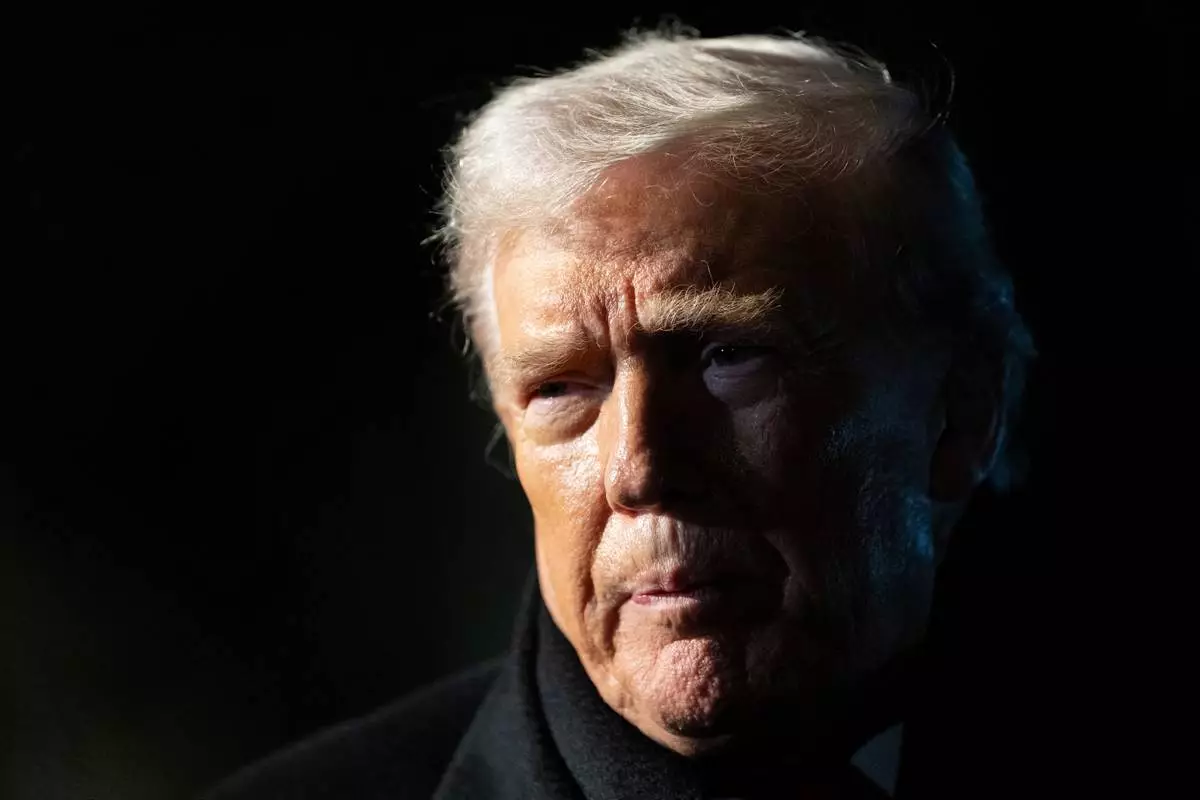
FILE - President Donald Trump speaks before departing on Marine One from the South Lawn of the White House, Jan. 20, 2026, in Washington. (AP Photo/Alex Brandon, File)
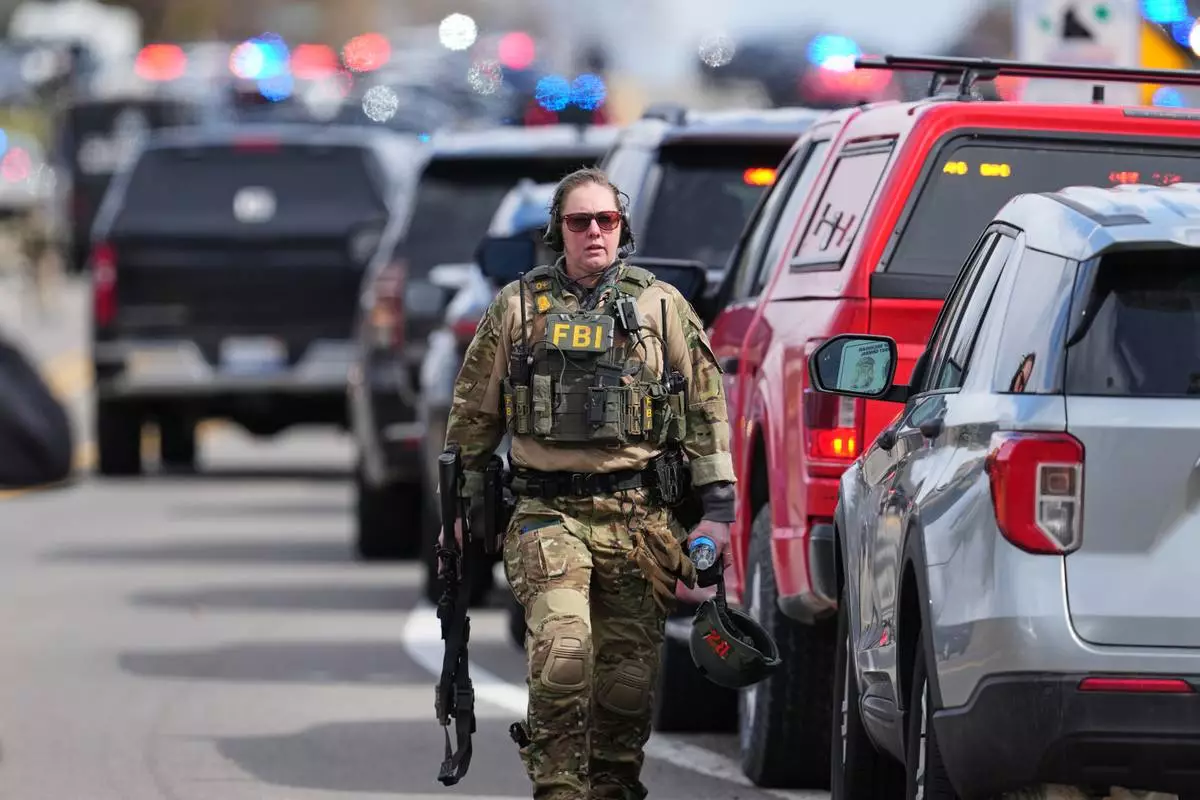
MINNEAPOLIS (AP) — In dueling news conferences, federal and state officials offered starkly different messages Sunday about the immigration crackdown that has swept across Minneapolis and surrounding cities, with both claiming the moral high ground after another shooting death by federal agents.
“Which side do you want to be on?" Gov. Tim Walz asked the public. "The side of an all-powerful federal government that could kill, injure, menace and kidnap its citizens off the streets, or on the side of a nurse at the VA hospital who died bearing witness to such government?” — a reference to Saturday's shooting of Alex Pretti in Minneapolis.
In a federal office building about 20 miles (32 kilometers) away, Border Patrol senior official Greg Bovino, the public face of the crackdown, again blamed the shooting on Pretti.
“When someone makes the choice to come into an active law enforcement scene, interfere, obstruct, delay or assault law enforcement officer and — and they bring a weapon to do that. That is a choice that that individual made,” he told reporters.
The competing comments emerged as local leaders and Democrats across the country demanded federal immigration officers leave Minnesota after Pretti's shooting, which set off clashes with protesters in a city already shaken by another shooting death weeks earlier.
Video shot by bystanders and reviewed by The Associated Press appears to contradict statements by President Donald Trump’s administration, which said agents fired “defensively” against Pretti, a 37-year-old intensive care nurse, as he approached them.
Pretti can be seen with only a phone in his hand as he steps between an immigration agent and a woman on the street. No footage appears to show him with a weapon. During the scuffle, agents appear to disarm him after discovering he is carrying a 9 mm semiautomatic handgun, and then open fire several times. Pretti was licensed to carry a concealed weapon.
In the hours after the shooting, Homeland Security Secretary Kristi Noem said Pretti attacked officers, and Bovino said he wanted to “massacre law enforcement.”
Bovino was more restrained Sunday, saying he would not speculate about the shooting and that he planned to wait for the investigation.
Pretti’s family said they were “heartbroken but also very angry” at authorities. Relatives were furious at federal officials’ description of the shooting.
“The sickening lies told about our son by the administration are reprehensible and disgusting. Alex is clearly not holding a gun when attacked by Trump’s murdering and cowardly ICE thugs. He has his phone in his right hand, and his empty left hand is raised above his head while trying to protect the woman ICE just pushed down all while being pepper sprayed,” the family statement said. “Please get the truth out about our son.”
A 2024 video posted to social media showed Pretti reading a salute for veteran Terrance Lee Randolph, who died at the VA hospital where Pretti worked.
“Today we remember that freedom is not free,” Pretti, wearing navy blue scrubs, says in the video. “We have to work for it, nurture it, protect it, and even sacrifice for it.”
Walz denounced as “despicable beyond all description” the comments that federal officials made about Pretti.
"And I would say, President Trump, you can end this today. Pull these folks back. Do humane, focused, effective immigration control,” he said.
The White House kept up its attacks on the governor, with press secretary Karoline Leavitt posting on X that Walz "does NOT believe in law and order” and accusing him of encouraging “left-wing agitators to stalk and record federal officers in the middle of lawful operations.”
At the federal news conference, Marcos Charles of Immigration and Customs Enforcement said one of their agents permanently lost a part of his finger when a protester bit it off Saturday in Minneapolis.
“This kind of violence is not a coincidence,” Charles said. “When sanctuary politicians, activists and the media work hard to create chaos and fear instead of using their platforms to reassure their communities, this is the result.”
Pretti was shot just over a mile from where an ICE officer killed 37-year-old Renee Good on Jan. 7, sparking widespread protests.
Federal officials, who are leading the investigation into the shooting, have thwarted local attempts to participate.
Drew Evans, superintendent of the state’s Bureau of Criminal Apprehension, which investigates police shootings, told reporters Saturday that federal officers had blocked his agency from the scene of the shooting even after it obtained a signed judicial warrant. Bureau officers were working at the scene Sunday morning.
A federal judge has already issued an order blocking the Trump administration from “destroying or altering evidence” related to the shooting, after state and county officials sued.
Minnesota Attorney General Keith Ellison said the lawsuit filed Saturday is meant to preserve evidence collected by federal officials that state authorities have not yet been able to inspect. A hearing is scheduled for Monday in federal court in St. Paul.
Assistant Homeland Security Secretary Tricia McLaughlin dismissed the lawsuit, saying claims that the federal government would destroy evidence are “a ridiculous attempt to divide the American people and distract from the fact that our law enforcement officers were attacked — and their lives were threatened.”
The Minnesota National Guard temporarily assisted local police at Walz's direction, officials said, with troops sent to the shooting site and a federal building where officers have squared off daily with demonstrators.
But Minneapolis Police Chief Brian O’Hara said Sunday morning on CBS' "Face the Nation" that “it’s back to just the Minneapolis police responding to calls.”
O'Hara said he had seen no evidence that Pretti brandished the pistol, and that the crackdown was exhausting his department.
“This is taking an enormous toll, trying to manage all this chaos on top of having to be the police department for a major city. It’s too much,” he said.
Rep. Alexandria Ocasio-Cortez of New York was among several Democratic lawmakers demanding that federal immigration authorities leave Minnesota.
In a statement, former President Barack Obama called Pretti’s death a “heartbreaking tragedy” and warned that “many of our core values as a nation are increasingly under assault.”
Federal officials, meanwhile, have repeatedly questioned why Pretti was armed during the confrontation. But gun rights groups noted that it's legal to carry firearms during protests.
When the Saturday confrontation began, bystander video shows protesters blowing whistles and shouting profanities at federal officers on a commercial street in south Minneapolis.
The videos show Pretti stepping in after an immigration officer shoves a woman. Pretti appears to be holding his phone toward the officer, but there's no sign he's holding a weapon.
The officer shoves Pretti in his chest and pepper sprays him and the woman.
Soon, at least seven officers force Pretti to the ground. Several officers try to bring his arms behind his back as he appears to resist. An officer holding a canister strikes him near his head several times.
A first shot is fired by a Border Patrol officer. There’s a slight pause, and then the same officer fires several more times into Pretti’s back. Multiple officers back off. Within seconds, Pretti is motionless on the street.
If Saturday was marked by clashes, with angry protesters blockading streets and agents firing canisters of tear gas, Sunday was marked by sadness.
Police cars with flashing lights have closed traffic to the block where the shooting occurred, and a constant flow of people came and went Sunday, gathering near the spot where Pretti was shot. There were 100 or so people at the scene Sunday night. Some sang, some prayed, some brought flowers or lit candles. TV news crews set up on the periphery of the crowd, and a man was giving away hand warmers with temperatures hovering just above 0 Fahrenheit (minus 18 degrees Celsius).
Brett Williams, 37, came from the city's suburbs to attend a vigil there earlier Sunday.
“I stand in solidarity with a brother whose life was taken too soon,” he said. “He’s standing up for immigrants. We’re all immigrants.”
Associated Press writers Jack Brook and Tim Sullivan in Minneapolis, Michael Biesecker and Michelle L. Price in Washington and Jim Mustian in New York contributed this story.
A Minnesota National Guard member walks around with their weapon in front of the Bishop Henry Whipple Federal Building, Sunday, Jan. 25, 2026, in Minneapolis. (AP Photo/Adam Gray)
People protest against ICE (Immigration and Customs Enforcement) in Omaha, Neb. on Sunday, Jan. 25, 2026. (Nikos Frazier/Omaha World-Herald via AP)
EDS NOTE: OBSCENITY - People protest against ICE (Immigration and Customs Enforcement) in downtown Minneapolis, Sunday, Jan. 25, 2026. (AP Photo/Adam Gray)
A makeshift memorial is placed where Alex Pretti was fatally shot by a U.S. Border Patrol officer yesterday, in Minneapolis, Sunday, Jan. 25, 2026. (AP Photo/Adam Gray)
Minnesota Gov. Tim Walz speaks during a news conference in Blaine, Minn., Sunday, Jan. 25, 2026. (AP Photo/Abbie Parr)
Federal immigration agents work on the scene in Minneapolis, Sunday, Jan. 25, 2026. (AP Photo/Adam Gray)
A person is pushed back by a federal agent working on the scene in Minneapolis, Sunday, Jan. 25, 2026. (AP Photo/Adam Gray)
BCA officers stand on the scene where Alex Pretti was fatally shot by a U.S. Border Patrol officer yesterday, in Minneapolis, Sunday, Jan. 25, 2026. (AP Photo/Adam Gray)
BCA officers stand near the scene of a fatal shooting that took place yesterday, in Minneapolis, Sunday, Jan. 25, 2026. (AP Photo/Adam Gray)
People gather near the scene where Alex Pretti was fatally shot by a U.S. Border Patrol officer yesterday, in Minneapolis, Sunday, Jan. 25, 2026. (AP Photo/Adam Gray)
Federal agents deploy tear gas and other munitions into a crowd of people near the intersection of 27th Street and Nicollet Avenue in Minneapolis after a federal officer shot and killed 37-year-old Alex Pretti on Saturday, Jan. 24, 2026. (Ben Hovland/Minnesota Public Radio via AP)
People gather at the site where a federal officer shot and killed 37-year-old Alex Pretti in Minneapolis on Saturday, Jan. 24, 2026. (Ben Hovland/Minnesota Public Radio via AP)
A person holds up their hands as law enforcement deploys a thick screen of teargas on Nicollet Avenue in Minneapolis on Saturday, Jan. 24, 2026. (Ben Hovland/Minnesota Public Radio via AP)