NEW YORK (AP) — What does it mean to have breast self-awareness?
It's a more general, flexible approach to breast cancer prevention that involves staying familiar with how your breasts look and feel. It goes along with other early detection measures like getting regular mammograms.
Doctors suggest breast self-awareness as an alternative to self-exams — those monthly, methodical checks for any changes while applying pressure or lying down.
Two decades ago, the American Cancer Society stopped recommending self-exams for people with average breast cancer risk because there wasn't strong evidence they helped if people were taking other preventative measures like regular mammograms. And the monthly checks made some patients anxious about every change, especially those with dense or naturally bumpy breast tissue.
“Let's say you bring 100 women into an auditorium and you teach them how to do it, and then they go home and do it. We don’t find any more cancers than if all of those women had mammograms according to our guidance,” said Dr. Arif Kamal, chief patient officer for the American Cancer Society.
Over 300,000 U.S. women and about 2,600 men will be diagnosed with invasive breast cancer in 2026, according to the cancer society.
While mammograms are critical, especially for finding early, otherwise undetectable cancers, it’s important to notice breast changes between screenings or before you are old enough to qualify — and get those checked by a doctor, just in case.
So what does that awareness look like in daily life? Here's what to know.
The point of breast self-awareness is to “know what your breasts normally look and feel like. And if something changes and you have a new lump or a new thickening, you could bring it to a doctor’s attention,” said Dr. Shari Goldfarb with Memorial Sloan Kettering Cancer Center.
Unlike monthly self-exams, there's no set routine for breast self-awareness. Instead, it's a general practice that integrates into daily life. That could mean noticing a change in shape while putting on a sports bra to exercise, or feeling pain when lying down for bed.
Dr. Megan Schneiderman's patients have brought up shifts they saw when looking in the mirror. Sometimes, their partner was the one who noticed.
The point of this general awareness “is to try to make things a little less scary for patients,” said Schneiderman, who works at Mount Nittany Health in Pennsylvania.
Other important changes to look out for besides lumps are an inverted nipple, nipple discharge, skin dimpling, changes in breast size, skin redness or constant pain from a single area. If something feels off, call a doctor to get it checked out.
Checking for changes can lead to anxiety over whether every new development could be cancerous. But experts say it’s important to remember that it's better not to be caught off guard.
Most lumps aren’t cancer — they could be normal fluctuations in breast tissue or a benign cyst — but it’s always a good idea to check just to be safe, especially if it persists or worsens, said Dr. Pouneh Razavi, a breast radiologist with Johns Hopkins Medicine.
“You definitely want to have it assessed, but do not worry unless there’s a reason to worry,” she said.
It’s also important to maintain a normal screening routine since being breast self-aware isn't protective enough on its own. That means getting mammograms yearly or every other year starting at age 40 or 45, as recommended by the U.S. Preventive Services Task Force and the American Cancer Society.
People who are at higher risk due to family history or genetic mutations or people with dense breasts may have earlier or different screening schedules or require additional imaging.
“It’s just about really knowing yourself and recognizing if something changes,” Razavi said.
The Associated Press Health and Science Department receives support from the Howard Hughes Medical Institute’s Department of Science Education and the Robert Wood Johnson Foundation. The AP is solely responsible for all content.
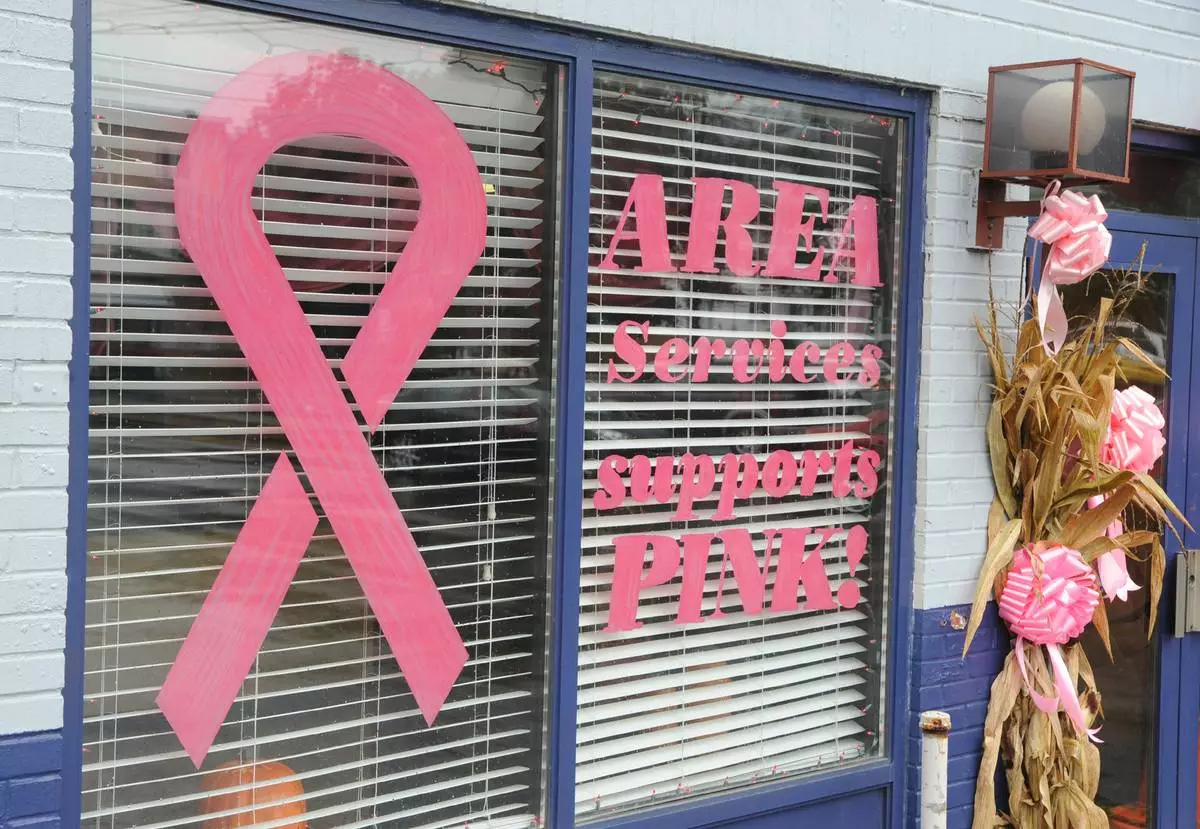
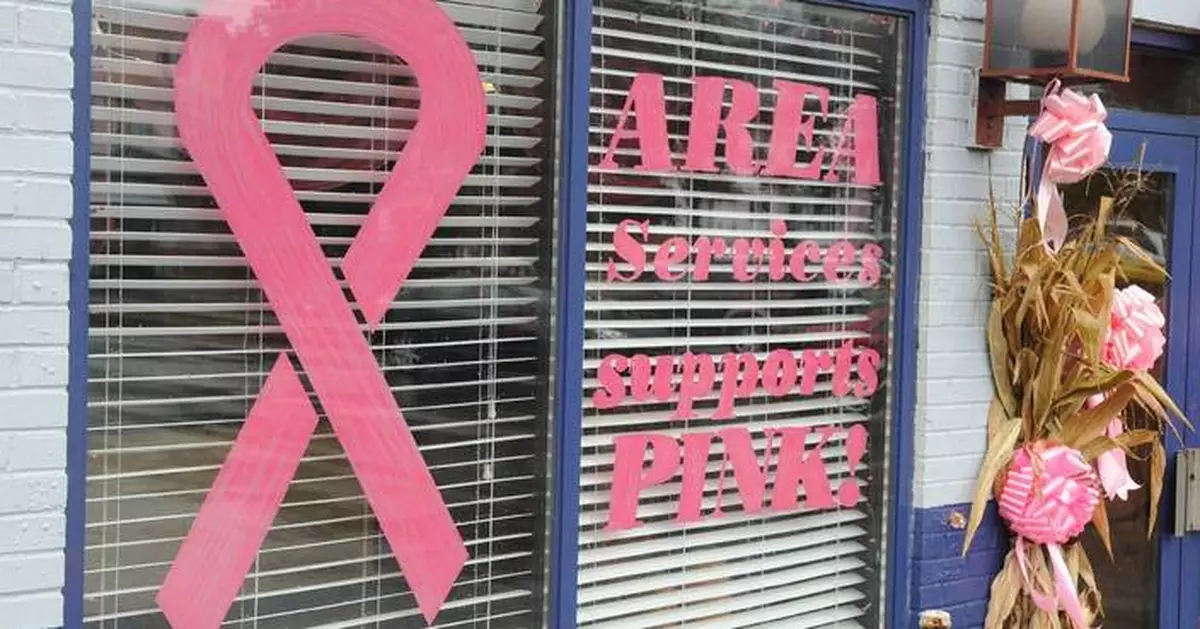
FILE - The AREA Services building in Shamokin, Pa. is decorated in pink ribbons and bras for Breast Cancer Awareness month, Thursday, Oct. 4, 2012. (Mike Staugaitis/The News-Item via AP)