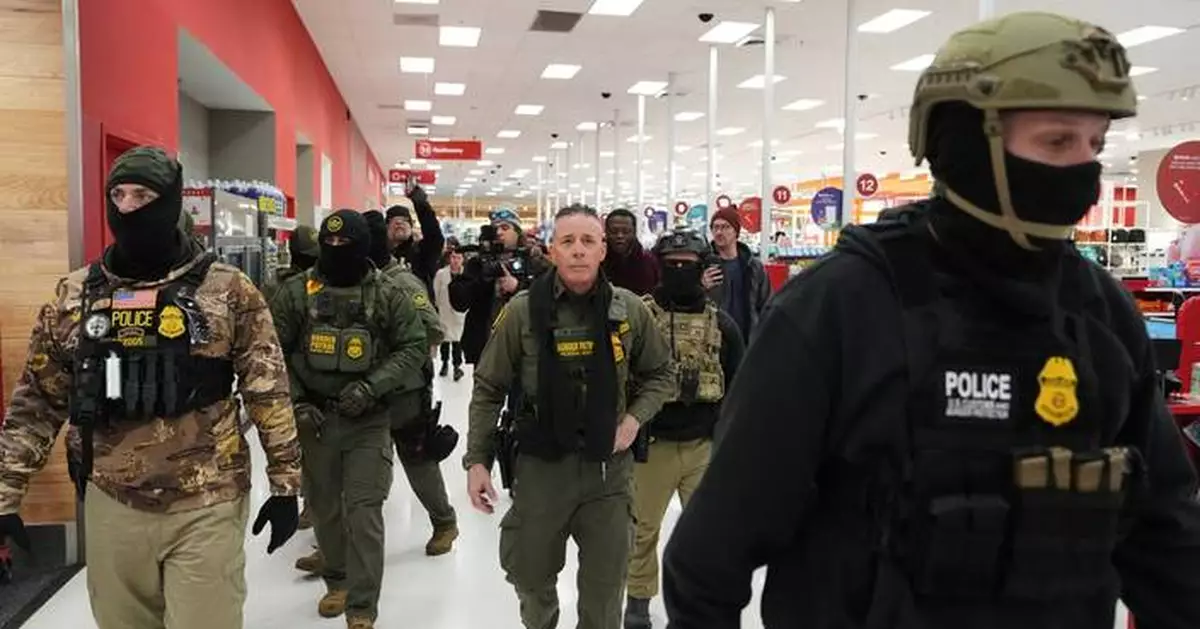
From family-run cafes to retail giants, businesses are increasingly coming into the crosshairs of President Donald Trump’s mass deportation campaign, whether it's public pressure for them to speak out against aggressive immigration enforcement or becoming the sites for such arrests themselves.
In Minneapolis, where the Department of Homeland Security says it’s carrying out its largest operation ever, hotels, restaurants and other businesses have temporarily closed their doors or stopped accepting reservations amid widespread protests.
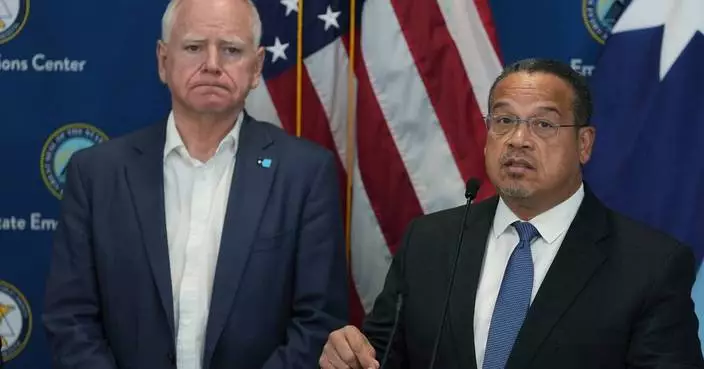
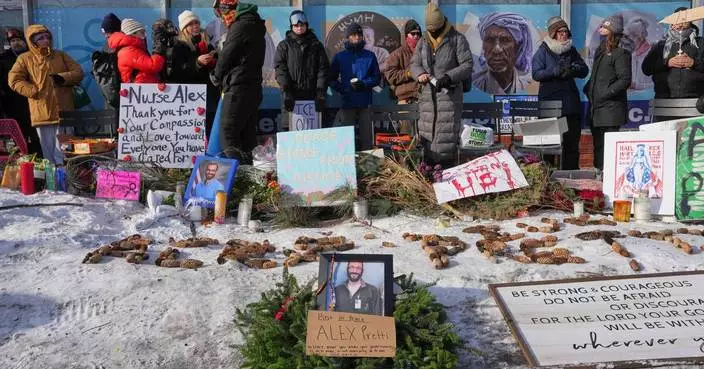
On Sunday, after the U.S. Border Patrol shot and killed Alex Pretti in Minneapolis, more than 60 CEOs of Minnesota-based companies including Target, Best Buy and UnitedHealth signed an open letter calling for "an immediate deescalation of tensions and for state, local and federal officials to work together to find real solutions.”
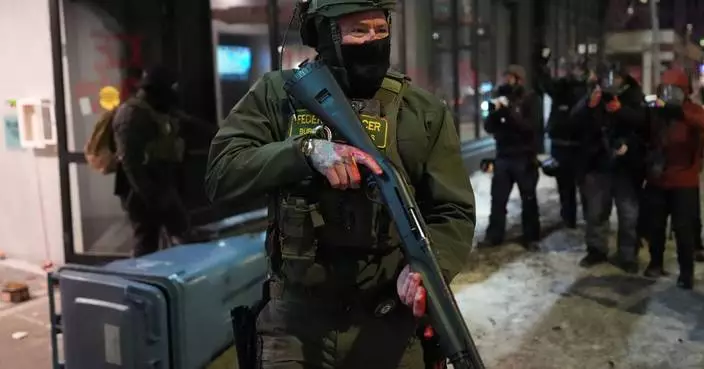
Still, that letter didn’t name immigration enforcement directly, or point to recent arrests at businesses. Earlier this month, widely-circulated videos showed federal agents detaining two Target employees in Minnesota. U.S. Immigration and Customs Enforcement has rounded up day laborers in Home Depot parking lots and delivery workers on the street nationwide. And last year, federal agents detained 475 people during a raid at a Hyundai plant in Georgia.
Here's what we know about immigration enforcement in businesses.
Anyone — including ICE — can enter public areas of a business as they wish. This can include restaurant dining sections, open parking lots, office lobbies and shopping aisles.
“The general public can go into a store for purposes of shopping, right? And so can law enforcement agents — without a warrant,” said Jessie Hahn, senior counsel for labor and employment policy at the National Immigration Law Center, an advocacy nonprofit. As a result, immigration officials may try to question people, seize information and even make arrests in public-facing parts of a business.
But to enter areas with a reasonable expectation of privacy — like a back office or a closed-off kitchen — ICE is supposed to have a judicial warrant, which must be signed by a judge from a specified court, and can be limited to certain days or parts of the business.
Judicial warrants should not be confused with administrative warrants, which are signed by immigration officers.
But in an internal memo obtained by The Associated Press, ICE leadership stated administrative warrants were sufficient for federal officers to forcibly enter people's homes if there’s a final order of removal. Hahn and other immigration rights lawyers say this upends years of precedent for federal agents’ authority in private spaces — and violates “bedrock principles” of the U.S. Constitution.
Still, the easiest way for ICE to enter private spaces in businesses without a warrant is through consent from an employer, which could be as simple as letting an agent into certain parts of the property. The agency may also cite other “exigent circumstances,” Hahn notes, such as if they’re in “hot pursuit” of a certain individual.
Beyond more sweeping workplace raids, enforcement against employers can also take the form of I-9 audits, which focus on verifying employees' authorization to work in the U.S.
Since the start of Trump’s second term, attorneys have pointed to an uptick in instances of ICE physically showing up to a place of business to initiate an I-9 audit. ICE has the authority to do this — but it marks a shift from prior enforcement, when audits more often began through writing like mailed notices.
David Jones, a regional managing partner at labor and employment law firm Fisher Phillips in Memphis, said he's also seen immigration agents approach these audits with the same approach as recent raids.
“ICE is still showing up in their full tactical gear without identifying themselves necessarily, just to do things like serve a notice of inspection,” Jones said. Employers have three days to respond to an I-9 audit, but agents behaving aggressively might make some businesses think they need to act more immediately.
If ICE shows up without a warrant, businesses can ask agents to leave — or potentially refuse service based on their own company policy, perhaps citing safety concerns or other disruptions caused by agents' presence. But there's no guarantee immigration officials will comply, especially in public spaces.
“That’s not what we’re seeing here in Minnesota. What we’re seeing is they still conduct the activity,” said John Medeiros, who leads corporate immigration practice at Minneapolis-based law firm Nilan Johnson Lewis.
Because of this, Medeiros said, the question for many businesses becomes less about getting ICE to leave their property and more about what to do if ICE violates consent and other legal requirements.
In Minneapolis — and other cities that have seen immigration enforcement surges, including Chicago and Los Angeles — some businesses have put up signs to label private spaces and set wider protocols for what to do when ICE arrives.
Vanessa Matsis-McCready, associate general counsel and vice president of HR at Engage PEO, says she's also seen a nationwide uptick in interest for I-9 self-audits across sectors and additional emergency preparation.
ICE's increased presence and forceful arrests at businesses has sparked public outcry, some of it directed at the companies themselves for not taking a strong enough stand.
Some employers, particularly smaller business owners, are speaking out about ICE's impacts on their workers and customers. But a handful of bigger corporations have stayed largely silent, at least publicly, about enforcement making its way to their storefronts.
Minneapolis-based Target has not commented on videos of federal agents detaining two of its employees earlier this month — although its incoming chief executive, Michael Fiddelke, sent a video message to the company's over 400,000 workers Monday calling recent violence “incredibly painful,” without directly mentioning immigration enforcement. He said Target was doing “everything we can to manage what’s in our control.” Fiddelke also signed the Minnesota Chamber of Commerce's letter calling for broader de-escalation, which got support from the Business Roundtable, a lobbying group of CEOs from more than 200 companies.
Target is among companies that organizers with “ICE Out of Minnesota” have asked to take stronger public stances over ICE's presence in the state. Others include Home Depot, whose parking lots have become a known site of ICE raids over the last year, and Hilton, which protestors said was among brands of Twin City-area hotels that have housed federal agents.
Hilton and Home Depot didn't respond to comment requests over the activists' calls. Home Depot previously denied being involved in immigration operations.
Several worker groups have been more outspoken. Ted Pappageorge, secretary-treasurer for a chapter of the Culinary Union in Las Vegas, said members were shocked by a “widening pattern of unlawful ICE behavior” and “recognize that anti-immigrant policies hurt tourism, business, and their families.” United Auto Workers also expressed solidarity with Minneapolis residents "fighting back against the federal government’s abuses and attacks on the working class.”
Hahn of the National Immigration Law Center noted some businesses are communicating through industry associations to avoid direct exposure to possible retaliation. Still, she stressed the importance of speaking publicly about the impacts of immigration enforcement overall.
“We know that the raids are contributing to things like labor shortages and reduced foot traffic,” Hahn said, adding that fears to push back on “this abuse of power from Trump could ultimately land us in a very different looking economy.”
Associated Press Writer Rio Yamat in Las Vegas and Anne D'Innocenzio in New York contributed to this report.
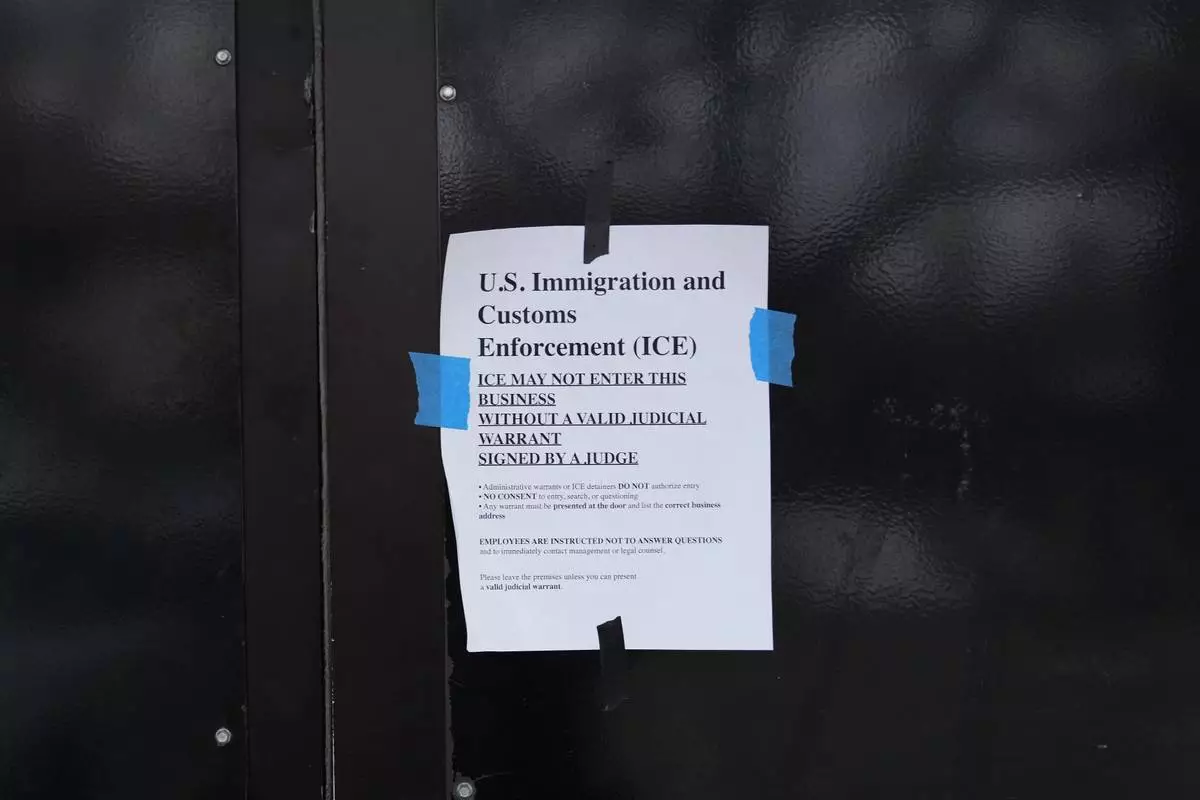
FILE - A sign is taped to the outside of the 24 Somali Mall in Minneapolis, Jan. 15, 2026. (AP Photo/Abbie Parr, File)
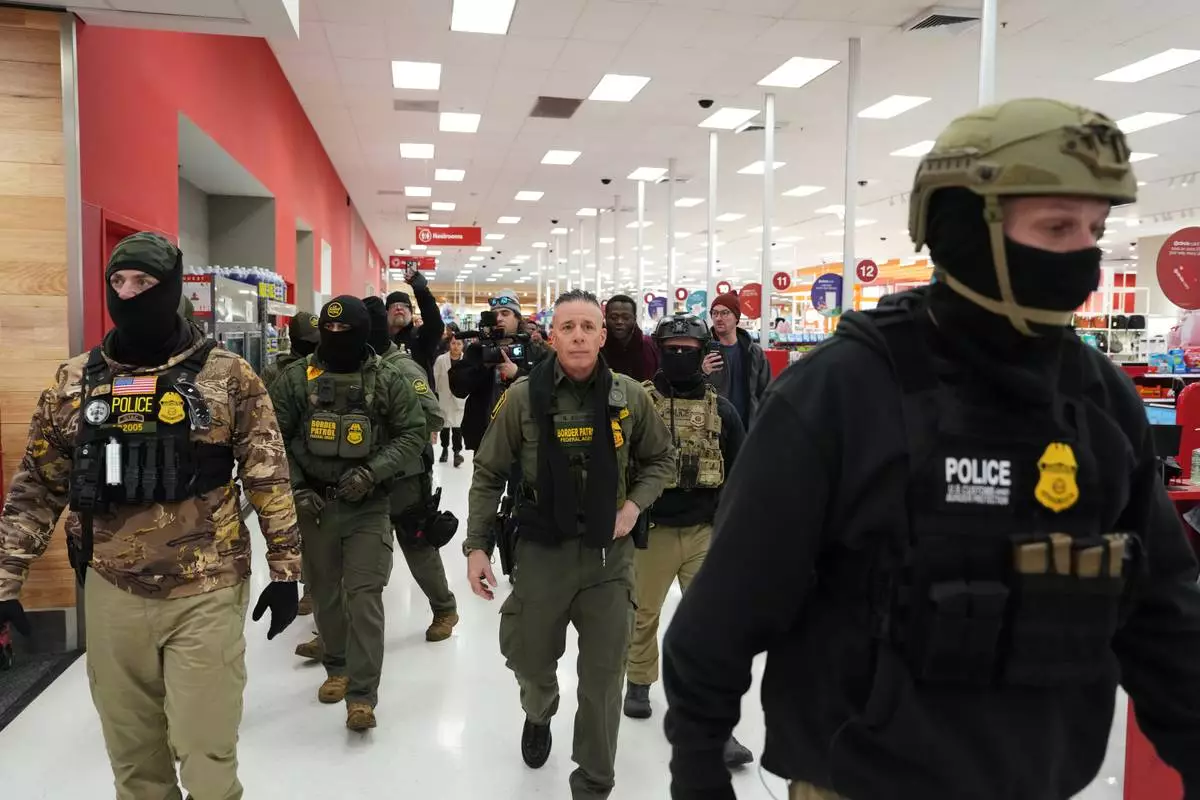
FILE - U.S. Border Patrol Cmdr. Gregory Bovino walks through a Target store Jan. 11, 2026, in St. Paul, Minn. (AP Photo/Adam Gray, File)