Skip to Content Facebook Feature Image

Couture and Lauren Sánchez are everywhere in Paris as Dior and Schiaparelli mix wonder and wit

ENT

Couture and Lauren Sánchez are everywhere in Paris as Dior and Schiaparelli mix wonder and wit
ENT

ENT

Couture and Lauren Sánchez are everywhere in Paris as Dior and Schiaparelli mix wonder and wit

2026-01-27 02:26 Last Updated At:02:30

PARIS (AP) — Dior turned the Musée Rodin into a celebrity waiting room — then into a garden — on the first day of Paris Couture Week.

Guests packed into the museum as the start time for the show drifted.

More Images
Models wear creations as part of the Christian Dior Spring/Summer 2026 Haute Couture collection presented in Paris, Monday, Jan. 26, 2026. (AP Photo/Aurelien Morissard)

Models wear creations as part of the Christian Dior Spring/Summer 2026 Haute Couture collection presented in Paris, Monday, Jan. 26, 2026. (AP Photo/Aurelien Morissard)

A model wears a creation as part of the Christian Dior Spring/Summer 2026 Haute Couture collection presented in Paris, Monday, Jan. 26, 2026. (AP Photo/Aurelien Morissard)

A model wears a creation as part of the Christian Dior Spring/Summer 2026 Haute Couture collection presented in Paris, Monday, Jan. 26, 2026. (AP Photo/Aurelien Morissard)

Fai Khadra poses for photographers at the photo call for the Christian Dior Spring/Summer 2026 Haute Couture collection presented in Paris, Monday, Jan. 26, 2026. (AP Photo/Michel Euler)

Fai Khadra poses for photographers at the photo call for the Christian Dior Spring/Summer 2026 Haute Couture collection presented in Paris, Monday, Jan. 26, 2026. (AP Photo/Michel Euler)

A model wears a creation as part of the Christian Dior Spring/Summer 2026 Haute Couture collection presented in Paris, Monday, Jan. 26, 2026. (AP Photo/Aurelien Morissard)

A model wears a creation as part of the Christian Dior Spring/Summer 2026 Haute Couture collection presented in Paris, Monday, Jan. 26, 2026. (AP Photo/Aurelien Morissard)

A model wears a creation as part of the Christian Dior Spring/Summer 2026 Haute Couture collection presented in Paris, Monday, Jan. 26, 2026. (AP Photo/Aurelien Morissard)

A model wears a creation as part of the Christian Dior Spring/Summer 2026 Haute Couture collection presented in Paris, Monday, Jan. 26, 2026. (AP Photo/Aurelien Morissard)

A model wears a creation as part of the Christian Dior Spring/Summer 2026 Haute Couture collection presented in Paris, Monday, Jan. 26, 2026. (AP Photo/Aurelien Morissard)

A model wears a creation as part of the Christian Dior Spring/Summer 2026 Haute Couture collection presented in Paris, Monday, Jan. 26, 2026. (AP Photo/Aurelien Morissard)

French first lady Brigitte Macron arrived. Lauren Sánchez Bezos swept in. Parker Posey twirled in her trench-dress.

And then the whole room, celebrities and editors alike, sat and waited for Rihanna.

When the pop-star finally took her seat, the lights dropped on a suspended ceiling hung with a garden of flowers.

Gravity did its quiet work: a bloom loosened and fell to the floor.

It was a fitting opening image for Jonathan Anderson’s first Dior haute couture show: beauty under pressure.

Anderson, the Northern Irish designer who revived Loewe with craft and wit, is now doing something Dior has never asked of one person in the modern era: he commands menswear, womenswear and couture at once.

That scale matters.

Dior is one of the main engines of the luxury conglomerate LVMH, and couture is where a house shows its power.

The collection was pitched as “nature in motion,” with technique treated as living knowledge, not museum display. Anderson followed that logic, reworking fragments of the past into something meant to feel new.

From the start, the palette was disciplined — blacks, whites and ecru — then punctured by flashes of color and texture. Lines were clean. Draping softened, then snapped back into structure: archetypal couture.

At its best, Anderson’s couture had the crispness he has already shown in menswear, and previously at Loewe.

A sublime silken Asian-style coat, strict and elegant, was cut through with black lapels that felt archive-meets-modern.

The house’s history appeared not as costume but as distortion.

The show’s oddest and most telling jokes were the pannier gowns: 18th-century volume reimagined as a take on a fanny pack silhouette.

It was classic Anderson: take something precious, tilt it, and make the result feel both witty and exact. Micro became macro — flowers cut from light silks, dense embroideries, chiffon and organza layered like feathers.

He also nodded to a broader Dior lineage without leaning on nostalgia.

Dior cited bunches of cyclamen given to Anderson by its former creative director John Galliano, and the show carried a faint echo of Galliano-style spectacle — filtered through Anderson’s cooler, more controlled hand.

Hydrangea-like blooms appeared as oversized earrings throughout, a decorative flourish, but one that felt like Dior’s house codes pushing him toward embellishment.

For all the ambition, the accomplished show occasionally felt like a set of strong parts still settling into a single, defining line.

Couture raises the stakes. When it works, it doesn’t just impress; it convinces. Anderson’s debut did both — but not always at the same time.

The ceiling garden promised one complete world. At times, the clothes felt like a designer still deciding where that garden begins and ends.

If Dior said it with flowers, Schiaparelli said it with plumes. The painted ceilings of the Petit Palais were made to evoke the Sistine Chapel in a typical imaginative and envelope-pushing couture display — graced by the likes of Sánchez Bezos and her husband Jeff, as well as Demi Moore. It was plumes, horns and lots of celebrity.

Designer Daniel Roseberry framed the collection as a push from “thinking” to “feeling,” and the clothes followed suit: sharp-shouldered “Elsa” jackets with gravity-defying hips, bustiers that seemed molded like armor, and skirts that bloomed in smoky sfumato tulle from nude to black.

There were creatures everywhere — bird heads, scorpion tails, snake teeth and she-scorpion looks that turned lingerie into couture theater.

Technique did the heavy lifting: bas-relief lace bouquets mounted on tulle, trompe l’oeil animal tails, and showpieces that reportedly took thousands of hours — including one with 65,000 handset feathers.

The keyhole motif — a Schiaparelli signature — returned as jewelry and hardware, a wink at mystery amid the meticulousness.

At its best, the collection balanced menace with beauty, making couture feel like fantasy built on discipline.

At other moments, the exuberance nearly tipped into costume, a victim of its own enthusiasm, as if every idea had to arrive at full volume.

Still, as an opening salvo for couture week, Schiaparelli made the message clear: this season, subtlety can wait.

Models wear creations as part of the Christian Dior Spring/Summer 2026 Haute Couture collection presented in Paris, Monday, Jan. 26, 2026. (AP Photo/Aurelien Morissard)

Models wear creations as part of the Christian Dior Spring/Summer 2026 Haute Couture collection presented in Paris, Monday, Jan. 26, 2026. (AP Photo/Aurelien Morissard)

A model wears a creation as part of the Christian Dior Spring/Summer 2026 Haute Couture collection presented in Paris, Monday, Jan. 26, 2026. (AP Photo/Aurelien Morissard)

A model wears a creation as part of the Christian Dior Spring/Summer 2026 Haute Couture collection presented in Paris, Monday, Jan. 26, 2026. (AP Photo/Aurelien Morissard)

Fai Khadra poses for photographers at the photo call for the Christian Dior Spring/Summer 2026 Haute Couture collection presented in Paris, Monday, Jan. 26, 2026. (AP Photo/Michel Euler)

Fai Khadra poses for photographers at the photo call for the Christian Dior Spring/Summer 2026 Haute Couture collection presented in Paris, Monday, Jan. 26, 2026. (AP Photo/Michel Euler)

A model wears a creation as part of the Christian Dior Spring/Summer 2026 Haute Couture collection presented in Paris, Monday, Jan. 26, 2026. (AP Photo/Aurelien Morissard)

A model wears a creation as part of the Christian Dior Spring/Summer 2026 Haute Couture collection presented in Paris, Monday, Jan. 26, 2026. (AP Photo/Aurelien Morissard)

A model wears a creation as part of the Christian Dior Spring/Summer 2026 Haute Couture collection presented in Paris, Monday, Jan. 26, 2026. (AP Photo/Aurelien Morissard)
A model wears a creation as part of the Christian Dior Spring/Summer 2026 Haute Couture collection presented in Paris, Monday, Jan. 26, 2026. (AP Photo/Aurelien Morissard)
A model wears a creation as part of the Christian Dior Spring/Summer 2026 Haute Couture collection presented in Paris, Monday, Jan. 26, 2026. (AP Photo/Aurelien Morissard)

A model wears a creation as part of the Christian Dior Spring/Summer 2026 Haute Couture collection presented in Paris, Monday, Jan. 26, 2026. (AP Photo/Aurelien Morissard)

LAKSHMIPUR, Bangladesh (AP) — Bangladeshi workers were lured to Russia under the false promise of civilian work and then forced to fight in the Ukraine war, an Associated Press investigation has found.

In interviews with three men who escaped Russia, and the families of three others who are missing, the AP documented a pattern of deception by labor recruiters who enticed workers with promises of lucrative job opportunities, only for them to unknowingly sign contracts for military service.

The returning Bangladeshi men — Maksudur Rahman, Mohan Miajee and Jehangir Alam — recounted harrowing experiences, including being forced to transport supplies to front-line positions, evacuate the wounded and collect dead bodies.

Neither the Russian Defense Ministry nor the south Asian country’s government responded to a list of questions from AP.

Here’s a closer look at AP’s report on how Bangladeshi workers were tricked into fighting in Ukraine.

Labor agents in impoverished communities in Bangladesh approached men to travel to Russia in late 2024, convincing them they could secure jobs, and even obtain residency over time, by working as cooks, cleaners and launderers in Russian army garrisons.

The accounts of the three men, and interviews with the families of those who are still unaccounted for, were substantiated by documents, including visas, military contracts, and army dog tags.

The men who escaped and the families of the missing indicated that the men were lured by promises of lucrative job opportunities conveyed by local recruiters. Many took out loans or sold property to cover the processing fees demanded by the agents, believing they would easily recoup their investment with the salaries they would earn.

The exact number of Bangladeshi men currently fighting in Russia remains unclear. The three men indicated to AP that the figure could be in the hundreds.

A Bangladeshi police investigator told AP that about 40 Bangladeshis may have lost their lives in the war.

Upon their arrival in Russia, the men and the families of the missing reported being coerced into signing military contracts written in Russian, a language they did not understand. They believed this was a standard procedure and expected to proceed with civilian jobs.

Shortly after, the men were taken to an army camp where they were subjected to basic military training, which included drone tactics. Confused and alarmed, they reached out to their families and questioned the local agent about the training. The agent claimed it was a standard requirement for a country at war.

As it became evident that the men would be deployed to the front lines, they voiced objections. One man recounted being told by a Russian commander that he had effectively been sold. Faced with threats of imprisonment, beatings, and even death, the men felt trapped.

They were forced to transport supplies to front-line positions, evacuate the wounded and collect the dead. Some reported being used as human shields in the conflict.

There are also instances of Bangladeshis who voluntarily enlisted in the war but were misled about the perilous roles they would occupy.

One man, who grew disillusioned with his job as an electrician in a gas-processing facility in the remote Far East, willingly signed up for military service after being promised by a recruiter that he would not see combat.

The recruiter had approached him online while he was searching for new employment, claiming that his electrical experience made him an ideal candidate for positions in electronic warfare or drone units. However, upon arriving at a Russian army camp in Ukraine, he was informed that such jobs did not exist.

He soon faced threats, beatings and torture for refusing to comply with the assigned tasks. Ultimately, he was forced to collect dead bodies.

Bangladeshi investigators are probing trafficking networks allegedly operated by local intermediaries with ties to the Russian government that authorities believe are responsible for recruiting Bangladeshi men to fight in the Ukraine war.

The investigation was prompted by a Bangladeshi man’s return from Russia in January 2025. He claimed he was tricked into joining the military. That led authorities to uncover nine more people who reported being trafficked. A key figure in the network, a Bangladeshi national with Russian citizenship who lives in Moscow, was charged.

Little is known about the network responsible for trafficking the men interviewed by AP. But the individuals were sent to Russia through a now-defunct local recruitment agency called SP Global. The company did not respond to AP’s calls and emails. Investigators found it ceased operations in 2025.

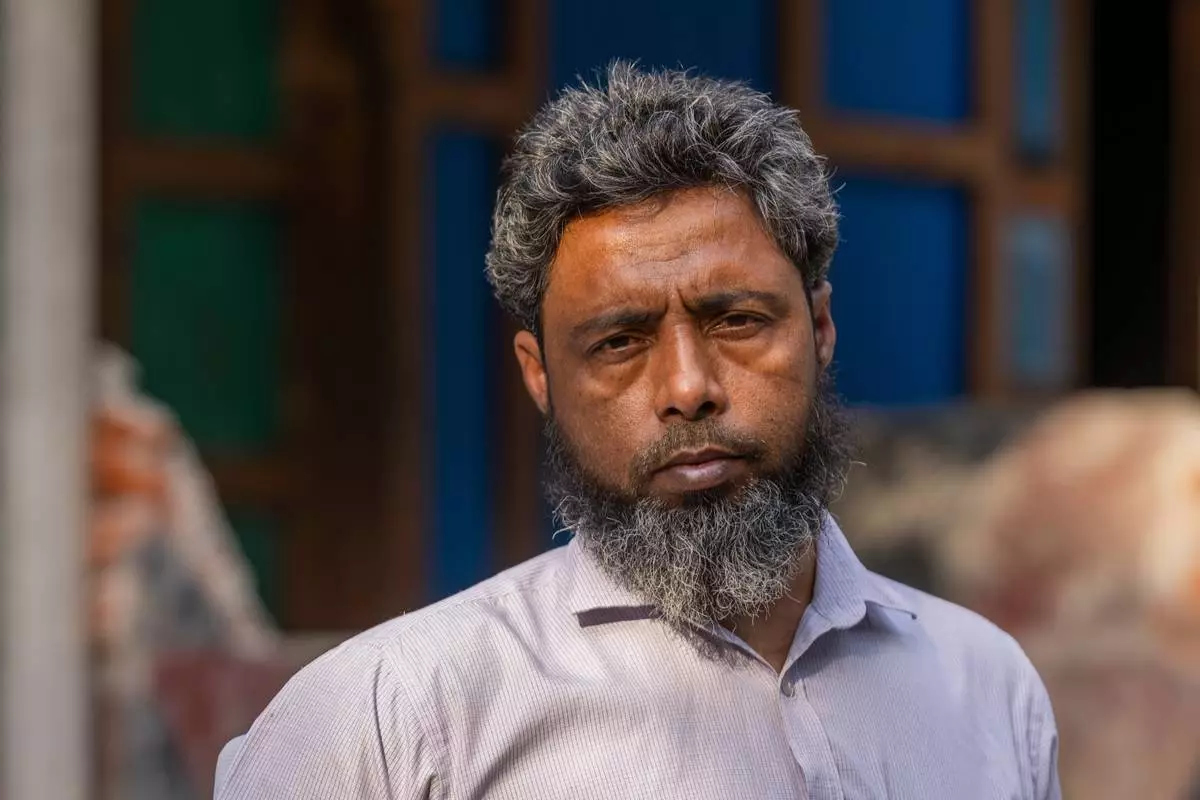
Mohammed Siraj, the father of Sajjad, 20, who was killed after being taken to fight in Russia, poses for a portrait at his home in Lakshmipur, Bangladesh, Dec. 10, 2025. (AP Photo/Rajib Dhar)

Mohammed Siraj, the father of Sajjad, 20, who was killed after being taken to fight in Russia, poses for a portrait at his home in Lakshmipur, Bangladesh, Dec. 10, 2025. (AP Photo/Rajib Dhar)

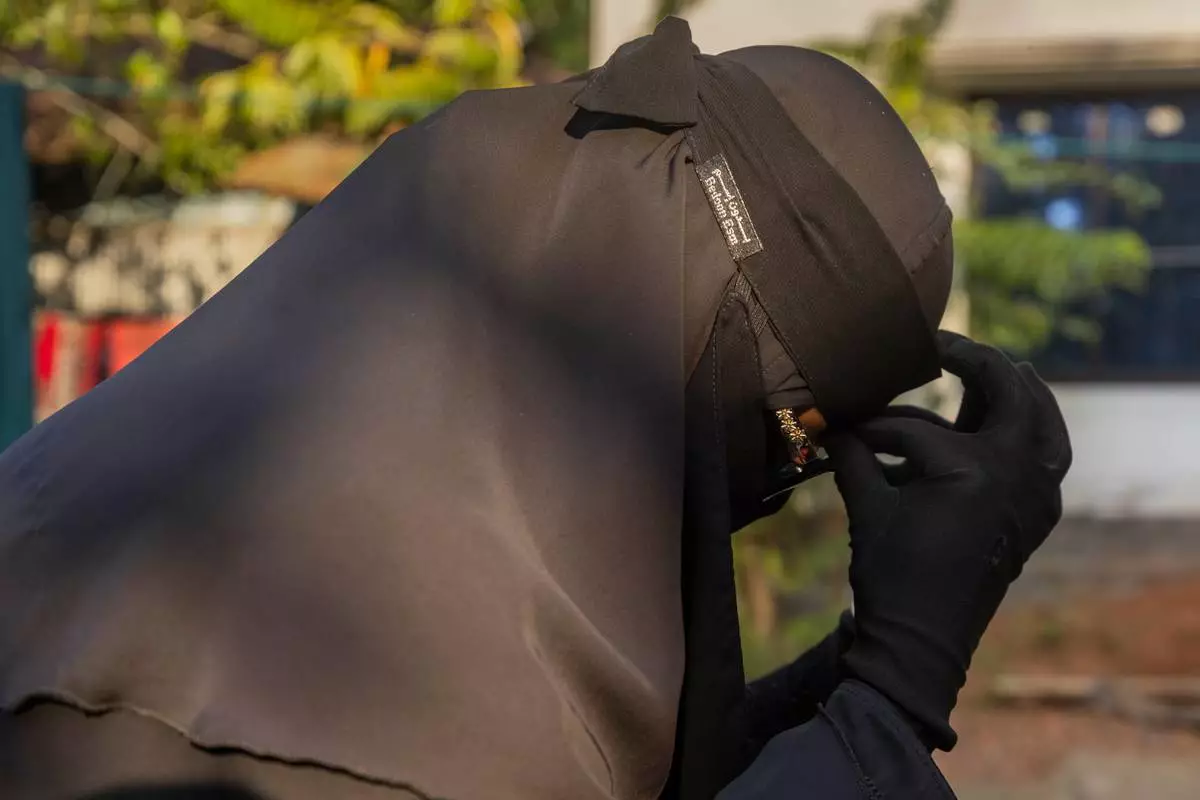
Salma Akdar, 28, who has not heard from her husband Ajgar Hussein, 40, for months, reacts as she sits in Lakshmipur, Bangladesh, Dec. 10, 2025. (AP Photo/Rajib Dhar)

Salma Akdar, 28, who has not heard from her husband Ajgar Hussein, 40, for months, reacts as she sits in Lakshmipur, Bangladesh, Dec. 10, 2025. (AP Photo/Rajib Dhar)

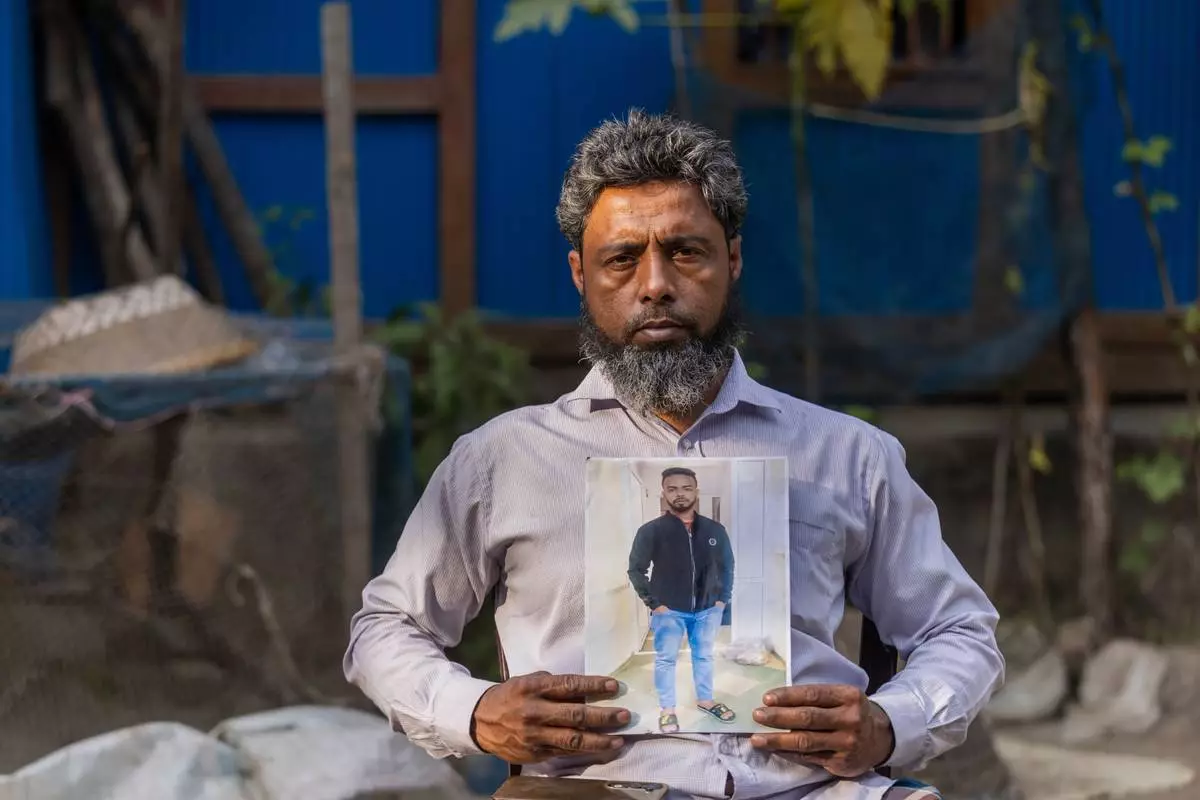
Mohammed Siraj holds a photograph of his 20-year-old son, Sajjad, who was killed after being taken to fight in Russia, at his home in Lakshmipur, Bangladesh, Dec. 10, 2025. (AP Photo/Rajib Dhar)

Mohammed Siraj holds a photograph of his 20-year-old son, Sajjad, who was killed after being taken to fight in Russia, at his home in Lakshmipur, Bangladesh, Dec. 10, 2025. (AP Photo/Rajib Dhar)

Recommended Articles