PARIS (AP) — French lawmakers approved a bill banning social media for children under 15, paving the way for the measure to enter into force at the start of the next school year in September, as the idea of setting a minimum age for use of the platforms gains momentum across Europe.
The bill, which also bans the use of mobile phones in high schools, was adopted by a 130-21 vote late Monday. French President Emmanuel Macron has requested that the legislation be fast-tracked and it will now be discussed by the Senate in the coming weeks.
“Banning social media for those under 15: this is what scientists recommend, and this is what the French people are overwhelmingly calling for,” Macron said after the vote. “Because our children’s brains are not for sale — neither to American platforms nor to Chinese networks. Because their dreams must not be dictated by algorithms.”
The issue is one of the very few in a divided National Assembly to attract such broad support, despite critics from the hard left denouncing provisions of the bill as infringement on civil liberties. Weakened domestically since his decision to dissolve parliament plunged France into a prolonged political crisis, Macron has strongly supported the ban, which could become one of the final major measures adopted under his leadership before he leaves office next year.
The French government had previously passed a law banning phone use in all primary and middle schools.
The vote in the assembly came just days after the British government said it will consider banning young teenagers from social media as it tightens laws designed to protect children from harmful content and excessive screen time.
The French bill has been devised to be compliant with the European Union’s Digital Services Act, which imposes a set of strict requirements designed to keep internet users safe online. In November, European lawmakers called for action at EU level to protect minors online, including a bloc-wide minimum age of 16 and bans on the most harmful practices.
According to France’s health watchdog, one in two teenagers spends between two and five hours a day on a smartphone. In a report published in December, it said that some 90% of children aged between 12 and 17 use smartphones daily to access the internet, with 58% of them using their devices for social networks.
The report highlighted a range of harmful effects stemming from the use of social networks, including reduced self-esteem and increased exposure to content associated with risky behaviors such as self-harm, drug use and suicide. Several families in France have sued TikTok over teen suicides they say are linked to harmful content.
The French ban won’t cover online encyclopedias, educational or scientific directories, or platforms for the development and sharing of open-source software.
In Australia, social media companies have revoked access to about 4.7 million accounts identified as belonging to children since the country banned use of the platforms by those under 16, officials said. The law provoked fraught debates in Australia about technology use, privacy, child safety and mental health and has prompted other countries to consider similar measures.
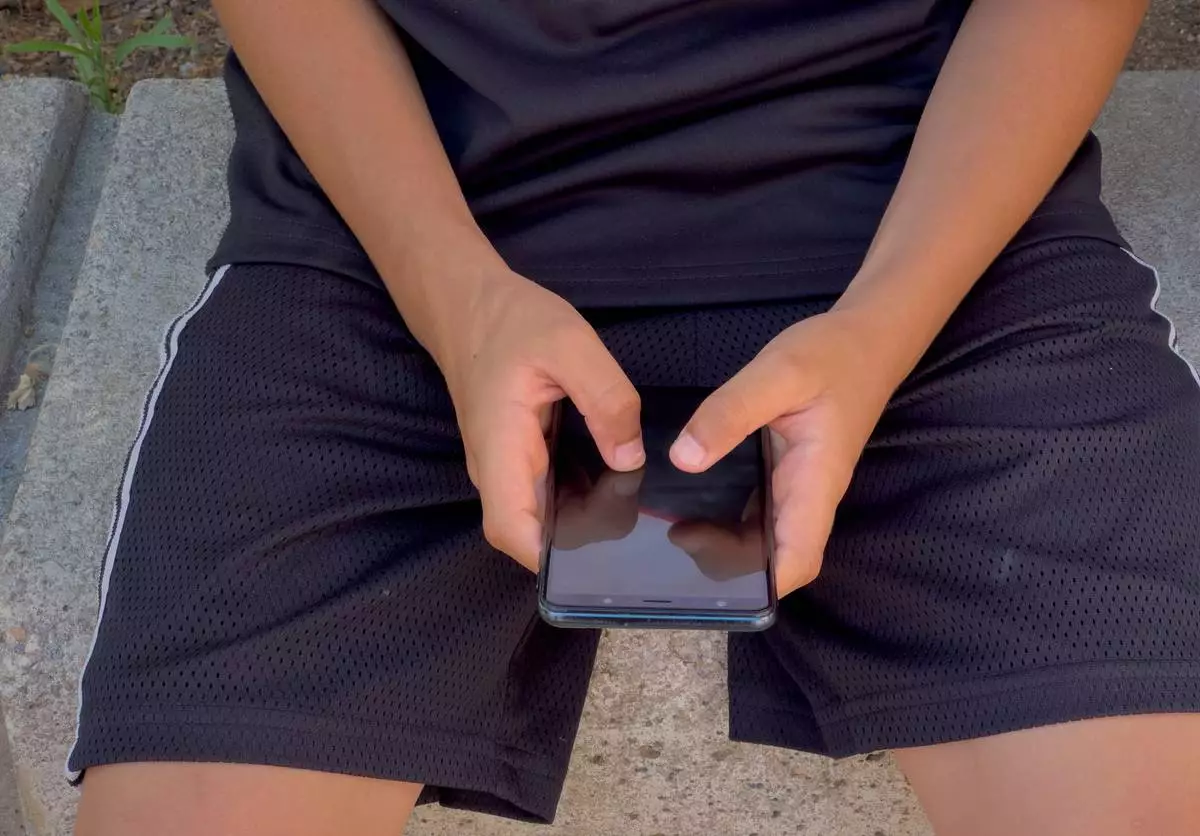
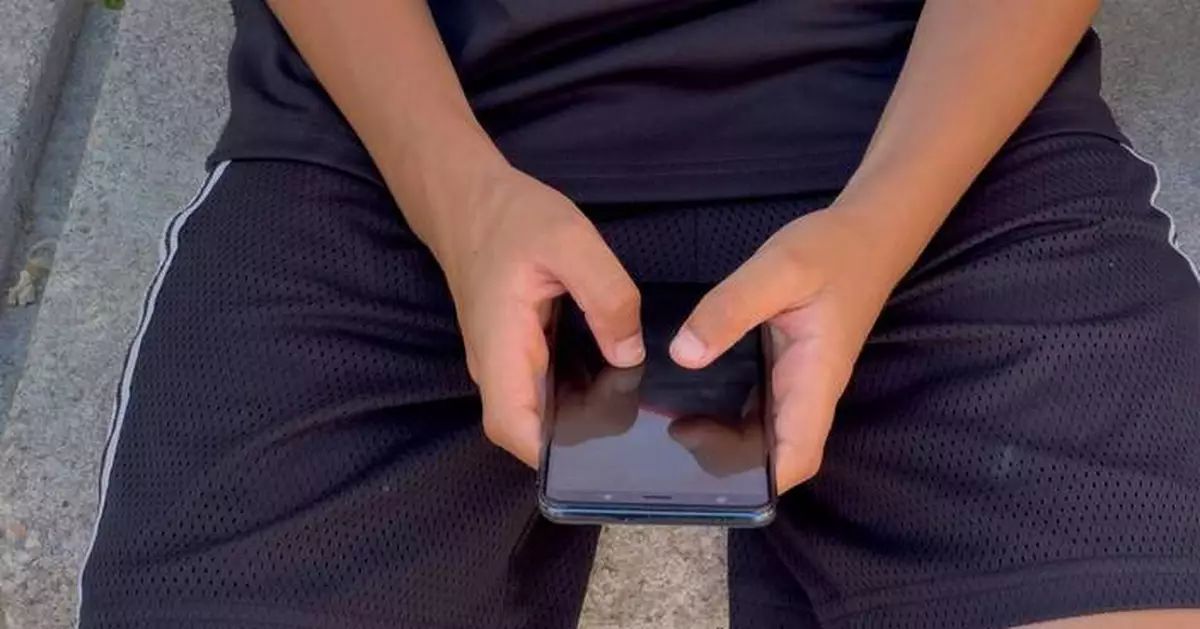
FILE - A 12-year-old boy plays with his personal phone outside school, in Barcelona, Spain, Monday, June 17, 2024. (AP Photo/Emilio Morenatti, FIle)
MINNEAPOLIS (AP) — A man sprayed an unknown substance on Democratic U.S. Rep. Ilhan Omar and was tackled to the ground Tuesday during a town hall Minneapolis, where tensions over federal immigration enforcement have come to a head after agents fatally shot an intensive care nurse and a mother of three this month.
The audience cheered as the man was pinned down and his arms were tied behind his back. In video of the incident, someone in the crowd can be heard saying, “Oh my god, he sprayed something on her.”
Just before that Omar had called for the abolishment of U.S. Immigration and Customs Enforcement and for Homeland Security Secretary Kristi Noem to resign or face impeachment. Calls are mounting on Capitol Hill for Noem to step down after the shooting deaths in Minneapolis of two people who protested deportations. Few Republicans have risen to her defense.
“ICE cannot be reformed,” Omar said, seconds before the attack.
Minneapolis police said officers saw the man use a syringe to spray an unknown liquid at Omar. They immediately arrested him and booked him at the county jail for third-degree assault, spokesperson Trevor Folke said. Forensic scientists responded to the scene.
Police identified the man as 55-year-old Anthony Kazmierczak. It was not immediately clear if Kazmierczak had an attorney. The county public defenders’ office could not immediately be reached.
Omar continued the town hall for about 25 more minutes after the man was ushered out by security, saying she would not be intimidated.
There was a strong, vinegarlike smell after the man pushed on the syringe, according to an Associated Press journalist who was there. Photos of the device, which fell to the ground when he was tackled, showed what appeared to be a light-brown liquid inside. There was no immediate word from officials on what it was.
Minneapolis Council Member LaTrisha Vetaw said some of the substance came into contact with her and State Sen. Bobby Joe Champion as well. She called it a deeply unsettling experience.
No one in the crowd of about 100 people had a noticeable physical reaction to the substance.
Walking out afterward, Omar said she felt a little flustered but was not hurt. She was going to be screened by a medical team.
She later posted on the social platform X: “I’m ok. I’m a survivor so this small agitator isn’t going to intimidate me from doing my work. I don’t let bullies win.”
The White House did not immediately respond to a message seeking comment Tuesday night.
President Donald Trump has frequently criticized the congresswoman and has stepped up verbal attacks on her in recent months as he turned his focus on Minneapolis. During a Cabinet meeting in December, he called her “garbage."
Hours earlier on Tuesday, the president criticized Omar as he spoke to a crowd in Iowa, saying his administration would only let in immigrants who “can show that they love our country.”
“They have to be proud, not like Ilhan Omar,” he said, drawing loud boos at the mention of her name.
He added: “She comes from a country that’s a disaster. So probably, it’s considered, I think — it’s not even a country.”
Omar is a U.S. citizen who fled her birthplace, Somalia, with her family at age 8 as a civil war tore apart the country.
The Minneapolis-St. Paul area is home to about 84,000 people of Somali descent — nearly a third of Somalis living in the U.S.
Democratic Minnesota Gov. Tim Walz expressed gratitude that Omar was safe, adding in a post on X: “Our state has been shattered by political violence in the last year. The cruel, inflammatory, dehumanizing rhetoric by our nation’s leaders needs to stop immediately.”
U.S. Rep. Nancy Mace, a South Carolina Republican, also denounced the assault.
“I am deeply disturbed to learn that Rep. Ilhan Omar was attacked at a town hall today” Mace said. “Regardless of how vehemently I disagree with her rhetoric — and I do — no elected official should face physical attacks. This is not who we are.”
Minneapolis Mayor Jacob Frey, a Democrat, called the attack “unacceptable.” He said he was relieved that Omar “is OK” and thanked police for their quick response, concluding: “This kind of behavior will not be tolerated in our city.”
The city has been reeling from the fatal shootings of two residents by federal immigration agents this month during Trump's massive immigration enforcement surge. Intensive care unit nurse Alex Pretti was killed Saturday, less than three weeks after Renee Good was fatally shot behind the wheel of her vehicle.
The attack came days after a man was arrested in Utah for allegedly punching U.S. Rep. Maxwell Frost, a Democrat from Florida, in the face during the Sundance Film Festival and saying Trump was going to deport him.
Threats against members of Congress have increased in recent years, peaking in 2021 in the aftermath of that year’s Jan. 6 attack on the U.S. Capitol, before dipping slightly only to climb again, according to the most recent figures from the U.S. Capitol Police.
Lawmakers have discussed the impact on their ability to hold town halls and public events, with some even citing the threat environment in their decisions not to seek reelection.
Omar has faced the most particular concern, long targeted with harsh language and personal attacks by Trump and other Republicans.
Following the assault on Omar, U.S. Capitol Police said in a statement that the agency was “working with our federal partners to see this man faces the most serious charges possible to deter this kind of violence in our society.”
It also released updated numbers detailing threats to members of Congress: 14,938 “concerning statements, behaviors, and communications directed against lawmakers, their families, staff and the Capitol Complex.”
That is a sharp increase from 2024, when the number of cases was 9,474, according to USCP. It is the third year in a row that the number of threats has increased.
Capitol Police have beefed up security measures across all fronts since Jan. 6, 2021, and the department has seen increased reporting after a new center was launched two years ago to process reports of threats.
Schoenbaum reported from Salt Lake City. Associated Press writers Audrey McAvoy in Honolulu, Mike Balsamo, Lisa Mascaro and Michelle Price in Washington, and Farnoush Amiri in New York contributed.
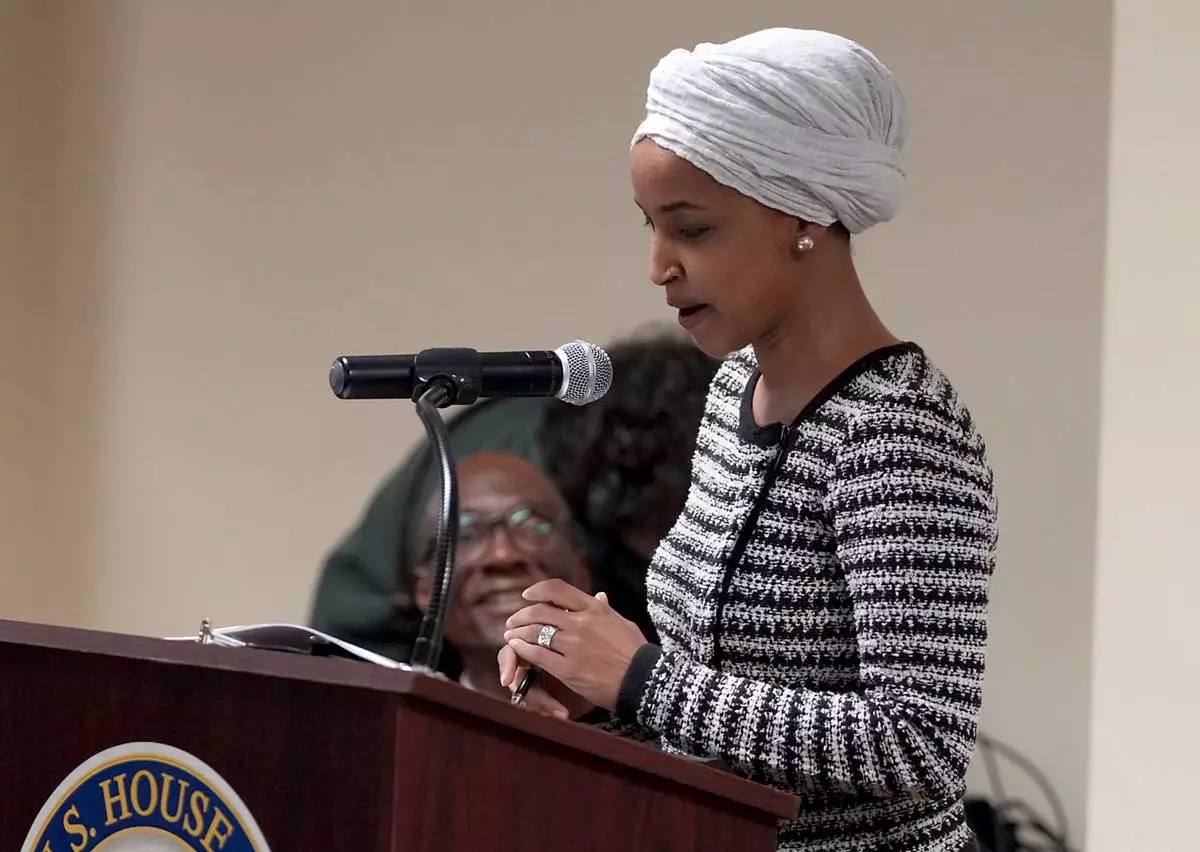
Rep. Ilhan Omar, D-Minn., speaks during a town hall in Minneapolis, Tuesday, Jan. 27, 2026. (Richard Tsong-Taatarii/Star Tribune via AP)
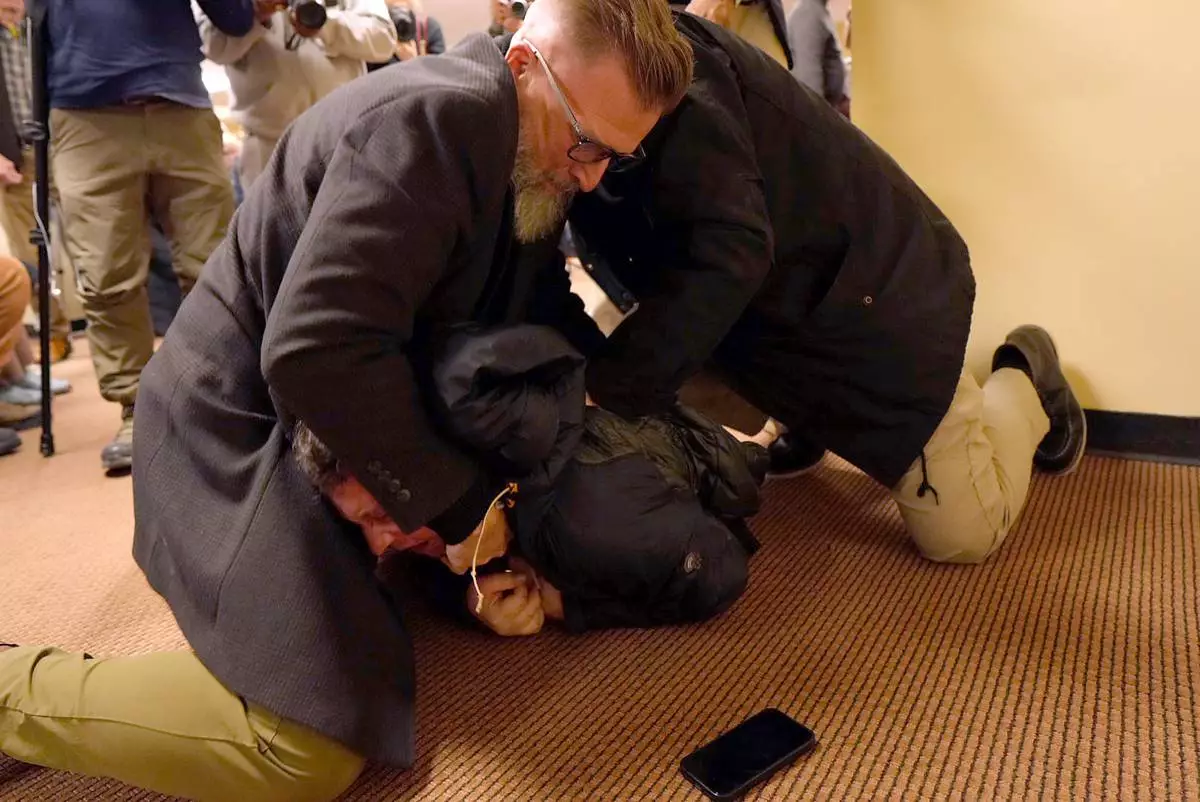
A man is tackled to the ground after spraying an unknown substance on U.S. Rep. Ilhan Omar, D-Minn., during a town hall on Tuesday, Jan. 27, 2026, in Minneapolis. (Richard Tsong-Taatarii/Star Tribune via AP)