Skip to Content Facebook Feature Image

Carney rolls his eyes at US Treasury secretary, says he told Trump he meant what he said at Davos

News

Carney rolls his eyes at US Treasury secretary, says he told Trump he meant what he said at Davos
News

News

Carney rolls his eyes at US Treasury secretary, says he told Trump he meant what he said at Davos

2026-01-28 05:03 Last Updated At:16:48

TORONTO (AP) — Canadian Prime Minister Mark Carney said Tuesday he told U.S. President Donald Trump that he meant what he said in his speech at Davos, and told him Canada plans to diversify away from the United States with a dozen new trade deals.

Carney rolled his eyes and rejected U.S. Treasury Secretary Scott Bessent’s contention to Fox News that he aggressively walked back his comments at the World Economic Forum during a phone call with Trump on Monday.

“To be absolutely clear, and I said this to the president, I meant what I said in Davos,” Carney said to reporters as he arrived for a Cabinet meeting in the capital, Ottawa.

“Canada was the first country to understand the change in U.S. trade policy that he initiated, and we’re responding to that. ”

In Davos at the World Economic Forum last week, Carney condemned economic coercion by great powers on smaller countries without mentioning Trump’s name. The prime minister received widespread praise and attention for his remarks, upstaging Trump at the gathering.

“The world has changed, Washington has changed. There is almost nothing normal in the U.S. now and that’s the truth,” Carney said in French in Parliament on Tuesday.

Trump threatened this past weekend to impose a 100% tariff on goods imported from Canada if America’s northern neighbor went ahead with a trade deal with Beijing, though Carney has said Canada has no interest in negotiating a comprehensive trade deal with Beijing.

Carney said Trump called him and that they spoke for a half hour.

“I explained to him our arrangement with China. I explained to him what we’re doing — 12 new deals, four continents, in six months,” Carney said. “He was impressed.”

Trump’s threat came amid an escalating war of words with Carney. The Republican president’s push to acquire Greenland strained the NATO alliance, alarming Canada, which shares a 3,000-kilometer (1,864 mile) maritime border with Greenland in the Arctic. Trump has also previously talked about making Canada the 51st state.

Carney has said his recent agreement with China merely cuts tariffs that were recently imposed on a few sectors. The prime minister plans to travel to India, Australia and other countries in an effort to diversify trade away from dependence on the U.S., which takes more than 75% of Canada's exports.

The United States-Mexico-Canada Agreement is up for renewal this year. Carney has set a goal for Canada to double its non-U.S. exports in the next decade.

Carney has emerged as a spokesman for a movement to link up countries and counter the U.S. under Trump. Speaking in Davos before Trump, Carney said, “Middle powers must act together because if you are not at the table, you are on the menu.”

Carney said he also spoke to Trump about Ukraine, Venezuela and Arctic security in his phone call.

Bessent said Carney spoke to Trump on Monday. The Treasury secretary told Fox News that Carney “was very aggressively walking back some of the unfortunate remarks he made at Davos.”

“Of course, Canada depends on the U.S.,” Bessent said. “There’s much more north-south trade than there could ever be east-west trade.”

Bessent said Canada is linked to the U.S. and that Carney should stop trying to “push his own globalist agenda.”

Dominic LeBlanc, Canada’s minister responsible for Canada-U.S. trade, has compared Canada's recent trade deal with China to an agreement Trump made with Chinese leader Xi Jinping in South Korea last summer in which the U.S. cut some tariffs on China while Beijing moved to allow rare earth exports and lift a pause on purchasing U.S. soy.

Trump’s push to acquire Greenland has come after he has repeatedly needled Canada over its sovereignty and suggested it also be absorbed into the United States. He posted an altered image on social media last week showing a map of the United States that included Canada, Venezuela, Greenland and Cuba as part of its territory.
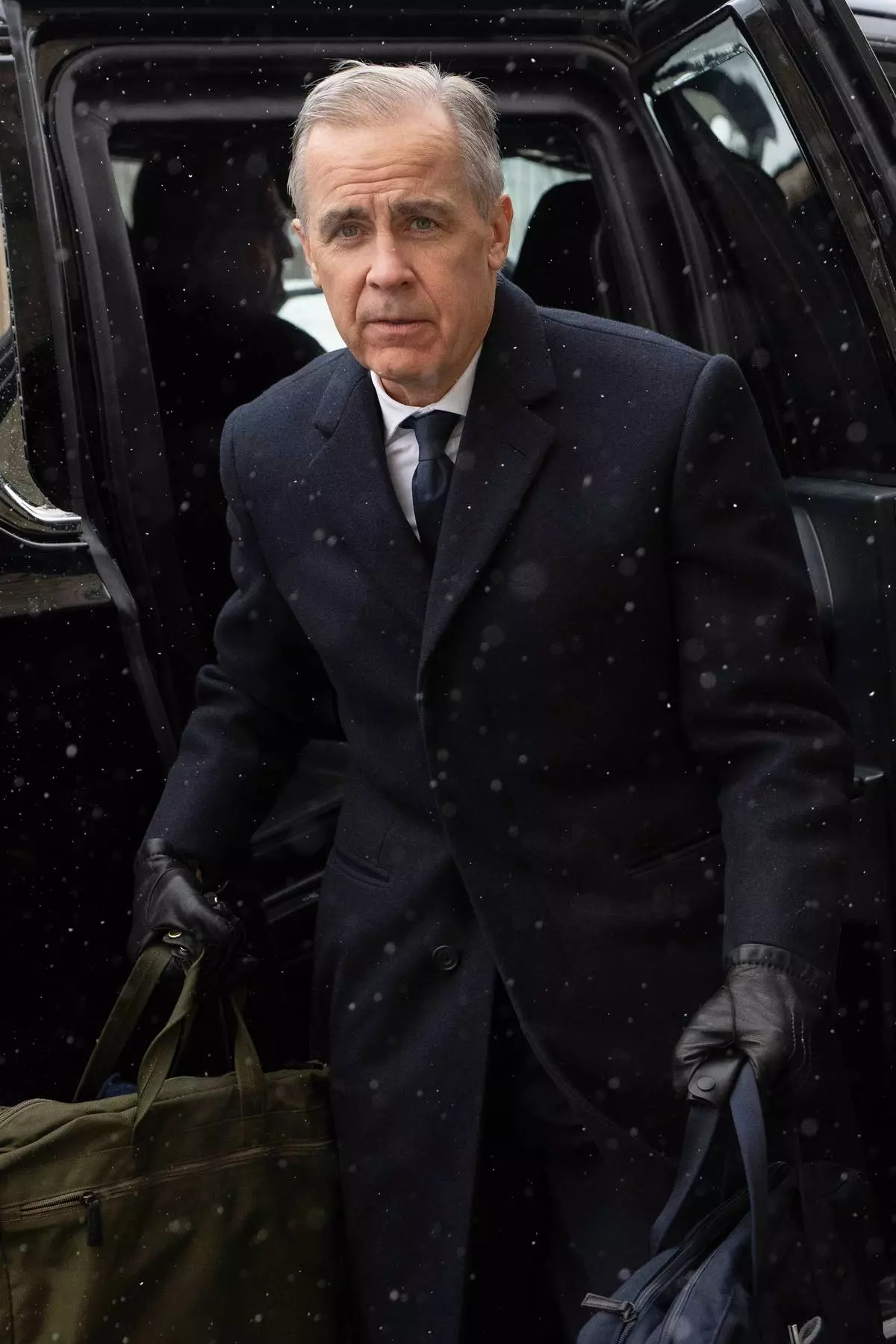
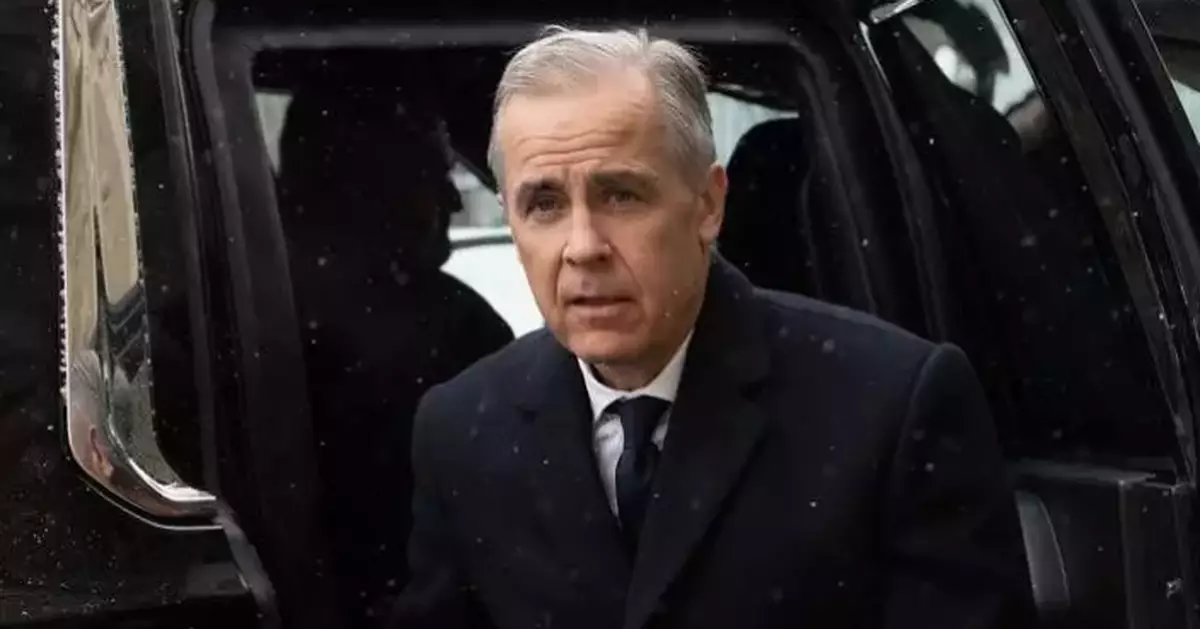
Canadian Prime Minister Mark Carney arrives by motorcade to Parliament Hill in Ottawa, Tuesday, Jan. 27, 2026. (Adrian Wyld/The Canadian Press via AP)
Canadian Prime Minister Mark Carney arrives by motorcade to Parliament Hill in Ottawa, Tuesday, Jan. 27, 2026. (Adrian Wyld/The Canadian Press via AP)
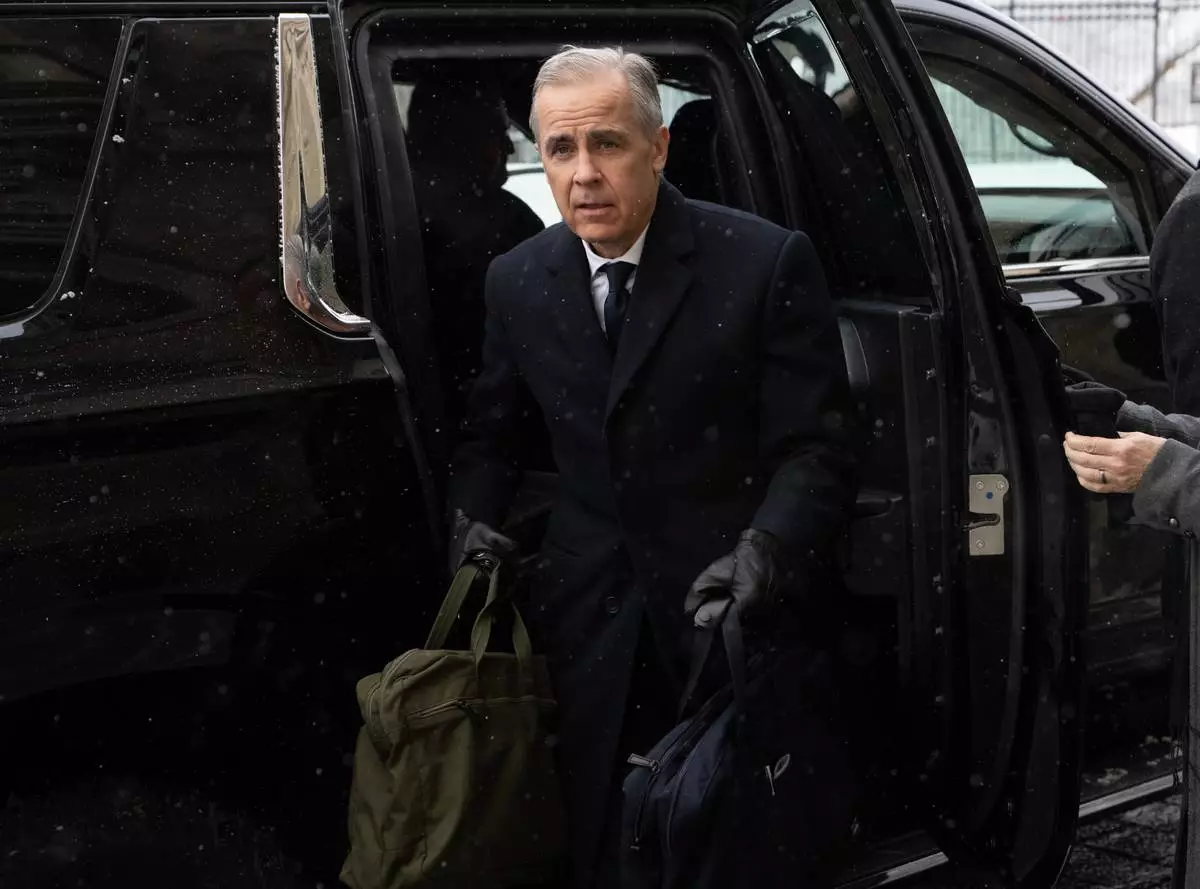
Canadian Prime Minister Mark Carney arrives by motorcade to Parliament Hill in Ottawa, Tuesday, Jan. 27, 2026. (Adrian Wyld/The Canadian Press via AP)

Canadian Prime Minister Mark Carney arrives by motorcade to Parliament Hill in Ottawa, Tuesday, Jan. 27, 2026. (Adrian Wyld/The Canadian Press via AP)

Canadian Prime Minister Mark Carney arrives by motorcade to Parliament Hill in Ottawa, Tuesday, Jan. 27, 2026. (Adrian Wyld/The Canadian Press via AP)

Canadian Prime Minister Mark Carney arrives by motorcade to Parliament Hill in Ottawa, Tuesday, Jan. 27, 2026. (Adrian Wyld/The Canadian Press via AP)

BOSTON (AP) — A federal judge has halted efforts by the Trump administration to collect data that proves higher education institutions aren’t considering race in admissions.

The ruling from U.S. District Court Judge F. Dennis Saylor IV in Boston on Friday granting the preliminary injunction follows a lawsuit filed earlier this month by a coalition of 17 Democratic state attorneys general. It will only apply to public universities in plaintiffs

The federal judge said the federal government likely has the authority to collect the data, but the demand was rolled out to universities in a “rushed and chaotic” manner.

“The 120-day deadline imposed by the President led directly to the failure of NCES (National Center for Education Statistics) to engage meaningfully with the institutions during the notice-and-comment process to address the multitude of problems presented by the new requirements,” Saylor wrote.

President Donald Trump ordered the data collection in August after he raised concerns that colleges and universities were using personal statements and other proxies to consider race, which he views as illegal discrimination.

In 2023, the Supreme Court ruled against the use of affirmative action in admissions but said colleges could still consider how race has shaped students’ lives if applicants share that information in their admissions essays.

The states argue the data collection risks invading student privacy and leading to baseless investigations of colleges and universities. They also argued that universities have not been given enough time to collect the data.

“The data has been sought in such a hasty and irresponsible way that it will create problems for universities,” a lawyer for the plaintiffs, Michelle Pascucci, told the court, adding that the effort seem was aimed at uncovering unlawful practices.

The Education Department has defended the effort, arguing taxpayers deserve transparency on how money is spent at institutions that receive federal funding.

The administration's policy echoes settlement agreements the government negotiated with Brown University and Columbia University, restoring their federal research money. The universities agreed to give the government data on the race, grade-point average and standardized test scores of applicants, admitted students and enrolled students. The schools also agreed to be audited by the government and to release admissions statistics to the public.

The National Center for Education Statistics is to collect the new data, including the race and sex of colleges’ applicants, admitted students and enrolled students. Education Secretary Linda McMahon has said the data, which was originally due by March 18, must be disaggregated by race and sex and retroactively reported for the past seven years.

If colleges fail to submit timely, complete and accurate data, the administration has said McMahon can take action under Title IV of the Higher Education Act of 1965, which outlines requirements for colleges receiving federal financial aid for students.

The Trump administration separately has sued Harvard University over similar data, saying it refused to provide admissions records the Justice Department demanded to ensure the school stopped using affirmative action. Harvard has said the university has been responding to the government’s requests and is in compliance with the high court ruling against affirmative action. On Monday, the Education Department's Office for Civil Rights directed Harvard to comply with the data requests within 20 days for face referral to the U.S. Justice Department.

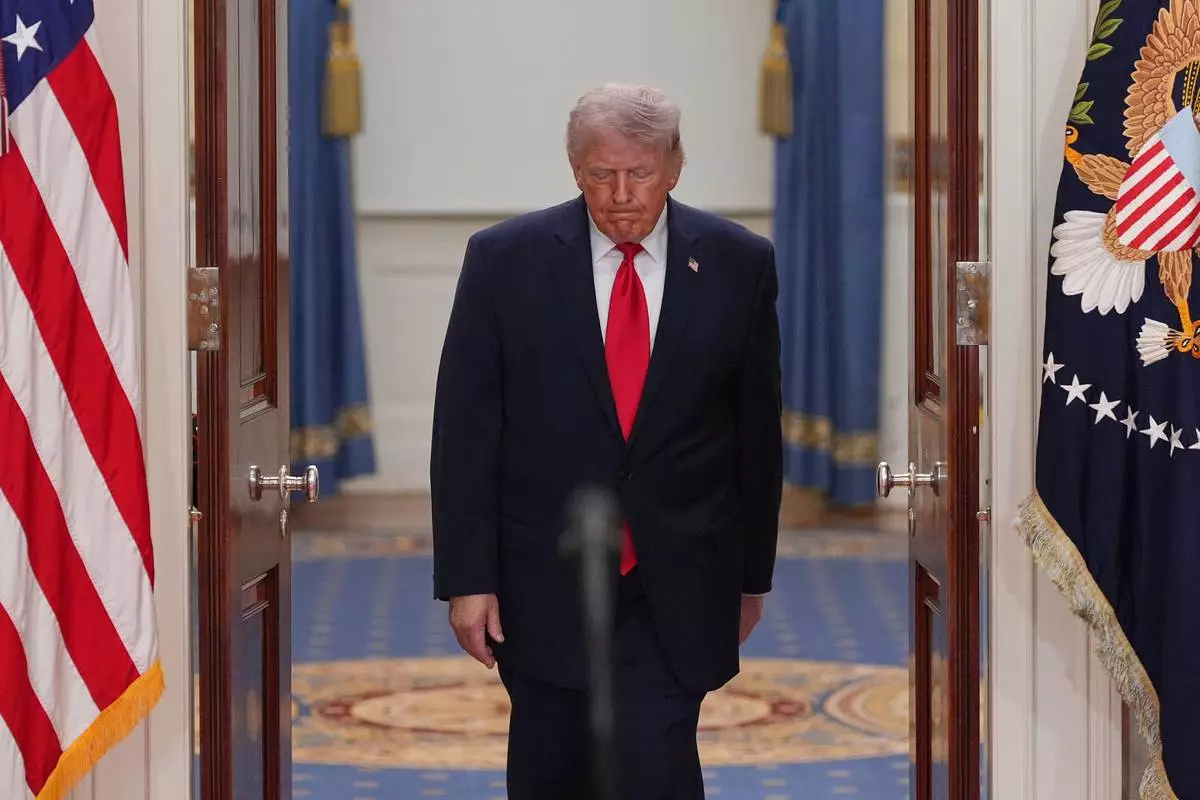
President Donald Trump arrives to speak about the Iran war from the Cross Hall of the White House on Wednesday, April 1, 2026, in Washington. (AP Photo/Alex Brandon, Pool)

President Donald Trump arrives to speak about the Iran war from the Cross Hall of the White House on Wednesday, April 1, 2026, in Washington. (AP Photo/Alex Brandon, Pool)

Recommended Articles