Skip to Content Facebook Feature Image

Maine plane crash victims include event planner and corporate pilot

News

Maine plane crash victims include event planner and corporate pilot
News

News

Maine plane crash victims include event planner and corporate pilot

2026-01-28 07:17 Last Updated At:07:20

PORTLAND, Maine (AP) — As snow from a massive storm began to fall in Bangor, Maine, on Sunday night, six people who had stopped to refuel a Paris-bound luxury jet prepared for takeoff. None would survive the crash that followed, the cause of which remains unknown.

A departing plane ahead of them radioed to the tower that visibility wasn’t great and they chose not to fly, but the winds were relatively mild and the snow, powdery and fine in the near-zero temperatures, had accumulated only a dusting. Airport officials say the plane went through the standard de-icing process and got in line with other jets that took off safely.

The plane, however, crashed during takeoff, leaving the jet burning and inverted on the tarmac, killing everyone on board. Among them a corporate pilot who was recently hired at the Texas law firm linked to the plane, and an event planner who had worked with the firm on previous occasions.

Lakewood Church in Houston, run by Joel Osteen Ministries, confirmed on Tuesday that longtime employee Shawna Collins, 53, was among those killed. Collins’ social media posts show her work organizing parties and events in Italy, Hawaii and elsewhere, for clients that included Arnold and Itkin Trial Lawyers, the Houston law firm whose co-founder is listed on the plane’s registration.

“Everybody loved her. She just had that kind of personality,” church spokesperson Donald Iloff Jr. told The Associated Press on Tuesday.

The family of pilot Jacob Hosmer, 47, confirmed his death on Tuesday but declined to comment. Hosmer started working for Arnold and Itkin seven months ago as a “team captain,” according to his LinkedIn page. He had been a licensed flight instructor and the managing member of Platinum Skies Aviation LLC, incorporated in Texas in late 2024, online records show.

A founding partner of the firm is listed as the agent for the company that owns the plane. The personal injury firm — whose partners are major donors to the University of Texas football and other causes — has so far declined to identify the passengers or comment on the crash.

The National Transportation Safety Board on Tuesday began its investigation while Bangor International Airport remained closed to preserve the scene where the two crew and four passengers aboard the plane died in the Sunday evening crash.

Collins, who was married with children and grandchildren, had also been helping plan her daughter’s wedding set for this year, Iloff said.

“She was very good at it. Everybody wanted her to plan her events for them,” he said.

The church, in a statement, called Collins “a light that brightened our days."

The Bombardier Challenger 600 flipped over and burned on takeoff at around 7:45 p.m. after stopping along its journey from Houston to Paris to refuel. It remained unclear on Tuesday if the weather or cold played a role in the crash as investigators were just beginning their work.

Bangor police were waiting for the NTSB to allow them to access the plane to identify the victims and, with the state coroner's office, care for their bodies.

Dozens of scheduled flights had been impacted, the airport said.

The FAA, in an updated accident statement on Tuesday, said the plane “crashed under unknown circumstances on departure, came to rest inverted and caught on fire.”

The international airport in Bangor, about 200 miles (320 kilometers) north of Boston, is one of the closest in the U.S. to Europe and is often used to refuel private jets flying overseas. The Bombardier was headed for France when it crashed.

NTSB officials said they would have an update on Wednesday. A preliminary report outlining the facts of the crash should be released in about a month, but the final version likely won't be published for more than a year.

The Bombardier Challenger 600 is a wide-bodied business jet configured for nine to 11 passengers. It was launched in 1980 as the first private jet with a “walk-about cabin” and remains a popular charter option, according to aircharterservice.com.

Experts say the weather and questions about whether ice accumulating on the wings kept the plane from getting airborne — as has happened at least twice before on that plane model — will likely be an initial focus by the NTSB. However, the agency will consider all possible factors.

“Nothing is off the table,” said John Cox, CEO of Safety Operating Systems.

The Bombardier Challenger 600 model crashed in Birmingham, England; and Montrose, Colorado, more than 20 years ago, aviation safety consultant Jeff Guzzetti said.

“Given the weather conditions at the time, and the history of wind contamination with this particular aircraft, I’m sure that’s something the NTSB is going to look into immediately,” Guzzetti said.

Funk contributed from Omaha, Nebraska and Dale reported from Philadelphia.

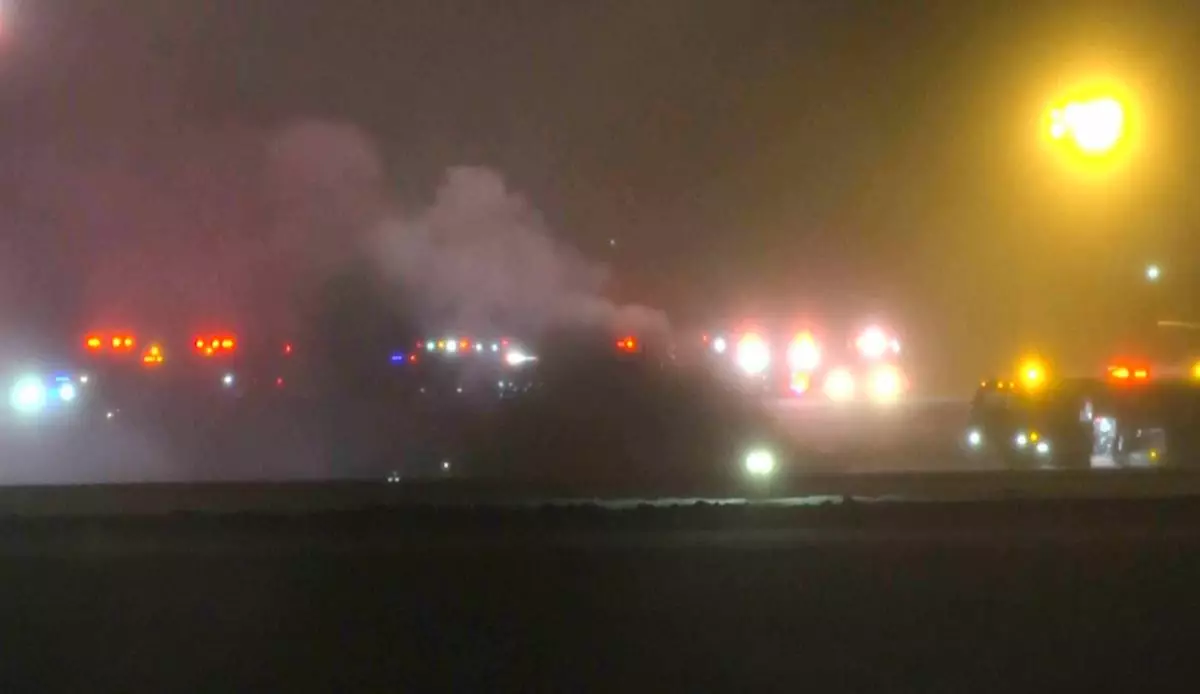
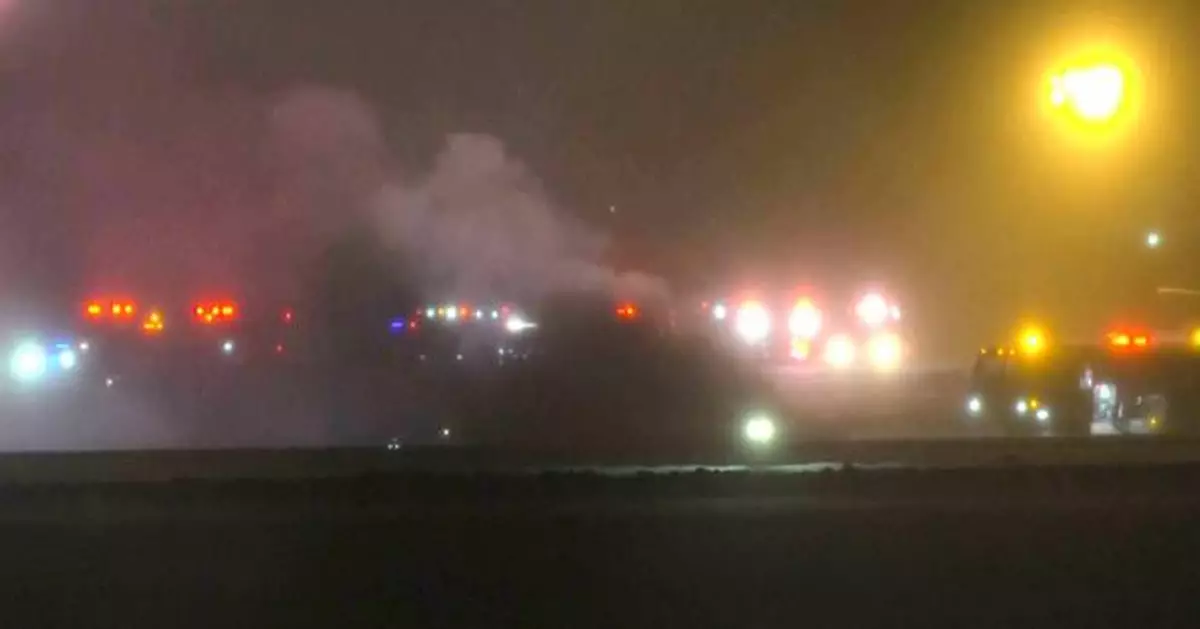
This image taken from video provided by WABI television, emergency services work on a scene of the Bombardier Challenger 600 crash at the Bangor Airport in Maine, late Sunday, Jan. 25, 2026. (WABI via AP)

This image taken from video provided by WABI television, emergency services work on a scene of the Bombardier Challenger 600 crash at the Bangor Airport in Maine, late Sunday, Jan. 25, 2026. (WABI via AP)

WASHINGTON (AP) — National Transportation Safety Board members were deeply troubled Tuesday over years of ignored warnings about helicopter traffic dangers and other problems, long before an American Airlines jet and an Army Black Hawk collided a year ago, killing 67 people near Washington, D.C.

The placement of a helicopter route in the approach path of Reagan National Airport's secondary runway without regularly reviewing it was a key factor causing the crash along with air traffic controllers' over reliance on asking pilots to avoid other aircraft. Throughout the daylong hearing, investigators emphasized the history of missed opportunities to address the risks related to helicopter traffic.

“I’m sorry for you, as these pages of these reports are written in your family members' blood,” board member Todd Inman told the audience. “I’m sorry that we have to be here.”

Family members listened intently during the hearing. Some were escorted out, including two in tears, as an animation of the flights was displayed on video screens. Others wore black shirts bearing the names of first responder units.

“The negligence of not fixing things that needed to be fixed killed my brother and 66 other people. So I’m not very happy,” Kristen Miller-Zahn, who watched from the front row, said during a break.

Victims' families say they hope there’s meaningful change in response to the NTSB's recommendations.

Before hearing from investigators, Inman said “systemic issues across multiple organizations,” not an error by any individual, caused the tragedy.

Everyone aboard the jet, flying from Wichita, Kansas, and the helicopter died when the two aircraft collided and plummeted into the icy Potomac River. It was the deadliest plane crash on U.S. soil since 2001, and the victims included 28 members of the figure skating community.

The Federal Aviation Administration last week made some changes permanent to ensure helicopters and planes no longer share the same airspace around the airport.

NTSB chairwoman Jennifer Homendy said she couldn’t believe the FAA didn’t realize the helicopter route in use during the crash didn’t provide adequate separation from planes landing on Reagan’s secondary runway. She noted that the FAA had refused to add detailed information about helicopter routes to pilots' charts so they could better understand the risks, and it wouldn't change the helicopter route even after a near miss in 2013.

“We know over time concerns were raised repeatedly, went unheard, squashed — however you want to put it — stuck in red tape and bureaucracy of a very large organization,” Homendy said. “Repeated recommendations over the years.”

Mary Schiavo, a former U.S. Department of Transportation Inspector General, said it's troubling to hear how many times the FAA failed to act.

“It was just a shocking dereliction of duty by the FAA. And they have so much work to be done to fix it. And just from my background, I don’t know if the people there are up to it,” Schiavo said.

But just Monday, Transportation Secretary Sean Duffy announced a plan to reorganize the FAA and create one single safety office that can track concerns agencywide and enforce the same standards instead of the fragmented approach taken by different silos within FAA.

NTSB investigators said the Army and FAA weren’t sharing all safety data with each other before the crash, and that Army helicopter pilots often weren’t even aware when they were involved in a near-miss around Reagan.

NTSB human performance investigator Katherine Wilson said an air traffic controller felt a “little overwhelmed” when traffic volume increased to 10 aircraft about 10 to 15 minutes before the collision, but then “felt the volume was manageable when one or two helicopters left the airspace.”

Yet about 90 seconds before the collision, Wilson said, “traffic volume increased to a maximum of 12 aircraft consisting of seven airplanes and five helicopters. Radio communication showed that the local controller was shifting focus between airborne, ground and transiting aircraft.”

The workload “reduced his situational awareness,” Wilson said.

NTSB investigators showed a video animation to demonstrate how difficult it would have been for the pilots in both aircraft to spot the other amid the lights of Washington. The animation also showed how the windshields of both aircraft and the helicopter crew’s night vision goggles restricted views.

Ahead of the hearing, Rachel Feres, who lost her cousin Peter Livingston and his wife and two young daughters, said she was hoping for “clarity and urgency” from the NTSB process.

No one else, she said, should have to “wake up to hear that an entire branch of their family tree is gone, or their wife is gone or the child is gone.”

Whether that happens depends on how Congress, the Army and the Trump administration respond after the hearing. A bill, that Homendy has endorsed, would require aircraft to have advanced locator systems to help avoid collisions. The senators who introduced it have said they believe their proposal would address many of the concerns NTSB raised over the past year.

Even before Tuesday, the NTSB had already spelled out many key factors that contributed to the crash. Investigators said controllers in the Reagan tower had been overly reliant on asking pilots to spot other aircraft and maintain visual separation.

The night of the crash, the controller approved the Black Hawk's request to do that twice. However, the investigation has shown that the helicopter pilots likely never spotted the American Airlines plane as the jet circled to land on the little-used secondary runway.

In a statement, the FAA said safety remains its top priority. It has reduced hourly plane arrivals at Reagan airport from 36 to 30 and worked to increase staff in the tower. The agency said it has 22 certified controllers in the tower and eight more in training.

“We will diligently consider any additional recommendations” from the NTSB, the FAA said.

Several high-profile crashes and close calls followed the D.C. collision, alarming the flying public. But NTSB statistics show that the total number of crashes last year was the lowest since the COVID-19 pandemic hit in 2020, with 1,405 nationwide.

Funk reported from Omaha, Nebraska, and White reported from Detroit.

National Transportation Safety Board (NTSB) investigators William Bramble, from left, Captain Van McKenny and Caleb Wagner speak during the hearing on the midair aircraft collision that killed 67 people near Washington Reagan National Airport, in Washington, Tuesday, Jan. 27, 2026. (AP Photo/Jose Luis Magana)

National Transportation Safety Board (NTSB) investigators William Bramble, from left, Captain Van McKenny and Caleb Wagner speak during the hearing on the midair aircraft collision that killed 67 people near Washington Reagan National Airport, in Washington, Tuesday, Jan. 27, 2026. (AP Photo/Jose Luis Magana)

People attend the National Transportation Safety Board (NTSB) hearing on the midair aircraft collision that killed 67 people near Washington Reagan National Airport, at the National Transportation and Safety Board boardroom in Washington, Tuesday, Jan. 27, 2026. (AP Photo/Jose Luis Magana)

People attend the National Transportation Safety Board (NTSB) hearing on the midair aircraft collision that killed 67 people near Washington Reagan National Airport, at the National Transportation and Safety Board boardroom in Washington, Tuesday, Jan. 27, 2026. (AP Photo/Jose Luis Magana)

National Transportation Safety Board (NTSB) Chairwoman Jennifer Homendy presides over a NTSB hearing on the midair aircraft collision that killed 67 people near Washington Reagan National Airport, in Washington, Tuesday, Jan. 27, 2026. (AP Photo/Jose Luis Magana)

National Transportation Safety Board (NTSB) Chairwoman Jennifer Homendy presides over a NTSB hearing on the midair aircraft collision that killed 67 people near Washington Reagan National Airport, in Washington, Tuesday, Jan. 27, 2026. (AP Photo/Jose Luis Magana)

People attend the National Transportation Safety Board (NTSB) hearing on the midair aircraft collision that killed 67 people near Washington Reagan National Airport, in Washington, Tuesday, Jan. 27, 2026. (AP Photo/Jose Luis Magana)

People attend the National Transportation Safety Board (NTSB) hearing on the midair aircraft collision that killed 67 people near Washington Reagan National Airport, in Washington, Tuesday, Jan. 27, 2026. (AP Photo/Jose Luis Magana)

People attend the National Transportation Safety Board (NTSB) hearing on the midair aircraft collision that killed 67 people near Washington Reagan National Airport, in Washington, Tuesday, Jan. 27, 2026. (AP Photo/Jose Luis Magana)

People attend the National Transportation Safety Board (NTSB) hearing on the midair aircraft collision that killed 67 people near Washington Reagan National Airport, in Washington, Tuesday, Jan. 27, 2026. (AP Photo/Jose Luis Magana)

National Transportation Safety Board (NTSB) Chairwoman Jennifer Homendy presides over the NTSB fact-finding hearing on the DCA midair collision accident, at the National Transportation and Safety Board boardroom in Washington, Tuesday, Jan. 27, 2026. (AP Photo/Jose Luis Magana)

National Transportation Safety Board (NTSB) Chairwoman Jennifer Homendy presides over the NTSB fact-finding hearing on the DCA midair collision accident, at the National Transportation and Safety Board boardroom in Washington, Tuesday, Jan. 27, 2026. (AP Photo/Jose Luis Magana)

National Transportation Safety Board (NTSB) Chairwoman Jennifer Homendy presides over the NTSB fact-finding hearing on the DCA midair collision accident, at the National Transportation and Safety Board boardroom in Washington, Tuesday, Jan. 27, 2026. (AP Photo/Jose Luis Magana)

National Transportation Safety Board (NTSB) Chairwoman Jennifer Homendy presides over the NTSB fact-finding hearing on the DCA midair collision accident, at the National Transportation and Safety Board boardroom in Washington, Tuesday, Jan. 27, 2026. (AP Photo/Jose Luis Magana)

Materials Engineer Mike Meadows looks at training samples on a microelectronic microscope in the Materials Laboratory of the National Transportation Safety Board (NTSB), Tuesday, Jan. 20, 2026, in Washington. (AP Photo/Jacquelyn Martin)

Materials Engineer Mike Meadows looks at training samples on a microelectronic microscope in the Materials Laboratory of the National Transportation Safety Board (NTSB), Tuesday, Jan. 20, 2026, in Washington. (AP Photo/Jacquelyn Martin)

Jennifer Homendy, chair of the National Transportation Safety Board (NTSB), speaks with journalists during a tour of the NTSB's laboratories, Tuesday, Jan. 20, 2026, in Washington. (AP Photo/Jacquelyn Martin)

Jennifer Homendy, chair of the National Transportation Safety Board (NTSB), speaks with journalists during a tour of the NTSB's laboratories, Tuesday, Jan. 20, 2026, in Washington. (AP Photo/Jacquelyn Martin)

FILE - Rescue and salvage crews pull up a part of a Army Black Hawk helicopter that collided midair with an American Airlines jet, at a wreckage site in the Potomac River from Ronald Reagan Washington National Airport, Feb. 6, 2025, in Arlington, Va. (AP Photo/Jose Luis Magana, File)

FILE - Rescue and salvage crews pull up a part of a Army Black Hawk helicopter that collided midair with an American Airlines jet, at a wreckage site in the Potomac River from Ronald Reagan Washington National Airport, Feb. 6, 2025, in Arlington, Va. (AP Photo/Jose Luis Magana, File)

FILE - Crosses are seen at a makeshift memorial for the victims of the plane crash in the Potomac River near Ronald Reagan Washington National Airport, Jan. 31, 2025, in Arlington, Va. (AP Photo/Jose Luis Magana, File)

FILE - Crosses are seen at a makeshift memorial for the victims of the plane crash in the Potomac River near Ronald Reagan Washington National Airport, Jan. 31, 2025, in Arlington, Va. (AP Photo/Jose Luis Magana, File)

Recommended Articles