JACKSON, Miss. (AP) — Conditions were growing more dire in parts of the South still reeling from subfreezing temperatures and widespread power outages as vehicles got stranded for hours on major highways and officials warned Wednesday that people stuck at home were running out of food, medicine and other essentials.
Mississippi dispatched 135 snowplows and National Guard troops equipped with wreckers to sections of Interstates 55 and 22 gridlocked by vehicles abandoned in the state's ice-stricken northern region. Tens of thousands of homes and businesses remained without power as cold daytime temperatures sunk below freezing overnight in a region unaccustomed and ill-equipped for such weather.
Click to Gallery
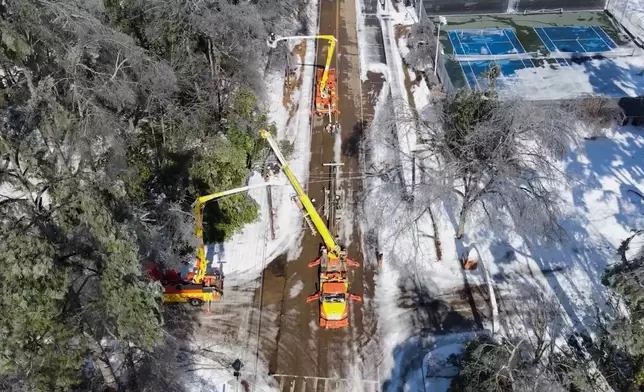
This image taken from a video released by the city of Oxford, Miss., shows crews working on power lines Tuesday, Jan. 27, 2026. (City of Oxford Mississippi via AP)
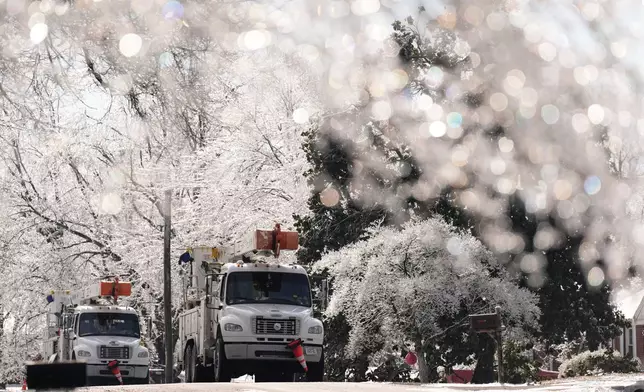
Utility trucks are seen through ice covered trees Wednesday, Jan. 28, 2026, in Nashville, Tenn. after a winter storm passed through area over the weekend. (AP Photo/George Walker IV)
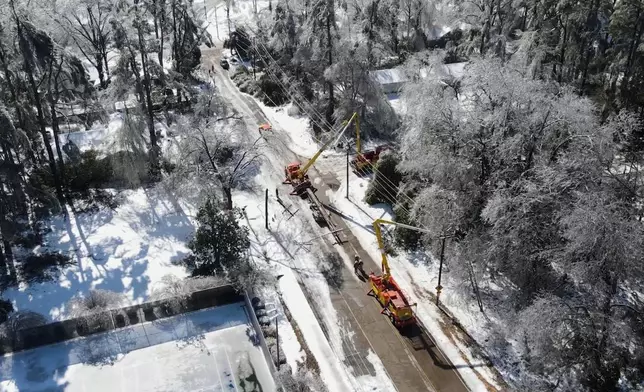
This image taken from a video released by the city of Oxford, Miss., shows crews working on power lines Tuesday, Jan. 27, 2026. (City of Oxford Mississippi via AP)
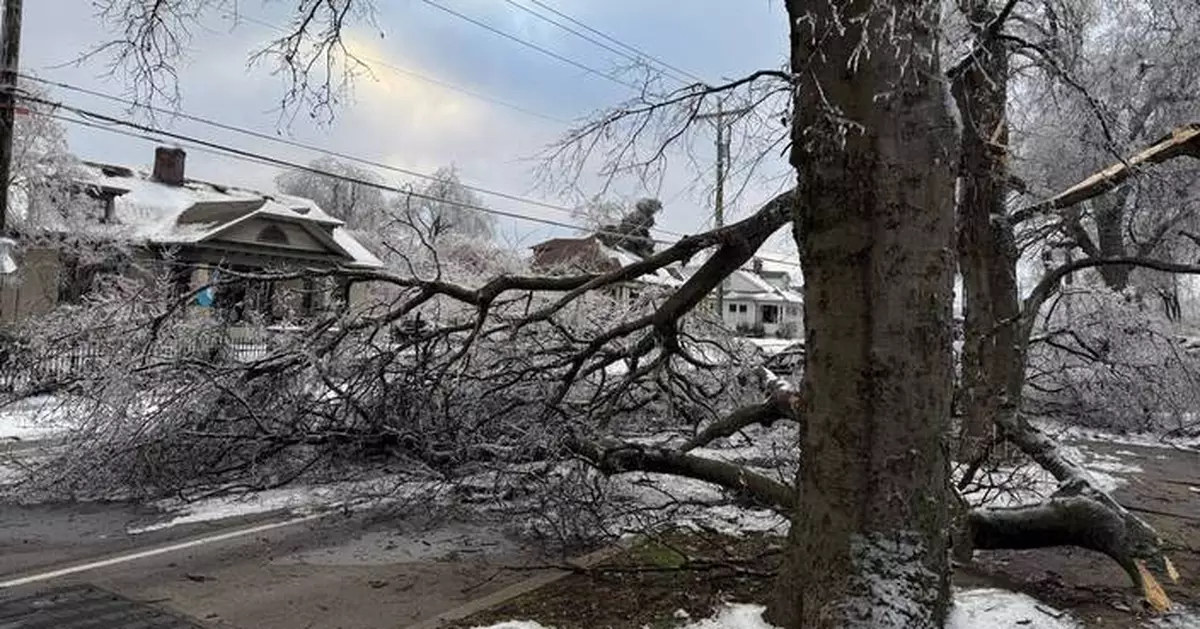
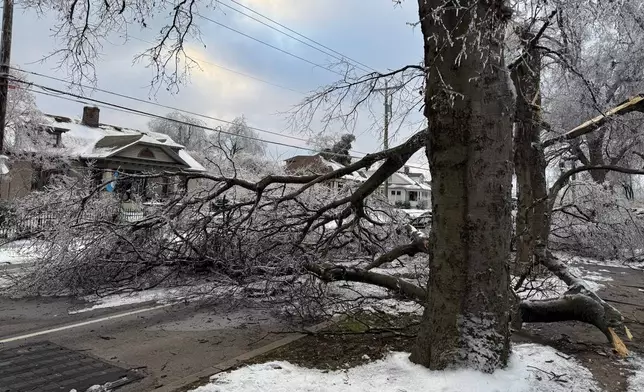
A tree blocks the road days after an ice storm in Nashville, Tenn., on Tuesday, Jan. 27, 2026. (AP Photo/Travis Loller)
Cars and semitrucks trying to navigate the frozen highways single-file began getting stuck Tuesday. No injuries were reported, the Mississippi Department of Public Safety said. But one driver told The Associated Press she feared she might freeze to death on I-22 when her car sat idle for more than 14 hours.
“There was nowhere to go, nothing to do, no one to save us," said Samantha Lewis, 78.
The growing misery and anxiety comes amid what Mississippi officials say is the state’s worst winter storm in more than 30 years.
Roughly 332,000 homes and businesses remained without power Wednesday, the vast majority of them in Tennessee and Mississippi. At least 70 people have died across the U.S. in states afflicted by the dangerous cold.
In Hardin County, Tennessee, at the Mississippi state line, many people remain trapped in homes without electricity because of roads made impassable by ice and fallen trees, said LaRae Sliger, the county’s emergency management director.
Sliger said people who were prepared to manage a couple of days without power can't go much longer without help.
“They’re cold, they don’t have power, they don’t have heat, they’re out of propane, they’re out of wood, they’re out of kerosene for their kerosene heaters,” she said. “They have no food, they have no additional fuel for their alternative heating sources, so they’re needing out.”
In northeast Mississippi, emergency managers in Alcorn County were also receiving “calls of desperation” from people running out of food, water, medication and other supplies, said Evan Gibens, the emergency agency’s director. He said dispatchers who have been sleeping at work since Friday have fielded more than 2,000 calls.
“We are doing everything we possibly can,” said Gibens, noting 200 people were staying at a local arena being used as a warming shelter.
More than 100,000 outages remained in Nashville, Tennessee, where downed trees and snapped power lines blocked access to some areas. Utility workers will need at least the weekend, if not longer, to finish restoring power, said Brent Baker, a Nashville Electric Service vice president.
Forecasters say the subfreezing weather will persist in the eastern U.S. into February, with a new influx of arctic air arriving this weekend. There's a growing chance for heavy snow in the Carolinas and Virginia.
The National Weather Service said chances of additional, significant snowfall are low in places like Nashville, but weekend temperatures will reach dangerously low single digits with wind chills below zero.
The impasse on Mississippi interstates began Tuesday when drivers began using single lanes the state's transportation agency had tried to keep open for emergency vehicles. Cars and semitrucks began getting stuck, Department of Transportation spokesperson David Kenney said.
The blocked highways were making it harder for authorities to distribute emergency supplies. Scott Simmons, spokesperson for the Mississippi Emergency Management Agency, said its drivers were having to find alternate routes to avoid the backups.
Lewis said she and a friend, Catherine Muldoon, were driving through Mississippi on a trip from Florida to Oklahoma when they got stuck on I-22 at about noon Tuesday. Cars and trucks were backed up in a single lane.
For hours, they would turn on the car for 15 minutes to warm up and then shut it off for 45 minutes to conserve fuel. Finally at about 3:30 a.m. Wednesday, they followed a pickup truck on one of the ice-covered, traffic-free lanes and reached a gas station.
“It was extremely frightening,” Muldoon said. “If we didn’t have the blankets and clothing that we had, it would have been dire straits.”
All passenger vehicles were cleared from the frozen highways by 3 a.m. Wednesday, according to the Mississippi Department of Public Safety. But there remained long lines of commercial trucks still awaiting removal hours later.
In the small community of Red Banks, Mississippi, local authorities were asking people with all-terrain vehicles to bring water, food, blankets or gas to stranded motorists, said Lacey Clancy, who works at a cafe near I-22 and neighboring Highway 178.
“The highway kind of looks like a parking lot,” Clancy said in a phone interview. “A lot of people have run out of gas, abandoned their vehicles.”
Angie Gresham, who lives in nearby Holly Springs, Mississippi, said hundreds of stranded vehicles were lining I-22 as well as streets in the city. She said stranded truck drivers were searching for stores and restaurants that had power.
“They’re just trying to survive,” Gresham said.
Bynum reported from Savannah, Georgia. Martin reported from Atlanta. Associated Press writers Adrian Sainz in Memphis, Tennessee; Jeff Amy in Atlanta; Jonathan Mattise in Nashville, Tennessee, and Sarah Brumfield in Washington contributed to this report.
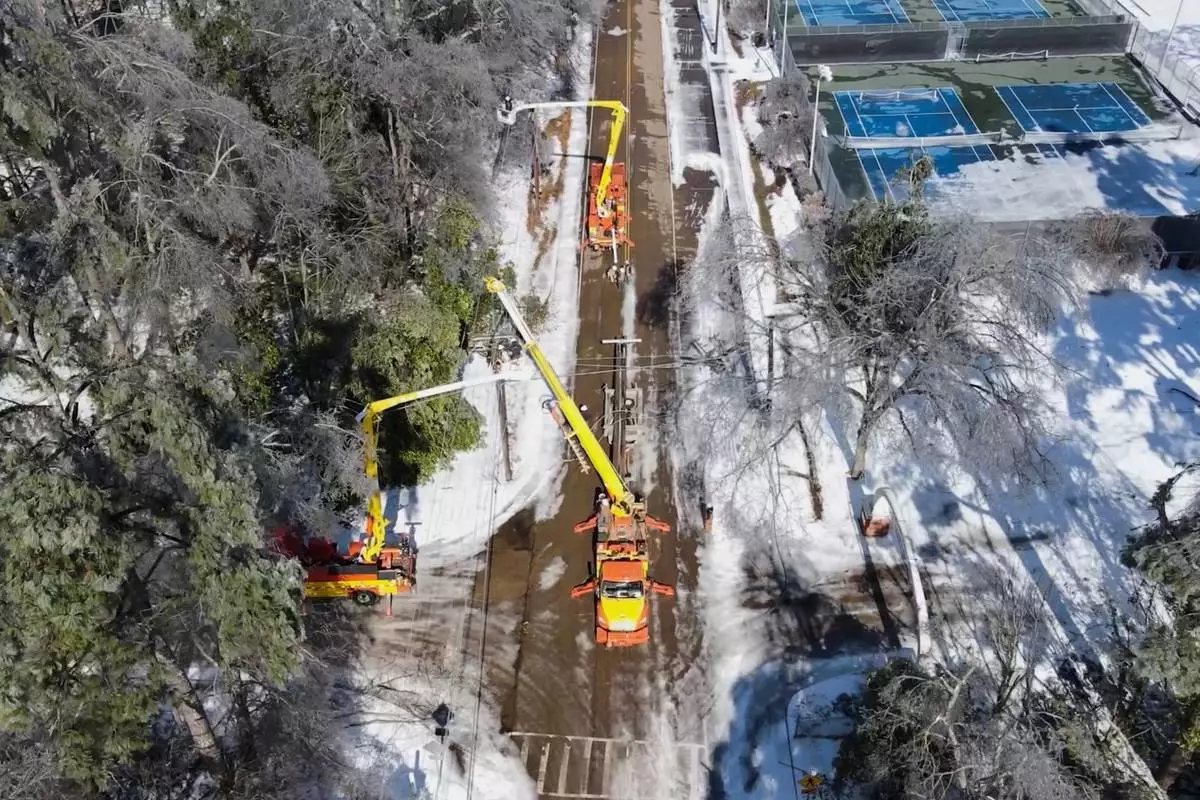
This image taken from a video released by the city of Oxford, Miss., shows crews working on power lines Tuesday, Jan. 27, 2026. (City of Oxford Mississippi via AP)
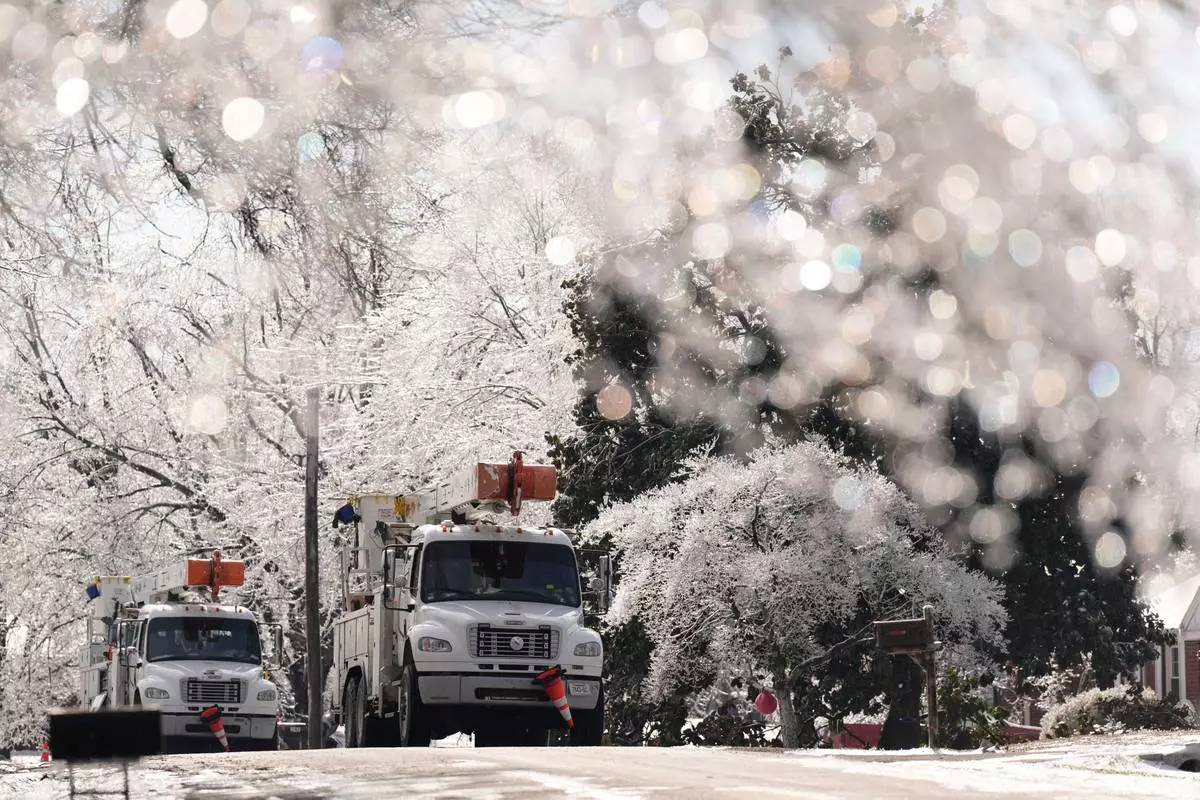
Utility trucks are seen through ice covered trees Wednesday, Jan. 28, 2026, in Nashville, Tenn. after a winter storm passed through area over the weekend. (AP Photo/George Walker IV)
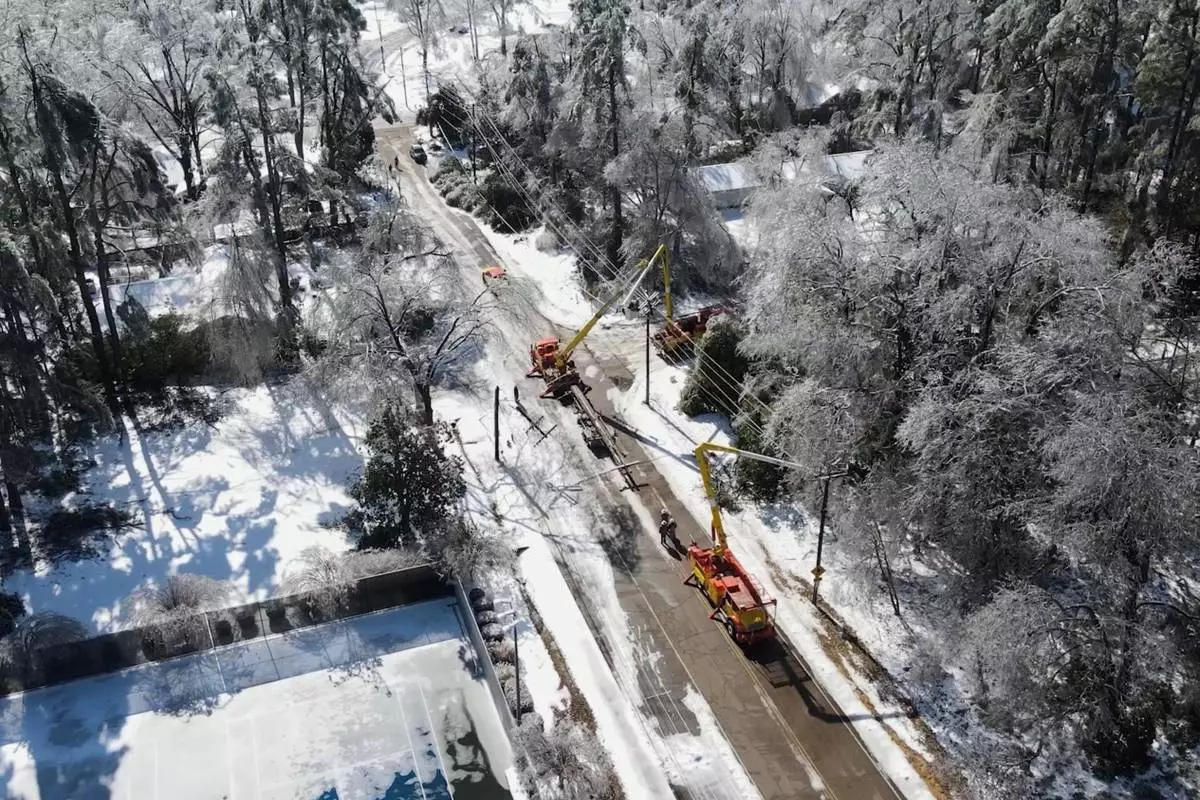
This image taken from a video released by the city of Oxford, Miss., shows crews working on power lines Tuesday, Jan. 27, 2026. (City of Oxford Mississippi via AP)
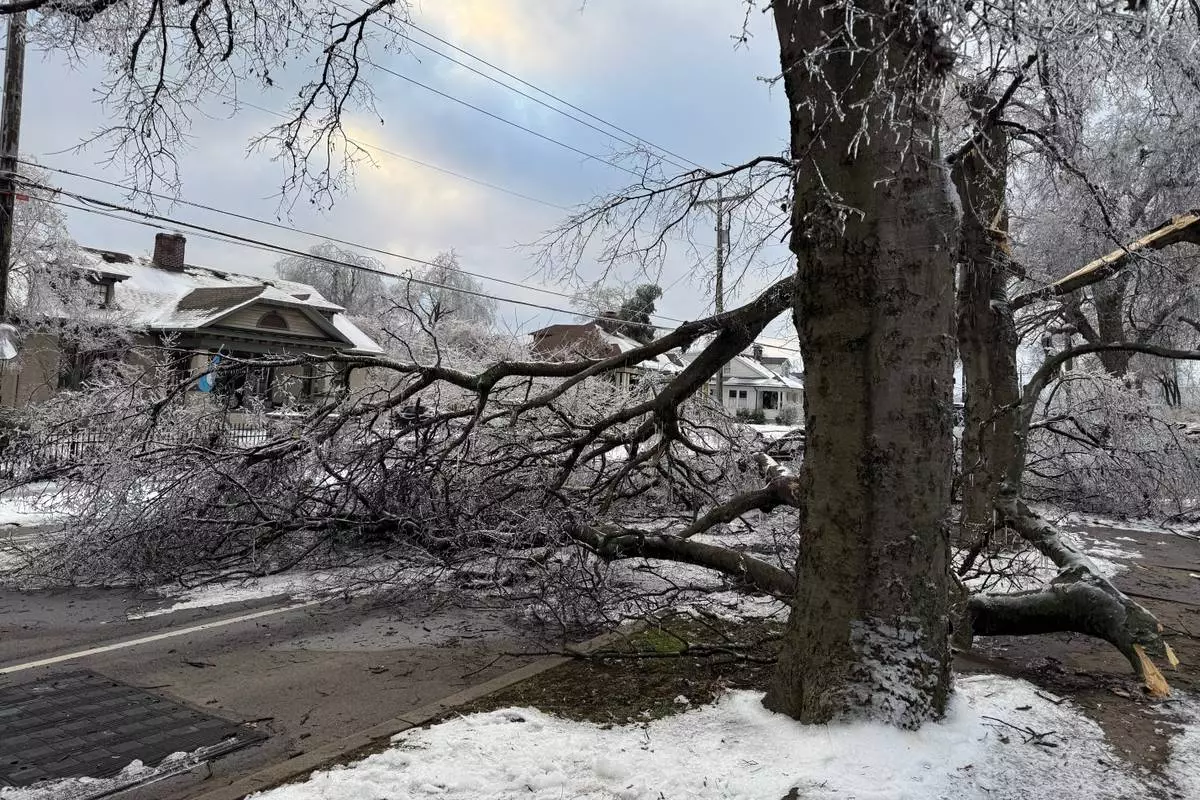
A tree blocks the road days after an ice storm in Nashville, Tenn., on Tuesday, Jan. 27, 2026. (AP Photo/Travis Loller)
NEW YORK (AP) — On a recent weeknight, three tenants of an aging Bronx building were trading apartment horror stories inside a packed ballroom lined with city bureaucrats.
The occasion was the third in a series of “rental rip-off hearings,” a new forum launched by New York Mayor Zohran Mamdani for disgruntled renters to air their complaints directly to housing officials — and in some cases, the mayor himself.
As she waited in line, Gulhayo Yuldosheva said she worried that noxious mold in her apartment had worsened her child’s asthma. Nearby, her downstairs neighbor, Marina Quiroz, was showing a video of rats scurrying through her kitchen to a representative of the city’s tenant protection office.
Ann Maitin, a longtime resident of the same building, had just met with the mayor.
“He let me go over my three minutes,” she said, holding up a spiral notebook’s worth of grievances.
Mamdani, a democratic socialist swept into office on a promise of zealous tenant advocacy, framed the event as a struggle session for renters, assuring the standing room only crowd that their stories would guide the city's efforts “to actually hold landlords accountable when they don’t follow the law."
To the residents of 705 Gerard Avenue, this raised a practical problem: No one seemed to know who actually owned their building.
“It feels like such a basic question,” said Maitin, a retired Verizon technician who recently organized the building’s tenant association. “You’d think we’d have the right to that information.”
Their situation is hardly unique. As corporate owners and investor groups have grown their share of the rental market in New York City, they are increasingly shielding their identities behind limited liability companies, or LLCs.
The practice, which has also been spreading nationally, is legal. But experts warn it could complicate Mamdani’s promised crackdown, making it harder for the city and tenants to track the chronically negligent owners whose buildings the mayor has vowed to target and even seize.
“There are these big slumlords that everyone knows are doing predatory investment, but pinning them down is going to be difficult, for the LLC reason,” said Oksana Mironova, a housing policy analyst at the Community Service Society. “That’s a problem for the administration, and it’s even worse for tenants.”
For Yuldosheva and her neighbors, finding their landlord is one of many problems afflicting their six-story building near Yankee Stadium.
Heat and hot water outages are regular enough that some tenants keep a thermometer on their fridge and the city’s complaint hotline on speed dial. Common areas are often filthy, and increasingly populated by drug users. Getting help with an urgent maintenance issue “feels like waiting for Christmas in July,” said Maitin.
During a monthslong elevator outage, a tenant who uses a wheelchair, Tommy Rodriguez, said he was forced to “slide down the steps, like a kid.” Calls to the building management about a repair timeline went unanswered, he said.
Growing up in the building in the 1980s, Rodriguez recalled the previous landlord as a friendly and responsive neighborhood presence.
“This felt like a home before,” Rodriguez said. “Now they treat us the same as the rats.”
A large rodent had recently chewed a hole through his couch cushion. He handled the extermination himself, with a two-by-four.
Recently, tenants received a clue about their landlord, following the partial collapse of another Bronx building. The man identified in news stories as the owner of that building, David Kleiner, shared a Brooklyn office with their building manager, Binyomin Herzl.
A handful of tenants visited each of the building’s 72 units, logging an array of decrepit conditions and unusual alterations.
“We didn’t want to become the next news story,” said Yuldosheva, pointing to a crack in the wall of a bedroom shared by her three children — a result, she feared, of the subway that rumbles just below her windows.
Lawsuits show that Herzl has been ordered to pay more than $100,000 for violations across at least six Bronx buildings, several of which were found by a judge to pose an imminent hazard.
Reached by phone, Herzl said he didn't own any of those properties, but simply acted as a middleman between tenants and the true owners, whom he declined to list. “There’s no one landlord,” he said. “It’s a group of investors.”
Kleiner, who was previously featured on the city’s “worst landlord” list, confirmed his partial ownership of 705 Gerard in a brief phone call, but declined further comment.
Herzl, meanwhile, attributed the tenants’ complaints to “normal wear and tear” of a nearly century old building. He said Mamdani should focus on improving the city’s public housing, rather than going after private landlords.
“Our buildings look like five star hotels against his,” he added.
When landlords refuse to address a serious violation, like heat or hot water outages, the city can step in and order repairs, then bill the owner directly.
In the last three years, inspectors have ordered emergency repairs at 38 buildings that list either Herzl or Kleiner as an owner, according to records provided by the city’s housing department. The men have been billed $446,521 for those repairs.
Mamdani has proposed using such fines as a vehicle to bring distressed rental properties under city stewardship, by aggressively pursuing liens on delinquent landlords and buying up their portfolios through foreclosure auctions.
Just as the city can shut down unsanitary restaurants, Mamdani has said, landlords that “repeatedly put New Yorkers at risk will not be allowed to operate in New York City — with no exceptions."
In reality, the process is resource-intensive and legally fraught. It is made more complex by the nest of LLCs often used by landlords to obfuscate the full scope of their portfolios, according to Cea Weaver, director of the Mayor’s Office to Protect Tenants.
“It’d be great to have a better sense of who owns the buildings that we are regulating and overseeing,” she said.
State legislation that would have made it easier to identify LLC owners was recently vetoed by New York Gov. Kathy Hochul amid pressure from landlords.
Kenny Burgos, the CEO of the New York Apartment Association, a landlord lobbying group, said Mamdani’s tenant proposals — including freezing the rent for regulated tenants — would force landlords to cut back on maintenance and services.
“That’s going to take away from the elevator budget, the boiler budget, the heating budget,” he said. “It’s a question of math: These buildings are crumbling because of policy, not because of bad landlords.”
He characterized the rental rip-off hearings as “show trials” that took a “tribal approach” to the city’s affordable housing crisis.
Despite the combative branding — “New Yorkers vs. Bad Landlords,” blares one promotion — the Bronx event mostly resembled a standard constituent service night: City officials fielded questions about local laws, helped residents with paperwork and connected them to service providers.
Maitin left feeling “glad to be heard by someone who can actually do something about the problem,” but felt it was too early to tell “if it’s all talk."
The next morning, she was surprised to find the building’s superintendent applying a fresh coat of paint to a staircase. Outside, workers were removing scaffolding that had been in front of the building for years.
“I think they caught wind of the rental rip-off,” Maitin said. “They’re scared.”
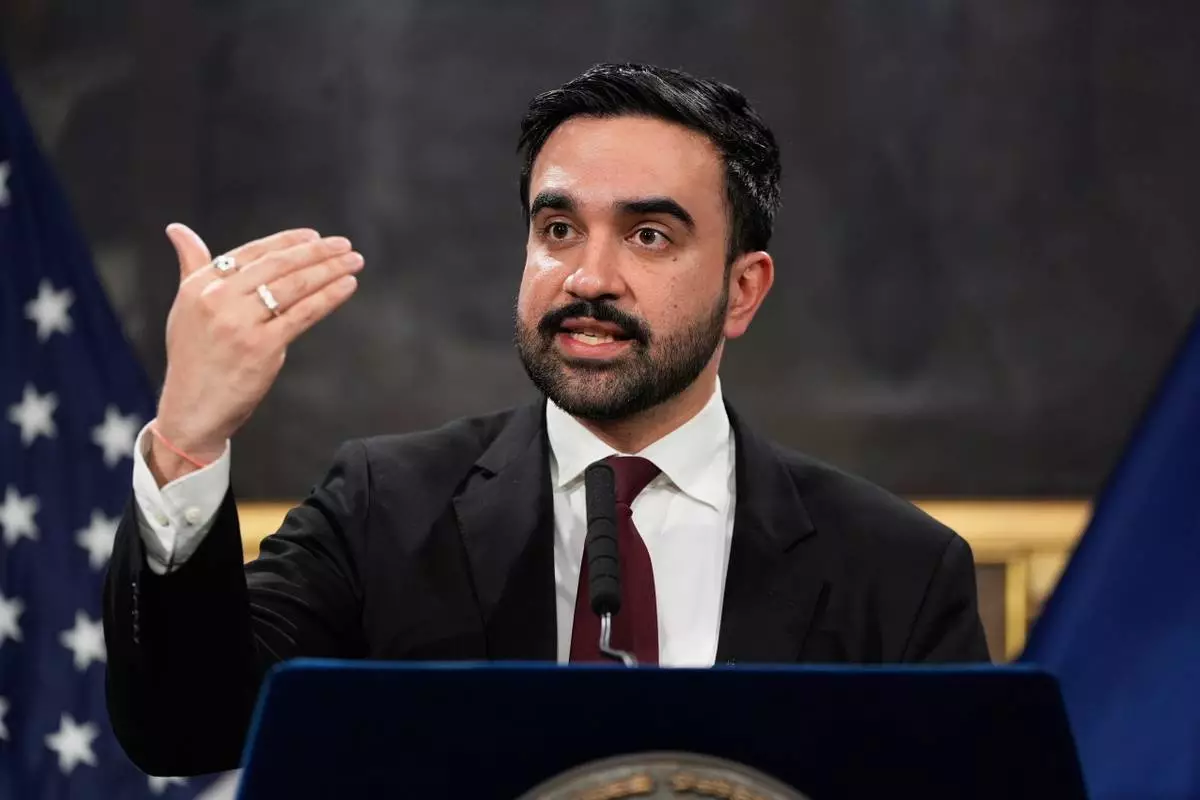
FILE - New York City Mayor Zohran Mamdani speaks to reporters during a news conference in New York, Tuesday, Feb. 17, 2026. (AP Photo/Seth Wenig, File)

FILE - New York City Mayor Zohran Mamdani speaks during a Rental Ripoff Hearing at Fordham University on Wednesday, March 11, 2026, in New York. (AP Photo/Andres Kudacki, File)
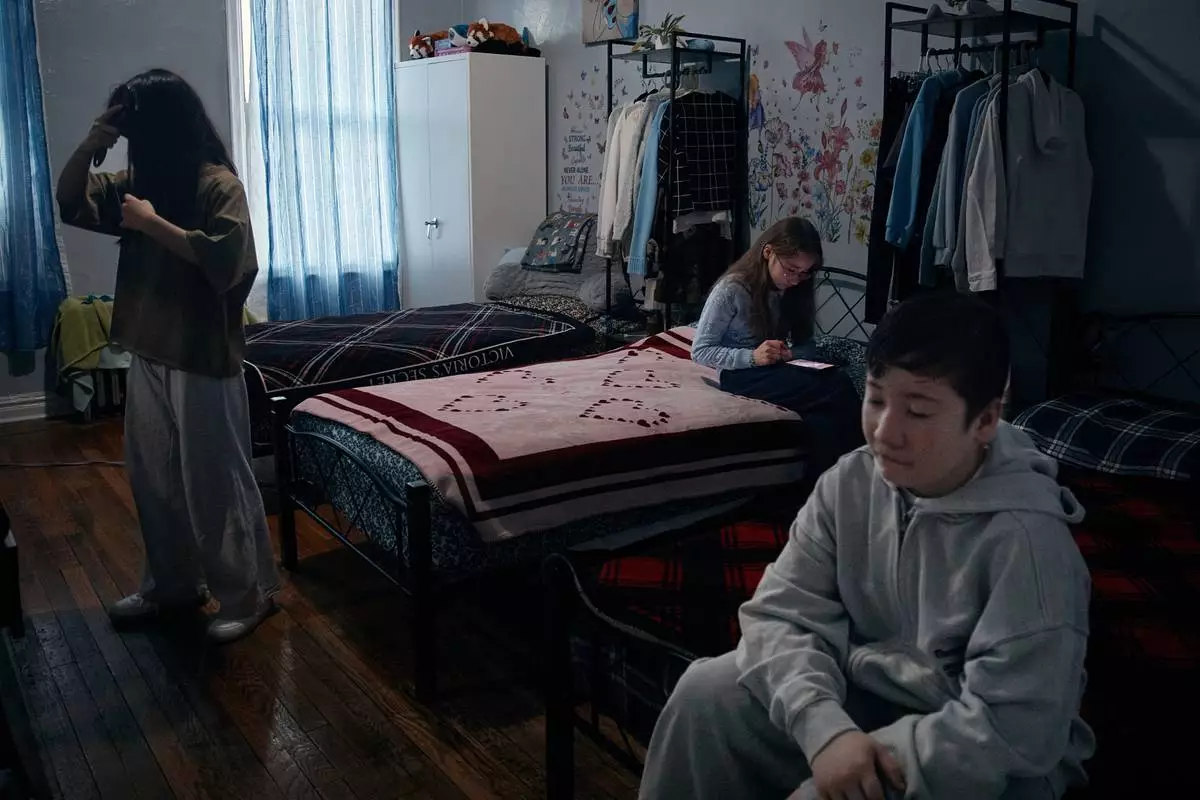
Gulhayo Yuldosheva's children get ready for school in an apartment building where tenants report maintenance issues and pest infestations, in the Bronx borough of New York, Tuesday, March 17, 2026. (AP Photo/Andres Kudacki)
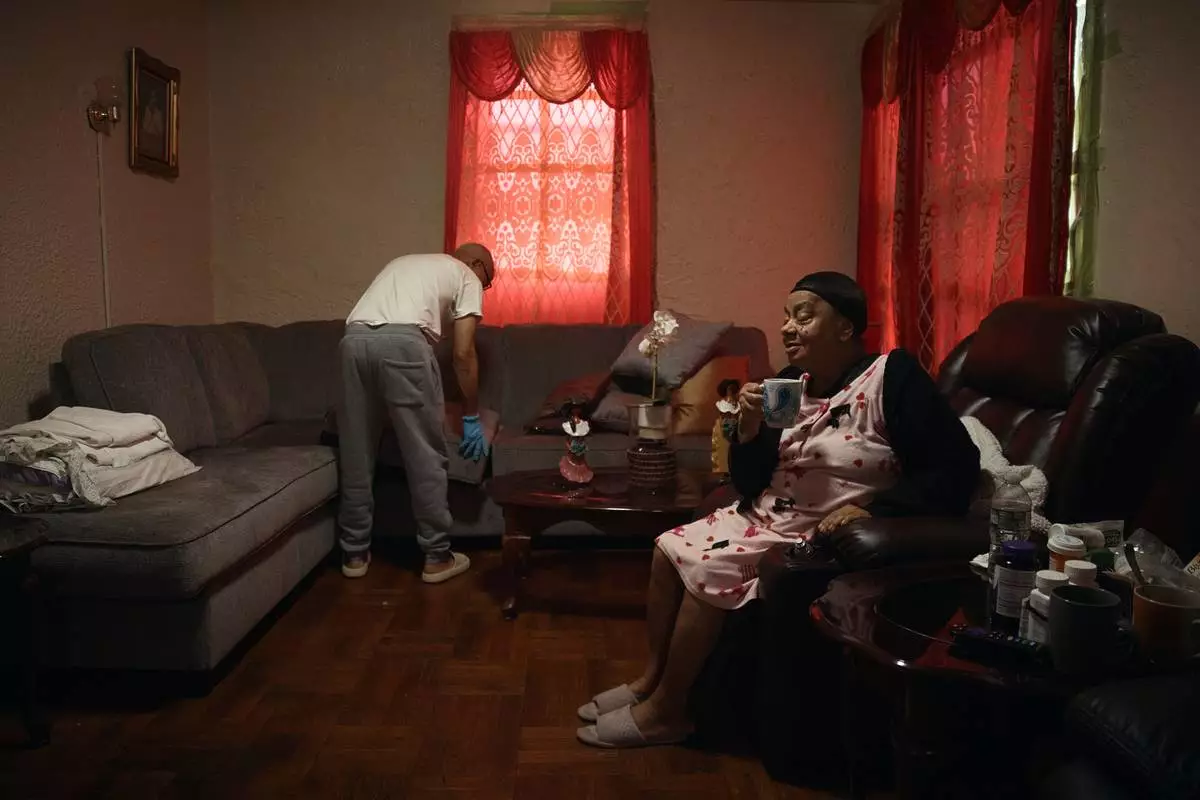
Francisco Medina, left, cleans his apartment next to his relative, Maria Frias, right, in an apartment building where tenants report maintenance issues and pest infestations, in the Bronx borough of New York, Tuesday, March 17, 2026. (AP Photo/Andres Kudacki)
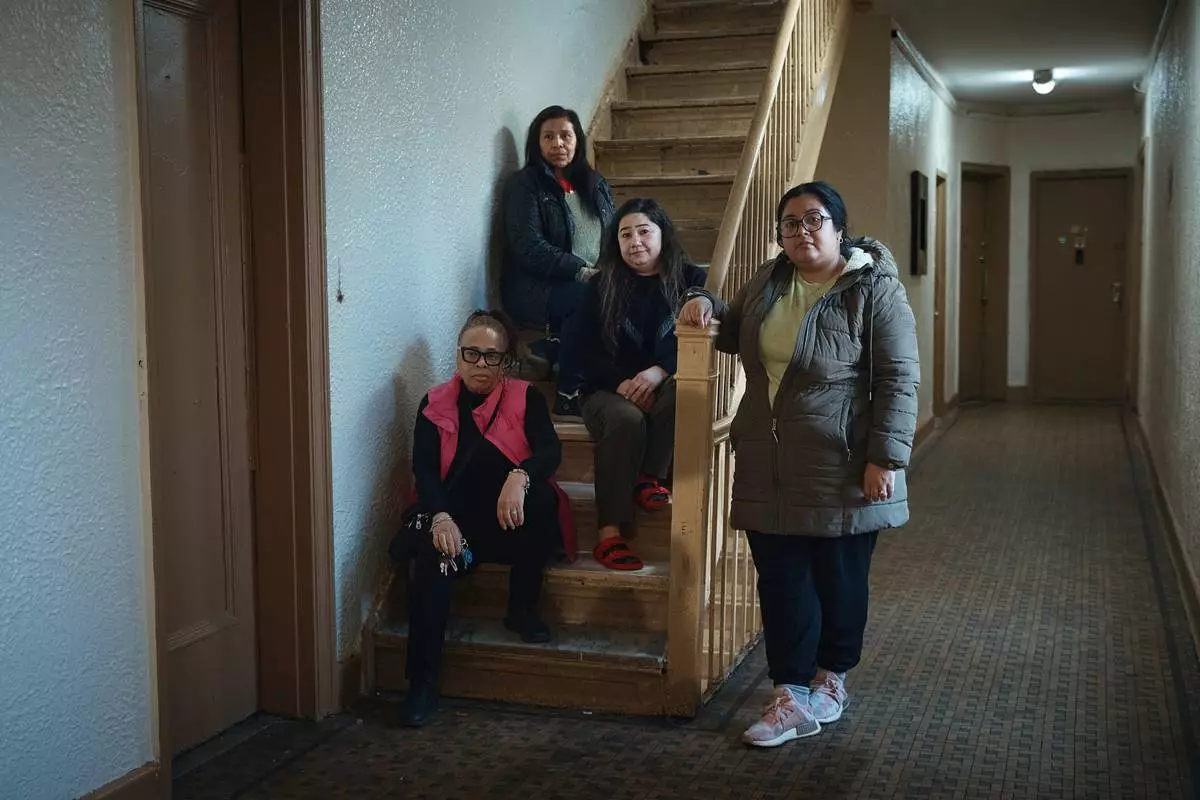
Gulhayo Yuldosheva, 33 , center right, Marina Quiroz, 65, top, pose for a portrait with other two residents in an apartment building where tenants report maintenance issues and pest infestations, in the Bronx borough of New York, Tuesday, March 17, 2026. (AP Photo/Andres Kudacki)
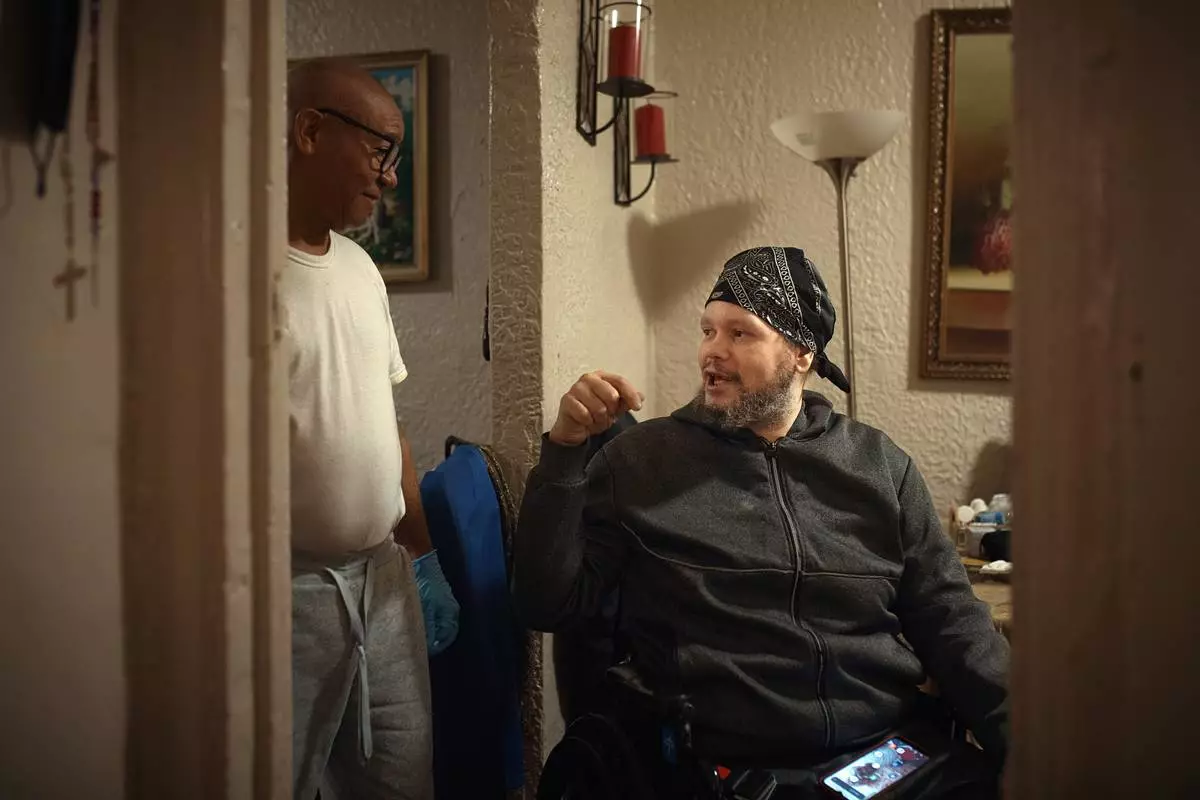
Tommy Rodriguez, right, talks to his relative, Francisco Medina, left, in an apartment building where tenants report maintenance issues and pest infestations, in the Bronx borough of New York, Tuesday, March 17, 2026. (AP Photo/Andres Kudacki)
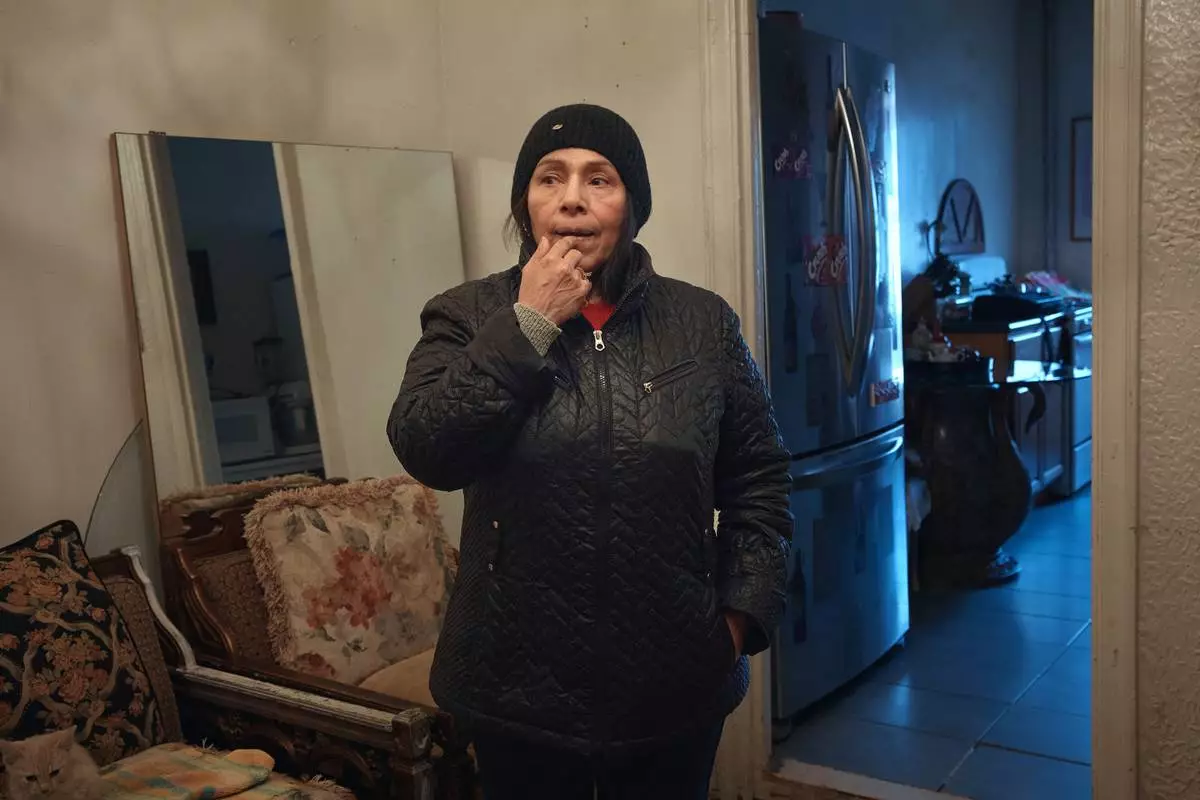
Marina Quiroz stands in her living room in a Bronx apartment building, where tenants report maintenance issues, pest infestations, Tuesday, March 17, 2026, in New York. (AP Photo/Andres Kudacki)