China, in cooperation with the United Nations Relief and Works Agency for Palestine Refugees in the Near East (UNRWA), provided insulin syringes to Palestinian refugees at an event on Wednesday at the Baqa'a Refugee Camp in Jordan.
Funded by China's Global Development and South-South Cooperation Fund, the project will benefit more than 43,000 Palestinian refugees across the West Bank, Gaza, Jordan, Lebanon, and Syria who require insulin treatment.
In Jordan alone, more than 11 million syringes will be distributed, enough to meet the needs of local refugees with diabetes for at least a year.
"So the provision of syringes that we just received now allows us to provide diabetic medication and syringes for all Palestine refugees that require them for the entire year," said Olaf Becker, director of UNRWA Affairs in Jordan.
UNRWA has faced not only funding cuts but also sustained political pressure in recent years, posing severe challenges to maintaining essential public services such as education and healthcare.
Becker said that China has been long supporting both UNRWA and the Palestinian refugees. Amid the current severe funding constraints and mounting financial pressures, the support provided by China is particularly crucial.
"[China's support] is invaluable to us right now, and in ensuring the continuation of our mandate as UNRWA but also of the service provision," Becker said.
About 30,000 Palestinian refugees in Jordan have diabetes, and roughly 14,000 require daily insulin injections.

China donates insulin syringes to Palestinian refugees in Jordan
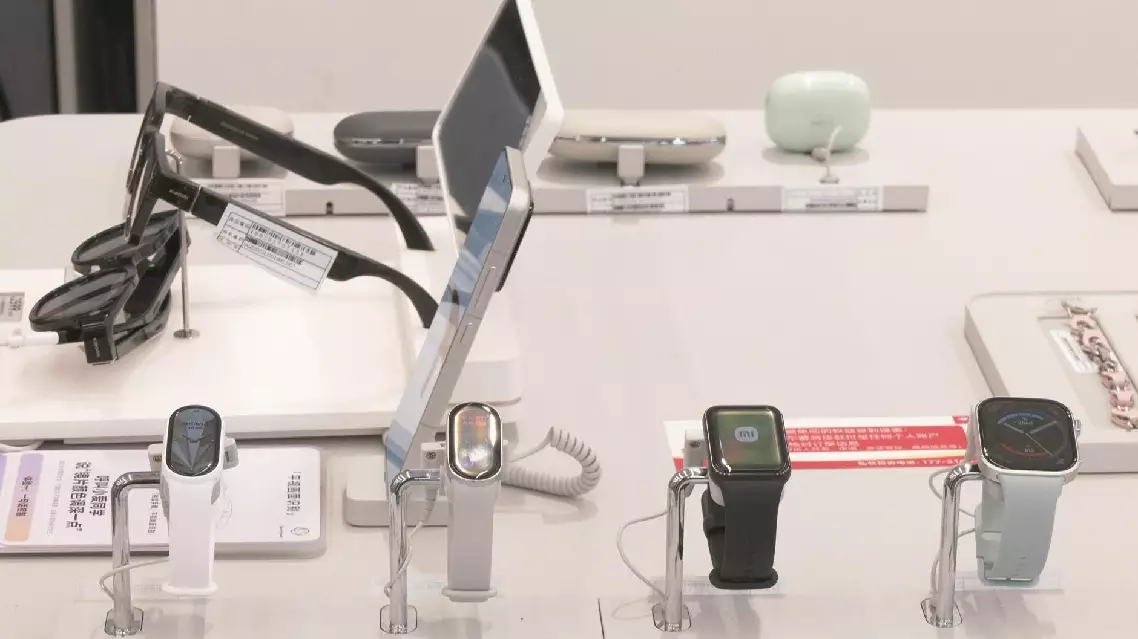
Smart wearable devices are increasingly embedded in daily life in China, where booming sales of watches and smart glasses are reshaping the consumer electronics market. In Beijing's Chaoyang District, smart watches have become a popular choice for shoppers seeking tools to monitor sleep, heart rate and stress.
"I often use my smart watch to monitor my sleep, heart rate, and stress. I hope it could also incorporate AI functions, allowing me to chat with it in-depth or help me complete some simple tasks," said a customer.
Beyond watches, smart glasses powered by large‑model technology are entering China's consumer market, reshaping the landscape of wearable electronics.
"It is more convenient to use smart glasses as earphones at work. This is my third pair of smart glasses, and the functions of the new one is much better than the previous ones," said a customer.
"Smart wearable devices have evolved significantly, shifting from simply displaying data to facilitating effective user interaction. As these product categories update at an accelerating pace and user demands grow increasingly diverse, manufacturers are compelled to accelerate their own cycles of innovation in both functional design and hardware configuration. Take smartwatches as an example: sales in this category have increased by more than 40 percent (compared to the same period in 2024)," said Zhang Jie, manager of Beijing Shuangjing Branch of JD Mall.
According to the latest worldwide quarterly wearable device tracker, in the first three quarters of 2025, global wrist-worn device shipments reached 150 million units, a year-on-year increase of 10 percent.
Among them, China's cumulative shipments totaled 58.43 million units, representing a year-on-year growth of 27.6 percent. In the first half of 2025, the global smart glasses shipments reached 4.065 million units, a year-on-year increase of 64.2 percent, and China's cumulative shipments exceeded 1 million units.
China smart wearables growth fuels consumer electronics boom