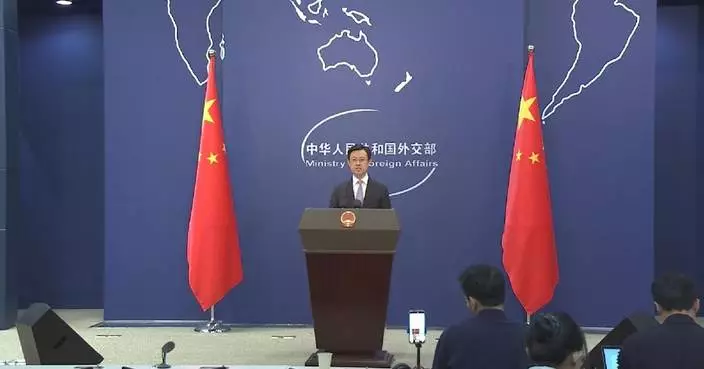
The ecological conditions in nine key regions across China have continued to improve as the country intensifies its conservation and restoration efforts, the Ministry of Ecology and Environment said on Wednesday.
The ministry on Wednesday released the latest blue paper on ecological status survey in the country's key regions, which covered the Yellow River basin, the Yangtze River Economic Belt, the Beijing-Tianjin-Hebei region, and the Guangdong-Hong Kong-Macao Greater Bay Area, among other vital zones. The findings indicated that a systematic approach to environmental governance is yielding substantial results across the nation.
Vegetation coverage along the Yellow River basin has expanded westward by about 300 kilometers, while the area of riverbanks with high-quality ecosystems along the main stream and tributaries of the Yangtze River Economic Belt has increased year by year, the blue paper said.
In the Beijing-Tianjin-Hebei region, shallow and deep groundwater levels have rebounded by 2.59 meters and 7.06 meters, respectively, compared with 2018, reflecting a steady recovery of water resources, according to the blue paper.
The survey also found that more than 50 percent of key ecological areas in the Qinling Mountains are showing clear signs of restoration, while desertification in typical arid regions has eased. Notably, the land desertification in the Yellow River's "Great Bend" area has dropped by 12.9 percent.

China sees sustained improvement in ecological conditions in key regions
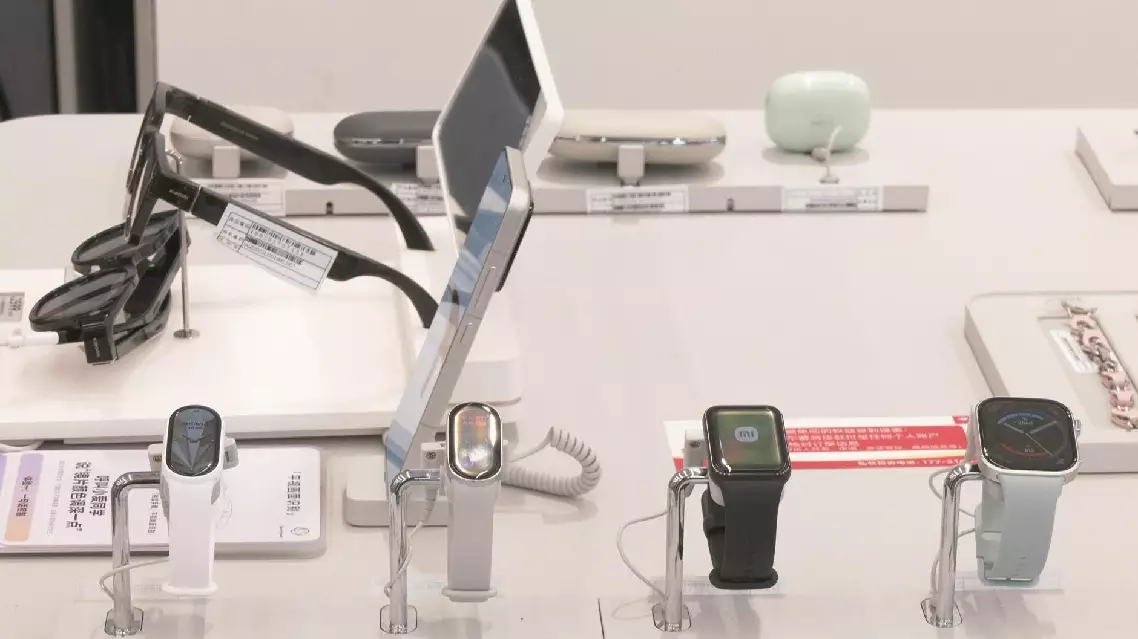
Smart wearable devices are increasingly embedded in daily life in China, where booming sales of watches and smart glasses are reshaping the consumer electronics market. In Beijing's Chaoyang District, smart watches have become a popular choice for shoppers seeking tools to monitor sleep, heart rate and stress.
"I often use my smart watch to monitor my sleep, heart rate, and stress. I hope it could also incorporate AI functions, allowing me to chat with it in-depth or help me complete some simple tasks," said a customer.
Beyond watches, smart glasses powered by large‑model technology are entering China's consumer market, reshaping the landscape of wearable electronics.
"It is more convenient to use smart glasses as earphones at work. This is my third pair of smart glasses, and the functions of the new one is much better than the previous ones," said a customer.
"Smart wearable devices have evolved significantly, shifting from simply displaying data to facilitating effective user interaction. As these product categories update at an accelerating pace and user demands grow increasingly diverse, manufacturers are compelled to accelerate their own cycles of innovation in both functional design and hardware configuration. Take smartwatches as an example: sales in this category have increased by more than 40 percent (compared to the same period in 2024)," said Zhang Jie, manager of Beijing Shuangjing Branch of JD Mall.
According to the latest worldwide quarterly wearable device tracker, in the first three quarters of 2025, global wrist-worn device shipments reached 150 million units, a year-on-year increase of 10 percent.
Among them, China's cumulative shipments totaled 58.43 million units, representing a year-on-year growth of 27.6 percent. In the first half of 2025, the global smart glasses shipments reached 4.065 million units, a year-on-year increase of 64.2 percent, and China's cumulative shipments exceeded 1 million units.
China smart wearables growth fuels consumer electronics boom