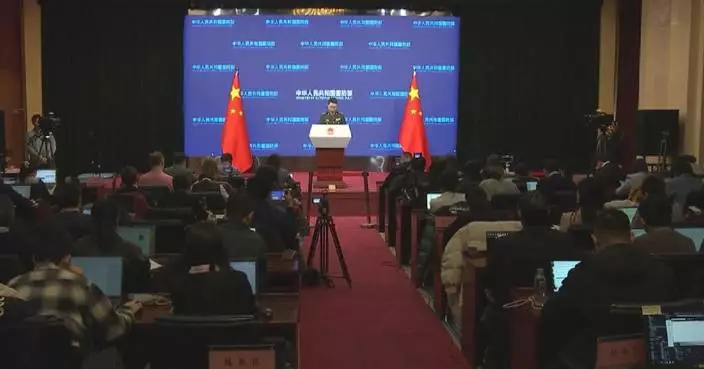
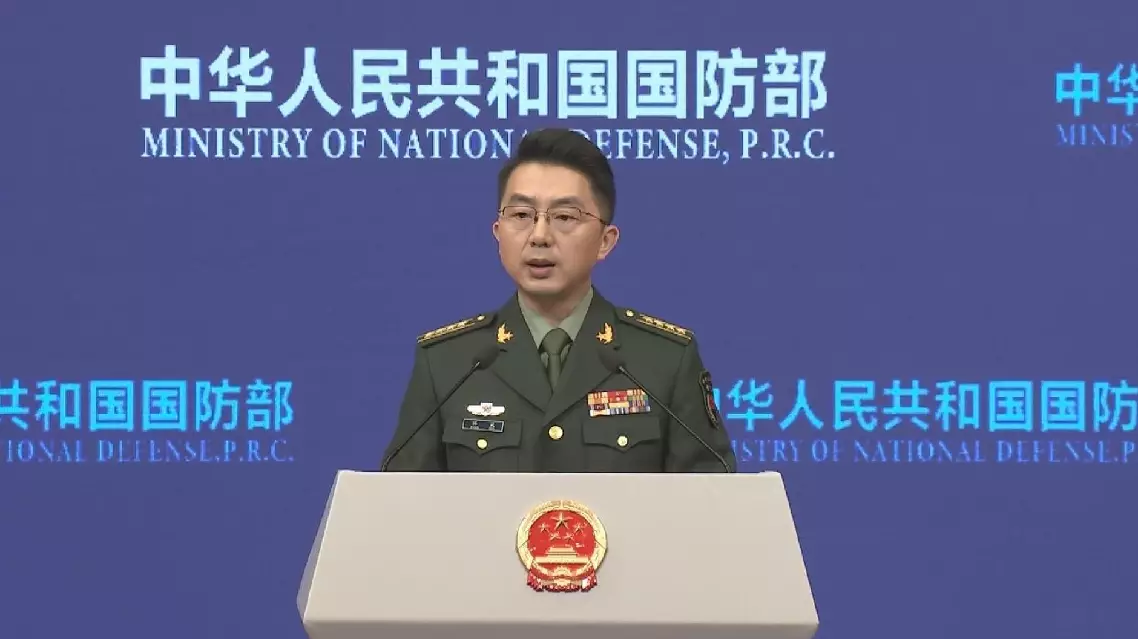
A Chinese defense official on Thursday warned against the resurgence of Japanese militarism, saying that China will work with all peace-loving countries to contain it.
Since the new administration took office last October, Japan has taken intensive moves to expand its military buildup and accelerated the loosening of restrictions on its military development, said Jiang Bin, a spokesman for China's Ministry of National Defense, commenting on the recent military moves by the Takaichi Cabinet.
"It has acquired offensive weapons under the pretext of strengthening 'counter-strike capability' and openly advocated for nuclear armament. These moves violate Japan's obligations as a defeated country stipulated in legally binding international documents such as the Cairo Declaration and the Potsdam Proclamation. These moves pose a serious threat to peace and stability in Asia and the world, and have raised high vigilance among regional countries and the international community," Jiang said.
"This year marks the 80th anniversary of the opening of the Tokyo trials. The Japanese right-wing forces have made public their ambitions for re-militarization. China will work with all peace-loving nations to resolutely contain the resurgence of the specter of militarism, and firmly defend the post-war international order, as well as international fairness and justice," he said.
The Allied Forces tried Japanese war criminals at the International Military Tribunal for the Far East in Tokyo in 1948. The proceedings, lasting more than two and a half years, played an important part in shaping the postwar Asia-Pacific order.
China warns against resurgence of Japanese militarism
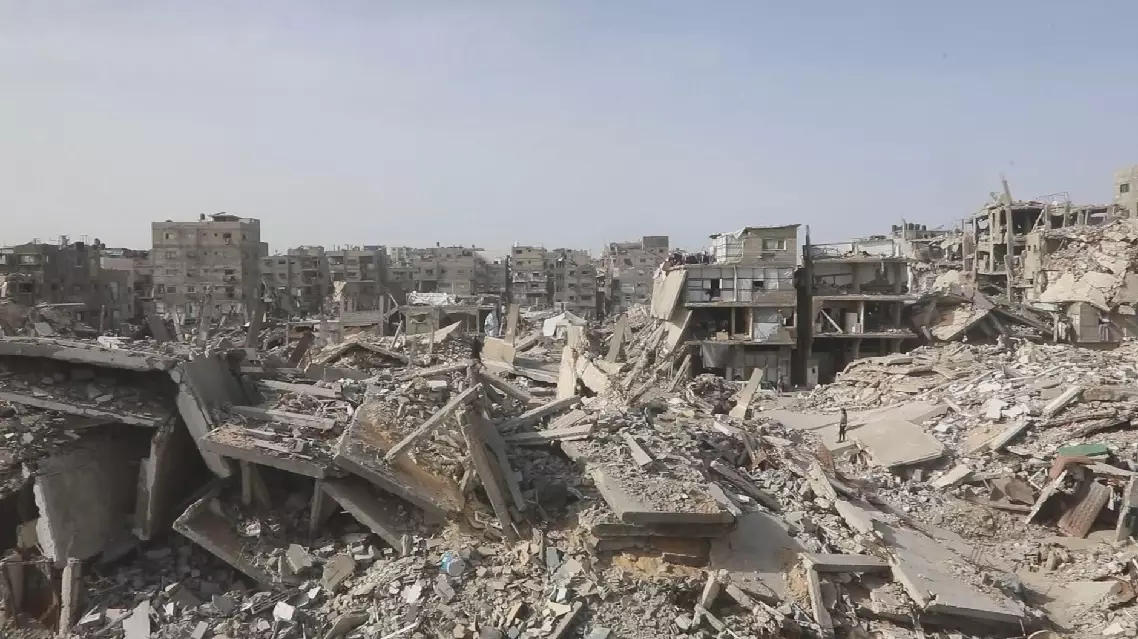
The prolonged closure of the Rafah crossing has left thousands of Palestinians in Gaza unable to travel abroad for medical treatment, education or family reunions, according to residents and health officials.
For many in Gaza, the crossing is more than a border point. After months of near-total isolation, it has become a crucial route for patients seeking care abroad, students hoping to continue their studies and families separated by the conflict.
Health officials say the extended closure has taken a heavy toll. More than 1,000 patients are reported to have died while waiting for permission to travel overseas for medical treatment.
"Our lives are tied to the crossing. If it opens, it gives us life. If it stays closed, we remain in a state of clinical death. I’ve been in the hospital for one hundred days," said Haitham Al-Qanoua, an injured Palestinian.
Hospitals say tens of thousands of patients remain on waiting lists, including children and cancer patients in urgent need of specialized care that is unavailable inside Gaza.
"More than 20,000 citizens have completed referral procedures for treatment abroad and are waiting to travel. Among them are 4,000 children and 4,000 cancer patients. There are also extremely critical cases that require immediate medical evacuation," said Zaher Al-Wahidi, director of the Health Information Center in Gaza.
The closure has also disrupted education plans, leaving many young Palestinians unable to pursue studies overseas.
"I've applied for Ministry of Education scholarships to study abroad in Turkey and Hungary, but I wasn't lucky to get them. Going abroad would help my parents save the money they spent on me in this awful condition. Opening the crossing is extremely important so people can travel, go on with their lives, and for me to complete my education," said Saeed Masoud, a Palestinian student.
For many families, the closure has meant prolonged separation, with relatives stranded on opposite sides of the border.
"I'm waiting for the crossing to open to see my children and my wife. She, with my children, left Gaza to accompany her father who needed medical treatment after he was injured in an Israeli airstrike on Deir al-Balah. I haven't seen my family for nearly two years, and I miss them deeply," said Ayman Abu Shanab, a displaced Palestinian.
With the Rafah crossing still closed, patients in need of treatment abroad, students seeking to continue their studies and families separated by the conflict remain unable to travel.
Rafah crossing closure strands patients, students, families in Gaza