The recent rollout of virtual reality (VR) cinemas across China is expanding the boundaries of the film industry, enabling audiences to transition from spectators to participants in interactive experiences.
In Beijing, "Hyper Vision," the first virtual reality cinema in China, opened recently to the public. Spanning three floors with a total area of 3,500 square meters, the venue features five themed screening halls.
Currently, 15 VR films are being screened in the cinema, covering a wide range of genres, such as popular film and television IPs, traditional culture, science fiction and puzzle-solving. By putting on head-mounted displays, audiences can step directly into the films.
"Visually, it's even better than 3D movies. It pulls me into a virtual space," said a viewer.
The global user base for VR films reached 280 million in 2025, with Chinese users accounting for 42 percent, while penetration in first-tier cities exceeded 60 percent. As virtual reality technology continues to integrate more deeply with cinematic art, it has become a key trend in the global audiovisual content industry.
In 2025, nearly 140 VR films were filed for release nationwide. From the scaling up of content production to the initial formation of a full industry chain, VR films are expected to further unlock new boundaries in viewing experiences and create more consumption scenarios in the future.
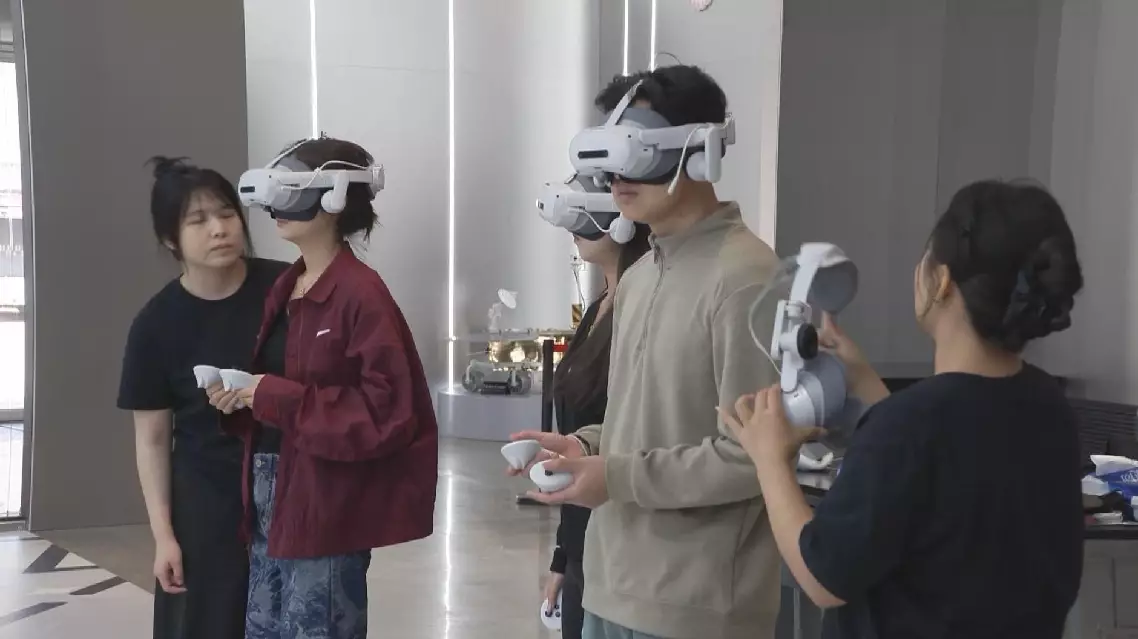
VR enables interactive viewing experiences for moviegoers across China
China's latest round of mineral exploration has delivered strong results, with substantial new reserves of oil, gas and key metals added so far this year, a breakthrough in an ongoing push to underpin the country's advanced manufacturing industry, officials said on Tuesday.
"The new round of exploration has produced encouraging outcomes. From January to August, China was added with nearly 70 million tons of recoverable oil reserves and 610 billion cubic meters of recoverable natural gas reserves. Meanwhile, new resource volumes at the Chating copper-gold mine in [east China's] Anhui Province and the Zhugongtang lead-zinc mine in [southwest China's] Guizhou Province have reached super-large scale," said Liu Guohong, secretary of the ministry's Committee of Communist Party of China, at a press conference in Beijing.
Looking ahead, leading officials of the ministry noted that demand for critical mineral resources will continue to grow during the 15th Five-Year Plan period (2026-2030). To meet that demand, China will press ahead with its strategic mineral exploration drive, secure the supply of essential minerals and provide solid support for the development of advanced manufacturing.
"The primary requirements for mineral exploration are to clarify the basic geological conditions of the country and identify areas where minerals may be found. To that end, we will implement a national geological mapping plan, raise the coverage of 1:50,000 regional geological surveys on land to 51 percent, and increase the coverage of mineral geological surveys in key metallogenic belts to 66 percent, so as to gain a clear picture of our resource and energy base," said Zhou Xing, vice minister of Natural Resources.
The leading officials said exploration will focus on minerals in short supply such as petroleum, iron, copper and aluminum, while also covering rare earths and other minerals where China holds an edge. A number of key exploration and extraction projects will be launched, and more large and medium-sized mineral deposits and oil and gas fields are expected to be discovered.
China will steadily advance the construction of some 300 energy and resource bases, significantly raise the self-sufficiency rate of strategic minerals, and boost the country's resource security.
At the same time, authorities will continue to reassess existing resources and unlock the potential of low-grade and hard-to-process mineral resources.
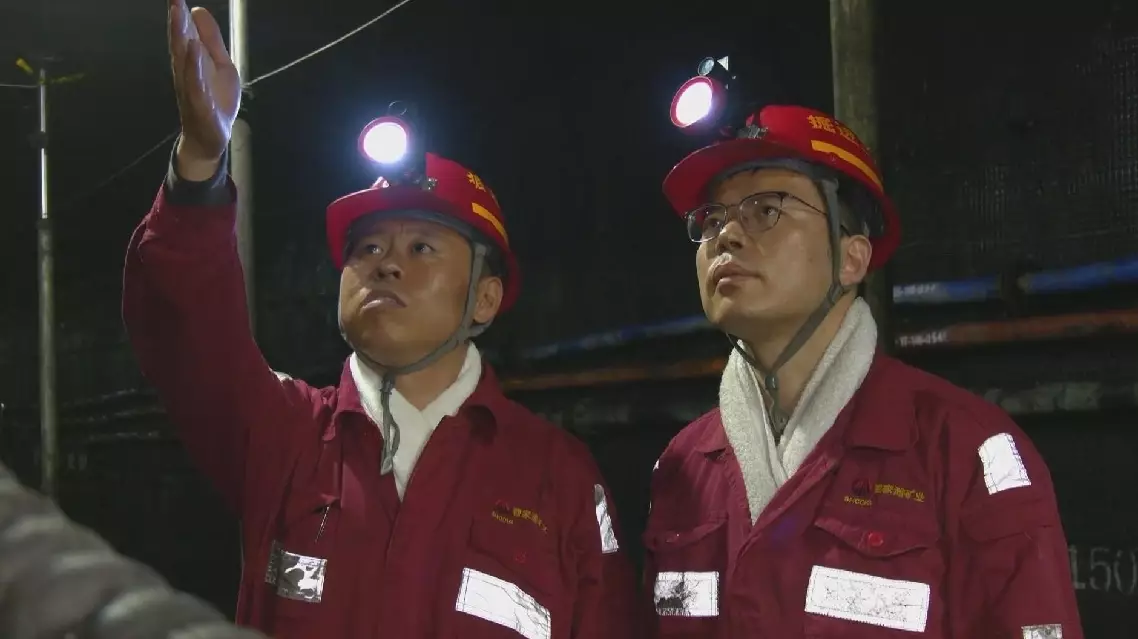
China reports major gains in mineral exploration drive