Visiting British Prime Minister Keir Starmer on Friday called for stronger dialogue and deeper engagement between companies and institutions from the UK and China as he addressed a business forum in Beijing.
The UK-China Business Forum was co-organized by the China Council for the Promotion of International Trade and the British government, and brought together more than 300 guests, including over 60 business and cultural delegates from various sectors who are accompanying the prime minister on his ongoing visit to China.
Starmer arrived in the Chinese capital on Wednesday to begin the four-day official visit, which marks the first trip by a British prime minister to the country in eight years. Speaking at the business forum's opening ceremony, Starmer pointed to what he described as "real progress" after he held talks with senior Chinese leaders including President Xi Jinping on the previous day.
He also urged forum guests to strengthen exchanges and turn dialogue into practical cooperation.
"I fundamentally believe that the more we engage, the more we exchange, the more we take advantage of the opening of access to opportunities, business, art and culture and so many others, then that is the way that we build the mutual trust and respect that is so important," Starmer said.
Following Thursday's meetings between Starmer and Xi, both sides expressed willingness to develop a "long-term and stable comprehensive strategic partnership," and agreed to deepen cooperation across various fields.
The healthcare and pharmaceutical industries were also seen as one of the key focuses, with the UK-based multinational AstraZeneca announcing new investment plans in China.
"We decided to make this investment of 100 billion yuan (around 14.39 billion U.S. dollars) over the next a few years until 2030. And this will go into research and development, manufacturing and lots of great collaborations with local biotech companies. You know, there's a huge emergence of science, innovation, entrepreneurship in China. So I'm very hopeful and very positive and optimistic about the future of the Chinese economy," said Pascal Soriot, the firm's CEO.
A number of companies from both sides reached agreements at the business forum, with their leaders expressing a commitment to fully leveraging each country's unique advantages to achieve complementary strengths and collaboratively explore the market.
"We're very proud today to be signing an agreement between the city of Liverpool and Cherry Commercial Vehicles, to establish the European headquarters of Cherry Commercial Vehicles in Liverpool. Liverpool has a long and proud association with China, and this is a great opportunity for us to develop that further in such an important sector for both countries," said Andrew Lewis, chief executive of Liverpool City Council.
Meanwhile, other business figures identified the considerable scope for cooperation in advancing the green transition.
One of the biggest deals involved the Octopus Energy Group, the UK's largest energy supplier by market share, which announced a new joint venture with China's PCG Power.
"Chinese companies, Chinese leadership has led to some of the most breakthrough technologies in new energy vehicles, in batteries, in wind turbines and in solar. And I think working with the companies that have got these technologies, lets us bring better solutions to the UK," said Greg Jackson, founder and CEO of Octopus Energy Group.
"We believe there are many opportunities for collaboration between us and the UK in the field of new energy. China has a vast market, while the UK has extensive experience in long-term electricity market transactions and excellent technology. I think that our cooperation can build a platform of great strategic significance," said Li Wenxuan, chairman and CEO of PCG Power.
Starmer's visit has already yielded a series of concrete outcomes, with China deciding to halve import tariffs on Scotch whisky to 5 percent. Furthermore, both countries agreed to establish a high-level partnership to address climate change, resume their security dialogue and signed 12 intergovernmental cooperation documents.
Following the forum, the British delegation traveled onwards to Shanghai.
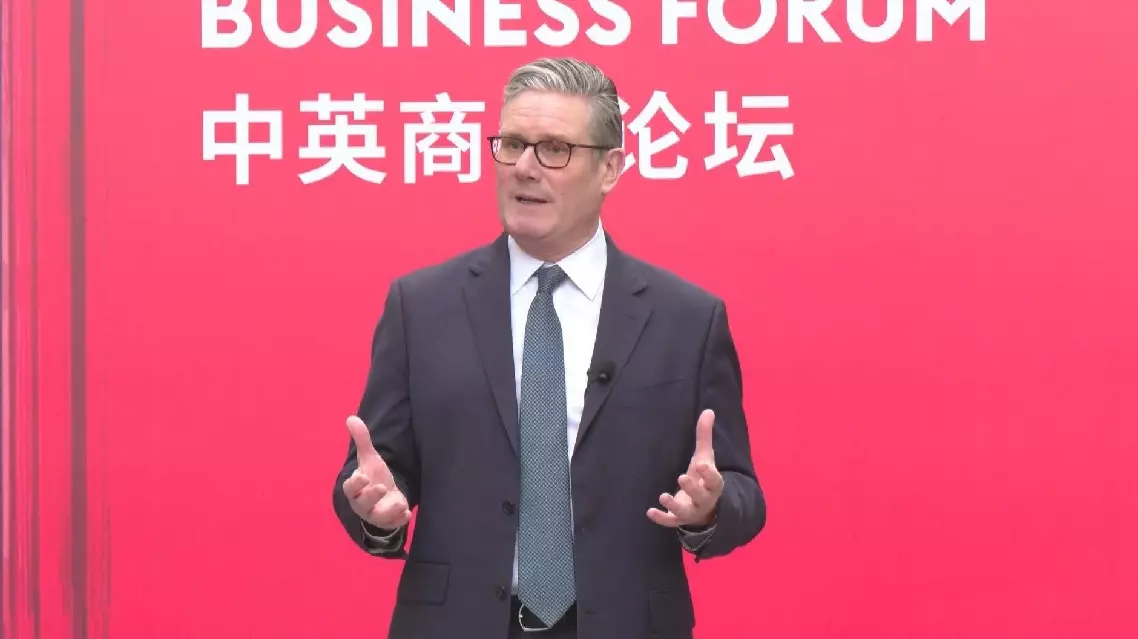
British PM encourages economic, cultural cooperation at UK-China Business Forum