BEIRUT (AP) — Lebanon’s Cabinet on Friday approved an agreement to transfer Syrian prisoners serving their sentences in Lebanon back to their home country.
The issue of prisoners has been a sore point as the neighboring countries seek to recalibrate their relations following the ouster of former Syrian President Bashar Assad in a lightning offensive by Islamist-led insurgents in December 2024. Former insurgent leader Ahmad al-Sharaa is now Syria’s interim president.
Lebanon and Syria have a complicated history with grievances on both sides. Many Lebanese resent the decades-long occupation of their country by Syrian forces that ended in 2005. Many Syrians resent the role played by the Lebanese militant group Hezbollah when it entered Syria’s civil war in defense of Assad’s government.
A key obstacle to warming relations has been the fate of about 2,000 Syrians in Lebanese prisons, including some 800 held over attacks and shootings, many without trial. Damascus had asked Beirut to hand them over to continue their prison terms in Syria, but Lebanese judicial officials said Beirut would not release any attackers and that each must be studied and resolved separately.
The deal approved Friday appeared to resolve that tension. Lebanese Information Minister Paul Morcos said other issues remain to be resolved between the two countries, including the fate of Lebanese believed to have been disappeared into Syrian prisons during Assad’s rule and the demarcation of the border between the two countries.
Lebanon’s Deputy Prime Minister Tarek Mitri told reporters after the Cabinet meeting that about 300 prisoners would be transferred as a result of the agreement.
Protesters gathered in a square below the government palace in downtown Beirut ahead of the Cabinet vote to call for amnesty for Lebanese prisoners, including some who joined militant groups fighting against Assad in Syria. Some of the protesters called for the release of Sunni cleric Ahmad al-Assir, imprisoned for his role in 2013 clashes that killed 18 Lebanese army soldiers.
“The state found solutions for the Syrian youth who are heroes and belong to the Syrian revolution who have been imprisoned for 12 years,” said protester Khaled Al- Bobbo. “But in the same files there are also Lebanese detainees. ... We demand that just as they found solutions for the Syrians, they must also find solutions for the people of this country.”
——
Associated Press journalist Fadi Tawil in Beirut contributed to this report.

A child wears a sweatshirt bearing a portrait of imprisoned Sunni cleric Ahmad al-Assir during a protest demanding a general amnesty for Islamic groups and other prisoners, in downtown Beirut, Lebanon, Friday, Jan. 30, 2026. (AP Photo/Hassan Ammar)

A child holds a placard reading in Arabic, "A comprehensive general amnesty to turn the page on pain and suffering," during a protest demanding a general amnesty for Islamic groups and other prisoners, in downtown Beirut, Lebanon, Friday, Jan. 30, 2026. (AP Photo/Hassan Ammar)

Women hold a placard reading in Arabic, "A comprehensive general amnesty to put an end to the pain and suffering," during a protest demanding a general amnesty for Islamic groups and other prisoners, in downtown Beirut, Lebanon, Friday, Jan. 30, 2026. (AP Photo/Hassan Ammar)
NEW YORK (AP) — The Justice Department on Friday released many more records from its investigative files on Jeffrey Epstein, resuming disclosures under a law intended to reveal what the government knew about the millionaire financier’s sexual abuse of young girls and his interactions with the rich and powerful.
Deputy Attorney General Todd Blanche said the department was releasing more than 3 million pages of documents in the latest Epstein disclosure, as well as more than 2,000 videos and 180,000 images. The files, posted to the department’s website, include some of the several million pages of records that officials said were withheld from an initial release of documents in December.
Congressional Democrats, who have been key to pushing for the release of case files on Epstein, are arguing that Friday’s release is only about half of the files that have been collected.
The Epstein Files Transparency Act, a law enacted after months of public and political pressure, requires the government to open its files on the convicted sex offender as well as his confidant and onetime girlfriend, Ghislaine Maxwell. Epstein killed himself in a New York jail cell in August 2019, a month after he was indicted on federal sex trafficking charges.
Here's the latest:
Congressional Democrats who have been key to pushing for the release of case files on Epstein are arguing that Friday’s release by the Department of Justice is only about half of the files that have been collected.
“The DOJ said it identified over 6 million potentially responsive pages but is releasing only about 3.5 million after review and redactions. This raises questions as to why the rest are being withheld,” said Rep. Ro Khanna, a California Democrat who sponsored the bill that mandated the disclosure.
Khanna said he was looking to see whether the files released Friday included FBI interviews with victims, a draft indictment and information prosecutors collected during a 2007 investigation into Epstein in Florida.
The House Oversight Committee has also issued a separate subpoena to Attorney General Pam Bondi for the files without redactions, but that has not been fulfilled.
Rep. Robert Garcia, the top Democrat on the oversight panel, called the limited release of documents “outrageous and incredibly concerning.”
Over the years, prosecutors received tips from people with wild stories about being sexually abused by famous figures. In some instances, FBI investigators diligently reached out to these tipsters and alleged victims and listened to their implausible sounding stories — some involving the occult and human sacrifice — then wrote dry reports summarizing what the people had to say and sent them to their superiors.
Attorney Jay Clayton told New York federal court judges overseeing records in the sex trafficking cases against Epstein and Maxwell that some documents are being withheld temporarily while the government awaits further guidance from civil and criminal courts.
In a letter to the judges, Clayton says his office continues to engage with victims and their lawyers, including during a call Thursday. He said the Justice Department has invited victims to reach out if they believe anything has been published that should be redacted.
The huge cache of documents included email correspondence between prosecutors, printouts of thousands of emails that Epstein either sent or received, news clippings, and reports written by FBI agents summarizing their interviews with witnesses and alleged victims in the investigation.
As was the case with many previous releases of documents related to Epstein, much material was blacked out. Some of the reports on FBI interviews had entire pages blacked out, along with the name of the person who was being interviewed.
The deputy U.S. attorney general also responded to criticism about the Justice Department’s handling of the files’ release.
He said federal attorneys had to review all 6 million pages to ensure no victim information is released, and couldn’t do so within the 30-day timeline set by the law. He noted various exemptions under the law, but said no material was being withheld under a national security or foreign policy exemption.
“There’s not some tranche of super-secret documents about Jeffrey Epstein that we’re withholding,” he said about redactions in the files.
Justice Department lawyers made extensive redactions to the released files, including victim information that included their medical files.
They redacted images and videos, including removing any woman depicted in videos except for Ghislaine Maxwell.
Lawyers also withheld child sex abuse materials or anything depicting images of death, physical abuse or injury, as well as anything that would hurt an ongoing federal investigation, Blanche said.
Compiling accurate and thorough information takes time. A team of AP reporters is working to confirm information released by the Justice Department regarding Jeffrey Epstein.
These standards guide our reporting process:
▶ Read our statement of news values and principles
Blanche said that the release may not answer all the questions people have about Epstein or the handling of the allegations against him.
“There’s a hunger, or a thirst, for information that I don’t think will be satisfied by review of these documents,” he said.
“We did not protect President Trump. We didn’t protect — or not protect — anybody,” Blanche said.
Blanche called the review and release of Epstein files an “unprecedented effort” as he defended the Trump administration’s response to demands for their release.
“I take umbrage at the suggestion, which is totally false, that the attorney general or this department does not take child exploitation or sex trafficking seriously,” Blanche said. “We do.”
He said more than 6 million pages could potentially be released under the law, but that the department’s massive release does not include files that contain personally identifiable information of victims.
Deputy U.S. Attorney General Todd Blanche said the Justice Department, in releasing more than 3 million pages of Epstein files Friday, that federal lawyers gave up countless hours every single day to fulfill this “promise of transparency” to the American people.
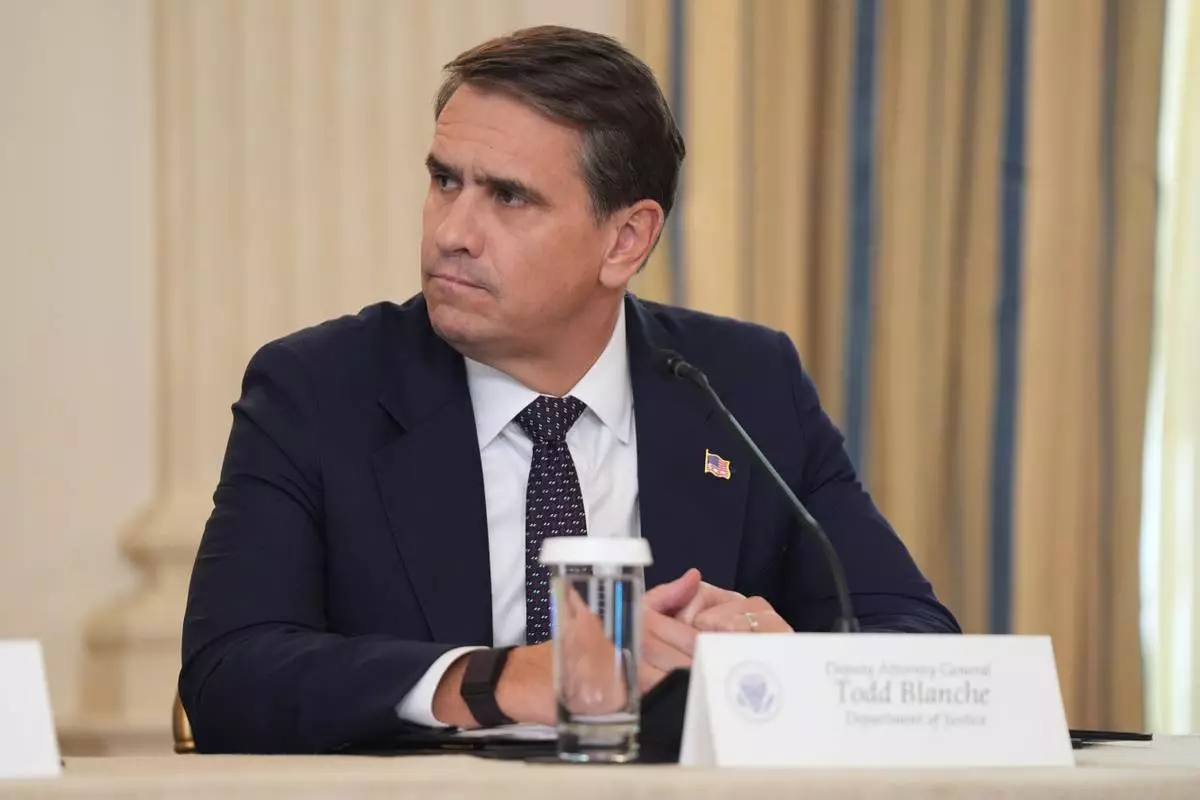
FILE - Deputy Attorney General Todd Blanche listens to President Donald Trump speak in the State Dining Room at the White House, Oct. 8, 2025, in Washington. (AP Photo/Evan Vucci, File)
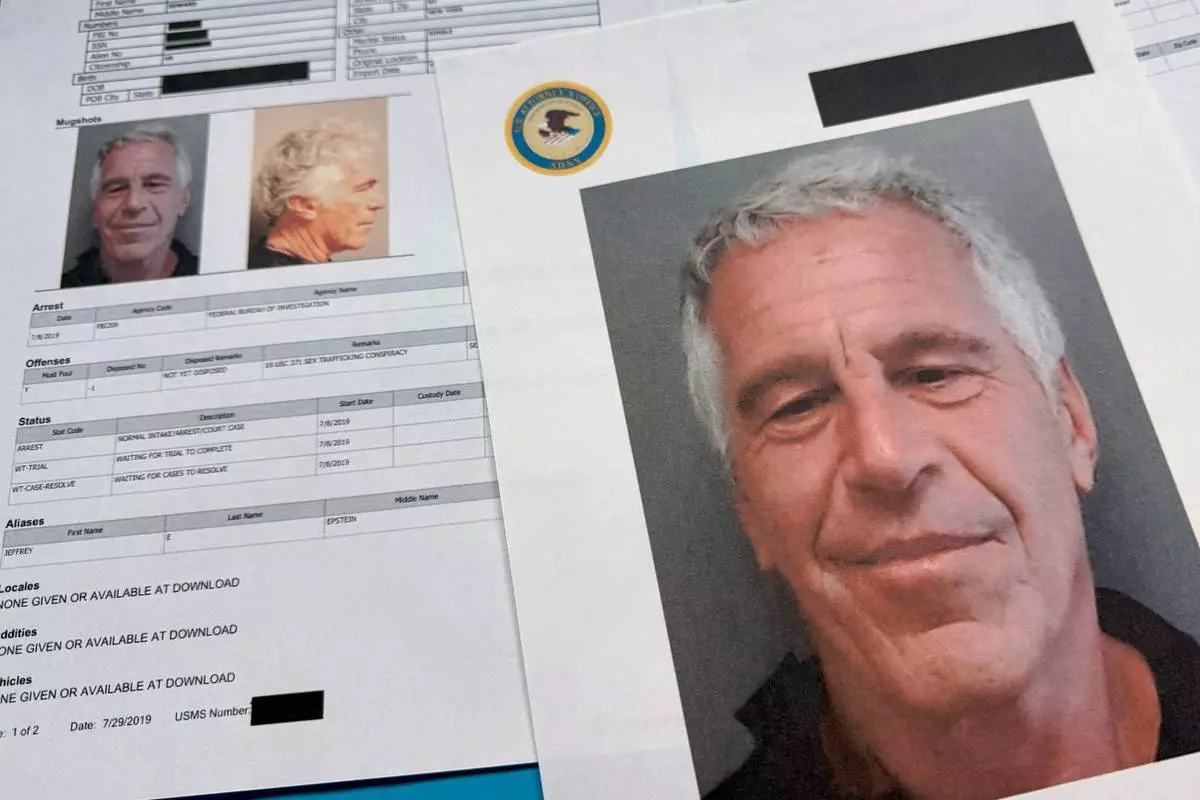
FILE - Documents that were included in the U.S. Department of Justice release of the Jeffrey Epstein files are photographed Friday, Jan. 2, 2026. (AP Photo/Jon Elswick, File)