ATLANTA (AP) — There were only 10 reported cases of Guinea worm infections confined to three countries in 2025, a historic low announced Friday by The Carter Center.
The new mark comes barely a year after the death of former U.S. President Jimmy Carter, who often said he hoped to outlive the Guinea worm. When the former president's center launched an eradication program in the mid-1980s, the parasite still afflicted millions of people in developing countries.
“We think about President Carter's legacy” and his push to get to zero cases, said Adam Weiss, director of the center's Guinea worm eradication program, in an interview. “These might not be seen as the number one problems in the world, but they are the number one problems for people that suffer from these diseases. So we continue to charge ourselves with his mission of alleviating as much pain and suffering as we can.”
In 2025, four human cases were reported in Chad, four in Ethiopia and two in South Sudan. Animal infections still number in the hundreds, declining in some countries but up slightly overall and making it harder to predict when Guinea worm might be eradicated.
The 10 human cases mark a 33% decline from 15 cases reported in 2024. Angola, Cameroon, the Central African Republic, and Mali reported zero human cases for the second consecutive year.
Guinea worm would join smallpox as only the two human diseases to be eradicated.
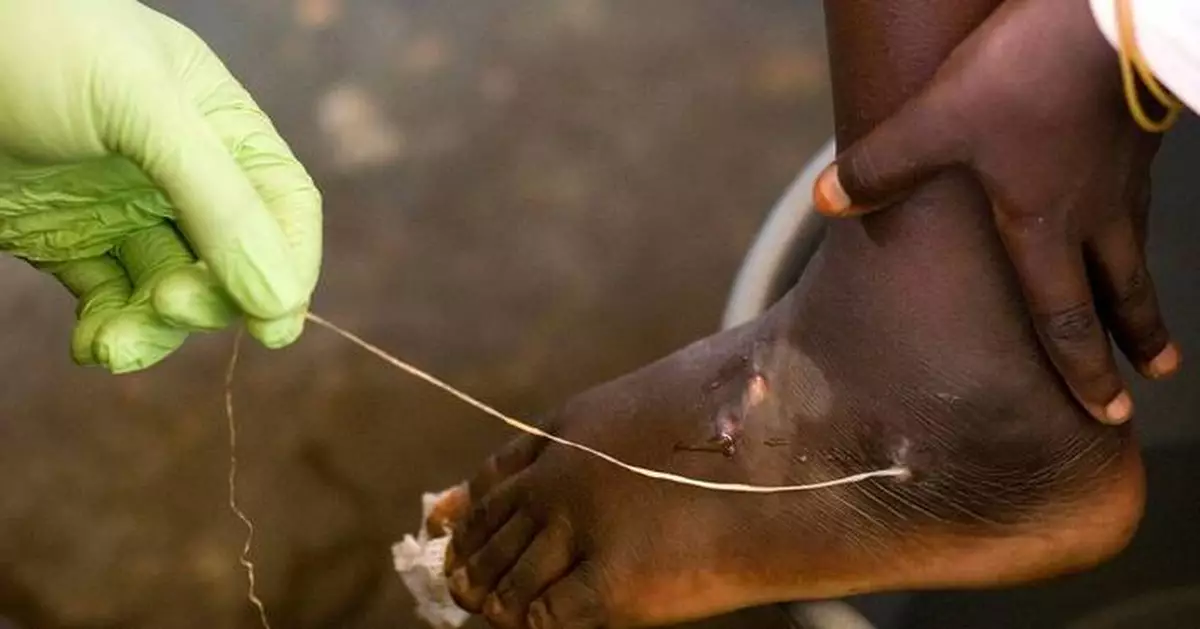
The worm is contracted by consuming water that contains larvae. It then grows inside an infected person, reaching as much as a meter long and the diameter of spaghetti. The worm then exits the person's body through a blister, which causes intense pain.
Infections can spread when those who suffer from the condition sometimes immerse themselves in water to ease symptoms — allowing the worm to deposit larvae that can be consumed by others. The same cycle can happen through land animal infections when they come to the water source. Humans also can be infected by consuming fish or amphibious creatures that have consumed larvae.
The Carter Center's eradication program has worked alongside government health ministries and other organizations for decades to educate the public, train volunteers and distribute water filters in affected areas.
There is no treatment for Guinea worm, though infected people can take pain medication.
Weiss said the eradication program's next step is developing diagnostic tests, especially for animals. Testing long before an infected person or animal becomes symptomatic would allow behavioral changes to minimize or eliminate the chances of them allowing more larvae to enter a water source.
The Carter Center said Chad reported 147 animal infections in 2025, a 47% drop for what was once the global epicenter of animal infections. Cameroon reported 445, while Angola reported 70, Mali 17, South Sudan three and Ethiopia one.
Carter and his wife, Rosalynn, traveled extensively across the affected countries with Carter Center staff who worked with the World Health Organization, national health ministries and local officials to build the coordinated eradication effort.
Weiss said the President Donald Trump's decision to leave the WHO and pull back funding and U.S. involvement from a range of international aid efforts has forced some logistical changes to the center’s work on Guinea worm and in other areas. But, Weiss said, it has not stopped the Guinea worm program at ground level.
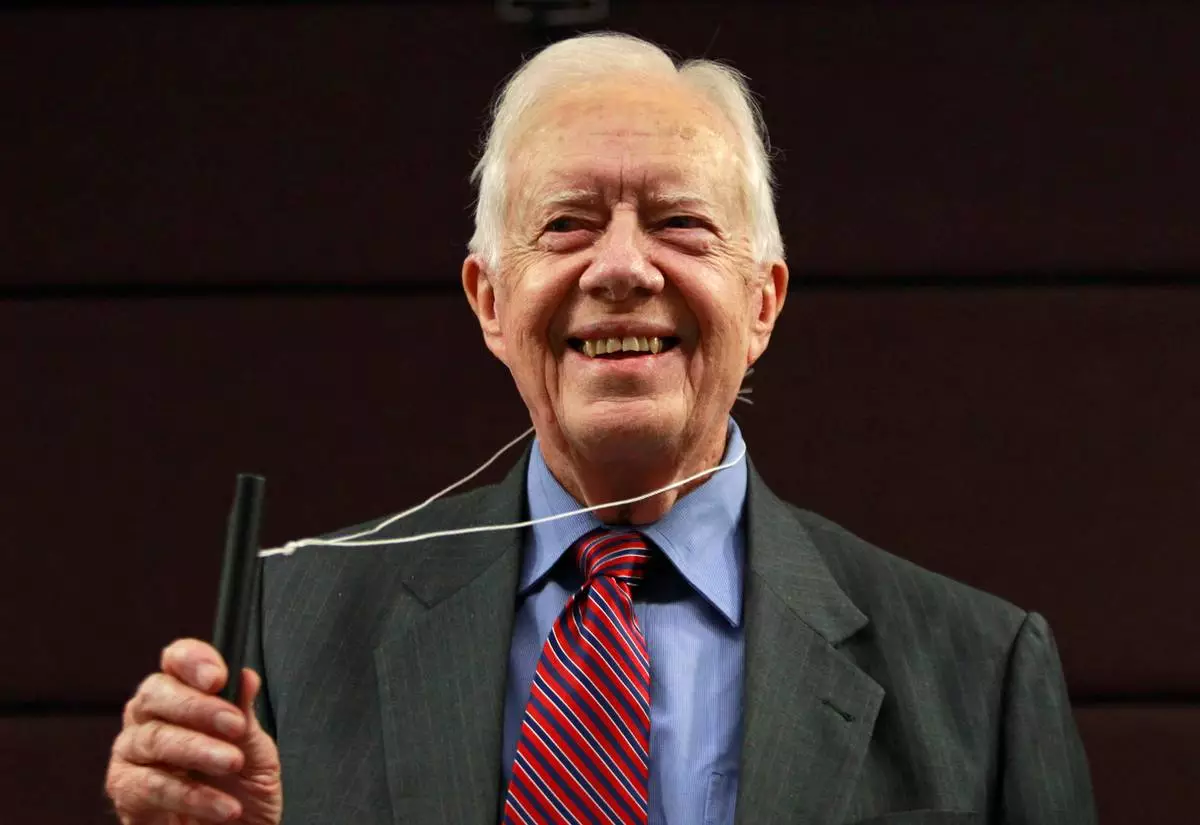
FILE - Former U.S. President Jimmy Carter poses for photographers with a water pipe filter, that is used to combat guinea worm disease, during a news conference to mark the launch of a campaign to eradicate the disease in central London, Wednesday, Oct. 5, 2011. (AP Photo/Lefteris Pitarakis, File)
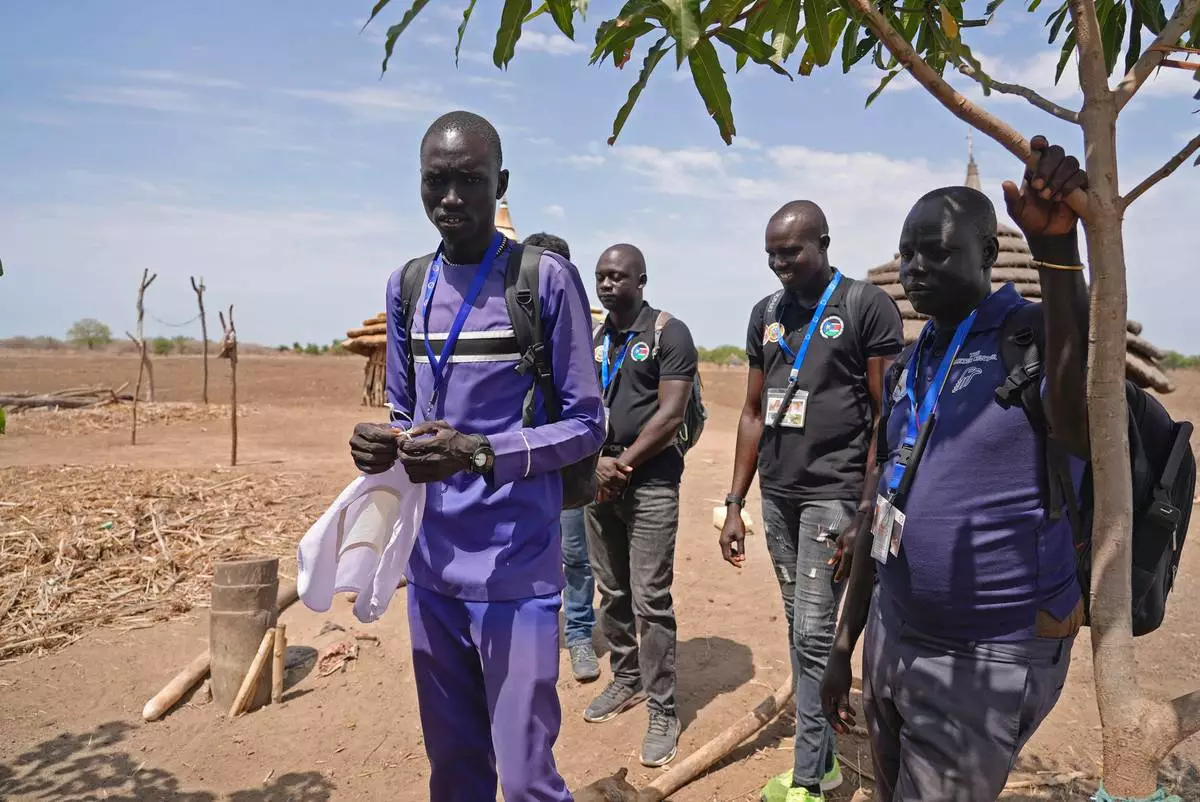
FILE - Aid workers with the Carter Center work in the community to raise awareness about Guinea worm and a family impacted in Jarweng, South Sudan, on May 13, 2023. (AP Photo/Sam Mednick, file)
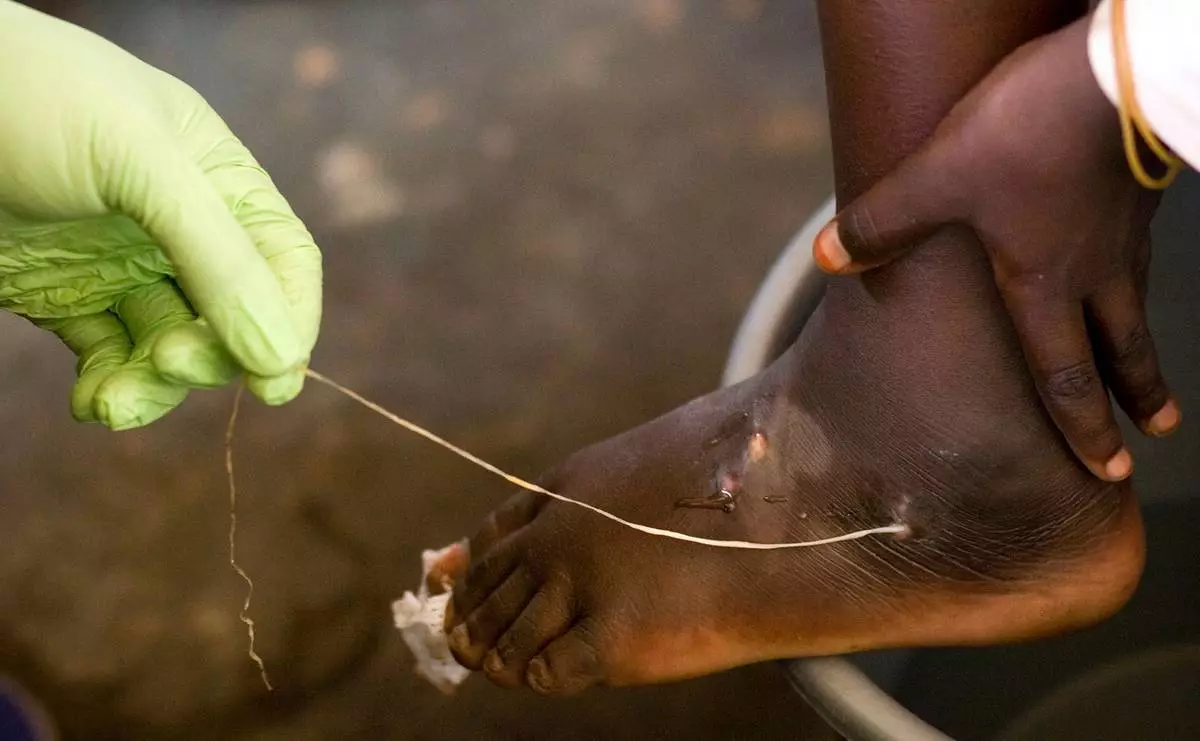
FILE - In this March 9, 2007 file photo, a guinea worm is extracted by a health worker from a child's foot at a containment center in Savelugu, Ghana. (AP Photo/Olivier Asselin, File)
LOS ANGELES (AP) — California Gov. Gavin Newsom’s office is demanding a civil rights investigation of Dr. Mehmet Oz, saying he discriminated against Armenians in a video claiming hospice fraud in Los Angeles, the latest front in the state’s ongoing battle with the Trump administration.
The Democratic governor's complaint, filed Thursday, came after Oz posted a video on social media in front of an Armenian bakery in Los Angeles, alleging that roughly $3.5 billion in hospice and home care fraud has taken place in the city and “quite a bit of it” was run by “the Russian Armenian mafia.” Oz is the administrator for the Centers for Medicare and Medicaid Services, which certifies hospice providers to accept patients on government-subsidized health insurance.
Newsom's office argued in the complaint that Oz “spewed baseless and racially charged allegations" that risked chilling participation in hospice and home care programs among the community targeted. His office said the claims had “already caused real-world harm” by dampening business at an Armenian bakery that is shown in the video.
“Mafia? There is no Armenian mafia going on here. We’re just hardworking business owners. I don’t understand why he’s mentioning just Armenians,” Movses Bislamyan, whose family-owned bakery appears in Oz’s video, told KABC-TV.
Oz and CMS didn't immediately respond to a request for comment on the complaint or the content of the video, and they haven't publicly shared details about the fraud being alleged.
Oz’s video also points to a larger Trump administration effort to spotlight fraud around the country. That effort comes after allegations of fraud involving day care centers run by Somali residents in Minneapolis prompted a massive immigration crackdown in the Midwestern city, resulting in widespread protests.
Earlier in the week, Newsom acknowledged fraud in hospice care in California but said the state has been working for years to crack down on it. He noted he signed a law in 2021 to stop providing new hospice licenses over fraud concerns and said the state has revoked more than 280 hospice licenses in recent years. Another 300 hospices are being examined for possible fraud, Newsom’s office said. The state did not immediately provide a list of all businesses that have had their licenses revoked.
“We’ve identified and cracked down on hospice fraud for years, taking real action to protect patients and taxpayers,” Newsom said in a statement.
Oz's video shows him visiting the Van Nuys neighborhood of Los Angeles and pointing to a four-block radius that he says is home to 42 hospices, suggesting potential fraud. He references a business that he says was part of a $16 million fraud scheme. Oz describes the Armenian script on the businesses' signs while the camera pans to the bakery.
"You notice the lettering and language behind me is of that dialect,” says Oz, whose parents emigrated to the U.S. from Turkey. He also claims there “has not been a lot of attention on these problems” in California.
Aram Hamparian, executive director of the Armenian National Committee of America, said Oz’s comments invoke “easy stereotypes” about the Armenian community, which has deep roots in California.
More than 200,000 people of Armenian descent are estimated to live in Los Angeles County, where April is celebrated as Armenian History Month. A small section of Los Angeles is known as Little Armenia, and the suburban city of Glendale, about 15 miles (24 kilometers) from where Oz recorded the video, is a center of the community.
Hamparian said Oz’s connections to Turkey are concerning. That nation's government does not acknowledge the killing and deportation of Armenians by Ottoman Empire forces in the early 1900s, known as the Armenian genocide.
“Things have been dealt with at the state level, prosecutions have been made,” Hamparian said. “But Dr. Oz is taking this in an entirely destructive direction by scapegoating, by fear-mongering, by staging the theatric collective indictment of all Armenians.”
Turkey and Armenia have long been strained by historic grievances and Turkey’s alliance with Azerbaijan. The neighboring countries have no formal diplomatic ties, and their joint border has remained closed since the 1990s, though late last year they agreed to simplify visa procedures in an effort to normalize ties.
The feud is among many that have sprung up between Newsom, seen as a potential Democratic presidential candidate for 2028, and the Republican administration of President Donald Trump. Newsom and Trump have clashed over issues ranging from the federal administration’s National Guard deployment in Los Angeles to the president’s efforts to block California’s 2035 ban on new gas-powered cars, a nationwide first.
Swenson reported from New York. Associated Press reporter Olga R. Rodriguez in San Francisco contributed to this story.

California Governor Gavin Newsom is seen during the Annual Meeting of the World Economic Forum in Davos, Switzerland, Tuesday, Jan. 20, 2026. (AP Photo/Markus Schreiber)