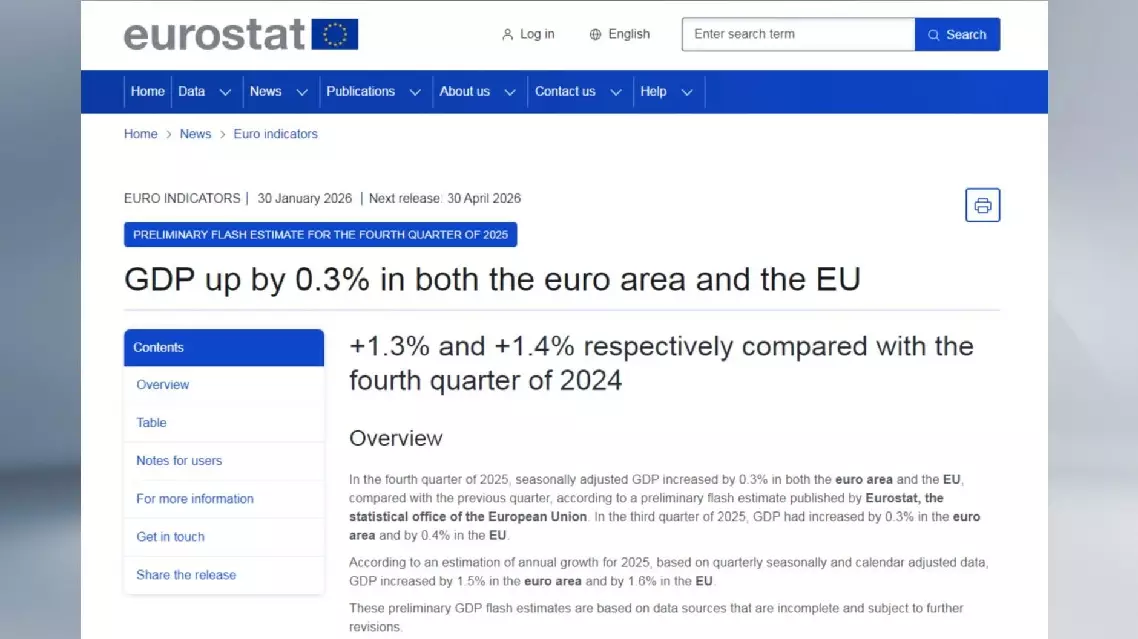
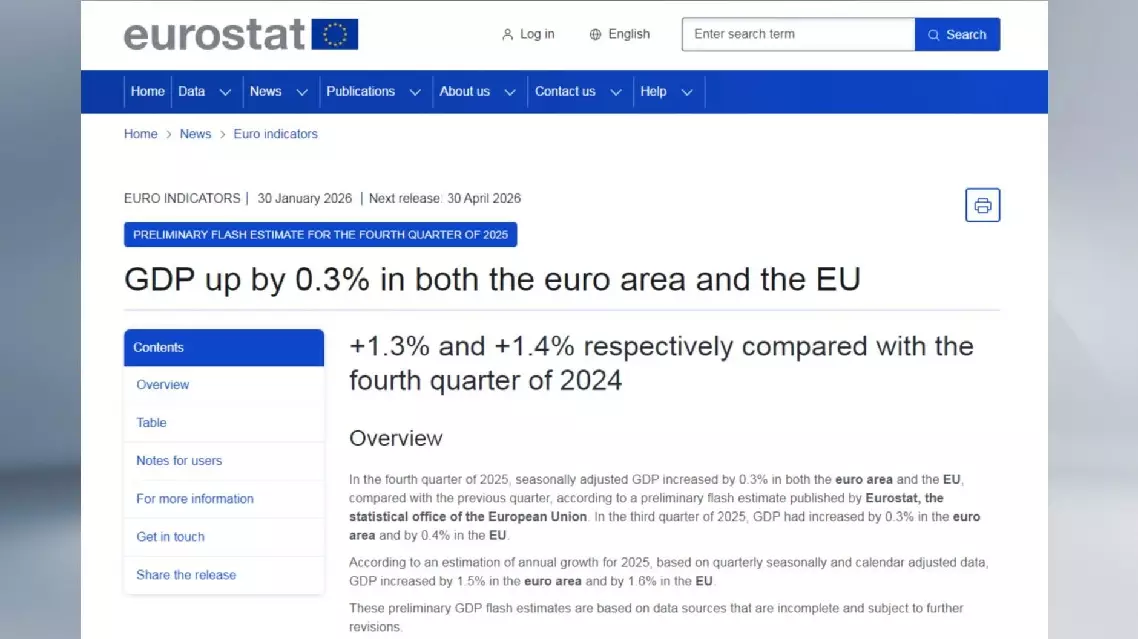
Gross domestic product (GDP) in the euro area grew by 1.5 percent in 2025, while the European Union (EU) economy expanded by 1.6 percent, according to data released on Friday by the EU's statistical office Eurostat.
The figures are based on quarterly seasonally and calendar-adjusted data. Growth momentum moderated toward the end of the year, with seasonally adjusted GDP in both the euro area and the EU rising 0.3 percent quarter-on-quarter in the fourth quarter of 2025.
On a year-on-year basis, GDP expanded by 1.3 percent in the euro area and 1.4 percent in the EU in the fourth quarter.
Among member states with available data for the fourth quarter, Lithuania recorded the strongest quarterly growth at 1.7 percent, followed by Spain and Portugal at 0.8 percent each, while Ireland was the only country to register a contraction, with GDP declining 0.6 percent.
Among the bloc's largest economies, Germany's GDP rose 0.3 percent quarter-on-quarter in the fourth quarter of 2025, while France expanded 0.2 percent and Italy grew 0.3 percent, Eurostat data showed.
ING Chief Economist Bert Colijn said the eurozone outlook remains clouded by multiple headwinds, including global uncertainty and weakening competitiveness, which could make trade a drag on growth this year. He added that structural challenges are being addressed too slowly, weighing on longer-term prospects, but noted that firmer domestic demand and planned investment could still support a modest pickup in growth in the coming quarters.
Markets widely expect the European Central Bank (ECB) to keep interest rates unchanged at 2 percent at its first monetary policy meeting of 2026, amid an uncertain global backdrop and lingering competitiveness concerns in the euro area.
Eurozone economy grows by 1.5 pct in 2025
Eurozone economy grows by 1.5 pct in 2025
Eurozone economy grows by 1.5 pct in 2025
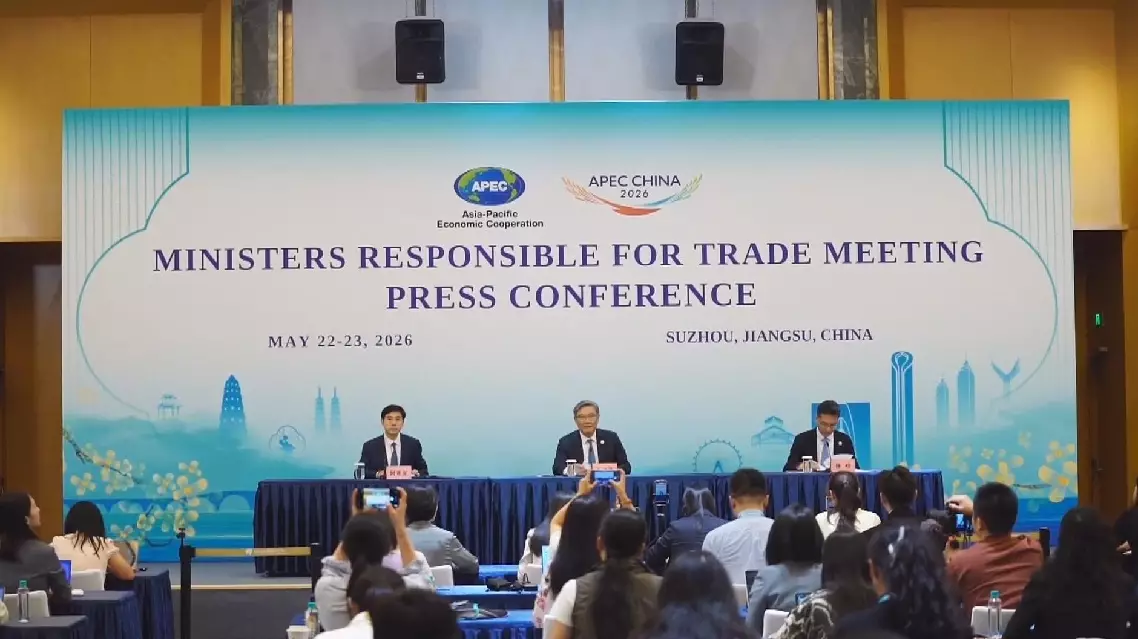
The 32nd Asia-Pacific Economic Cooperation (APEC) Ministers Responsible for Trade Meeting concluded in east China's Suzhou on Saturday, yielding fruitful results and laying significant groundwork for the APEC Economic Leaders' Meeting in November.
The trade ministers' meeting focused on "building an open and predictable regional and multilateral economic and trade order" and "fostering new engines of innovative and dynamic trade and investment cooperation."
Chinese Commerce Minister Wang Wentao briefed the media on the meeting's outcomes at a press conference.
Wang said the meeting issued a joint statement titled the Suzhou Statement, and approved the latest edition of the APEC Roadmap for Innovative, Competitive and Resilient Services.
All parties agreed to advance policy innovation and reform in services trade, build an open and predictable investment environment, improve regional trade facilitation and supply chain resilience, strengthen standards coordination, and enhance intellectual property protection, Wang told the media.
He also said that substantial progress was made on a framework document for regional digital trade cooperation and the ministers emphasized promoting inclusive AI development, strengthening AI-related trade, and bridging the digital divide to ensure shared benefits from digital transformation.
The minister noted that the outcomes of the meeting demonstrated strong cooperation willingness, highlighted an innovation-oriented approach, and reflected inclusiveness and shared benefits. "The fact that Asia-Pacific economies can come together, uphold the original aspiration of promoting trade and investment liberalization and facilitation while supporting economic growth and prosperity, and engage in in-depth discussions on the important issue of 'where multilateral and regional economic and trade cooperation is headed,' fully demonstrates that open regionalism and true multilateralism enjoy broad support, and that mutual success and shared development serve the fundamental interests of all economies," Wang said.
2026 APEC trade ministers' meeting concludes with fruitful results