Skip to Content Facebook Feature Image

What to know about the Strait of Hormuz as Iran plans military drill while tensions are high with US

News

What to know about the Strait of Hormuz as Iran plans military drill while tensions are high with US
News

News

What to know about the Strait of Hormuz as Iran plans military drill while tensions are high with US

2026-02-18 01:03 Last Updated At:15:53

DUBAI, United Arab Emirates (AP) — The Strait of Hormuz, the narrow mouth of the Persian Gulf, again has become a focus of tensions as Iran prepares to launch a military drill that could see fire into a lane crucial for global shipping.

Iran has warned ships that it will conduct a live fire drill Sunday and Monday in the strait, which sees a fifth of all oil traded pass through the tight corridor between the Islamic Republic and Oman.

More Images
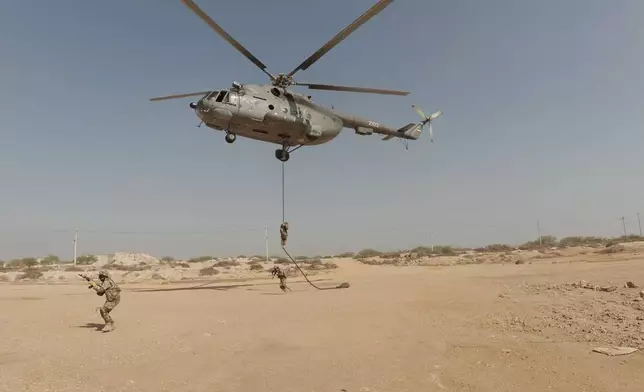
In this image provided by Sepahnews of the Iranian Revolutionary Guard on Feb. 16, 2026, shows the Iranian Revolutionary Guard's drill in the Persian Gulf on Monday, Feb. 16, 2026. (Sepahnews via AP)
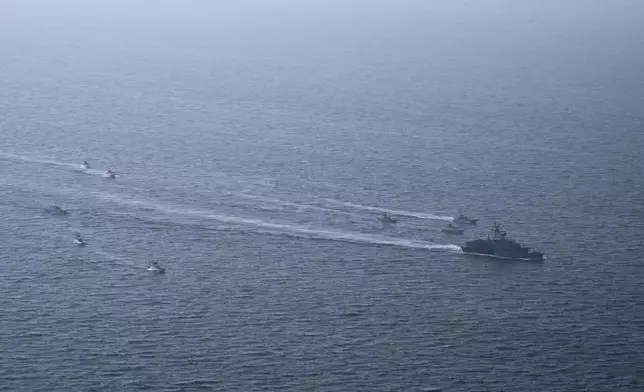
In this image provided by Sepahnews of the Iranian Revolutionary Guard on Feb. 16, 2026, shows the Iranian Revolutionary Guard's drill in the Persian Gulf on Monday, Feb. 16, 2026. (Sepahnews via AP)
In this image provided by Sepahnews of the Iranian Revolutionary Guard on Feb. 16, 2026, shows the Iranian Revolutionary Guard's drill in the Persian Gulf on Monday, Feb. 16, 2026. (Sepahnews via AP)

In this image provided by Sepahnews of the Iranian Revolutionary Guard on Feb. 16, 2026, shows the Iranian Revolutionary Guard's drill in the Persian Gulf on Monday, Feb. 16, 2026. (Sepahnews via AP)

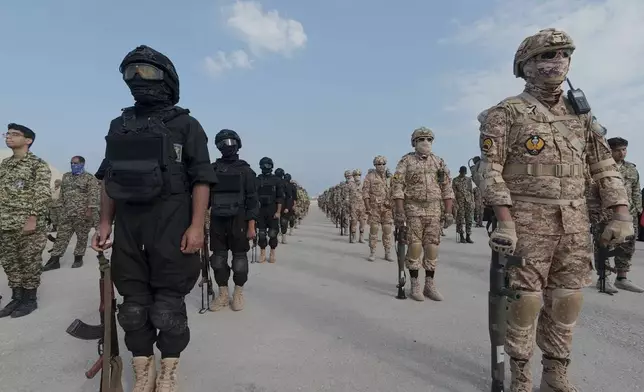
In this image provided by Sepahnews of the Iranian Revolutionary Guard on Feb. 16, 2026, shows troops standing at attention during the guard's drill in the Persian Gulf on Monday, Feb. 16, 2026. (Sepahnews via AP)
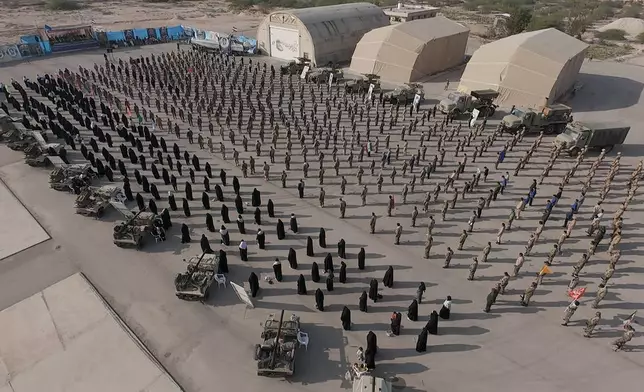
In this image provided by Sepahnews of the Iranian Revolutionary Guard on Feb. 16, 2026, shows troops standing at attention during the guard's drill in the Persian Gulf on Monday, Feb. 16, 2026. (Sepahnews via AP)
In this image provided by Sepahnews of the Iranian Revolutionary Guard on Feb. 16, 2026, shows troops standing at attention during the guard's drill in the Persian Gulf on Monday, Feb. 16, 2026. (Sepahnews via AP)

In this image provided by Sepahnews of the Iranian Revolutionary Guard on Feb. 16, 2026, shows troops standing at attention during the guard's drill in the Persian Gulf on Monday, Feb. 16, 2026. (Sepahnews via AP)

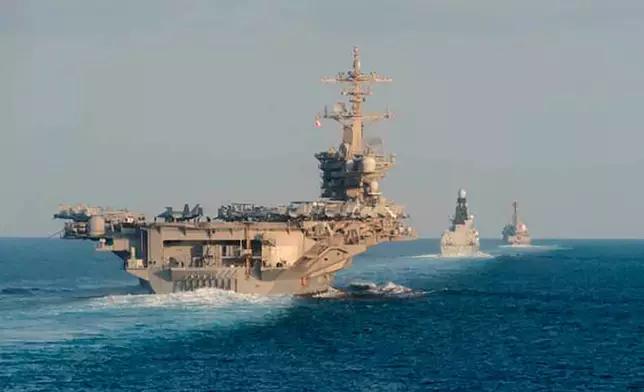
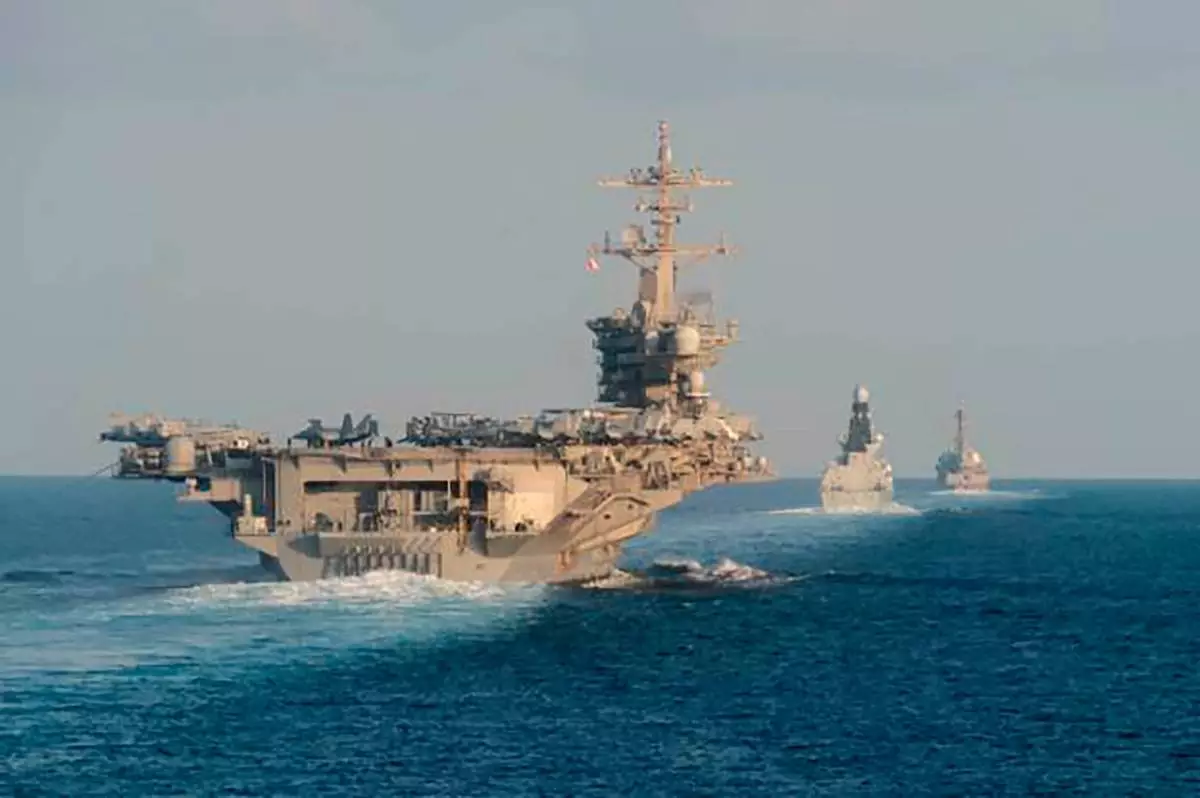
FILE - In this Nov. 19, 2019, photo made available by U.S. Navy, the aircraft carrier USS Abraham Lincoln, left, the air-defense destroyer HMS Defender and the guided-missile destroyer USS Farragut transit the Strait of Hormuz with the guided-missile cruiser USS Leyte Gulf. (Mass Communication Specialist 3rd Class Zachary Pearson/U.S. Navy via AP, File)
FILE - In this Nov. 19, 2019, photo made available by U.S. Navy, the aircraft carrier USS Abraham Lincoln, left, the air-defense destroyer HMS Defender and the guided-missile destroyer USS Farragut transit the Strait of Hormuz with the guided-missile cruiser USS Leyte Gulf. (Mass Communication Specialist 3rd Class Zachary Pearson/U.S. Navy via AP, File)

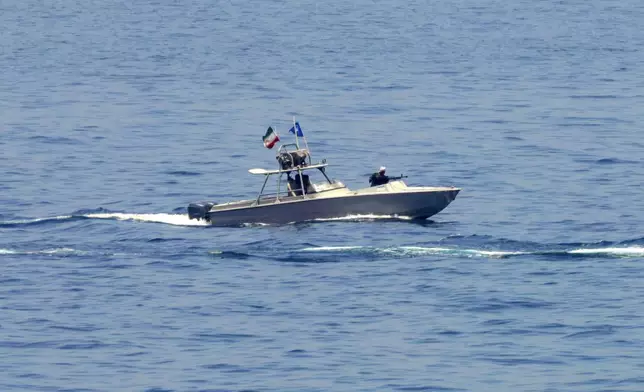
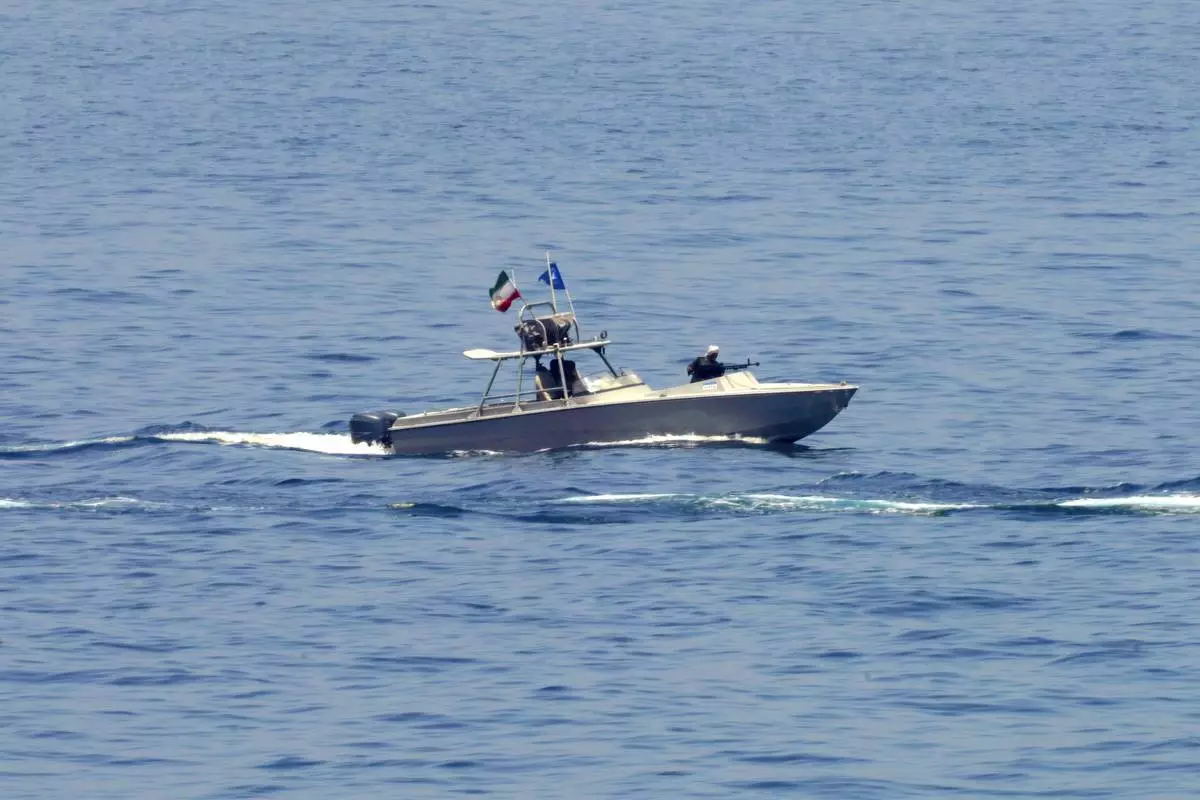
FILE - An Iranian Revolutionary Guard vessel watches an American warship in the Strait of Hormuz, May 19, 2023. (AP Photo/Jon Gambrell, File)
FILE - An Iranian Revolutionary Guard vessel watches an American warship in the Strait of Hormuz, May 19, 2023. (AP Photo/Jon Gambrell, File)

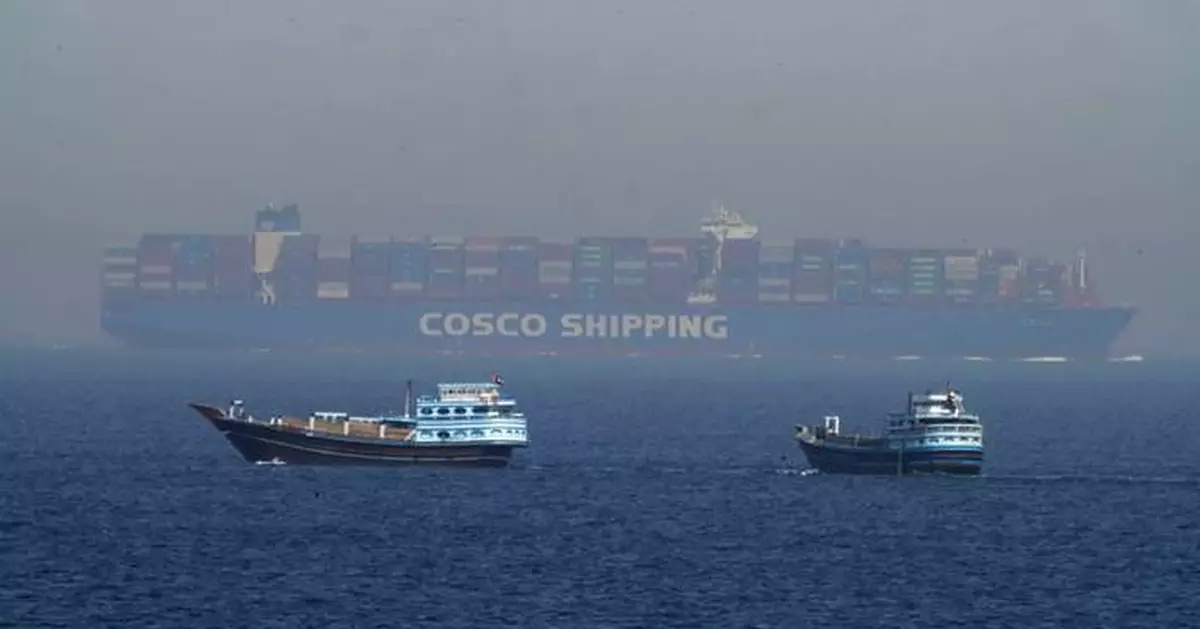
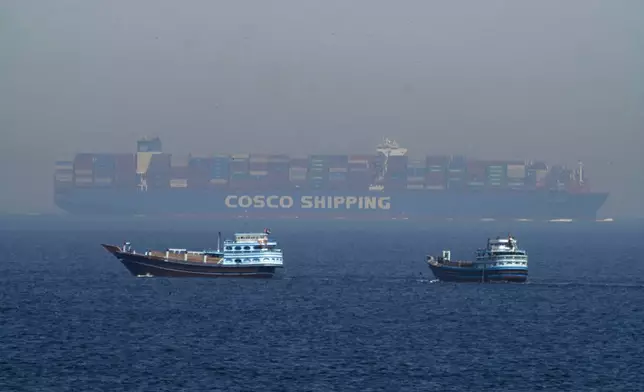
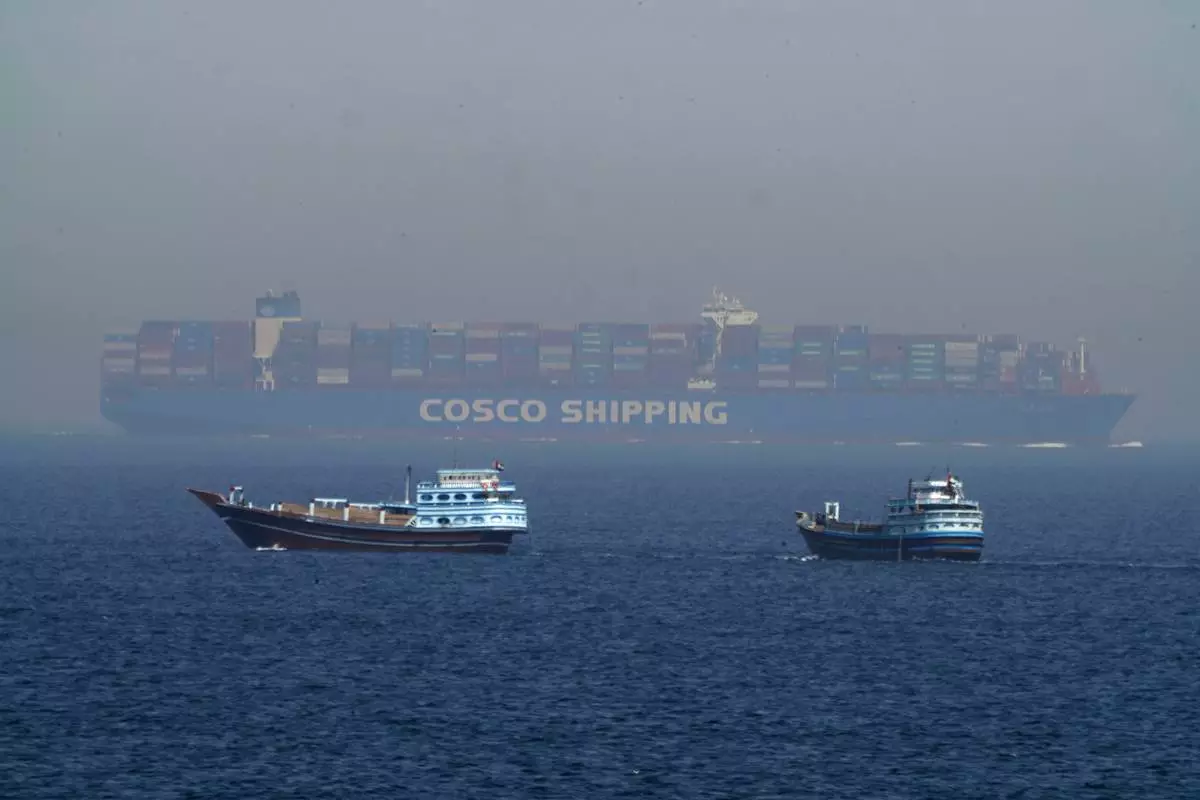
FILE - Two traditional dhows sail by a large container ship in the Strait of Hormuz, May 19, 2023. (AP Photo/Jon Gambrell, File)

FILE - Two traditional dhows sail by a large container ship in the Strait of Hormuz, May 19, 2023. (AP Photo/Jon Gambrell, File)

The U.S. military's Central Command issued its own warning early Saturday, telling Tehran that any “unsafe and unprofessional behavior near U.S. forces, regional partners or commercial vessels increases risks of collision, escalation and destabilization.”

Here's what to know about the drill, the U.S. warning, what caused the tensions and what might happen next in the Strait of Hormuz.

The Strait of Hormuz resembles a bend looking down from space. Its narrowest point is just 33 kilometers (21 miles) wide. It flows from the Persian Gulf into the Gulf of Oman. From there, ships can then travel to the rest of the world. While Iran and Oman have its territorial waters in the strait, its viewed as an international waterway all ships can ply. The United Arab Emirates, home to the skyscraper-studded city of Dubai, also sits near the waterway.

The Strait of Hormuz through history has been important for trade, with ceramics, ivory, silk and textiles moving from China through the region. In the modern era of supertankers, the narrow strait proved deep and wide enough to allow for oil to pass through it. While there are pipelines in Saudi Arabia and the UAE that can avoid the passage, the U.S. Energy Information Administration says “most volumes that transit the strait have no alternative means of exiting the region.” The vast majority of the oil and gas moving through the strait goes to markets in Asia. Threats to the route have spiked global energy prices in the past, including during the 12-day war Israel launched against Iran in June.

A notice to mariners sent Thursday by radio warned that Iran planned to conduct “naval shooting” in the Strait of Hormuz on Sunday and Monday. The coordinates provided by the message put the drill potentially going into what is known as the Traffic Separation Scheme — a 3.2-kilometer- (2-mile-) wide, two-lane system in which ships coming into the Persian Gulf go north and ships exiting onto the Gulf of Oman go south. That northern lane is within the coordinates of the drill. While Iran has provided no other public details about the drills, it will likely involve the country's paramilitary Revolutionary Guard. The Guard operates a fleet of small fast-attack vessels in the strait that routinely has tense encounters with the U.S. Navy.

Early Saturday, the U.S. military's Central Command issued a strongly worded warning to Iran and the Revolutionary Guard over the drill. While acknowledging Iran's “right to operate professionally in international airspace and waters,” it warned against interfering or threatening American warships or passing commercial vessels. The command, which oversees the U.S. Navy's Bahrain-based 5th Fleet, said it “will not tolerate unsafe (Guard) actions” that could include its aircraft or vessels getting too close to American warships or pointing weapons toward them. The command added that “the U.S. military has the most highly trained and lethal force in the world.”

U.S. President Donald Trump has threatened to launch a military strike against Iran after its bloody crackdown on nationwide protests. He has laid down two red lines — the killing of peaceful protesters and Iran launching a wave of mass executions of those held. In recent days, he's also included the fate of Iran's nuclear program. The USS Abraham Lincoln aircraft carrier and supporting guided missile destroyers are now in the Arabian Sea where they could launch an attack if Trump calls for it. Iran has warned it could launch its own preemptive strike or target American interests across the Middle East and Israel. While the 12-day war saw Iran fire off ballistic missiles and Israel target its stockpile, Tehran maintains an arsenal of short- and medium-range missiles that could hit surrounding Gulf Arab states.
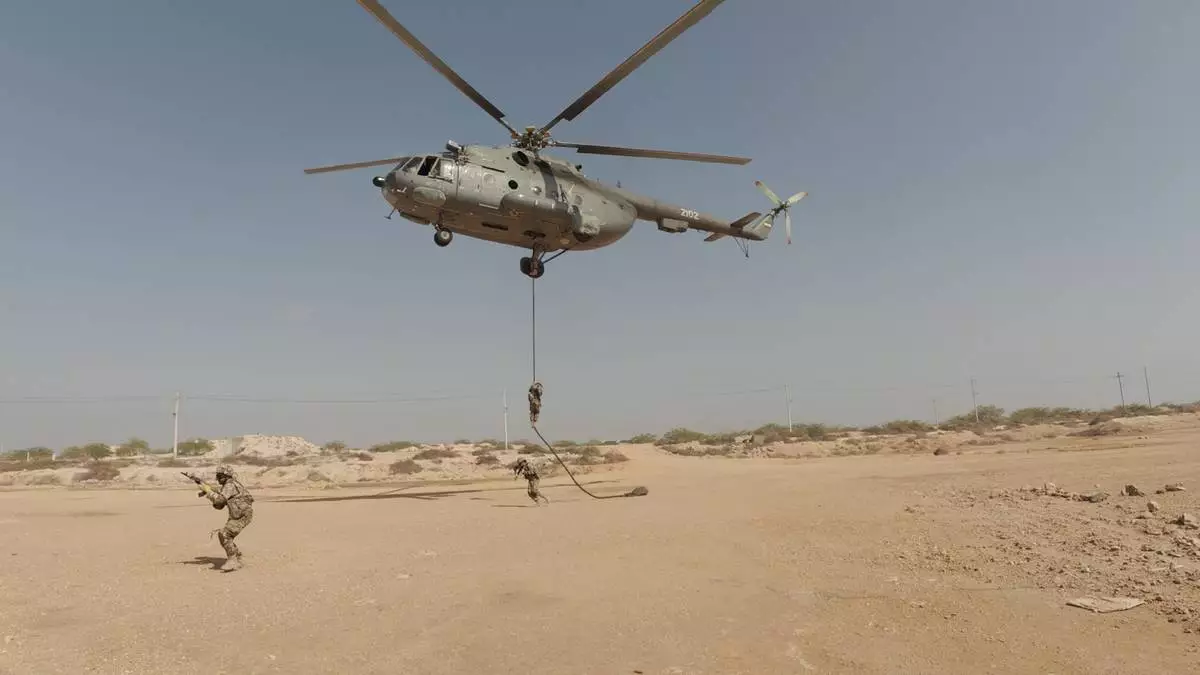
In this image provided by Sepahnews of the Iranian Revolutionary Guard on Feb. 16, 2026, shows the Iranian Revolutionary Guard's drill in the Persian Gulf on Monday, Feb. 16, 2026. (Sepahnews via AP)
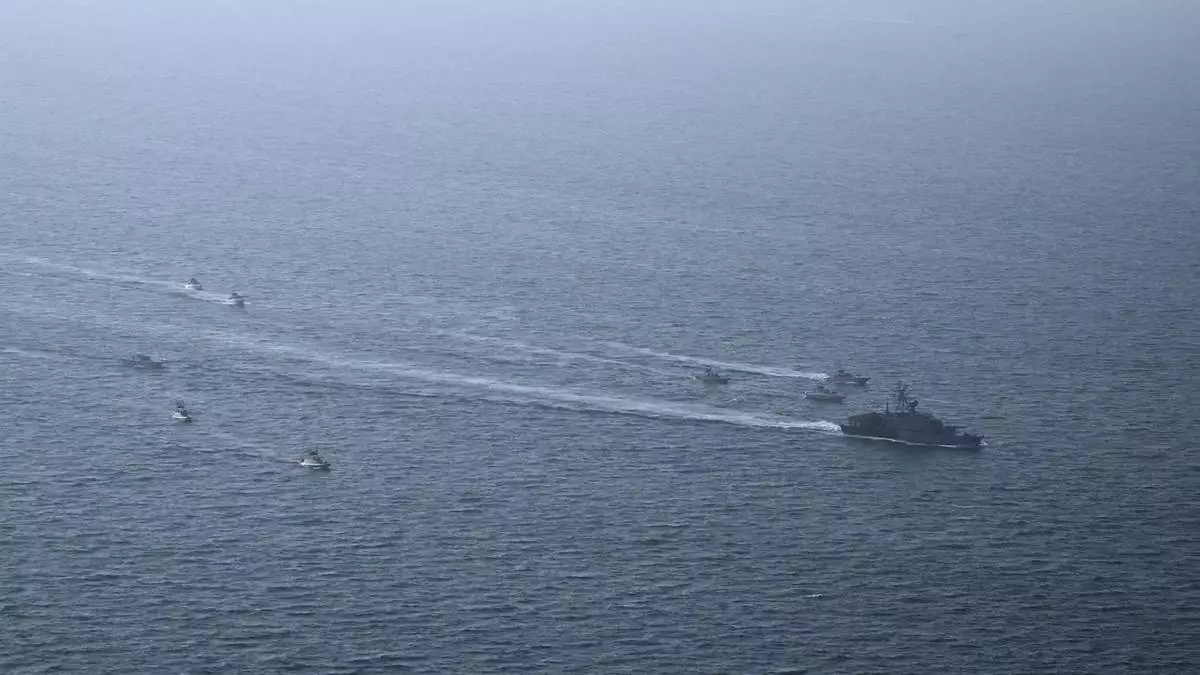
In this image provided by Sepahnews of the Iranian Revolutionary Guard on Feb. 16, 2026, shows the Iranian Revolutionary Guard's drill in the Persian Gulf on Monday, Feb. 16, 2026. (Sepahnews via AP)
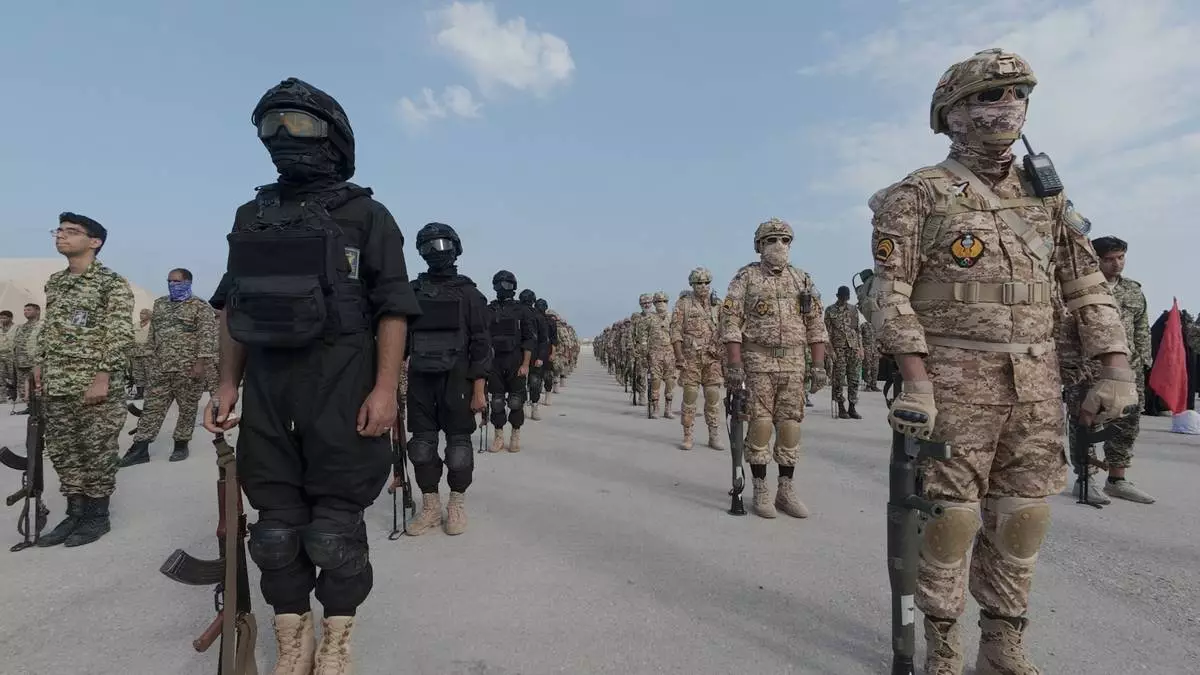
In this image provided by Sepahnews of the Iranian Revolutionary Guard on Feb. 16, 2026, shows the Iranian Revolutionary Guard's drill in the Persian Gulf on Monday, Feb. 16, 2026. (Sepahnews via AP)

In this image provided by Sepahnews of the Iranian Revolutionary Guard on Feb. 16, 2026, shows the Iranian Revolutionary Guard's drill in the Persian Gulf on Monday, Feb. 16, 2026. (Sepahnews via AP)

In this image provided by Sepahnews of the Iranian Revolutionary Guard on Feb. 16, 2026, shows troops standing at attention during the guard's drill in the Persian Gulf on Monday, Feb. 16, 2026. (Sepahnews via AP)
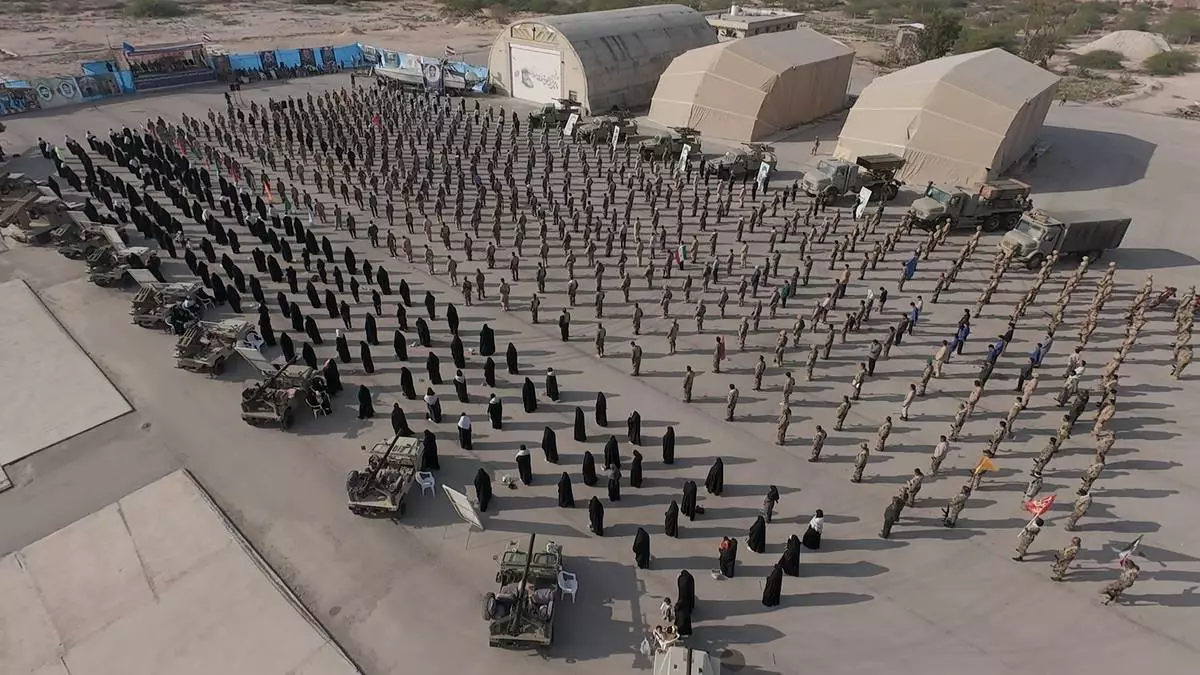
In this image provided by Sepahnews of the Iranian Revolutionary Guard on Feb. 16, 2026, shows troops standing at attention during the guard's drill in the Persian Gulf on Monday, Feb. 16, 2026. (Sepahnews via AP)
In this image provided by Sepahnews of the Iranian Revolutionary Guard on Feb. 16, 2026, shows troops standing at attention during the guard's drill in the Persian Gulf on Monday, Feb. 16, 2026. (Sepahnews via AP)

In this image provided by Sepahnews of the Iranian Revolutionary Guard on Feb. 16, 2026, shows troops standing at attention during the guard's drill in the Persian Gulf on Monday, Feb. 16, 2026. (Sepahnews via AP)

FILE - In this Nov. 19, 2019, photo made available by U.S. Navy, the aircraft carrier USS Abraham Lincoln, left, the air-defense destroyer HMS Defender and the guided-missile destroyer USS Farragut transit the Strait of Hormuz with the guided-missile cruiser USS Leyte Gulf. (Mass Communication Specialist 3rd Class Zachary Pearson/U.S. Navy via AP, File)
FILE - In this Nov. 19, 2019, photo made available by U.S. Navy, the aircraft carrier USS Abraham Lincoln, left, the air-defense destroyer HMS Defender and the guided-missile destroyer USS Farragut transit the Strait of Hormuz with the guided-missile cruiser USS Leyte Gulf. (Mass Communication Specialist 3rd Class Zachary Pearson/U.S. Navy via AP, File)

FILE - An Iranian Revolutionary Guard vessel watches an American warship in the Strait of Hormuz, May 19, 2023. (AP Photo/Jon Gambrell, File)
FILE - An Iranian Revolutionary Guard vessel watches an American warship in the Strait of Hormuz, May 19, 2023. (AP Photo/Jon Gambrell, File)

FILE - Two traditional dhows sail by a large container ship in the Strait of Hormuz, May 19, 2023. (AP Photo/Jon Gambrell, File)

FILE - Two traditional dhows sail by a large container ship in the Strait of Hormuz, May 19, 2023. (AP Photo/Jon Gambrell, File)
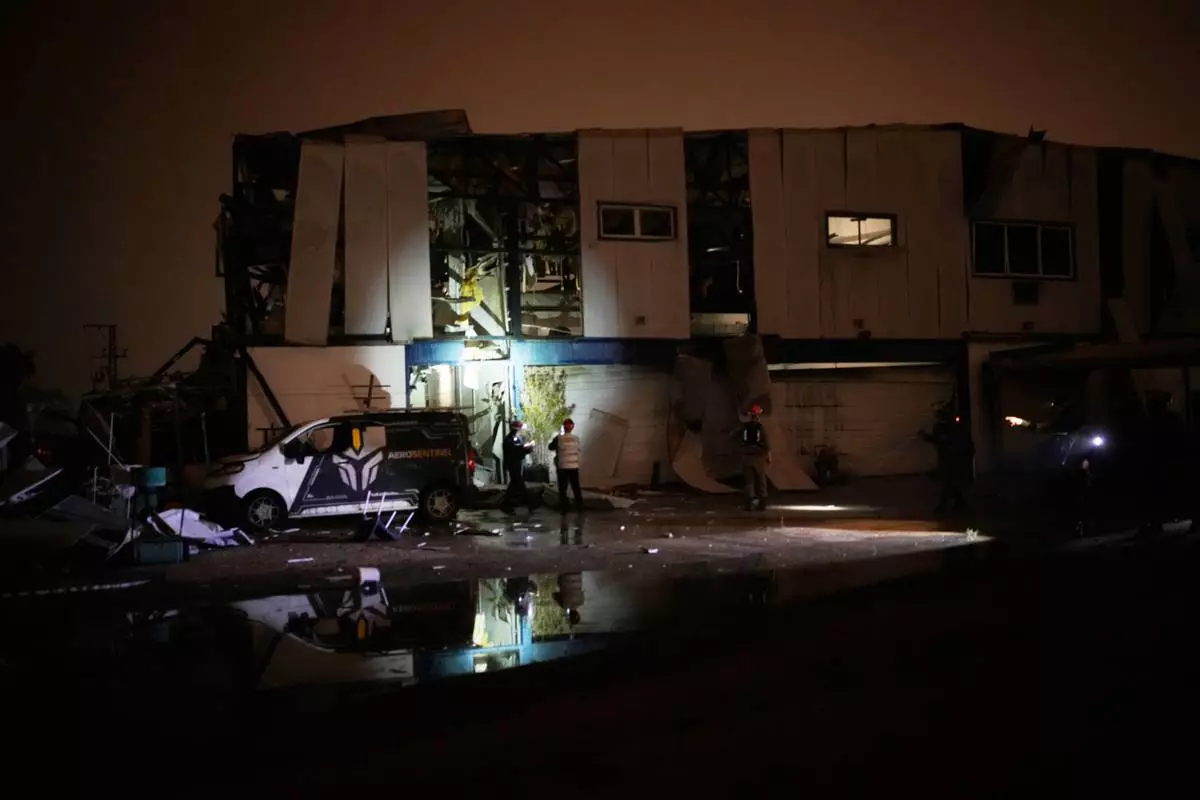
DUBAI, United Arab Emirates (AP) — Iran fired on targets across the Middle East while American and Israeli airstrikes hit the Islamic Republic early Friday as the war neared the end of its fifth week unabated and the U.N. Security Council prepared to meet over Tehran’s stranglehold on the Strait of Hormuz.

Despite claims from the U.S. and Israel that Iran’s military capabilities have been all but destroyed, Tehran has continued to keep the pressure on Israel and its Gulf Arab neighbors. Bahrain and Kuwait both reported early morning barrages from Iran, while Israel warned of incoming missiles.

Activists reported strikes around Tehran and the central city of Isfahan, but it wasn’t immediately clear what was hit.

Iran’s attacks on Gulf region energy infrastructure and its tight grip on the Strait of Hormuz, through which a fifth of the world’s oil and natural gas transits in peacetime, have sent oil prices skyrocketing and is impacting global economies.

Spot prices of Brent crude, the international standard, were around $109 early Friday, up more than 50% from Feb. 28 when Israel and the U.S. started the war with their attacks on Iran.

Shipping had flowed freely through the strait before the war, but U.S. President Donald Trump has said it’s not now Washington’s responsibility to get the waterway reopened, instead putting the onus on others, saying this week that the countries that depend more on fuel shipped through Hormuz should “build some delayed courage” and go “take it.”

The U.N. Security Council was expected to vote Saturday on a proposal from Bahrain that would authorize defensive action to ensure vessels can safely transit the strait. Bahrain’s initial draft would have allowed countries to “use all necessary means” to secure the strait, but Russia, China and France — who have veto power on the Council — expressed opposition to approving the use of force.

Speaking Thursday in South Korea, French President Emmanuel Macron said the American expectation that the Strait of Hormuz could be reopened by force was unrealistic.

Macron said a military operation “would take an infinite amount of time and would expose anyone passing through the strait to coastal threats from (Iran’s) Revolutionary Guard." He added that reopening of the strait “can only be done in coordination with Iran,” through negotiations that would follow a potential ceasefire.

Talks organized by Britain and involving more than 40 countries focused on political rather than military means to secure the strait. The nations, which didn't include the U.S., urged increased diplomatic pressure on Iran and possible sanctions.

More than 1,900 people have been killed in Iran during the war, while 19 have been reported dead in Israel. More than two dozen people have died in Gulf states and the occupied West Bank, while 13 U.S. service members have been killed.

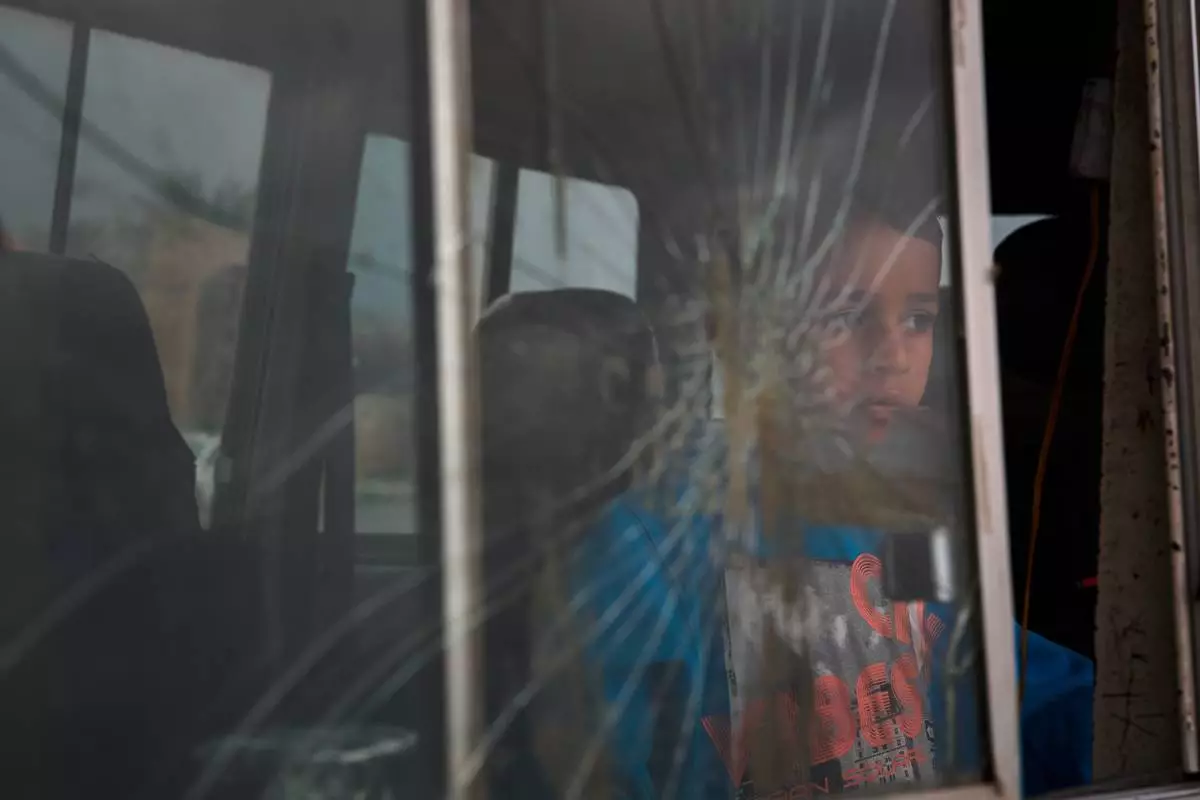
More than 1,300 people have been killed and more than 1 million displaced in Lebanon, where Israel has launched a ground invasion in its fight with the pro-Iranian Hezbollah militant group. Ten Israeli soldiers have also died there.

Rising reported from Bangkok. AP journalists Sylvie Corbet in Paris and Edith M. Lederer at the United Nations contributed to this report.

Israeli security forces and rescue teams inspect a site struck by an Iranian missile in Petah Tikva, Israel,Thursday, April 2, 2026. (AP Photo/Ohad Zwigenberg)

Israeli security forces and rescue teams inspect a site struck by an Iranian missile in Petah Tikva, Israel,Thursday, April 2, 2026. (AP Photo/Ohad Zwigenberg)

A boy who fled with his family following Israeli strikes in southern Lebanon sits inside the van they are using as shelter in Sidon, Lebanon, Thursday, April 2, 2026. (AP Photo/Emilio Morenatti)

A boy who fled with his family following Israeli strikes in southern Lebanon sits inside the van they are using as shelter in Sidon, Lebanon, Thursday, April 2, 2026. (AP Photo/Emilio Morenatti)

Israeli security forces and rescue teams inspect a site struck by an Iranian missile in Petah Tikva, Israel,Thursday, April 2, 2026. (AP Photo/Ohad Zwigenberg)

Israeli security forces and rescue teams inspect a site struck by an Iranian missile in Petah Tikva, Israel,Thursday, April 2, 2026. (AP Photo/Ohad Zwigenberg)

Recommended Articles