Skip to Content Facebook Feature Image

What to know about the partial government shutdown

News

What to know about the partial government shutdown
News

News

What to know about the partial government shutdown

2026-02-04 03:24 Last Updated At:03:41

WASHINGTON (AP) — The partial government shutdown is vastly different from the record closure in the fall.

That is mostly because this shutdown, which started Saturday, does not include the whole of government and may not last long, even as it now drags into the new week.

More Images
Senate Minority Leader Chuck Schumer, D-N.Y., speaks during a news conference at the Capitol in Washington, Friday, Jan. 30, 2026. The Senate voted Friday to fund most of the government through the end of September after President Donald Trump made a deal with Democrats to carve out Homeland Security funding and allow Congress to debate new restrictions on federal immigration raids across the country. (AP Photo/Jose Luis Magana)

Senate Minority Leader Chuck Schumer, D-N.Y., speaks during a news conference at the Capitol in Washington, Friday, Jan. 30, 2026. The Senate voted Friday to fund most of the government through the end of September after President Donald Trump made a deal with Democrats to carve out Homeland Security funding and allow Congress to debate new restrictions on federal immigration raids across the country. (AP Photo/Jose Luis Magana)

A man walks by posters of Renee Nicole Good and Alex Pretti, who were both fatally shot by federal agents, in Minneapolis, Saturday, Jan. 31, 2026. (AP Photo/Ryan Murphy)
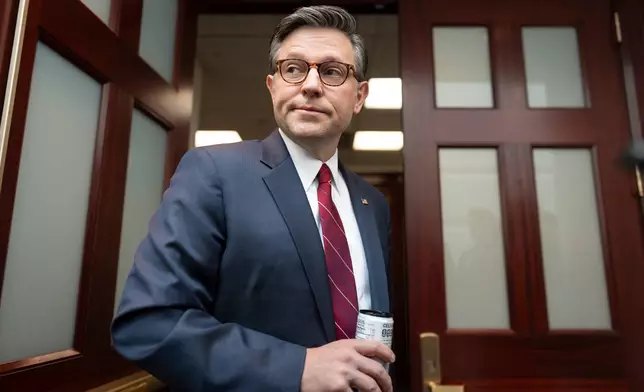
A man walks by posters of Renee Nicole Good and Alex Pretti, who were both fatally shot by federal agents, in Minneapolis, Saturday, Jan. 31, 2026. (AP Photo/Ryan Murphy)

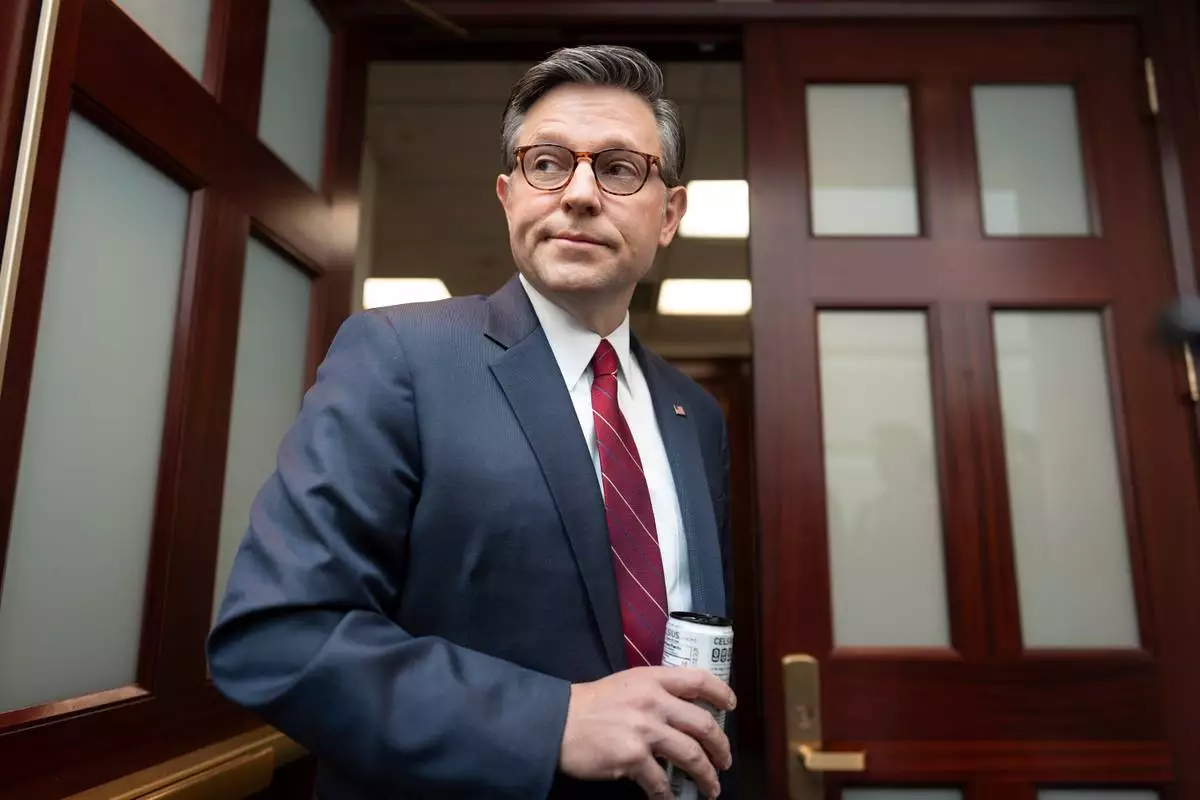
Speaker of the House Mike Johnson, R-La., pauses for questions from reporters as he arrives for an early closed-door Republican Conference meeting on how to end the partial government shutdown and deal with demands over immigration enforcement operations, at the Capitol in Washington, Tuesday, Feb. 3, 2026. (AP Photo/J. Scott Applewhite)
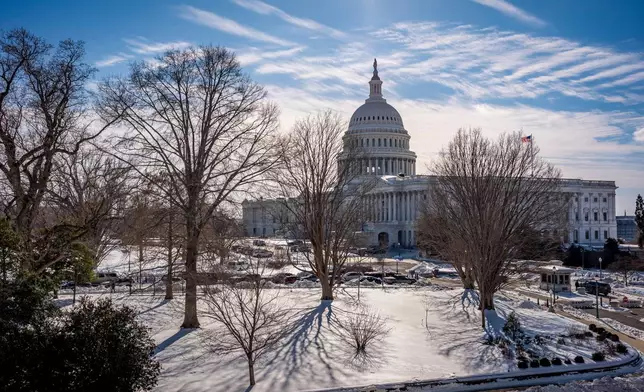
Speaker of the House Mike Johnson, R-La., pauses for questions from reporters as he arrives for an early closed-door Republican Conference meeting on how to end the partial government shutdown and deal with demands over immigration enforcement operations, at the Capitol in Washington, Tuesday, Feb. 3, 2026. (AP Photo/J. Scott Applewhite)

The Capitol is seen from the Russell Senate Office Building as lawmakers argue on whether to move forward with the spending legislation that funds the Department of Homeland Security, at the Capitol in Washington, Thursday, Jan. 29, 2026. (AP Photo/J. Scott Applewhite)
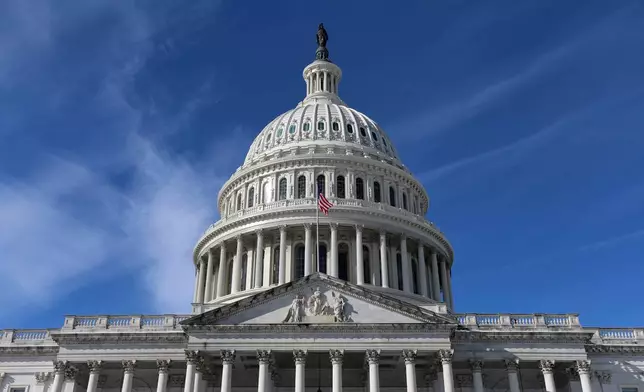
The Capitol is seen from the Russell Senate Office Building as lawmakers argue on whether to move forward with the spending legislation that funds the Department of Homeland Security, at the Capitol in Washington, Thursday, Jan. 29, 2026. (AP Photo/J. Scott Applewhite)

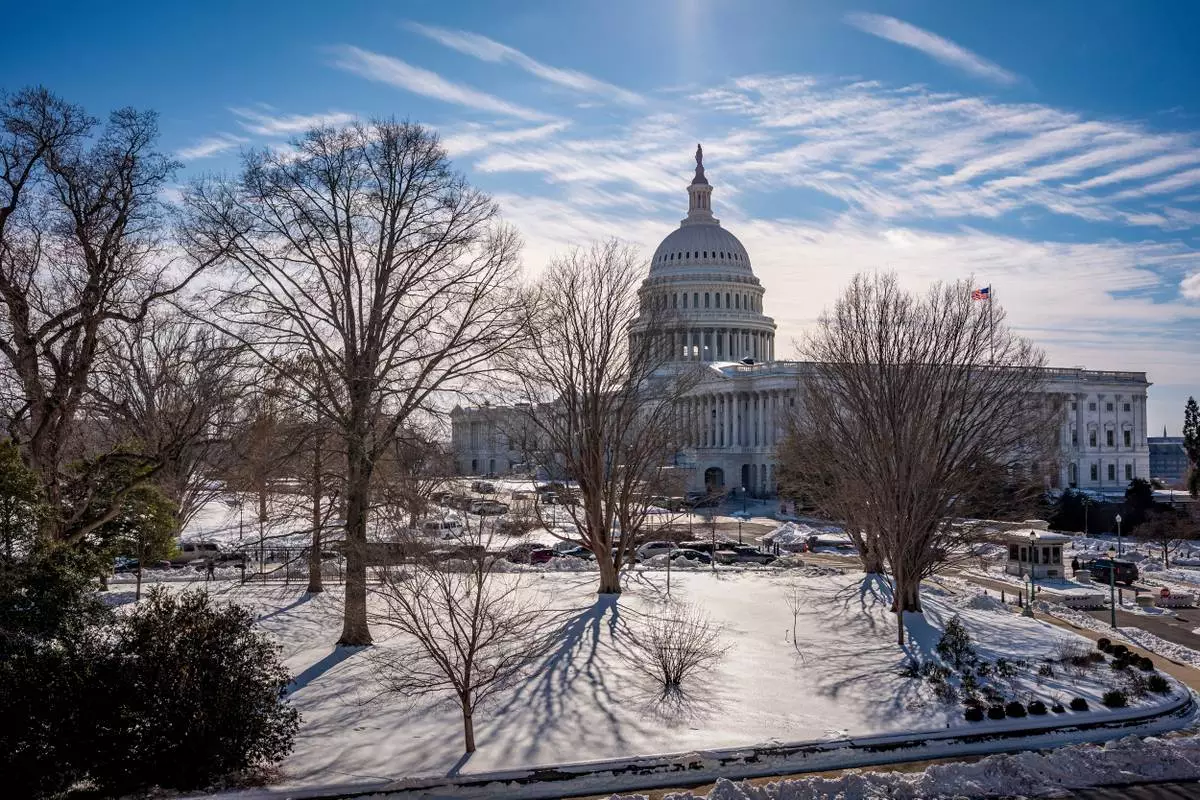
The U.S. Capitol is photographed Friday, Jan. 30, 2026, in Washington. (AP Photo/Rahmat Gul)
The U.S. Capitol is photographed Friday, Jan. 30, 2026, in Washington. (AP Photo/Rahmat Gul)

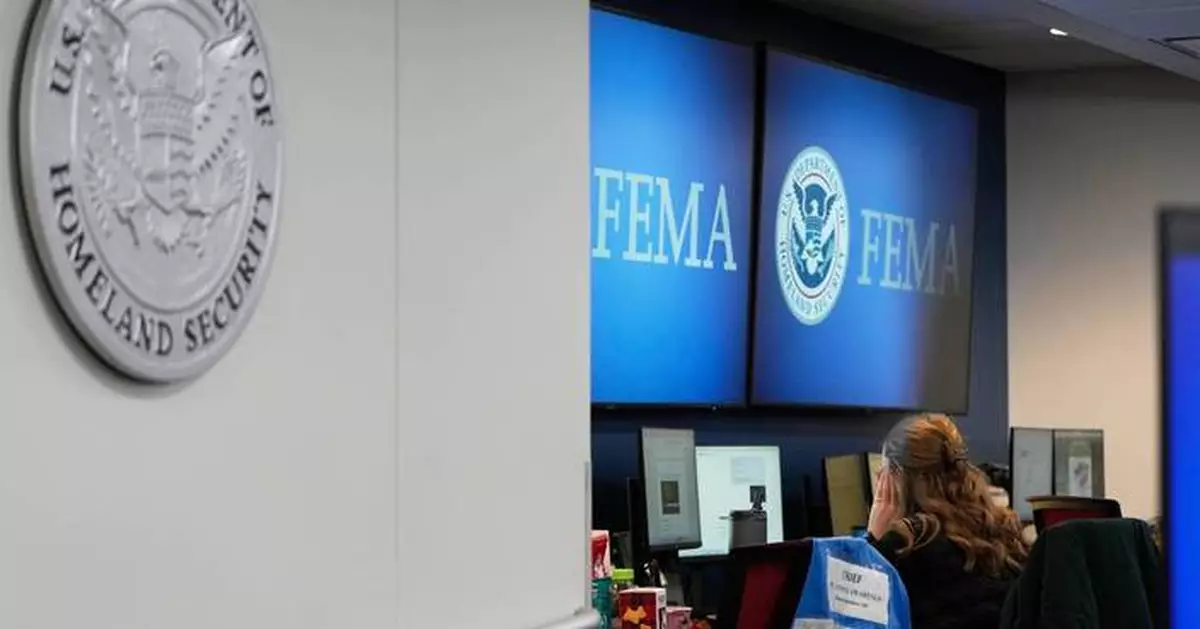
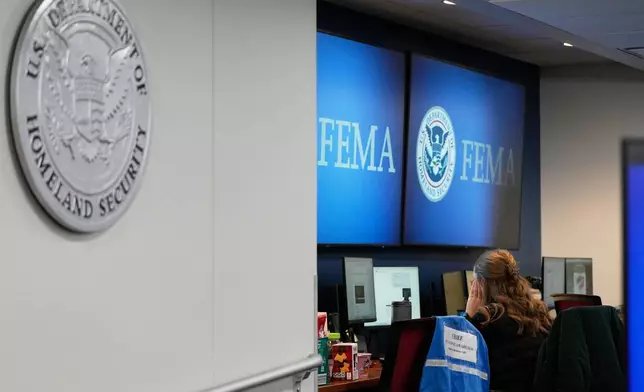
A person works at Federal Emergency Management Agency headquarters Saturday, Jan. 24, 2026, in Washington. (AP Photo/Julia Demaree Nikhinson)

A person works at Federal Emergency Management Agency headquarters Saturday, Jan. 24, 2026, in Washington. (AP Photo/Julia Demaree Nikhinson)

The House had hoped to pass funding legislation quickly when lawmakers return Monday evening, and that would have ended the shutdown. But House Speaker Mike Johnson, R-La., now says he is hoping to have the package considered “at least by Tuesday” as he scrambles to round up votes and Democrats hold out for deeper changes to immigration enforcement.

Congress already has passed half this year’s funding bills, ensuring that several important federal agencies and programs continue to operate through September. Nutrition assistance programs, for example, should be unaffected.

Funding is lapsing, at least temporarily, for the Pentagon and agencies such as the departments of Homeland Security and Transportation. Essential functions are continuing, but workers could go without pay if the impasse drags on. Some could be furloughed.

The government funding process had been going smoothly, with key lawmakers in the House and Senate finding bipartisan agreement. But the shooting deaths this month of two U.S. citizens, Alex Pretti and Renée Good, by federal agents in Minneapolis, changed the dynamic.

Democrats were incensed after Pretti's killing and demanded that one of the six remaining funding bills, for DHS and its associated agencies, be stripped from the package passed by the House. They said the bill must include changes to immigration enforcement, including a code of conduct for federal agents and a requirement that officers show identification.

Eager to avoid another shutdown, President Donald Trump's White House struck a deal with Democrats to temporarily fund DHS at current levels for two weeks while the negotiations play out.

The Senate passed the five-bill funding package Friday, but it must pass the House again before becoming law. The House is not returning until Monday, ensuring funding will lapse for parts of the government, at least temporarily.

“I’m confident that we’ll do it at least by Tuesday,” Johnson told NBC's “Meet the Press” on Sunday.

Yes, and typically the effects were not very visible to anyone hoping to use government services.

There were a couple of these in Trump's first administration.

In January 2018, a dispute over immigration protections resulted in a weekend shutdown. Some federal workers were furloughed or worked without pay. Benefits such as Social Security and Medicare were uninterrupted, many people did not notice the shutdown and federal offices reopened the following Monday after a deal was in place.

In February 2018, the shortest shutdown in U.S. history lasted about nine hours, overnight, and most people did not notice any impact. While agencies technically shut down after funding lapsed, it was so brief that furlough notices were not all sent out, and nothing was closed during business hours.

The funding lapse affects the Pentagon and agencies such as the Transportation Department and DHS, which includes the Federal Emergency Management Agency.

Experts have said FEMA should have enough money to respond to the massive winter storm still affecting large swaths of the country. FEMA would have about $7 billion to $8 billion in a fund for disaster response and recovery efforts and the staff who work on them. An extended shutdown could put more pressure on that fund, especially if FEMA must respond to new disasters.

Other FEMA operations, such as the ability to write or renew National Flood Insurance Program policies, would pause, as they did during last year’s 43-day shutdown.

That shutdown took a toll on the traveling public as delays and cancellations mounted, and there is now a risk of air travel disruptions again: One of the spending bills awaiting House passage covers the Department of Transportation, which is responsible for the air traffic control system and its workforce.

Air traffic controllers would still report for duty, but would be doing so without pay until a funding bill is passed.

At the State Department, the shutdown will not have a significant effect for the general public, in the United States or abroad.

Department employees were sent a 73-page memo late Friday that said passport and visa services and processing will continue and that embassies and consulates will remain open. Some functions, including nonemergency consular notifications and website updates, may be affected. But the memo said that 18,946 of the department’s 27,206 direct hire American employees are exempted from potential furloughs if the shutdown continues.

No. That is a major change from the fall shutdown, when many people had to do with little-to-no assistance from the Supplemental Nutrition Assistance Program during the final weeks of the government closure. The bill to end that shutdown funded the Department of Agriculture and the programs that it administers through the remainder of the budget year, which ends Sept. 30.

That means full SNAP benefits will continue now. The federal food program serves about 42 million people, about 1 in 8 Americans, in lower-income households. They receive an average of around $190 monthly per person.

Another key program fully funded for the year is the federal supplemental nutrition program for women, infants and children, known as WIC. It provides pregnant women and young children with healthy food and nutrition counseling.

Kinnard reported from Columbia, S.C., and can be reached at http://x.com/MegKinnardAP. AP Diplomatic Writer Matthew Lee contributed to this report.

Senate Minority Leader Chuck Schumer, D-N.Y., speaks during a news conference at the Capitol in Washington, Friday, Jan. 30, 2026. The Senate voted Friday to fund most of the government through the end of September after President Donald Trump made a deal with Democrats to carve out Homeland Security funding and allow Congress to debate new restrictions on federal immigration raids across the country. (AP Photo/Jose Luis Magana)

Senate Minority Leader Chuck Schumer, D-N.Y., speaks during a news conference at the Capitol in Washington, Friday, Jan. 30, 2026. The Senate voted Friday to fund most of the government through the end of September after President Donald Trump made a deal with Democrats to carve out Homeland Security funding and allow Congress to debate new restrictions on federal immigration raids across the country. (AP Photo/Jose Luis Magana)

A man walks by posters of Renee Nicole Good and Alex Pretti, who were both fatally shot by federal agents, in Minneapolis, Saturday, Jan. 31, 2026. (AP Photo/Ryan Murphy)
A man walks by posters of Renee Nicole Good and Alex Pretti, who were both fatally shot by federal agents, in Minneapolis, Saturday, Jan. 31, 2026. (AP Photo/Ryan Murphy)

Speaker of the House Mike Johnson, R-La., pauses for questions from reporters as he arrives for an early closed-door Republican Conference meeting on how to end the partial government shutdown and deal with demands over immigration enforcement operations, at the Capitol in Washington, Tuesday, Feb. 3, 2026. (AP Photo/J. Scott Applewhite)
Speaker of the House Mike Johnson, R-La., pauses for questions from reporters as he arrives for an early closed-door Republican Conference meeting on how to end the partial government shutdown and deal with demands over immigration enforcement operations, at the Capitol in Washington, Tuesday, Feb. 3, 2026. (AP Photo/J. Scott Applewhite)

The Capitol is seen from the Russell Senate Office Building as lawmakers argue on whether to move forward with the spending legislation that funds the Department of Homeland Security, at the Capitol in Washington, Thursday, Jan. 29, 2026. (AP Photo/J. Scott Applewhite)
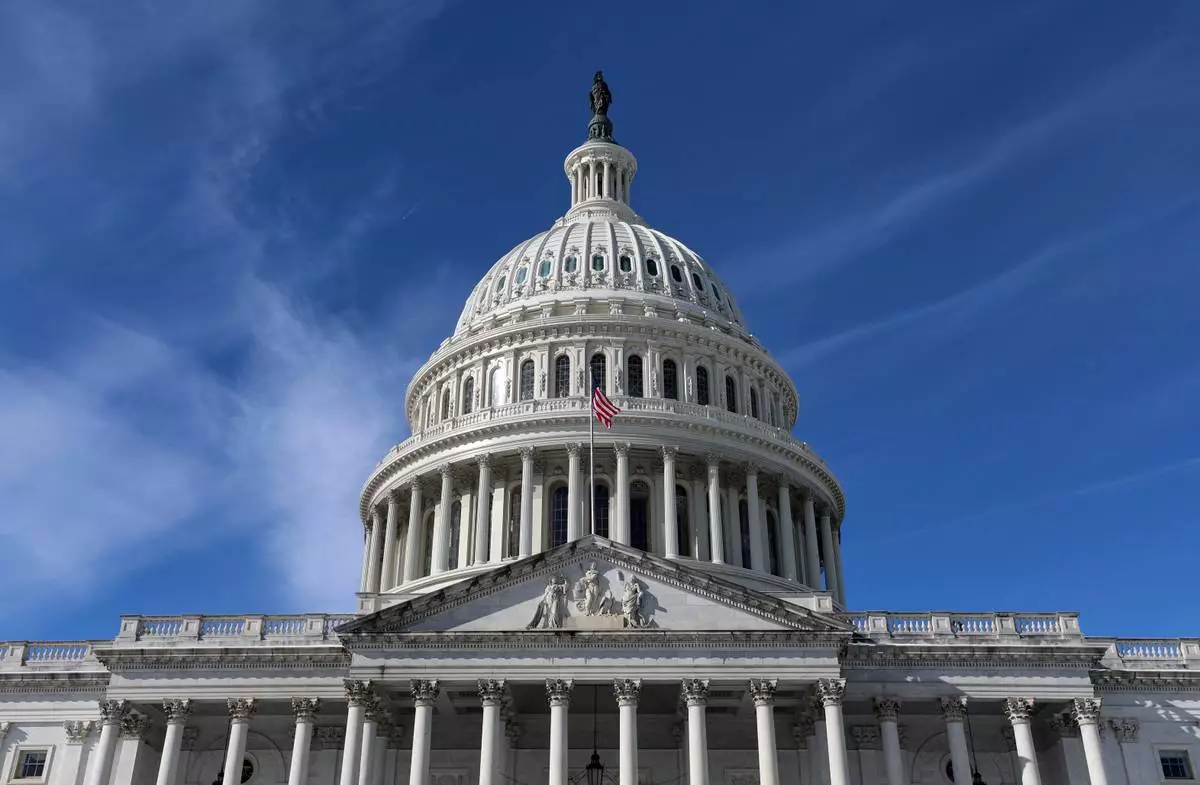
The Capitol is seen from the Russell Senate Office Building as lawmakers argue on whether to move forward with the spending legislation that funds the Department of Homeland Security, at the Capitol in Washington, Thursday, Jan. 29, 2026. (AP Photo/J. Scott Applewhite)

The U.S. Capitol is photographed Friday, Jan. 30, 2026, in Washington. (AP Photo/Rahmat Gul)
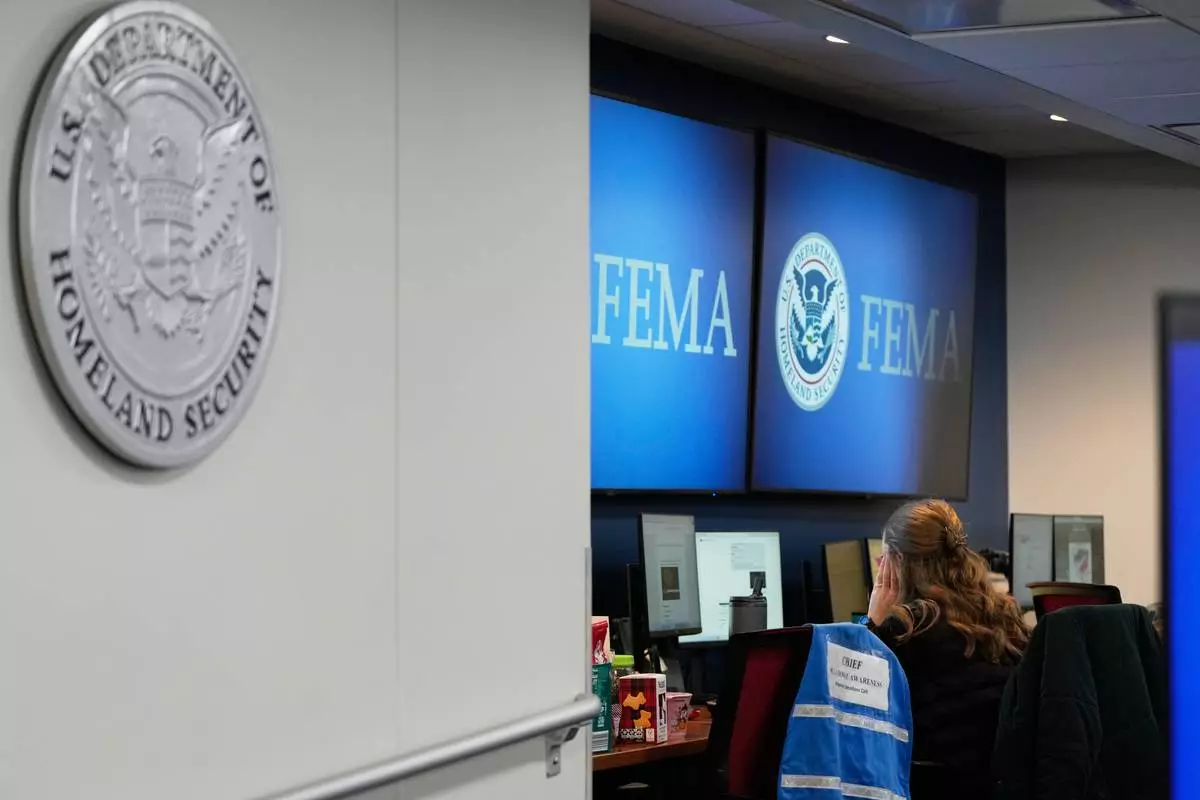
The U.S. Capitol is photographed Friday, Jan. 30, 2026, in Washington. (AP Photo/Rahmat Gul)

A person works at Federal Emergency Management Agency headquarters Saturday, Jan. 24, 2026, in Washington. (AP Photo/Julia Demaree Nikhinson)
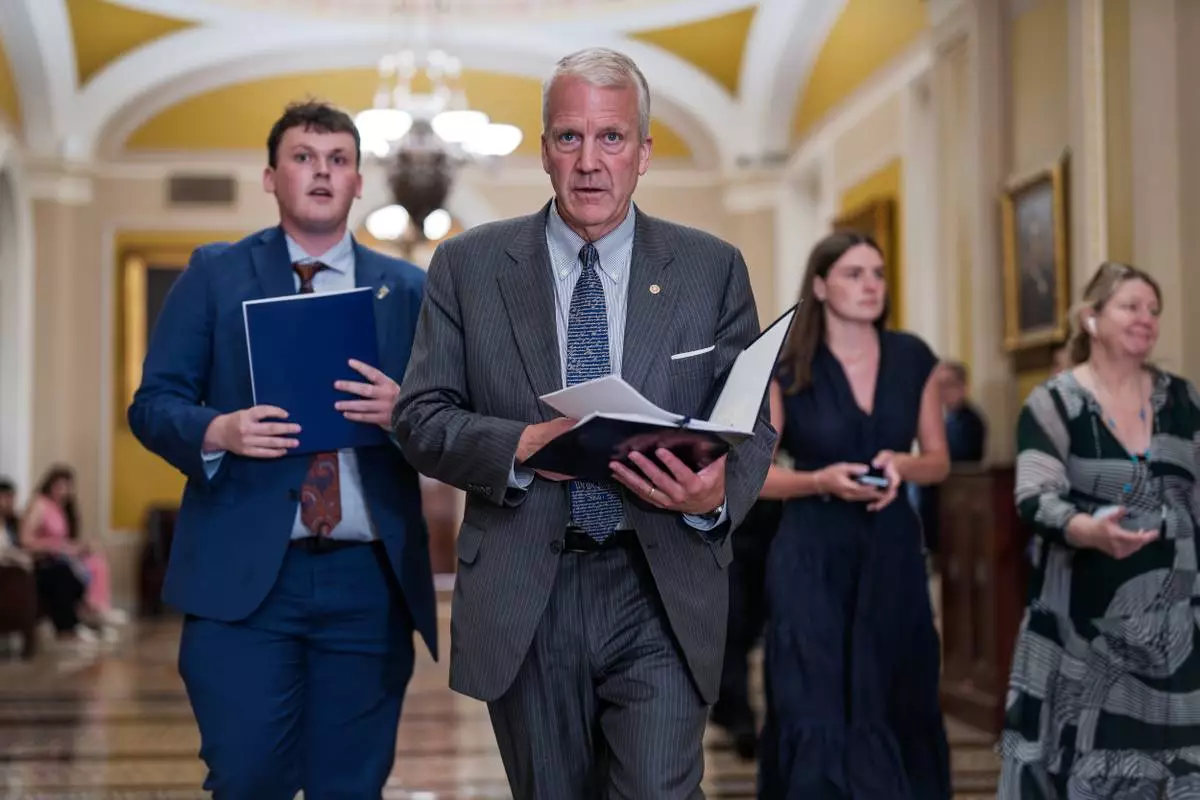

A person works at Federal Emergency Management Agency headquarters Saturday, Jan. 24, 2026, in Washington. (AP Photo/Julia Demaree Nikhinson)

JUNEAU, Alaska (AP) — Alaska U.S. Senate candidate Dan Sullivan acknowledges that sharing a name and party affiliation with the incumbent Republican gives him “an instant megaphone" in the crowded primary race. But Sullivan said his campaign isn't a sham or something Democrats put him up to doing.

He said friends for years have jokingly referred to him as senator and asked if he has ever thought about running. He said he’s been considering it for more than a decade.

“This is my choice,” Sullivan, who lives in the small fishing community of Petersburg, said in a telephone interview Monday.

Last week, Sen. Dan Sullivan accused the challenger Sullivan of “trying to trick” voters to help his main rival in the race, Democratic former U.S. Rep. Mary Peltola. The senator suggested the other Sullivan's entrance in the August primary was part of a coordinated effort by Democrats and Peltola's campaign to confuse voters, an accusation they deny. He threatened litigation to get to the bottom of it.

The issue is of national concern to Republicans because they are seeking to hold onto their majority in the U.S. Senate in what is expected to be a difficult midterm election year for the party in power. Sullivan, the challenger, dismissed claims that his candidacy is a merely a ruse to undermine the senator's reelection chances.

He said he has had no contact with Peltola's campaign — “zero, none, zilch” — and said “no” when asked if anyone from the state Democratic Party or any national Democratic operatives had contacted him to run.

A Peltola spokesperson, Harry Child, has said the campaign “has no involvement with either Sullivan campaign.” The executive director of the Alaska Democratic Party, Jenny-Marie Stryker, said her organization “is in no way affiliated with either Dan Sullivan.” A Democratic Senatorial Campaign Committee spokesperson, Monica Robinson, replied “no” when asked if the group had been involved in urging the challenger Sullivan to run.

Sullivan called sharing a name with the Alaska's incumbent U.S. senator “a matter of fate” and said he had done nothing wrong.

“I have every right to run for whatever office I'm qualified for, and I’m qualified for this office,” the challenger said, adding: “I think I’m doing what most Americans would think would be a patriotic thing to do when you’re unsatisfied with the status quo. You stand up and say, I’m going to fight for things I believe that are going to make my community better.”

Ballots in prior years in Alaska have not identified the incumbent, but the Alaska Division of Elections’ current candidate list online does. It also distinguishes the candidates using a middle initial — Dan S. Sullivan for the senator and Dan J. Sullivan for the challenger.

Alaska has open primaries in which the top four vote-getters, regardless of party, advance to the ranked choice general election in November. Sen. Sullivan's campaign worries having two Dan Sullivans on the ballot could confuse voters.

Sen. Sullivan's campaign, in a statement Monday, said, “Alaskans deserve a fair and honest election — not political games meant to manipulate the ballot and benefit Democrats.”

The challenger said he was registered with the limited government-leaning Alaskan Independence Party for decades, until the party's dissolution late last year. Election officials had said voters registered with the party could change their affiliation but if they did not, they'd be shown as “undeclared.” Sullivan said he then was listed as undeclared until filing to run for office, when he registered as Republican.

He said he was motivated in part by his late father, whom he described as a “true, compassionate, conservative Republican.” He said if he had to label himself, it would be “a pragmatic Republican centrist” — similar to Alaska's senior U.S. senator, Lisa Murkowski, but “with touches of a Rand Paul Republican in there.”

He said he grew up in the Chicago area but was drawn to Alaska and put down roots nearly 50 years ago in Petersburg. The fishing community of about 3,400 in southeast Alaska's Tongass National Forest is known as “Little Norway” for its many residents with Scandinavian roots. He worked for the U.S. Forest Service before changing careers and becoming a teacher. He has since retired.

Like most communities in Alaska, Petersburg isn't connected to the state's main road system and is accessible only by air or water. Juneau, the nearest city, is about 45 minutes away by plane.

Petersburg sits on Mitkof Island, which is distinguished by mountains, thick stands of forest and boggy areas called muskeg. Sea lions hauled up on buoys and humpback whales and orcas are common sights off its shores.

Sullivan, who will turn 69 this weekend, passed on an interview request last Friday, he said, because the king salmon were running and he wanted to fish.

As far as his run for office, the challenger said he plans to do some fundraising and hopes to campaign in the state's larger cities, including Anchorage and Juneau, but he so far has no firm plans to do so and is working on the details.

He finds the current dustup over his Senate run — and the incumbent's reaction — a bit surprising.

“I guess my thought would be, ‘Dude, why don’t you just run your campaign?’ If you’ve got a strong record, run on your record. People will love you for it and you’ll be swept back into office,” he said Monday. “Why would he be concerned that a guy out of Petersburg is this huge threat?”

Sen. Dan Sullivan, R-Alaska, heads to a closed-door meeting with fellow Republicans, at the Capitol in Washington, Tuesday, June 2, 2026. (AP Photo/J. Scott Applewhite)

Sen. Dan Sullivan, R-Alaska, heads to a closed-door meeting with fellow Republicans, at the Capitol in Washington, Tuesday, June 2, 2026. (AP Photo/J. Scott Applewhite)

Recommended Articles