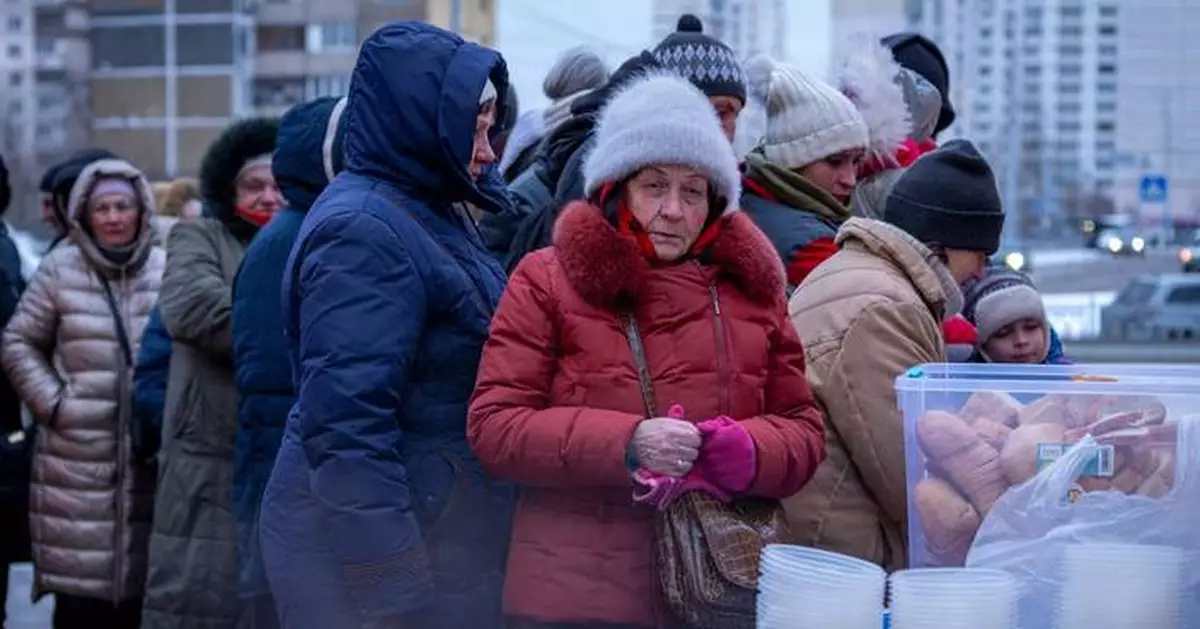
KYIV, Ukraine (AP) — Emergency power cuts swept across several Ukrainian cities as well as neighboring Moldova on Saturday, officials said, amid a commitment from the Kremlin to U.S. President Donald Trump to pause strikes on Kyiv as Ukraine battles one of its bleakest winters in years.
Ukraine’s Energy Minister Denys Shmyhal said that the outages had been caused by a technical malfunction affecting power lines linking Ukraine and Moldova.
Click to Gallery
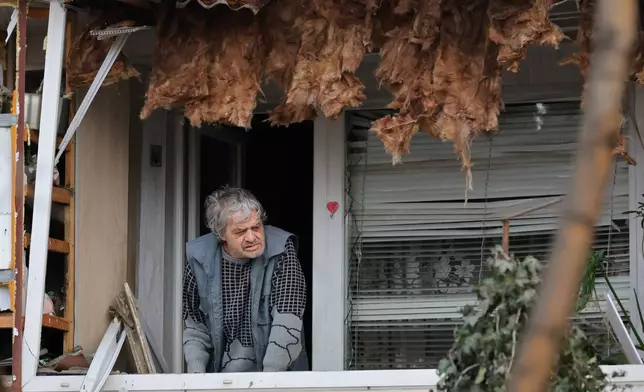
An elderly man looks out from his damaged balcony after a Russian attack in Zaporizhzhia, Ukraine, Wednesday, Jan. 28, 2026. (AP Photo/Kateryna Klochko)
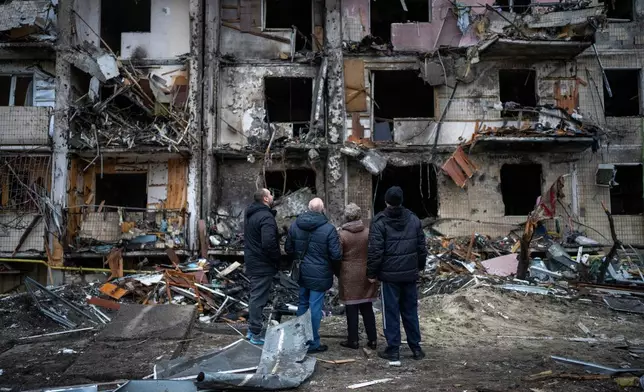
FILE- People look at the damage following a rocket attack the city of Kyiv, Ukraine, Feb. 25, 2022. (AP Photo/Emilio Morenatti, File)
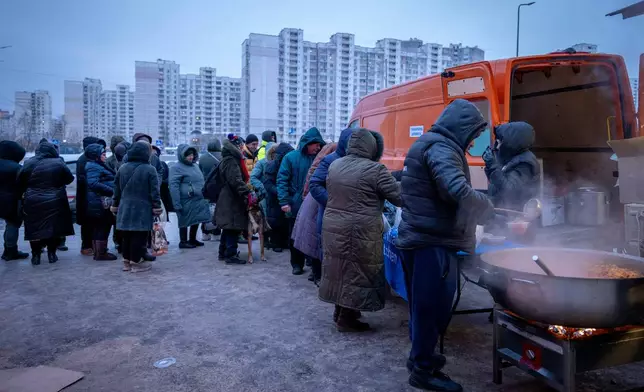
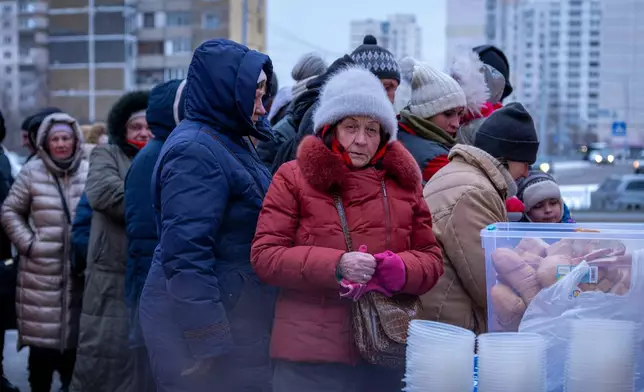
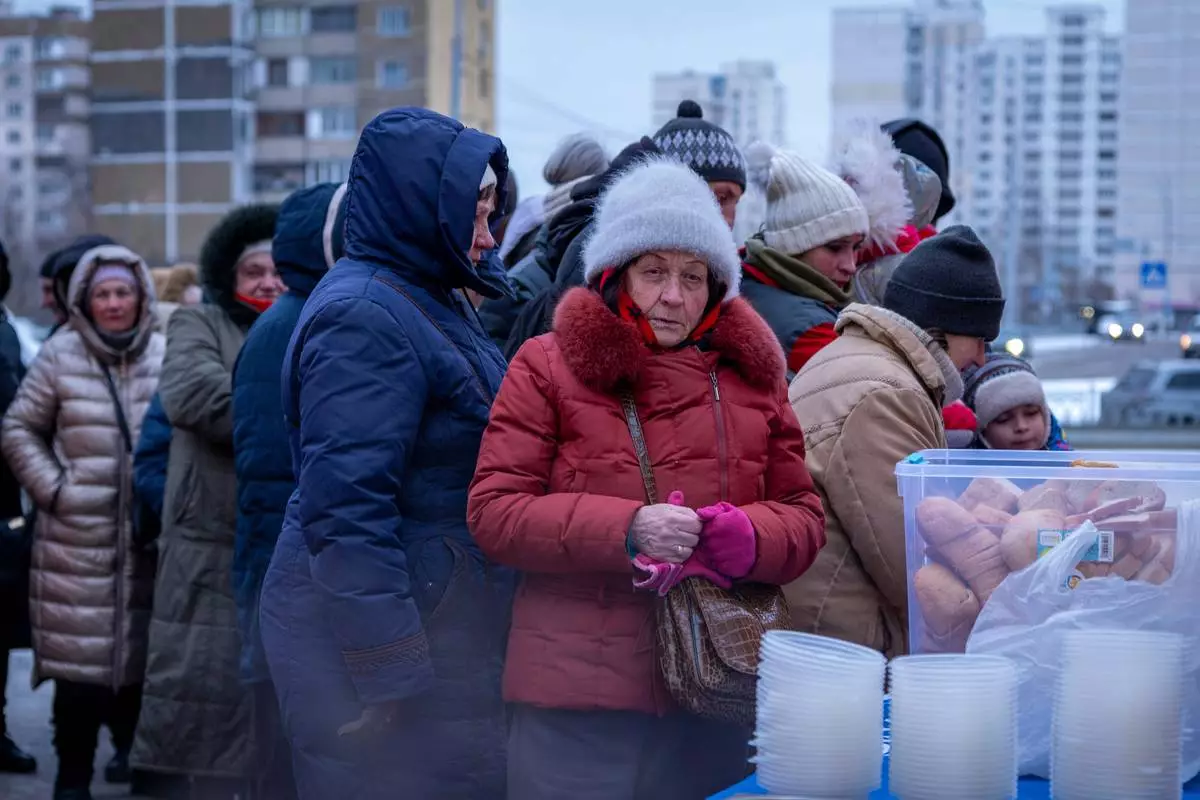
People who have no power at home following Russia's air attacks wait in line to receive free hot meals in a residential neighbourhood in Kyiv, Ukraine, Friday, Jan. 30, 2026. (AP Photo/Dan Bashakov)
The failure “caused a cascading outage in Ukraine’s power grid,” triggering automatic protection systems, he said.
Blackouts were reported in Kyiv, as well as Zhytomyr and Kharkiv regions, in the center and northeast of the country respectively. The outage cut water supplies to the Ukrainian capital, officials said, while the city’s subway system was temporarily suspended because of low voltage on the network.
Moldova also experienced major power outages, including in the capital Chisinau, officials said.
“Due to the loss of power lines on the territory of Ukraine, the automatic protection system was triggered, which disconnected the electricity supply,” Moldova’s Energy Minister Dorin Junghietu said in a post on Facebook. “I encourage the population to stay calm until electricity is restored.”
The large-scale outage followed weeks of Russian strikes against Ukraine’s already struggling energy grid, which have triggered long stretches of severe power shortages.
Moscow has sought to deny Ukrainian civilians heat, light and running water over the course of the war, in a strategy that Ukrainian officials describe as “weaponizing winter.”
While Russia has used similar tactics throughout the course of its almost four-year invasion of Ukraine, temperatures throughout this winter have fallen further than usual, bringing widespread hardship to civilians.
Forecasters say Ukraine will experience a brutally cold period stretching into next week. Temperatures in some areas will drop to minus 30 degrees Celsius (minus 22 Fahrenheit), Ukraine’s State Emergency Service said.
Trump said late Thursday that President Vladimir Putin had agreed to a temporary pause in targeting Kyiv and other Ukrainian towns amid the extreme weather.
“I personally asked President Putin not to fire on Kyiv and the cities and towns for a week during this ... extraordinary cold,” Trump said during a Cabinet meeting at the White House. Putin has “agreed to that,” he said, without elaborating on when the request to the Russian leader was made.
The White House didn’t immediately respond to a query seeking clarity about the scope and timing of any limited pause.
Kremlin spokesperson Dmitry Peskov confirmed Friday that Trump “made a personal request” to Putin to stop targeting Kyiv until Sunday “in order to create favorable conditions for negotiations.”
Talks are expected to take place between U.S., Russian and Ukrainian officials on Feb. 1 in Abu Dhabi. The teams previously met in late January in the first known time that officials from the Trump administration simultaneously met with negotiators from both Ukraine and Russia. However, it's unclear many obstacles to peace remain. Disagreement over what happens to occupied Ukrainian territory, and Moscow’s demand for possession of territory it hasn’t captured, are a key issue holding up a peace deal, Zelenskyy said Thursday.
Russian presidential envoy Kirill Dmitriev said on social media Saturday that he was in Miami, where talks between Russian and U.S. negotiators have previously taken place. Russian state news agencies later reported that he was meeting with an “American delegation” but did not provide further details.
Russia struck Ukrainian energy assets in several regions on Thursday but there were no strikes on those facilities overnight, Ukraine’s President Volodymyr Zelenskyy said Friday.
In a post on social media, Zelenskyy also noted that Russia has turned its attention to targeting Ukrainian logistics networks, and that Russian drones and missiles hit residential areas of Ukraine overnight, as they have most nights during the war.
Trump has framed Putin’s acceptance of the pause in strikes as a concession. But Zelenskyy was skeptical as Russia’s invasion approaches its fourth anniversary on Feb. 24 with no sign that Moscow is willing to reach a peace settlement despite a U.S.-led push to end the fighting.
“I do not believe that Russia wants to end the war. There is a great deal of evidence to the contrary,” Zelenskyy said Thursday.
Associated Press writer Stephen McGrath in Leamington Spa, England, contributed.
Follow AP’s coverage of the war in Ukraine at https://apnews.com/hub/russia-ukraine
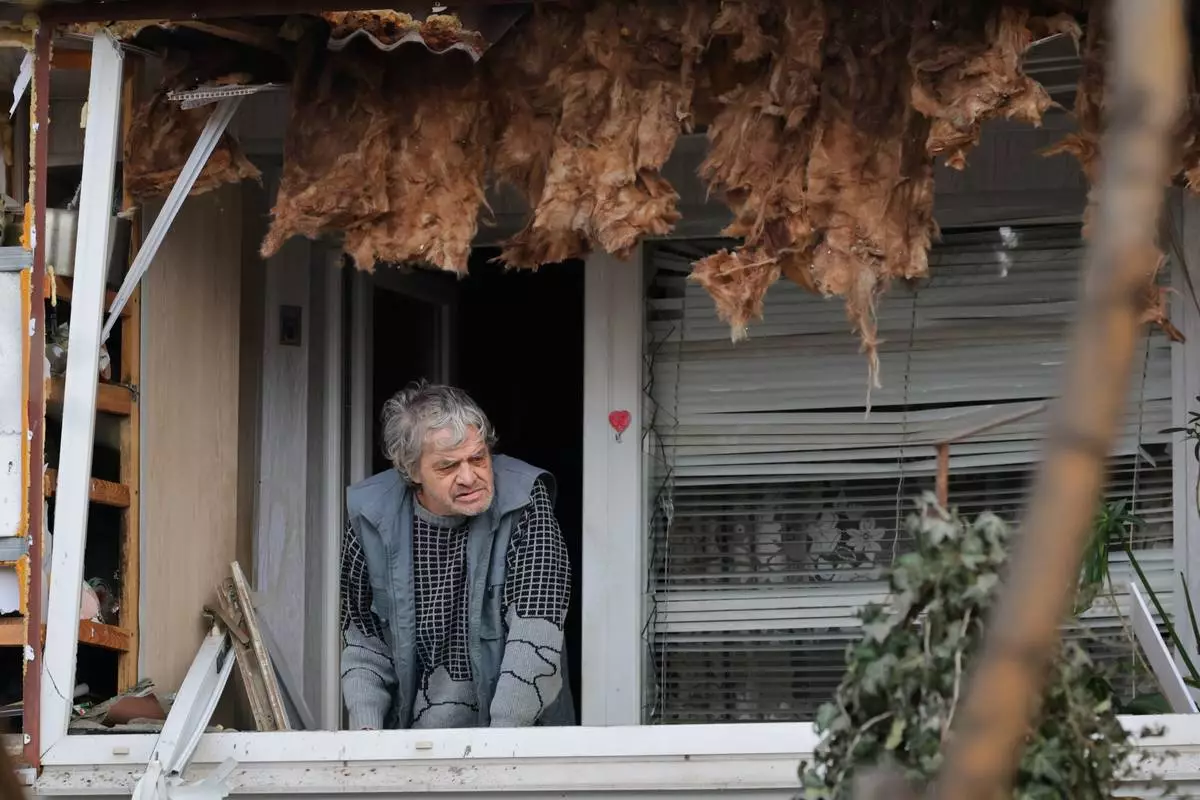
An elderly man looks out from his damaged balcony after a Russian attack in Zaporizhzhia, Ukraine, Wednesday, Jan. 28, 2026. (AP Photo/Kateryna Klochko)
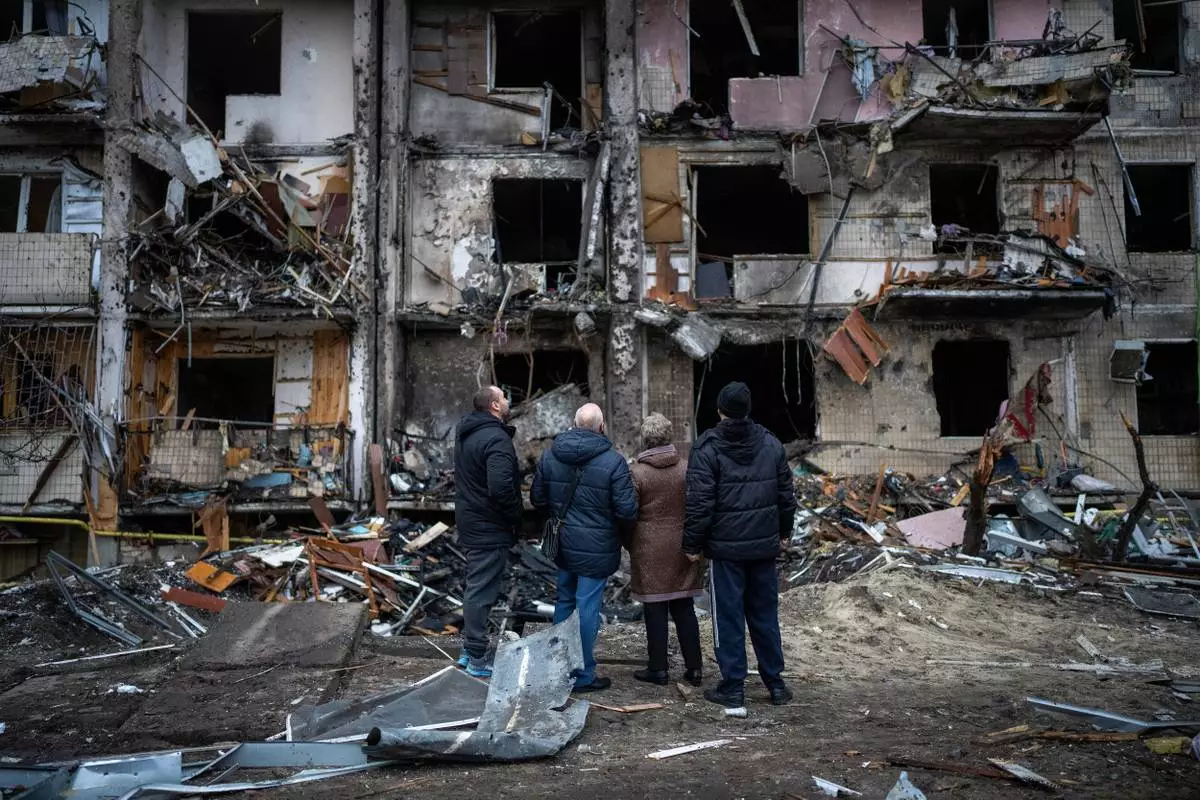
FILE- People look at the damage following a rocket attack the city of Kyiv, Ukraine, Feb. 25, 2022. (AP Photo/Emilio Morenatti, File)
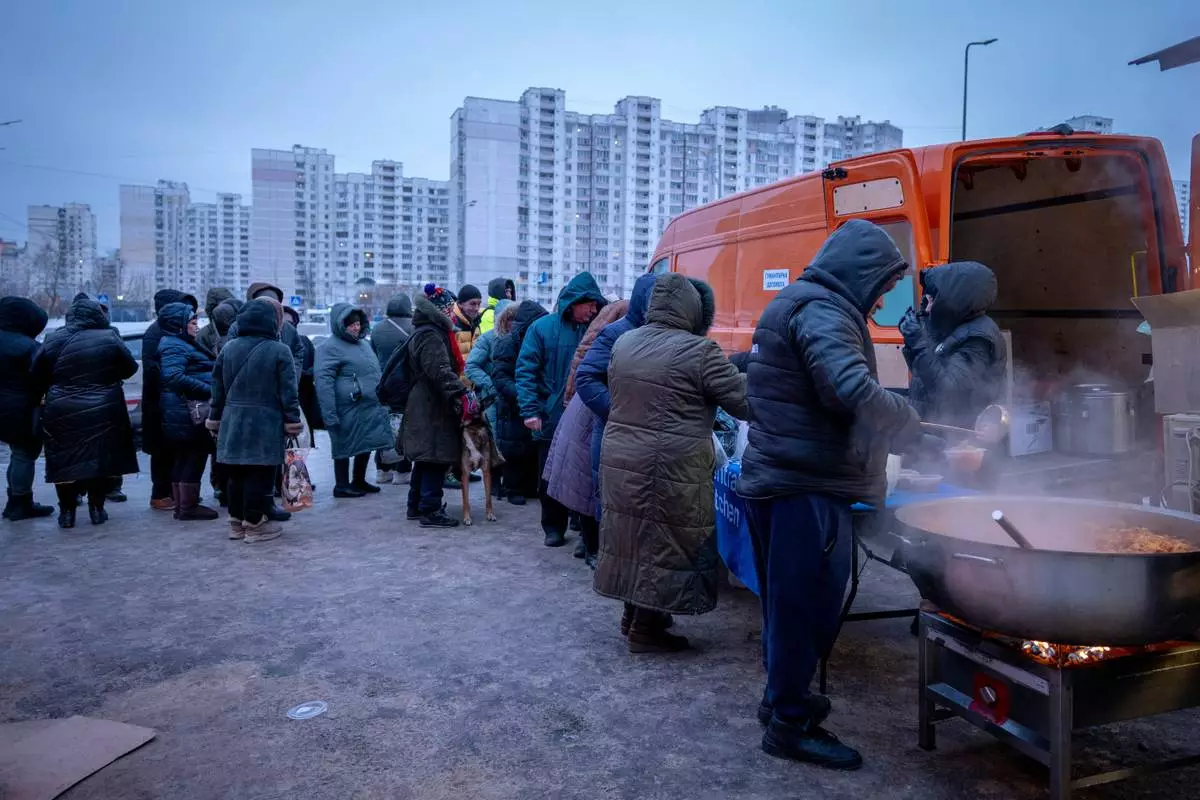
People who have no power at home following Russia's air attacks wait in line to receive free hot meals in a residential neighbourhood in Kyiv, Ukraine, Friday, Jan. 30, 2026. (AP Photo/Dan Bashakov)

Blizzardlike conditions stemming from a “ bomb cyclone ” hammered parts of the Carolinas on Saturday and ushered in frigid temperatures to much of the East Coast, and tens of thousands of homes and businesses in Tennessee and Mississippi remained without power after being hit by a different icy storm last week.
Charlotte, North Carolina, saw one of its heaviest snowfalls in years, with roughly a foot (30 centimeters) or more in parts of the region.
That caused an hourslong mess on Interstate 85 northeast of the city, after a noninjury crash left dozens of semis and other vehicles backed up into the evening, according to the State Highway Patrol. The agency said it counted at least 750 traffic collisions, but no fatalities.
As snow came down steadily throughout the day, some people went out sledding with their families and dogs. Others stayed cozy at home to avoid treacherous traveling conditions.
Temperatures were expected to dip into the teens and single digits late Saturday and overnight.
About 240 million people were under cold weather advisories and winter storm warnings, said Bob Oravec, lead meteorologist for the National Weather Service in College Park, Maryland. A low of minus 27 Fahrenheit (minus 33 Celsius) was recorded in West Virginia, and the frigid cold was expected to plunge as far south as Florida.
Some areas unaccustomed to snow braced for several inches to fall by Sunday.
Hundreds of flights were canceled or delayed at airports in Atlanta, Charlotte and Raleigh, North Carolina, according to FlightAware, a flight tracking and data company.
Snow blanketed the neighborhood of Lee Harrison, an insurance agent in a town outside of Greenville, North Carolina, and he planned to take his three daughters sledding in the backyard.
“We’re not gonna drive anywhere,” Harrison said. “It’s thick enough that I would not feel comfortable driving with our family.”
Subfreezing weather and heavy snow were forecast in the Carolinas, Virginia and northeast Georgia continuing into Sunday. Snow was also said to be possible from Maryland to Maine.
Cindy Symonds, a teacher who lives near Columbia, South Carolina, said her husband stocked up “every snack known to mankind” in preparation. Storms in the area typically drop just an inch or two (a few centimeters), so the plan now was to stay off the roads.
“This is a complete, you know, aberration for us to have this kind of snow, where it’s coming down consistently for hours on end,” Symonds said.
In Myrtle Beach, South Carolina — whose official seal is the sun, palm trees and a seagull — snow started to accumulate in the evening, with up to 8 inches (20 centimeters) possible overnight.
With no snow-removal equipment of its own, the city was working with county and state officials, Mayor Mark Kruea said.
More than 197,000 customers were without electricity, mostly in Mississippi and Tennessee, according to the outage tracking website poweroutage.us.
Amanda Linton, a resident of Holly Springs, Mississippi, near the Tennessee border, and her family of five have tried to keep busy and stay positive during the weeklong outage. They have been stuck in the house for days with their dogs, chickens and ducks, with roads outside coated by inches (centimeters) of ice.
Linton said they managed to buy a generator ahead of the storms.
“Just lots of games and reading and really just trying to keep mine and my husband’s spirits up so that we’re staying positive for our kids,” Linton said.
Some 48,000 customers in and around Nashville, Tennessee, were still waiting for power to return. Nashville Electric Service estimated that 90% will have it back by Tuesday but it could take until next weekend — two weeks after the ice storm — for some.
Gov. Bill Lee said he shared “strong concerns” with leadership of the utility, which has defended its response and said the storm was unprecedented.
Mississippi officials said that was the state's worst winter storm since 1994. About 80 warming centers were opened, and National Guard troops delivered supplies by truck and helicopter.
In Georgia, 65-year-old Dolla Johnson, who is homeless, slept in a warming center.
“If I hadn’t have been here, I would be sleeping outside,” Johnson, said. “There’s nowhere else to go. The bridges are not safe. Everything’s freezing over.”
Experts warned of the risk of hypothermia and frostbite.
More than 100 people have died from Texas to New Jersey, roughly half of them in Tennessee, Mississippi and Louisiana. Some deaths have been attributed to hypothermia, while others are suspected to be related to carbon monoxide exposure. Officials have not released specific details about some deaths.
Officials closed a nearly 13-mile (21-kilometer) stretch of a main road in North Carolina’s Outer Banks, citing deteriorating conditions and poor visibility. Through social media the state Department of Transportation warned of likely “ocean overwash” and urged people to stay home.
Associated Press writers Julie Walker in New York, Gary Robertson in Raleigh, North Carolina, and Hallie Golden in Seattle contributed.
Snow falls outside a shopping center in Columbia, S.C., on Saturday, Jan. 31, 2026. (AP Photo/Jeffrey Collins)
Alex Taylor, accompanied by his dog Daisy, prepared to slide down a snow-covered hill in Charlotte, N.C., Saturday, Jan. 31, 2026. (AP Photo/Erik Verduzco)
Alex Taylor, 23, and his dog Daisy, make their way down a snowy hill in Charlotte, N.C., Saturday, Jan. 31, 2026. (AP Photo/Erik Verduzco)
Hunter Steffen, 17, left, hands a hard-to-come by 40-pound bag of ice melt to a customer outside Town & County Hardware in Wake Forest, N.C., on Saturday, Jan. 31, 2026. (AP Photo/Allen G. Breed)
Tennessee National Guard Specialist Taylor Osteen, left, holds a chainsaw as he takes a break from cutting trees from a road Friday, Jan. 30, 2026, in Nashville, Tenn. (AP Photo/George Walker IV)
Ethan Green, 21, left, an apprentice one lineman at the Yazoo Valley Power Association, looks up at a crew member Taylor Arinder on Friday, Jan. 30, 2026 in Bentonia, Miss. (AP Photo/Sophie Bates)
Tennessee National Guard members Taylor Osteen, left, and Antuwan Powell walk along an ice covered road as they work to remove trees Friday, Jan. 30, 2026, in Nashville, Tenn. (AP Photo/George Walker IV)
Austin Bradbury uses a chainsaw to remove a tree above a road Friday, Jan. 30, 2026, in Nashville, Tenn. (AP Photo/George Walker IV)