Skip to Content Facebook Feature Image

Judge says she won’t halt the immigration enforcement surge in Minnesota as a lawsuit proceeds

News

Judge says she won’t halt the immigration enforcement surge in Minnesota as a lawsuit proceeds
News

News

Judge says she won’t halt the immigration enforcement surge in Minnesota as a lawsuit proceeds

2026-02-01 05:34 Last Updated At:05:40

MINNEAPOLIS (AP) — A federal judge says she won’t halt the immigration enforcement surge in Minnesota and the Twin Cities as a lawsuit over it proceeds.

Judge Katherine M. Menendez on Saturday denied a preliminary injunction sought in a lawsuit filed this month by state Attorney General Keith Ellison and the mayors of Minneapolis and St. Paul.

More Images
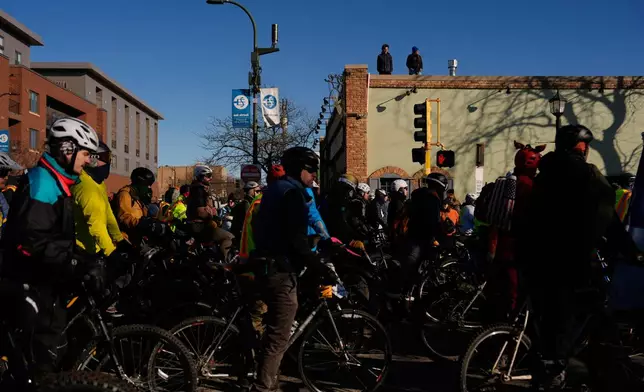
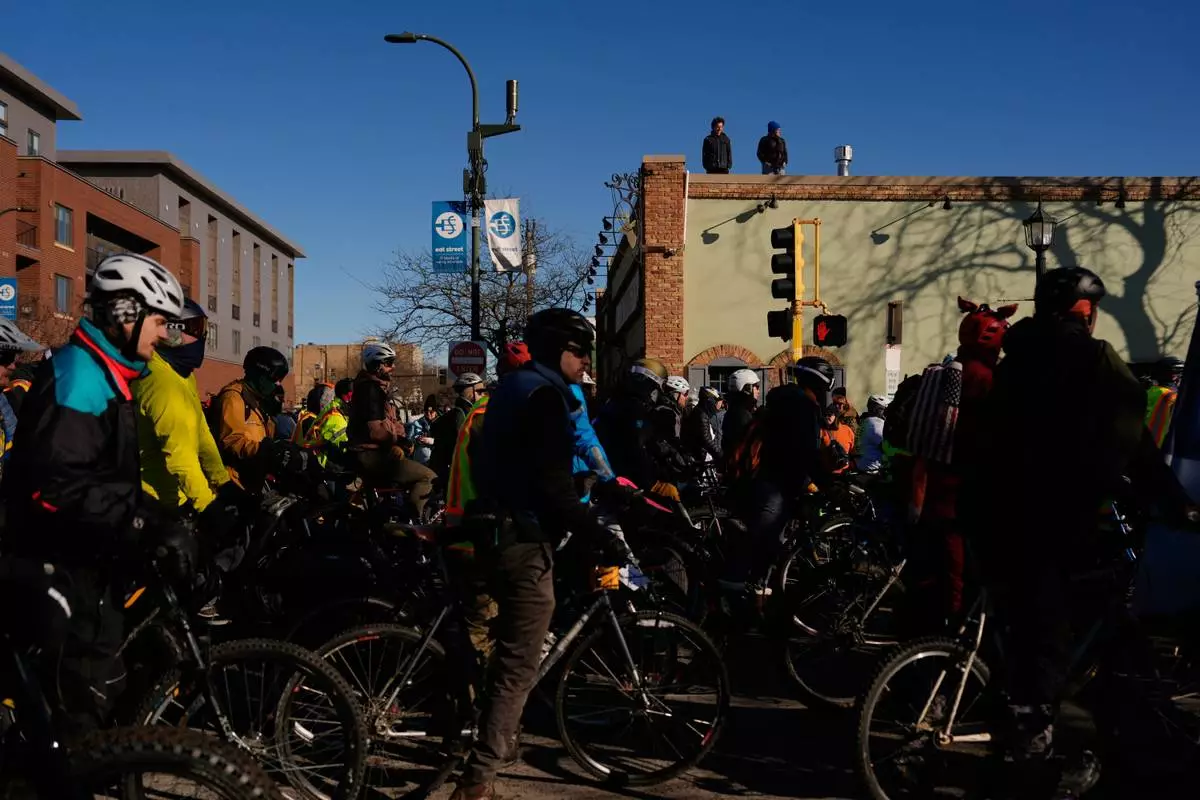
ople gather for a solidarity bike ride for Alex Pretti and Renee Good on Saturday, Jan. 31, 2026 in Minneapolis. (AP Photo/Julia Demaree Nikhinson)
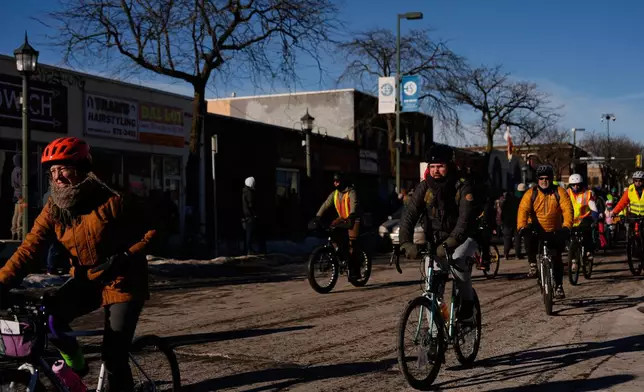
ople gather for a solidarity bike ride for Alex Pretti and Renee Good on Saturday, Jan. 31, 2026 in Minneapolis. (AP Photo/Julia Demaree Nikhinson)

ople gather for a solidarity bike ride for Alex Pretti and Renee Good on Saturday, Jan. 31, 2026 in Minneapolis. (AP Photo/Julia Demaree Nikhinson)

ople gather for a solidarity bike ride for Alex Pretti and Renee Good on Saturday, Jan. 31, 2026 in Minneapolis. (AP Photo/Julia Demaree Nikhinson)

Flowers and photos are left at a memorial site for Renee Good on Saturday, Jan. 31, 2026, in Minneapolis. (AP Photo/Alex Brandon)
Flowers and photos are left at a memorial site for Renee Good on Saturday, Jan. 31, 2026, in Minneapolis. (AP Photo/Alex Brandon)

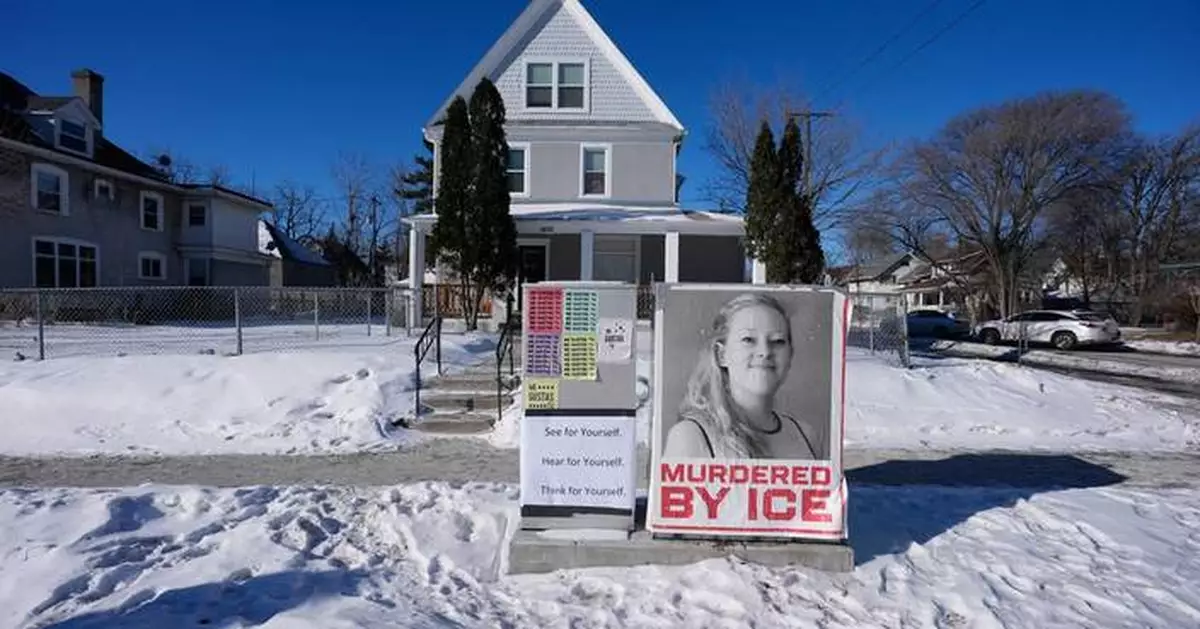
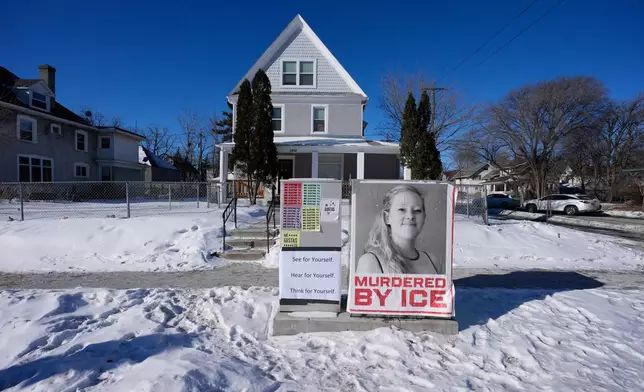
A photo of Renee Good is displayed in front of a home on Saturday, Jan. 31, 2026, in Minneapolis. (AP Photo/Alex Brandon)

A photo of Renee Good is displayed in front of a home on Saturday, Jan. 31, 2026, in Minneapolis. (AP Photo/Alex Brandon)

It argues that the Department of Homeland Security is violating constitutional protections. State and local officials sought a quick order to halt the enforcement action or limit its scope. Lawyers with the U.S. Department of Justice have called the lawsuit “legally frivolous.”

The ruling on the injunction focused on the argument by Minnesota officials that the federal government is violating the Constitution’s 10th Amendment, which limits the federal government’s powers to infringe on the sovereignty of states. In her ruling, the judge relied heavily on whether that argument was likely to ultimately succeed in court.

The federal government argued that the surge, dubbed Operation Metro Surge, is necessary in its effort to take criminal immigrants off the streets and because federal efforts have been hindered by state and local “sanctuary laws and policies.”

State and local officials argued that the surge amounts to retaliation after the federal government's initial attempts to withhold federal funding to try to force immigration cooperation failed. They also maintain that the surge has amounted to an unconstitutional drain on state and local resources, noting that schools and businesses have been shuttered in the wake of what local officials say are aggressive, poorly trained and armed federal officers.

“Because there is evidence supporting both sides’ arguments as to motivation and the relative merits of each side’s competing positions are unclear, the Court is reluctant to find that the likelihood-of-success factor weighs sufficiently in favor of granting a preliminary injunction,” the judge said in the ruling.

The judge also said she was influenced by the government’s victory last week at the 8th U.S. Circuit Court of Appeals. The appeals court set aside her decision putting limits on the use of force by immigration officers against peaceful Minnesota protesters.

“If that injunction went too far, then the one at issue here — halting the entire operation — certainly would,” Menendez said.

Despite the denial of an injunction, Menendez said the lawsuit makes a strong showing that the surge is having a “profound and even heartbreaking” effect on the people of Minnesota, noting multiple shootings of state residents by federal agents.

“Additionally, there is evidence that ICE and CBP agents have engaged in racial profiling, excessive use of force, and other harmful actions,” she wrote.

U.S. Attorney General Pam Bondi lauded the ruling, calling it “another HUGE” legal win for the Justice Department on the social platform X.

At an unrelated news conference Saturday in Miami, Department of Homeland Security Secretary Kristi Noem said her agency is “grateful when a court sees that the right thing has been done,” and said DHS will try to work with local law enforcement and state leadership on its effort.

Minneapolis Mayor Jacob Frey said in a statement that he was disappointed.

“This decision doesn’t change what people here have lived through — fear, disruption, and harm caused by a federal operation that never belonged in Minneapolis in the first place,” Frey said. “This operation has not brought public safety. It’s brought the opposite and has detracted from the order we need for a working city. It’s an invasion, and it needs to stop.”

Minnesota Attorney General Keith Ellison said the case is still in its infancy and his office will push forward with the lawsuit.

“We know that these 3,000 immigration agents are here to intimidate Minnesota and bend the state to the federal government’s will,” Ellison said in a statement. “That is unconstitutional under the Tenth Amendment and the principle of equal sovereignty. We’re not letting up in defending our state’s constitutional powers.”

The state, particularly Minneapolis, has been on edge after federal officers fatally shot two people in the city: Renee Good on Jan. 7 and Alex Pretti on Jan. 24. Thousands of people have taken to the streets to protest the federal action in Minnesota and across the country.

On Saturday in a Minneapolis park, demonstrators voiced a mix of concern and resignation over the ruling.

“It’s not surprising, but it’s awful,” said Tucker Johnson, a 27-year-old middle school teacher, adding that he has seen a significant drop in attendance since the operation began. “Our students can’t get an education, because they and their families are too scared to go to school. That’s wrong, no matter what the court says.”

Carrie Schmitt-Jost, a 54-year-old nurse, agreed.

“Shame on the judge,” she said. “But it won’t stop us.”

Beck reported from Omaha, Nebraska. Associated Press writer Ed White in Detroit contributed.
ople gather for a solidarity bike ride for Alex Pretti and Renee Good on Saturday, Jan. 31, 2026 in Minneapolis. (AP Photo/Julia Demaree Nikhinson)
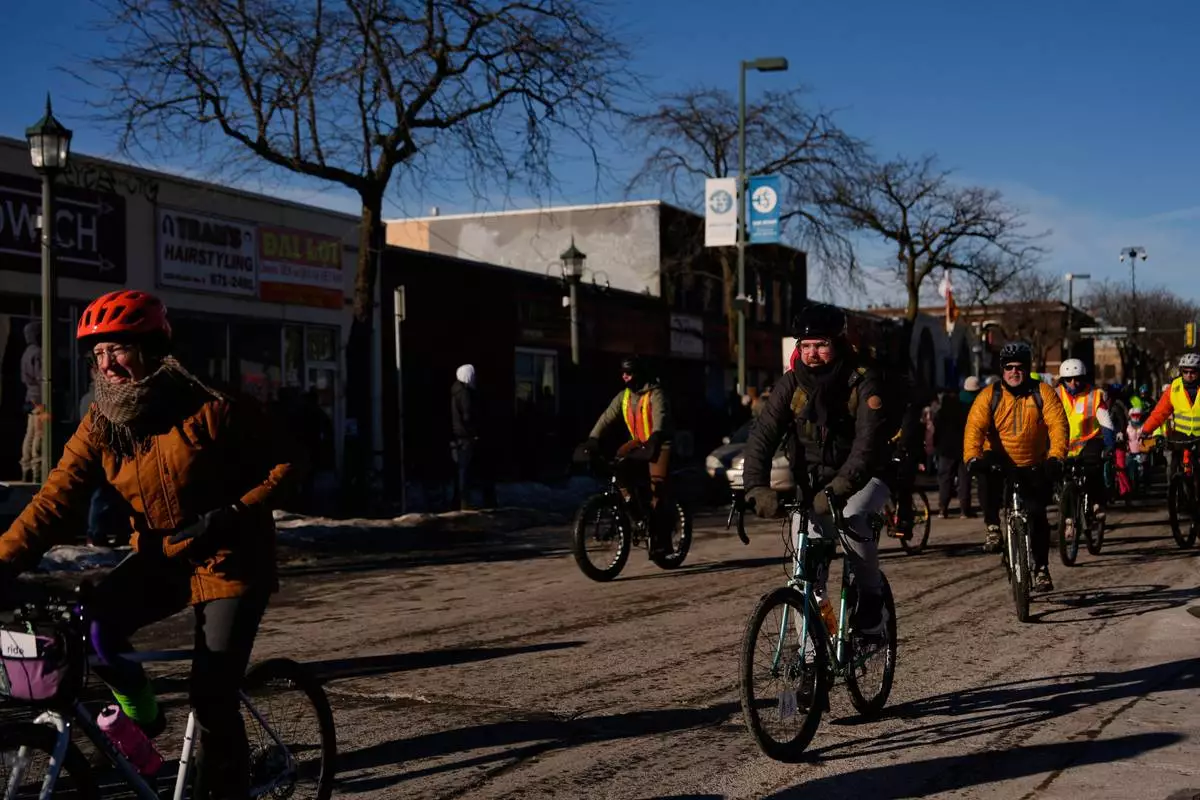
ople gather for a solidarity bike ride for Alex Pretti and Renee Good on Saturday, Jan. 31, 2026 in Minneapolis. (AP Photo/Julia Demaree Nikhinson)

ople gather for a solidarity bike ride for Alex Pretti and Renee Good on Saturday, Jan. 31, 2026 in Minneapolis. (AP Photo/Julia Demaree Nikhinson)

ople gather for a solidarity bike ride for Alex Pretti and Renee Good on Saturday, Jan. 31, 2026 in Minneapolis. (AP Photo/Julia Demaree Nikhinson)

Flowers and photos are left at a memorial site for Renee Good on Saturday, Jan. 31, 2026, in Minneapolis. (AP Photo/Alex Brandon)
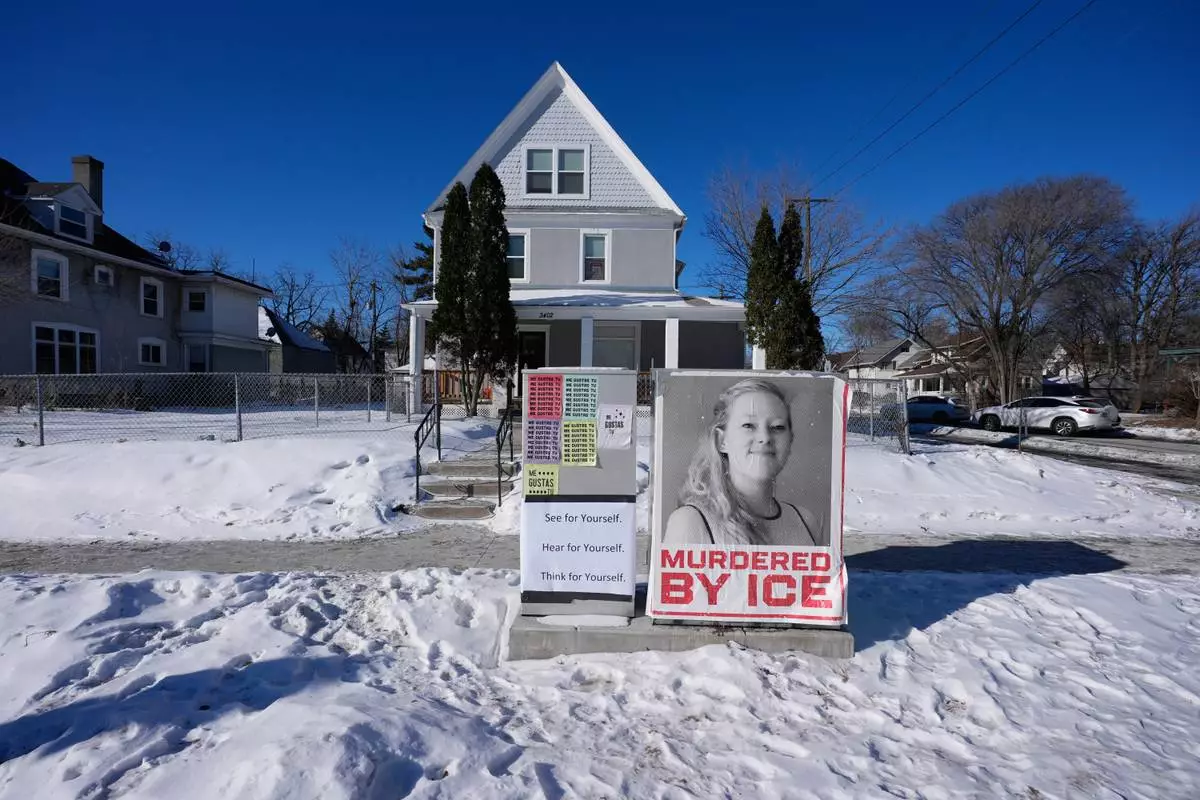
Flowers and photos are left at a memorial site for Renee Good on Saturday, Jan. 31, 2026, in Minneapolis. (AP Photo/Alex Brandon)

A photo of Renee Good is displayed in front of a home on Saturday, Jan. 31, 2026, in Minneapolis. (AP Photo/Alex Brandon)
A photo of Renee Good is displayed in front of a home on Saturday, Jan. 31, 2026, in Minneapolis. (AP Photo/Alex Brandon)
RALEIGH, N.C. (AP) — Hold on to those Thanksgiving turkeys! WKRP is coming to Cincinnati — for real this time.

“I cannot, by contract, tell you when. I cannot tell you who. But I can tell you, direct to the camera, WKRP, after 48 years, is coming to Cincinnati,” D.P. McIntire, who runs the media nonprofit that is auctioning the famous call letters, told The Associated Press. “Book it! It’s done!”

The call sign was made famous by “WKRP in Cincinnati,” a CBS television sitcom that ran from 1978 to 1982. It made stars of actors like Loni Anderson and Richard Sanders, whose bumbling newsman Les Nessman reported on a Thanksgiving promotion gone bad when live but flightless turkeys were dropped from a helicopter.

McIntire remembers watching the show’s first episode — featuring disc jockeys Dr. Johnny Fever (Howard Hesseman) and Venus Flytrap (Tim Reid) — in the living room with his parents and older sister.

“And at the end of the 30-minute episode,” he said, “I got up and I proclaimed, `I’m going to be in radio. And if I ever have the opportunity, I’m going to run a station called WKRP.’”

McIntire said he got his first on-air job at 13 as a news anchor at WNQQ “Wink FM” in Blairsville, Pennsylvania.

Fast forward to 2014, when his North Carolina-based nonprofit acquired the call sign from the Federal Communications Commission. Stations in Dallas, Georgia, and Alexandria, Tennessee, previously bore the letters.

McIntire laughs as he recalls his chat with a woman in the agency’s audio division.

He had two sets of call letters in mind. She told him he needed a third.

“Being the jokester that I am, I said, `Well, if you need three, and if it’s available, we’ll take WKRP,’” he said. “And 90 seconds later, she came back and she said, `Mr. McIntire. Congratulations. You’re the general manager of WKRP in Raleigh, North Carolina.’”

WKRP-LP — 101.9 on the FM dial — went live Nov. 30, 2015. The LP stands for “low power,” a class of station created to serve more local audiences that didn’t want mass-market content.

“Our format is what radio used to be 35 years ago in small-town America,” he said. “There is Greats of the 80s, Sounds of the 70s, 90s Rewind.”

LPFM is restricted to nonprofit organizations like his Oak City Media, and it’s definitely local.

“Your broadcast capacity is limited to 100 watts,” McIntire said. “So, your average range is between, depending on your terrain and circumstances, 4 and 12 miles (6 and 19 kilometers) in any direction. Enough to cover a small town.”

And, by necessity, it’s a low-budget affair.

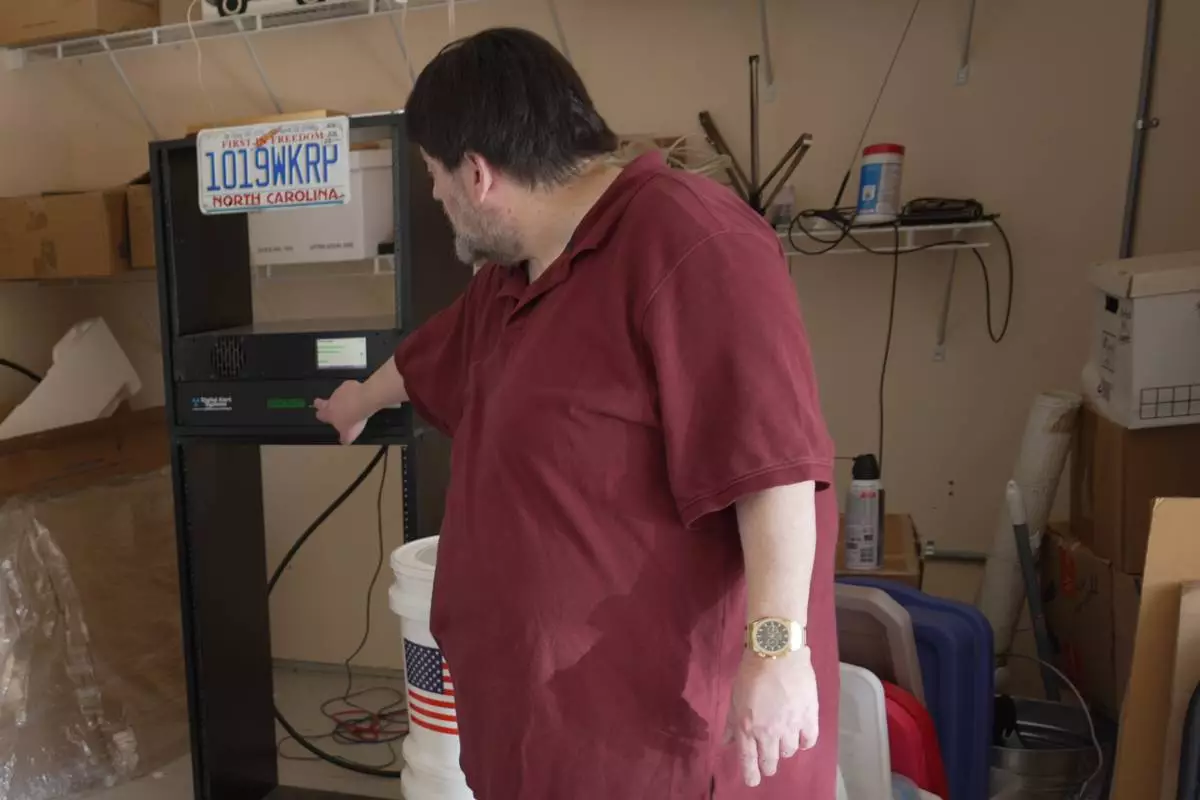
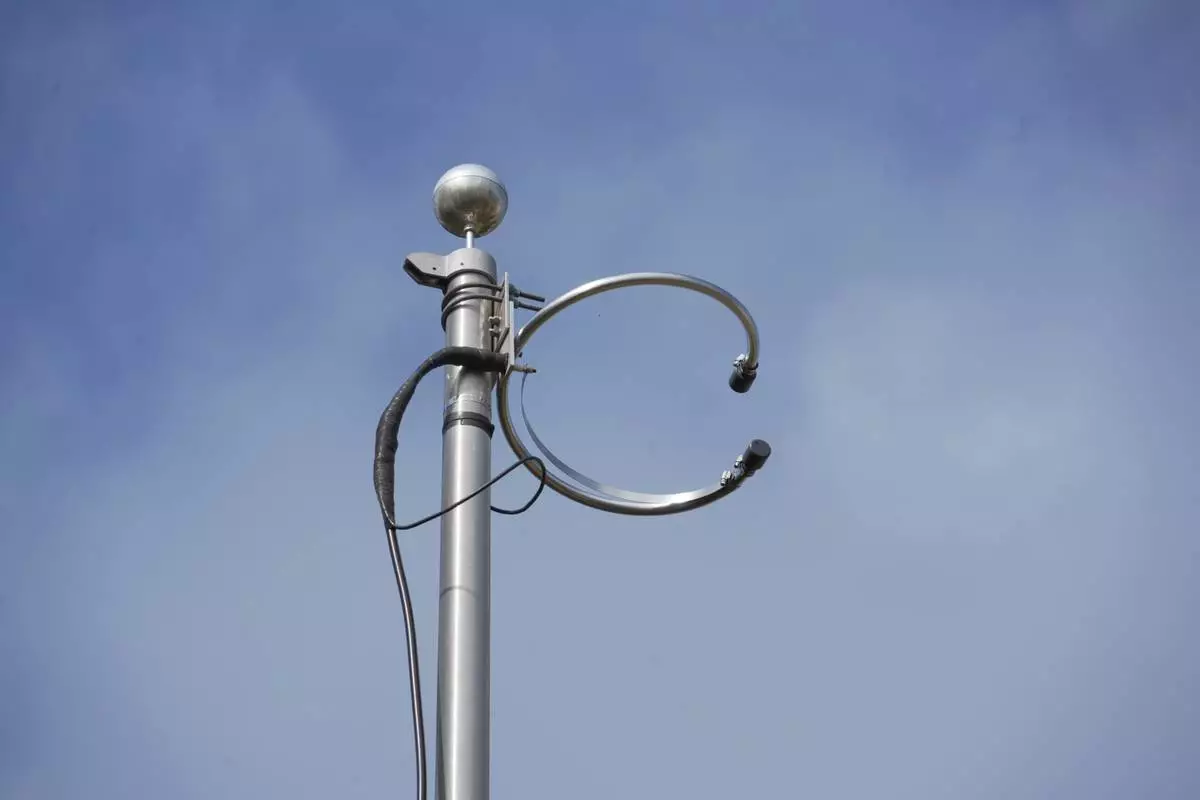
The transmitter is in a corner of McIntire’s garage, between a recycling bin and the cleaning supplies. The broadcast antenna sits atop a 25-foot (7.62-meter) metal flagpole in the backyard. The studio — microphones and a mixing board hooked up to a computer — is in McIntire’s basement.

Like the WKRP of television, McIntire and his partners set out to be “irreverent.” One of their offerings is a two-hour show called “Weird Al and Friends,” focusing on the satirical works of Weird Al Yankovic.

They even had an annual Thanksgiving turkey giveaway. But don’t call the American Society for the Prevention of Cruelty to Animals — they hand out gift certificates to a local grocery store.

“We don’t toss them out of helicopters,” he said with a laugh.

After 10 years on the air, the 56-year-old McIntire decided it was time to pass the reins.

“We’re in a position where the older members like me who started the station are turning the leadership over to younger members,” he said. “They’re not interested in radio.”

They put out a call for bids to use the call letters on FM and AM radio, as well as television and digital television.

They intend to use the proceeds for a new nonprofit venture called Independent Broadcast Consultants. He said IBC will be “geared specifically toward helping these new broadcasters get up and running, get the consulting that they need in order to be, hopefully, more successful than we have been.”

Oak City Media was all set to hand off the television-related suffixes — WKRPTV and WKRPDT — when another group defaulted on the agreement, McIntire said. But he said the Cincinnati deal is in the bag, he just can’t legally discuss it.

“It will be radio,” he said. “But that’s all I can tell you at this time.”

Whatever they do with the call sign, he hopes they will be true to the show that inspired it.

“It has a special place in the hearts of an awful lot of people,” he said. “And we have been very, very, very proud to have been a steward of that legacy.”

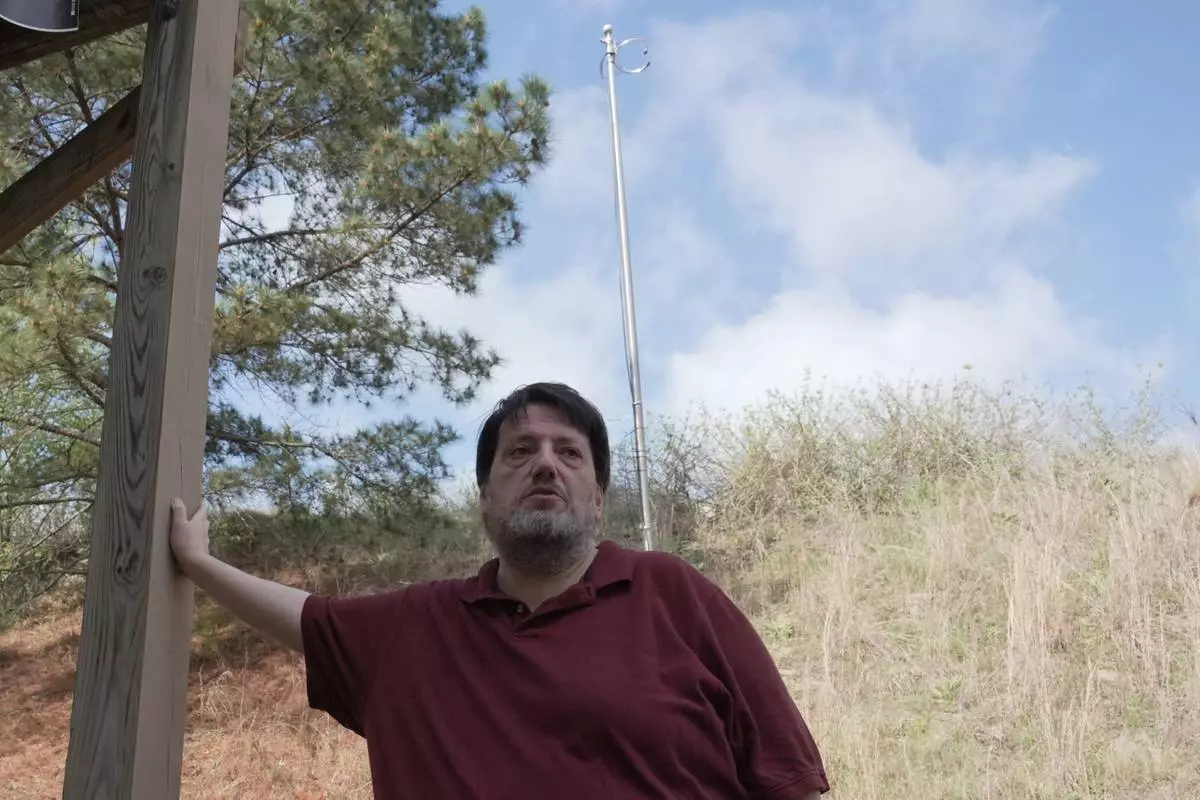
D.P. McIntire leans against a deck beneath the WKRP radio antenna in the backyard of his home in Raleigh, N.C., on Thursday, April 2, 2026. (AP Photo/Allen G. Breed)

D.P. McIntire leans against a deck beneath the WKRP radio antenna in the backyard of his home in Raleigh, N.C., on Thursday, April 2, 2026. (AP Photo/Allen G. Breed)

D.P. McIntire points to the transmitter for WKRP radio in a corner of his garage in Raleigh, N.C., on Thursday, April 2, 2026. (AP Photo/Allen G. Breed)

D.P. McIntire points to the transmitter for WKRP radio in a corner of his garage in Raleigh, N.C., on Thursday, April 2, 2026. (AP Photo/Allen G. Breed)

The WKRP radio antenna sits atop a 25-foot flagpole behind D.P. McIntire's home in Raleigh, N.C., on Thursday, April 2, 2026. (AP Photo/Allen G. Breed)

The WKRP radio antenna sits atop a 25-foot flagpole behind D.P. McIntire's home in Raleigh, N.C., on Thursday, April 2, 2026. (AP Photo/Allen G. Breed)

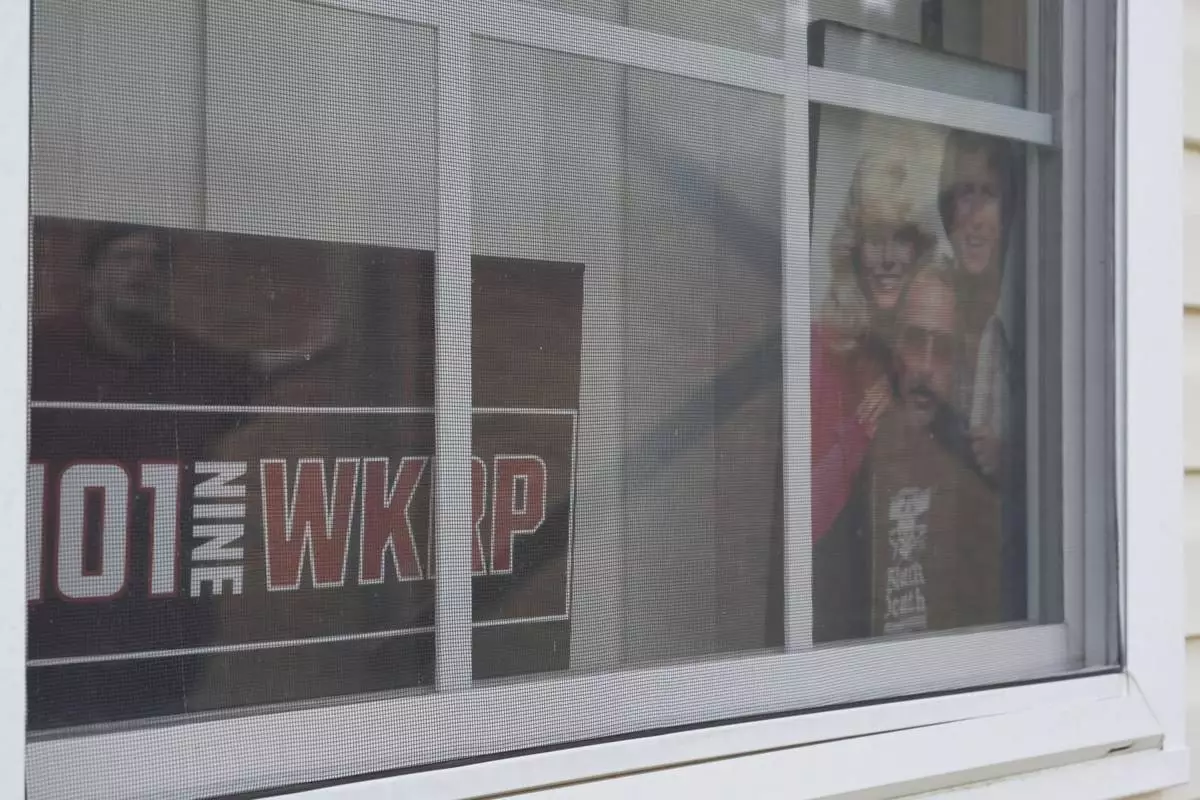
A photo of the cast members of the sitcom "WKRP in Cincinnati" sits in a window at the home of D.P. McIntire in Raleigh, N.C., on Thursday, April 2, 2026. (AP Photo/Allen G. Breed)

A photo of the cast members of the sitcom "WKRP in Cincinnati" sits in a window at the home of D.P. McIntire in Raleigh, N.C., on Thursday, April 2, 2026. (AP Photo/Allen G. Breed)

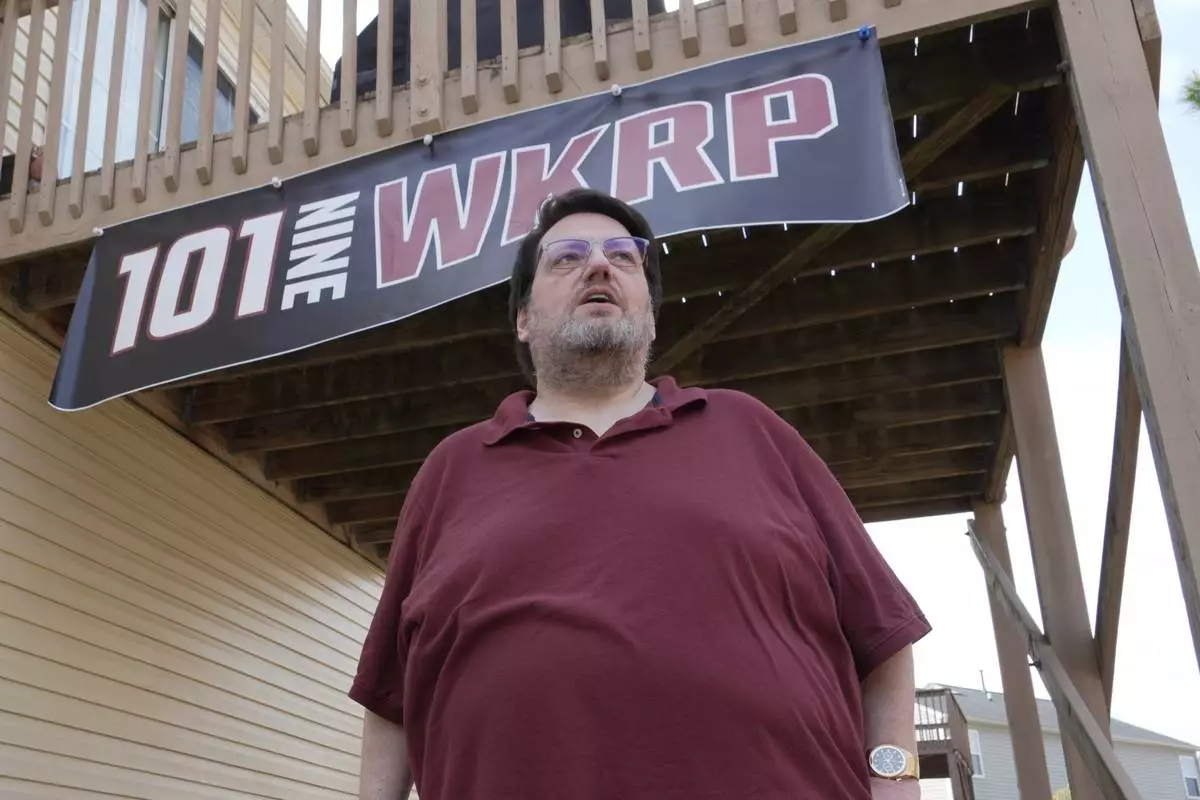
D.P. McIntire stands beneath a WKRP banner in the backyard of his home in Raleigh, N.C., on Thursday, April 2, 2026. (AP Photo/Allen G. Breed)

D.P. McIntire stands beneath a WKRP banner in the backyard of his home in Raleigh, N.C., on Thursday, April 2, 2026. (AP Photo/Allen G. Breed)

Recommended Articles