CARACAS (AP) — U.S. charge d’affaires Laura Dogu arrived in Caracas on Saturday to reopen the American diplomatic mission in Venezuela after seven years of severed ties.
The move comes almost one month after a military action ordered by U.S. President Donald Trump removed the South American country's then-leader Nicolás Maduro from office.
“My team and I are ready to work,” Dogu said in a message posted by the U.S. Embassy in Venezuela 's account on X. It also posted pictures of her upon her landing at Maiquetia airport.
Venezuela and the United States broke off diplomatic relations in February 2019 in a decision by Maduro. They closed their embassies mutually after Trump gave public support to lawmaker Juan Guaidó who claimed to be the nation’s interim president in January that year.
Interior Minister Diosdado Cabello, one of Venezuela's most powerful politicians and a Maduro loyalist, said earlier in January that reopening the U.S. embassy would give the Venezuelan government a way to oversee the treatment of the deposed president, who is jailed in the U.S.
Venezuela's foreign minister Yván Gil said in a message on Telegram that Dogu's arrival is part of a joint schedule to “deal with and resolve existing differences through diplomatic dialogue, in a foundation of mutual respect and (based on) international law.”
Dogu, who was previously ambassador in Nicaragua and Honduras, arrived in Venezuela one day after the country's interim president, Delcy Rodríguez, announced an amnesty bill to release political prisoners. That move was one of the key demands of the Venezuelan opposition.
Follow AP’s coverage of Latin America and the Caribbean at https://apnews.com/hub/latin-america
This story has been corrected to show that Dogu's title is charge d’affaires, not ambassador.
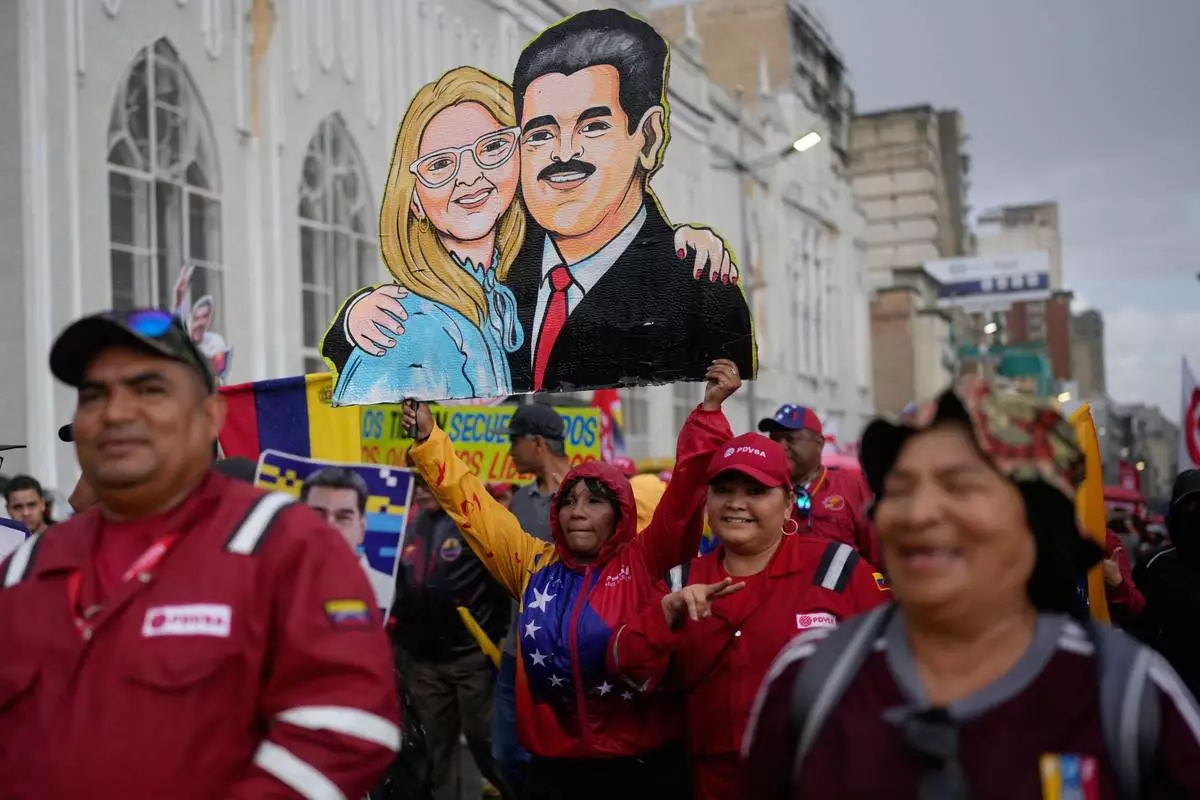
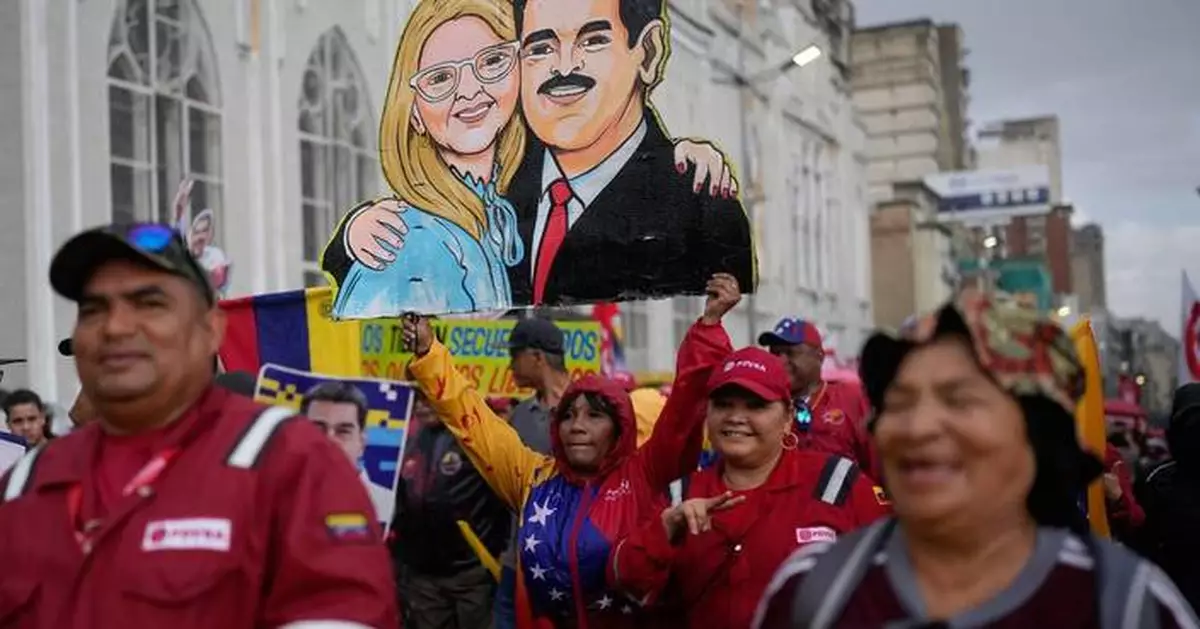
Government supporters carry a cutout of former President Nicolás Maduro and his wife Cilia Flores during a rally marking the anniversary of the 1958 coup that overthrew Venezuelan dictator Marcos Pérez Jiménez, in Caracas, Venezuela, Friday, Jan. 23, 2026. (AP Photo/Ariana Cubillos)
About 50 residents of a community outside Chile’s capital spent Saturday trying their best to power an entirely human-operated chatbot that could answer questions and make silly pictures on command, in a message to highlight the environmental toll of artificial intelligence data centers in the region.
Organizers say the 12-hour project fielded more than 25,000 requests from around the world.
Asking the Quili.AI website to generate an image of a “sloth playing in the snow” didn't instantly produce an output, as ChatGPT or Google's Gemini would. Instead, someone responded in Spanish to wait a few moments and reminded the user that a human was responding.
Then came a drawing about 10 minutes later: a penciled sketch of a cute and cartoonish sloth in a pile of snowballs, with its claws clutching one and about to throw it.
“The goal is to highlight the hidden water footprint behind AI prompting and encourage more responsible use,” said a statement from organizer Lorena Antiman of the environmental group Corporación NGEN.
The answers came from a rotating crew of volunteers working on laptops in a community center in Quilicura, a municipality at the urban edge of Santiago that has become a data center hub. Asked by an Associated Press reporter for the identity of who made the sloth drawing, the website responded that it was a local youth who's helping with illustrations.
The website responded quickly to questions that drew on residents' cultural knowledge, like how to make Chilean sopaipillas, a fried pastry. When they didn't know the answer, they walked around the room to see if someone else did.
“Quili.AI isn’t about always having an instant answer. It’s about recognizing that not every question needs one," Antiman said. "When residents don’t know something, they can say so, share perspective, or respond with curiosity rather than certainty.”
She said it's not designed to reject the “incredibly valuable” uses of AI but to think more about the impacts of so much “casual prompting” on water-stressed places like Quilicura.
The backdrop behind the campaign is a debate, in Chile and elsewhere, about the heavy costs of AI usage. Data center computer chips running AI systems require huge amounts of electricity and some also use large volumes of water for cooling, with usage varying depending on location and type of equipment.
Cloud computing giants Amazon, Google and Microsoft are among a number of companies that have built or planned data centers in the Santiago region.
Google has argued that the Quilicura data center it switched on in 2015 is the “most energy efficient in Latin America” and has highlighted its investment in wetlands restoration and irrigation projects in the surrounding Maipo River basin. But it faced a court challenge over another project near Santiago over water usage concerns.
Chile has faced a decade of severe drought, which experts say contributed to the spread of recent deadly wildfires.
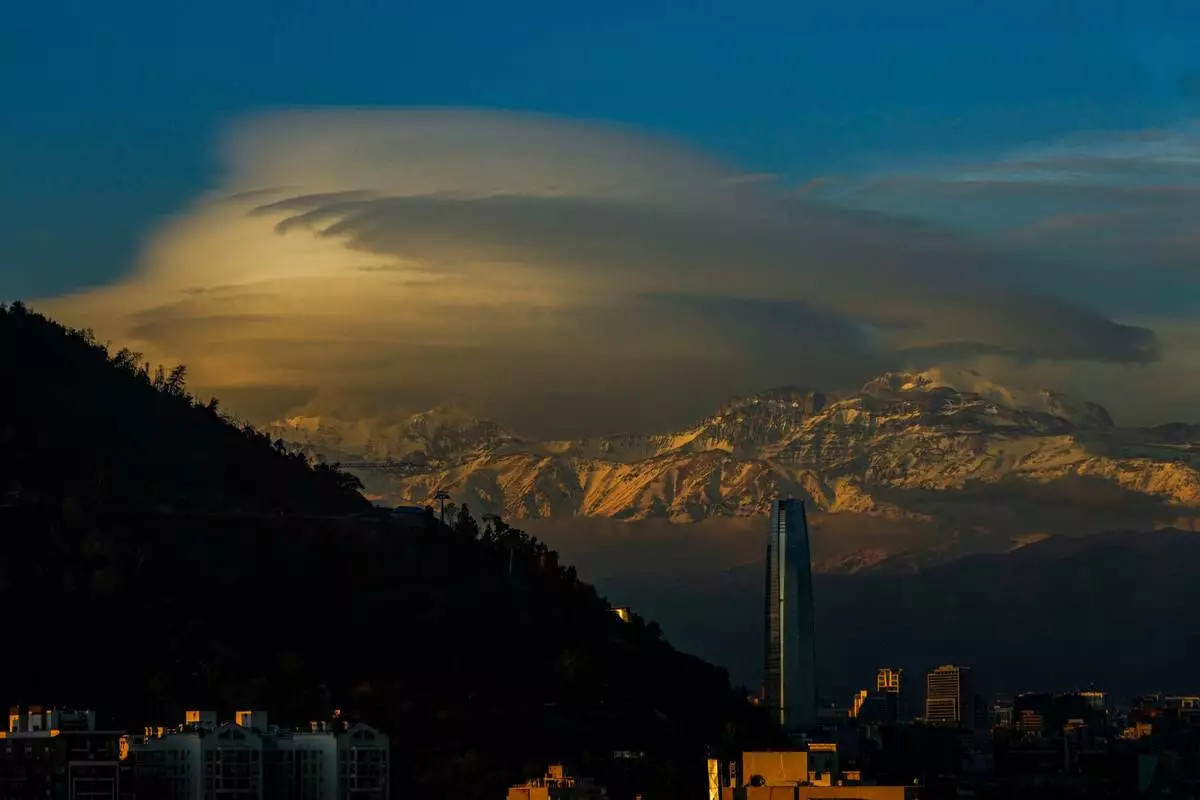
FILE - Clouds hover over the Andes Mountains in Santiago, Chile, June 19, 2024. (AP Photo/Esteban Felix, File)