Skip to Content Facebook Feature Image

NATO's ability to deter Russia has taken a hit with trans-Atlantic infighting

News

NATO's ability to deter Russia has taken a hit with trans-Atlantic infighting
News

News

NATO's ability to deter Russia has taken a hit with trans-Atlantic infighting

2026-02-01 15:02 Last Updated At:15:20

BRUSSELS (AP) — European allies and Canada are pouring billions of dollars into helping Ukraine, and they have pledged to massively boost their budgets to defend their territories.

But despite those efforts, NATO’s credibility as a unified force under U.S. leadership has taken a huge hit over the past year as trust within the 32-nation military organization dissolved.

More Images
FILE - President Donald Trump speaks in the Oval Office of the White House on May 20, 2025, in Washington. (AP Photo/Alex Brandon, File)
FILE - President Donald Trump speaks in the Oval Office of the White House on May 20, 2025, in Washington. (AP Photo/Alex Brandon, File)

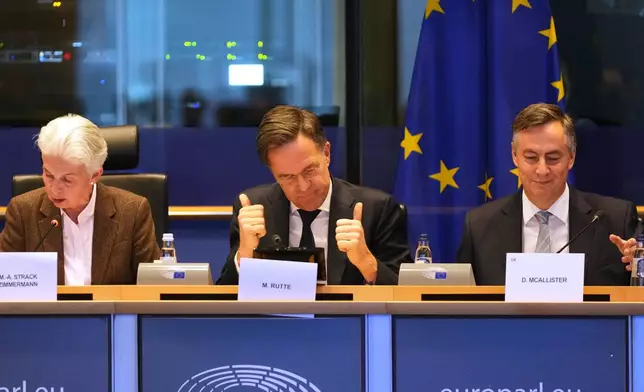
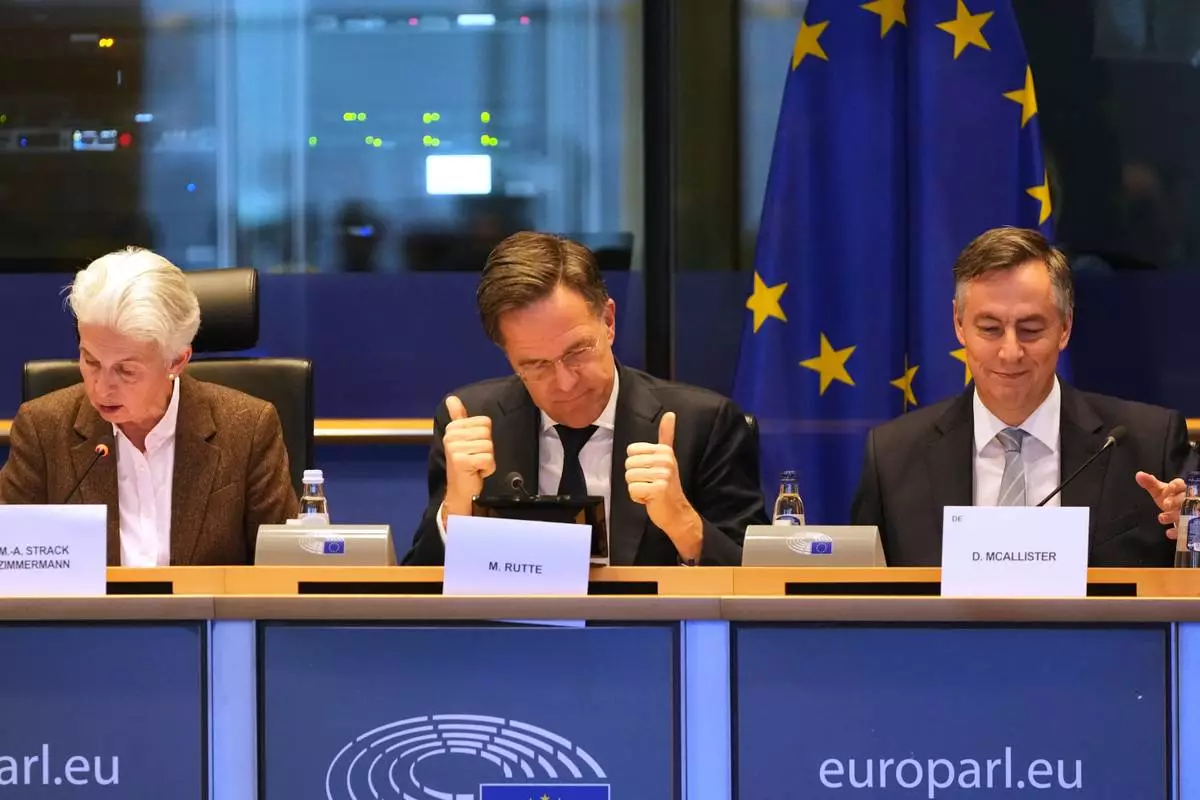
NATO Secretary General Mark Rutte, center, addresses the Security and Defence Committee at the European Parliament in Brussels, Monday, Jan. 26, 2026. (AP Photo/Virginia Mayo)
NATO Secretary General Mark Rutte, center, addresses the Security and Defence Committee at the European Parliament in Brussels, Monday, Jan. 26, 2026. (AP Photo/Virginia Mayo)

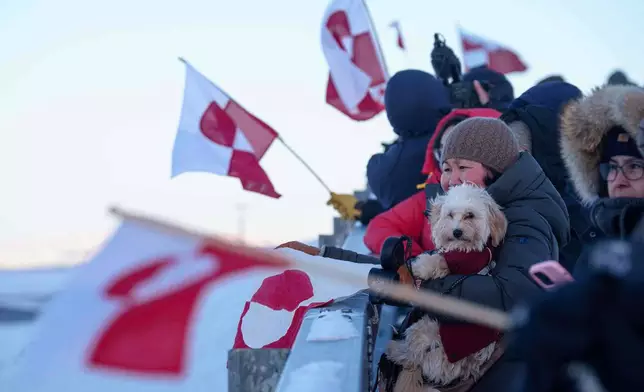
People wave national flags for Greenland Minister for Foreign Affairs and Research Vivian Motzfeldt as she arrives at the airport in Nuuk, Greenland, on Tuesday, Jan. 20, 2026. (AP Photo/Evgeniy Maloletka)
People wave national flags for Greenland Minister for Foreign Affairs and Research Vivian Motzfeldt as she arrives at the airport in Nuuk, Greenland, on Tuesday, Jan. 20, 2026. (AP Photo/Evgeniy Maloletka)

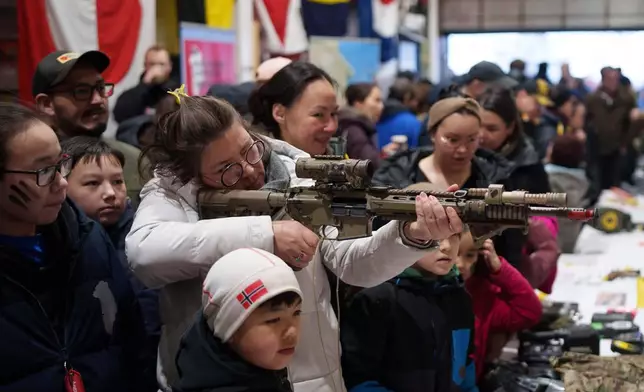
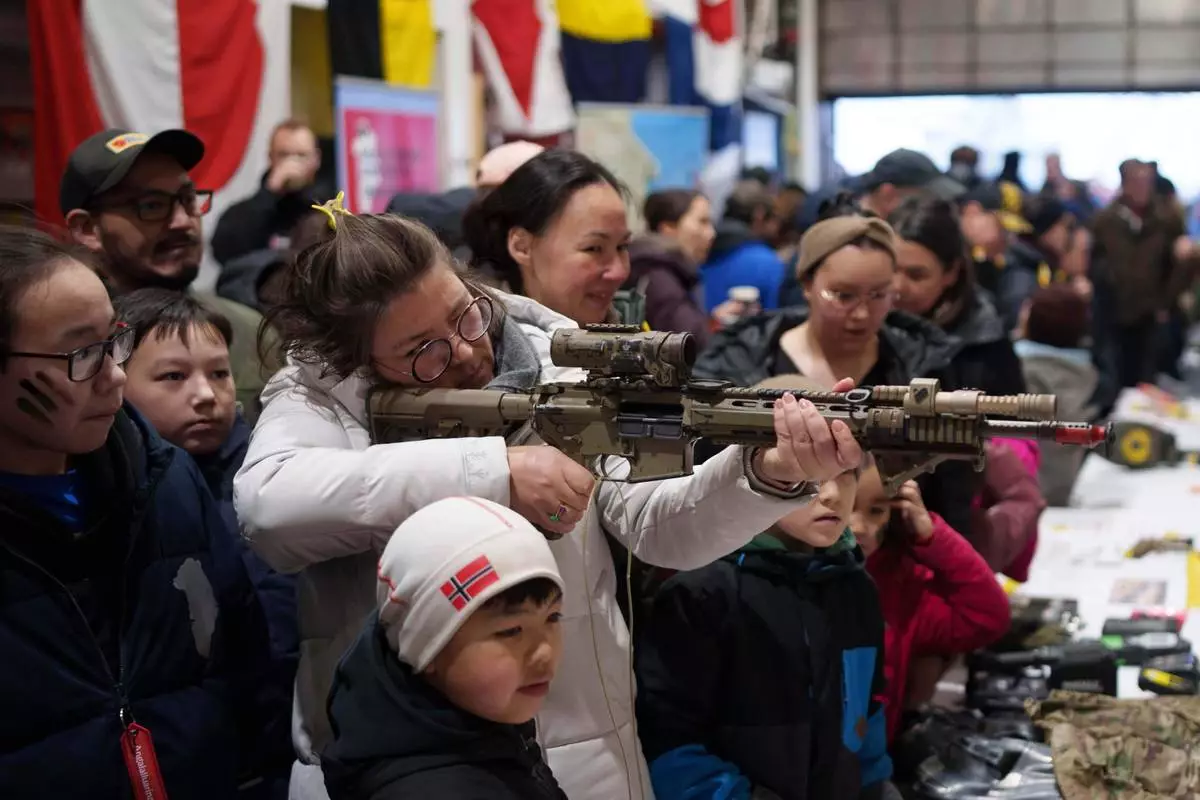
A woman aims a rifle aboard a naval vessel during a public day in Nuuk, Greenland, on Saturday, Jan. 24, 2026. (AP Photo/Evgeniy Maloletka)
A woman aims a rifle aboard a naval vessel during a public day in Nuuk, Greenland, on Saturday, Jan. 24, 2026. (AP Photo/Evgeniy Maloletka)

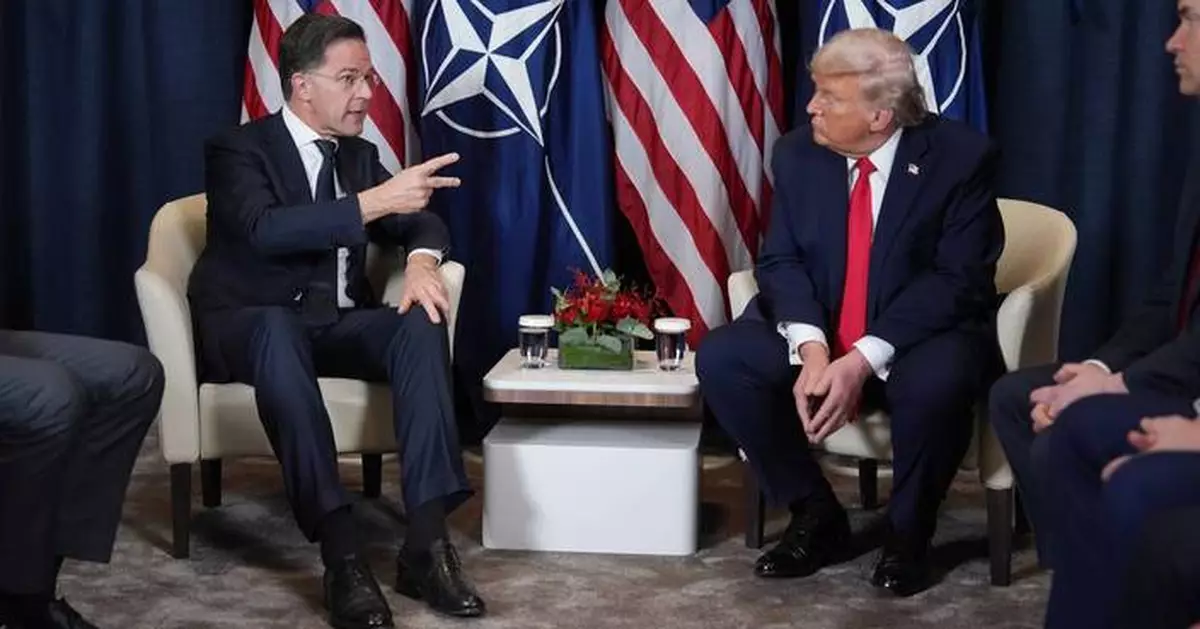
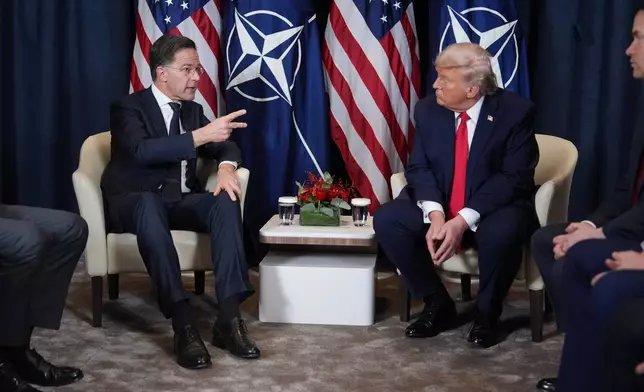
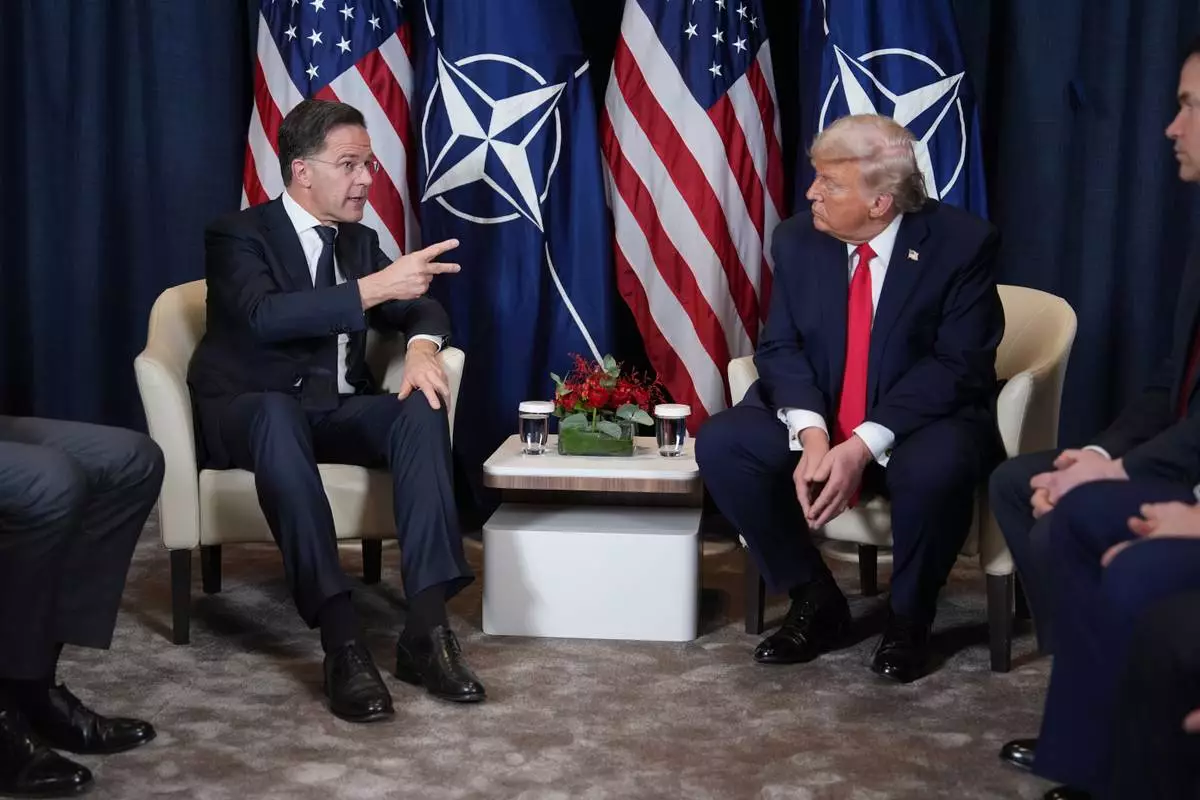
President Donald Trump, right, meets with NATO Secretary General Mark Rutte during a meeting on the sidelines of the Annual Meeting of the World Economic Forum in Davos, Switzerland, Wednesday, Jan. 21, 2026. (AP Photo/Evan Vucci)

President Donald Trump, right, meets with NATO Secretary General Mark Rutte during a meeting on the sidelines of the Annual Meeting of the World Economic Forum in Davos, Switzerland, Wednesday, Jan. 21, 2026. (AP Photo/Evan Vucci)

The rift has been most glaring over U.S. President Donald Trump's repeated threats to seize Greenland, a semiautonomous territory of NATO ally Denmark. More recently, Trump's disparaging remarks about his NATO allies' troops in Afghanistan drew another outcry.

While the heat on Greenland has subsided for now, the infighting has seriously undercut the ability of the world’s biggest security alliance to deter adversaries, analysts say.

“The episode matters because it crossed a line that cannot be uncrossed,” Sophia Besch from the Carnegie Europe think tank said in a report on the Greenland crisis. “Even without force or sanctions, that breach weakens the alliance in a lasting way.”

The tensions haven’t gone unnoticed in Russia, NATO’s biggest threat.

Any deterrence of Russia relies on ensuring that President Vladimir Putin is convinced that NATO will retaliate should he expand his war beyond Ukraine. Right now, that does not seem to be the case.

“It’s a major upheaval for Europe, and we are watching it,” Russian Foreign Minister Sergey Lavrov noted last week.

Criticized by U.S. leaders for decades over low defense spending, and lashed relentlessly under Trump, European allies and Canada agreed in July to significantly up their game and start investing 5% of their gross domestic product on defense.

The pledge was aimed at taking the whip out of Trump's hand. The allies would spend as much of their economic output on core defense as the United States — around 3.5% of GDP — by 2035, plus a further 1.5% on security-related projects like upgrading bridges, air and seaports.

NATO Secretary-General Mark Rutte has hailed those pledges as a sign of NATO’s robust health and military might. He recently said that “fundamentally thanks to Donald J. Trump, NATO is stronger than it ever was.”

Though a big part of his job is to ensure that Trump does not pull the U.S. out of NATO, as Trump has occasionally threatened, his flattery of the American leader has sometimes raised concern. Rutte has pointedly refused to speak about the rift over Greenland.

The North Atlantic Treaty Organization was formed in 1949 to counter the security threat posed by the Soviet Union during the Cold War, and its deterrence is underpinned by a strong American troop presence in Europe.

The alliance is built on the political pledge that an attack on one ally must be met with a response from them all — the collective security guarantee enshrined in Article 5 of its rule book.

It hinges on the belief that the territories of all 32 allies must remain inviolate. Trump’s designs on Greenland attack that very principle, even though Article 5 does not apply in internal disputes because it can only be triggered unanimously.

“Instead of strengthening our alliances, threats against Greenland and NATO are undermining America’s own interests,” two U.S. senators, Democrat Jeanne Shaheen and Republican Lisa Murkowski, wrote in a New York Times op-ed.

“Suggestions that the United States would seize or coerce allies to sell territory do not project strength. They signal unpredictability, weaken deterrence and hand our adversaries exactly what they want: proof that democratic alliances are fragile and unreliable,” they said.

Even before Trump escalated his threats to seize control of Greenland, his European allies were never entirely convinced that he would defend them should they come under attack.

Trump has said that he doesn’t believe the allies would help him either, and he recently drew more anger when he questioned the role of European and Canadian troops who fought and died alongside Americans in Afghanistan. The president later partially reversed his remarks.

In testimony to the Senate Foreign Relations Committee, U.S. Secretary of State Marco Rubio dismissed criticism that Trump has undermined the alliance.

“The stronger our partners are in NATO, the more flexibility the United States will have to secure our interests in different parts of the world,” he said. “That’s not an abandonment of NATO. That is a reality of the 21st century and a world that’s changing now.”

Despite NATO’s talk of increased spending, Moscow seems undeterred. The EU's foreign policy chief, Kaja Kallas, said this week that “it has become painfully clear that Russia will remain a major security threat for the long term.”

“We are fending off cyberattacks, sabotage against critical infrastructure, foreign interference and information manipulation, military intimidation, territorial threats and political meddling,” she said Wednesday.

Officials across Europe have reported acts of sabotage and mysterious drone flights over airports and military bases. Identifying the culprits is difficult, and Russia denies responsibility.

In a year-end address, Rutte warned that Europe is at imminent risk.

“Russia has brought war back to Europe, and we must be prepared for the scale of war our grandparents or great-grandparents endured,” he said.

Meanwhile in Russia, Lavrov said the dispute over Greenland heralded a “deep crisis” for NATO.

“It was hard to imagine before that such a thing could happen,” Lavrov told reporters, as he contemplated the possibility that “one NATO member is going to attack another NATO member.”

Russian state media mocked Europe's “impotent rage” over Trump's designs on Greenland, and Putin's presidential envoy declared that “trans-Atlantic unity is over.”

U.S. Defense Secretary Pete Hegseth is due to meet with his counterparts at NATO on Feb. 12. A year ago, he startled the allies by warning that America’s security priorities lie elsewhere and that Europe must look after itself now.

Security in the Arctic region, where Greenland lies, will be high on the agenda. It’s unclear whether Hegseth will announce a new drawdown of U.S. troops in Europe, who are central to NATO’s deterrence.

Lack of clarity about this has also fueled doubt about the U.S. commitment to its allies. In October, NATO learned that up to 1,500 American troops would be withdrawn from an area bordering Ukraine, angering ally Romania.

A report from the European Union Institute for Security Studies warned last week that although U.S. troops are unlikely to vanish overnight, doubts about U.S. commitment to European security means “the deterrence edifice becomes shakier.”

“Europe is being forced to confront a harsher reality,” wrote the authors, Veronica Anghel and Giuseppe Spatafora. “Adversaries start believing they can probe, sabotage and escalate without triggering a unified response."
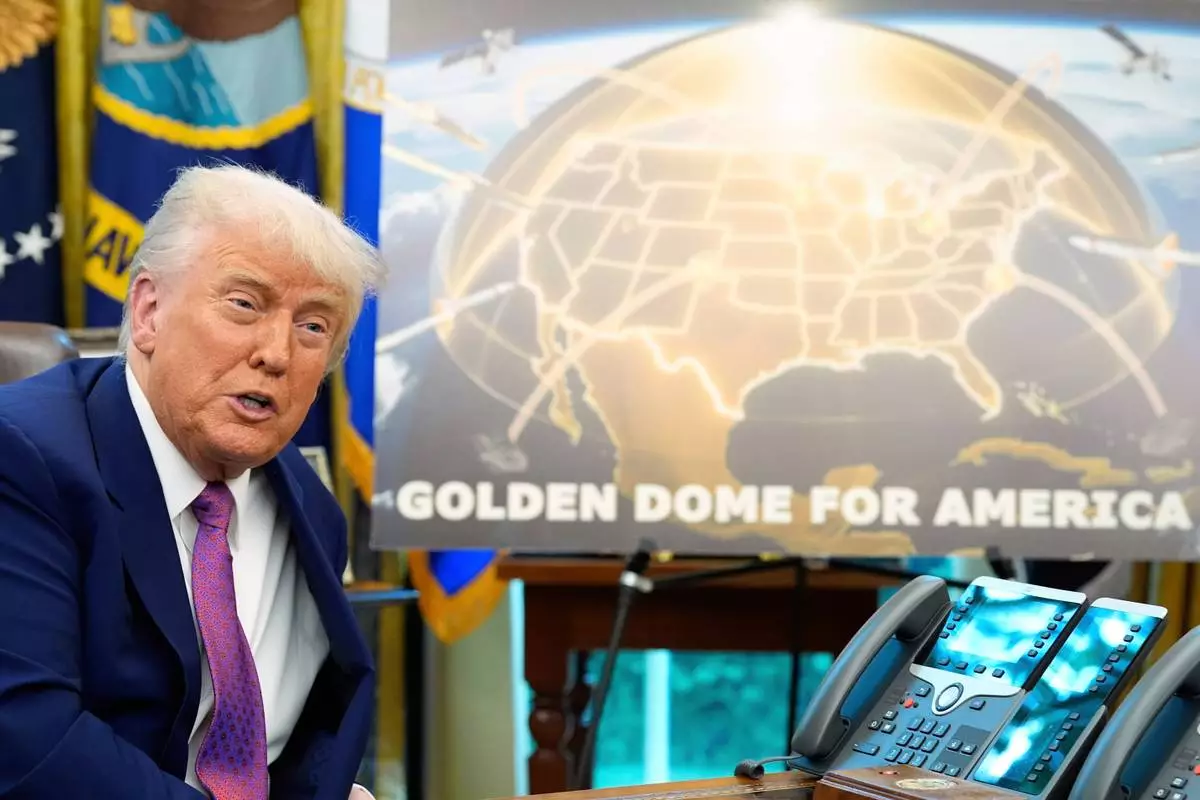
FILE - President Donald Trump speaks in the Oval Office of the White House on May 20, 2025, in Washington. (AP Photo/Alex Brandon, File)
FILE - President Donald Trump speaks in the Oval Office of the White House on May 20, 2025, in Washington. (AP Photo/Alex Brandon, File)

NATO Secretary General Mark Rutte, center, addresses the Security and Defence Committee at the European Parliament in Brussels, Monday, Jan. 26, 2026. (AP Photo/Virginia Mayo)

NATO Secretary General Mark Rutte, center, addresses the Security and Defence Committee at the European Parliament in Brussels, Monday, Jan. 26, 2026. (AP Photo/Virginia Mayo)

People wave national flags for Greenland Minister for Foreign Affairs and Research Vivian Motzfeldt as she arrives at the airport in Nuuk, Greenland, on Tuesday, Jan. 20, 2026. (AP Photo/Evgeniy Maloletka)
People wave national flags for Greenland Minister for Foreign Affairs and Research Vivian Motzfeldt as she arrives at the airport in Nuuk, Greenland, on Tuesday, Jan. 20, 2026. (AP Photo/Evgeniy Maloletka)

A woman aims a rifle aboard a naval vessel during a public day in Nuuk, Greenland, on Saturday, Jan. 24, 2026. (AP Photo/Evgeniy Maloletka)
A woman aims a rifle aboard a naval vessel during a public day in Nuuk, Greenland, on Saturday, Jan. 24, 2026. (AP Photo/Evgeniy Maloletka)

President Donald Trump, right, meets with NATO Secretary General Mark Rutte during a meeting on the sidelines of the Annual Meeting of the World Economic Forum in Davos, Switzerland, Wednesday, Jan. 21, 2026. (AP Photo/Evan Vucci)

President Donald Trump, right, meets with NATO Secretary General Mark Rutte during a meeting on the sidelines of the Annual Meeting of the World Economic Forum in Davos, Switzerland, Wednesday, Jan. 21, 2026. (AP Photo/Evan Vucci)
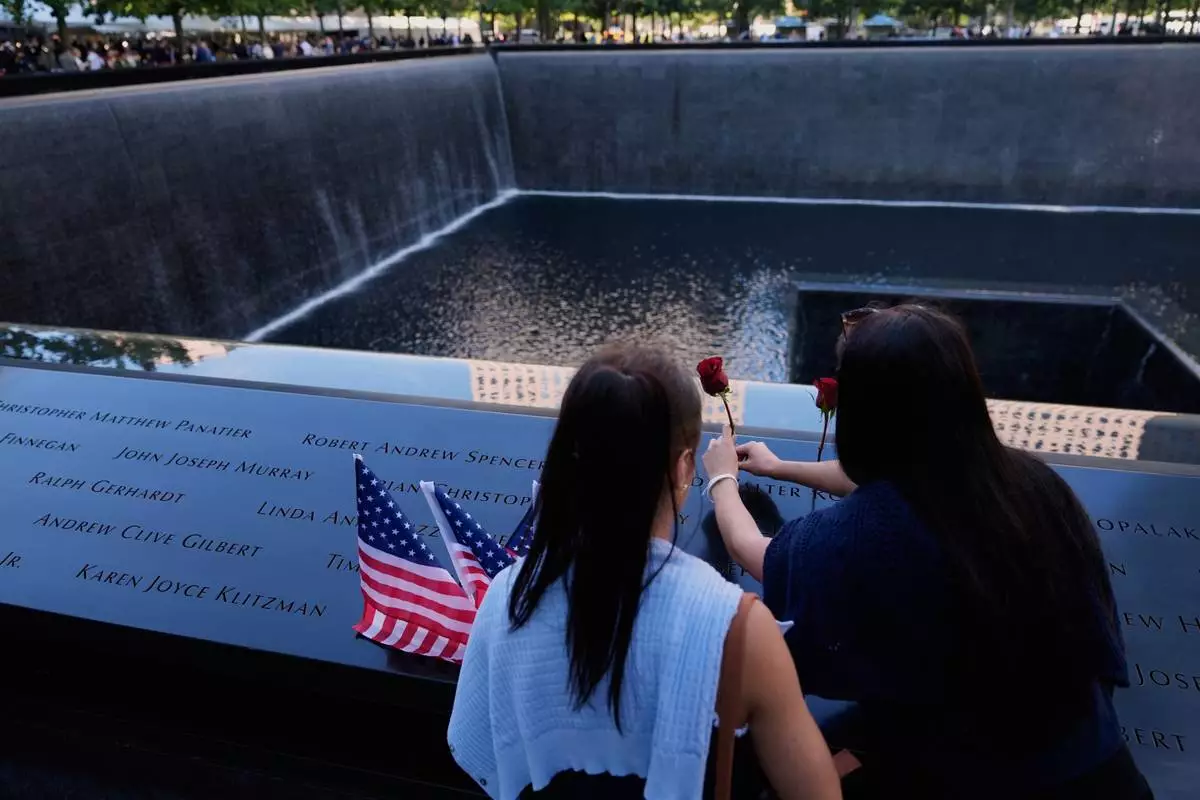
NEW YORK (AP) — The 9/11 Memorial and Museum has launched a $75 million fundraising campaign as the nonprofit tries to educate the millions of U.S. youth who don't remember the terror attacks on their upcoming 25th anniversary.

Boosting The Never Forget Fund's latest appeal, announced Wednesday, is Mike Bloomberg. The former New York City mayor, who has rallied hundreds of millions of dollars toward the 9/11 Memorial and Museum as its chair, pledged to match the next $25 million in donations through his Bloomberg Philanthropies. Organizers already secured the first $25 million through unspecified initial gifts.

Officials count about 97 million memorial visitors and nearly 28 million museum attendees since they opened in 2014 at the site where hijacked jetliners destroyed the World Trade Center's twin towers in lower Manhattan. But recent years have seen a budget crisis following pandemic closures and interest from the Trump administration in taking control of the site.

Beth Hillman, the organization's president and CEO, says they need a permanent funding source to reach the roughly 100 million Americans born after the attacks. The goal is to frame the aftermath as one that inspired selfless acts of service and provide basic facts through new on-site exhibits and classroom materials.

“The ongoing importance of remembering 9/11 is to remind people that they can come together even in the face of incredible loss,” Hillman told the Associated Press.

The legacy of the Sept. 11, 2001 attacks that killed nearly 3,000 people remains hotly contested. Younger generations have only ever known the existence of airport screenings, immigration enforcement officers and other security measures pursued afterwards by the U.S. government. Many engage with the events through popular memes of the photograph showing then-President George W. Bush learning about the developments. Conspiracy theories abound about what government officials knew in their leadup.

Also debated is the notion of unity advanced by the memorial and museum. The Sept. 11 attacks fueled 20 years of war abroad that grew increasingly unpopular as the death toll rose. Young American Muslims growing up under their shadow have faced hostility, mistrust and suspicion.

As the 25th anniversary approaches this September, Hillman sees a “compelling story of service, of hope, of resilience, of coming together” for the people who didn't live through that period. Those stories will be told in an exhibit called “In Their Honor." Celebrity chef Bobby Flay, she noted, was among the many chefs who prepared meals for first responders in the months following the attacks. Theater workers brought their lights to power the blacked-out area around ground zero. Victims' family members started social services organizations such as 9/11 Day to inspire volunteering in memory of their lost relatives. They also want to inform more people of the first responders who developed chronic illnesses and still face barriers to care.

The funds raised by the 9/11 Memorial and Museum will ensure free museum access continues for students, first responders and veterans, according to Hillman, who said “we don't want the price to be a barrier to them.” Standard adult admission currently costs $36. The nonprofit's website notes that it “relies primarily on ticket sales to help fund its operational costs.”

The organization plans to reach more educators with the funds. As teachers enter the workforce without lived experiences of Sept. 11, Hillman said they want to help prepare lesson plans. The nonprofit runs summer teachers' institutes, offers professional development programs and remakes a 30-minute film each year with firsthand stories.

Hillman acknowledged a greater “degree of distraction and confusion” today than in the past when it comes to efforts to memorialize recent historical events. She sees a need to give “simple representations of what happened." The March/April issue of The National Council for the Social Studies' magazine, which was guest edited by 9/11 Memorial and Museum staff, features a timeline of the morning of Sept. 11, 2001.

"9/11 is heavy and compelling and full of inspiring stories,” Hillman said. "But also, just a trusted set of what happened on that day, of materials that can convey the basics of it — that’s the beginning of people learning and starting to understand, too.”

Alex Edgar, a Gen Z civic leader who is working with a group called Made By Us to amplify youth voices ahead of the United States' 250th birthday, sees value in emphasizing the power of service. His peers, he said, have “never really seen a country that has worked” or one that “really lived up to the promise of America.” He finds that narratives about overcoming division to accomplish shared goals serve as an antidote to the political polarization frequently experienced by young people.

But he emphasized that those narratives must permeate classroom walls and museum doors.

“They invite young people to consider what’s preventing us from using any of the issues of our time as a rallying cry for folks to come together across backgrounds to build the type of country, the communities, that we want to live in,” he said.

Associated Press coverage of philanthropy and nonprofits receives support through the AP’s collaboration with The Conversation US, with funding from Lilly Endowment Inc. The AP is solely responsible for this content. For all of AP’s philanthropy coverage, visit https://apnews.com/hub/philanthropy.

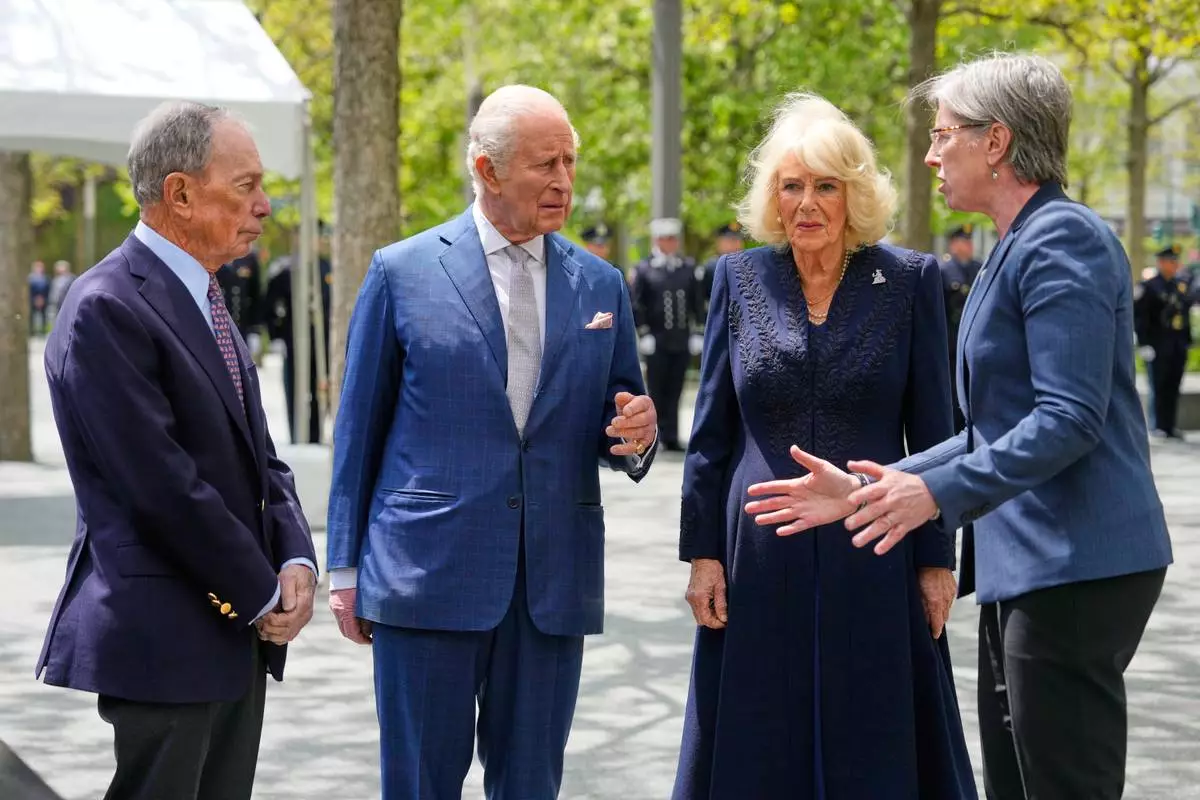
FILE - From left, former New York City Mayor Michael Bloomberg, Britain's King Charles III, Queen Camilla and Elizabeth Hillman, president and CEO of the National 9/11 Memorial an Museum, visit the 9/11 Memorial, April 29, 2026, in New York. (AP Photo/Yuki Iwamura, Pool, File)

FILE - From left, former New York City Mayor Michael Bloomberg, Britain's King Charles III, Queen Camilla and Elizabeth Hillman, president and CEO of the National 9/11 Memorial an Museum, visit the 9/11 Memorial, April 29, 2026, in New York. (AP Photo/Yuki Iwamura, Pool, File)

FILE - Visitors peek into the museum at the 9/11 Museum and Memorial, April 29, 2021, in New York. (AP Photo/Mary Altaffer, File)

FILE - Visitors peek into the museum at the 9/11 Museum and Memorial, April 29, 2021, in New York. (AP Photo/Mary Altaffer, File)

FILE - Ainsley, right, and Sarah Jurccak place a flower in the name of a relative during a ceremony to mark the 24th anniversary of the 9/11 attacks, Sept. 11, 2025, in New York. (AP Photo/Seth Wenig, File)

FILE - Ainsley, right, and Sarah Jurccak place a flower in the name of a relative during a ceremony to mark the 24th anniversary of the 9/11 attacks, Sept. 11, 2025, in New York. (AP Photo/Seth Wenig, File)

Recommended Articles