MELBOURNE, Australia (AP) — Carlos Alcaraz is 22, he's the youngest man ever to win all four of the major titles in tennis, and he had to achieve what no man previously has done to complete the career Grand Slam in Australia.
The top-ranked Alcaraz dropped the first set of the Australian Open final in 33 minutes Sunday as Novak Djokovic went out hard in pursuit of an unprecedented 25th major title, but the young Spaniard dug deep to win 2-6, 6-2, 6-3, 7-5.
Click to Gallery
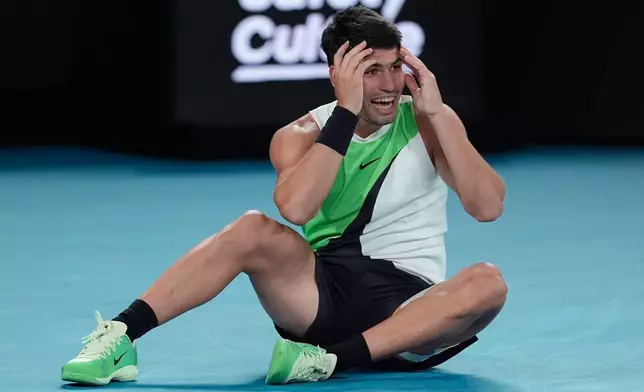
Carlos Alcaraz of Spain celebrates after defeating Novak Djokovic of Serbia in the men's singles final at the Australian Open tennis championship in Melbourne, Australia, Sunday, Feb. 1, 2026. (AP Photo/Asanka Brendon Ratnayake)
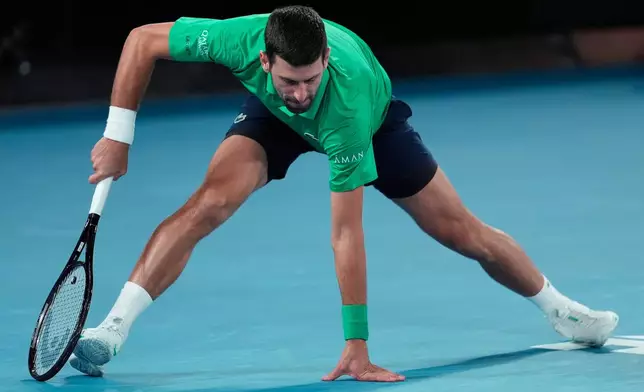
Novak Djokovic of Serbia braces himself after playing a shot to Carlos Alcaraz of Spain during the men's singles final at the Australian Open tennis championship in Melbourne, Australia, Sunday, Feb. 1, 2026. (AP Photo/Asanka Brendon Ratnayake)
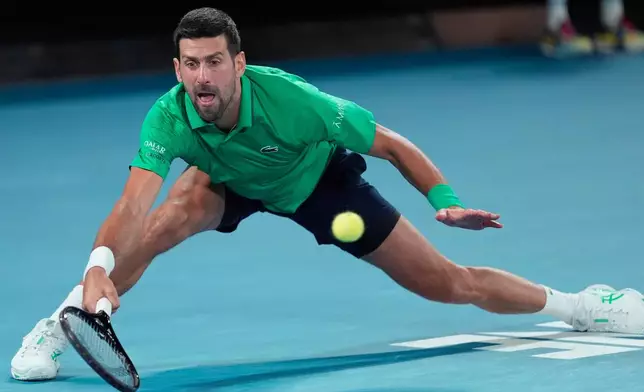
Novak Djokovic of Serbia hits a forehand to Carlos Alcaraz of Spain during the men's singles final at the Australian Open tennis championship in Melbourne, Australia, Sunday, Feb. 1, 2026. (AP Photo/Asanka Brendon Ratnayake)
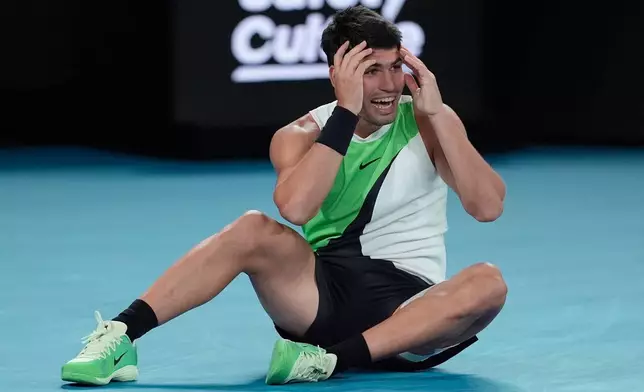
Carlos Alcaraz of Spain celebrates after defeating Novak Djokovic of Serbia in the men's singles final at the Australian Open tennis championship in Melbourne, Australia, Sunday, Feb. 1, 2026. (AP Photo/Asanka Brendon Ratnayake)

Carlos Alcaraz of Spain reacts after defeating Novak Djokovic of Serbia in the men's singles final at the Australian Open tennis championship in Melbourne, Australia, Sunday, Feb. 1, 2026.(AP Photo/Mark Baker)
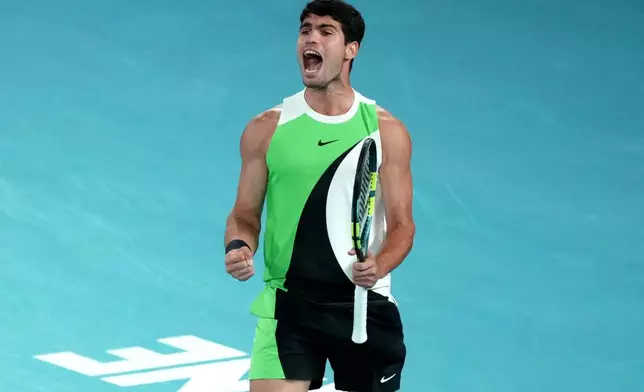
Carlos Alcaraz of Spain reacts during the men's singles final match against Novak Djokovic of Serbia at the Australian Open tennis championship in Melbourne, Australia, Sunday, Feb. 1, 2026.(AP Photo/Mark Baker)
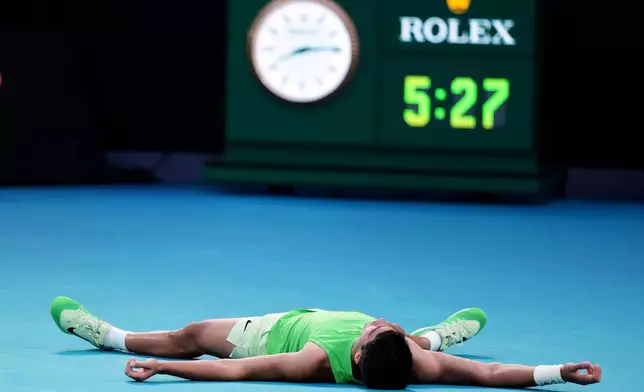
Carlos Alcaraz of Spain celebrates after defeating Alexander Zverev of Germany in their semifinal match at the Australian Open tennis championship in Melbourne, Australia, Friday, Jan. 30, 2026. (AP Photo/Asanka Brendon Ratnayake)
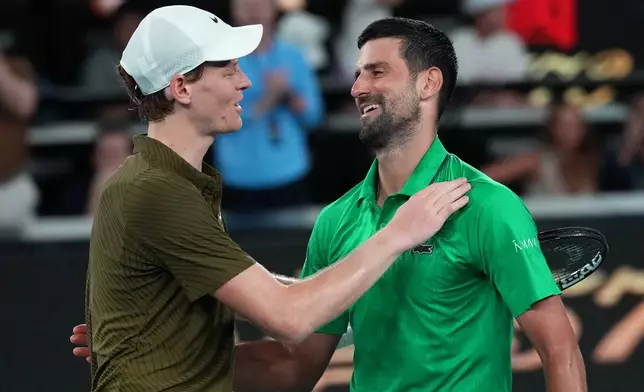
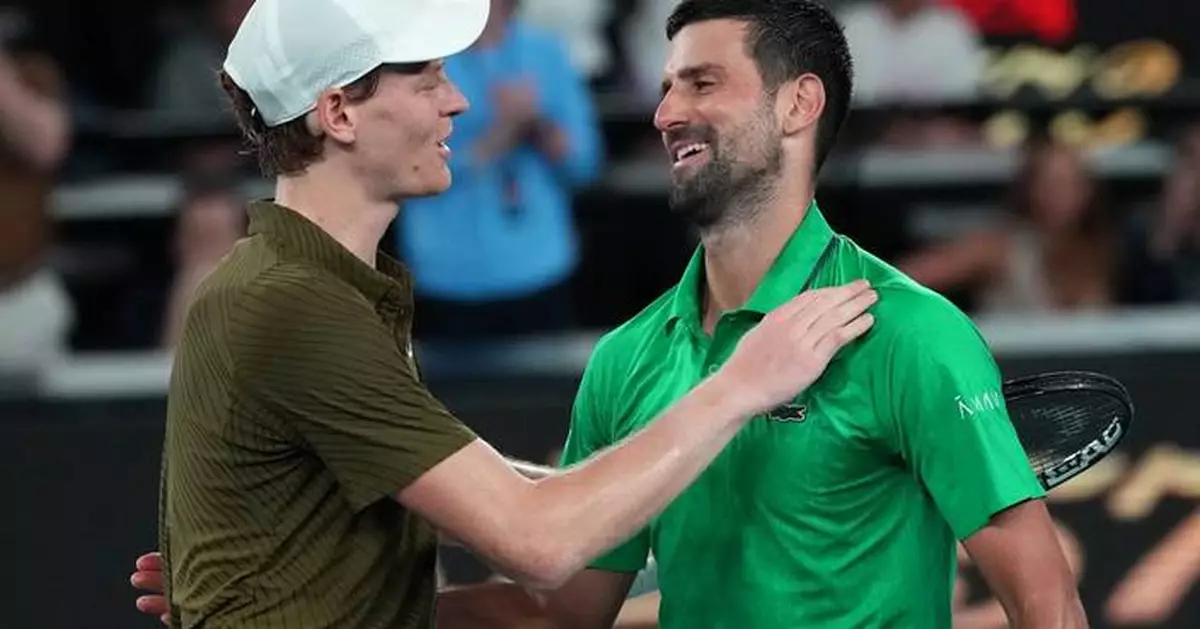
Novak Djokovic, right, of Serbia is congratulated by Jannik Sinner, left, of Italy following their semifinal match at the Australian Open tennis championship in Melbourne, Australia, early Saturday, Jan. 31, 2026. (AP Photo/Aaron Favila)
“Means the world to me,” Alcaraz said. “It is a dream come true for me.”
Djokovic had won all 10 of his previous finals at Melbourne Park and, despite being 38, gave himself every chance of extending that streak to 11 when he needed only two sets to win.
Alcaraz rose to the challenge.
“Tennis can change on just one point. One point, one feeling, one shot can change the whole match completely,” he said. “I played well the first set, but you know, in front of me I had a great and inspired Novak, who was playing great, great shots.”
A couple of unforced errors from Djokovic early in the second set gave Alcaraz the confidence.
He scrambled to retrieve shots that usually would be winners for Djokovic, and he kept up intense pressure on the most decorated player in men's tennis history. There were extended rallies where each player hit enough brilliant shots to usually win a game.
Djokovic has made an artform of rallying from precarious positions. Despite trailing two sets to one, he went within the width of a ball in the fourth set's ninth game of turning this final around.
After fending off six break points in the set, he exhorted the crowd when he got to 30-30. The crowd responded with chants of “Nole, Nole, Nole!”
When Djokovic earned a breakpoint chance — his first since the second set — he whipped up his supporters again. But when Djokovic sent a forehand long on the next point, Alcaraz took it as a reprieve.
A short forehand winner, a mis-hit from Alcaraz, clipped the net and landed inside the line to give him game point. Then Djokovic hit another forehand long.
Alcaraz responded with a roar, and sealed victory by taking two of the next three games.
As he was leaving the court, Alcaraz signed the lens of the TV camera with a recognition: "Job finished. 4/4 Complete.”
After paying tribute at the trophy ceremony to Djokovic for being an inspiration, Alcaraz turned to his support team. He parted ways with longtime coach Juan Carlos Ferrero at the end of last season and Samuel Lopez stepped up to head the team.
“Nobody knows how hard I’ve been working to get this trophy. I just chased this moment so much,” Alcaraz said. "The pre-season was a bit of a rollercoaster emotionally.
“You were pushing me every day to do all the right things,” he added. “I’m just really grateful for everyone I have in my corner right now.”
Djokovic joked about this showdown setting up a rivalry over the next 10 years with Alcaraz, but then said it was only right to hand the floor over to the new, 16 years his junior, champion.
“What you’ve been doing, the best word to describe is historic, legendary," he said. "So congratulations."
Both players were coming off grueling five-set semifinal wins — Alcaraz held off No. 3 Alexander Zverev on Friday; Djokovic’s win over two-time defending Australian Open champion Jannik Sinner ended after 1:30 a.m. Saturday — yet showed phenomenal fitness, athleticism and stamina for just over three hours in pursuit of their own historic achievements.
Djokovic won the last of his 24 Grand Slam singles titles at the 2023 U.S. Open, his push for an unprecedented 25th has now been blocked by Alcaraz or Sinner for nine majors.
Djokovic and Rafael Nadal played some epic matches, including the longest match ever at the Australian Open that lasted almost six hours in 2012.
Nadal was in the stands Sunday, and both players addressed the 22-time major winner.
“He's my idol, my role model,” Alcaraz said. To complete the career Slam "in front of him, it made even more special."
Djokovic, addressing Nadal directly as the “legendary Rafa,” joked that there were “too many Spanish legends” in Rod Laver.
“It felt like it was two against one tonight,” he said.
At 22 years and 272 days, Alcaraz is the youngest man to complete a set of all four major singles titles. He broke the mark set by Don Budge in the 1938 French championships, when he was 22 years and 363 days.
He’s the ninth man to achieve the career Grand Slam, a list that also includes Djokovic, Nadal and Roger Federer.
Alcaraz now has seven major titles — his first in Australia along with two each at Wimbledon and the French and U.S. Opens.
AP tennis: https://apnews.com/hub/tennis
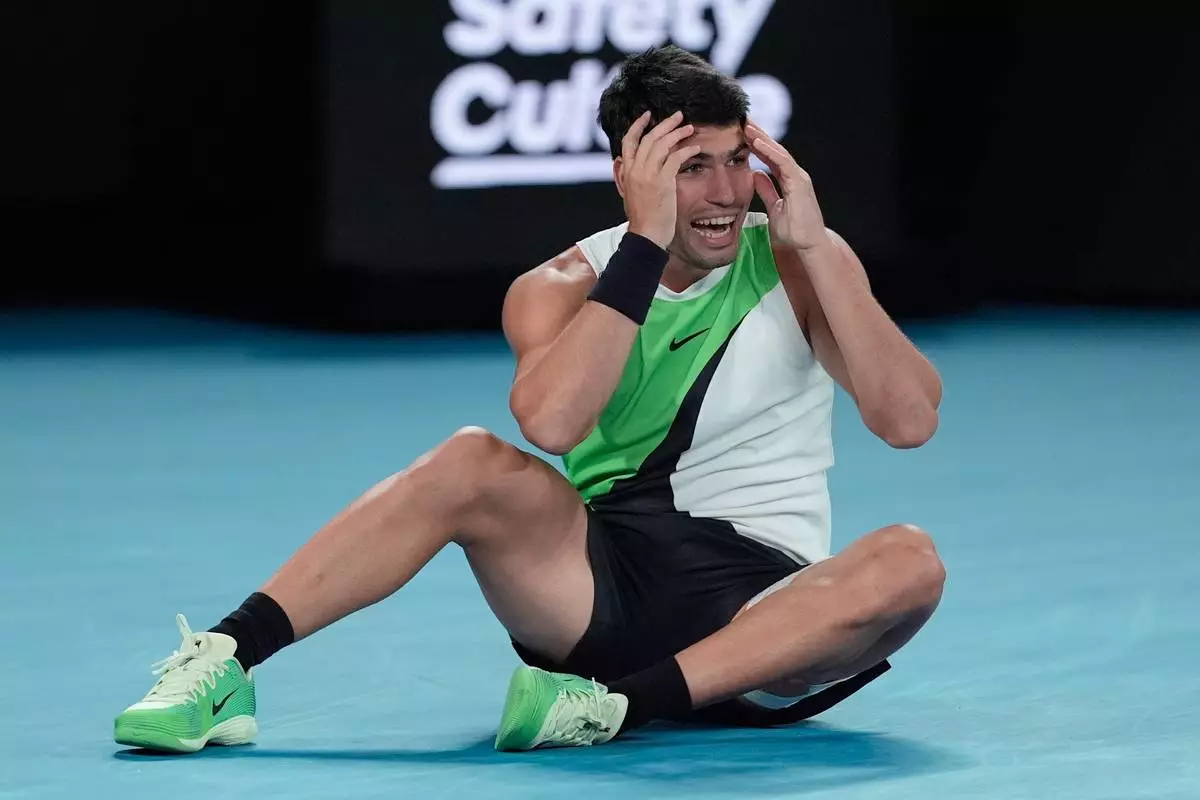
Carlos Alcaraz of Spain celebrates after defeating Novak Djokovic of Serbia in the men's singles final at the Australian Open tennis championship in Melbourne, Australia, Sunday, Feb. 1, 2026. (AP Photo/Asanka Brendon Ratnayake)
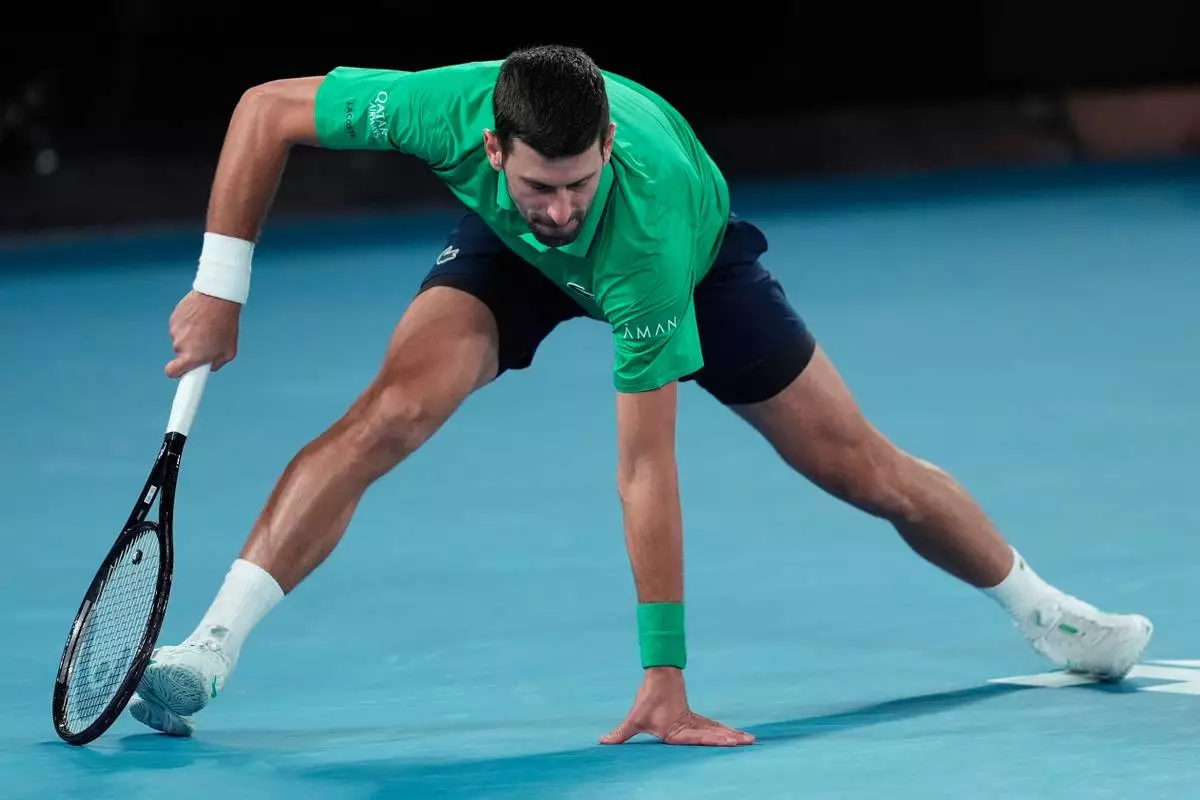
Novak Djokovic of Serbia braces himself after playing a shot to Carlos Alcaraz of Spain during the men's singles final at the Australian Open tennis championship in Melbourne, Australia, Sunday, Feb. 1, 2026. (AP Photo/Asanka Brendon Ratnayake)
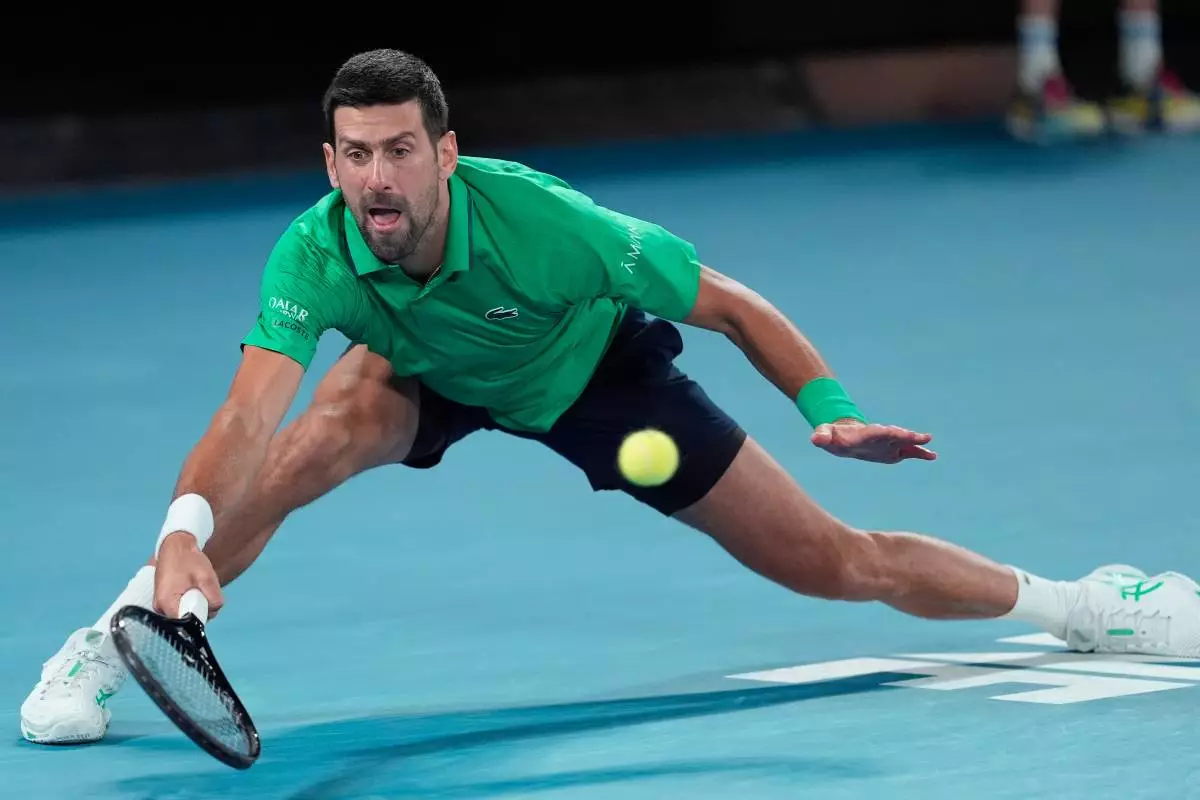
Novak Djokovic of Serbia hits a forehand to Carlos Alcaraz of Spain during the men's singles final at the Australian Open tennis championship in Melbourne, Australia, Sunday, Feb. 1, 2026. (AP Photo/Asanka Brendon Ratnayake)
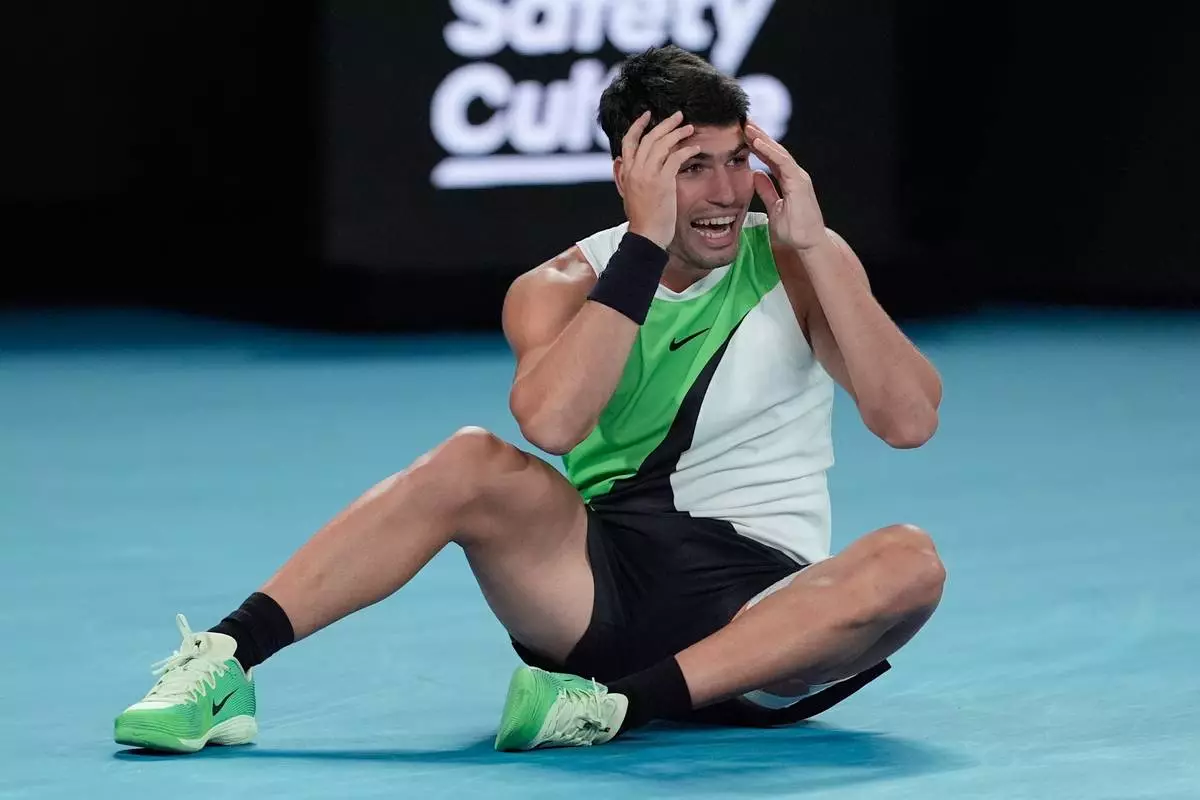
Carlos Alcaraz of Spain celebrates after defeating Novak Djokovic of Serbia in the men's singles final at the Australian Open tennis championship in Melbourne, Australia, Sunday, Feb. 1, 2026. (AP Photo/Asanka Brendon Ratnayake)
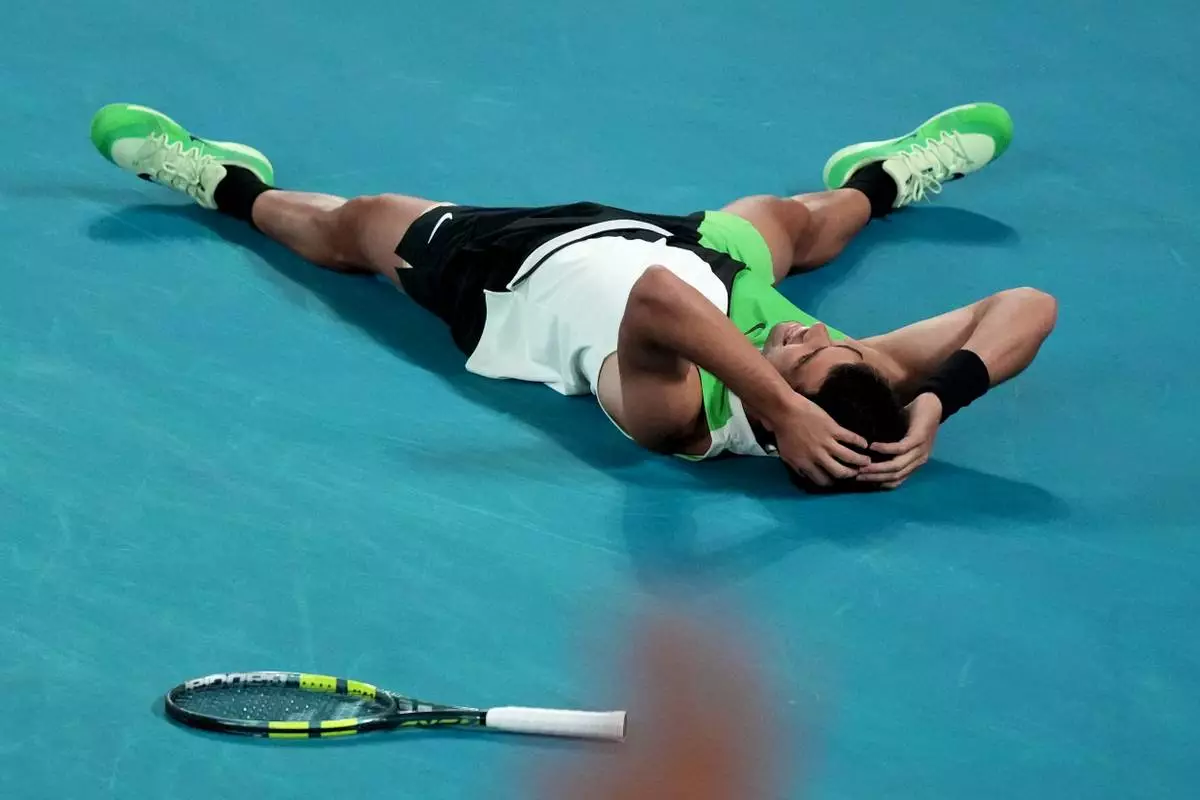
Carlos Alcaraz of Spain reacts after defeating Novak Djokovic of Serbia in the men's singles final at the Australian Open tennis championship in Melbourne, Australia, Sunday, Feb. 1, 2026.(AP Photo/Mark Baker)
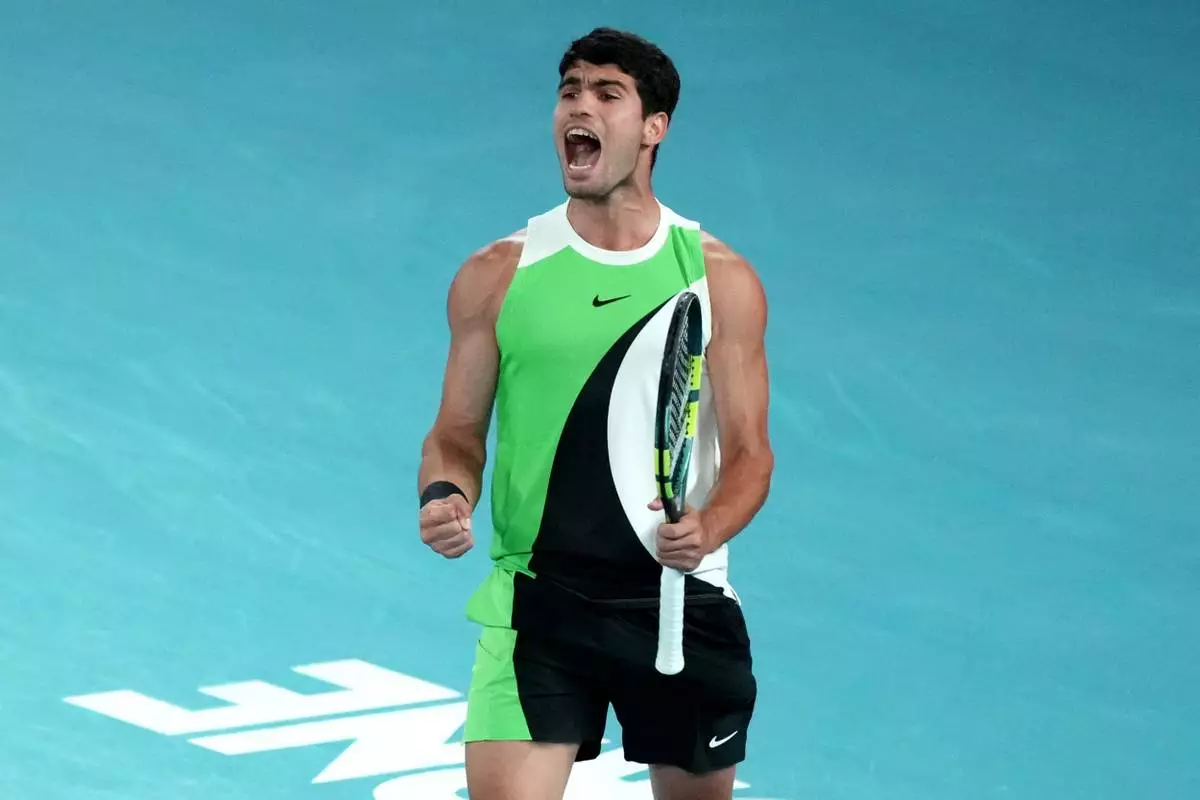
Carlos Alcaraz of Spain reacts during the men's singles final match against Novak Djokovic of Serbia at the Australian Open tennis championship in Melbourne, Australia, Sunday, Feb. 1, 2026.(AP Photo/Mark Baker)
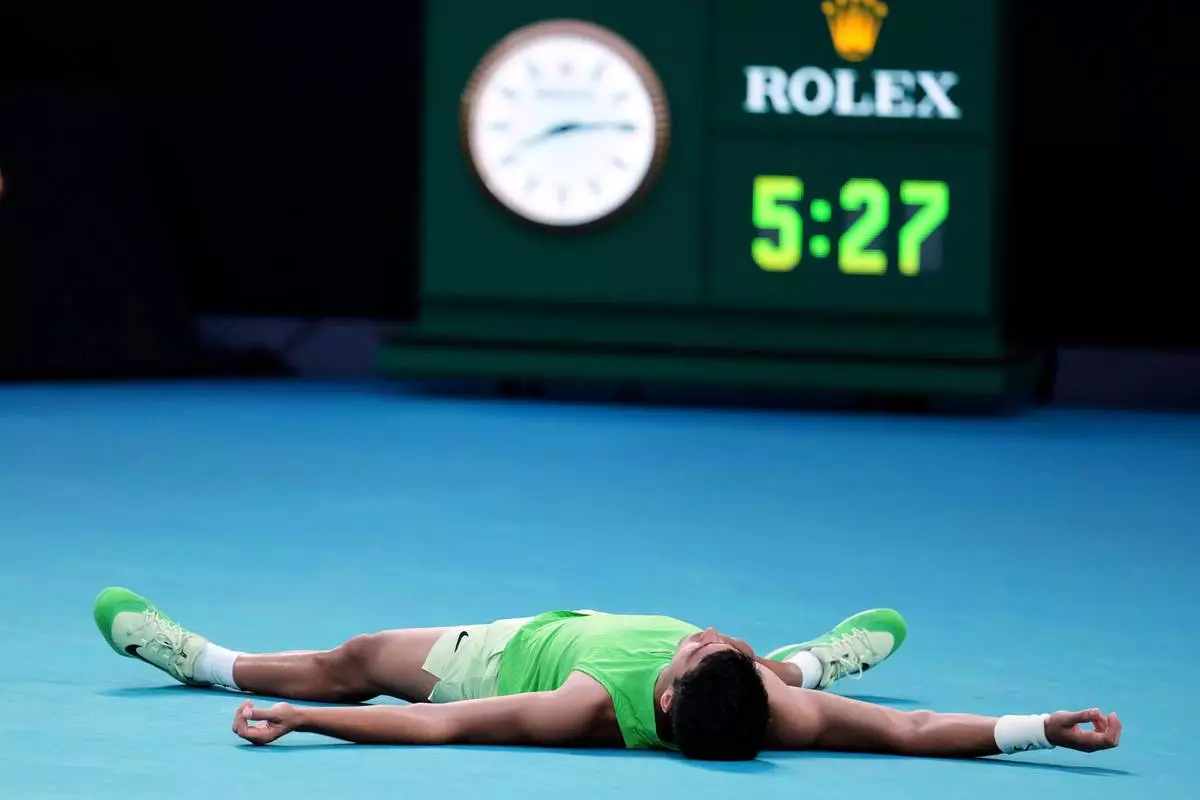
Carlos Alcaraz of Spain celebrates after defeating Alexander Zverev of Germany in their semifinal match at the Australian Open tennis championship in Melbourne, Australia, Friday, Jan. 30, 2026. (AP Photo/Asanka Brendon Ratnayake)
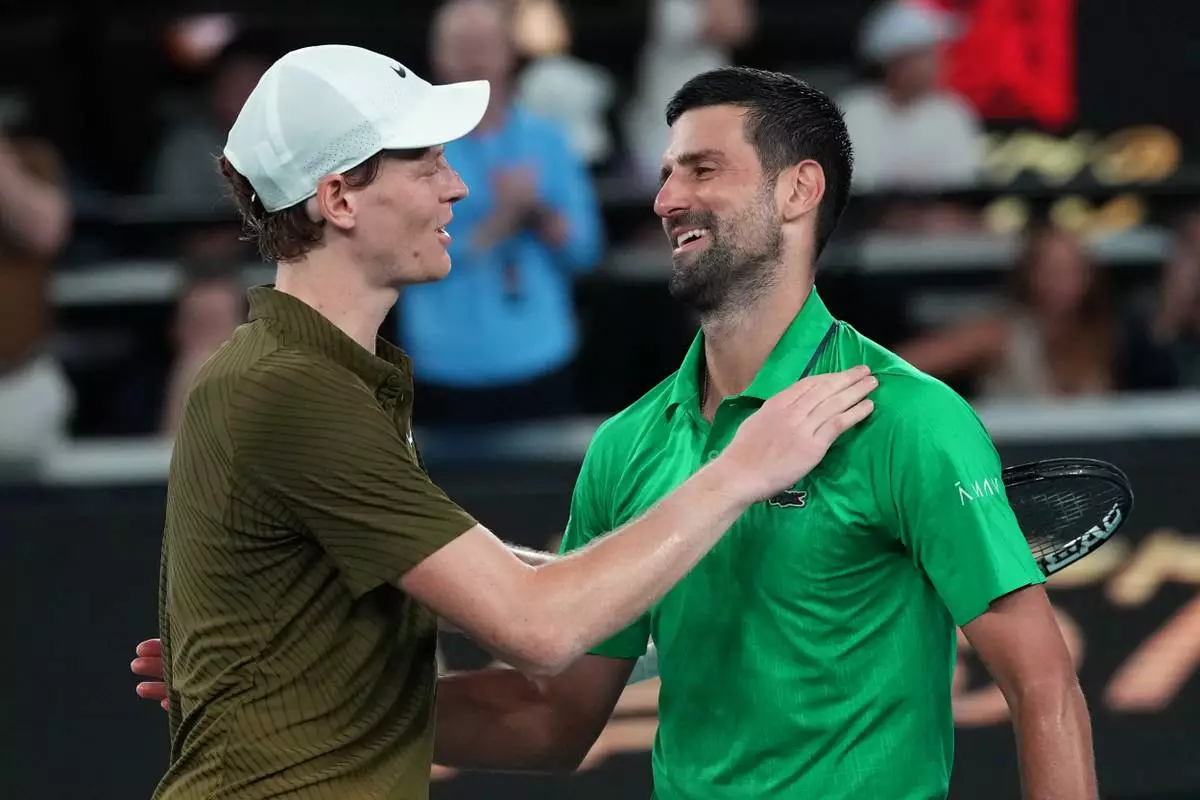
Novak Djokovic, right, of Serbia is congratulated by Jannik Sinner, left, of Italy following their semifinal match at the Australian Open tennis championship in Melbourne, Australia, early Saturday, Jan. 31, 2026. (AP Photo/Aaron Favila)