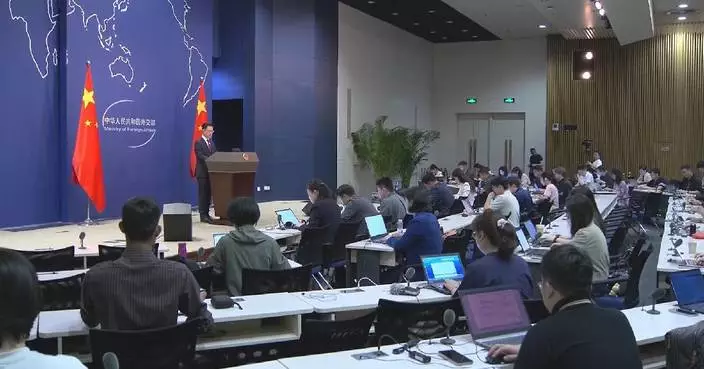
The China Coast Guard (CCG) has regularly carried out law enforcement operations against rights-infringement and provocative acts of certain countries as well as Taiwan secessionist activities to safeguard China's national sovereignty and maritime rights and interests over the past five years since the entry into force of China's Coast Guard Law, CCG Director-General Zhang Jianming said in Beijing on Friday.
Effective as of February 1, 2021, the Coast Guard Law provides a clear legal framework for Coast Guard operations at sea, marking a key milestone in strengthening the country's maritime rule of law.
Over the last five years, the CCG has carried out a total of 550,000 vessel operations and conducted over 6,000 aircraft sorties in maritime rights-protection missions with a clear legal basis, reinforcing standardized, law-based governance at sea, Zhang said at a press briefing to mark the fifth anniversary of the enactment of the law.
"[Over the past five years,] the China Coast Guard has worked to prevent and check rights infringement and provocative acts by the relevant countries, and powerfully deter Taiwan secessionist actions, to resolutely safeguard China's national territorial sovereignty and maritime rights and interests. Last year alone, the China Coast Guard conducted patrol operations covering 357 days in the territorial waters of Diaoyu Dao," said the director-general.
"[Over the past five years,] the China Coast Guard has regularly carried out rights-protection patrols in the East China Sea, the South China Sea and the Yellow Sea, while maintaining law enforcement operations in waters around the Taiwan island and its affiliated islands, as well as in the territorial waters of Huangyan Dao and surrounding area," he said.
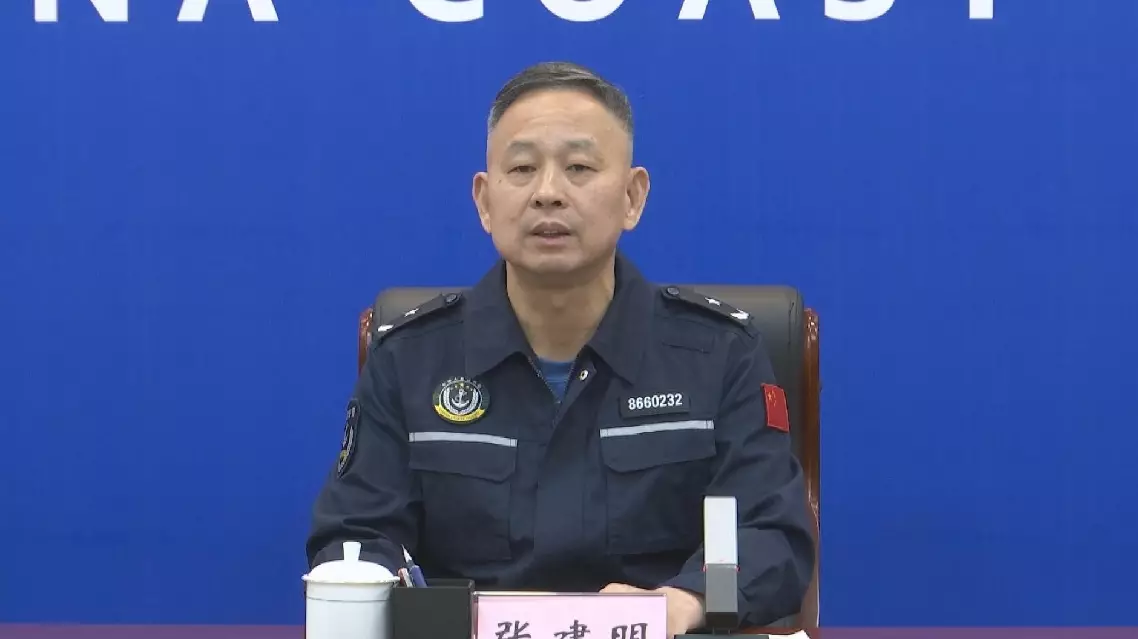
China Coast Guard carries out law enforcement to safeguard national sovereignty: director-general
Decades of U.S. sanctions have crippled Cuba's energy infrastructure, pushing families across the island to abandon modern kitchens and revive an age-old tradition: cooking with charcoal.
In Havana's Mariana neighborhood, 62-year-old Caridad Alvarez runs a small cafe with her husband. But as the energy crisis deepens, she has been forced to learn a skill she never expected to need, making fire with charcoal.
"I'm 62 years old, and for the first time in my life, I've had to cook with charcoal, because of the fuel shortage. We're going through a very difficult time. We've had no choice but to switch to charcoal, which was the way people cooked many years ago," she said.
The U.S. policy of "maximum pressure and economic strangulation" has directly targeted Cuba's energy system, with electricity shortages becoming increasingly severe. For families accustomed to electric cooking, unpredictable blackouts mean meals are delayed, or sometimes never cooked at all. So more and more households are reverting to charcoal.
"When the power goes out while I'm cooking, we switch to charcoal. Because the electricity is so unreliable, we've cut back to just two meals a day," she continued.
Lexer Brizuela has been making charcoal for over two decades. Now, he often runs three batches at once and still cannot keep up with demand. Though charcoal production is grueling work, the recent surge in demand means his hard work is finally paying off.
"I produce about 200 bags of charcoal a month. As soon as they're bagged, they're shipped out and they sell out in less than two days. The price of charcoal shot up overnight. Just like I said, it used to be 1,000 pesos (about 41 U.S. dollars). In less than a week, it jumped to 2,500 pesos. Now it's 3,000 pesos," said Brizuela.
The U.S. pressure campaign has not only choked electricity but also cut off fuel imports, paralyzing the transport and refilling of gas canisters. Even families who once relied on gas are now joining the search for charcoal.
"There's no gas, no electricity, so I have to cook with charcoal or firewood. That fills the house with smoke, so you can't even stay inside. This is how Cubans cook now," said Yudaimi, another resident.
US energy strangulation forces Cubans back to charcoal cooking